
Project
Alberto Peña Kay
Protecting the Santurban páramo from mining's damage
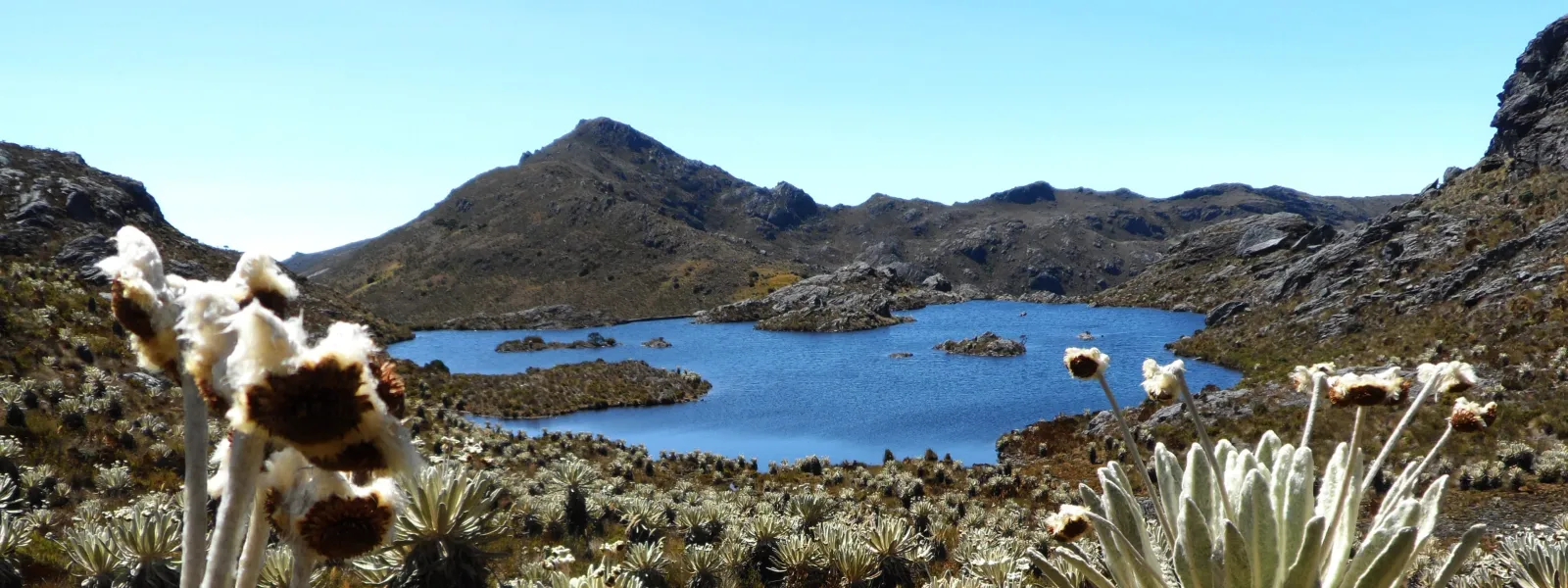
In the Andean region, high-mountain ecosystems known as páramos capture water from the fog and supply it to the lowlands. One such ecosystem is the Santurbán páramo, which provides fresh water to more than two million people in Colombia.
Santurbán, like the other páramos on the continent, also captures large amounts of carbon, making it a key ally in mitigating the climate crisis. It is also a refuge for hundreds of endangered species, including the iconic spectacled bear.
The land in and around the páramo contains gold and other minerals. This has put Santurbán in the spotlight of the multinational mining industry, which for decades has sought to establish large-scale projects in the ecosystem that threaten to degrade it.
The Committee for the Defense of Water and the Santurbán Páramo—a coalition of environmental advocates—has thwarted these ongoing attempts, with support from AIDA and other civil society organizations.
Background
The Santurbán páramo is located in the heart of the Eastern Cordillera of the Colombian Andes, in the departments of Santander and Norte de Santander, at an elevation ranging from 2,200 to 4,290 meters above sea level.
It covers an area of 129,743 hectares and is home to 57 lakes. It serves as a habitat for 457 plant species and 293 species of vertebrate fauna.
There are mineral deposits in Santurbán, primarily gold, but also silver and copper. This explains the region’s mining tradition, particularly in the part of the páramo located in Santander, in the province of Soto Norte. The communities in the area have built their culture and identity around gold mining, which is mainly artisanal and small-scale.
But since the 1990s, the gold deposits in the páramo have also attracted foreign mining conglomerates seeking to develop large-scale projects. This has raised concerns among the population that relies on the Santurbán water sources, who have mobilized in defense of water, their land, and life.
Although national and international regulations prohibit mining in páramos, the Colombian government has granted mining concessions to transnational corporations in Santurbán.
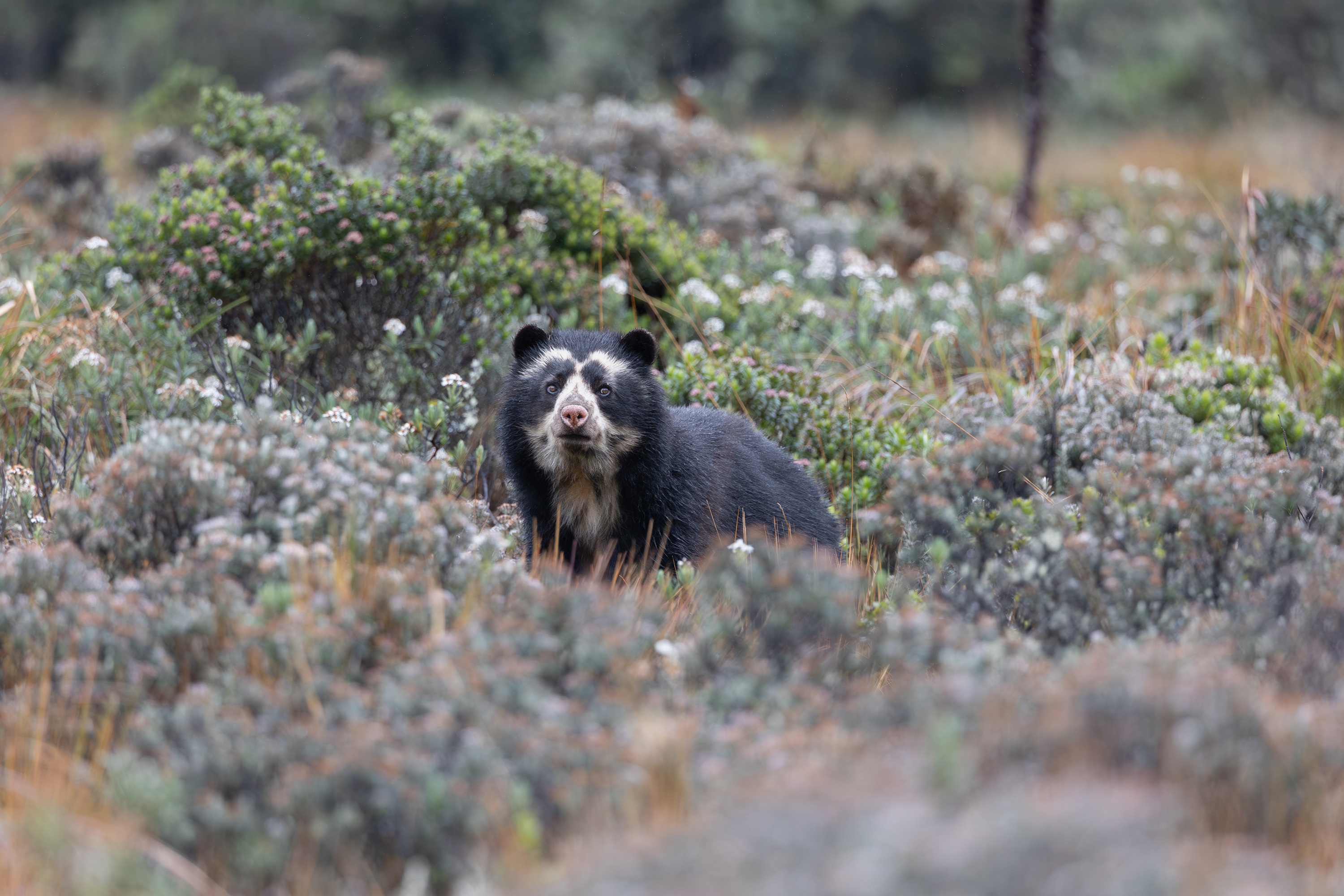
Photo: Keishpixl / Pixabay.
The long struggle to protect the páramo
One of the companies that sought to develop large-scale mining in Santurbán is Eco Oro Minerals Corp.—formerly Greystar Resources—a Canadian company that intended to establish the Angostura open-pit mine there to extract gold and silver. Between 1994 and 1995, the company acquired its mining titles and conducted exploration. And in 2010, it applied for a mining permit.
That was the year AIDA became involved in defending the ecosystem, supporting the Committee for the Defense of Water and the Santurbán Páramo. Our legal work helped convince the Colombian government to deny the mine an environmental permit in May 2011.
In January 2013, the government designated a portion of the páramo (11,700 hectares) as a Regional Natural Park. That year—together with the committee and partner organizations—we carried out a campaign and advocacy efforts to urge the government to recognize the entire Santurbán area as a páramo ecosystem through a delimitation based on scientific criteria. In December 2014, the Ministry of the Environment established a delimitation that protected 76% of the páramo (98,954 hectares).
Furthermore, as a result of a litigation supported by AIDA, in February 2016, Colombia’s highest court reaffirmed that mining in páramos is prohibited.
That same year, in December, the International Finance Corporation (IFC), the World Bank Group’s private sector arm, decided to divest from Eco Oro Minerals. This achievement was the result of a process that began in 2012, when the committee—advised and supported by AIDA and international partner organizations—filed a complaint before an independent accountability mechanism, which concluded that the IFC’s investment in the Angostura project failed to take into account the project’s social and environmental impacts, thereby contradicting the financial institution’s internal policies.
Also in 2016, Eco Oro Minerals filed an arbitration claim against the Colombian government with the International Centre for Settlement of Investment Disputes (ICSID), arguing that it had been adversely affected by government decisions aimed at protecting the country’s páramos, including the delimitation of Santurbán.
In 2017, the Constitutional Court invalidated the delimitation because the affected communities were not consulted. The high court ordered that a participatory delimitation be carried out.
And that year, a new threat to Santurbán emerged when the Canadian multinational Aris Mining applied for an environmental permit for Soto Norte, a gold mining project located near the páramo. Following citizen protests and technical objections, in October 2020, the National Environmental Licensing Authority shelved the project.
Photo: Aztlec.
Current situation
In March 2025, the Colombian government designated the western flank of the Santurbán massif as a temporary renewable natural resource reserve area, delimiting and protecting an area of 75,344.65 hectares. This resulted in a two-year suspension of the Soto Norte project. However, Aris Mining's contract to formalize Calimineros' small-scale mining activities through the purchase and processing of mineralized material remains in effect.
In addition, the Canadian mining company continues to move the project forward. In September 2025, it released its prefeasibility study, revising the mine’s original design.
Meanwhile, members of the Committee for the Defense of Water and the Santurbán Páramo face threats and stigmatization because of their work. In March 2025, UN Special Rapporteurs and the Working Group on Business and Human Rights denounced these incidents in communications sent to the governments of Colombia, Canada, and the United Arab Emirates, as well as to the companies Aris Mining and MDC Industry Holding Company LLC, the former co-owner of the Soto Norte project.
Regarding the arbitration claim filed by Eco Oro Minerals, in July 2024, ICSID ruled in favor of the Colombian government and rejected the Canadian company’s claim for USD 1.1 billion in compensation.
Concerning the delimitation of Santurbán, in July 2026, the Ministry of the Environment issued a resolution introducing the concept of "progressive delimitation." On that basis, the government proposes to progressively demarcate the páramo, covering 29,199 hectares across 19 municipalities—those where the participatory agreements required by the Constitutional Court in its 2017 ruling have already been finalized. It also proposes two measures on the creation and expansion of reserves to restrict mining in the ecosystem.
Learn more about the impacts of mining on the páramos of Latin America (in Spanish).
Partners:
Related projects
The natural wonders we could protect with the High Seas Treaty
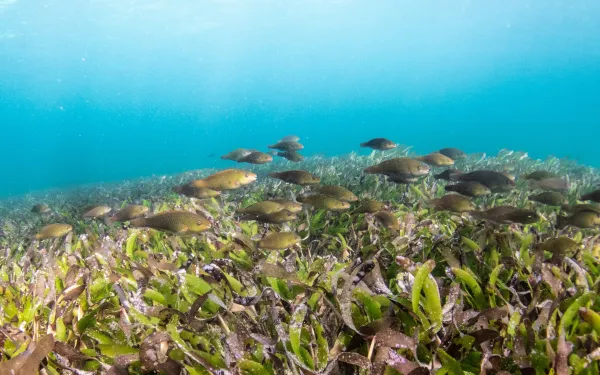
For decades, the ocean has protected us from the impacts of climate change, absorbing 90 percent of the excess heat produced by global warming. It’s given us food and the genetic resources we use to produce life-saving drugs. As if that weren’t enough, it’s enabled millions of families to thrive in an economy based on its bounty.Despite its importance, the ocean remains unprotected in large part; no country governs the high seas, international waters that comprise 64 percent of the ocean’s total surface area. Management measures have given rise to a patchwork of uncoordinated protections.To fill this gap, in June 2023, UN member countries formally adopted an agreement to protect biodiversity in the high seas, which requires ratification by at least 60 countries to enter into force.The High Seas Treaty - short name for the Agreement on the Conservation and Sustainable Use of Marine Biological Diversity of Areas beyond National Jurisdiction (BBNJ Agreement) - proposes, among other aspects, the creation and adequate management of marine protected areas (MPAs) in the high seas, regions that would allow for the conservation and rescue of the rich biodiversity found in the ocean. Protection at a high costIn addition to absorbing a large part of the planet’s excess heat, the ocean absorbs nearly 30 percent of all greenhouse gases, which are responsible for climate change.But this protective role comes with serious consequences. By interacting with and absorbing pollutants such as carbon dioxide, the ocean suffers from acidification - a phenomenon that reduces the levels of calcium, an element necessary for the shells and external skeletons of several species of marine fauna - and loss of oxygen, essential for life under the sea.These impacts consequently affect the food supply and employment in the fishing and tourism industries.Faced with the impacts of the climate crisis on marine ecosystems, governments must do much more to protect the ocean, starting with ratifying the High Seas Treaty, which establishes a clear legal framework and process for maintaining its health and resilience. Protected natural wondersAs the ratification of the High Seas Treaty progresses, there is growing interest from governments and civil society to lay the groundwork for greater protection of the high seas.As part of this push, areas of high ecological value have been identified that could form the first wave of protection once the treaty goes into effect. High Seas Alliance - a coalition of organizations of which AIDA is a member - has highlighted 8 priority sites that could be part of this first generation of MPAs, which it has called the Hidden Natural Wonders of the World:Salas y Gómez and Nazca Ridges: Deep in the waters of the southeastern Pacific, these two unique chains of submarine slopes and peaks are separated from South America by the waters of the Humboldt Current and the enormous chasm of the Atacama Trench. They are critical habitats and migratory corridors for at least 82 threatened or endangered species, along with many others of ecological and economic importance.The Termal Dome: Each year in the eastern tropical Pacific, strong seasonal winds push warm waters from the coast offshore, where they meet cooler waters carried by ocean currents. This interaction causes a unique upwelling system that brings cold, nutrient-rich waters to the sea surface, benefiting many species.Emperor Seamounts: Located in the North Pacific, this chain of more than 80 seamounts extends for 2,000 kilometers on the seafloor between the northwesternmost point of the Hawaiian Islands and the Kuril-Kamchatka Trench (Pacific Northwest). Its nutrient-rich waters feed a great diversity of species. And in the mountains, a range of corals and sponges shelter countless species of fish and invertebrates.Walvis Ridge: It is a range of seamounts that extends for about 3,000 kilometers off the coast of southwestern Namibia to the mid-Atlantic ridge (submarine ridge that runs along the Atlantic Ocean). It is composed of several seafloor types and includes many features of the deep ocean floor, along with its abyssal plains, seamounts and guyots (seamounts).Sargasso Sea: It is the only sea in the world without land borders. It is geographically defined by four Atlantic Ocean currents in an area of about 1,100 kilometers wide and 3,200 kilometers long. It is called the “golden rainforest of the high seas” because of the sargassum algae that float on its surface and provide habitat for a myriad of species, while absorbing and storing carbon and producing oxygen.South Tasman Sea: Located between Australia and New Zealand, it is a diverse and dynamic area that supports abundant marine life. It is also an important breeding area and migratory corridor for a large number of species, including endangered species such as the Antipodean albatross, which often transit its waters.The Lost City: It is a complex of 30 hydrothermal vent chimneys located on the upper slopes of the Atlantis seamount massif in the North Atlantic Ocean. The complex of vents rises 4,300 meters from the seafloor, with peaks at a depth of 750 meters. The Lost City chimneys are believed to be more than 120,000 years old.Saya de Malha: Located in the heart of the Indian Ocean, midway between the Seychelles and Mauritius, this unique seascape is home to the world’s largest seagrass community. It is a rare example of seagrass meadows on the high seas and the largest submerged ocean bank in the world, covering more than 40,000 square kilometers.Preserving these natural wonders through marine protected areas requires the entry into force of the High Seas Treaty.It is time to take care of the ocean as it takes care of us.
Read more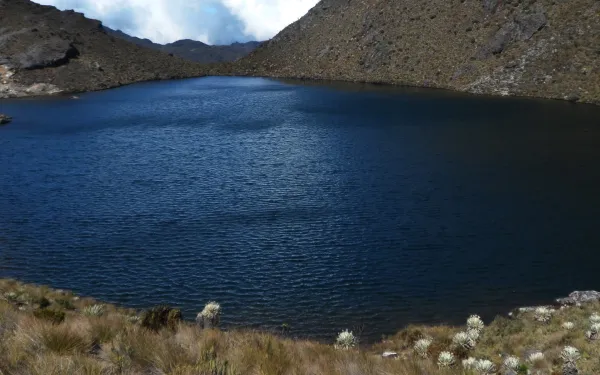
UN experts denounce threats and stigmatization against defenders of water and the Santurbán páramo; demand protection for their work
Bucaramanga, Colombia. On March 6, 2025 the United Nations Special Rapporteurs on human rights defenders, a healthy environment, water and sanitation, and the UN Working Group on Business and Human Rights sent formal letters to the governments of Colombia, Canada, and the United Arab Emirates, as well as to the companies Aris Mining and MDC Industry Holding Company LLC to denounce the threats and stigmatization faced by the Committee for the Defence of Water and the Santurbán Páramo for defending this ecosystem threatened by mining in Colombia. To date, only the Colombian government’s reply has been made public. While harassment is not new, content has recently been disseminated on social media labeling the Committee’s spokespersons as "persona non grata", endangering their lives by claiming false connections to illegal armed groups. Committee members have warned that "every day that passes without a response from the national government and the companies legitimizes those who seek to silence us".For 16 years, the committee has worked to protect the Santurban páramo - a high altitude wetland ecosystem which provides fresh water to more than two million people. Recently, they achieved recognition of part of the páramo as a Temporary Reserve Zone, which means that large-scale mining activities will be suspended for two years.Viviana Herrera, Latin America Program Coordinator at MiningWatch Canada, said, "it speaks volumes that Canada has not yet responded to the UN experts. Canada must prioritize the environmental defenders of the Santurbán Committee and their struggle to protect water."Sebastián Abad Jara, an attorney with the Interamerican Association for Environmental Defense (AIDA), said that "through these letters, the offices of the UN recognized the committee as a coalition of rights defenders; they informed governments and companies of the clear, imminent, and specific risk to its members; and in doing so they dismantled the false narratives linking their activities to those of illegal groups."The UN agencies emphasize that Aris Mining, its subsidiary Minesa, and all companies in its supply chain associated with the Soto Norte project — such as Calimineros — have an obligation to respect and protect human rights, especially those of environmental and water defenders."Colombia is one of the most dangerous countries for those defending water and life against extractive projects, which is why immediate action by states and companies is urgently needed to stop the stigmatization and guarantee the safety of members of the committee," said Jen Moore, associate researcher at the Institute for Policy Studies (IPS).The Committee for the Defence of Water and the Santurbán Páramo, AIDA, MiningWatch Canada, IPS, Common Frontiers Canada, and the Center for International Environmental Law (CIEL) reiterate the call by United Nations experts to the governments of Colombia, Canada, and the United Arab Emirates, as well as to Aris Mining company and MDC Holding, to safeguard the lives and integrity of the committee members.In accordance with their obligations under national law, the Escazú Agreement, inter-American law and jurisprudence, and the Guiding Principles on Business and Human Rights, we also urgently call on states and companies to respond to the substance of the letters and adopt measures — with verifiable deadlines and measurable progress — to prevent companies associated with the Soto Norte project from committing human rights violations.Only the protection and strengthening of historic leadership such as that of the Santurbán Committee in Colombia will bring us closer to environmental and climate justice. The concerns raised by the offices of the UN are a reminder that protecting those who lead the struggle for water in Latin America is an imperative of state and corporate due diligence.Press contactsCommittee for the Defense of Water and the Santurbán Páramo, [email protected] Quintanilla (Mexico), AIDA, [email protected], +5215570522107Viviana Herrera, Mining Watch Canada, [email protected], +14389931264Jennifer Moore, IPS, [email protected], +12027049011
Read more
Reimagining the circular economy from territories of extraction. Proposals from Latin America
Among the various global commitments to address the current climate crisis, international governance bodies — such as the United Nations — have highlighted the need to double renewable energy production and expand electromobility to decarbonize the global energy mix, calling this process the "energy transition." However, this transition entails intensifying the extraction of minerals essential for developing these technologies. Each region of the world plays a distinct role in the supply chains of minerals used in decarbonization processes. Latin America has been identified as one of the regions with vast mineral reserves capable of fueling this transition. Yet, in this context of growing mining interest, there is a tendency to render invisible the populations who inhabit these territories, as well as the hydrogeological systems of local, regional, and global significance that exist there.Lithium is one of the minerals whose commercial demand has grown significantly in connection with progress toward energy decarbonization. It is in the Gran Atacama region — located in the border area of Argentina, Bolivia, and Chile — where the largest global reserves are found. Nevertheless, for lithium to become available, it must pass through a complex international supply chain, which includes mineral extraction, refining, production of battery electrodes, battery manufacturing, and, finally, the production of electric vehicles.This surge in mineral demand within complex global supply chains raises concerns for the region about the risk of reproducing a new cycle of extractivism, unless public policies are devised and implemented that effectively integrate environmental, social, and territorial development standards.The circular economy, closely linked to the energy transition, emerges as a key strategy to overcome the logic of the traditional linear economic model ("take–make–consume–dispose"). Its aim is to reduce pressure on territories and common goods by incorporating sustainability criteria into supply chains and promoting more rational management of extracted mineral resources.However, this vision of the circular economy — when applied to minerals for the energy transition — can also perpetuate extractivism, particularly in the Global South. Decarbonization options often require vast quantities of minerals for energy storage, extracted at the cost of high environmental and social impacts. This threatens the resilience of the ecosystems from which they are taken and poses risks to the populations that inhabit them.Given these limitations, a circular economy proposal — from the perspective of Latin American extraction zones and applied to transition minerals — should contribute to ensuring that changes in the energy mix toward technologies with lower greenhouse gas emissions (commonly referred to as the energy transition) are truly just throughout all stages of the process. This entails avoiding the creation, expansion, and/or deepening of sacrifice zones; ensuring environmental restoration; guaranteeing the protection of human rights; and securing reparation where rights have been violated. It also requires respecting biophysical boundaries and the resilience capacity of ecosystems. Read and download
Read more