
Project
Alberto Peña Kay
Protecting the Santurban páramo from mining's damage
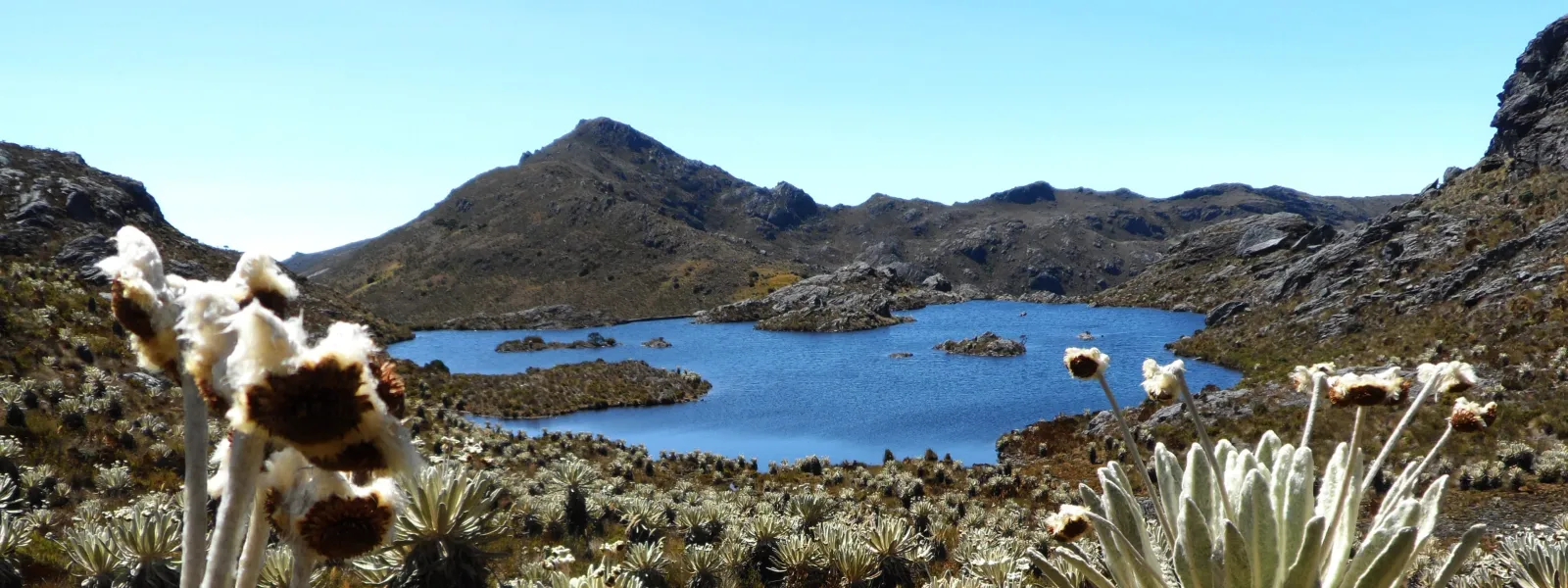
In the Andean region, high-mountain ecosystems known as páramos capture water from the fog and supply it to the lowlands. One such ecosystem is the Santurbán páramo, which provides fresh water to more than two million people in Colombia.
Santurbán, like the other páramos on the continent, also captures large amounts of carbon, making it a key ally in mitigating the climate crisis. It is also a refuge for hundreds of endangered species, including the iconic spectacled bear.
The land in and around the páramo contains gold and other minerals. This has put Santurbán in the spotlight of the multinational mining industry, which for decades has sought to establish large-scale projects in the ecosystem that threaten to degrade it.
The Committee for the Defense of Water and the Santurbán Páramo—a coalition of environmental advocates—has thwarted these ongoing attempts, with support from AIDA and other civil society organizations.
Background
The Santurbán páramo is located in the heart of the Eastern Cordillera of the Colombian Andes, in the departments of Santander and Norte de Santander, at an elevation ranging from 2,200 to 4,290 meters above sea level.
It covers an area of 129,743 hectares and is home to 57 lakes. It serves as a habitat for 457 plant species and 293 species of vertebrate fauna.
There are mineral deposits in Santurbán, primarily gold, but also silver and copper. This explains the region’s mining tradition, particularly in the part of the páramo located in Santander, in the province of Soto Norte. The communities in the area have built their culture and identity around gold mining, which is mainly artisanal and small-scale.
But since the 1990s, the gold deposits in the páramo have also attracted foreign mining conglomerates seeking to develop large-scale projects. This has raised concerns among the population that relies on the Santurbán water sources, who have mobilized in defense of water, their land, and life.
Although national and international regulations prohibit mining in páramos, the Colombian government has granted mining concessions to transnational corporations in Santurbán.
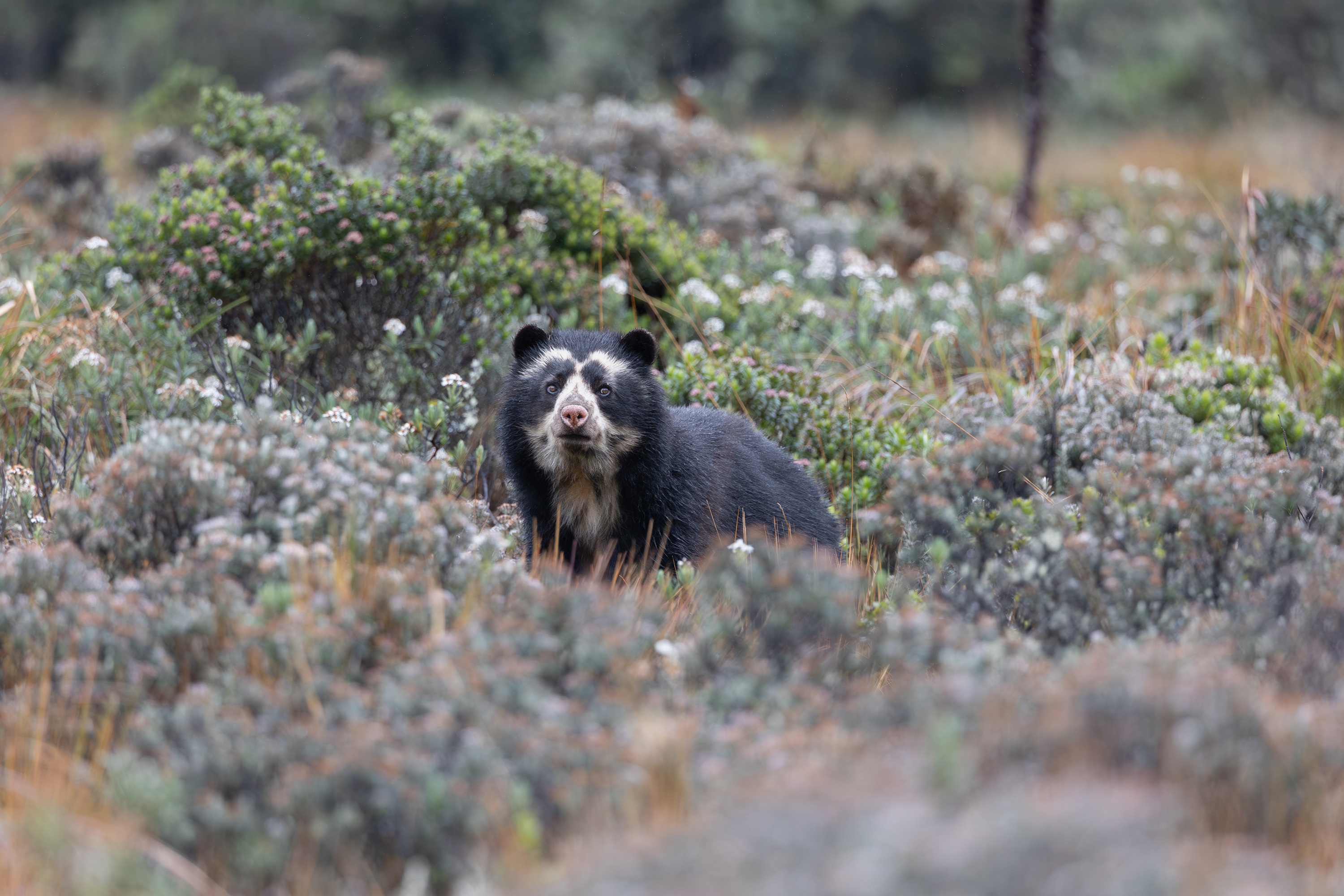
Photo: Keishpixl / Pixabay.
The long struggle to protect the páramo
One of the companies that sought to develop large-scale mining in Santurbán is Eco Oro Minerals Corp.—formerly Greystar Resources—a Canadian company that intended to establish the Angostura open-pit mine there to extract gold and silver. Between 1994 and 1995, the company acquired its mining titles and conducted exploration. And in 2010, it applied for a mining permit.
That was the year AIDA became involved in defending the ecosystem, supporting the Committee for the Defense of Water and the Santurbán Páramo. Our legal work helped convince the Colombian government to deny the mine an environmental permit in May 2011.
In January 2013, the government designated a portion of the páramo (11,700 hectares) as a Regional Natural Park. That year—together with the committee and partner organizations—we carried out a campaign and advocacy efforts to urge the government to recognize the entire Santurbán area as a páramo ecosystem through a delimitation based on scientific criteria. In December 2014, the Ministry of the Environment established a delimitation that protected 76% of the páramo (98,954 hectares).
Furthermore, as a result of a litigation supported by AIDA, in February 2016, Colombia’s highest court reaffirmed that mining in páramos is prohibited.
That same year, in December, the International Finance Corporation (IFC), the World Bank Group’s private sector arm, decided to divest from Eco Oro Minerals. This achievement was the result of a process that began in 2012, when the committee—advised and supported by AIDA and international partner organizations—filed a complaint before an independent accountability mechanism, which concluded that the IFC’s investment in the Angostura project failed to take into account the project’s social and environmental impacts, thereby contradicting the financial institution’s internal policies.
Also in 2016, Eco Oro Minerals filed an arbitration claim against the Colombian government with the International Centre for Settlement of Investment Disputes (ICSID), arguing that it had been adversely affected by government decisions aimed at protecting the country’s páramos, including the delimitation of Santurbán.
In 2017, the Constitutional Court invalidated the delimitation because the affected communities were not consulted. The high court ordered that a participatory delimitation be carried out.
And that year, a new threat to Santurbán emerged when the Canadian multinational Aris Mining applied for an environmental permit for Soto Norte, a gold mining project located near the páramo. Following citizen protests and technical objections, in October 2020, the National Environmental Licensing Authority shelved the project.
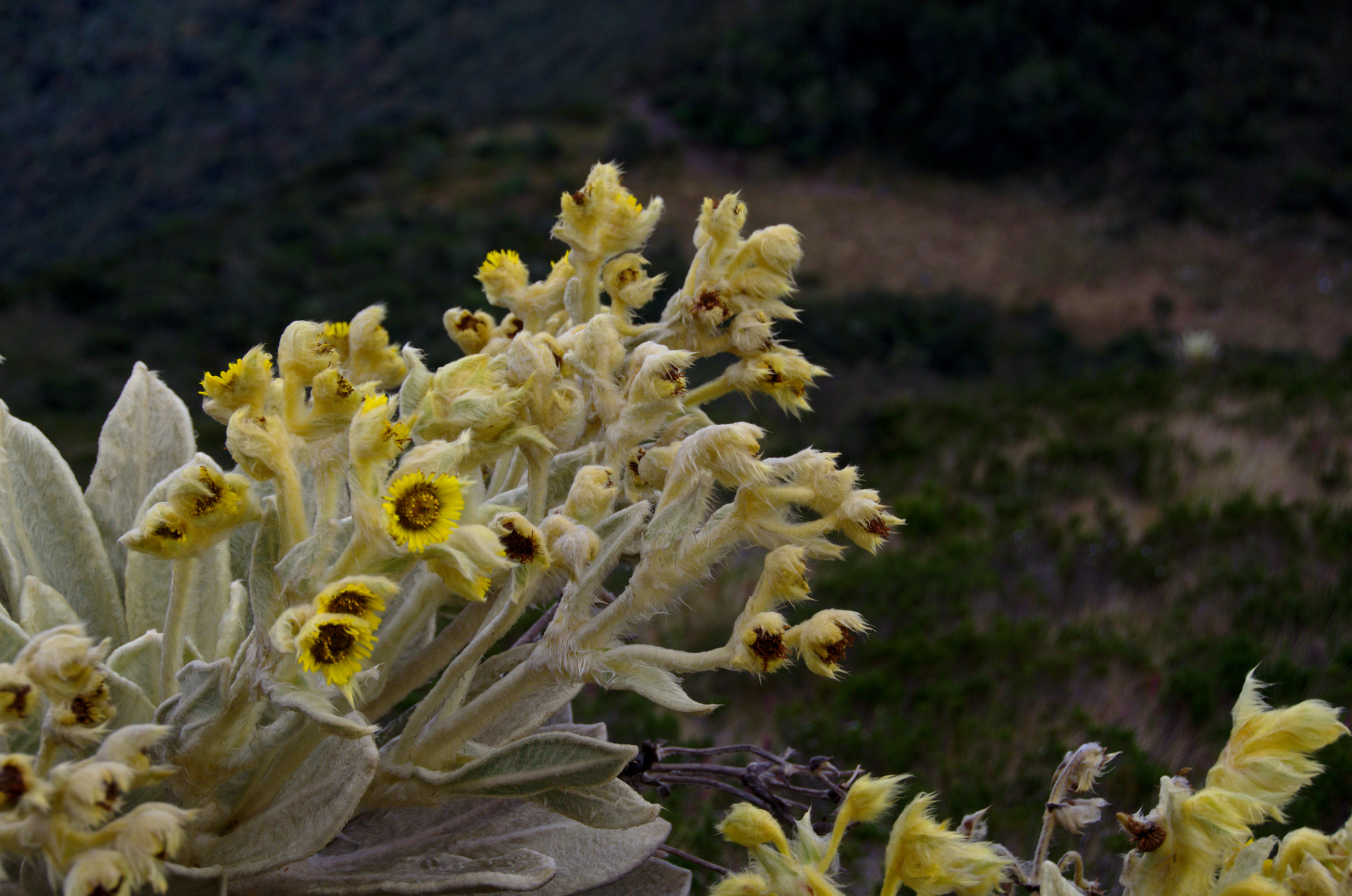
Photo: Aztlec.
Current situation
In March 2025, the Colombian government designated the western flank of the Santurbán massif as a temporary renewable natural resource reserve area, delimiting and protecting an area of 75,344.65 hectares. This resulted in a two-year suspension of the Soto Norte project. However, Aris Mining's contract to formalize Calimineros' small-scale mining activities through the purchase and processing of mineralized material remains in effect.
In addition, the Canadian mining company continues to move the project forward. In September 2025, it released its prefeasibility study, revising the mine’s original design.
Meanwhile, members of the Committee for the Defense of Water and the Santurbán Páramo face threats and stigmatization because of their work. In March 2025, UN Special Rapporteurs and the Working Group on Business and Human Rights denounced these incidents in communications sent to the governments of Colombia, Canada, and the United Arab Emirates, as well as to the companies Aris Mining and MDC Industry Holding Company LLC, the former co-owner of the Soto Norte project.
Regarding the arbitration claim filed by Eco Oro Minerals, in July 2024, ICSID ruled in favor of the Colombian government and rejected the Canadian company’s claim for USD 1.1 billion in compensation.
Concerning the delimitation of Santurbán, in July 2026, the Ministry of the Environment issued a resolution introducing the concept of "progressive delimitation." On that basis, the government proposes to progressively demarcate the páramo, covering 29,199 hectares across 19 municipalities—those where the participatory agreements required by the Constitutional Court in its 2017 ruling have already been finalized. It also proposes two measures on the creation and expansion of reserves to restrict mining in the ecosystem.
Learn more about the impacts of mining on the páramos of Latin America (in Spanish).
Partners:
Related projects

Cetaceans and salmon farming: Challenges for the conservation of marine biodiversity in Chilean Patagonia (executive summary)
In 2018, the environmental organizations Interamerican Association for Environmental Defense (AIDA), Greenpeace, and the NGO FIMA joined forces to confront the threat of the expansion of salmon farming in the southern waters of Chilean Patagonia. Since then, we have been actively working to expose and stop the impacts of intensive salmon production in pristine ecosystems, including special protected areas. In 2021, a scientific study of whale-ship interactions in Chilean Patagonia was published, including a video of a blue whale navigating a high-traffic area. According to the study, the world’s largest and most endangered mammal shares space with up to 870 vessels daily in Chilean Patagonia, one of its main feeding grounds. The study confirmed that 83% of the vessels were involved in the aquaculture industry.This finding shed light on a new facet of the environmental issues facing Chilean Patagonia, home to nearly 30% of the world’s cetacean species, including the endemic Chilean dolphin. This led us to commission a scientific report from a multidisciplinary team of experts to make the information publicly available. The results provided evidence of the impacts of salmon farming on cetaceans in Chilean Patagonia and highlighted the lack of studies and information needed to understand the magnitude and consequences of these impacts, as well as the true risk involved.In addition to complementing the efforts of civil society to demonstrate the urgency of halting the expansion of salmon farming in the country’s southern seas, we hope that this report will specifically draw attention to the real and potentially irreversible problem affecting these emblematic species. We also hope that the report’s recommendations will encourage the development of conservation measures for cetaceans, even in a context of insufficient knowledge, in accordance with the Precautionary Principle — recognized in the General Fisheries and Aquaculture Law, national legislation, and international law — which establishes the obligation to act in favor of environmental protection, even in the face of uncertainty. Finally, we hope that this report will motivate further research necessary to implement concrete and effective protective measures to make our waters a safe space for whales and dolphinsRead and download the executive summary
Read more
Colombia: Communities and workers win first court ruling on coal mine closure that protects their rights
The Interamerican Association for Environmental Defense (AIDA) celebrates the ruling of the Constitutional Court of Colombia, which recognizes the rights to due process and participation of communities and workers in the closure of coal mining projects in the department of Cesar. This ruling comes after years of insistence by these groups, who filed a tutela lawsuit. In this case, AIDA contributed with a legal brief that includes the analysis it has conducted on the issue of closure and responsible exit in Latin America, from the perspective of the right to a healthy environment and other human rights.Below, we share the statement of the communities and workers on the occasion of the ruling.The Constitutional Court of Colombia issued the first ruling on mine closures in the country (T-029 of 2025). It guaranteed due process and, consequently, the effective participation of the communities and unions representing more than 20,000 people in the more than four municipalities affected by the environmental, social and economic impacts of the first irregular abandonment and closure of large-scale coal mines in Colombia.We, a group of affected communities and dismissed workers from Cesar and Magdalena, have led a legal action for more than four years to ensure a public dialogue through a large consultation table where the communities, dismissed workers, local authorities and the affected citizens in general of the mining municipalities of La Jagua, El Paso, Becerril and Ciénaga can know and participate in the definition of compensation and restoration measures that the multinational Glencore - Prodeco must carry out in these municipalities as part of its mining abandonment and closure plan, which is in the process of being approved by the National Environmental Licensing Authority (ANLA).In this ruling, the court determined that the Seventh Administrative Court of Valledupar violated the fundamental right to due process by considering that the multinational company had complied with this participation process with a SINGLE socialization meeting held in November 2022 in these municipalities, which is clearly insufficient and does not comply with what was agreed in the minutes of the meeting, where the commitment of the parties was to convene the GREAT TABLE OF DIALOGUE AND CONCERTATION in the presence of the affected population of these four municipalities.The court ordered to initiate again the opening of the contempt proceeding against the legal representative of Grupo Empresarial PRODECO S.A. and to review the compliance with the judgment and the agreement contained in these minutes.We, as communities and unions of the mining corridor, supported by national and international civil society organizations, and represented in court by attorney Rocío Torres Bobadilla, consider that this public roundtable may be the last opportunity for us to make a balance of what has happened in our territories after 25 years of exploitation and achieve measures for Glencore to compensate and restore all the impacts caused.Therefore:We invite Glencore - Prodeco to a constructive dialogue, to avoid evasive maneuvers and to respect the importance of this judicial decision.We request the Colombian State, headed by the ANLA, the DEFENSORIA and the PROCURADURÍA to accompany us in this process, support this judicial decision and strengthen our protection measures to guarantee our safety as leaders in this process to comply with this ruling.We request national and international organizations to continue supporting us to guarantee a real and effective participation and that this GREAT CONCERTATION TABLE is fulfilled. Finally, we ask the entire population of the country and especially of the municipalities of La Jagua, Becerril, El Paso and Ciénaga to accompany us, support us and join us in a great process to DEFEND THIS JUDICIAL DECISION which is HISTORIC for our territory in order to restore and compensate the serious environmental and social impacts caused by the irregular mining closure and to find measures to address the great poverty and unemployment we are experiencing.Join us to be heard, to heal our territories and to recover our economy.Signed byJunta de acción comunal de BoquerónConsejo Comunitario Afrodescendiente Coafrovis de la Victoria de San IsidroRed de Mujeres del Municipio del Paso Asamblea Campesina del Cesar por la Restitución y el Buen Vivir Asociación de Usuarios Campesinos (ANUC) el Paso Sindicato Nacional de Trabajadores del Carbón (Sintracarbón) Sindicato Nacional de los Trabajadores de la Industria Minero-Energética (Sintraminergetica) Sindicato Nacional de los Trabajadores Mineros Asociación del Reguardo Sokorhpa del Pueblo Indígena Yukpa Consejo Comunitario Caño Candela de Becerril Junta de Acción Comunal del Barrio Don Jaca en Santa Marta Corregimiento de Cordobita en Ciénaga (Madgalena) Vereda el Hatillo Representante Junta de Acción Comunal Sororia de la Jagua de Ibirico Centro de Estudios para la Justicia Social Tierra Digna Rocío Torres Bobadilla- environmental rights defender National and international organizations and defenders that SUPPORT US:Universidad del Magdalena Universidad del Magdalena Clínica Jurídica Interamerican Association for Environmental Defense (AIDA)London Mining Network PAX Holanda PAX Colombia CNV InternationaalSolifonds Multiwatch ASK Switzerland-Colombia Working GroupUrgewald Polen –Transiciones JustasAna Catalina Herrara - labor rights defenderÁngela Velandia Cruz – human rights defender
Read more
Life in Andean wetlands at risk from extractivism
The expansion of industrial extraction of lithium and other minerals for the energy transition of the global north threatens wetlands in Argentina, Bolivia and Chile. These delicate ecosystems are an abundant source of life and fundamental for human subsistence, environmental balance and for mitigating and adapting to the climate crisis.The Andean wetlands - including salt flats, lakes and lagoons - of Argentina, Bolivia and Chile are at serious risk due to the advance of the extraction of lithium and other minerals demanded for the energy transition in the countries of the global north. The Andean Wetlands Alliance warns of this threat to these ecosystems where life abounds and which are key to human subsistence and biodiversity in general and to the fight against the climate crisis.This year, the Convention on Wetlands proposes as the theme for World Wetlands Day: “Protecting wetlands for our common future”. This theme highlights the importance of collective action to protect these ecosystems, on which the future of humanity depends.According to United Nations data, although they cover only 6% of the earth's surface, wetlands are home to 40% of all plant and animal species. And, worldwide, more than 1 billion people (one eighth of the Earth's population) live in rural and urban areas that depend on these ecosystems for their livelihoods. However, with a 35% global loss in the last 50 years (since 1970), wetlands are the most threatened ecosystem, disappearing three times faster than forests.In Latin America, the Andean wetlands of the Gran Atacama region - located in the border area of Argentina, Bolivia and Chile - are home to unique species of flora and fauna, especially adapted to extreme climatic conditions, as well as microorganisms that absorb carbon dioxide and release oxygen. Its high capacity to purify and store water guarantees the supply of the resource for communities and species, also generating conditions for adaptation to the climate crisis.However, due to the presence of large quantities of lithium in these wetlands - the three countries concentrate more than 53% of the resources (potentially exploitable material) of the mineral - there is great pressure on them: corporate and state actors have developed a growing and massive mining industry to meet the demand for lithium in the global north, oriented to the manufacture of electric vehicles and energy storage from renewable sources, among other purposes.On the other hand, national and provincial governments see the industry as an opportunity to attract investment and strengthen their economies, for which they relax or poorly implement regulations that require an adequate analysis of the environmental and social impacts of projects. Likewise, there are no processes of consultation and free, prior and informed consent with the indigenous communities living in the territories. Nor are the rights of access to information, citizen participation, access to justice in environmental matters, or a safe environment for environmental defenders guaranteed.One of the main impacts of this type of mining (lithium extraction) is on water, a central element of Andean wetlands. Lithium is extracted from the water beneath the salt flats, a process that requires both saltwater and freshwater. Andean wetlands exist in regions where survival depends on the scarce water that defines them. The expansion of extractivism in the Gran Atacama regionArgentinaAccording to official data, the country has a portfolio of more than 50 lithium projects in different stages of progress, mainly located in the provinces of Salta, Catamarca and Jujuy. Three of them are in production and export stage (a fourth project started production in July 2024), four are under construction and more than 40 are at different stages of progress (prospecting/exploration/feasibility), mostly in advanced exploration phase. In Salta and Jujuy operate large companies such as Pan American Energy, Pluspetrol and Tecpetrol, historically linked to the oil and gas industry, which are now expanding their presence in renewable energy sectors, with a marked interest in lithium extraction.However, through an amparo action filed against the authorities and government of the province of Jujuy, it has come to light that there are more than 40 mining projects in the Salinas Grandes Basin and Guayatayoc Lagoon alone, an endorheic basin where more than thirty native communities belonging to the Kolla and Atacama peoples/nations live. To date, their progress and whether there are other projects is unknown because access to public environmental information is restricted and is not provided in a complete and timely manner, in breach of national regulations and international standards. In the Salar del Hombre Muerto, Catamarca, is the oldest lithium mining enclave in the country. The salt flat has been exploited since 1996 by the company Livent (now Arcadium Lithium), causing the total and irreversible drying up of the vega of the Trapiche River. In March 2024, the Supreme Court of Catamarca ordered a halt to mining activity in this salar until a cumulative environmental impact assessment is conducted. BoliviaIn the Salar de Uyuni, the largest in the world, resources of 23 million tons of lithium have been identified. And there are 26 other salt flats that, by regulation, are reserved for the exploitation of the mineral; exploration activities are being carried out in six of them. In Bolivia, lithium is state-owned. The country has a state-owned exploitation plant that began operating in 2024 at 20% of its capacity. In 2012 and 2018, two public consultations were held for state-owned plants, but these excluded indigenous and native communities with titled collective lands. Some communities have informally denounced a significant depletion of springs and water wells. The degradation of the Salar de Chalviri and the overexploitation of lithium and boron in the Salar de Capina have also been denounced.Since 2023, agreements have been signed and exploration and camp installation activities have begun with one Russian and two Chinese companies. These agreements have resulted in two contracts, signed at the end of 2024 and pending approval by the Legislative Assembly, with the Russian company Uranium One Group for a plant in the Salar de Uyuni and with the Chinese consortium CBC Hong Kong (CATL-BRUMP-CMOC companies) for two other plants in the same salar. Also at the end of last year, a second international call was launched for the exploitation of four other salt flats (Empexa, Capina, Cañapa and Chiguana), which has resulted in the signing of agreements with the companies EAU Lithium Pty Ltd (Australia), Tecpetrol S.A. (Argentina) and Geolith Actaris (France). These agreements, contracts and processes have been developed without prior consultation processes and with a lack of transparency. ChileThe Salar de Atacama basin is home to more than 90% of Chile's lithium reserves and was one of the first to be exploited by the mining industry. Currently, there are four major mining operations in the Salar Atacama, located in the Antofagasta Region: lithium extraction by Sociedad Química y Minera de Chile (SQM) and Albemaerle, under contracts with the Corporación de Fomento de la Producción (CORFO), which involves the extraction of more than 2,000 liters of water per second; and the parallel extraction of copper by Minera Escondida and Minera Zaldívar, which extract more than 1,400 liters of fresh water per second, aggravating the already critical water crisis in the area. The Atacameño Community of Peine, who live in the salar basin, has taken legal action denouncing the overexploitation of their aquifers, while in Calama, citizen movements are demanding water governance in the face of uncontrolled extraction by mining companies. In 2015, a government-appointed committee recognized that brine extraction has adverse effects on the ecosystem, but instead of regulating its use, it confirmed the government's long-standing policy of regulating lithium production.In Chile, the government has exclusive property rights over lithium under Decree Law 2886 (1979). This means that state institutions, particularly CORFO, set the conditions under which private companies operate in the salars. In 1979, following U.S. directives, the Chilean government - the dictatorship of Augusto Pinochet - declared lithium a “strategic mineral” and took measures to safeguard long-term reserves by limiting production through quotas accredited by the Chilean Nuclear Energy Commission.The National Lithium Strategy, launched in 2023, seeks to expand state exploitation, including new projects in the Maricunga and Pedernales salt flats. Chile concentrates 36% of global lithium production and, with at least 31 new green hydrogen projects in the pipeline, pressure on water resources will increase exponentially. It is known that, since 2013, on SQM's property, 32.4% of the carob trees (Prosopis chilenis) have dried up due to lack of water. The carob tree is a native tree, resistant to drought and with very deep roots that allow it to survive in this environment. Press contacts Víctor Quintanilla, Interamerican Association for Environmental Defense (AIDA), [email protected], +52 5570522107Rocío Wischñevsky, Fundación Ambiente y Recursos Naturales (FARN), Argentina, [email protected], +54 1159518538Verónica Gostissa, Asamblea Pucará (Argentina), [email protected], +54 93834771717Juan Donoso, Formando Rutas (Chile), [email protected], +4915780743628
Read more