
Project
Alberto Peña Kay
Protecting the Santurban páramo from mining's damage
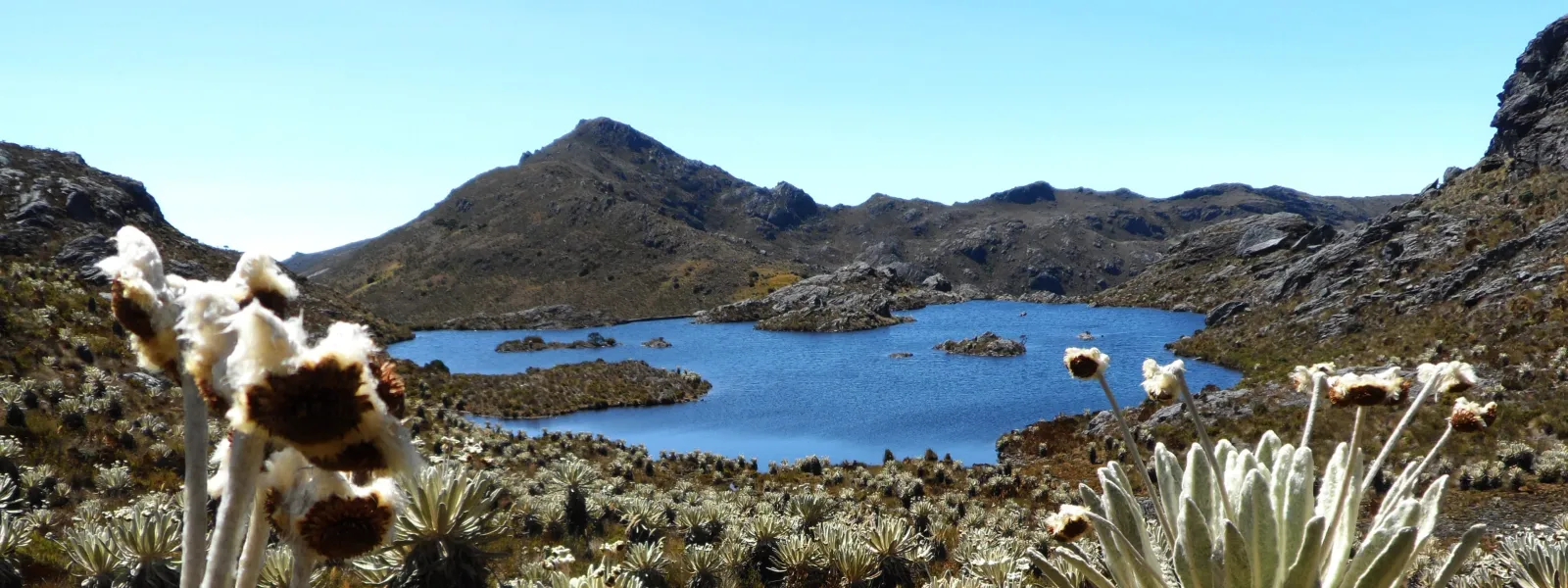
In the Andean region, high-mountain ecosystems known as páramos capture water from the fog and supply it to the lowlands. One such ecosystem is the Santurbán páramo, which provides fresh water to more than two million people in Colombia.
Santurbán, like the other páramos on the continent, also captures large amounts of carbon, making it a key ally in mitigating the climate crisis. It is also a refuge for hundreds of endangered species, including the iconic spectacled bear.
The land in and around the páramo contains gold and other minerals. This has put Santurbán in the spotlight of the multinational mining industry, which for decades has sought to establish large-scale projects in the ecosystem that threaten to degrade it.
The Committee for the Defense of Water and the Santurbán Páramo—a coalition of environmental advocates—has thwarted these ongoing attempts, with support from AIDA and other civil society organizations.
Background
The Santurbán páramo is located in the heart of the Eastern Cordillera of the Colombian Andes, in the departments of Santander and Norte de Santander, at an elevation ranging from 2,200 to 4,290 meters above sea level.
It covers an area of 129,743 hectares and is home to 57 lakes. It serves as a habitat for 457 plant species and 293 species of vertebrate fauna.
There are mineral deposits in Santurbán, primarily gold, but also silver and copper. This explains the region’s mining tradition, particularly in the part of the páramo located in Santander, in the province of Soto Norte. The communities in the area have built their culture and identity around gold mining, which is mainly artisanal and small-scale.
But since the 1990s, the gold deposits in the páramo have also attracted foreign mining conglomerates seeking to develop large-scale projects. This has raised concerns among the population that relies on the Santurbán water sources, who have mobilized in defense of water, their land, and life.
Although national and international regulations prohibit mining in páramos, the Colombian government has granted mining concessions to transnational corporations in Santurbán.

Photo: Keishpixl / Pixabay.
The long struggle to protect the páramo
One of the companies that sought to develop large-scale mining in Santurbán is Eco Oro Minerals Corp.—formerly Greystar Resources—a Canadian company that intended to establish the Angostura open-pit mine there to extract gold and silver. Between 1994 and 1995, the company acquired its mining titles and conducted exploration. And in 2010, it applied for a mining permit.
That was the year AIDA became involved in defending the ecosystem, supporting the Committee for the Defense of Water and the Santurbán Páramo. Our legal work helped convince the Colombian government to deny the mine an environmental permit in May 2011.
In January 2013, the government designated a portion of the páramo (11,700 hectares) as a Regional Natural Park. That year—together with the committee and partner organizations—we carried out a campaign and advocacy efforts to urge the government to recognize the entire Santurbán area as a páramo ecosystem through a delimitation based on scientific criteria. In December 2014, the Ministry of the Environment established a delimitation that protected 76% of the páramo (98,954 hectares).
Furthermore, as a result of a litigation supported by AIDA, in February 2016, Colombia’s highest court reaffirmed that mining in páramos is prohibited.
That same year, in December, the International Finance Corporation (IFC), the World Bank Group’s private sector arm, decided to divest from Eco Oro Minerals. This achievement was the result of a process that began in 2012, when the committee—advised and supported by AIDA and international partner organizations—filed a complaint before an independent accountability mechanism, which concluded that the IFC’s investment in the Angostura project failed to take into account the project’s social and environmental impacts, thereby contradicting the financial institution’s internal policies.
Also in 2016, Eco Oro Minerals filed an arbitration claim against the Colombian government with the International Centre for Settlement of Investment Disputes (ICSID), arguing that it had been adversely affected by government decisions aimed at protecting the country’s páramos, including the delimitation of Santurbán.
In 2017, the Constitutional Court invalidated the delimitation because the affected communities were not consulted. The high court ordered that a participatory delimitation be carried out.
And that year, a new threat to Santurbán emerged when the Canadian multinational Aris Mining applied for an environmental permit for Soto Norte, a gold mining project located near the páramo. Following citizen protests and technical objections, in October 2020, the National Environmental Licensing Authority shelved the project.

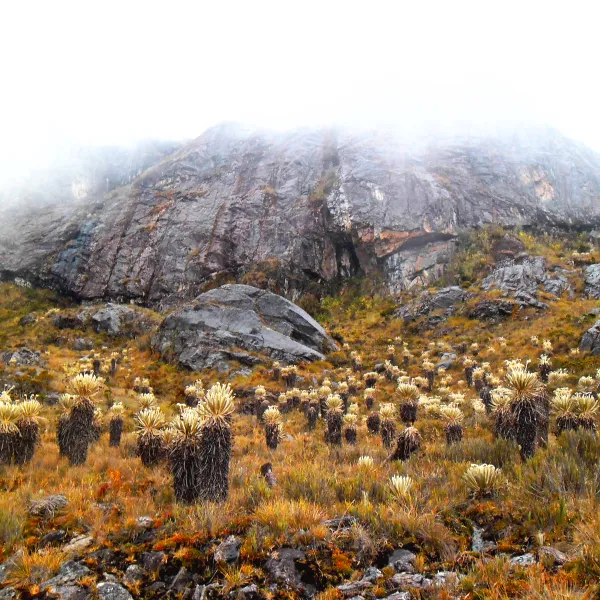
Photo: Aztlec.
Current situation
In March 2025, the Colombian government designated the western flank of the Santurbán massif as a temporary renewable natural resource reserve area, delimiting and protecting an area of 75,344.65 hectares. This resulted in a two-year suspension of the Soto Norte project. However, Aris Mining's contract to formalize Calimineros' small-scale mining activities through the purchase and processing of mineralized material remains in effect.
In addition, the Canadian mining company continues to move the project forward. In September 2025, it released its prefeasibility study, revising the mine’s original design.
Meanwhile, members of the Committee for the Defense of Water and the Santurbán Páramo face threats and stigmatization because of their work. In March 2025, UN Special Rapporteurs and the Working Group on Business and Human Rights denounced these incidents in communications sent to the governments of Colombia, Canada, and the United Arab Emirates, as well as to the companies Aris Mining and MDC Industry Holding Company LLC, the former co-owner of the Soto Norte project.
Regarding the arbitration claim filed by Eco Oro Minerals, in July 2024, ICSID ruled in favor of the Colombian government and rejected the Canadian company’s claim for USD 1.1 billion in compensation.
Concerning the delimitation of Santurbán, in July 2026, the Ministry of the Environment issued a resolution introducing the concept of "progressive delimitation." On that basis, the government proposes to progressively demarcate the páramo, covering 29,199 hectares across 19 municipalities—those where the participatory agreements required by the Constitutional Court in its 2017 ruling have already been finalized. It also proposes two measures on the creation and expansion of reserves to restrict mining in the ecosystem.
Learn more about the impacts of mining on the páramos of Latin America (in Spanish).
Partners:
Related projects
What you need to know about the “loss and damage” of the climate crisis
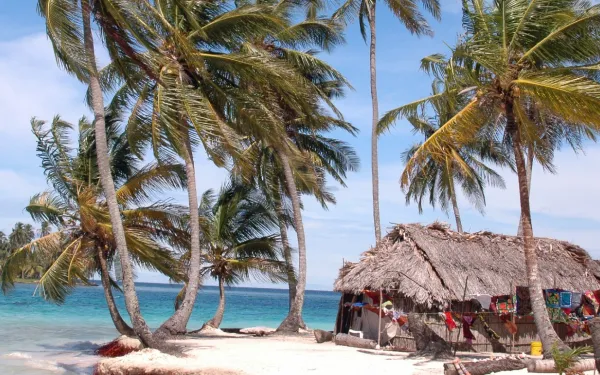
Recent flooding in the southern Brazilian state of Rio Grande do Sul has forced more than 500,000 people from their homes, turning them into climate refugees and causing millions of dollars in crop and livestock losses.Meanwhile, in Panama, some 300 coastal families had to leave Cartí Sugdupu, an island threatened by rising sea levels, and be relocated to a government-built settlement off the Caribbean coast.These types of negative impacts of extreme weather events, which occur despite or because of the lack of mitigation and adaptation measures, are technically referred to as "loss and damage" of the climate crisis.Scientific evidence shows that these losses and damages are already occurring, will increase, and are unevenly distributed, with a disproportionate impact on developing countries and vulnerable groups.This issue - key to international climate negotiations - is closely linked to the concept of climate justice, as it raises the question of who should pay for the losses and damages in the poorest countries, which bear little historical responsibility for the climate emergency.In this text, we address the basic aspects of this issue, which is becoming increasingly relevant and requires urgent action. What counts as loss and damage?Let's start by breaking down the term a little further:"Loss" refers to what is permanently lost due to the climate crisis, such as human and other species’ lives, territories, water sources, ecosystems, livelihoods, cultural heritage, and languages."Damage" refers to what has been affected by the climate crisis but can be restored or rebuilt, such as impacts on physical and mental health, soils, roads, schools, homes, health centers, and businesses. Loss and damage are usually divided into two categories, which may overlap:Economic. Loss and damage can be assigned a monetary value: destruction of assets such as houses or cars, loss of livelihoods such as crops or livestock, reduced productivity due to lost working hours, damage to basic infrastructure or disruption of supply chains. This can occur at the international, national or local level.Non-economic. Loss and damage that is difficult to measure in monetary terms. They include loss of human life, damage to health, the trauma of forced displacement, and impacts on culture, language, heritage, identity, etc. This category also includes the loss or reduction of biodiversity, the extinction of species, and the disruption or loss of ecosystem services, such as the production of oxygen by a forest. In international climate negotiations, however, the term takes on a different meaning. The United Nations Framework Convention on Climate Change refers to efforts to "avert, minimize and address loss and damage associated with climate change impacts, especially in developing countries that are particularly vulnerable to the adverse effects of climate change."The terms "avoid" and "minimize" generally refer to mitigation and adaptation, respectively, while the word "address" refers to actions to deal with the impacts of the climate crisis that could not be avoided. How much money is needed to address loss and damage?Discussions on loss and damage, which address issues such as liability and compensation, have been contentious in international negotiations. Developed countries – historically responsible for most of the greenhouse gases that have warmed the planet – have resisted possible agreements that would hold them accountable and make them pay for the loss and damage their emissions have caused and continue to cause.How big is the bill?According to a report published by the Loss and Damage Collaboration, 55 of the most climate-vulnerable economies will suffer losses of more than $500 billion between 2000 and 2020, and this could increase by a similar amount in the following decade. Other estimates put the annual cost of loss and damage at $400 billion by 2030.In Latin America, according to a 2019 study, losses and damages due to the climate crisis are expected to reach $462 billion by 2050 and could rise to $891 billion by 2070. What is being done to address loss and damage?Although the issue of loss and damage has emerged in international climate negotiations for more than three decades, it only gained momentum in 2013. That year, at the 19th United Nations Climate Change Conference (COP19), countries established the Warsaw International Mechanism on Loss and Damage with a mandate to share knowledge, strengthen dialogue among stakeholders, and mobilize expertise to strengthen action and support on the issue.In 2015, developing countries successfully lobbied for the inclusion of an article on loss and damage in the Paris Agreement (a legally binding international treaty in force since 2016), but the issue of finance was left out.This brings us to the next milestone, which occurred at COP27 in Egypt in 2022, when it was agreed to establish a Loss and Damage Fund to provide financial support to developing countries.A year later, at COP28 in Dubai, the launch of the fund was agreed, including the rules of operation and other key aspects, like an invitation to the World Bank to act as interim manager for the first four years.In June 2024, during the Bonn negotiations, the World Bank accepted the invitation to manage the fund, and discussions began to make it operational.Civil society is calling for loss and damage to be recognized as the third pillar of climate action (alongside mitigation and adaptation), but developed countries are resisting, suggesting that the creation of the fund would be sufficient and even suggesting that loss and damage should not be part of the new global finance goal.While welcome, the existence of the fund is only the first step in making it what is so desperately needed by countries suffering the worst impacts of the climate crisis. Challenges include:Financing. Developed countries have so far pledged US$700 million, less than 0.2% of what is needed ($400 billion).Governance. Among other things, the World Bank must ensure the independence and integrity of the fund's Board and Secretariat, that all countries party to the Paris Agreement have direct access to resources (even if they are not members of the Bank), and that resources are delivered in a sufficient and efficient manner.Participation. The Fund requires a decentralized structure and the participation of civil society, indigenous communities, youth, women and other vulnerable groups from the outset to ensure that the money reaches those who need it.Access. The fund should provide direct access to funding, not only to national authorities, but also to civil society organizations and affected communities.Inventories. Developing countries need to monitor and report losses and damage on their territory, which requires economic and technical resources. Sources- United Nations Environment Programme, "About Loss and damage".- Preety Bhandari, Nate Warszawski, Deirdre Cogan y Rhys Gerholdt, "What Is 'Loss and Damage' from Climate Change? 8 Key Questions, Answered", World Resources Institute.- United Nations, "Loss and Damage: A Moral Imperative to Act".- The Loss & Damage Collaboration, "WHAT IS LOSS AND DAMAGE?".- The London School of Economics and Political Science, "What is climate change ‘Loss and Damage’?".- Navin Singh Khadka, "COP27: what does the concept of 'loss and damage' mean for extreme weather pitting rich and poor countries against each other," BBC Mundo.- Alejandra Cuéllar, "COP27: What are losses and damages, and what do they mean for Latin America?", Climate Tracker.- Adriana Abramovits, “The Loss and Damage Fund, why is it not what civil society expected?”, Dejusticia.
Read more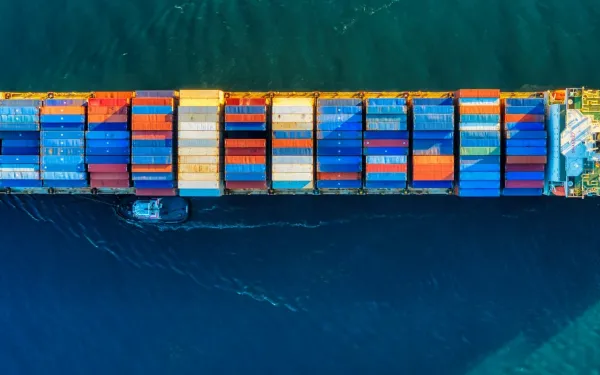
Maritime shipping: what’s being done to reduce emissions?
Maritime transport is the activity of moving goods from one destination to another by sea. It is fundamental to trade and accounts for 80% of global shipping.However, it is also a major source of pollution, particularly greenhouse gases that warm the planet and other pollutants that harm human health.The sector therefore needs to decarbonize its activities by reducing its emissions, both in transport and in the loading and unloading of goods at ports around the world. How many emissions does international shipping produce?Every year, 10 billion tons of cargo are transported by sea, accounting for 2.9% of global greenhouse gas emissions - including carbon dioxide (CO₂) - a percentage close to that of Japan. This is because ships use enormous amounts of oil to move, emitting nearly 1 billion tons of greenhouse gases.The above figures do not include emissions generated at cargo ports, which are not automated and use fossil fuels. The main energy source for ships moving goods around the world is heavy fuel oil, a highly polluting fossil fuel that produces CO₂ emissions that accelerate global warming.In 2023, greenhouse gas emissions from shipping will be 20% higher than they were 10 years ago, according to the United Nations. And projections published by the European Environment Agency indicate that they could reach 17% of global emissions by 2050 if no action is taken to decarbonize the sector.The warming and subsequent melting of the Arctic - the geographic region around the North Pole - is evidence of the impact of shipping emissions on the global climate:According to the Clean Arctic Alliance, the Arctic —one of the world's most important climate regulators— is warming up to four times faster than the rest of the planet.Much of this is due to emissions of black carbon, or soot, from shipping, which is the residue left after heavy fuel is burned on ships.Black carbon is emitted in both gaseous and solid forms. As a gas, it contributes to the greenhouse effect in the atmosphere; as a solid particle, it accelerates the melting of snow and ice. How do ship emissions affect human health?International shipping generates pollutants such as black carbon and particulate matter that affect human health.According to the Barcelona Institute for Global Health, which reviewed 32 studies on shipping emissions, the industry could be responsible for an estimated 265,000 premature deaths worldwide in 2020. This means that 0.5% of global mortality would be associated with its emissions.Although air pollution from shipping is a global problem, it disproportionately affects coastal populations, especially those living near ports and other industrial facilities. Who is responsible for preventing emissions from shipping?The International Maritime Organization (IMO) is the specialized agency of the United Nations responsible for setting standards for safe, efficient, and environmentally sound shipping. In 2023, the 175 countries that make up the IMO agreed to reduce greenhouse gas emissions from industry by 20-30% (compared to 2008) by 2030 and by at least 70% by 2040. The pact is complemented by a target to achieve a zero emissions balance (so that gases released into the atmosphere are neutralized or offset by sinks) by "around 2050."Within this framework, meetings at the IMO in the coming months and until April 2025 will focus on achieving the decarbonization of shipping through a just energy transition.During this period, a range of technical and economic measures will be analyzed and discussed to achieve the objectives of the Ship Emissions Reduction Strategy.The main challenges of these efforts include:Meeting market demand for zero emission fuels in the volume required to power the entire global marine fleet.Bridging the cost gap between fossil fuels and low-emission fuels.Enabling ships to adapt their technology for a rapid transition to cleaner fuels. The process of decarbonizing maritime transport will require the combined efforts of various actors: States, companies, NGOs, and international governance organizations.It is a complex process that involves the entire global shipping chain. For the decarbonization of the sector to be equitable, it is necessary to take into account shared responsibilities as well as the different needs and capacities of countries in the face of the costs of phasing out fossil fuels in maritime transport.It must also consider the impact that global warming is already having on economically and climatically vulnerable countries, such as islands, least developed and developing countries.Sources- International Maritime Organization, "Introduction to the IMO".- Natalie Mueller, "Maritime transport: the forgotten pollution", Barcelona Institute for Global Health.- Michelle Carrere, "Agreements to reduce shipping emissions considered ‘weak’ by environmental organizations", Mongabay.-Paula Mateu, "Maritime transport will reduce emissions by 30% in 2030 but NGOs see it as insufficient", La Vanguardia.
Read more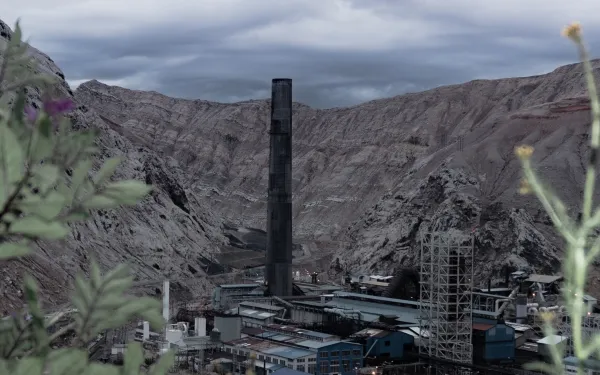
Warning of increased contamination in La Oroya and slow progress by the State to comply with the Inter-American Court ruling
The State's progress in implementing the international court's ruling has been slow and insufficient. Meanwhile, a high level of sulphur dioxide has recently been registered in the Andean city due to the partial reactivation of the metallurgical complex and the lack of prevention, warning, monitoring and control measures by the state. Two months after the Inter-American Court of Human Rights issued its ruling in the case "La Oroya Community vs. Peru," the Inter-American Association for Environmental Defense (AIDA) and the Pro Human Rights Association (APRODEH), organizations that legally represent the victims, warned at a press conference that the Peru is making slow and insufficient progress in effectively complying with the ruling.The ruling, issued on March 22 and considered a landmark in international law, established Peru’s responsibility for violating the rights of La Oroya residents affected by decades of toxic contamination.The international tribunal ordered comprehensive remedial measures, including environmental cleanup, reduction and mitigation of polluting emissions, air quality monitoring, free and specialized medical care, compensation, and a resettlement plan for the affected people. Increased pollution in La OroyaThe organizations also denounced that the government’s slow action is occurring in the midst of an increase in the presence of toxic contamination in the area due to the partial reactivation of the La Oroya Metallurgical Complex and the lack of prevention, warning, monitoring and control measures by the state.According to the Environmental Monitoring System of the Environmental Evaluation and Control Agency, a high presence of sulfur dioxide has recently been recorded in La Oroya, which makes it imperative that Peru take urgent action based on its international responsibility.One of the measures ordered by the Inter-American Court is to ensure that the operations of the La Oroya Metallurgical Complex comply with international environmental standards, preventing and mitigating damage to the environment and human health. Challenges in implementing the rulingDuring the press conference, Rosa Peña, Senior Attorney for AIDA's Human Rights and Environment Program, said: "The ruling is a great opportunity for the State of Peru to prevent and better manage the environmental impacts of mining and metallurgical activities, as well as to improve health care for people exposed to contamination. The Court has already identified the key aspects, now it is up to the State as a whole to ensure a good implementation that will serve as an example for other cases at national and international levels."Christian Huaylinos, coordinator of the legal sector of APRODEH, emphasized the need for an articulated multisectoral work: "A coordinated effort of the three levels of the state—local, regional and national—is needed to advance in the effective compliance of the sentence. In addition, clear mechanisms must be put in place to ensure the effective participation of victims in the implementation of the orders issued by the Court." Community demandsYolanda Zurita, a petitioner in the case, emphasized the community's frustration with the lack of prompt and effective action: "We, as a population, need to feel and see that there is compliance. It is not possible that after 20 years of litigation, and after the Court's ruling has been made public, there are officials who claim to be ignoring the ruling."The Inter-American Court's ruling not only focuses on reparations for direct victims, but also includes restitution measures and guarantees of non-repetition for the entire population of La Oroya and the country. It defines parameters for the proper conduct of mining and metallurgical operations in Peru, in defense of the environment and health.The ruling is an important precedent for the protection of the right to a healthy environment in Latin America and for adequate state oversight of corporate activities.AIDA and APRODEH urge the Peruvian government to comply with the measures ordered by the Inter-American Court and to take immediate action to protect the environment and health of the community of La Oroya.Press contactVíctor Quintanilla-Sangüeza (Mexico), AIDA, [email protected], +52 5570522107
Read more