
Project
Alberto Peña Kay
Protecting the Santurban páramo from mining's damage
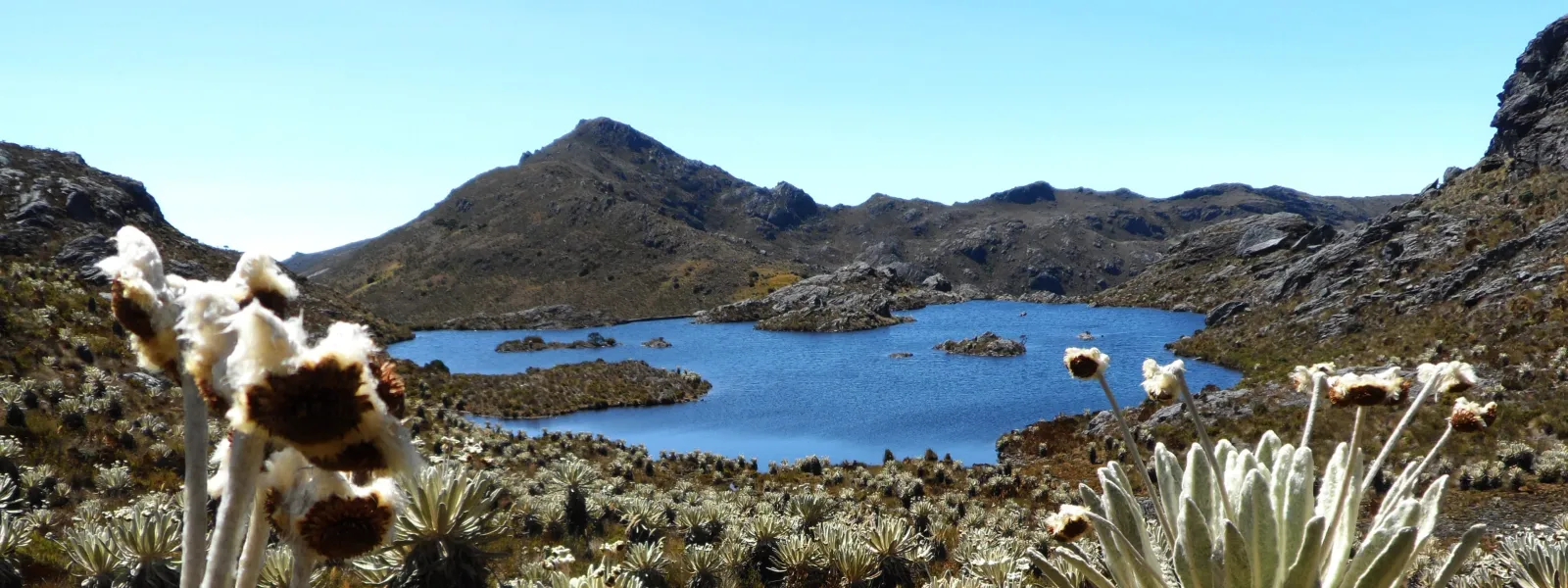
In the Andean region, high-mountain ecosystems known as páramos capture water from the fog and supply it to the lowlands. One such ecosystem is the Santurbán páramo, which provides fresh water to more than two million people in Colombia.
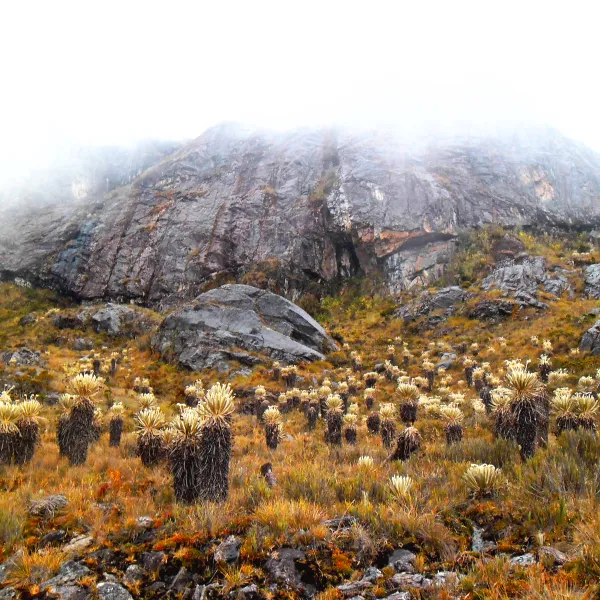
Santurbán, like the other páramos on the continent, also captures large amounts of carbon, making it a key ally in mitigating the climate crisis. It is also a refuge for hundreds of endangered species, including the iconic spectacled bear.
The land in and around the páramo contains gold and other minerals. This has put Santurbán in the spotlight of the multinational mining industry, which for decades has sought to establish large-scale projects in the ecosystem that threaten to degrade it.
The Committee for the Defense of Water and the Santurbán Páramo—a coalition of environmental advocates—has thwarted these ongoing attempts, with support from AIDA and other civil society organizations.
Background
The Santurbán páramo is located in the heart of the Eastern Cordillera of the Colombian Andes, in the departments of Santander and Norte de Santander, at an elevation ranging from 2,200 to 4,290 meters above sea level.
It covers an area of 129,743 hectares and is home to 57 lakes. It serves as a habitat for 457 plant species and 293 species of vertebrate fauna.
There are mineral deposits in Santurbán, primarily gold, but also silver and copper. This explains the region’s mining tradition, particularly in the part of the páramo located in Santander, in the province of Soto Norte. The communities in the area have built their culture and identity around gold mining, which is mainly artisanal and small-scale.
But since the 1990s, the gold deposits in the páramo have also attracted foreign mining conglomerates seeking to develop large-scale projects. This has raised concerns among the population that relies on the Santurbán water sources, who have mobilized in defense of water, their land, and life.
Although national and international regulations prohibit mining in páramos, the Colombian government has granted mining concessions to transnational corporations in Santurbán.

Photo: Keishpixl / Pixabay.
The long struggle to protect the páramo
One of the companies that sought to develop large-scale mining in Santurbán is Eco Oro Minerals Corp.—formerly Greystar Resources—a Canadian company that intended to establish the Angostura open-pit mine there to extract gold and silver. Between 1994 and 1995, the company acquired its mining titles and conducted exploration. And in 2010, it applied for a mining permit.
That was the year AIDA became involved in defending the ecosystem, supporting the Committee for the Defense of Water and the Santurbán Páramo. Our legal work helped convince the Colombian government to deny the mine an environmental permit in May 2011.
In January 2013, the government designated a portion of the páramo (11,700 hectares) as a Regional Natural Park. That year—together with the committee and partner organizations—we carried out a campaign and advocacy efforts to urge the government to recognize the entire Santurbán area as a páramo ecosystem through a delimitation based on scientific criteria. In December 2014, the Ministry of the Environment established a delimitation that protected 76% of the páramo (98,954 hectares).
Furthermore, as a result of a litigation supported by AIDA, in February 2016, Colombia’s highest court reaffirmed that mining in páramos is prohibited.
That same year, in December, the International Finance Corporation (IFC), the World Bank Group’s private sector arm, decided to divest from Eco Oro Minerals. This achievement was the result of a process that began in 2012, when the committee—advised and supported by AIDA and international partner organizations—filed a complaint before an independent accountability mechanism, which concluded that the IFC’s investment in the Angostura project failed to take into account the project’s social and environmental impacts, thereby contradicting the financial institution’s internal policies.
Also in 2016, Eco Oro Minerals filed an arbitration claim against the Colombian government with the International Centre for Settlement of Investment Disputes (ICSID), arguing that it had been adversely affected by government decisions aimed at protecting the country’s páramos, including the delimitation of Santurbán.
In 2017, the Constitutional Court invalidated the delimitation because the affected communities were not consulted. The high court ordered that a participatory delimitation be carried out.
And that year, a new threat to Santurbán emerged when the Canadian multinational Aris Mining applied for an environmental permit for Soto Norte, a gold mining project located near the páramo. Following citizen protests and technical objections, in October 2020, the National Environmental Licensing Authority shelved the project.
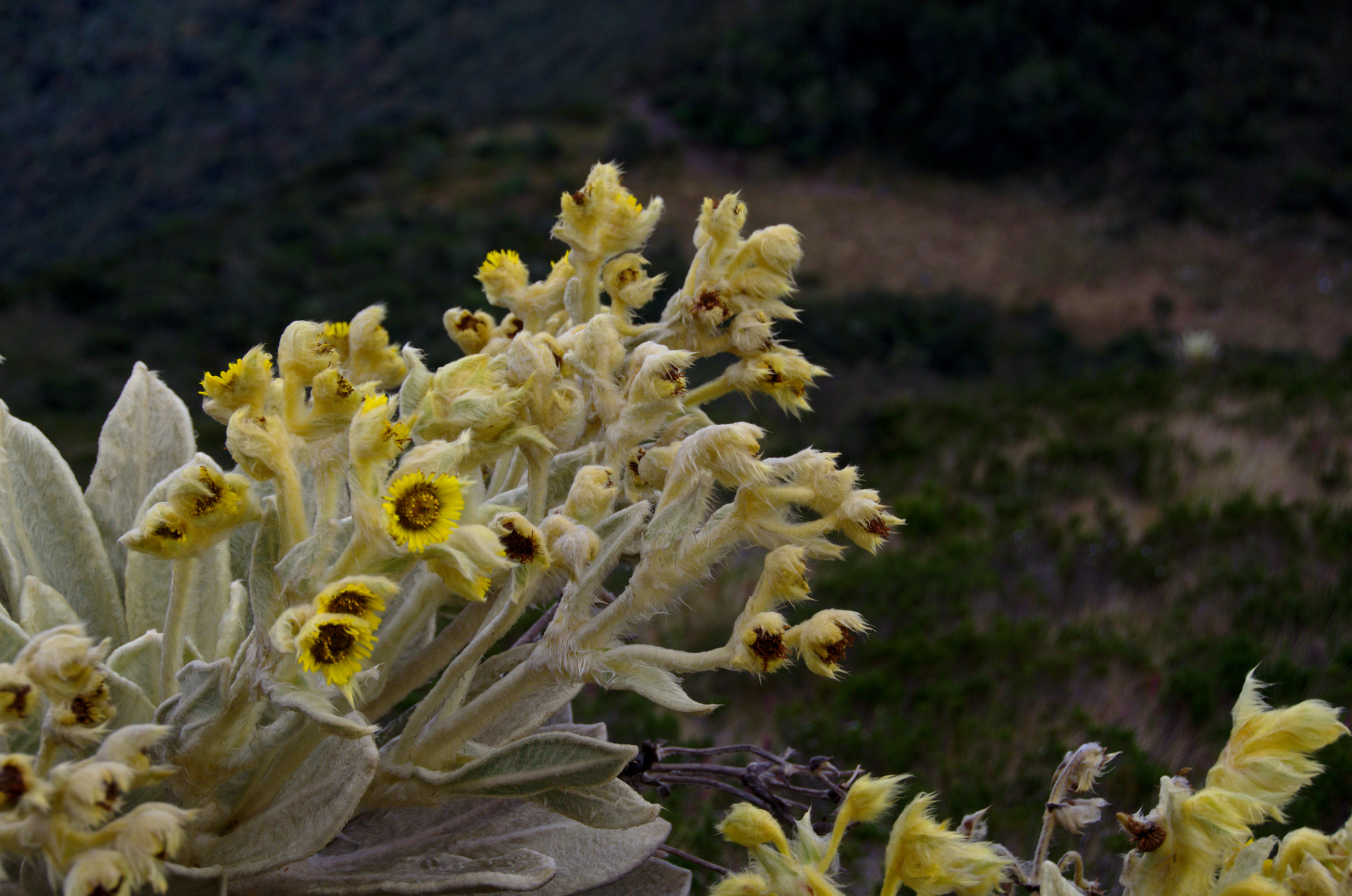
Photo: Aztlec.
Current situation
In March 2025, the Colombian government designated the western flank of the Santurbán massif as a temporary renewable natural resource reserve area, delimiting and protecting an area of 75,344.65 hectares. This resulted in a two-year suspension of the Soto Norte project. However, Aris Mining's contract to formalize Calimineros' small-scale mining activities through the purchase and processing of mineralized material remains in effect.
In addition, the Canadian mining company continues to move the project forward. In September 2025, it released its prefeasibility study, revising the mine’s original design.
Meanwhile, members of the Committee for the Defense of Water and the Santurbán Páramo face threats and stigmatization because of their work. In March 2025, UN Special Rapporteurs and the Working Group on Business and Human Rights denounced these incidents in communications sent to the governments of Colombia, Canada, and the United Arab Emirates, as well as to the companies Aris Mining and MDC Industry Holding Company LLC, the former co-owner of the Soto Norte project.
Regarding the arbitration claim filed by Eco Oro Minerals, in July 2024, ICSID ruled in favor of the Colombian government and rejected the Canadian company’s claim for USD 1.1 billion in compensation.
Concerning the delimitation of Santurbán, in July 2026, the Ministry of the Environment issued a resolution introducing the concept of "progressive delimitation." On that basis, the government proposes to progressively demarcate the páramo, covering 29,199 hectares across 19 municipalities—those where the participatory agreements required by the Constitutional Court in its 2017 ruling have already been finalized. It also proposes two measures on the creation and expansion of reserves to restrict mining in the ecosystem.
Learn more about the impacts of mining on the páramos of Latin America (in Spanish).
Partners:
Related projects
In Peru, a High Court’s Opportunity to Combat Oil Spills in the Amazon
In 2014, 2500 barrels of oil flowing through the Norperuano Pipeline in the heart of the Amazon leaked in the Cuninico River. For native communities, the consequences of the spill persist to this day, affecting the life and integrity of the people of San Francisco, Nueva Esperanza, Cuninico and Santa Rosa, who are still struggling to find clean water to grow their crops. In 2018, accompanied by the Instituto de Defensa Legal, they filed an injunction (known as an amparo in Peruvian courts) in an effort to prevent further spills, calling for the maintenance of the Norperuano Pipeline. Currently, their case is before the Constitutional Court of Peru, which has an unprecedented opportunity to stop oil spills in the Peruvian Amazon and, with them, prevent the systematic violation of the rights of the indigenous peoples who live there. The Court could do both by ruling in the favor of the petitioners and ordering state-owned oil company Petroperu to perform maintenance on the pipeline. AIDA supported the case with an amicus brief detailing the international obligation of the Peruvian state to guarantee the adoption of the necessary measures—administrative, legal, political and cultural—to protect the rights to a dignified life and a healthy environment. A systematic problem with oil infrastructure Sadly, what happened in the Cuninico basin is not a one-time occurrence; it is a systematic problem facing oil infrastructure in the Amazon. Oil spills in the Peruvian Amazon are putting entire families and communities at risk: compromising food security, contaminating ecosystems, and affecting the cosmovision and ways of life of the Amazonian peoples. According to The Shadow of Oil, an OXFAM report from 2020, 65 percent of the 474 spills that occurred in Amazonian oil fields and from the Norperuvian Pipeline between 2000 and 2019—affecting the territory of 41 indigenous communities—were due to pipeline corrosion and operational failures; only 28 percent were caused by third parties. Complementary data from the Organismo de Evaluación y Fiscalización Ambiental and the Organismo Supervisor de la Inversión en Energía y Minería—both public entities—confirm that, for the most part, oil spills derive mainly from a lack of supervision and oversight by the State and the absence of due diligence by the companies. It’s evident that the responsibility for the vast majority of spills lies with the operating companies. This has generated a structural scenario of threats and violations to the human and environmental rights of Peru’s ancestral populations. Broader causes of the continuous oil spills in Peru include a dependence on the extraction of fossil fuels, the lack of maintenance of facilities, institutional weakness, and gaps in corporate responsibility. Strategic litigation: a way forward The courts in the region have been, on many occasions, valuable actors in the protection of the right to a healthy environment and human rights more broadly. In Colombia, courts have prevented the advancement of several projects that were implemented without prior consultation, affecting the rights of indigenous peoples. In Mexico, courts have recognized the rights of indigenous communities to participate in the use and administration of minerals in the subsoil of their territory. In Ecuador, the Constitutional Court (Ecuador's highest court) ordered the Ministry of Environment to remedy the damages caused by palm oil plantations and to take measures to control and mitigate future and potential damages. Now it’s the turn of Peru’s Constitutional Court to defend these rights by moving to protect the Amazon from future oil spills. Undoubtedly, a positive decision would be an important regional precedent for the protection of the Amazon, an indispensable ecosystem. The Amazon region is majestic. Stretching over 2.7 million square miles, it is the largest tropical forest on the planet and is home to at least 10 percent of known biodiversity, much of it endemic. Since ancestral times, it has been home to more than 470 indigenous peoples, quilombolos and traditional communities; among its trees and rivers you can hear more than 86 languages and 650 different dialects. The Amazon is a vital ecosystem in times of climate crisis. It functions as a large carbon sink that stores between 90 and 140 billion metric tons of carbon dioxide, one of the most important greenhouse gases that, if released, would further accelerate climate change. What happened in Peru highlights the importance of strategic litigation to preserve the Amazon as a key ecosystem to confront climate crisis, and to defend the peoples that call it home.
Read more
What you should know about the trinational alert to save the Pantanal from wildfires
In recent years, fires have seriously damaged and endangered the largest freshwater wetland in the world, the Pantanal, which sits at the shared border of Brazil, Bolivia and Paraguay. Given the urgency of the situation, civil society organizations alerted the Secretariat of the Ramsar Convention, the intergovernmental treaty for the protection of wetlands, about the damages to the Pantanal and requested its support in the search for solutions. In the current context of climate crisis, the protection of key ecosystems like wetlands and the curbing of large carbon dioxide emissions caused by forest fires is an urgent task. Here's what you need to know about the crisis facing the Pantanal wetlands and recent efforts to bring about their recovery through transboundary cooperation. An epicenter of biodiversity at risk In its nearly 20 million hectares, the Pantanal is home to species of at least 3,500 plants, 600 birds, 150 mammals, 175 reptiles, 40 amphibians and 300 freshwater fish. Some of these species are endangered in other regions. It is home to the highest concentration of jaguars and caimans in the Americas. The destructive force of fire In 2019 and 2020, the Pantanal burned at an unprecedented rate. In 2020, fires devastated 4 million 300 thousand hectares of the Pantanal region, the highest number recorded since 1998. That same year, 100 percent of Brazil's Pantanal Matogrossense National Park burned. Fires there have become a transboundary problem. Aggravating the global climate crisis In addition to the loss of forests, the death of animals and the direct impact on the health and livelihoods of local communities, fires in the Pantanal aggravate the climate crisis. A study published by the Brazilian Academy of Sciences estimates that the 2020 fires in the Pantanal region of that country released around 115 million tons of carbon dioxide into the atmosphere, more than 20 percent of the carbon dioxide emissions generated in Colombia during that same year. International alert for urgent measures On February 2, World Wetlands Day, AIDA—together with the Center for Biological Diversity and Ecologia e Ação (ECOA)—requested the Ramsar Convention Secretariat to send an advisory mission to six Pantanal wetlands located in Bolivia, Brazil and Paraguay. The organizations also requested that the sites, considered internationally important under the treaty, be inscribed on the Montreux Record, the global list of wetlands at serious risk. They urged the three governments to implement measures to preserve the Pantanal as a transboundary ecosystem. Specialized support for rescue "The advisory mission consists of a visit by international experts who would provide highly specialized recommendations to Brazil, Bolivia and Paraguay to overcome the conditions that generate risk for the conservation and wise use of the Pantanal, as well as to develop innovative management and protection measures," explained AIDA attorney Claudia Velarde. The inscription of the sites on the Montreux Record implies financial assistance, as well as support and technical advice, for the recovery of the Pantanal in the three countries. In July 2021, in the Brazilian state of Mato Grosso alone, the burned area of the Pantanal was five times larger than that of São Paulo. With appropriate and timely actions, it may be possible to prevent the degradation of the ecosystem from recurring in June and July of this year, when forest fires season begins. The alert represents an important opportunity for the countries that share the Pantanal to manage its ecological wealth in a collaborative and sustainable manner, joining efforts for its preservation.
Read more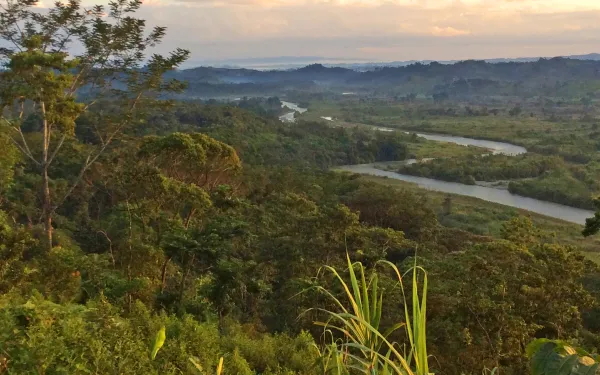
Indigenous victory as development bank withdraws investment and drafts exit plan following rights violation in Guatemala
In a historic advance, the Inter-American Development Bank has designed a responsible exit plan to accompany their divestment from two controversial large dams in the Yichk'isis micro-region of Guatemala. Affected Mayan communities celebrate the decision, a response to their 2018 complaint, while acknowledging that the Bank has several challenges left to confront. Washington, DC, U.S.A. The Inter-American Development Bank (IDB) announced its decision to withdraw financing from the San Mateo and San Andrés hydroelectric projects, run by the company Energía y Renovación S.A. in the micro-region of Yichk'isis (Ixquisis) in northern Guatemala. The Bank designed a responsible exit and institutional strengthening plan to address the weaknesses the case revealed. The Bank’s decision stems from a complaint affected Mayan communities filed in 2018 before the IDB Group's Independent Consultation and Investigation Mechanism (MICI, for it’s Spanish initials). In resolving the complaint, the accountability office concluded that IDB Invest failed to comply with the bank’s operational policies and safeguards in the framework of project financing, and opened the possibility of a withdrawal of investment. "It’s an opportunity for the bank to take into account the lessons learned from the case: among them the relevance of understanding the local contexts of projects, the socio-cultural dynamics of the populations that will be directly affected, and the local perspective of development to determine the viability of the financing," says Liliana Avila, senior attorney of the Human Rights and Environment Program of the Interamerican Association for Environmental Defense (AIDA). "It is also an opportunity for the bank to strengthen the monitoring and supervision of the projects it supports in order to prevent non-compliance.” The divestment was finalized in October 2021, when IDB Invest and Energía y Renovación S.A. signed settlement agreements. Notably, this is the first time that the IDB Group, as a result of a complaint, has drawn up a plan to make its exit responsible. However, there are still challenges and pending issues that the financial institution must address in the process of exiting hydroelectric projects. "In order to prepare the responsible exit plan, IDB Invest must carry out consultation processes with the affected communities, which will largely define the plan's capacity to effectively address and offer viable solutions to the damages recognized in the MICI report, such as the increase in conflict, the lack of knowledge of the existence of indigenous peoples and their rights, the effects on ancestral cultural heritage, the differentiated impacts on women and the lack of prevention and consequent environmental degradation," said Carolina Juaneda, of the Bank Information Center. "If these issues are not addressed and included in the responsible exit plan, all this effort will not have been worthwhile since, ultimately, it will not lead to any improvement or reconstitution of living conditions for the affected people and the environment." The action plan proposed by the entity establishes that IDB Invest will create a transition plan translated into the native languages of the affected communities, as well as a gender-differentiated impact assessment, and an investment to promote financial inclusion and women's empowerment in the area. In addition, the plan contains actions to address MICI's recommendations for structural changes at the institutional level. In this regard, the bank plans to strengthen the environmental and social safeguards unit of IDB Invest in the area of indigenous peoples, as well as to establish a zero tolerance policy for gender-based violence, which will be included in the contractual conditions of operations approved by the bank. Existing protocols will include tools to follow up on acts of violence associated with projects financed by IDB Invest. Regarding the categorization of projects, an update will be made so that the internal supervision classification will be modified to a higher one when circumstances are identified that raise the risks and impacts of a project after its financing was approved. "The bank's responsibility in the investment process and in the non-compliance with its social and environmental safeguards is evident; therefore, it must promote during the exit process the effectiveness of the actions in a participatory manner, free of manipulation and in an inclusive manner with the community to reduce the risks of re-victimization and violation of the affected population," indicates Mara Bocaletti, Director of the International Platform against Impunity. "This experience is a first step to maximize the benefits in the territories so as to make amends for the damage caused." The communities submitted their complaint to MICI in August 2018 with the accompaniment of AIDA, the International Platform against Impunity and the Plurinational Ancestral Government of the Akateko, Chuj, Q'anjob'al and Popti' Native Nations. In it, they requested that IDB Invest withdraw its investment due to the damage that the implementation of the projects has caused to the environment, indigenous peoples and women of Ixquisis. In September 2021, the IDB Group Board of Directors approved the MICI report, which concluded that IDB Invest failed to comply with its own operational policies and safeguards for at least five reasons: 1) validating an inadequate characterization of the affected population, which denied the existence of indigenous peoples; 2) failing to verify the completion of an identification of gender-differentiated impacts on women; 3) failing to ensure that the client made an adequate identification and management of environmental impacts; 4) failing to ensure that the communities were properly informed and consulted; and 5) failing to carry out adequate monitoring of local conflict risks that could be generated in the area because of the projects. "The MICI report confirms that IDB Invest failed to comply with its policies, generating adverse impacts on the lives of the communities. The company Energía y Renovación did not act with due diligence in the framework of its operations and, on the contrary, has implemented strategies contrary to the respect of human rights. Currently, several indigenous authorities and human rights defenders are criminalized, making undeniable the continued risk for the communities," says Rigoberto Juárez, General Coordinator of the Plurinational Ancestral Government. "Given this evidence, it’s important that IDB Invest guarantee actions aimed at repairing the damages caused to the communities in the framework of the financing of these projects, and more strongly recognize its responsibility." press contacts: Victor Quintanilla (México), AIDA, [email protected], +521 5570522107 Camila Castellanos, Plataforma Internacional contra la Impunidad, [email protected]
Read more