
Project
Alberto Peña Kay
Protecting the Santurban páramo from mining's damage
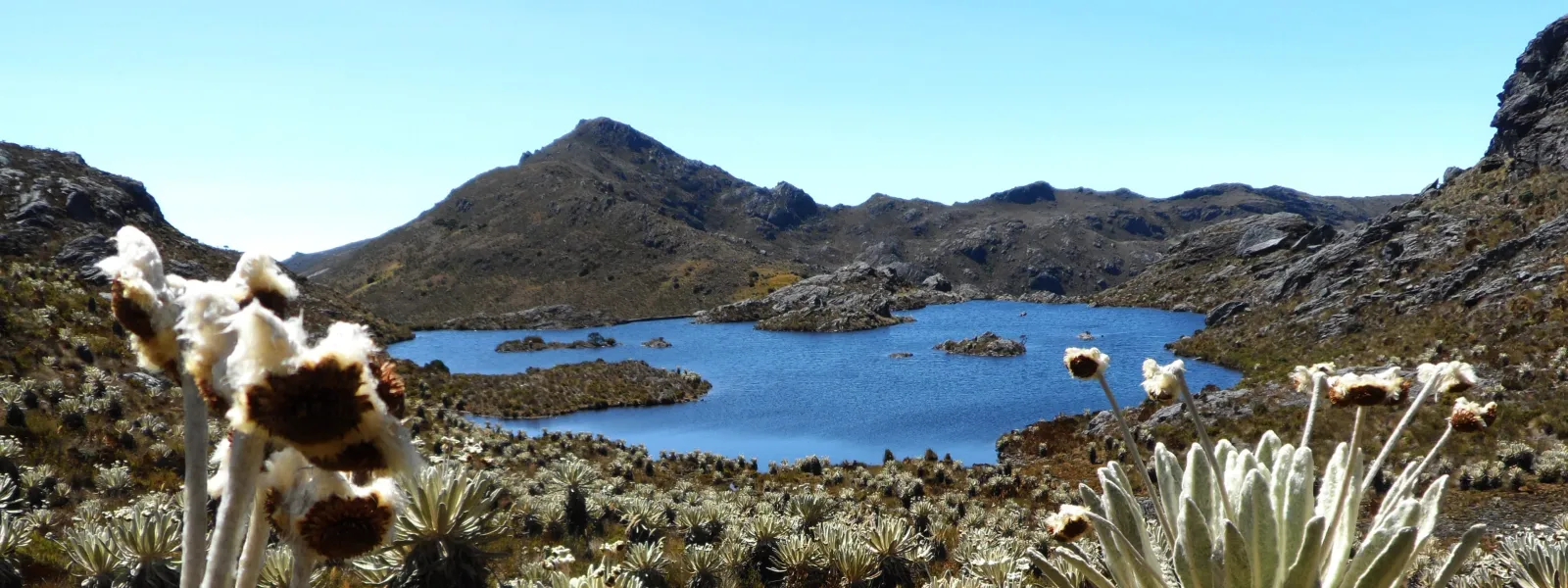
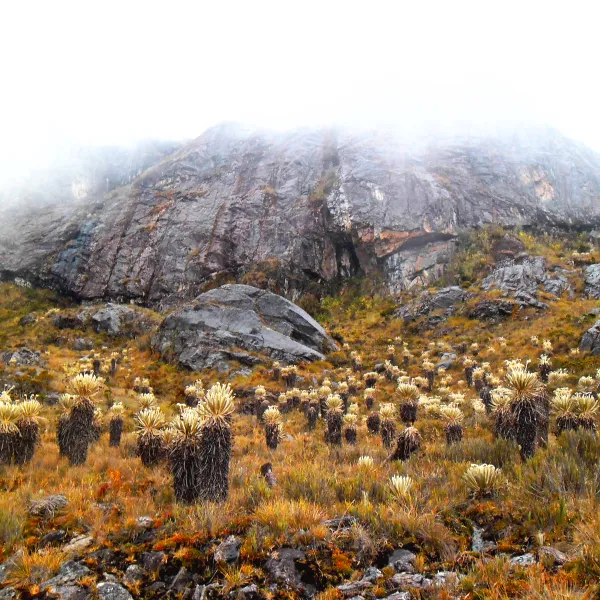
In the Andean region, high-mountain ecosystems known as páramos capture water from the fog and supply it to the lowlands. One such ecosystem is the Santurbán páramo, which provides fresh water to more than two million people in Colombia.
Santurbán, like the other páramos on the continent, also captures large amounts of carbon, making it a key ally in mitigating the climate crisis. It is also a refuge for hundreds of endangered species, including the iconic spectacled bear.
The land in and around the páramo contains gold and other minerals. This has put Santurbán in the spotlight of the multinational mining industry, which for decades has sought to establish large-scale projects in the ecosystem that threaten to degrade it.
The Committee for the Defense of Water and the Santurbán Páramo—a coalition of environmental advocates—has thwarted these ongoing attempts, with support from AIDA and other civil society organizations.
Background
The Santurbán páramo is located in the heart of the Eastern Cordillera of the Colombian Andes, in the departments of Santander and Norte de Santander, at an elevation ranging from 2,200 to 4,290 meters above sea level.
It covers an area of 129,743 hectares and is home to 57 lakes. It serves as a habitat for 457 plant species and 293 species of vertebrate fauna.
There are mineral deposits in Santurbán, primarily gold, but also silver and copper. This explains the region’s mining tradition, particularly in the part of the páramo located in Santander, in the province of Soto Norte. The communities in the area have built their culture and identity around gold mining, which is mainly artisanal and small-scale.
But since the 1990s, the gold deposits in the páramo have also attracted foreign mining conglomerates seeking to develop large-scale projects. This has raised concerns among the population that relies on the Santurbán water sources, who have mobilized in defense of water, their land, and life.
Although national and international regulations prohibit mining in páramos, the Colombian government has granted mining concessions to transnational corporations in Santurbán.
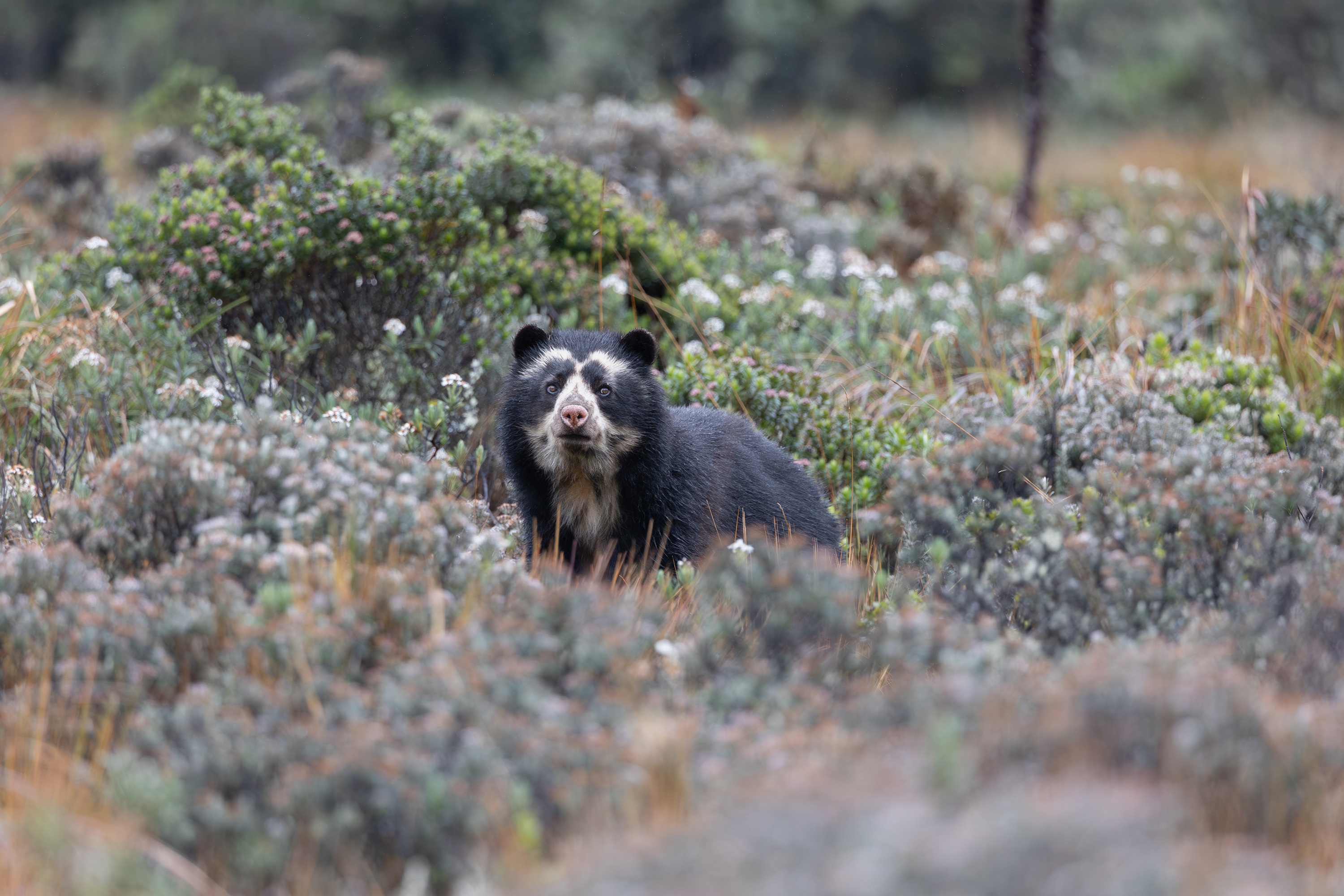
Photo: Keishpixl / Pixabay.
The long struggle to protect the páramo
One of the companies that sought to develop large-scale mining in Santurbán is Eco Oro Minerals Corp.—formerly Greystar Resources—a Canadian company that intended to establish the Angostura open-pit mine there to extract gold and silver. Between 1994 and 1995, the company acquired its mining titles and conducted exploration. And in 2010, it applied for a mining permit.
That was the year AIDA became involved in defending the ecosystem, supporting the Committee for the Defense of Water and the Santurbán Páramo. Our legal work helped convince the Colombian government to deny the mine an environmental permit in May 2011.
In January 2013, the government designated a portion of the páramo (11,700 hectares) as a Regional Natural Park. That year—together with the committee and partner organizations—we carried out a campaign and advocacy efforts to urge the government to recognize the entire Santurbán area as a páramo ecosystem through a delimitation based on scientific criteria. In December 2014, the Ministry of the Environment established a delimitation that protected 76% of the páramo (98,954 hectares).
Furthermore, as a result of a litigation supported by AIDA, in February 2016, Colombia’s highest court reaffirmed that mining in páramos is prohibited.
That same year, in December, the International Finance Corporation (IFC), the World Bank Group’s private sector arm, decided to divest from Eco Oro Minerals. This achievement was the result of a process that began in 2012, when the committee—advised and supported by AIDA and international partner organizations—filed a complaint before an independent accountability mechanism, which concluded that the IFC’s investment in the Angostura project failed to take into account the project’s social and environmental impacts, thereby contradicting the financial institution’s internal policies.
Also in 2016, Eco Oro Minerals filed an arbitration claim against the Colombian government with the International Centre for Settlement of Investment Disputes (ICSID), arguing that it had been adversely affected by government decisions aimed at protecting the country’s páramos, including the delimitation of Santurbán.
In 2017, the Constitutional Court invalidated the delimitation because the affected communities were not consulted. The high court ordered that a participatory delimitation be carried out.
And that year, a new threat to Santurbán emerged when the Canadian multinational Aris Mining applied for an environmental permit for Soto Norte, a gold mining project located near the páramo. Following citizen protests and technical objections, in October 2020, the National Environmental Licensing Authority shelved the project.
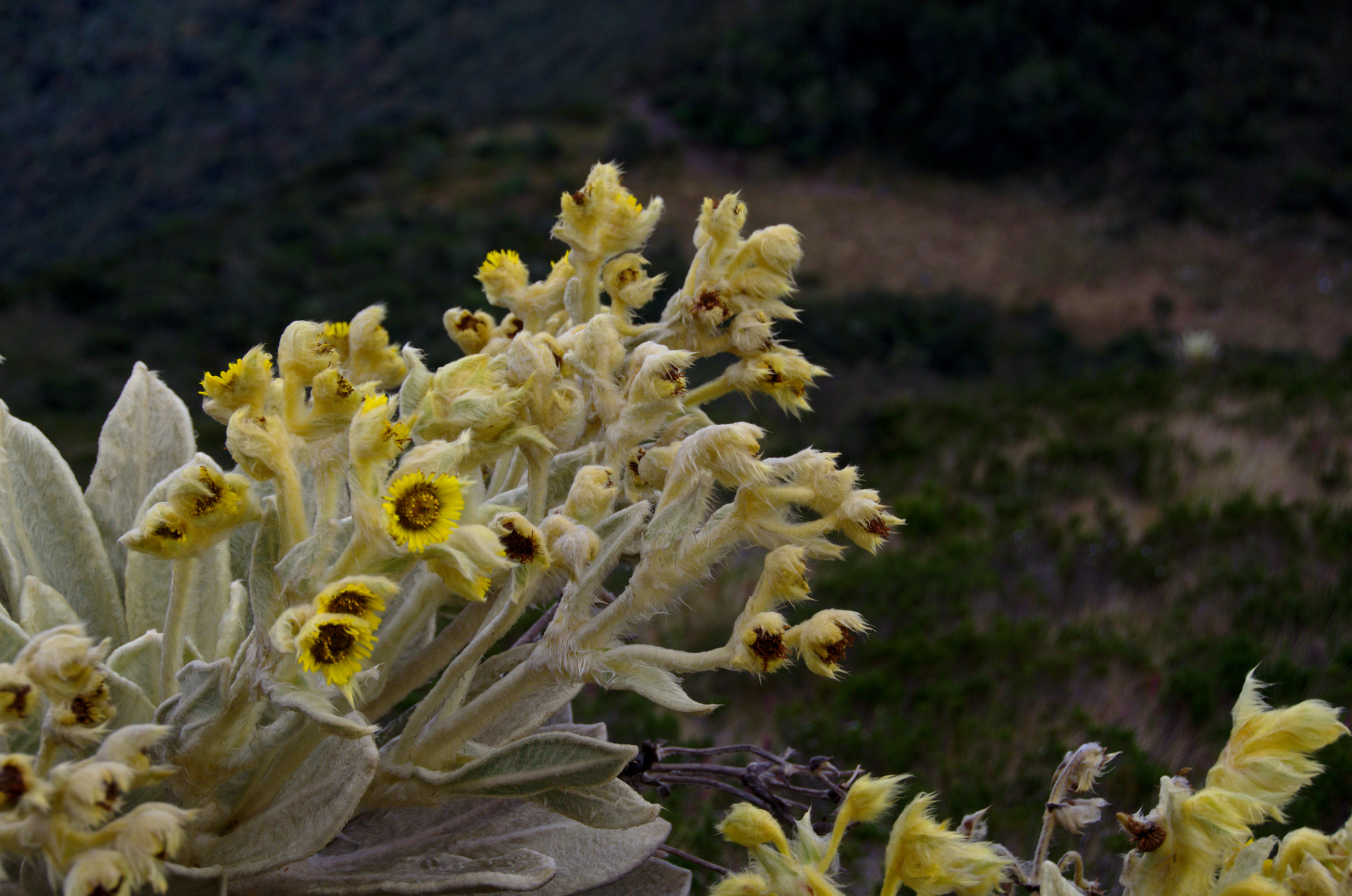
Photo: Aztlec.
Current situation
In March 2025, the Colombian government designated the western flank of the Santurbán massif as a temporary renewable natural resource reserve area, delimiting and protecting an area of 75,344.65 hectares. This resulted in a two-year suspension of the Soto Norte project. However, Aris Mining's contract to formalize Calimineros' small-scale mining activities through the purchase and processing of mineralized material remains in effect.
In addition, the Canadian mining company continues to move the project forward. In September 2025, it released its prefeasibility study, revising the mine’s original design.
Meanwhile, members of the Committee for the Defense of Water and the Santurbán Páramo face threats and stigmatization because of their work. In March 2025, UN Special Rapporteurs and the Working Group on Business and Human Rights denounced these incidents in communications sent to the governments of Colombia, Canada, and the United Arab Emirates, as well as to the companies Aris Mining and MDC Industry Holding Company LLC, the former co-owner of the Soto Norte project.
Regarding the arbitration claim filed by Eco Oro Minerals, in July 2024, ICSID ruled in favor of the Colombian government and rejected the Canadian company’s claim for USD 1.1 billion in compensation.
Concerning the delimitation of Santurbán, in July 2026, the Ministry of the Environment issued a resolution introducing the concept of "progressive delimitation." On that basis, the government proposes to progressively demarcate the páramo, covering 29,199 hectares across 19 municipalities—those where the participatory agreements required by the Constitutional Court in its 2017 ruling have already been finalized. It also proposes two measures on the creation and expansion of reserves to restrict mining in the ecosystem.
Learn more about the impacts of mining on the páramos of Latin America (in Spanish).
Partners:
Related projects
Mining Arc threatens majestic lands of Southern Venezuela
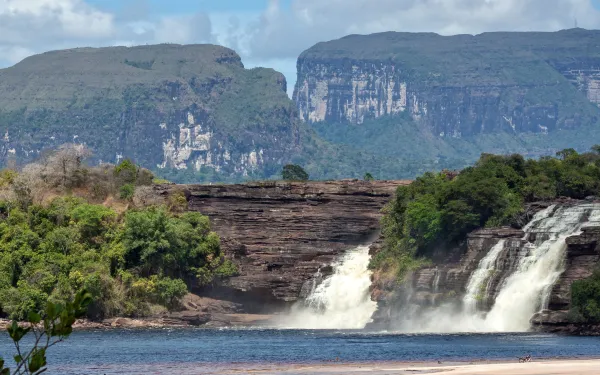
For decades, one of the greatest socio-ecological tragedies in Latin America has been developing in Venezuela. Small-scale gold mining is inflicting irreversible damage to one of the continent’s most biodiverse natural areas. It’s happening South of the Orinoco River, amidst majestic waterfalls, impressive mesas, and long-established indigenous communities. Despite its major impacts on the states of Amazonas and Bolívar, mining there has advanced rather silently. Up until a few years ago, not many researchers were even paying attention. The situation changed in 2011, when then-President Hugo Chavez announced the creation of the Orinoco Mining Arc National Strategic Development Zone, a project finalized five years later through a presidential decree. Photo: Bram Ebus / Infoamazonía. Mining’s large-scale damages The Orinoco Mining Arc involves permitting undefined mining activities in 111,843 square kilometers of territory—an area larger than Guatemala and almost twice the size of the Orinoco Oil Belt. Its implementation has legitimized and exacerbated the damages of small-scale mining, chief among them water pollution, deforestation and the destruction of fertile soils. The project also aims to develop large-scale mining in this mega-diverse region. Now, independent researchers like Carlos Eduardo Pacheco and others, hailing from organizations such as the Venezuelan Society of Ecology and Provita, warn of the huge damages that may occur due to the nation’s lack of environmental regulation. Thanks to their studies, additional research, and an analysis of satellite images, we know that: in the area around the Mining Arc there exist at least five or six large pockets of deforestation, and hundreds of smaller ones; the Caroní and Ikabarú river basins are being destroyed; and damages have reached Caura and Canaima National Parks, as well as the territories of the Pemón, Yekuana, Akawayo and Yanomami indigenous people, among others. The consequences, the researchers warn, are not only ecological; they are social as well. There has been a mass exodus from major cities, people fleeing poverty and heading to the Mining Arc to seek economic opportunity. Photo: Bram Ebus / Infoamazonía. In addition, mining activity has lead to multiple reports of human trafficking, prostitution, drug trafficking, extortion, murder, and the presence of both paramilitary groups and guerillas from Colombia. Many of the mining projects in the zone are under the control of a mafia known as “Pranato Minero,” whose leaders are relatively unknown. Increased mining has also caused serious harms to the health of informal miners and their families due to the use of mercury. Statistics from the Ministry of People’s Power for Health demonstrate a strong increase in mortality—at least 500 percent between 2002 and 2013 in municipalities close to the Arc, including Sifontes, El Callao, Cedeño and Roscio. And large-scale transnational mining hasn’t been left out of the picture. Even Canadian companies that recently sued Venezuela for controversies related to their investments have returned as partners in the mining exploitation of Orinoco. Raising awareness of Orinoco In all this development, where is the social and environmental responsibility? There seems to be no place for accountability in Venezuela, a nation with non-existent institutions and inapplicable laws. We must to ask what we can do, as members of civil society, in the face of this latest chronicle of deforestation, mercury contamination, and outright destruction of the natural world of Southern Venezuela. At AIDA, we’re doing what we can by providing technical and scientific support to the Venezuelan organizations studying the Mining Arc’s development. By supporting them, we’re working to raise awareness of the issue and put one of the most serious social and environmental attacks in the region in the public eye.
Read more
Six advances for Latin America’s reefs in 2018
In 2018, we joined people and organizations around the world in celebrating the International Year of the Reef. AIDA was part of a global movement to increase awareness of the value of reefs and the threats they’re facing. To advance reef conservation in the Americas, we took part in a variety of legal actions to protect reefs in Mexico and the Caribbean. As always, we’re proud to celebrate the small victories we’ve achieved on the road to environmental justice in 2018. Together with our supporters and allies we: Supported a case in defense of the Veracruz Reef In February, we presented an amicus brief in support of an amparo filed by local residents against the expansion of the Port of Veracruz. We outlined how Mexico’s approval of the project in 2013 violated the nation’s international environmental and human rights commitments. Just a year earlier, the government had reduced the area of the reef system, changing its boundaries to make the project viable. At the time of authorization, adequate scientific information was not available to understand how to avoid damaging the reefs and protect the services they provide to the people of Veracruz. To raise awareness of the issue, we also co-produced a documentary, Battle for the Reefs of Veracruz. Alerted the Ramsar Convention to threats to Puerto Morelos Reef We sent an Urgent Alert to the Secretariat of the Ramsar Convention, alerting them to the threats to Puerto Morelos Reef National Park, a national protected area and Wetland of International Importance. Together with a coalition of civil society organizations, we solicited a visit of international experts to evaluate the risks facing the site, particularly changes in land use in coastal ecosystems due to massive and unsustainable tourism development. Created a Working Group on Threats to Mexico’s Wetlands In May, the Working Group on Threats was created within the National Wetlands Committee, which AIDA helped create in order to motivate Mexico to comply with its obligations to protect at-risk wetlands of international importance. Within the framework of this Group, efforts are being made to strengthen national actions to protect Ramsar ecosystems, including reefs and the herbivorous fish that make their home in them. Supported the protection of 10 species of parrotfish in Mexico’s Caribbean In October we presented a letter of support outlining international environmental and human rights arguments for the inclusion of 10 species of parrotfish on Mexico’s national list of at-risk species. While the inclusion has been acknowledged and accepted, official confirmation is expected early this year. Our efforts supported a proposal of the Health Reefs Initiative that seeks to legally protect parrotfish species, which are critical to maintaining a healthy coral reef ecosystem. Parrotfish and other herbivorous fish feed on algae that compete with corals for light and oxygen, thus enabling the reef to flourish. Helped Establish a Working Group on Corals in Costa Rica In coordination with the Ministry of Environment, we helped organize a working group of academic experts, members of civil society and competent governmental authorities that will propose comprehensive solutions to the problems facing the country’s coral ecosystems. Together we will work to ensure integral solutions to protect Costa Rica’s coral reefs. Supported a Working Group on Herbivorous Fish in Guatemala In coordination with the Healthy Reefs Initiative, academics from San Carlos University and members of the government, we’ve supported the creation of a working group to draft a technical-scientific document that outlines the information necessary for a ministerial decree to prohibit the fishing of herbivorous fish in the Guatemalan Caribbean and, thus, protect the nation’s reefs.
Read moreSix advances for Latin America’s reefs in 2018
In 2018, we joined people and organizations around the world in celebrating the International Year of the Reef. AIDA was part of a global movement to increase awareness of the value of reefs and the threats they’re facing. To advance reef conservation in the Americas, we took part in a variety of legal actions to protect reefs in Mexico and the Caribbean. As always, we’re proud to celebrate the small victories we’ve achieved on the road to environmental justice in 2018. Together with our supporters and allies we: Supported a case in defense of the Veracruz Reef In February, we presented an amicus brief in support of an amparo filed by local residents against the expansion of the Port of Veracruz. We outlined how Mexico’s approval of the project in 2013 violated the nation’s international environmental and human rights commitments. Just a year earlier, the government had reduced the area of the reef system, changing its boundaries to make the project viable. At the time of authorization, adequate scientific information was not available to understand how to avoid damaging the reefs and protect the services they provide to the people of Veracruz. To raise awareness of the issue, we also co-produced a documentary, Battle for the Reefs of Veracruz. Alerted the Ramsar Convention to threats to Puerto Morelos Reef We sent an Urgent Alert to the Secretariat of the Ramsar Convention, alerting them to the threats to Puerto Morelos Reef National Park, a national protected area and Wetland of International Importance. Together with a coalition of civil society organizations, we solicited a visit of international experts to evaluate the risks facing the site, particularly changes in land use in coastal ecosystems due to massive and unsustainable tourism development. Created a Working Group on Threats to Mexico’s Wetlands In May, the Working Group on Threats was created within the National Wetlands Committee, which AIDA helped create in order to motivate Mexico to comply with its obligations to protect at-risk wetlands of international importance. Within the framework of this Group, efforts are being made to strengthen national actions to protect Ramsar ecosystems, including reefs and the herbivorous fish that make their home in them. Supported the protection of 10 species of parrotfish in Mexico’s Caribbean In October we presented a letter of support outlining international environmental and human rights arguments for the inclusion of 10 species of parrotfish on Mexico’s national list of at-risk species. While the inclusion has been acknowledged and accepted, official confirmation is expected early this year. Our efforts supported a proposal of the Health Reefs Initiative that seeks to legally protect parrotfish species, which are critical to maintaining a healthy coral reef ecosystem. Parrotfish and other herbivorous fish feed on algae that compete with corals for light and oxygen, thus enabling the reef to flourish. Helped Establish a Working Group on Corals in Costa Rica In coordination with the Ministry of Environment, we helped organize a working group of academic experts, members of civil society and competent governmental authorities that will propose comprehensive solutions to the problems facing the country’s coral ecosystems. Together we will work to ensure integral solutions to protect Costa Rica’s coral reefs. Supported a Working Group on Herbivorous Fish in Guatemala In coordination with the Healthy Reefs Initiative, academics from San Carlos University and members of the government, we’ve supported the creation of a working group to draft a technical-scientific document that outlines the information necessary for a ministerial decree to prohibit the fishing of herbivorous fish in the Guatemalan Caribbean and, thus, protect the nation’s reefs.
Read more