
Project
Alberto Peña Kay
Protecting the Santurban páramo from mining's damage
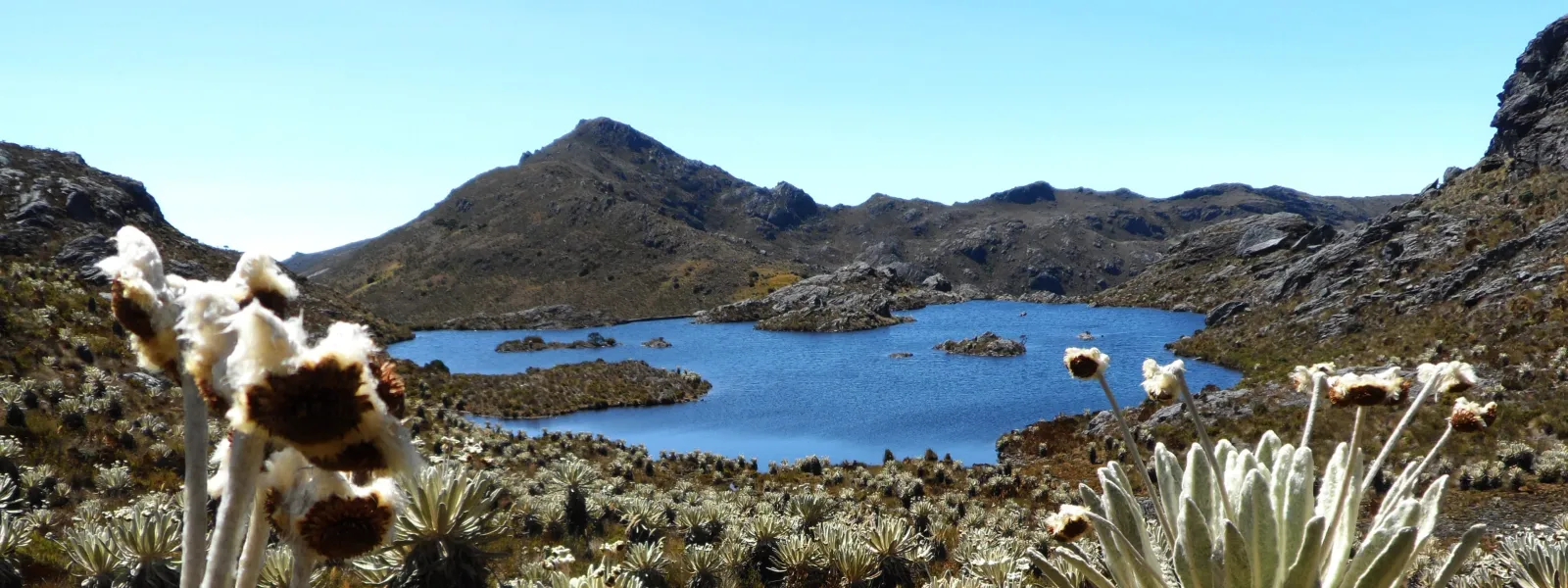
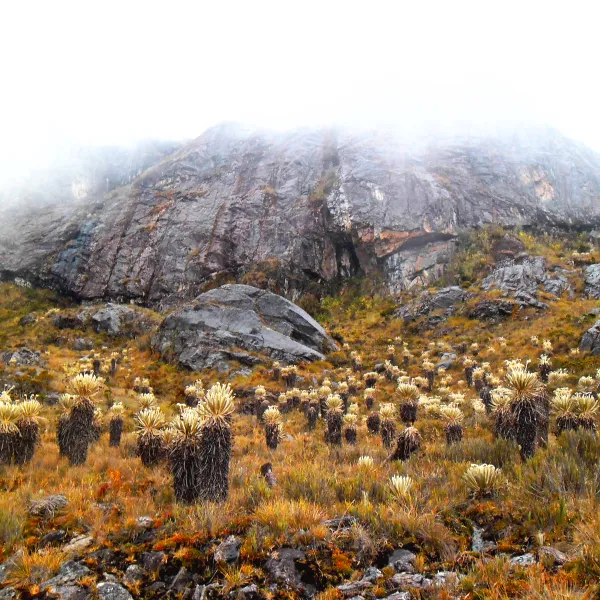
In the Andean region, high-mountain ecosystems known as páramos capture water from the fog and supply it to the lowlands. One such ecosystem is the Santurbán páramo, which provides fresh water to more than two million people in Colombia.
Santurbán, like the other páramos on the continent, also captures large amounts of carbon, making it a key ally in mitigating the climate crisis. It is also a refuge for hundreds of endangered species, including the iconic spectacled bear.
The land in and around the páramo contains gold and other minerals. This has put Santurbán in the spotlight of the multinational mining industry, which for decades has sought to establish large-scale projects in the ecosystem that threaten to degrade it.
The Committee for the Defense of Water and the Santurbán Páramo—a coalition of environmental advocates—has thwarted these ongoing attempts, with support from AIDA and other civil society organizations.
Background
The Santurbán páramo is located in the heart of the Eastern Cordillera of the Colombian Andes, in the departments of Santander and Norte de Santander, at an elevation ranging from 2,200 to 4,290 meters above sea level.
It covers an area of 129,743 hectares and is home to 57 lakes. It serves as a habitat for 457 plant species and 293 species of vertebrate fauna.
There are mineral deposits in Santurbán, primarily gold, but also silver and copper. This explains the region’s mining tradition, particularly in the part of the páramo located in Santander, in the province of Soto Norte. The communities in the area have built their culture and identity around gold mining, which is mainly artisanal and small-scale.
But since the 1990s, the gold deposits in the páramo have also attracted foreign mining conglomerates seeking to develop large-scale projects. This has raised concerns among the population that relies on the Santurbán water sources, who have mobilized in defense of water, their land, and life.
Although national and international regulations prohibit mining in páramos, the Colombian government has granted mining concessions to transnational corporations in Santurbán.
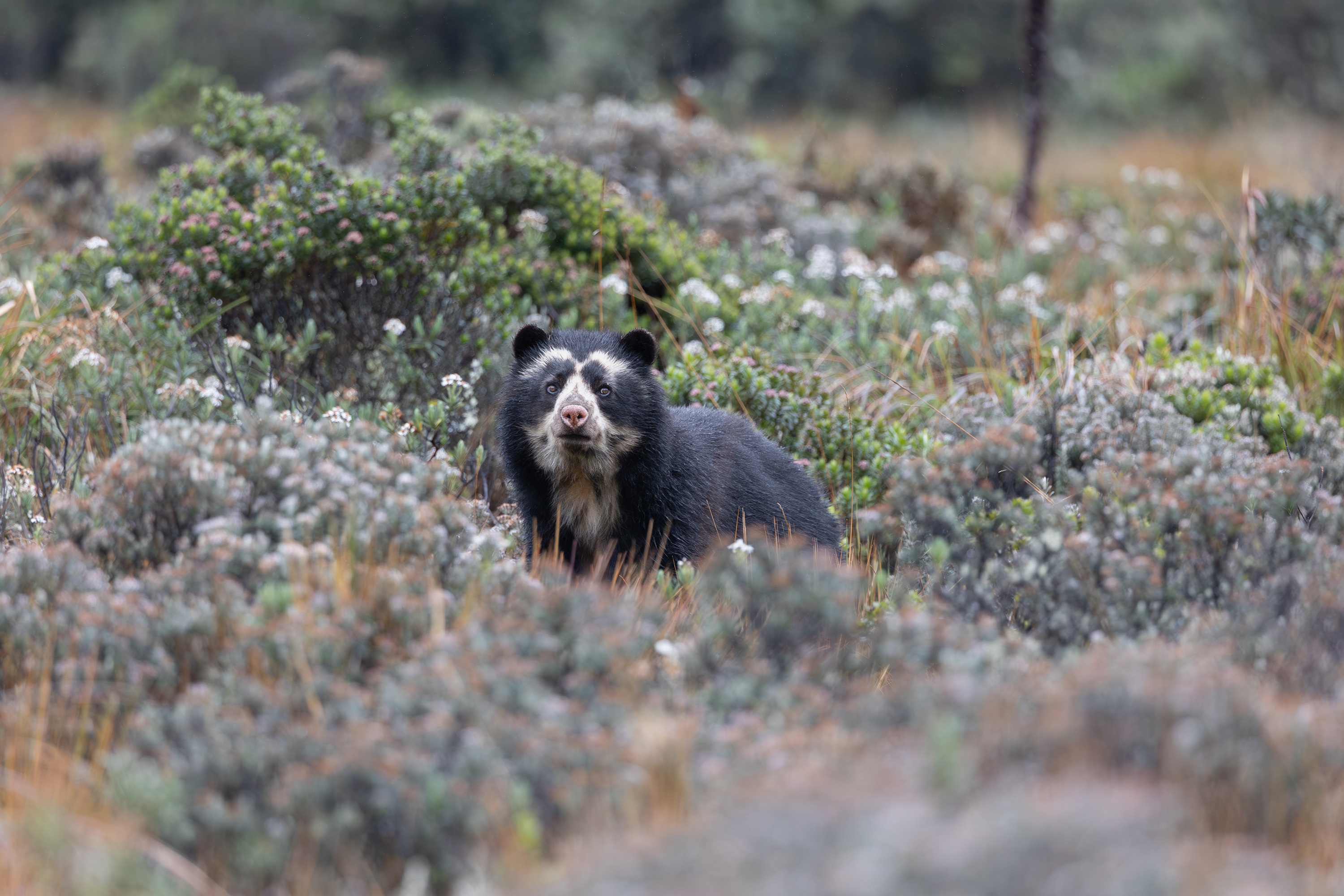
Photo: Keishpixl / Pixabay.
The long struggle to protect the páramo
One of the companies that sought to develop large-scale mining in Santurbán is Eco Oro Minerals Corp.—formerly Greystar Resources—a Canadian company that intended to establish the Angostura open-pit mine there to extract gold and silver. Between 1994 and 1995, the company acquired its mining titles and conducted exploration. And in 2010, it applied for a mining permit.
That was the year AIDA became involved in defending the ecosystem, supporting the Committee for the Defense of Water and the Santurbán Páramo. Our legal work helped convince the Colombian government to deny the mine an environmental permit in May 2011.
In January 2013, the government designated a portion of the páramo (11,700 hectares) as a Regional Natural Park. That year—together with the committee and partner organizations—we carried out a campaign and advocacy efforts to urge the government to recognize the entire Santurbán area as a páramo ecosystem through a delimitation based on scientific criteria. In December 2014, the Ministry of the Environment established a delimitation that protected 76% of the páramo (98,954 hectares).
Furthermore, as a result of a litigation supported by AIDA, in February 2016, Colombia’s highest court reaffirmed that mining in páramos is prohibited.
That same year, in December, the International Finance Corporation (IFC), the World Bank Group’s private sector arm, decided to divest from Eco Oro Minerals. This achievement was the result of a process that began in 2012, when the committee—advised and supported by AIDA and international partner organizations—filed a complaint before an independent accountability mechanism, which concluded that the IFC’s investment in the Angostura project failed to take into account the project’s social and environmental impacts, thereby contradicting the financial institution’s internal policies.
Also in 2016, Eco Oro Minerals filed an arbitration claim against the Colombian government with the International Centre for Settlement of Investment Disputes (ICSID), arguing that it had been adversely affected by government decisions aimed at protecting the country’s páramos, including the delimitation of Santurbán.
In 2017, the Constitutional Court invalidated the delimitation because the affected communities were not consulted. The high court ordered that a participatory delimitation be carried out.
And that year, a new threat to Santurbán emerged when the Canadian multinational Aris Mining applied for an environmental permit for Soto Norte, a gold mining project located near the páramo. Following citizen protests and technical objections, in October 2020, the National Environmental Licensing Authority shelved the project.
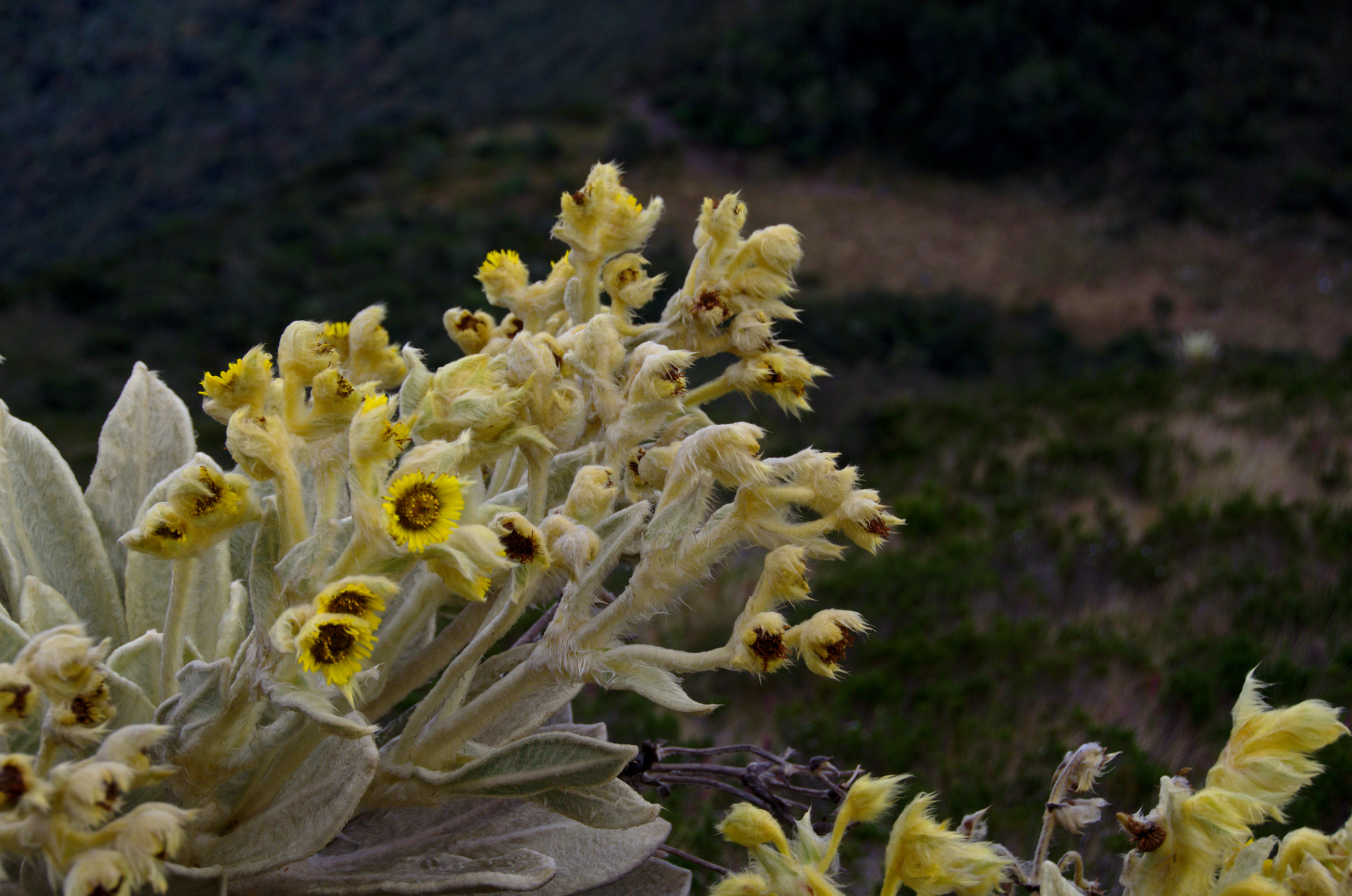
Photo: Aztlec.
Current situation
In March 2025, the Colombian government designated the western flank of the Santurbán massif as a temporary renewable natural resource reserve area, delimiting and protecting an area of 75,344.65 hectares. This resulted in a two-year suspension of the Soto Norte project. However, Aris Mining's contract to formalize Calimineros' small-scale mining activities through the purchase and processing of mineralized material remains in effect.
In addition, the Canadian mining company continues to move the project forward. In September 2025, it released its prefeasibility study, revising the mine’s original design.
Meanwhile, members of the Committee for the Defense of Water and the Santurbán Páramo face threats and stigmatization because of their work. In March 2025, UN Special Rapporteurs and the Working Group on Business and Human Rights denounced these incidents in communications sent to the governments of Colombia, Canada, and the United Arab Emirates, as well as to the companies Aris Mining and MDC Industry Holding Company LLC, the former co-owner of the Soto Norte project.
Regarding the arbitration claim filed by Eco Oro Minerals, in July 2024, ICSID ruled in favor of the Colombian government and rejected the Canadian company’s claim for USD 1.1 billion in compensation.
Concerning the delimitation of Santurbán, in July 2026, the Ministry of the Environment issued a resolution introducing the concept of "progressive delimitation." On that basis, the government proposes to progressively demarcate the páramo, covering 29,199 hectares across 19 municipalities—those where the participatory agreements required by the Constitutional Court in its 2017 ruling have already been finalized. It also proposes two measures on the creation and expansion of reserves to restrict mining in the ecosystem.
Learn more about the impacts of mining on the páramos of Latin America (in Spanish).
Partners:
Related projects
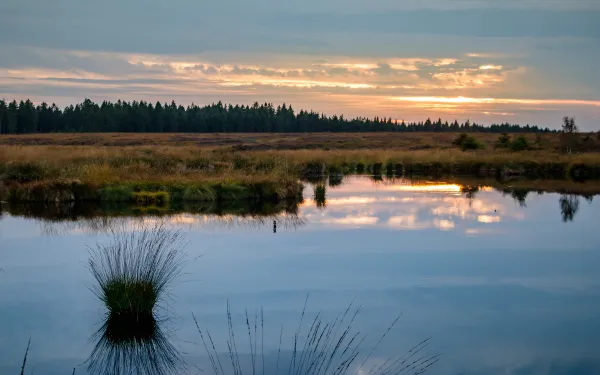
Protecting Wetlands: A Ramsar Infographic
Wetlands worldwide are at threat due to changes in land use, pollution and unsustainable development. The Ramsar Convention is an intergovernmental treaty that works to protect wetlands across international borders, and advocates for their wise use. This infographic breaks down why wetlands are so important, and how the application of the Ramsar Convention can help us protect these sensitive and vital ecosystems.
Read more
How supporting women is linked to environmental justice
Although women lead struggles for the conservation of nature around the world, they are often excluded from decisions about the use of land, water and other natural resources. They’re disproportionately affected when inadequately implemented projects pollute air and water, or cause forced displacements and other damages. And they’re often more seriously impacted by climate change. In all of these cases, women—particularly indigenous women—are highly vulnerable to losing their way of life, their income, and their homes. At AIDA, we incorporate a gender perspective into our defense of the environment and human rights, recognizing that combating inequalities and differentiated harms is fundamental to achieving environmental justice in Latin America. “The gender approach allows us to defend the rights of women in an integral way, understanding that the risks and harms, as well as the policies needed to confront them, are different for men and women,” explained Senior Attorney Liliana Ávila. “Making this visible helps break through discrimination scenarios and effectively guarantee the right to equality.” Uplifting women’s voices Working with a gender focus, Liliana explained, has been a fascinating professional experience that has allowed her to understand how environmental damage affects men and women differently. She has listened to women explain how they view their territory, and what happens to it, distinctly from the men in their communities. In Northwest Guatemala, in the micro-region of Ixquisis, the construction of the Pojom II and San Andrés dams has damaged water sources. It has spread diseases and harmed fishing and agriculture, subsistence activities for local communities, largely made up of indigenous Mayan women. “It’s necessary to promote methodologies and spaces that make women’s voices heard, that enable and strengthen their participation, that demonstrate the differentiated harms they face, and that promote change to guarantee their rights,” Liliana said. AIDA legally supports the resistance of the women of Ixquisis to the dam projects, both in national courts and before the Inter-American Development Bank, which finances the projects despite obvious conflict with its operating policies. Our work in Guatemala is possible thanks to the Global Alliance for Green and Gender Action (GAGGA), which supports collaboration between movements and grassroots organizations to strengthen their role in the defense and promotion of women's rights and environmental justice. Since 2016, GAGGA has provided funds to women's movements and environmental organizations at the national, regional and global levels in more than 30 countries across Latin America, Africa, Asia and Europe. Women’s role in environmental defense By working hand in hand with communities across Latin America, AIDA attorneys have a close knowledge of the fundamental role that women play in protecting the environment and building equitable societies. “In Nayarit, Mexico indigenous women are playing a key role in defense of their land, water and the San Pedro Mezquital River,” said Camilo Thompson, AIDA attorney in Mexico. “And in the Gulf of California, women are leading efforts toward proper fisheries management.” Claudia Velarde, an AIDA attorney in Bolivia, says that her country has recognized that peasant women produce more food, so their experiences, visions, and knowledge must be incorporated into public food policies. “Personally, it has been very enriching for me to work both with and from the perspective of women,” she explained. “I’ve have had the opportunity to meet incredible women fighting to defend their territories from extractive activities like fracking. It’s helped me understand that the impacts of a single activity are experienced quite differently according to socially assigned gender roles.”
Read more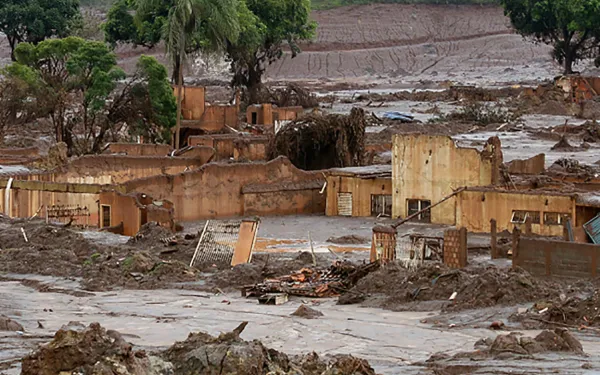
Mine tailings dams: a history of failures
Once again, tragedy looms over Brazil. Last Friday, for the second time in less than four years, a tailings dam broke in the State of Minas Gerais—this time in the municipality of Brumadinho—leaving catastrophic human and environmental damage in its wake. Once again, the losses are incalculable. We’re faced with disappearances and death. We see the same, disconcerting images: survivors evacuated by helicopter; trees, animals, and homes covered in toxic sludge; a swollen river carrying mining waste downstream. Once again, nature and society have been damaged, torn apart. As if in an endless loop, the tragedy has repeated in Minas Gerais. Five similar incidents, at least of which there is evidence, occurred in 1986, 2001, 2007, 2014, and 2015. The tragedy in November 2015 in the city of Mariana is considered the worst environmental disaster in the history of Brazil. It destroyed the town of Bento Rodrigues and contaminated the Doce River basin, carrying toxic sludge all the way to the Atlantic Ocean. A tragic cycle Far from isolated events, the failures of mine tailings dams have become a common occurrence, and statistics suggest we can expect many more in the future. Like any infrastructure work, a dam has a certain useful life—a period of operation with a firm beginning and end. That period is based on the dam having adequate design, execution, and maintenance, something that often does not occur. Thanks to the World Information Service on Energy’s Uranium Project, we know that over the last 30 years there have been 73 accidents or incidents involving mine tailings dams worldwide. The United States (17), China (8) and the Philippines (7) lead the list of affected countries. The project’s database offers an account of the main accidents and indicators including breakdowns, overshoots, collapses, partial failures, and lining ruptures. These figures should lead us to reflect on large-scale mining, particularly metal mining, which requires these types of dams and impoundments. Instead of continuing to build mines, wouldn’t it be better to concentrate our efforts on recovering and reusing the metal we discard? When will we transition to a circular economy that avoids such catastrophes? How many more disasters can our ecosystems and our human populations endure? Quite often, affected communities do not have objective or sufficient information about the benefits and harms of the mining projects proposed near their homes. Breaking that information gap is urgent. At AIDA we contribute to this task by providing useful information about the potential harms of mining, and using it to strengthen legal actions undertaken to protect people and the environment. It’s urgent that the governmental, non-governmental and private sectors do whatever is necessary to avoid more tragedies like those we’ve seen in Brazil. They must make a conscious decision to put the value of people and nature above profit. For more information, consult the database of major tailings dam failures: http://www.wise-uranium.org/mdaf.html 73 tailings dams have failed over the last 30 years, wreaking havoc on the environment and affected communities: https://t.co/G6xZibNIAk How many more avoidable disasters can we endure? #MinasGerais #BrumadinhoSOS #ValeAssassina #mining pic.twitter.com/ceuNTUUpkL — AIDA Americas (@AIDAorg) January 28, 2019
Read more