
Project
Alberto Peña Kay
Protecting the Santurban páramo from mining's damage
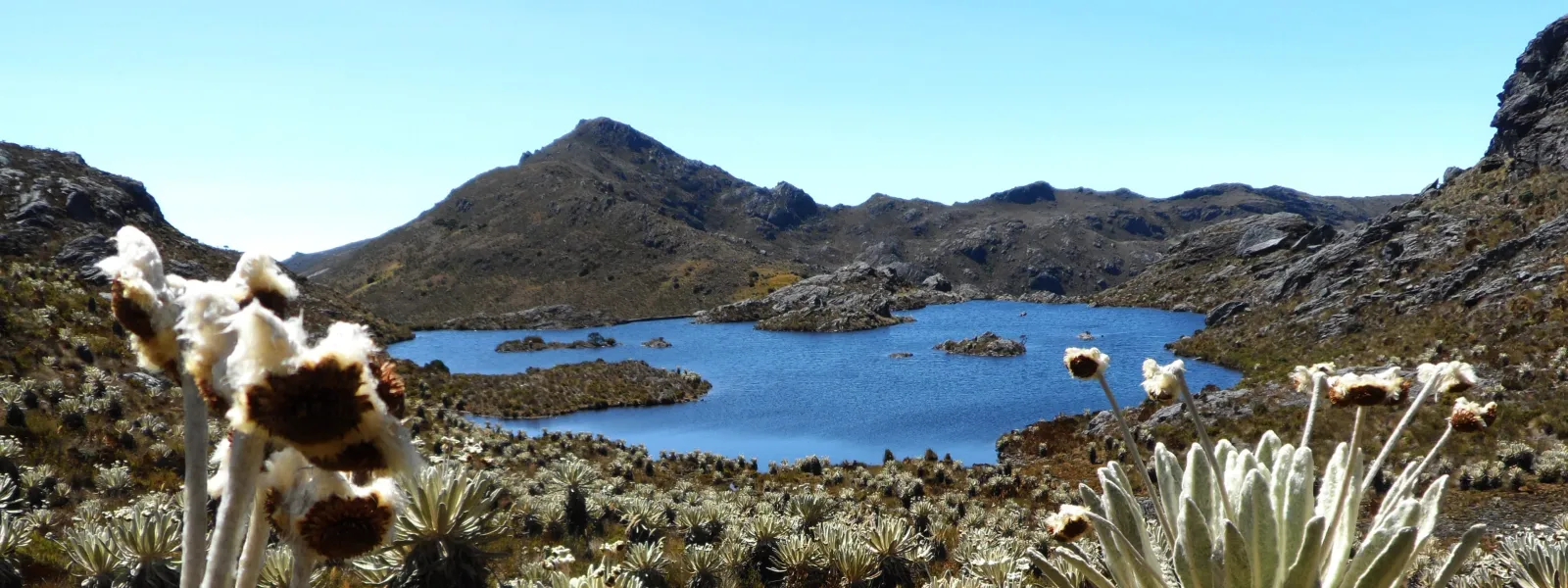
In the Andean region, high-mountain ecosystems known as páramos capture water from the fog and supply it to the lowlands. One such ecosystem is the Santurbán páramo, which provides fresh water to more than two million people in Colombia.
Santurbán, like the other páramos on the continent, also captures large amounts of carbon, making it a key ally in mitigating the climate crisis. It is also a refuge for hundreds of endangered species, including the iconic spectacled bear.
The land in and around the páramo contains gold and other minerals. This has put Santurbán in the spotlight of the multinational mining industry, which for decades has sought to establish large-scale projects in the ecosystem that threaten to degrade it.
The Committee for the Defense of Water and the Santurbán Páramo—a coalition of environmental advocates—has thwarted these ongoing attempts, with support from AIDA and other civil society organizations.
Background
The Santurbán páramo is located in the heart of the Eastern Cordillera of the Colombian Andes, in the departments of Santander and Norte de Santander, at an elevation ranging from 2,200 to 4,290 meters above sea level.
It covers an area of 129,743 hectares and is home to 57 lakes. It serves as a habitat for 457 plant species and 293 species of vertebrate fauna.
There are mineral deposits in Santurbán, primarily gold, but also silver and copper. This explains the region’s mining tradition, particularly in the part of the páramo located in Santander, in the province of Soto Norte. The communities in the area have built their culture and identity around gold mining, which is mainly artisanal and small-scale.
But since the 1990s, the gold deposits in the páramo have also attracted foreign mining conglomerates seeking to develop large-scale projects. This has raised concerns among the population that relies on the Santurbán water sources, who have mobilized in defense of water, their land, and life.
Although national and international regulations prohibit mining in páramos, the Colombian government has granted mining concessions to transnational corporations in Santurbán.
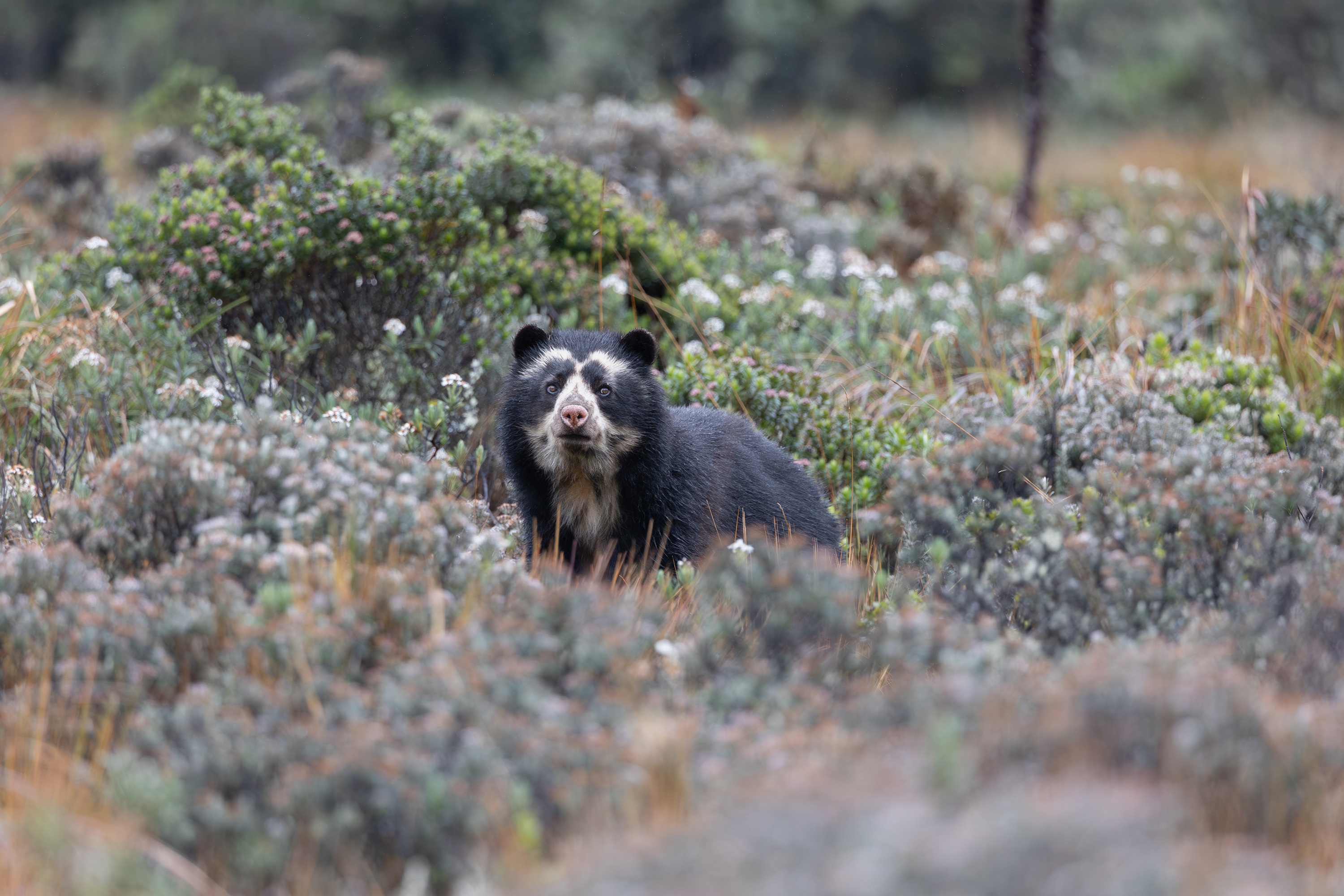
Photo: Keishpixl / Pixabay.
The long struggle to protect the páramo
One of the companies that sought to develop large-scale mining in Santurbán is Eco Oro Minerals Corp.—formerly Greystar Resources—a Canadian company that intended to establish the Angostura open-pit mine there to extract gold and silver. Between 1994 and 1995, the company acquired its mining titles and conducted exploration. And in 2010, it applied for a mining permit.
That was the year AIDA became involved in defending the ecosystem, supporting the Committee for the Defense of Water and the Santurbán Páramo. Our legal work helped convince the Colombian government to deny the mine an environmental permit in May 2011.
In January 2013, the government designated a portion of the páramo (11,700 hectares) as a Regional Natural Park. That year—together with the committee and partner organizations—we carried out a campaign and advocacy efforts to urge the government to recognize the entire Santurbán area as a páramo ecosystem through a delimitation based on scientific criteria. In December 2014, the Ministry of the Environment established a delimitation that protected 76% of the páramo (98,954 hectares).
Furthermore, as a result of a litigation supported by AIDA, in February 2016, Colombia’s highest court reaffirmed that mining in páramos is prohibited.
That same year, in December, the International Finance Corporation (IFC), the World Bank Group’s private sector arm, decided to divest from Eco Oro Minerals. This achievement was the result of a process that began in 2012, when the committee—advised and supported by AIDA and international partner organizations—filed a complaint before an independent accountability mechanism, which concluded that the IFC’s investment in the Angostura project failed to take into account the project’s social and environmental impacts, thereby contradicting the financial institution’s internal policies.
Also in 2016, Eco Oro Minerals filed an arbitration claim against the Colombian government with the International Centre for Settlement of Investment Disputes (ICSID), arguing that it had been adversely affected by government decisions aimed at protecting the country’s páramos, including the delimitation of Santurbán.
In 2017, the Constitutional Court invalidated the delimitation because the affected communities were not consulted. The high court ordered that a participatory delimitation be carried out.
And that year, a new threat to Santurbán emerged when the Canadian multinational Aris Mining applied for an environmental permit for Soto Norte, a gold mining project located near the páramo. Following citizen protests and technical objections, in October 2020, the National Environmental Licensing Authority shelved the project.
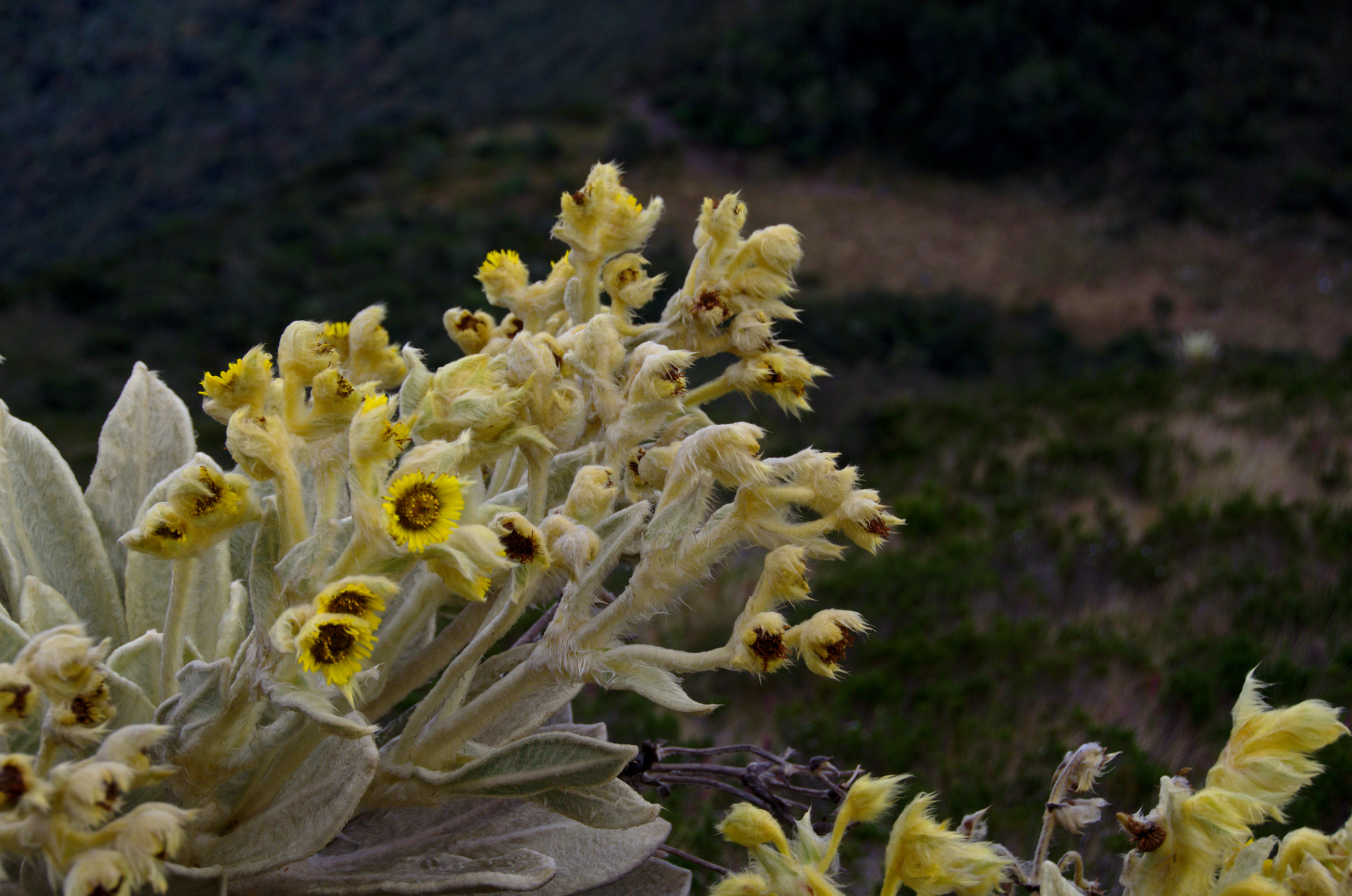
Photo: Aztlec.
Current situation
In March 2025, the Colombian government designated the western flank of the Santurbán massif as a temporary renewable natural resource reserve area, delimiting and protecting an area of 75,344.65 hectares. This resulted in a two-year suspension of the Soto Norte project. However, Aris Mining's contract to formalize Calimineros' small-scale mining activities through the purchase and processing of mineralized material remains in effect.
In addition, the Canadian mining company continues to move the project forward. In September 2025, it released its prefeasibility study, revising the mine’s original design.
Meanwhile, members of the Committee for the Defense of Water and the Santurbán Páramo face threats and stigmatization because of their work. In March 2025, UN Special Rapporteurs and the Working Group on Business and Human Rights denounced these incidents in communications sent to the governments of Colombia, Canada, and the United Arab Emirates, as well as to the companies Aris Mining and MDC Industry Holding Company LLC, the former co-owner of the Soto Norte project.
Regarding the arbitration claim filed by Eco Oro Minerals, in July 2024, ICSID ruled in favor of the Colombian government and rejected the Canadian company’s claim for USD 1.1 billion in compensation.
Concerning the delimitation of Santurbán, in July 2026, the Ministry of the Environment issued a resolution introducing the concept of "progressive delimitation." On that basis, the government proposes to progressively demarcate the páramo, covering 29,199 hectares across 19 municipalities—those where the participatory agreements required by the Constitutional Court in its 2017 ruling have already been finalized. It also proposes two measures on the creation and expansion of reserves to restrict mining in the ecosystem.
Learn more about the impacts of mining on the páramos of Latin America (in Spanish).
Partners:
Related projects
How Brazil is threatening indigenous and environmental rights
With the new presidency, Brazil has entered an unfortunate period of changes—to legislation, governmental structure, and foreign and public policy—that will set the nation back decades on the issues of climate, the environment and human rights. The new administration has made a host of extremely questionable decisions that signal the weakening of guarantees for indigenous peoples in Brazil, the Amazon, and the environment as a whole. Some of the reforms that most stand out include: The transfer of the Ministry of the Environment’s most important functions to the Ministry of Agriculture. The weakening of governmental entities responsible for monitoring cases of environmental crimes. The transfer of responsibility for demarcating indigenous lands from the National Indian Foundation (FUNAI) to the Ministry of Agriculture. The suspension of contracts signed between state entities and civil society organizations. The weakening of the process for granting environmental permits. Continuous threats to withdraw Brazil from international agreements on the protection of the environment and indigenous peoples, including the recent threat to leave ILO Convention 169. These changes seem to be just the beginning, and the outlook could worsen at any moment. The latest move to undermine environmental protection in Brazil is the apparent opening of indigenous lands to large-scale mining projects. In March, Brazil’s Minister of Mines and Energy announced to attendees of one of the largest global mining events (the annual convention of the Prospectors & Developers Association of Canada) that he would seek authorization for mining activities in indigenous and border areas. He stated that indigenous peoples would not have the autonomy to prevent the installation of mines in their territory. The State’s priority, this move implies, will be to promote irresponsible development over the protection of human rights. How mining threatens indigenous lands Last year, a government decree (Decree 9406) established drastic changes and new flexibility for mining activities, including successive extensions for permits in the event of lack of access, lack of consent or permission of the environmental agency, and the consideration that mining's foundations are the national interest and public utility. But mining itself is not in the national interest, since it implies great environmental damage and throws ecosystems out of balance. It must instead be recognized as a high-risk activity that causes destruction and contamination. Brazil has been incapable of safely regulating mining activities. We need only think of the rupture of two dams of mining waste in less than four years in the state of Minas Gerais. The first case in Mariana is considered the greatest environmental tragedy in Brazil’s history, and the second, earlier this year in Brumadinho, resulted in 197 deaths and 111 missing persons. If the government’s need for mining is undeniable, so is the need for stricter controls, the use of safer techniques, and a serious national assessment of the viability of each and every mine. Given the serious environmental damage associated with mining, its implementation on indigenous lands implies transferring those damages to a minority and vulnerable population that depends directly on the health of the environment for its physical and cultural survival. Indigenous communities have the constitutional right to be heard on projects that may affect them; some communities have even created protocols on how they want to be consulted. To build a mine against the will of a community is to violate their rights to life, to self-determination, to autonomy, to culture, to not being forcibly displaced, to benefit from their native territories, and to a healthy environment, among many others. The statements of the Minister of Mines and Energy represent a complete lack of commitment to the fundamental rights established in the Brazilian Constitution, as well as to internationally recognized human rights. They reveal a singular intention to appease investors, particularly the Canadian company behind the Belo Sun mining project, which seeks to mine indigenous lands already impacted by the construction of the Belo Monte Dam. In defense of indigenous peoples Mining on indigenous lands is not yet adequately regulated in Brazil. What the country needs is for Congress to approve a law that respects the fundamental rights of indigenous communities and protects their lands, while including communities in the process. The setbacks posed by the current administration have only strengthened the resistance of indigenous communities, and those of us who support them. Civil society organizations like AIDA are committed to defending human rights, safeguarding indigenous territory, and holding governments and corporations accountable whenever they pose a threat.
Read more
Statement on the Assassination of Dilma Ferreira Silva, leader of Brazil’s Movement of Dam-Affected Peoples
In the face of the brutal crime committed on March 22nd against a coordinator of the Movement of Dam-Affected Peoples in Brazil, the undersigned human rights and environmental organizations call on Brazilian authorities and multilateral organizations to ensure that the country’s obligations regarding the protection of human rights and environmental defenders are enforced. With deep sadness and indignation, we received the news that Dilma Ferreira Silva, a regional coordinator of Brazil’s Movement of Dam-Affected Peoples (MAB), together with her husband Claudionor Costa da Silva and Hilton Lopes, a friend of the family, were assassinated on Friday, March 22nd in the Amazonian state of Pará. The bodies of the three victims were found in her residence with signs of torture. Dilma Ferreira Silva was a prominent activist and recognized leader who, for more than three decades, fought for the rights of the people affected by the Tucuruí mega-hydroelectric dam project on the Tocantins River of the Brazilian Amazon, built during the country’s military dictatorship 1964-1985), provoking the displacement of an estimated 32,000 people, along with serious environmental damage. This is not the first case of a brutal murder perpetrated against a human rights defender in the region of the Tucurui dam. In April 2009, Raimundo Nonato do Carmo, a union leader who fought on behalf of those whose lives were ruined by the Tucuruí dam was shot seven times by two men on a motorcycle as he walked out of a supermarket on the street in which he lived in the town of Tucuruí. Dilma dedicated her life to promoting national policies that would effectively take into account the rights of dam-affected peoples, with due attention to gender issues that particularly affect the rights of women. Dilma Ferreira lived in the rural settlement of Salvador Allende, where land titles were issued for family farmers by the federal government in 2012, as a result of a popular mobilization of the Movement of the Landless Workers (MST), with support from MAB. However, the area continued to be coveted by land grabbers (grileiros) that invade and seize control of public and community lands. One such example is Fernando Ferreira Rosa Filho (aka ‘Fernandinho’) arrested by the civil police force of the state of Pará as the principal suspect in the triple homicide of Dilma Ferreira, Claudionor Costa da Silva and Hilton Lopes. The assassination of Dilma Ferreira Silva is evidence of the grave situation faced by human rights and environmental defenders in Brazil, a country that tops the global ranking in violence practiced against defenders, with one person murdered every six days in 2017. The incoming administration of President Jair Bolsonaro has intensified recent attempts to undermine Brazil’s progressive legislation on environmental protection and human rights - especially those of indigenous peoples, quilombolas (descendants of African slaves), family farmers and other traditional populations. Such attempts have often clashed with Brazil’s progressive Federal Constitution, approved in 1988 during a period of redemocratization that followed military rule. Backsliding on public policies, together with public statements that incite violence in conflictive areas, are seriously increasing the risks faced by human rights and environmental defenders such as Dilma Ferreira Silva. The undersigned human rights and environmental organizations express our solidarity with the family of Dilma and the Movement of Dam-Affected Peoples (MAB). Without a doubt, her assassination is a huge loss for the defense of the environment and human rights in the Amazon. We stand with the UN High Commissioner on Human Rights in demanding a complete, independent and imparcial investigation of the assassination of Dilma Ferreira Silva, as well as the exemplary punishment of those that carried out and ordered this horrendous crime. Moreover, we call on Brazilian authorities to ensure that the country’s domestic legislation and international obligations regarding the protection of human rights and environmental defenders are fully implemented, including preventative action to avoid further acts of violence. Signed, 1. 350.org 2. Aborigen-Forum 3. AMAR - Associação de Defesa do Meio Ambiente de Araucária 4. Amazon Watch 5. APREC Ecossistemas Costeiros 6. Arctic Consult 7. Articulação Antinuclear Brasileira 8. Asociación Interamericana para la Defensa del Ambiente - AIDA 9. Associação Mineira de Defesa do Ambiente – Amda 10. Association green alternative Georgia 11. Association of Journalists-Environmentalists of the Russian Union of Journalists 12. BAI Indigenous Women's Network in the Philippines 13. Bank Information Center (BIC) USA 14. Biodiversity Conservation Center 15. Both ENDS 16. Bretton Woods Project 17. Buryat Regional Association for Baikal 18. Business & Human Rights Center 19. Center for International Environmental Law - CIEL 20. CIDSE - International family of Catholic social justice organizations 21. Coalition for Human Rights in Development 22. Colegiado Mar RBMA/Reserva da Biosfera da Mata Atlântica - Grupo Conexão Abrolhos -Trindade 23. Coletivo de Mulheres do Xingu 24. Coletivo de Mulheres Negras de Altamira 25. Comisión Ecumenica de Derechos Humanos 26. Comité Ambiental en Defensa de la Vida 27. Conectas Direitos Humanos 28. Conseil Régional des Organisations Non Gouvernementales de Développement en RDC 29. Conselho Indigenista Missionário - CIMI 30. Corporación SOS Ambiental 31. Crescente Fértil 32. Derecho Ambiente y Recursos Naturales - DAR 33. Derechos Humanos y Medio Ambiente - DHUMA 34. Derechos Humanos y Medio Ambiente de Puno - Perú 35. DKA Austria 36. ECOA - Ecologia e Ação 37. Ecological Center DRONT 38. Ecolur Information NGO 39. Environmental Investigation Agency 40. Fastenopfer Switzerland 41. Focsiv - Federation of Italian Christian NGOs 42. Fórum em Defesa de Altamira 43. Foundation Sami Heritage and Development 44. Frente por uma Nova Política Energética para o Brasil 45. Front Line Defenders 46. Fundação Avina 47. Fundação Grupo ESQUEL 48. Future for Everyone 49. Global Witness 50. Green Dubna 51. Green Peace Brasil 52. ONG Guajiru 53. In Difesa Di - per i Diritti Umani e chi li difende 54. Indigenous Peoples Movement for Self-determination and Liberation (IPMSDL) 55. Instituto Igarapé 56. Instituto Terramar 57. Institutos Ethos 58. International Indigenous Fund for Development and Solidarity "Batani" dos EUA 59. International Land Coalition Secretariat 60. International Rivers 61. Katribu Kalipunan ng Katutubong Mamamayan ng Pilipinas (Katribu national alliance of indigenous peoples in the Philippines) 62. Kazan Federal University 63. Latin America Working Group 64. London Mining Network 65. Lumiere Synergie pour le Developpement 66. MAB - Movimento dos Atingidos por Barragens 67. Maryknoll Office for Global Concerns 68. MISEREOR 69. Movimento Nacional de Luta pela Moradia (MNLM) 70. Movimento Negro 71. Movimento Paulo Jackson - Ética, Justiça, Cidadania 72. Movimento Tapajós Vivo 73. Movimento Xingu Vivo para Sempre 74. Movimiento de Afectados por Represas de America Latina - MAR 75. O Movimento Nacional das Cidadãs Posithivas (MNCP) 76. Oyu Tolgoi Watch 77. Pax Christi - Comisión Solidaridad Un Mundo Alemania 78. Pax Christi Internacional 79. Pax Christi Toronto 80. Projeto Saúde e Alegria 81. Protection International 82. Public Interest law Center (PILC/CHAD) 83. Red de Comités Ambientales del Tolima 84. Red de Género y Medio Ambiente de México 85. REDE GTA 86. Resource Rights Africa da Uganda 87. Rivers without Boundaries International Coalition 88. Rivers without Boundaries - Mongolia 89. SAPÊ - Sociedade Agrense de Proteção Ecológica 90. SCIAF - Scottish Catholic International Aid Fund 91. Serpaj Chile 92. Siberian Environmental Organization 93. Socio-ecological Union International 94. Tatarstan Organization of the All-Russian Society for the Conservation of Nature 95. Terra 1530 96. The Canadian Catholic Organization for Development and Peace/Caritas 97. The Society for Threatened Peoples International STPI - Gesellschaft für bedrohte Völker-International, GfbV-International 98. The Volunteer Movement Save Utrish 99. Toxisphera - Associação de Saúde Ambiental 100. Tutela Legal Maria Julia Hernández 101. Uma Gota no Oceano 102. Uniafro Brasil 103. Washington Office on Latin America - Wola 104. WoMin African Alliance 105. World Wide Fund for Nature – WWF/Brasil
Read more
Conserving our water, drop by drop
Water is powerful. Even the idea of not having it in our daily life disturbs us. Yet we so often take it for granted. Many of us believe it will flow indefinitely, without having to do anything to guarantee its presence. As if to prove how wrong we are, reality has been hitting us harder and more frequently. In 2016, Bolivia suffered its worst drought in 25 years. Water scarcity affected five of the country’s nine departments, and a national emergency was declared. In the city of La Paz, seat of the federal government, the water cut-offs employed to confront the crisis led to some people having to subsist up to two days on only 50 liters of water. Bolivia isn’t an isolated case. Since 2010, central Chile has been experienced a mega-drought that is far from ending. And in 2018, the drought in Central America caused severe crop losses, putting the food of millions of people at risk. The causes of water shortages Water scarcity in Bolivia and other countries have common causes, problems that we must confront with urgency, such as: Climate change. Latin America is one of the world’s most vulnerable regions to climate change, which intensifies the water cycle, meaning the driest regions of the world are becoming even drier. Lack of long-term policies. Population growth has not been accompanied by policies for the more efficient use of water, or the better conservation of its sources. Inadequate water management. The management of water resources has not considered the growing demand on all sectors, the protection of natural sources, or the use of traditional and indigenous knowledge for conservation. Damages from extractive projects. An increase in mining activity in the region is contaminating rivers and using large quantities of water; fracking does as well. Large dams irreversibly damage important water basins. No culture of conservation. The growth of cities and the consequent growth of water consumption have not come accompanied with an increase in responsible citizenry. Best practices for water conservation It’s expected that the gap between water supply and demand in cities will reach 40 percent by 2030, so we must work quickly to implement good water management practices, including the following: Recycling wastewater from sewage systems, agriculture and industry. The reuse of water requires less energy than desalinization (which produces more toxic waste than water); it is also sustainable and profitable. Adopting solutions that take advantage of the natural processes that regulate the water cycle. They could be applied on a personal scale (for example, a dry toilet), at the landscape level (conservation agriculture that minimizes soil disturbance and uses crop rotation), or in urban environments (green walls and rooftop gardens). Harvesting rainwater and implementing better systems to store it would help reduce the impacts of future droughts. Applying appropriate environmental impact assessments would prevent the authorization of projects that threaten to damage natural sources of water supply. Motivating a change of mentality in key actors—those responsible for public policies, the private sector and consumers—would guarantee the availability and sustainable management of water. Humanity needs water, and for this year’s World Water Day, celebrated March 22, we join the focus on “leaving no one behind.” At AIDA we understand that water is a human right. That’s why we work to defend the ecosystems that provide our water from the damages of inadequately implemented mega-projects.
Read more