
Project
Alberto Peña Kay
Protecting the Santurban páramo from mining's damage
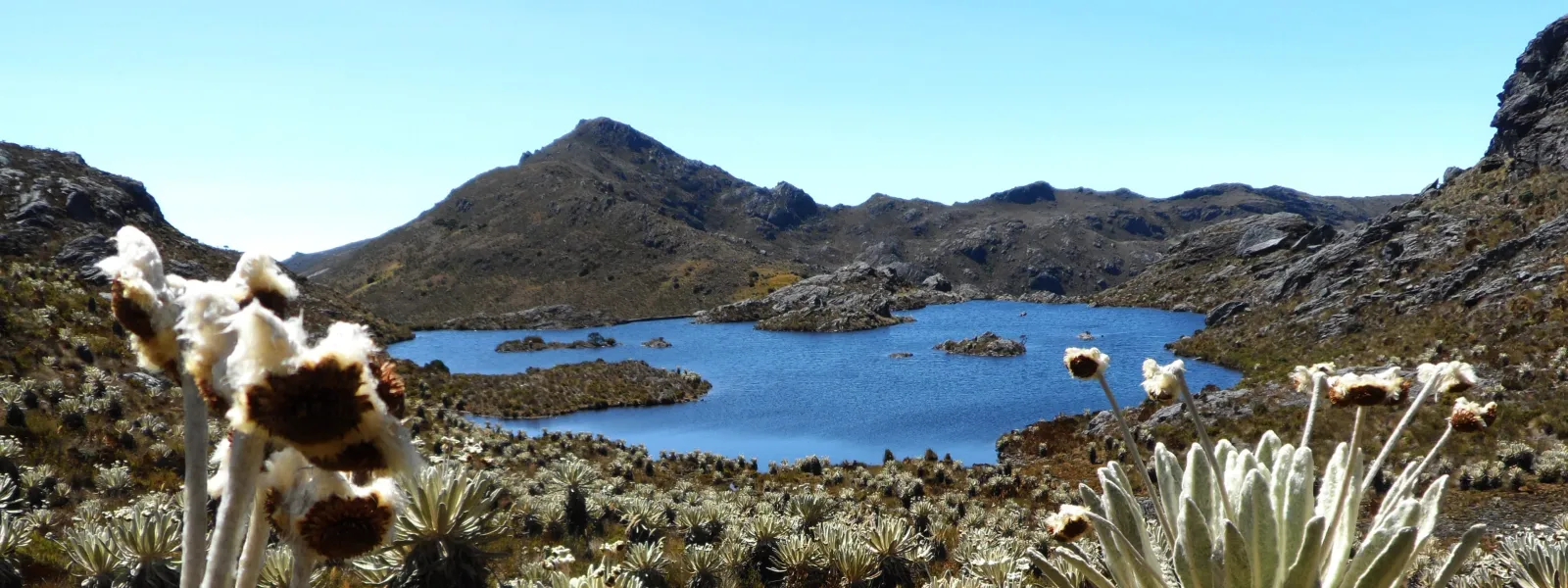
In the Andean region, high-mountain ecosystems known as páramos capture water from the fog and supply it to the lowlands. One such ecosystem is the Santurbán páramo, which provides fresh water to more than two million people in Colombia.
Santurbán, like the other páramos on the continent, also captures large amounts of carbon, making it a key ally in mitigating the climate crisis. It is also a refuge for hundreds of endangered species, including the iconic spectacled bear.
The land in and around the páramo contains gold and other minerals. This has put Santurbán in the spotlight of the multinational mining industry, which for decades has sought to establish large-scale projects in the ecosystem that threaten to degrade it.
The Committee for the Defense of Water and the Santurbán Páramo—a coalition of environmental advocates—has thwarted these ongoing attempts, with support from AIDA and other civil society organizations.
Background
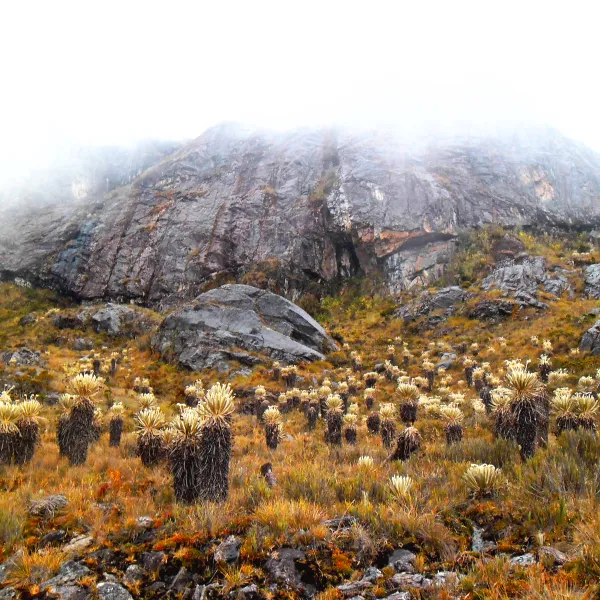
The Santurbán páramo is located in the heart of the Eastern Cordillera of the Colombian Andes, in the departments of Santander and Norte de Santander, at an elevation ranging from 2,200 to 4,290 meters above sea level.
It covers an area of 129,743 hectares and is home to 57 lakes. It serves as a habitat for 457 plant species and 293 species of vertebrate fauna.
There are mineral deposits in Santurbán, primarily gold, but also silver and copper. This explains the region’s mining tradition, particularly in the part of the páramo located in Santander, in the province of Soto Norte. The communities in the area have built their culture and identity around gold mining, which is mainly artisanal and small-scale.
But since the 1990s, the gold deposits in the páramo have also attracted foreign mining conglomerates seeking to develop large-scale projects. This has raised concerns among the population that relies on the Santurbán water sources, who have mobilized in defense of water, their land, and life.
Although national and international regulations prohibit mining in páramos, the Colombian government has granted mining concessions to transnational corporations in Santurbán.

Photo: Keishpixl / Pixabay.
The long struggle to protect the páramo
One of the companies that sought to develop large-scale mining in Santurbán is Eco Oro Minerals Corp.—formerly Greystar Resources—a Canadian company that intended to establish the Angostura open-pit mine there to extract gold and silver. Between 1994 and 1995, the company acquired its mining titles and conducted exploration. And in 2010, it applied for a mining permit.
That was the year AIDA became involved in defending the ecosystem, supporting the Committee for the Defense of Water and the Santurbán Páramo. Our legal work helped convince the Colombian government to deny the mine an environmental permit in May 2011.
In January 2013, the government designated a portion of the páramo (11,700 hectares) as a Regional Natural Park. That year—together with the committee and partner organizations—we carried out a campaign and advocacy efforts to urge the government to recognize the entire Santurbán area as a páramo ecosystem through a delimitation based on scientific criteria. In December 2014, the Ministry of the Environment established a delimitation that protected 76% of the páramo (98,954 hectares).
Furthermore, as a result of a litigation supported by AIDA, in February 2016, Colombia’s highest court reaffirmed that mining in páramos is prohibited.
That same year, in December, the International Finance Corporation (IFC), the World Bank Group’s private sector arm, decided to divest from Eco Oro Minerals. This achievement was the result of a process that began in 2012, when the committee—advised and supported by AIDA and international partner organizations—filed a complaint before an independent accountability mechanism, which concluded that the IFC’s investment in the Angostura project failed to take into account the project’s social and environmental impacts, thereby contradicting the financial institution’s internal policies.
Also in 2016, Eco Oro Minerals filed an arbitration claim against the Colombian government with the International Centre for Settlement of Investment Disputes (ICSID), arguing that it had been adversely affected by government decisions aimed at protecting the country’s páramos, including the delimitation of Santurbán.
In 2017, the Constitutional Court invalidated the delimitation because the affected communities were not consulted. The high court ordered that a participatory delimitation be carried out.
And that year, a new threat to Santurbán emerged when the Canadian multinational Aris Mining applied for an environmental permit for Soto Norte, a gold mining project located near the páramo. Following citizen protests and technical objections, in October 2020, the National Environmental Licensing Authority shelved the project.
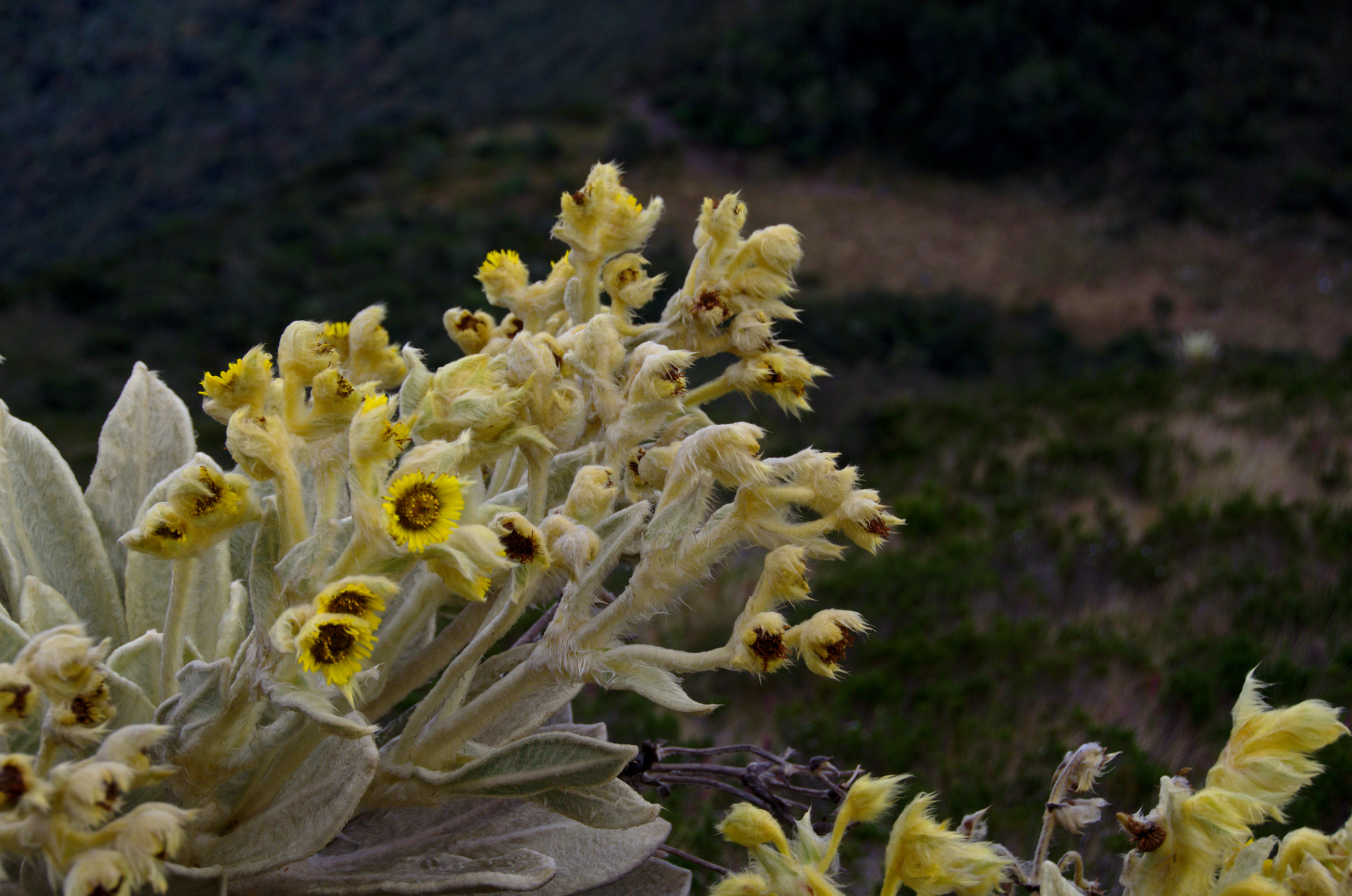
Photo: Aztlec.
Current situation
In March 2025, the Colombian government designated the western flank of the Santurbán massif as a temporary renewable natural resource reserve area, delimiting and protecting an area of 75,344.65 hectares. This resulted in a two-year suspension of the Soto Norte project. However, Aris Mining's contract to formalize Calimineros' small-scale mining activities through the purchase and processing of mineralized material remains in effect.
In addition, the Canadian mining company continues to move the project forward. In September 2025, it released its prefeasibility study, revising the mine’s original design.
Meanwhile, members of the Committee for the Defense of Water and the Santurbán Páramo face threats and stigmatization because of their work. In March 2025, UN Special Rapporteurs and the Working Group on Business and Human Rights denounced these incidents in communications sent to the governments of Colombia, Canada, and the United Arab Emirates, as well as to the companies Aris Mining and MDC Industry Holding Company LLC, the former co-owner of the Soto Norte project.
Regarding the arbitration claim filed by Eco Oro Minerals, in July 2024, ICSID ruled in favor of the Colombian government and rejected the Canadian company’s claim for USD 1.1 billion in compensation.
Concerning the delimitation of Santurbán, in July 2026, the Ministry of the Environment issued a resolution introducing the concept of "progressive delimitation." On that basis, the government proposes to progressively demarcate the páramo, covering 29,199 hectares across 19 municipalities—those where the participatory agreements required by the Constitutional Court in its 2017 ruling have already been finalized. It also proposes two measures on the creation and expansion of reserves to restrict mining in the ecosystem.
Learn more about the impacts of mining on the páramos of Latin America (in Spanish).
Partners:
Related projects
Clean air should be a human right, says UN Special Rapporteur
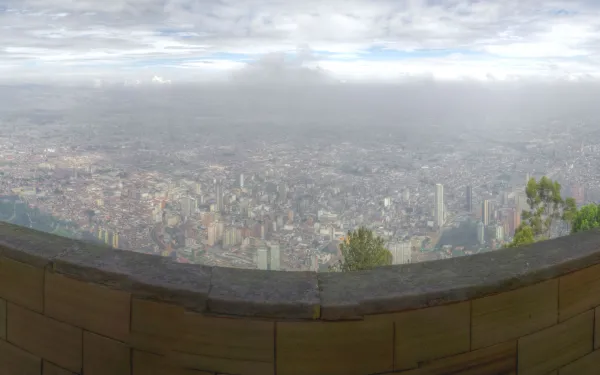
Even on a clear day in Bogotá, the air pollution can be so overwhelming that the sky is cast in a foggy, washed out haze that hangs over the city. In Bogotá—as in many cities across the Americas—air pollution has become a part of daily life. But it shouldn’t have to be that way. In a recent report, David Boyd, the UN Special Rapporteur on human rights and the environment said that breathing clean air should be considered a human right. While the majority of countries around the world have recognized the right to a healthy environment, the right to clean air does not yet enjoy the same level of global recognition. Air pollution is a dual killer: not only is it one of the biggest risks to public health worldwide, airborne pollutants also exacerbate the climate crisis. States and the human rights community, therefore, must incorporate the Rapporteur’s recommendations into law, because tackling air pollution is the best thing we can do to improve public health while also saving the planet. Air pollution: a dual killer More than six billion people, including two billion children around the world, are breathing air that adversely affects their health, according to the World Heath Organization (WHO). The effects of ambient and household air pollution cause roughly 7 million premature deaths worldwide each year, more than 300 thousand of which occur in the Americas alone. Hundreds of millions of people around the world suffer from illnesses caused by air pollution, which is considered one of the five leading factors contributing to non-communicable diseases like stroke, heart disease, chronic obstructive pulmonary disease, and cancer. Fine particulate matter like soot, black carbon, sulfates, nitrates and heavy metals all significantly increase the risk of these diseases. Moreover, air pollution disproportionately affects society’s most vulnerable populations. Children and the elderly are particularly affected by airborne pollutants, and suffer disproportionate impacts including illnesses and chronic breathing problems. Low income and poor communities, more often located near the sources of pollution—factories, power plants, and busy roads, among others—also suffer outsized health risks. Global air pollution is more than just a public health concern. Often, the same polluting activities that harm human health are also speeding up climate crisis. Research shows that black carbon—generated by burning fossil fuels, biofuels, and biomass—may accelerate snowmelt in glaciers, contributing to water insecurity and natural disasters. And methane, another short-lived climate pollutant, can trap up to 30 times more heat than CO2, speeding up global heating. Both issues amount to a costly problem. The World Bank estimates that global costs of air pollution will soon exceed $5 trillion per year, and says that unless countries curb global air pollution, air pollution-induced mortality could increase 50 to 100 percent by 2050. The economic benefits of slowing climate change will far outweigh the astronomical costs caused by flooding, more powerful storms, and crippling droughts, which could reach hundreds of billions of dollars by the end of the century, according to a report by the United States’ fourth National Climate Assessment. Respecting human rights While reducing air pollution makes good economic sense, curbing airborne pollutants is also a matter of respecting human rights. Besides violating the right to a clean and healthy environment, poor air quality can affect one’s right to life, health, water, food, housing and adequate standard of living, as well as the rights of the child, the UN report said. According to the Special Rapporteur, States should immediately devise action plans that: Monitor air quality and its impacts on human health; Assess sources of air pollution; Make information publicly available and release public health advisories; Establish air quality legislation, regulations, standards and policies; Develop air quality action plans at the local, nation, or regional level; Implement that air quality action plan and enforce its standards; and Evaluate progress and strengthen the plan to ensure the standards are met. Not only does this framework charge states with monitoring air quality, educating the public on air pollution, and making information accessible, it also urges States to establish strong, enforceable standards that will hold polluters accountable. Without those standards, improving air quality would be impossible. What’s more, States should apply the precautionary principle and use adequate margins of safety in order to protect society’s most vulnerable. Cities across Latin America are already starting to take air pollution seriously. Curitiba, Brazil, for example, built an extensive rapid bus system and, in 2013, launched an ambitious plan to add 300 kilometers of bicycle paths. Now, life expectancy in the city is two years longer than the national average, and the city has relatively low infant mortality, according to the WHO. In 2014, the Chilean government implemented a progressive tax on air pollution, taxing industry at higher rates in more densely populated areas to hold polluters accountable for their disproportionate impacts on urban populations. Although these examples show that change is possible, air pollution won’t be solved overnight, and States must begin establishing ambitious regulations to curb airborne contaminants. Otherwise, the world will continue coughing and sputtering into the 21st Century, as the impacts of climate crisis only continue to get worse.
Read more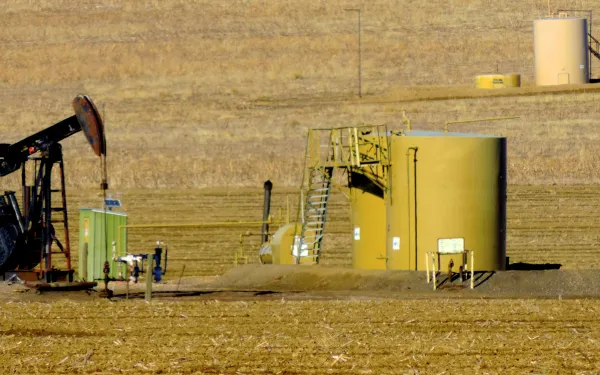
Is the UN finally turning against fracking?
The world is divided over the issue of fracking, a fact that is (at times painfully) apparent in the United Kingdom (UK) where I grew up. Four separate countries make up the UK. Of them, England is the only nation that still allows hydraulic fracturing; Scotland, Wales and Northern Ireland (along with a host of other countries worldwide) have banned the controversial process. Despite earthquakes linked to fracking in areas of the country where such things are virtually unheard of—plus waves of protests, controversy and opposition campaigns— the British government has so far refused to change its position. However, a recent United Nations recommendation to the UK may signal the beginning of the end for fracking in England and, hopefully, around the world. Fracking and the United Nations Until recently, the UN has appeared to have a complicated relationship with fracking. Several different UN bodies have made conflicting statements about the benefits of, and issues with, this means of energy production. In early 2018, the UN Conference on Trade and Development released a report that, according to one of its authors, did “not [say fracking] is good or bad,” but rather that each project’s cost/benefit analysis was dependent on a number of context-specific factors. The report cited positive aspects of fracking, calling it a useful “bridge fuel” for States aiming to move towards more environmentally-friendly renewable power sources, alongside it’s disadvantages. This argument is not viable since the environmental impact of hydraulic fracturing is even greater than that of conventional gas and oil exploitation. Over the last few months, however, it seems the UN has been hardening its position against fracking, particularly given its negative climate change impacts in the context of the Paris Agreement, the intergovernmental treaty in which nations have committed to taking ambitious steps to keep global warming below 1.5 degrees centigrade with respect to pre-industrial levels. Since October 2018, there have been 2 UN recommendations issued against fracking. In the UK, the government was urged to consider a complete and comprehensive ban on fracking; and in Argentina, the government was urged to reconsider the development of a large fracking project. The dangers of fracking Although for its promoters fracking has led to a huge spike in oil and gas production around the world—perhaps most notably in the US—its use has come at great environmental cost, particularly with regards to air quality and water supply due to the amount of water used in the process and its consequent contamination. Fracking releases large quantities of methane, a greenhouse gas whose global warming potential is 86 times greater than carbon dioxide over a 20-year period, according to the Intergovernmental Panel on Climate Change. In addition, the release of this gas can be hugely detrimental to the air quality surrounding fracking sites. Fracking also leads to increased earthquake risks due to the high pressure used to fracture layers of shale rock and extract oil and gas from it. In its recommendations to the UK and Argentina, the UN has clearly stressed the dangers of fracking. The key reason behind its recommendation to Argentina to reconsider the fracking project was its effect on climate change, especially in light of the Paris Agreement, and “the negative impact [that the project would have] on global warming and on the enjoyment of economic and social rights by the world’s population and future generations.” In its recommendation to the UK, it was noted that women in the UK are “disproportionately affected by the harmful effects of fracking, including exposure to hazardous and toxic chemicals, environmental pollution, and climate change.” Stopping the spread of fracking While operational in certain areas of the world, and being banned in others, fracking is advancing rapidly in Latin America. In the face of increasing global energy demand, it is crucial that the region, and the international community as a whole, commits to developing only truly sustainable energy projects. Fracking is not one. I believe the UN’s recent change in tone on fracking is a positive advance that should inspire both Argentina and the UK to react accordingly. From a personal point of view, I hope the UK heeds the growing evidence about the dangers of fracking and abandons the practice immediately. For Latin America, and other regions facing fracking’s blind advance, there are many countries to hold up as examples of how to confront the controversial practice. That’s why AIDA recently published a report highlighting the arguments and mechanisms that have been used around the world to restrict fracking and avoid its negative impacts on people and the environment. It is crucial that these impacts be properly considered as we take the ambitious steps needed to create an energy matrix that can solve the world’s energy needs without violating human rights, destroying our common goods, or worsening the catastrophic impacts of the climate crisis.
Read more
Protests Challenge Hydropower Companies at Global Event in Paris
Civil society organizations denounce corporate attempts to label hydroelectric dams as “green energy,” citing human rights abuses and environmental damage. Paris, France—A coalition of activists, organizations and indigenous leaders convened a series of events this week in light of the opening of the World Hydropower Conference, calling attention to the socially and environmentally destructive nature of hydroelectric dams, as well at their climate-aggravating impacts. From May 14-16, the International Hydropower Association (IHA) is hosting its biannual World Hydropower Congress in central Paris. The industry seeks to portray hydroelectric dams as a clean source of renewable energy, which they claim are essential for delivering the Paris Climate Agreement and the United Nations’ Sustainable Development Goals. However, a broad coalition of environmental and human rights organizations, together with social movements, argue that the dam industry’s claims amount to greenwashing, and are aimed at capturing new sources of finance from institutions like the Green Climate Fund. They point to numerous cases where hydropower projects have provoked disastrous consequences for people and the environment. Citing mounting scientific evidence that dams are a significant source of greenhouse gases—CO2and, particularly, methane—civil society groups also highlight the role of dams in aggravating climate change. A joint statement signed by more than 250 civil society groups from 70 countries calls attention to the false promises of hydropower and the urgent need for truly sustainable energy solutions. It is available in five languages. These and other issues—including the impacts of hydroelectric dams on natural and cultural heritage sites—were debated by scientists, activists and representatives of affected communities from Brazil, Colombia, Myanmar and Turkey in a parallel event to the IHA Congress, held at the Town Hall of the 6thArrondissement of Paris on May 13. The conference was organized by the NGOs Planète Amazone, GegenStrömung / CounterCurrent, Rivers without Boundaries, International Rivers, and AIDA. Myint Zaw, an activist and researcher from Myanmar who was awarded the 2015 Goldman Prize, was one of the speakers at the conference. “The food security of millions of people is threatened by dam projects planned for the Irrawaddy River that would impact important farmlands needed for rice production along the river and in delta region,” Zaw said. During Tuesday’s opening of the World Hydropower Congress, representatives of indigenous communities, social movements and non-governmental organizations protested together with activists from Extinction Rebellion in front of the Espace Grande Arche in La Défense. A focus of the protest was to call attention to the growing number of human rights and environmental activists murdered in dam-related conflicts. “Miguel Ángel Pabón Pabón disappeared as a result of his activism against the Hidrosogamoso Dam in Colombia, which has continued despite severe human rights violations,“ said Juan Pablo Soler from Movimiento Ríos Vívos of Colombia, mentioning one of many defenders lost. In Gabon, the Kingélé and Tchimbélé dams are adversely affecting populations living beside rivers. “During heavy rains, some villages are flooded when reservoirs overflow. Rivers turn into lakes, water becomes polluted and fish die intoxicated. There is no structure to help us on the ground, nor does the government hear our complaints, which is why we look abroad to issue a distress call,” proclaimed Assossa, a Pigmy leader. Three representatives of the Munduruku people from the Brazilian Amazon—Chief Arnaldo Kabá, Alessandra Korap and Candido Waro Munduruku—participated in both the parallel conference and the protest. After the protest, the Munduruku attempted to hand deliver a letter to the corporate headquarters of Électricité de France (EDF), majority-controlled by the French government. EDF is involved in the controversial Sinop dam on the Teles Pires River, a tributary of the Tapajos, and has contributed to studies that promote the São Luiz do Tapajós mega-dam, which would flood Munduruku territory. EDF representatives refused to speak with the Munduruku leaders. “EDF invades our territory, destroys our rivers, our territory and our sacred places. And when we come here to deliver a letter to this huge company, we’re barred,” stated Alessandra Munduruku. “We’re sad, but we’re determined to continue our struggle to defend our territory.” Press Contacts: Gert-Peter Bruch, Planète Amazone, [email protected] (French, English), + 33 (0)7 81 23 92 91 Brent Millikan, International Rivers, [email protected] (English, Portuguese), +55 61 8153-7009 Thilo F. Papacek, GegenStrömung – CounterCurrent / Forum Umwelt und Entwicklung, [email protected] (German, Portuguese, Spanish, English), ++49 151 412 145 19 Eugene Simonov, Rivers without Boundaries, [email protected](Russian, English, Chinese), +79 (0) 165 491 22 Resources: Further information about the parallel event from May 13: http://www.transrivers.org/2019/2634/ The joint statement, available in Chinese, English, Portuguese, Russian and Spanish can be downloaded here: https://drive.google.com/open?id=1pgS3YHm4zy5_LFSSjRe0KH-DMK773DQI Link to the Munduruku letter of protest to EDF: Électricité de France (Portuguese and English):https://drive.google.com/file/d/1TxqIiOuJDxNUI2YKPtUBrE_wucJLFl-E/view?usp=sharing Press photos available free of charge (Credit: Todd Southgate): https://tinyurl.com/y34b2g7u Clip reel of protest at opening of IHA Congress and Munduruku attempt to deliver letter at IHA headquarters: https://youtu.be/9BrI3AqVnXE Fact sheet from CounterCurrent on hydroelectric dams and UN Sustainable Development: tinyurl.com/y6mbjqj2
Read more