
Project
Alberto Peña Kay
Protecting the Santurban páramo from mining's damage
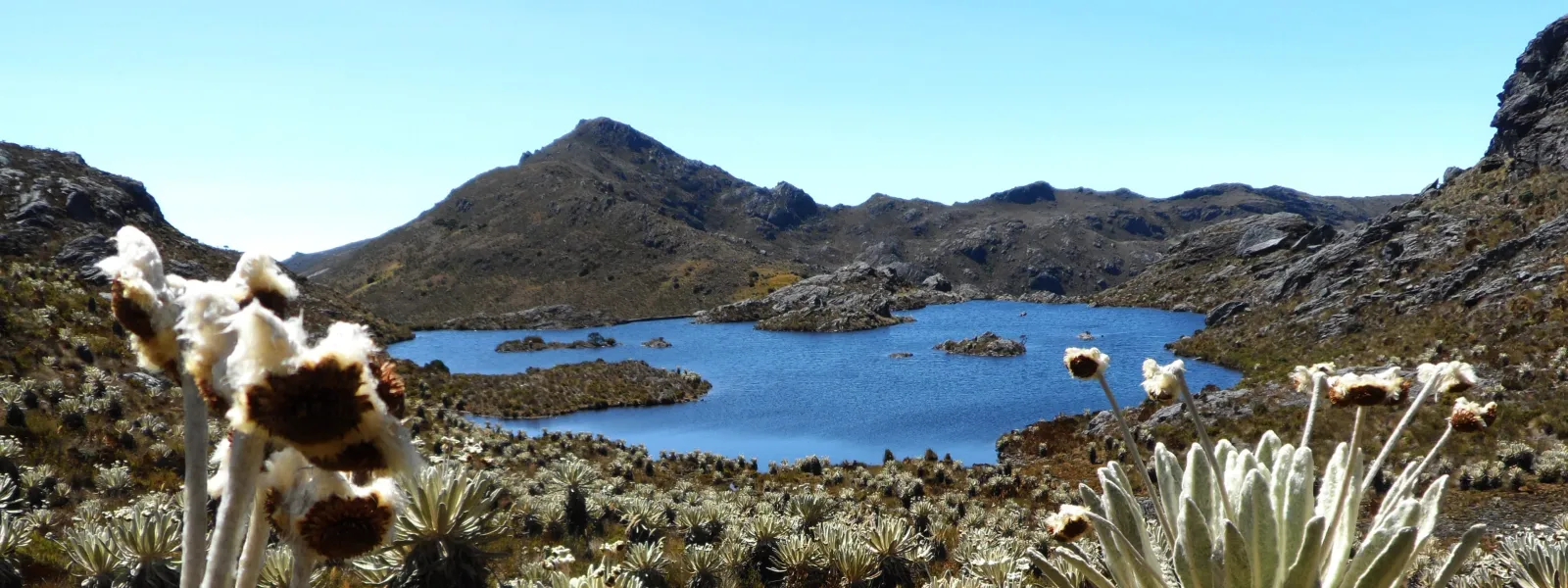
In the Andean region, high-mountain ecosystems known as páramos capture water from the fog and supply it to the lowlands. One such ecosystem is the Santurbán páramo, which provides fresh water to more than two million people in Colombia.
Santurbán, like the other páramos on the continent, also captures large amounts of carbon, making it a key ally in mitigating the climate crisis. It is also a refuge for hundreds of endangered species, including the iconic spectacled bear.
The land in and around the páramo contains gold and other minerals. This has put Santurbán in the spotlight of the multinational mining industry, which for decades has sought to establish large-scale projects in the ecosystem that threaten to degrade it.
The Committee for the Defense of Water and the Santurbán Páramo—a coalition of environmental advocates—has thwarted these ongoing attempts, with support from AIDA and other civil society organizations.
Background
The Santurbán páramo is located in the heart of the Eastern Cordillera of the Colombian Andes, in the departments of Santander and Norte de Santander, at an elevation ranging from 2,200 to 4,290 meters above sea level.
It covers an area of 129,743 hectares and is home to 57 lakes. It serves as a habitat for 457 plant species and 293 species of vertebrate fauna.
There are mineral deposits in Santurbán, primarily gold, but also silver and copper. This explains the region’s mining tradition, particularly in the part of the páramo located in Santander, in the province of Soto Norte. The communities in the area have built their culture and identity around gold mining, which is mainly artisanal and small-scale.
But since the 1990s, the gold deposits in the páramo have also attracted foreign mining conglomerates seeking to develop large-scale projects. This has raised concerns among the population that relies on the Santurbán water sources, who have mobilized in defense of water, their land, and life.
Although national and international regulations prohibit mining in páramos, the Colombian government has granted mining concessions to transnational corporations in Santurbán.
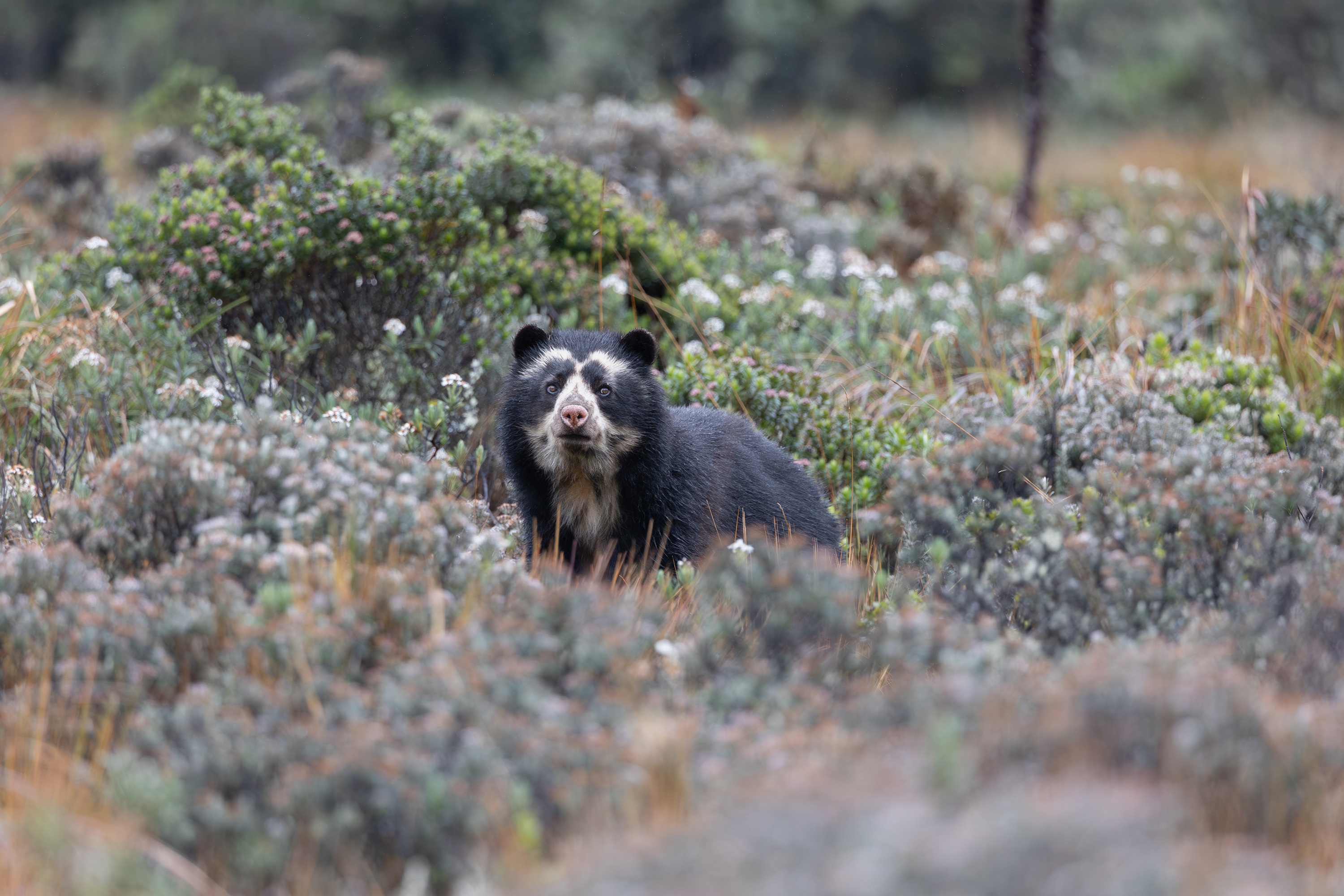
Photo: Keishpixl / Pixabay.
The long struggle to protect the páramo
One of the companies that sought to develop large-scale mining in Santurbán is Eco Oro Minerals Corp.—formerly Greystar Resources—a Canadian company that intended to establish the Angostura open-pit mine there to extract gold and silver. Between 1994 and 1995, the company acquired its mining titles and conducted exploration. And in 2010, it applied for a mining permit.
That was the year AIDA became involved in defending the ecosystem, supporting the Committee for the Defense of Water and the Santurbán Páramo. Our legal work helped convince the Colombian government to deny the mine an environmental permit in May 2011.
In January 2013, the government designated a portion of the páramo (11,700 hectares) as a Regional Natural Park. That year—together with the committee and partner organizations—we carried out a campaign and advocacy efforts to urge the government to recognize the entire Santurbán area as a páramo ecosystem through a delimitation based on scientific criteria. In December 2014, the Ministry of the Environment established a delimitation that protected 76% of the páramo (98,954 hectares).
Furthermore, as a result of a litigation supported by AIDA, in February 2016, Colombia’s highest court reaffirmed that mining in páramos is prohibited.
That same year, in December, the International Finance Corporation (IFC), the World Bank Group’s private sector arm, decided to divest from Eco Oro Minerals. This achievement was the result of a process that began in 2012, when the committee—advised and supported by AIDA and international partner organizations—filed a complaint before an independent accountability mechanism, which concluded that the IFC’s investment in the Angostura project failed to take into account the project’s social and environmental impacts, thereby contradicting the financial institution’s internal policies.
Also in 2016, Eco Oro Minerals filed an arbitration claim against the Colombian government with the International Centre for Settlement of Investment Disputes (ICSID), arguing that it had been adversely affected by government decisions aimed at protecting the country’s páramos, including the delimitation of Santurbán.
In 2017, the Constitutional Court invalidated the delimitation because the affected communities were not consulted. The high court ordered that a participatory delimitation be carried out.
And that year, a new threat to Santurbán emerged when the Canadian multinational Aris Mining applied for an environmental permit for Soto Norte, a gold mining project located near the páramo. Following citizen protests and technical objections, in October 2020, the National Environmental Licensing Authority shelved the project.
Photo: Aztlec.
Current situation
In March 2025, the Colombian government designated the western flank of the Santurbán massif as a temporary renewable natural resource reserve area, delimiting and protecting an area of 75,344.65 hectares. This resulted in a two-year suspension of the Soto Norte project. However, Aris Mining's contract to formalize Calimineros' small-scale mining activities through the purchase and processing of mineralized material remains in effect.
In addition, the Canadian mining company continues to move the project forward. In September 2025, it released its prefeasibility study, revising the mine’s original design.
Meanwhile, members of the Committee for the Defense of Water and the Santurbán Páramo face threats and stigmatization because of their work. In March 2025, UN Special Rapporteurs and the Working Group on Business and Human Rights denounced these incidents in communications sent to the governments of Colombia, Canada, and the United Arab Emirates, as well as to the companies Aris Mining and MDC Industry Holding Company LLC, the former co-owner of the Soto Norte project.
Regarding the arbitration claim filed by Eco Oro Minerals, in July 2024, ICSID ruled in favor of the Colombian government and rejected the Canadian company’s claim for USD 1.1 billion in compensation.
Concerning the delimitation of Santurbán, in July 2026, the Ministry of the Environment issued a resolution introducing the concept of "progressive delimitation." On that basis, the government proposes to progressively demarcate the páramo, covering 29,199 hectares across 19 municipalities—those where the participatory agreements required by the Constitutional Court in its 2017 ruling have already been finalized. It also proposes two measures on the creation and expansion of reserves to restrict mining in the ecosystem.
Learn more about the impacts of mining on the páramos of Latin America (in Spanish).
Partners:
Related projects

What we must do to preserve the planet’s biodiversity and natural heritage
Society is at serious risk of losing our natural world and all that sustains us. Our actions are provoking mass extinction and accelerating the loss of natural resources, plants and animals. Among these actions are the growth of agriculture and livestock production, the destruction of habitats, the introduction of invasive species, the expansion of urban areas, poaching and overfishing, overpopulation and pollution. That’s according to the most complete global evaluation of biodiversity yet, recently published by scientists at the United Nations’ Intergovernmental Science-Policy Platform on Biodiversity and Ecosystem Services (IPBES). The report shows that the capacity of Earth’s ecosystems to provide benefits to people has diminished drastically over the last 70 years. That’s because, on average: global resources have diminished by 47 percent; 25 percent of flora and fauna species are in danger of extinction; and the climate crisis is driving higher temperatures and increased acidification of the ocean, which is causing coral reef coverage worldwide to shrink. What’s more, a third of all species in the ocean are being overfished. Despite these alarming statistics, we can still take the planet out of the grave situation we’ve put it in. But it will require radical changes to our approach. The diagnosis for Latin America Historically, the world has passed through five mass extinctions that have caused the loss of more than 70 percent of the Earth’s life forms. Currently, we seem to be living through the sixth. Although species extinction occurs naturally, it generally does so at a rate of about one species per million each year. The current rate far exceeds that, as at least 100 species per million are going extinct each year—and that rate is rising. Another way to visualize this global threat is by listing the countries with the most species in danger of extinction. Five countries in Latin America are in the top 10 for species loss, with Mexico topping the list at 665 threatened species (71 species of birds, 96 mammals, 98 reptiles, 181 types of fish and 219 amphibians). Mexico’s situation is largely being driven by high rates of deforestation, a practice aimed at increasing agricultural area to cover the country’s growing demand for food. In fact, Latin America and Southeast Asia have lost millions of hectares of terrestrial ecosystems and fresh water through increased livestock production and agriculture (which includes the use of fertilizers). Other countries in the region with high rates of species loss include Colombia (540 species), Ecuador (436), Brazil (413), and Peru (385). Species extinction alters and impedes the proper functioning of ecosystems, which rely on interactions between varied forms of life to produce food, manage water supply, regulate climate, and more. Big changes to ensure a better future Although life on our planet has existed for some 4 billion years, humanity has only been around 200 thousand of those; yet we’ve managed to disrupt the Earth’s natural balance. Although our actions have negatively affected the earth, this shows that we, as humans, have the ability to transform our environment. The IPBES report mentions the Aichi Biodiversity Targets as transformative actions that can protect biodiversity. One of those is the creation of natural protected areas, which have helped reduce the risk of extinction for species like mammals and amphibians. Nevertheless, the report emphasizes the need for a drastic change in the values and objectives of our governments so that decisions at the local, national, and international levels are aligned to combat the causes behind the planet’s degradation. To that end, and taking into account the UN’s Sustainable Development Goals, nations must: Expand and coordinate the global network of natural protected areas. Invest in green infrastructure. Produce food, materials, and energy in sustainable ways. Conserve and use water efficiently. Support indigenous and traditional communities, who protect many of the planet’s remaining natural resources. Adequately approach population growth and global consumption levels. Create new environmental laws and better compliance with existing ones. Slow pollution and the overexploitation of our natural resources. “People shouldn’t panic, but they should begin to make drastic changes,” said Josef Settele, an IPBES co-chair and entomologist at the Helmholtz Center for Environmental Research in Germany. “Business as usual with small adjustments won’t be enough.” Our air, water, and food depend on biodiversity—the varied forms of life on our planet and the interaction between them. Caring for this natural heritage is a shared task; it is now more important than ever.
Read more
Colombia makes the right move by suspending fracking project
Citing a recent court order, Colombia’s environmental authority has suspended the licensing process for a fracking project in the Middle Magdalena Valley. The decision represents an advance in the movement to stop fracking’s expansion in Latin America. Bogotá. In an advance for the struggle against fracking’s expansion in Latin America, Colombia’s National Environmental Licensing Authority has suspended the licensing process for a fracking project in the Middle Magdalena Valley. With this decision, Colombia joins a growing list of communities, municipalities, and regions across Latin America and the world who have made progress to stop the expansion of fracking in their territories, many through the enactment of bans or moratoriums. "The Environmental Authority’s decision is a positive example for nations across Latin America and the world,” said Astrid Puentes Riaño, co-executive director of AIDA. “It’s the result of an admirable civic movement and of the use of the precautionary principle as a tool to protect human health and ecosystems, and to confront the climate crisis.” The decision to halt the process for Ecopetrol’s "APE Guane A” project is founded on the State Council’s suspension, in November 2018, of the regulatory framework for fracking in the country, citing the precautionary principle. The Interamerican Association for Environmental Defense (AIDA) supports the Council’s decision and considers the Environmental Authority’s enactment of that order to be a step in the right direction. “In the absence of existing regulations on fracking, in Colombia we have a judicial moratorium. This implies that no project may be implemented that seeks to exploit unconventional oil and gas deposits using this technique,” explained Juana Hofman, AIDA attorney. “All activities aimed at the development of fracking activities must be suspended.” In its decision, the Environmental Authority states: “… The temporary suspension of the aforementioned provisions translates to those provisions being temporarily outside the legal system, which consequently means that this Environmental Authority does not have technical regulations that allow it to verify the management measures that should be included in the Environmental Impact Study, to be analyzed within the environmental assessment procedure, and thus could not determine whether or not the granting of the environmental license required for new projects in unconventional deposits was viable.” The suspended project involves the use of hydraulic fracturing in a boggy complex located between the municipalities of Barrancabermeja and Puerto Wilches in Northeast Colombia. Fracking, or hydraulic fracturing, is an extractive technique that proves incredibly damaging for water, air quality, human health and the climate. It emits methane, a pollutant strongly associated with global warming. Due to its negative impacts on the environment and public health, fracking has been prohibited by judicial or legislative means in many municipalities, regions and nations around the world, such as Scotland, the state of New York (USA), and the province of Quebec (Canada). Global efforts to stop fracking’s expansion have largely been citizen-led and driven by concerns for the risks fracking poses to the climate, environment and public health. The Alliance for a Colombia Free from Fracking has been steadfast in their commitment to stopping fracking’s advance in Colombia, and should be congratulated for this important advance. AIDA urges the Colombian government to continue down the path of prevention and to comply with its international environmental obligations to confront the climate crisis, and to protect its land, water and communities. We urge the government to deny authorizations for fracking operations in Colombia. “Fracking is a procedure that furthers us from our climate goals, and from the energy path that all nations should be targeting” Puentes Riaño said. “Decisions like these are an invitation to seek out renewable energies that are better for our planet and our communities, not only in Colombia but around the world.” Press Contacts: Carlos Lozano Acosta (Colombia), AIDA, [email protected], +57 (300) 564 0282 Juana Hofman (Colombia), AIDA, [email protected], +57 (310) 884 6715
Read more
Why these algae-eating fish may be corals’ greatest allies
Numerous studies have shown that herbivorous fish play a fundamental role in the health and survival of coral reefs by removing the algae that robs corals of the light and space they need to grow. But populations of these small algae-eating fish are diminishing rapidly due to human activity, which puts our reefs at greater risk. In the Mexican Caribbean, for example, 60 percent of the reefs are considered in poor or critical health. There exist a diverse array of herbivorous fish in our oceans; they’re grouped into various families that are, in turn, divided into groups according to their feeding habits and roles in controlling algae growth. Parrotfish are among the most important species, as their strong beaks allow them to clean large amounts of macroalgae. Herbivorous fish live in tropical and subtropical waters, including many Latin American and Caribbean nations—Belize, Colombia, Guatemala, and Mexico, to name a few. These fish contribute to the health of key coral ecosystems like the Mesoamerican Reef System. Despite serving as fish hatcheries and natural barriers against hurricanes, coral reefs are extremely fragile and vulnerable to the global climate crisis, which is driving ocean acidification, sea level rise, and increased algae growth. Experts say that, when faced with the reduced presence of herbivorous fish, reef systems lose their capacity to recover from extreme weather events like hurricanes, which are becoming more and more powerful. But the relationship between herbivorous fish and coral reefs is at increasing risk. Dwindling herbivorous fish populations are evident in the Caribbean, where fishing communities have begun to capture parrotfish after overfishing commercial species. The destruction of mangroves and marine grassland habitats put these fish at risk, since many species of parrotfish rely on them during their life cycle. Environmental degradation also increases sedimentation and the concentration of nutrients, causing an increase in macroalgae. Algae growth and an increase in coral diseases are the result of pollution caused by inadequate wastewater management and runoff from commercial agriculture. These problems require the implementation of urgent measures aimed at preserving herbivorous fish populations and, with them, maintaining the health and regenerative capacity of coral reefs. Such measures should include the establishment and adoption of clear fisheries management and conservation strategies to ensure the recuperation of herbivorous fish, particularly parrotfish, populations. Protected marine areas or regeneration zones that prohibit fishing in key areas should also be created. To adequately protect these fish, States must also: standardize the monitoring of fish populations in the region and implement alternative management strategies; promote comprehensive, regional management that enables local authorities to share experiences and establish common conservation tools; and create and implement regulations and laws to combat overfishing and bad tourism practices, and promote low-impact coastal development. In nature, symbiotic relationships, like that of herbivorous fish and corals, are abundant. We must learn to recognize and value them. Likewise, if we take care of nature, nature will take care of us.
Read more