
Project
Alberto Peña Kay
Protecting the Santurban páramo from mining's damage
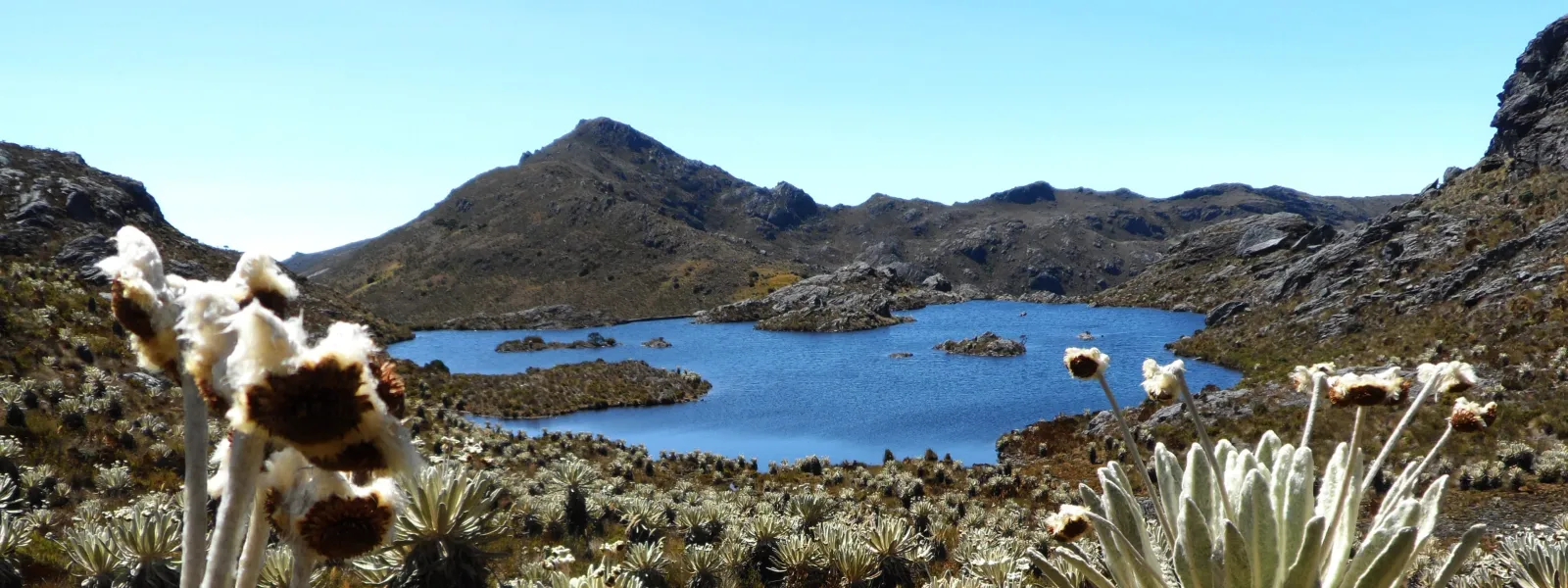
In the Andean region, high-mountain ecosystems known as páramos capture water from the fog and supply it to the lowlands. One such ecosystem is the Santurbán páramo, which provides fresh water to more than two million people in Colombia.
Santurbán, like the other páramos on the continent, also captures large amounts of carbon, making it a key ally in mitigating the climate crisis. It is also a refuge for hundreds of endangered species, including the iconic spectacled bear.
The land in and around the páramo contains gold and other minerals. This has put Santurbán in the spotlight of the multinational mining industry, which for decades has sought to establish large-scale projects in the ecosystem that threaten to degrade it.
The Committee for the Defense of Water and the Santurbán Páramo—a coalition of environmental advocates—has thwarted these ongoing attempts, with support from AIDA and other civil society organizations.
Background
The Santurbán páramo is located in the heart of the Eastern Cordillera of the Colombian Andes, in the departments of Santander and Norte de Santander, at an elevation ranging from 2,200 to 4,290 meters above sea level.
It covers an area of 129,743 hectares and is home to 57 lakes. It serves as a habitat for 457 plant species and 293 species of vertebrate fauna.
There are mineral deposits in Santurbán, primarily gold, but also silver and copper. This explains the region’s mining tradition, particularly in the part of the páramo located in Santander, in the province of Soto Norte. The communities in the area have built their culture and identity around gold mining, which is mainly artisanal and small-scale.
But since the 1990s, the gold deposits in the páramo have also attracted foreign mining conglomerates seeking to develop large-scale projects. This has raised concerns among the population that relies on the Santurbán water sources, who have mobilized in defense of water, their land, and life.
Although national and international regulations prohibit mining in páramos, the Colombian government has granted mining concessions to transnational corporations in Santurbán.

Photo: Keishpixl / Pixabay.
The long struggle to protect the páramo
One of the companies that sought to develop large-scale mining in Santurbán is Eco Oro Minerals Corp.—formerly Greystar Resources—a Canadian company that intended to establish the Angostura open-pit mine there to extract gold and silver. Between 1994 and 1995, the company acquired its mining titles and conducted exploration. And in 2010, it applied for a mining permit.
That was the year AIDA became involved in defending the ecosystem, supporting the Committee for the Defense of Water and the Santurbán Páramo. Our legal work helped convince the Colombian government to deny the mine an environmental permit in May 2011.
In January 2013, the government designated a portion of the páramo (11,700 hectares) as a Regional Natural Park. That year—together with the committee and partner organizations—we carried out a campaign and advocacy efforts to urge the government to recognize the entire Santurbán area as a páramo ecosystem through a delimitation based on scientific criteria. In December 2014, the Ministry of the Environment established a delimitation that protected 76% of the páramo (98,954 hectares).
Furthermore, as a result of a litigation supported by AIDA, in February 2016, Colombia’s highest court reaffirmed that mining in páramos is prohibited.
That same year, in December, the International Finance Corporation (IFC), the World Bank Group’s private sector arm, decided to divest from Eco Oro Minerals. This achievement was the result of a process that began in 2012, when the committee—advised and supported by AIDA and international partner organizations—filed a complaint before an independent accountability mechanism, which concluded that the IFC’s investment in the Angostura project failed to take into account the project’s social and environmental impacts, thereby contradicting the financial institution’s internal policies.
Also in 2016, Eco Oro Minerals filed an arbitration claim against the Colombian government with the International Centre for Settlement of Investment Disputes (ICSID), arguing that it had been adversely affected by government decisions aimed at protecting the country’s páramos, including the delimitation of Santurbán.
In 2017, the Constitutional Court invalidated the delimitation because the affected communities were not consulted. The high court ordered that a participatory delimitation be carried out.
And that year, a new threat to Santurbán emerged when the Canadian multinational Aris Mining applied for an environmental permit for Soto Norte, a gold mining project located near the páramo. Following citizen protests and technical objections, in October 2020, the National Environmental Licensing Authority shelved the project.
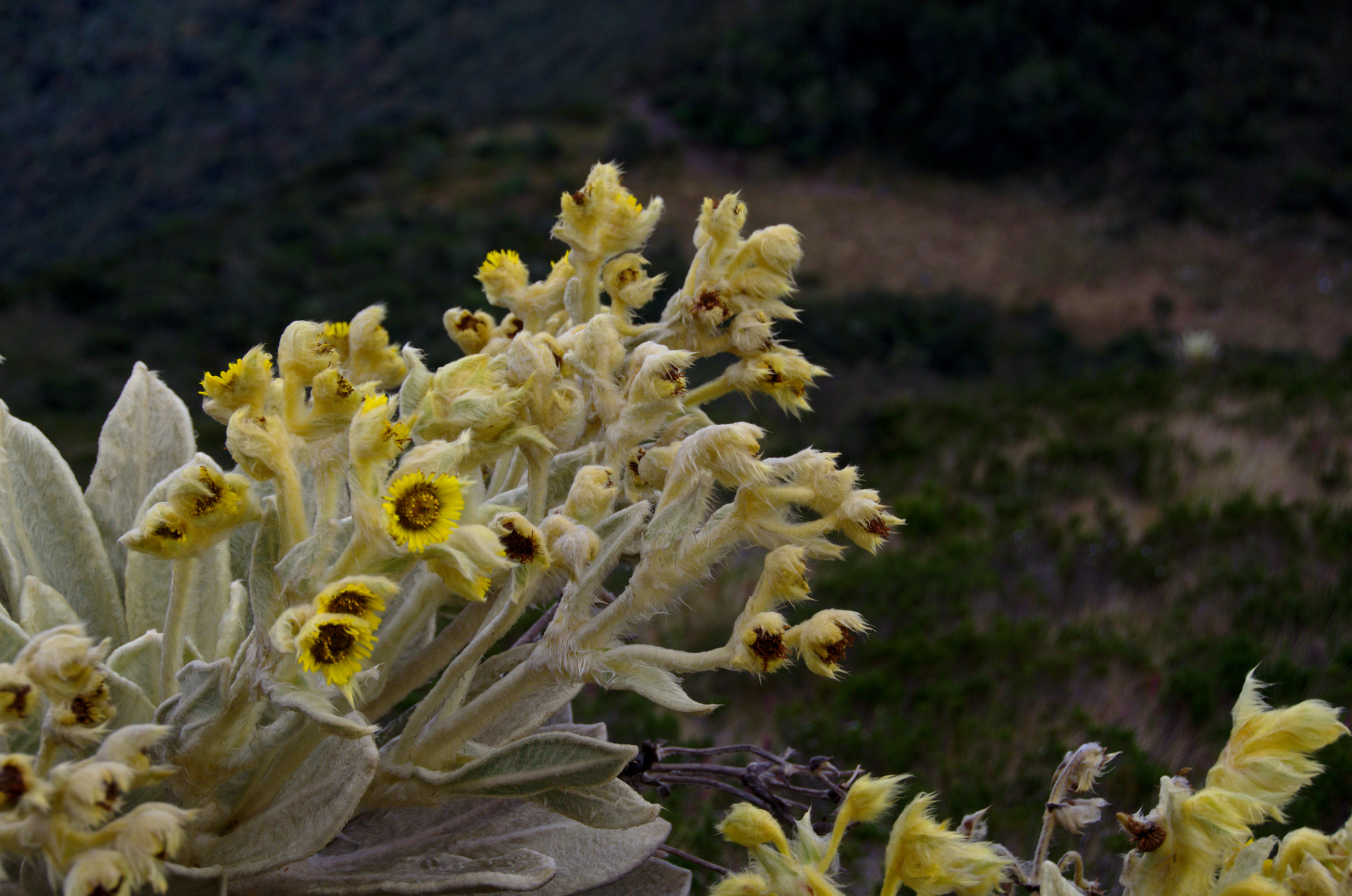
Photo: Aztlec.
Current situation
In March 2025, the Colombian government designated the western flank of the Santurbán massif as a temporary renewable natural resource reserve area, delimiting and protecting an area of 75,344.65 hectares. This resulted in a two-year suspension of the Soto Norte project. However, Aris Mining's contract to formalize Calimineros' small-scale mining activities through the purchase and processing of mineralized material remains in effect.
In addition, the Canadian mining company continues to move the project forward. In September 2025, it released its prefeasibility study, revising the mine’s original design.
Meanwhile, members of the Committee for the Defense of Water and the Santurbán Páramo face threats and stigmatization because of their work. In March 2025, UN Special Rapporteurs and the Working Group on Business and Human Rights denounced these incidents in communications sent to the governments of Colombia, Canada, and the United Arab Emirates, as well as to the companies Aris Mining and MDC Industry Holding Company LLC, the former co-owner of the Soto Norte project.
Regarding the arbitration claim filed by Eco Oro Minerals, in July 2024, ICSID ruled in favor of the Colombian government and rejected the Canadian company’s claim for USD 1.1 billion in compensation.
Concerning the delimitation of Santurbán, in July 2026, the Ministry of the Environment issued a resolution introducing the concept of "progressive delimitation." On that basis, the government proposes to progressively demarcate the páramo, covering 29,199 hectares across 19 municipalities—those where the participatory agreements required by the Constitutional Court in its 2017 ruling have already been finalized. It also proposes two measures on the creation and expansion of reserves to restrict mining in the ecosystem.
Learn more about the impacts of mining on the páramos of Latin America (in Spanish).
Partners:
Related projects
Ecuador bets on a mining boom, at the expense of nature
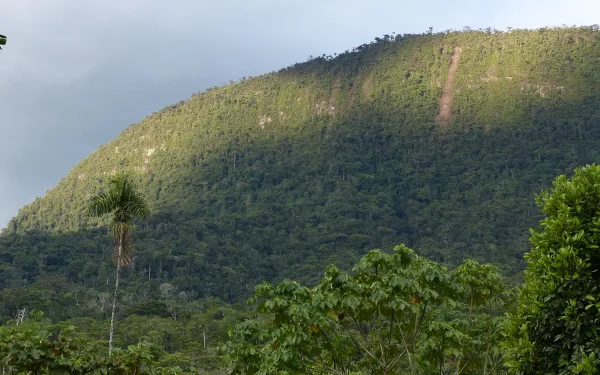
In southeast Ecuador, in the heart of its Amazon, stands an imposing mountain massif that stretches more than 160 kilometers in length: the Condor Mountain Range, which, once largely unknown, retains an expansive intact and unexplored territory. In this area of vital importance for life, science and conservation, an open-pit copper mine known as the Mirador project, with an expected lifespan of 30 years, began operating in July. The launch of the project marks the beginning of large-scale mining in Ecuador, with which the government intends to sustain the economy and leave behind its dependence on oil. This is a sad novelty because large-scale mining involves the risk of enormous environmental damages, which are most serious in ecosystems of great biodiversity and proximity to water sources such as the Condor Range, where indigenous and peasant communities also live. This impulse toward extractive activity contradicts the progress made in 2008, when Ecuador was the first country in the world to recognize the rights of nature in its Constitution. As the Amazon burns in flames, and takes our future with it, Ecuador has a responsibility to change course. The nation must serve as an example for other countries of the Amazon Basin, and the world, of the effective protection of the rainforest and those who depend on it. The resources we must conserve "This country lacks resources." Based on these words, the Mirador project and the presence of the mining industry in Ecuador has been intensified without precedent. They were said by spokespersons of the Chinese company Ecuacorriente (in charge of the mining concession) and echoed, in turn, by government representatives. But what will happen to the biodiversity and environmental services of the priceless Condor Range? These Amazonian mountains protect cloud forests and páramos (high mountain wetlands), both natural carbon sinks. They are home to more than 2,000 species of flora, including one of the few carnivorous plants in Ecuador, and hosts 613 species of birds. According to studies, there are another 2,000 plant species to be discovered in this unique environment. It is there that excavations of 300 to 500 meters deep will be carried out to access subsoil minerals, and where risky dams will be built to deposit tons of waste. The damages are already occurring. The company confirmed that 1,422 hectares of forest have been cleared for the project. And local organizations have denounced serious legal and constitutional violations surrounding the project. The discourse of large profits in store for the country from the exploitation and sale of subsoil resources has gained strength in recent months. Official data shows that currently 7.5% of the territory is concessioned for mineral exploration, and the government is analyzing the granting of new concessions. By 2020, the government plans to have a map of the new areas where mining will be permitted. These plans ignore the perpetual impacts of large-scale mining, including impacts on the landscape and damage to water quality. In the case of Mirador, the project has already caused the diversion of the Tundayme River, just to name one of its impacts, recognized as irreversible by the company itself. "Be coherent, stop using cell phones and bicycles and other objects made from materials extracted from the mines," challenged Vice President Otto Sonnenholzner, one of mining's biggest promoters, to those who oppose the projects. "I propose another challenge: you stop using water and food," replied Yaku Perez, a defender of water and prefect of the province of Azuay. The above is the clearest metaphor of what is at stake with the blind advance of open-pit mining in Ecuador. The climate crisis demands a new vision of development The accelerated move towards large-scale mining in Ecuador means acting negligently in the face of the global climate crisis, which forces us to change our development model this decade in order to achieve the goals of mitigation and adaptation. The international scientific community warned in 2018 that we only have a dozen years to maintain global warming at a maximum of 1.5°C (with respect to the pre-industrial era) and that exceeding that limit would make the risks of droughts, floods and extreme heat worse. This requires unprecedented transitions in sectors such as energy and industrial systems. Boosting large-scale mining is reversing and deepening the development model that has caused the climate emergency. It means destroying natural carbon sinks such as those in the Condor Mountain Range and the Amazon as a whole. Ecuador can and must take a new step forward. It must, as it did in 2008 with the recognition of the rights of nature, find a development model that effectively respects its obligations to the climate and to human rights. Ecuador cannot continue to mortgage the present and future of entire communities and ecosystems under the pretext of the immediate and ephemeral profits of mining. New paths are possible and, above all, urgent.
Read more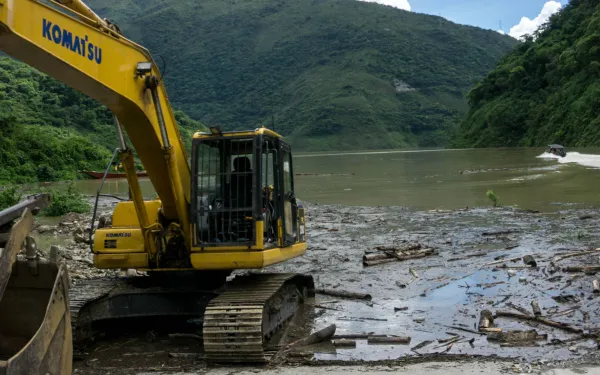
Inter-American Development Bank washes its hands of responsibility for dangerous Hidroituango dam and related human rights violations in Colombia
Fearing imminent collapse of the dam, communities in Antioquia, Colombia, have learned that the public lending arm of the Inter-American Development Bank (IDB) will not be investigated. Washington, DC — Last month, the Board and management of the Inter-American Development Bank (IDB) announced it would not approve an investigation of the Bank’s role in financing the construction of the controversial Ituango Hydroelectric Project (Hidroituango) in Colombia. The decision disregards allegations of acute and far-reaching harms caused by the project, including a humanitarian crisis that has displaced hundreds of families and caused human rights abuses, including assassination and intimidation of community members who oppose the project. The announcement comes more than a year after communities affected by the construction of the Hidroituango dam on the Cauca River in Antioquia, Colombia, filed a claim with the Independent Consultation and Investigation Mechanism (MICI). The claim, signed by more than 400 individuals affected by the dam, sought recourse from the MICI for the IDB’s alleged failure to comply with its own environmental and social safeguards. "We publicly denounce the IDB’s decision to evade its responsibility for the environmental damage and human rights violations resulting from the Hidroituango project, and we condemn the role of the MICI in facilitating and manifestly supporting this decision,2 remarked Isabel Zuleta, representative of Movimiento Ríos Vivos Antioquia. "It is unconscionable that the IDB is attempting to rewrite history by absolving itself from its responsibility for enabling and financing high-risk development projects that have extreme environmental impacts and blatantly violate human rights," added Zuleta. The IDB has two lending arms, one that invests in the public sector (the IDB) and another that invests in the private sector (IDB Invest). The MICI is the accountability mechanism of the bank, in charge of evaluating environmental and social compliance of the institution’s investments. The IDB initially invested in the Hidroituango project in 2012, which paved the way for and facilitated millions of dollars of additional investments from the IDB, as well as an additional billion from other international banks. The MICI, whose mandate is to provide accountability for harms caused by IDB investments, recommended no investigation of the IDB’s role in the project. Despite the decision not to review the IDB’s compliance, the MICI could continue its investigation regarding IDB Invest’s investment in the Hidroituango project. However this will depend completely on approval by the Bank’s Board. Before the dam was approved, communities warned of precisely the environmental and social impacts that have occurred. "For an institution that seeks to improve the lives of people in Latin America, the IDB’s decision is absurd, irresponsible, and disrespectful. It exemplifies a complete disregard for people living within the Cauca River Basin. Unfortunately, this disregard too often characterizes the IDB’s engagement in large-scale infrastructure projects throughout the region," said Alexandre Andrade Sampaio of International Accountability Project. "What is the value of environmental and social policies at the IDB, when they are ignored and dismissed precisely when they are most needed to protect people’s lives? This lack of accountability is unacceptable, and it demonstrates why communities affected by the actions of development banks have found it necessary to resort to the courts to secure their rights," remarked Carla García Zendejas, Senior Attorney at the Center for International Environmental Law (CIEL), in reference to the recent US Supreme Court decision in Jam v. IFC, which recognized that international organizations such as the IDB are not immune from litigation in US courts. "This decision exemplifies the perils of an accountability mechanism that lacks the independence and legitimacy to initiate and carry out a genuine investigation of a bank’s projects," added García Zendejas. "Since day one, the Hidroituango project carried out a weak impact assessment, inaccurate surveys of affected people and deficient environmental implementation and monitoring, but the IDB has continued to invest in it," sustained Carlos Lozano, Senior Attorney at the Interamerican Association for Environmental Defense (AIDA). "The project was approved and is under construction without having previously carried out an evaluation of alternatives," he pointed out. Members of Movimiento Ríos Vivos Antioquia, who represent affected communities in the complaint, continue to receive ongoing threats and suffer intimidation, homicides, and other forms of violence. The IDB has shown its disregard for the volatile situation surrounding Hidroituango, including the continued presence of paramilitary groups in the area. The IDB has also ignored community requests to delay dam construction to exhume mass graves from the armed conflict in the area affected by the dam. Press Contacts: Isabel Zuleta, Movimiento Ríos Vivos Antioquia, +57 3217347264, [email protected] (Spanish) Carla Garcia Zendejas, Center for International Law, +1 202 374 2550, [email protected] Alexandre Andrade Sampaio, International Accountability Project, [email protected] Carlos Lozano Acosta, Interamerican Association for Environmental Defense, [email protected] Note for editors: The Ituango hydroelectric plant will be the largest in Colombia, with a 49-mile (79 km) reservoir that will flood a surface of 11,120 acres (4,500 hectares). The IDB Group has financed the project through various types of investment: initially $2 million in technical cooperation for the Colombian State in 2012 and then $550 million in direct investments in 2016 to Empresas Públicas de Medellín (EPM), the company in charge of the project. Additionally, the IDB manages a $1 billion dollar loan package, with funds from multiple institutional investors, including European banks. After a construction failure at the dam construction in May 2018, more than 25,000 people had to be evacuated from the area due to flooding, landslides, and avalanches. The humanitarian crisis has worsened dramatically: people have lost their property, livelihoods, and access to health and education services, which have always been meager in the area. Many people have been displaced and those who have stayed are not properly cared for. In addition, people who are members of Movimiento Ríos Vivos are discriminated against. There is a lack of food, people suffer from diseases, and shelters are deficient. People are pressured to return to risk areas and sign documents waiving their claims. In short, communities are facing a situation of systematic human rights violations as a result of the project.
Read moreInter-American Development Bank washes its hands of responsibility for dangerous Hidroituango dam and related human rights violations in Colombia
Fearing imminent collapse of the dam, communities in Antioquia, Colombia, have learned that the public lending arm of the Inter-American Development Bank (IDB) will not be investigated. Washington, DC — Last month, the Board and management of the Inter-American Development Bank (IDB) announced it would not approve an investigation of the Bank’s role in financing the construction of the controversial Ituango Hydroelectric Project (Hidroituango) in Colombia. The decision disregards allegations of acute and far-reaching harms caused by the project, including a humanitarian crisis that has displaced hundreds of families and caused human rights abuses, including assassination and intimidation of community members who oppose the project. The announcement comes more than a year after communities affected by the construction of the Hidroituango dam on the Cauca River in Antioquia, Colombia, filed a claim with the Independent Consultation and Investigation Mechanism (MICI). The claim, signed by more than 400 individuals affected by the dam, sought recourse from the MICI for the IDB’s alleged failure to comply with its own environmental and social safeguards. "We publicly denounce the IDB’s decision to evade its responsibility for the environmental damage and human rights violations resulting from the Hidroituango project, and we condemn the role of the MICI in facilitating and manifestly supporting this decision,2 remarked Isabel Zuleta, representative of Movimiento Ríos Vivos Antioquia. "It is unconscionable that the IDB is attempting to rewrite history by absolving itself from its responsibility for enabling and financing high-risk development projects that have extreme environmental impacts and blatantly violate human rights," added Zuleta. The IDB has two lending arms, one that invests in the public sector (the IDB) and another that invests in the private sector (IDB Invest). The MICI is the accountability mechanism of the bank, in charge of evaluating environmental and social compliance of the institution’s investments. The IDB initially invested in the Hidroituango project in 2012, which paved the way for and facilitated millions of dollars of additional investments from the IDB, as well as an additional billion from other international banks. The MICI, whose mandate is to provide accountability for harms caused by IDB investments, recommended no investigation of the IDB’s role in the project. Despite the decision not to review the IDB’s compliance, the MICI could continue its investigation regarding IDB Invest’s investment in the Hidroituango project. However this will depend completely on approval by the Bank’s Board. Before the dam was approved, communities warned of precisely the environmental and social impacts that have occurred. "For an institution that seeks to improve the lives of people in Latin America, the IDB’s decision is absurd, irresponsible, and disrespectful. It exemplifies a complete disregard for people living within the Cauca River Basin. Unfortunately, this disregard too often characterizes the IDB’s engagement in large-scale infrastructure projects throughout the region," said Alexandre Andrade Sampaio of International Accountability Project. "What is the value of environmental and social policies at the IDB, when they are ignored and dismissed precisely when they are most needed to protect people’s lives? This lack of accountability is unacceptable, and it demonstrates why communities affected by the actions of development banks have found it necessary to resort to the courts to secure their rights," remarked Carla García Zendejas, Senior Attorney at the Center for International Environmental Law (CIEL), in reference to the recent US Supreme Court decision in Jam v. IFC, which recognized that international organizations such as the IDB are not immune from litigation in US courts. "This decision exemplifies the perils of an accountability mechanism that lacks the independence and legitimacy to initiate and carry out a genuine investigation of a bank’s projects," added García Zendejas. "Since day one, the Hidroituango project carried out a weak impact assessment, inaccurate surveys of affected people and deficient environmental implementation and monitoring, but the IDB has continued to invest in it," sustained Carlos Lozano, Senior Attorney at the Interamerican Association for Environmental Defense (AIDA). "The project was approved and is under construction without having previously carried out an evaluation of alternatives," he pointed out. Members of Movimiento Ríos Vivos Antioquia, who represent affected communities in the complaint, continue to receive ongoing threats and suffer intimidation, homicides, and other forms of violence. The IDB has shown its disregard for the volatile situation surrounding Hidroituango, including the continued presence of paramilitary groups in the area. The IDB has also ignored community requests to delay dam construction to exhume mass graves from the armed conflict in the area affected by the dam. Press Contacts: Isabel Zuleta, Movimiento Ríos Vivos Antioquia, +57 3217347264, [email protected] (Spanish) Carla Garcia Zendejas, Center for International Law, +1 202 374 2550, [email protected] Alexandre Andrade Sampaio, International Accountability Project, [email protected] Carlos Lozano Acosta, Interamerican Association for Environmental Defense, [email protected] Note for editors: The Ituango hydroelectric plant will be the largest in Colombia, with a 49-mile (79 km) reservoir that will flood a surface of 11,120 acres (4,500 hectares). The IDB Group has financed the project through various types of investment: initially $2 million in technical cooperation for the Colombian State in 2012 and then $550 million in direct investments in 2016 to Empresas Públicas de Medellín (EPM), the company in charge of the project. Additionally, the IDB manages a $1 billion dollar loan package, with funds from multiple institutional investors, including European banks. After a construction failure at the dam construction in May 2018, more than 25,000 people had to be evacuated from the area due to flooding, landslides, and avalanches. The humanitarian crisis has worsened dramatically: people have lost their property, livelihoods, and access to health and education services, which have always been meager in the area. Many people have been displaced and those who have stayed are not properly cared for. In addition, people who are members of Movimiento Ríos Vivos are discriminated against. There is a lack of food, people suffer from diseases, and shelters are deficient. People are pressured to return to risk areas and sign documents waiving their claims. In short, communities are facing a situation of systematic human rights violations as a result of the project.
Read more