
Project
Alberto Peña Kay
Protecting the Santurban páramo from mining's damage
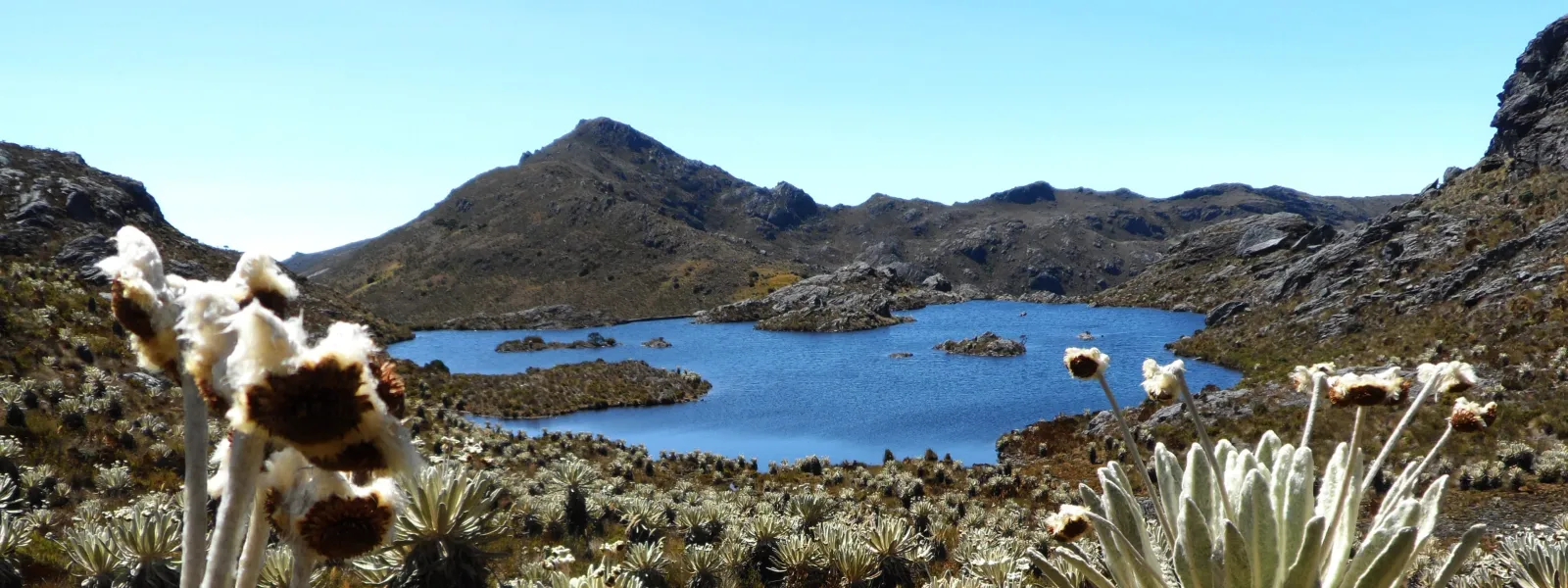
In the Andean region, high-mountain ecosystems known as páramos capture water from the fog and supply it to the lowlands. One such ecosystem is the Santurbán páramo, which provides fresh water to more than two million people in Colombia.
Santurbán, like the other páramos on the continent, also captures large amounts of carbon, making it a key ally in mitigating the climate crisis. It is also a refuge for hundreds of endangered species, including the iconic spectacled bear.
The land in and around the páramo contains gold and other minerals. This has put Santurbán in the spotlight of the multinational mining industry, which for decades has sought to establish large-scale projects in the ecosystem that threaten to degrade it.
The Committee for the Defense of Water and the Santurbán Páramo—a coalition of environmental advocates—has thwarted these ongoing attempts, with support from AIDA and other civil society organizations.
Background
The Santurbán páramo is located in the heart of the Eastern Cordillera of the Colombian Andes, in the departments of Santander and Norte de Santander, at an elevation ranging from 2,200 to 4,290 meters above sea level.
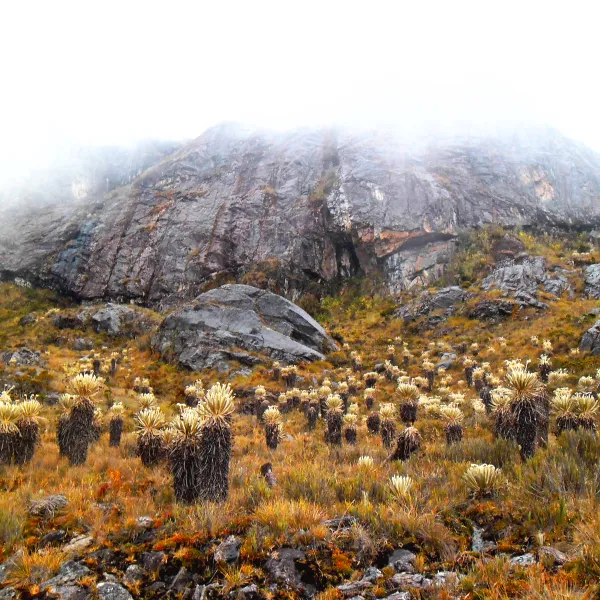
It covers an area of 129,743 hectares and is home to 57 lakes. It serves as a habitat for 457 plant species and 293 species of vertebrate fauna.
There are mineral deposits in Santurbán, primarily gold, but also silver and copper. This explains the region’s mining tradition, particularly in the part of the páramo located in Santander, in the province of Soto Norte. The communities in the area have built their culture and identity around gold mining, which is mainly artisanal and small-scale.
But since the 1990s, the gold deposits in the páramo have also attracted foreign mining conglomerates seeking to develop large-scale projects. This has raised concerns among the population that relies on the Santurbán water sources, who have mobilized in defense of water, their land, and life.
Although national and international regulations prohibit mining in páramos, the Colombian government has granted mining concessions to transnational corporations in Santurbán.

Photo: Keishpixl / Pixabay.
The long struggle to protect the páramo
One of the companies that sought to develop large-scale mining in Santurbán is Eco Oro Minerals Corp.—formerly Greystar Resources—a Canadian company that intended to establish the Angostura open-pit mine there to extract gold and silver. Between 1994 and 1995, the company acquired its mining titles and conducted exploration. And in 2010, it applied for a mining permit.
That was the year AIDA became involved in defending the ecosystem, supporting the Committee for the Defense of Water and the Santurbán Páramo. Our legal work helped convince the Colombian government to deny the mine an environmental permit in May 2011.
In January 2013, the government designated a portion of the páramo (11,700 hectares) as a Regional Natural Park. That year—together with the committee and partner organizations—we carried out a campaign and advocacy efforts to urge the government to recognize the entire Santurbán area as a páramo ecosystem through a delimitation based on scientific criteria. In December 2014, the Ministry of the Environment established a delimitation that protected 76% of the páramo (98,954 hectares).
Furthermore, as a result of a litigation supported by AIDA, in February 2016, Colombia’s highest court reaffirmed that mining in páramos is prohibited.
That same year, in December, the International Finance Corporation (IFC), the World Bank Group’s private sector arm, decided to divest from Eco Oro Minerals. This achievement was the result of a process that began in 2012, when the committee—advised and supported by AIDA and international partner organizations—filed a complaint before an independent accountability mechanism, which concluded that the IFC’s investment in the Angostura project failed to take into account the project’s social and environmental impacts, thereby contradicting the financial institution’s internal policies.
Also in 2016, Eco Oro Minerals filed an arbitration claim against the Colombian government with the International Centre for Settlement of Investment Disputes (ICSID), arguing that it had been adversely affected by government decisions aimed at protecting the country’s páramos, including the delimitation of Santurbán.
In 2017, the Constitutional Court invalidated the delimitation because the affected communities were not consulted. The high court ordered that a participatory delimitation be carried out.
And that year, a new threat to Santurbán emerged when the Canadian multinational Aris Mining applied for an environmental permit for Soto Norte, a gold mining project located near the páramo. Following citizen protests and technical objections, in October 2020, the National Environmental Licensing Authority shelved the project.
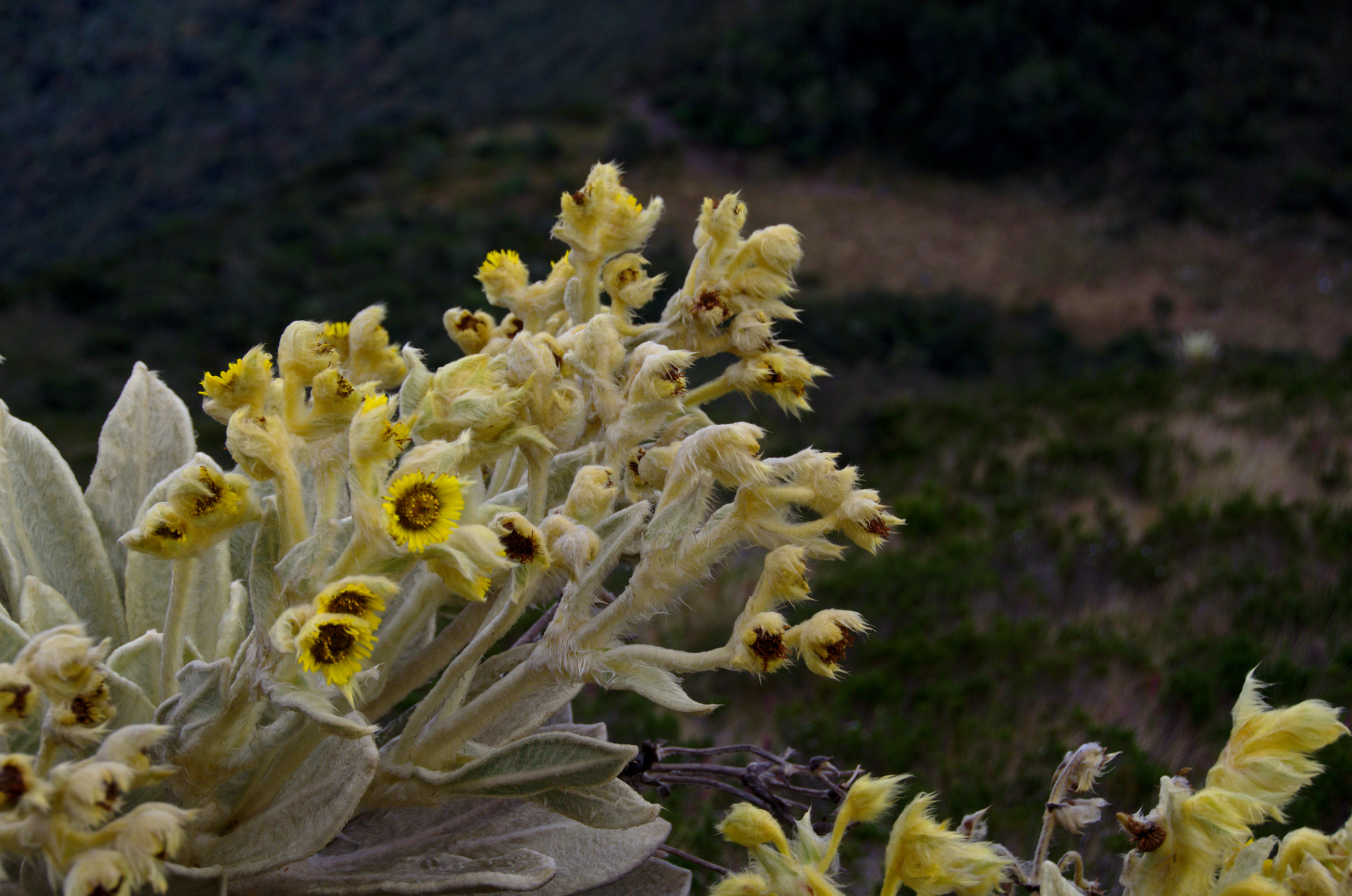
Photo: Aztlec.
Current situation
In March 2025, the Colombian government designated the western flank of the Santurbán massif as a temporary renewable natural resource reserve area, delimiting and protecting an area of 75,344.65 hectares. This resulted in a two-year suspension of the Soto Norte project. However, Aris Mining's contract to formalize Calimineros' small-scale mining activities through the purchase and processing of mineralized material remains in effect.
In addition, the Canadian mining company continues to move the project forward. In September 2025, it released its prefeasibility study, revising the mine’s original design.
Meanwhile, members of the Committee for the Defense of Water and the Santurbán Páramo face threats and stigmatization because of their work. In March 2025, UN Special Rapporteurs and the Working Group on Business and Human Rights denounced these incidents in communications sent to the governments of Colombia, Canada, and the United Arab Emirates, as well as to the companies Aris Mining and MDC Industry Holding Company LLC, the former co-owner of the Soto Norte project.
Regarding the arbitration claim filed by Eco Oro Minerals, in July 2024, ICSID ruled in favor of the Colombian government and rejected the Canadian company’s claim for USD 1.1 billion in compensation.
Concerning the delimitation of Santurbán, in July 2026, the Ministry of the Environment issued a resolution introducing the concept of "progressive delimitation." On that basis, the government proposes to progressively demarcate the páramo, covering 29,199 hectares across 19 municipalities—those where the participatory agreements required by the Constitutional Court in its 2017 ruling have already been finalized. It also proposes two measures on the creation and expansion of reserves to restrict mining in the ecosystem.
Learn more about the impacts of mining on the páramos of Latin America (in Spanish).
Partners:
Related projects
Empowering fishermen to protect coral reefs, and their guardians
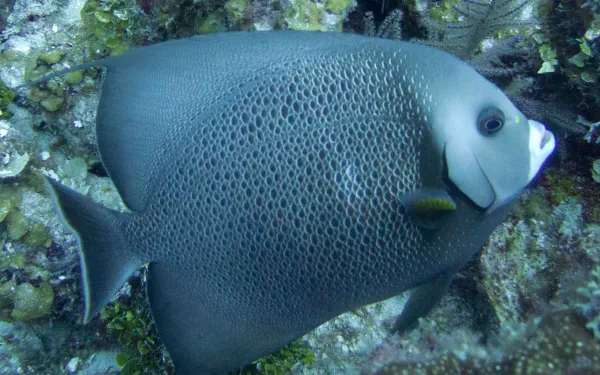
When he thinks of his childhood, Mario Smith remembers the abundance of fish, crabs and lobsters he and his father used to find while fishing, an activity now in decline on his island. "There used to be such abundance and today we are forbidden to fish for many things because of our irresponsibility in taking care of our resources," said Mario, who is now the leader of the San Luis Fishermen's Committee, whose members work on San Andres Island, Colombia. San Luis is a hamlet located on the east coast of San Andres with white sandy beaches and calm waters. I was there in August to support the dissemination of a very important resolution for the conservation of the coral ecosystems of the Colombian Caribbean. The law prohibits the capture and sale of several species of herbivorous and omnivorous fish that cleanse the corals of the algae that take away their light and space, thus supporting their survival. In recent years, a decrease in commercial species has led fishing communities have to go after herbivorous fish. This, in turn, has caused a reduction in populations of these species, particularly in the Caribbean. The resolution was issued on July 15 by the Corporation for the Sustainable Development of the Archipelago of San Andrés, Providencia and Santa Catalina (CORALINA), the environmental authority in that region. Disseminating and socializing these type of norms in local communities is very important so that residents, understanding the importance of these fish for the health of both the reefs and their economies, support actions aimed at their conservation. Along with CORALINA's education team, I visited several fishermen's committees, as well as schools and restaurants. I participated in a meeting of the Inter-Institutional Committee on Environmental Education, which was also attended by representatives of the government, the police, and the tourism and education sectors. The visits were very enriching, full of questions and emotions. In each of them I highlighted the benefits of taking care of our corals and the fish that help them thrive. Coral reefs are one of the most important ecosystems on the planet. They are home to more than 25% of our marine species and protect our coasts from hurricanes, storms and other weather events. At Cajasai School, the active participation of one student surprised me. He told me of his concern about garbage on his beaches and about catching parrotfish, one of the most important species of herbivorous fish. "I'm very concerned about my resources and that's why I made a foundation to take care of the beaches that are close to my home," he told me passionately. His empathy and desire to fight for his beaches and sea inspired me. The beautiful landscapes of San Andrés and the interest of all the people I spoke with filled me with satisfaction and energy to continue working. But there is still a lot to do. Our marine resources are in danger of disappearing in the face of the global climate crisis. And the urgency to do something about it is becoming ever more pressing. Our coral reefs are among the ecosystems most threatened by this crisis, mainly due to changes in the acidity and temperature of our oceans. In addition, human actions such as pollution and overfishing are causing irreversible damages. That’s why AIDA will continue to support local efforts to conserve important marine species, such as the parrotfish and his herbivorous relatives. LEARN MORE
Read more
Human rights, the great absentees at the UN Climate Summit
The United Nations Climate Action Summit on September 23rd was an interesting step toward the future. Some commitments were announced to confront the climate crisis. But one key aspect was absent: the express, transversal and decisive inclusion of human rights. Goals of the global meeting included preventing the development of new coal projects, achieving zero net emissions by 2050, ending fossil fuel subsidies, and making those who pollute pay. To this end, 19 states—supported by various organizations—worked in coalition to achieve goals on mitigation, social and political drivers, youth and public mobilization, energy transition, industrial transition, nature-based solutions, adaptation and resilience, climate finance and carbon pricing, as well as infrastructure, cities and local action. Although previous meetings were held with indigenous peoples, and some coalitions recognized that solutions shouldn’t increase inequality—but be fair and include a gender perspective—what we needed was an explicit reference to human rights. It was conspicuous for its absence. This is not a minor need. It’s enough to see those who suffer first and worst the impacts of the climate emergency: families in Central America who, after losing their crops, leave everything behind to migrate to the United States; residents of the Bahamas, devastated by Hurricane Dorian; and those who live in the Amazon, partially destroyed by fires. The climate crisis is already affecting human rights. Michelle Bachelet, UN High Commissioner for Human Rights, called it their greatest threat. Some measures to address the climate emergency actually aggravate it, while ignoring human rights. This is the case with wind projects and large hydroelectric dams in Brazil, Mexico, Colombia and Honduras, which have been implemented without consulting local communities, some of them indigenous. It was therefore essential that world leaders use Summit to expressly include in their commitments a respect for human rights, a recognition already found in the Paris Agreement. That did not happen. Nevertheless, hope is fuelled by growing awareness, which increases pressure on governments, companies and other sectors to contribute more. Millions of students around the world are on strike and dropping out of school on Fridays. Mobilizations have multiplied and so have their supporters. Having true ambition for climate justice means putting human rights at the center of our solutions, not least because indigenous and traditional communities have knowledge essential to preserving the planet.
Read more
Ocean scientists and NGOs call time on government neglect of earth’s life support system
The Intergovernmental Panel on Climate Change (IPCC) Special Report on the Ocean and Crysophere in a Changing Climate reveals the extent of the crisis facing humanity as the ocean and its services begin to show signs of collapse. Although the ocean is inextricably linked with the climate, the two working together to make planet Earth habitable, this is the first time that the IPCC has turned its attention to the marine realm. The resulting report conveys what marine scientists and NGOs have been saying for years, that the ocean is beginning to crumble under an onslaught of needless stressors from overfishing to pollution, compounded by climate breakdown. The effect of climate breakdown is the most serious, creating acidification, heating and deoxygenation. These three factors have been present in every mass extinction event in Earth’s history; all three are active in the ocean now. Professor Dan Laffoley of the IUCN World Commission on Protected Areas: “We are an ocean world, run and regulated by a single ocean and we are pushing that life support system to its very limits through heating, deoxygenation and acidification. We are well past 'wake up calls' - what we need now is enlightened self-interest to deliver the actions that protect the ocean and climate and which in turn protect and support humanity.” The timescales at work within the ocean mean that changes already put into its system – such as warming – will remain at work for hundreds of years, consequently, even with immediate action to curb temperature rise and cut CO2 emissions, ocean services to the planet could still be at risk. This is why it is so important that all extraneous stressors on the ocean which can be controlled, are. Overfishing, pollution, destruction of habitats, ecosystems and biodiversity are all stressors which can be stopped to support the resilience of the ocean to withstand the climate crisis. Gladys Martínez, senior attorney of the Interamerican Association for Environmental Defense (AIDA): “The IPCC report makes it crystal clear that time is running out for ocean action. We have a small window of opportunity to achieve a strong High Seas Treaty by 2020 and to protect at least 30% of the ocean by 2030, two measures that will help defend the resilience of the ocean. The treaty is being negotiated before the United Nations and states must complete it by 2020, in line with the UN General Assembly resolution and demonstrating high ambitions.” Although the picture painted by the IPCC is undeniably bleak, there are measures which can be taken now to help bolster the resilience of the ocean and which governments need to finally and robustly take action on. State parties to the legally binding Convention on Biological Diversity will negotiate new targets to protect biodiversity at a meeting in 2020. The target for marine biodiversity should be to protect at least 30% of the ocean through implemented highly and fully protected areas, with the remaining 70% of the ocean sustainably managed. Bringing an end to overfishing and pollution in all its forms and preventing further biodiversity, ecosystem and habitat loss are essential measures within our reach. Tackling climate breakdown and holding warming at or as close to 1.5 degrees Celsius as possible is essential if the ecosystem services of the ocean are to survive. All states need to commit to new and more ambitious plans (NDCs) in 2020 to achieve this. Press contacts: Victor Quintanilla in Mexico - [email protected], +521 5570522107 Patricia Roy in Paris - [email protected], +34 696 905 907 Mirella von Lindenfels in London - [email protected], +44 7717 844 352 Karen Rausch in Santiago - [email protected], +56 967354769 Sophie Hulme in NYC - [email protected], +44 7973 712869
Read more