
Project
Alberto Peña Kay
Protecting the Santurban páramo from mining's damage
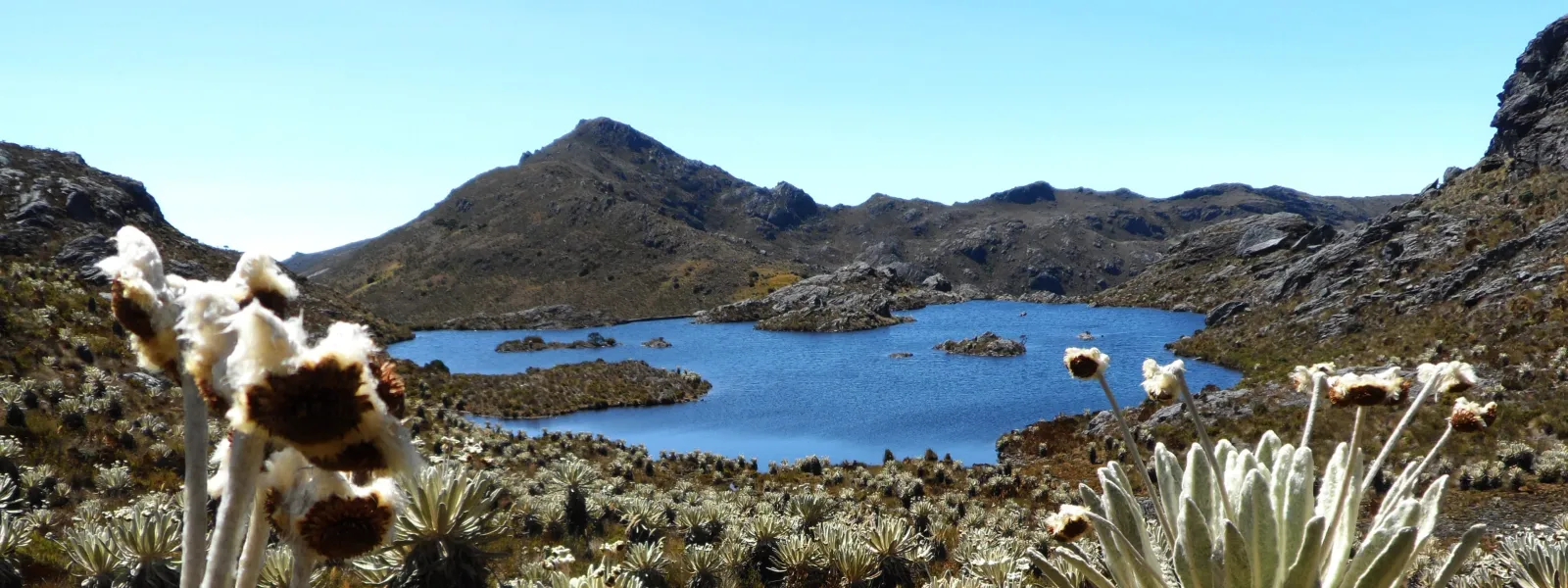
In the Andean region, high-mountain ecosystems known as páramos capture water from the fog and supply it to the lowlands. One such ecosystem is the Santurbán páramo, which provides fresh water to more than two million people in Colombia.
Santurbán, like the other páramos on the continent, also captures large amounts of carbon, making it a key ally in mitigating the climate crisis. It is also a refuge for hundreds of endangered species, including the iconic spectacled bear.
The land in and around the páramo contains gold and other minerals. This has put Santurbán in the spotlight of the multinational mining industry, which for decades has sought to establish large-scale projects in the ecosystem that threaten to degrade it.
The Committee for the Defense of Water and the Santurbán Páramo—a coalition of environmental advocates—has thwarted these ongoing attempts, with support from AIDA and other civil society organizations.
Background
The Santurbán páramo is located in the heart of the Eastern Cordillera of the Colombian Andes, in the departments of Santander and Norte de Santander, at an elevation ranging from 2,200 to 4,290 meters above sea level.
It covers an area of 129,743 hectares and is home to 57 lakes. It serves as a habitat for 457 plant species and 293 species of vertebrate fauna.
There are mineral deposits in Santurbán, primarily gold, but also silver and copper. This explains the region’s mining tradition, particularly in the part of the páramo located in Santander, in the province of Soto Norte. The communities in the area have built their culture and identity around gold mining, which is mainly artisanal and small-scale.
But since the 1990s, the gold deposits in the páramo have also attracted foreign mining conglomerates seeking to develop large-scale projects. This has raised concerns among the population that relies on the Santurbán water sources, who have mobilized in defense of water, their land, and life.
Although national and international regulations prohibit mining in páramos, the Colombian government has granted mining concessions to transnational corporations in Santurbán.

Photo: Keishpixl / Pixabay.
The long struggle to protect the páramo
One of the companies that sought to develop large-scale mining in Santurbán is Eco Oro Minerals Corp.—formerly Greystar Resources—a Canadian company that intended to establish the Angostura open-pit mine there to extract gold and silver. Between 1994 and 1995, the company acquired its mining titles and conducted exploration. And in 2010, it applied for a mining permit.
That was the year AIDA became involved in defending the ecosystem, supporting the Committee for the Defense of Water and the Santurbán Páramo. Our legal work helped convince the Colombian government to deny the mine an environmental permit in May 2011.
In January 2013, the government designated a portion of the páramo (11,700 hectares) as a Regional Natural Park. That year—together with the committee and partner organizations—we carried out a campaign and advocacy efforts to urge the government to recognize the entire Santurbán area as a páramo ecosystem through a delimitation based on scientific criteria. In December 2014, the Ministry of the Environment established a delimitation that protected 76% of the páramo (98,954 hectares).
Furthermore, as a result of a litigation supported by AIDA, in February 2016, Colombia’s highest court reaffirmed that mining in páramos is prohibited.
That same year, in December, the International Finance Corporation (IFC), the World Bank Group’s private sector arm, decided to divest from Eco Oro Minerals. This achievement was the result of a process that began in 2012, when the committee—advised and supported by AIDA and international partner organizations—filed a complaint before an independent accountability mechanism, which concluded that the IFC’s investment in the Angostura project failed to take into account the project’s social and environmental impacts, thereby contradicting the financial institution’s internal policies.
Also in 2016, Eco Oro Minerals filed an arbitration claim against the Colombian government with the International Centre for Settlement of Investment Disputes (ICSID), arguing that it had been adversely affected by government decisions aimed at protecting the country’s páramos, including the delimitation of Santurbán.
In 2017, the Constitutional Court invalidated the delimitation because the affected communities were not consulted. The high court ordered that a participatory delimitation be carried out.
And that year, a new threat to Santurbán emerged when the Canadian multinational Aris Mining applied for an environmental permit for Soto Norte, a gold mining project located near the páramo. Following citizen protests and technical objections, in October 2020, the National Environmental Licensing Authority shelved the project.
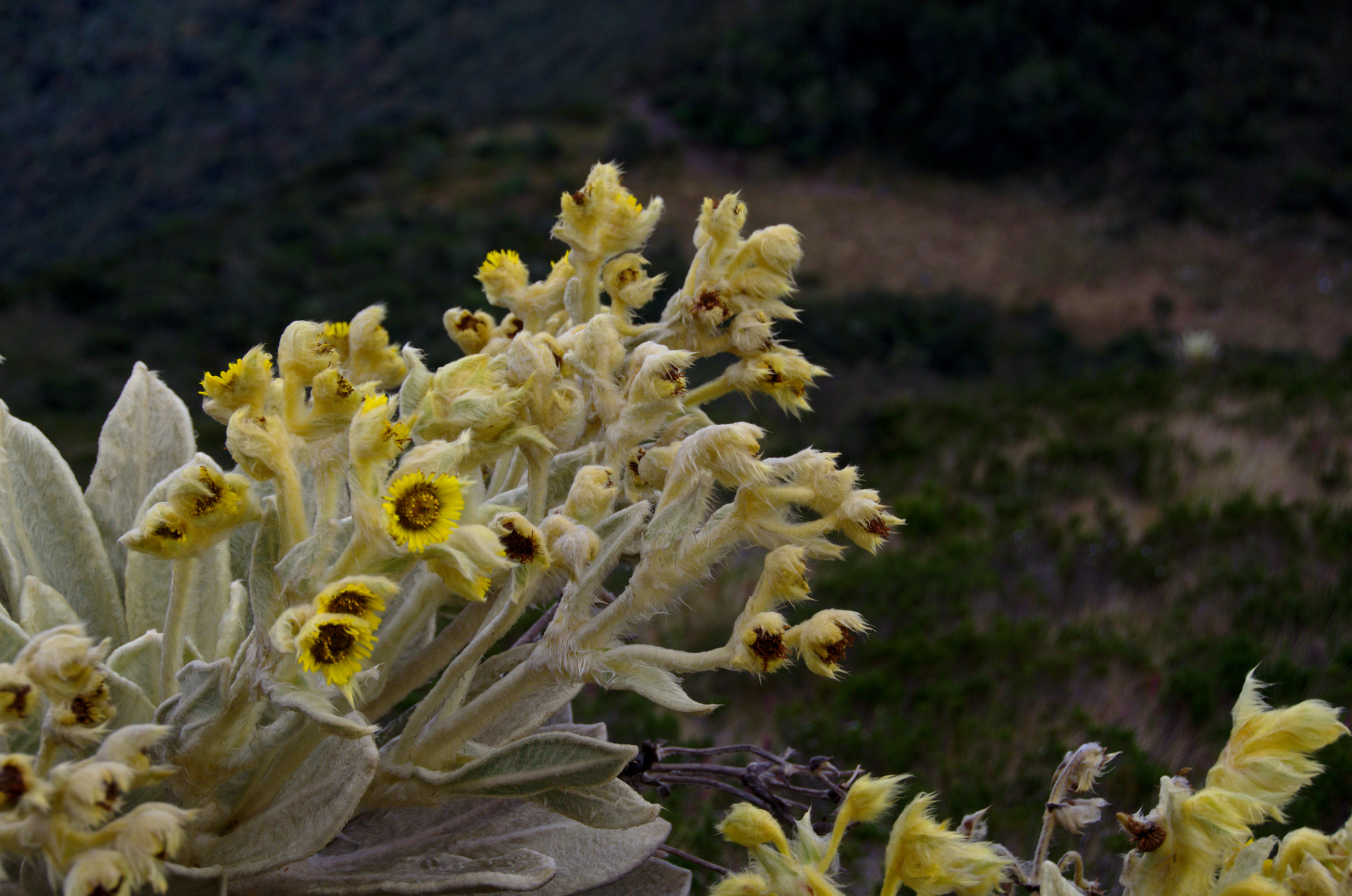
Photo: Aztlec.
Current situation
In March 2025, the Colombian government designated the western flank of the Santurbán massif as a temporary renewable natural resource reserve area, delimiting and protecting an area of 75,344.65 hectares. This resulted in a two-year suspension of the Soto Norte project. However, Aris Mining's contract to formalize Calimineros' small-scale mining activities through the purchase and processing of mineralized material remains in effect.
In addition, the Canadian mining company continues to move the project forward. In September 2025, it released its prefeasibility study, revising the mine’s original design.
Meanwhile, members of the Committee for the Defense of Water and the Santurbán Páramo face threats and stigmatization because of their work. In March 2025, UN Special Rapporteurs and the Working Group on Business and Human Rights denounced these incidents in communications sent to the governments of Colombia, Canada, and the United Arab Emirates, as well as to the companies Aris Mining and MDC Industry Holding Company LLC, the former co-owner of the Soto Norte project.
Regarding the arbitration claim filed by Eco Oro Minerals, in July 2024, ICSID ruled in favor of the Colombian government and rejected the Canadian company’s claim for USD 1.1 billion in compensation.
Concerning the delimitation of Santurbán, in July 2026, the Ministry of the Environment issued a resolution introducing the concept of "progressive delimitation." On that basis, the government proposes to progressively demarcate the páramo, covering 29,199 hectares across 19 municipalities—those where the participatory agreements required by the Constitutional Court in its 2017 ruling have already been finalized. It also proposes two measures on the creation and expansion of reserves to restrict mining in the ecosystem.
Learn more about the impacts of mining on the páramos of Latin America (in Spanish).
Partners:
Related projects

Air pollution: it damages your health from day one
Although they occur seasonally each year, respiratory diseases are becoming increasingly severe, said pediatrician Gina Pinilla, who works in Bogotá. As air quality decreases, health complications increase for children who come to the emergency department. What Dr. Pinilla has observed in more than a decade of experience as a doctor is no mere impression. A study conducted by a multidisciplinary team of researchers in Colombia shows that health damage from poor air quality is noticeable from day one. Hospital admissions increase over the first 24 to 72 hours and can extend for almost two weeks. It’s the first multi-city study conducted in Colombia and Latin America to determine the relationship between air pollution and respiratory and circulatory diseases in the population, explained lead researcher Dr. Laura Rodriguez of the Industrial University of Santander. Each contaminant affects us differently One of the findings that most caught the researchers' attention is that harms caused by pollutants are different for children and adults. Children suffer from respiratory diseases, while adults face cardiovascular complications. "Children between 5 and 9 years old face greater impacts and are more likely to have an episode that takes them to the emergency room,” explained Dr. Rodriguez. “But this doesn't mean that the younger ones are unaffected. When a child has respiratory complications, he or she may stay hospitalized for up to a week and be connected to respiratory support. "There are children who need prolonged hospitalizations. For a week, they are dependent on oxygen, whether from a nasal cannula or oxygen machines,” Dr. Pinilla added. “Then they are left with side effects and get sick often." The particular mixture of pollutants found in the air also affects each age group differently. "Pollution in every city has its own behavior: interaction, quantity and the change in makeup between cities," said Dr. Rodriguez. In Bogotá, for example, pollution by sulfur dioxide and particulate matter (PM10 and PM2.5) are related to circulatory diseases in people over 60. Pollution by nitrogen dioxide, sulfur dioxide and PM2.5 particles significantly increases the risk of hospitalization in people under the age of 15. The researcher says that the damage caused by nitrogen dioxide is not given much importance, despite being associated with cardiovascular disease in adults. And, when that pollutant is combined with sulfur dioxide and particulate matter, its effects are enhanced. Pollution harms, even in small quantities An important takeaway from this study is that contaminants can begin to damage public health even before they reach maximum allowable limits. Nitrogen dioxide, for example, is considered harmful, yet regulations have set very high emission limits. "Reaching these limits is very difficult. The city has to be in absurdly high pollution for the alerts to sound," explained Dr. Rodriguez. “The health effects are not related to whether you are exposed to the limits or not, but to the type of mixture you are breathing, because the pollutants are potentiating each other.” In several Latin American cities, regulations allow pollution limits that exceed the recommendations of the World Health Organization (WHO). For example, the WHO recommends a maximum average of 20 µg/m3 (micrograms per cubic meter) of PM10 (solid particles such as ash, soot and dust), but Bogotá has an average of 38 µg/m3. Other cities in the region have even higher annual averages: 40 (Monterrey), 55 (Mexico City), 62 (Lima) and 69 (Santiago). What does this information mean for your city? When poor air quality reaches its most critical levels, hospitals are left without beds and many children with respiratory illnesses remain in the emergency area, explained Dr. Pinilla. It's a common situation because there are no action plans for environmental contingencies. For Dr. Laura Rodriguez, the most important result of her research would be that it helps institutions take action to confront the issue. She recommends local governments and health institutions: Control and regulate the air quality parameters of industrial emissions, and consider monitoring other pollutants. Increase efforts to communicate to the public about the risks of pollution levels in their cities. Prepare hospitals, especially in the first months of the year when pollution reaches its highest level, aggravated by changes in the climate. She emphasized the importance of making intersectoral and multidisciplinary plans and investigations to understand the panorama of air pollution, and to ensure that this information gets into the hands of the appropriate authorities. The study was also conducted by Julián Alfredo Fernández-Niño (U. del Norte, Barranquilla), Néstor Rojas (U. Nacional), Luis Camilo Blanco (U. Santo Tomás) and Víctor Herrera, U. Autónoma de Bucaramanga). Consult it here.
Read more
Inter-American Development Bank to investigate Ituango hydroelectric project
Washington D.C. In a historic decision, the Board of Executive Directors of the Inter-American Development Bank (IDB) approved an international investigation of the Bank’s private lending arm, IDB Invest, for its investment in the Ituango hydroelectric project. Located in the department of Antioquia, the Ituango dam has had a devastating impact on thousands of people across four departments and 27 municipalities in Colombia. The investigation’s main objective will be to determine whether—when financing this megaproject in a region of Colombia that continues to be affected by high levels of violence and resurgent armed conflict—the Bank complied with the social and environmental standards that it is obligated to uphold. The investigation will also examine whether any non-compliance by the Bank is connected to the serious harm that has been sustained by affected communities. “As those who have been affected by the Ituango dam, we demand that the investigation be rigorous and independent,” declared Isabel Zuleta, spokesperson for Movimiento Ríos Vivos in Colombia, which represents the affected communities. “For more than a decade, our communities have denounced the serious problems that the project has caused. These problems have been further exacerbated by the multiple emergencies that have occurred since 2018 and that continue to this day. We hope that, with this international investigation, the voices of victims and opponents of the project will finally be heard.” The investigation originated in a complaint filed by 477 people affected by the Ituango dam project. In the complaint, the affected communities—which are represented by Movimiento Ríos Vivos—emphasize that the Bank’s own policies require that the projects it finances must be sustainable, participatory, and in conformity with national legislation. In the case of the Ituango dam, none of this has happened. In the complaint, the communities indicate that the project lacked an adequate environmental impact assessment and that it did not allow for the participation of communities or provide access to information. They emphasize that the project has been advanced in a context marked by human rights violations, the disproportionate use of force, and increasing violence against people who defend their land and water. They also point out the pattern of discrimination faced by communities for deciding to oppose the project, as well as by women affected by the project. As the complaint lays out, all of this contradicts the social and environmental standards that the IDB must apply to its investments. Further, the complaint was filed in the wake of a humanitarian crisis that endangered the lives of thousands of people in the area surrounding the dam’s construction site. The crisis began after two of the dam’s diversion tunnels were blocked with cement, when a third tunnel became obstructed and the river’s flow increased dramatically. The resulting landslides and flooding forced thousands of people to be evacuated from their homes in a poorly planned, ad hoc manner, and many remain displaced to this day. No other development project in Colombia has caused a humanitarian crisis of this magnitude. This crisis reveals the inadequacy of both the impact assessment and the environmental regulation of the project, which—despite these deficiencies—was nevertheless approved. The state of emergency in the area affected by the crisis has yet to be lifted, and neither the government nor the regulatory agencies in Colombia have ruled out the possibility that the dam could collapse altogether. Even in this critical context, the affected communities sought to engage in a process of dialogue and dispute resolution with the company behind the dam project, which would have been facilitated by the IDB’s accountability mechanism. However, the company refused to participate in such a dialogue. For this reason, as the next step in the process following from the complaint, the accountability mechanism recommended this investigation. The communities affected by the Ituango dam, who live in the river basin of the Cauca River and its tributaries, are accompanied in the complaint process by the Center for International Environmental Law (CIEL), the Interamerican Association for Environmental Defense (AIDA), and International Accountability Project (IAP). The Ituango dam is expected to be the largest hydropower plant in Colombia, capable of generating 2,400 MW of electricity. Although the dam’s 79-kilometer-long reservoir was filled nearly two years ago, however, the dam has yet to generate any electricity. Moreover, the project has flooded 4,500 hectares without first removing the area’s vegetation, which is now generating large quantities of methane, a greenhouse gas. This flooding was undertaken even before the dam structure itself was completed and without informing, relocating, or compensating communities in the impacted area. IDB Invest has invested millions of dollars in the project and facilitated an additional billion-dollar investment in the project by other international banks. These investments have been maintained despite the grave crisis caused by the project. press contacts: Isabel Zuleta, Movimiento Ríos Vivos, [email protected] (Spanish only) Carla García Zendejas, Center for International Environmental Law, [email protected] Victor Quintanilla, Interamerican Association for Environmental Defense, [email protected] Alexandre Sampaio, International Accountability Project, [email protected] Note for editors: The investigation will be conducted by the Independent Consultation and Investigation Mechanism (MICI) of the Inter-American Development Bank. As an international accountability mechanism, the MICI addresses complaints from people and communities affected by IDB-funded development projects. The investigation will be carried out within a maximum period of nine months, in light of the high complexity of the case. Among the aspects of the project that will be investigated are the following: Whether the area of influence was adequately assessed and the affected population properly identified; The heightened levels of conflict and insecurity in the area surrounding the dam, and its differentiated impacts on women; The participation of communities, which—in the opinion of the communities themselves—has been seriously lacking; The relationship between the project and the damage caused; The deficiencies in the project’s resettlement plans and supposed compensation; The assessment of the risk of disasters, and access to information about these risks.
Read more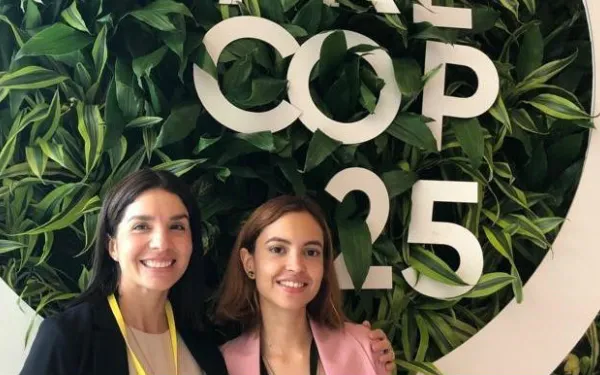
Defending my place in the fight for the climate
I started at AIDA as a law student exploring the possibilities of working in the field of environmental law. Four years later, I am the youngest attorney on the organization's legal team, supporting the efforts of the Marine Biodiversity and Coastal Protection Program. I always say that the best part of my job is being surrounded by so many young, powerful and exemplary women. Their teachings have cemented my path. Last month, I participated in the preparatory meeting for the 25th Conference of the Parties (COP25) of the United Nations Framework Convention on Climate Change, which took place in Costa Rica. It was my first time at such an event. It was there that I really felt the strength of women and the younger generations, who have united to demand our place at the table to discuss solutions to the climate crisis. In recent months, we’ve seen the strength of global and regional movements of young people outraged by what they see as the inaction of governments to curb global warming. For the most part, young women, adolescents and even girls have led these movements. The climate meeting in Costa Rica was no exception, and reflected the generational change we are experiencing. In that forum, young people of various professions and aspirations made our claim and sought to be heard. We were united by a common purpose: to guarantee our future and to be better than present generations in fulfilling that goal. Millennials (the generational group to which I belong) and the centennials (to which my 13-year-old sister belongs) are the ones who will have to live with the consequences of political inaction in the face of the climate crisis. It is our future that is at stake. Women are especially vulnerable to environmental degradation due to the special role we play in caring for natural resources and the people around us. That is why it’s good news that we’re rising up and demanding clear, concrete and, above all, urgent actions. This PreCOP was an opportunity for learning and growth. I identified with the emphasis that the government of Costa Rica placed on the protection of the ocean and solutions based in nature. And I was inspired to see more and more young women taking the lead in the determined and ambitious actions that the world's environmental and social crises require us to take.
Read more