
Project
Alberto Peña Kay
Protecting the Santurban páramo from mining's damage
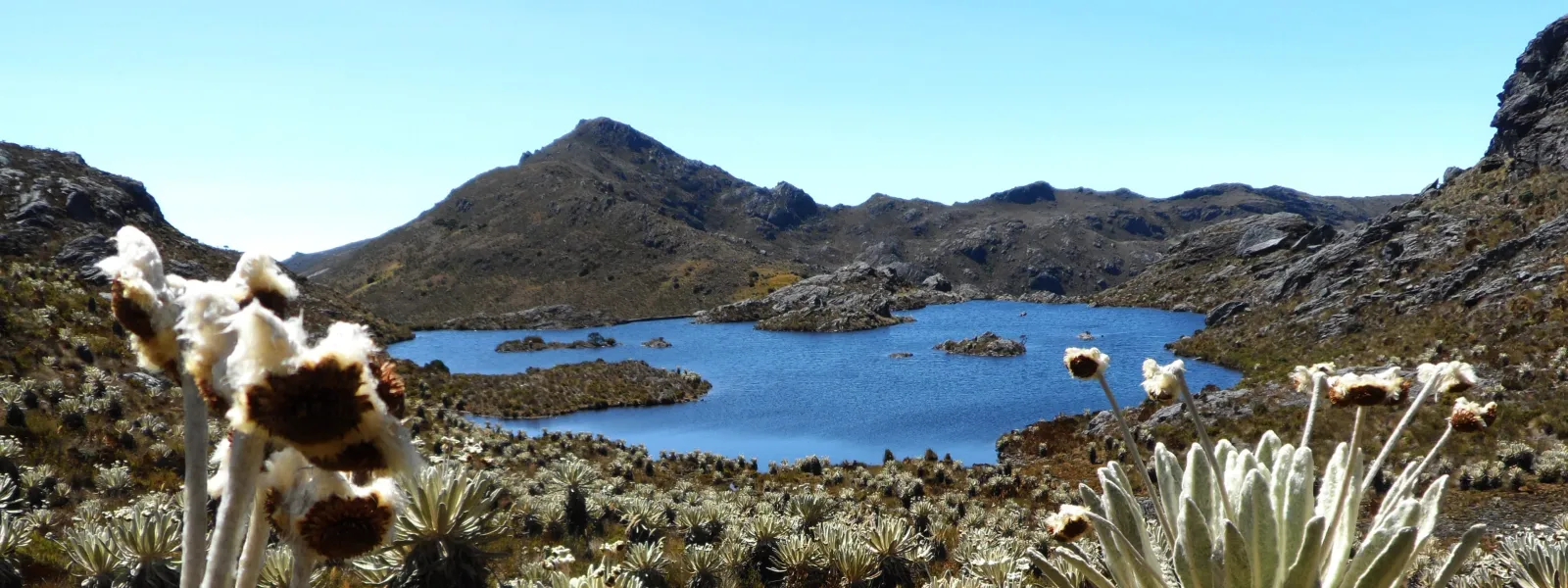
In the Andean region, high-mountain ecosystems known as páramos capture water from the fog and supply it to the lowlands. One such ecosystem is the Santurbán páramo, which provides fresh water to more than two million people in Colombia.
Santurbán, like the other páramos on the continent, also captures large amounts of carbon, making it a key ally in mitigating the climate crisis. It is also a refuge for hundreds of endangered species, including the iconic spectacled bear.
The land in and around the páramo contains gold and other minerals. This has put Santurbán in the spotlight of the multinational mining industry, which for decades has sought to establish large-scale projects in the ecosystem that threaten to degrade it.
The Committee for the Defense of Water and the Santurbán Páramo—a coalition of environmental advocates—has thwarted these ongoing attempts, with support from AIDA and other civil society organizations.
Background
The Santurbán páramo is located in the heart of the Eastern Cordillera of the Colombian Andes, in the departments of Santander and Norte de Santander, at an elevation ranging from 2,200 to 4,290 meters above sea level.
It covers an area of 129,743 hectares and is home to 57 lakes. It serves as a habitat for 457 plant species and 293 species of vertebrate fauna.
There are mineral deposits in Santurbán, primarily gold, but also silver and copper. This explains the region’s mining tradition, particularly in the part of the páramo located in Santander, in the province of Soto Norte. The communities in the area have built their culture and identity around gold mining, which is mainly artisanal and small-scale.
But since the 1990s, the gold deposits in the páramo have also attracted foreign mining conglomerates seeking to develop large-scale projects. This has raised concerns among the population that relies on the Santurbán water sources, who have mobilized in defense of water, their land, and life.
Although national and international regulations prohibit mining in páramos, the Colombian government has granted mining concessions to transnational corporations in Santurbán.

Photo: Keishpixl / Pixabay.
The long struggle to protect the páramo
One of the companies that sought to develop large-scale mining in Santurbán is Eco Oro Minerals Corp.—formerly Greystar Resources—a Canadian company that intended to establish the Angostura open-pit mine there to extract gold and silver. Between 1994 and 1995, the company acquired its mining titles and conducted exploration. And in 2010, it applied for a mining permit.
That was the year AIDA became involved in defending the ecosystem, supporting the Committee for the Defense of Water and the Santurbán Páramo. Our legal work helped convince the Colombian government to deny the mine an environmental permit in May 2011.
In January 2013, the government designated a portion of the páramo (11,700 hectares) as a Regional Natural Park. That year—together with the committee and partner organizations—we carried out a campaign and advocacy efforts to urge the government to recognize the entire Santurbán area as a páramo ecosystem through a delimitation based on scientific criteria. In December 2014, the Ministry of the Environment established a delimitation that protected 76% of the páramo (98,954 hectares).
Furthermore, as a result of a litigation supported by AIDA, in February 2016, Colombia’s highest court reaffirmed that mining in páramos is prohibited.
That same year, in December, the International Finance Corporation (IFC), the World Bank Group’s private sector arm, decided to divest from Eco Oro Minerals. This achievement was the result of a process that began in 2012, when the committee—advised and supported by AIDA and international partner organizations—filed a complaint before an independent accountability mechanism, which concluded that the IFC’s investment in the Angostura project failed to take into account the project’s social and environmental impacts, thereby contradicting the financial institution’s internal policies.
Also in 2016, Eco Oro Minerals filed an arbitration claim against the Colombian government with the International Centre for Settlement of Investment Disputes (ICSID), arguing that it had been adversely affected by government decisions aimed at protecting the country’s páramos, including the delimitation of Santurbán.
In 2017, the Constitutional Court invalidated the delimitation because the affected communities were not consulted. The high court ordered that a participatory delimitation be carried out.
And that year, a new threat to Santurbán emerged when the Canadian multinational Aris Mining applied for an environmental permit for Soto Norte, a gold mining project located near the páramo. Following citizen protests and technical objections, in October 2020, the National Environmental Licensing Authority shelved the project.
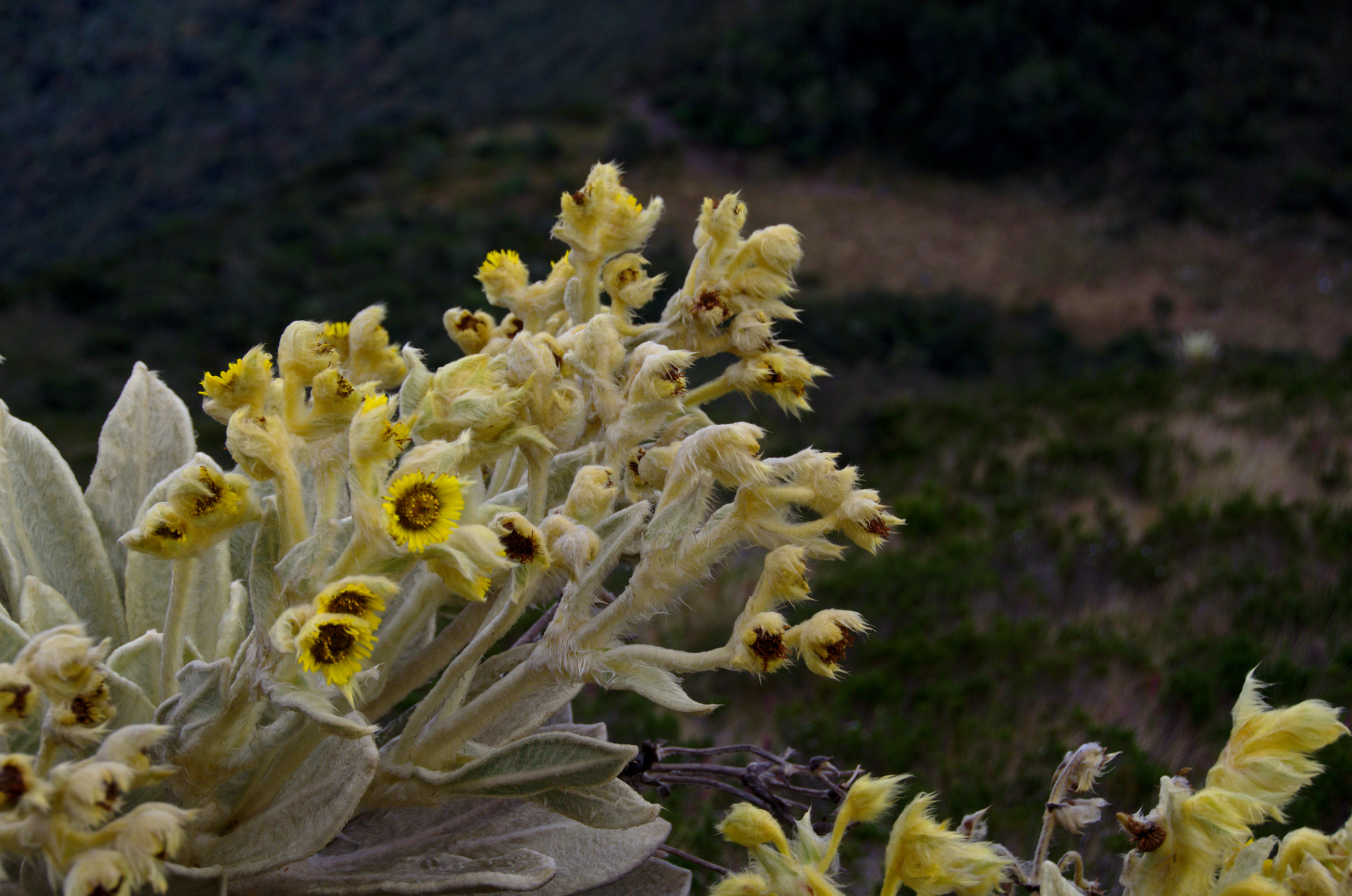
Photo: Aztlec.
Current situation
In March 2025, the Colombian government designated the western flank of the Santurbán massif as a temporary renewable natural resource reserve area, delimiting and protecting an area of 75,344.65 hectares. This resulted in a two-year suspension of the Soto Norte project. However, Aris Mining's contract to formalize Calimineros' small-scale mining activities through the purchase and processing of mineralized material remains in effect.
In addition, the Canadian mining company continues to move the project forward. In September 2025, it released its prefeasibility study, revising the mine’s original design.
Meanwhile, members of the Committee for the Defense of Water and the Santurbán Páramo face threats and stigmatization because of their work. In March 2025, UN Special Rapporteurs and the Working Group on Business and Human Rights denounced these incidents in communications sent to the governments of Colombia, Canada, and the United Arab Emirates, as well as to the companies Aris Mining and MDC Industry Holding Company LLC, the former co-owner of the Soto Norte project.
Regarding the arbitration claim filed by Eco Oro Minerals, in July 2024, ICSID ruled in favor of the Colombian government and rejected the Canadian company’s claim for USD 1.1 billion in compensation.
Concerning the delimitation of Santurbán, in July 2026, the Ministry of the Environment issued a resolution introducing the concept of "progressive delimitation." On that basis, the government proposes to progressively demarcate the páramo, covering 29,199 hectares across 19 municipalities—those where the participatory agreements required by the Constitutional Court in its 2017 ruling have already been finalized. It also proposes two measures on the creation and expansion of reserves to restrict mining in the ecosystem.
Learn more about the impacts of mining on the páramos of Latin America (in Spanish).
Partners:
Related projects

3 ways to maintain hope in the face of the climate crisis
Those of us who work on environmental issues are bombarded on a daily basis with headlines repeating the message: “Time is up, our days are numbered.” And, to tell the truth, rarely do they seem exaggerated: the IPCC reports, fires in Australia, the disillusionment of COP25, the mocking of the youth movement, assassinations and threats to environmental defenders. During dinner parties and casual get-togethers, people who know I work on environmental issues ask me what they can do for our planet. We start by talking about garbage: produce less of it. This, although seemingly basic, leads to long and heated conversations. Why? Because it questions our means of consumption, how we transport ourselves, feed ourselves, and dress. It makes us analyze our lifestyle and ask ourselves what “quality of life” means for us. Our garbage, after all, is the result of a long chain of emissions, which include the exploitation of land, species, and people. The truth is, everything is connected and it’s impossible to detach ourselves from our impact on the Earth. It’s through this chain of thoughts that many of us fall into episodes of “eco-anxiety.” It’s an increasingly common condition that, if left untreated, can be detrimental to our health. In 2017 the American Psychological Association (APA) described eco-anxiety as “a chronic fear of environmental doom… Watching the slow and seemingly irrevocable impacts of climate change unfold, and worrying about the future for oneself, children and later generations.” The strange thing about this condition is that it can stop us from acting. We might begin to believe there’s nothing we can do and, then, stop paying attention. We might become more lax with our consumption habits and end up aggravating the problem. So what can we do? From what I’ve gathered, our actions can be divided into three areas: the individual, the community, and the citizen-consumer. First things first: Be good to yourself A general rule for helping others is to first help yourself. The climate crisis affects our physical health, food security, human rights, and mental health. According to the APA, emotional responses are normal and negative emotions are necessary for making decisions and living a full life. But extreme emotions and the lack of a plan to resolve the problem can interfere with our ability to think rationally and behave appropriately. Not to mention the fact that those suffering losses due to environmental catastrophes (hurricanes, droughts, and floods) may develop post-traumatic stress. To confront these emotions, the APA suggests that we: Believe in our own resilience and know that we can overcome obstacles. Practice optimism and learn from our experiences. Cultivate self-regulation and emotional self-awareness in order to develop long-term strategies; knowing how to detect them prevents episodes from worsening. Find meaning in your life. Faith or religion work for some; for others it’s meditation or building community. The point is to find something that gives you a sense of peace. Individual actions do help, and people united for a cause can make a difference. Rather than punish ourselves for everything that we can’t do, let’s begin to talk about what we can. How many emissions can we cut back on by riding a bicycle? How many plastic bags can we divert from the sea? How does our consumption help the local economy and our environment? And always, always, take a daily dose of nature to inspire yourself. Second: Your immediate circle Recently, single-use plastic bags were banned in Mexico City. More than one person said that it violated their right to shop as they please; others complained they didn’t know how to shop anymore. I’ve used cloth bags for years. I could have just rejoiced in my own environmental righteousness and bragged on Twitter. Instead I asked myself, “Why not share some recommendations?” Practices that I had already applied to my house were well received by friends and neighbors because they were practical. Building relationships, however brief, is a step toward strengthening our community. Also, it helps to maintain perspective and a sense of humor. Get together with neighborhood groups, volunteer with organizations whose cause you support. Donating time, money, or materials is taking a step beyond your individual actions. Have a friend who wants to eat less meat? Offer them your best vegetarian recipes! Do you know how to program or do graphic design? Do you have a pick up truck? Surely there are groups who would appreciate your help. At AIDA, for instance, we’re often looking for volunteers and interns. The APA recognizes the impacts of the climate crisis on the mental health of certain communities; they are not the same in a city as they are in an area at risk of environmental disaster, or in an indigenous community. Affected communities confront a loss of social cohesion and the loss of important spiritual or recreational places. They also witness an increase in violence, including racial violence, as certain groups become increasingly persecuted. Furthermore, a loss of identity ruptures the unity of these communities, as is happening with the Inuit of Greenland or as we at AIDA have seen in displaced indigenous and riverine populations in the Amazon. Third (I’m sorry): We have to talk about politics and civic engagement This may be a subject you don’t particularly enjoy, but you’re needed here too. The wastewater produced in your home is but a drop compared to untreated industrial waste being dumped into a river. You could ride your bike everyday, but you would still be living in a country that permits industries to emit volatile carcinogenic and greenhouse gases into the atmosphere without accountability. While our goodwill does matter, it just doesn’t have as large an impact as the will (and obligations) of governments and industries to do things right and work for the health of all living things. In Latin America, the election of our local representatives may work differently than it does in the United States. But that doesn’t free us from the responsibility to elect representatives that will work for a cleaner and more resilient future. Indeed, we must demonstrate our interest in that future and demand that they work toward it. Environmental writer Emma Marris explained it well in her New York Times column: “The climate crisis is not going to be solved by personal sacrifice. It will be solved by electing the right people, passing the right laws, drafting the right regulations, signing the right treaties—and respecting those treaties already signed, particularly with indigenous nations. It will be solved by holding the companies and people who have made billions off our shared atmosphere to account.” The balance we’re seeking in AIDA We are proud to be an organization made up of professionals who are deeply passionate about the environment. On a personal level, we share our ideas with each other about how to create a better planet. On a community level, we all support the organization, and there are also those of us that organize civic and neighborhood events. On the level of public policy and participation, AIDA works for environmental justice. We empower communities with the knowledge and tools they need to safeguard and monitor their rights. We take emblematic cases to court and before international bodies to ensure that companies and governments live up to their obligations. We believe that a healthy and equitable future is possible.
Read more
Why are women so important to the pursuit of environmental justice?
Women have long played a fundamental role in the conservation and defense of the planet. Past and present struggles for environmental justice and the defense of animals have been, to a large extent, led by women. Yet the close relationship between women and the environment has not escaped the inequalities that characterize today’s societies. Poverty, exclusion, and inequality are intertwined with environmental degradation and the climate crisis. Women, in general, suffer these plagues in a differential and aggravated manner. In natural disasters, for example, women often experience higher mortality rates than men. Due to the role women play in their communities, they are often less equipped with mechanisms to help them respond to emergencies that result from disasters. They are less likely to know how to swim or climb trees. They are more likely to be responsible for young children or older members of the family. They are more likely to wear clothing that makes it difficult to quickly react to a crisis situation. Furthermore, for historical and cultural reasons, women are less likely to have access to information or be able to participate in situations that affect their right to a healthy environment. They also are less likely to have access to the mechanisms for addressing injustices or repairing damages from catastrophes. Women who do take on roles in the public sphere, participating in public issues, are more likely to take on additional responsibilities that, generally, a man in the same situation would not have to assume. And, at the same time, they confront more intense risks and greater obstacles to the development of their leadership. In this context, the gender focus—defined as the mechanism developed to guarantee holistically valuing the impact any action has on men, women, and those who identify between those categories—is fundamental to making asymmetries visible, overcoming barriers of discrimination, and removing scenarios of exclusion that impede women’s ability to enjoy their right to equality. The gender focus seeks to ensure that those challenges are included in the design, implementation, monitoring, and evaluation of each intervention on a political, economic, and social level. The gender perspective is indispensable to empowering the leadership of women, which is proving increasingly vital in the struggle for environmental justice. In effect, the development of ecofeminist theories offers the world new and transformative alternatives to the ways of thinking that are bringing about the destruction of our environment and negatively affecting the lives of men, women, and other living things. Women are more than simply the most affected by the climate crisis. They also are active participants with a vital role to play in preserving nature and seeking solutions for the health of our planet.
Read more
Learning from Mendoza, Argentina: “Water is not negotiable
Near the end of 2019, the citizens of Mendoza, Argentina united in one of the province’s most important social manifestations. Their objective was clear: to defend their water. People of all ages—members of NGOs, environmental assemblies, anti-mining movements, scientists and academics—took to the streets to demand that the local government reverse the modification of Law 7722, known as "guardian of the water" or "the people’s law." The law is fundamental for the protection of water in Mendoza because it prohibits the use of cyanide, mercury, sulfuric acid and other toxic chemicals in mining activities—all of which seriously contaminate rivers, lakes and other natural water sources. Enacted on June 21, 2007, this law resulted from a long struggle by civil society. A step back in environmental protection The government intended to modify Law 7722 with another regulation, Law 9209, which allowed for "the use of chemical substances [including cyanide], mixtures or dissolutions of them, to ensure the sustainability of the [mining] project.” The justification for eliminating the prohibition on the use of cyanide and other toxic elements was "to guarantee the sustainability of the use of natural resources, with special emphasis on the protection of water resources and to ensure compliance with mining activities.” The use of cyanide in legal mining is becoming less frequent due to the risks involved in its manufacture, transport and use. Cyanide compounds are highly toxic in their gaseous form or when dissolved in water. Considering that the limit of cyanide in drinking water for safe human consumption is four drops per liter, the concentrations used in mining present high risks. In addition, there is abundant evidence of cyanide spills and losses from mining facilities during transport, and multiple cases of mass fatalities of wildlife near mining facilities, particularly migratory birds. The legislative amendment sought to make the procedures for environmental control and monitoring more flexible, by establishing that it was no longer obligatory for the Environmental Impact Statement of a mining project to be ratified by law. This undermined the effectiveness of Law 7722. These changes, promoted by the government of Mendoza, violated environmental protection principles contained in Argentina’s Constitution, among them sustainability and other national regulations that the provinces are obliged to comply with and enrich. For example, article 41 of the Constitution states that "all inhabitants have the right to a healthy, balanced environment, suitable for human development and for productive activities to satisfy present needs without compromising those of future generations; and they have the duty to preserve it." The citizen's response The social response to this modification—which intended to give free rein to the use of substances with a high environmental impact—surpassed all precedents. By successfully reversing an initiative already approved by Mendoza's legislators, it became an example for the entire region. The largest demonstrations in Mendoza's history began on December 22. Under the slogans "water is not negotiable" and "water is worth more than gold," the people of Mendoza organized to express their disapproval of the new law. The following day, 50,000 people gathered in front of the Provincial Government House after a journey of more than 100 kilometers, which began in the town of San Carlos, in the Uco Valley. They demanded: Law 7722 is not to be touched. Despite this widespread popular rejection, the Governor of Mendoza enacted the reform. Then, thousands of self-convoked neighbors gathered at kilometer zero—between San Martín and Garibaldi Streets—in the provincial capital to demand the law’s repeal. On December 26, faced with constant and growing social pressure, the Governor announced that he would not enact the new law. That palliative measure was deemed unconvincing and mobilizations intensified. The Governor then decided to reverse the amendment to Law 7722. On Friday the 27th, he announced the reform’s repeal, which finally happened on Monday the 30th. The case of Mendoza teaches a valuable lesson to all Latin American countries: When citizens are aware of the importance of nature and the scale of the dangers it faces, they will not yield. Socio-environmental conflicts are not only a response to those who have control over natural resources, but also to their effects on a complex social network. For humans and also for other beings, nature is a formative part of our identity, culture and customs. We are part of it and it is part of us. It is a living and interconnected network. That is why we must be its main defenders. The prompt and necessary updating of the concept of "sustainable development" is one of the challenges of Environmental Law in the 21st century. We mustn’t promote development that attacks nature and ignores human rights. Learn more about the use of cyanide in mining (in Spanish).
Read more