
Project
Alberto Peña Kay
Protecting the Santurban páramo from mining's damage
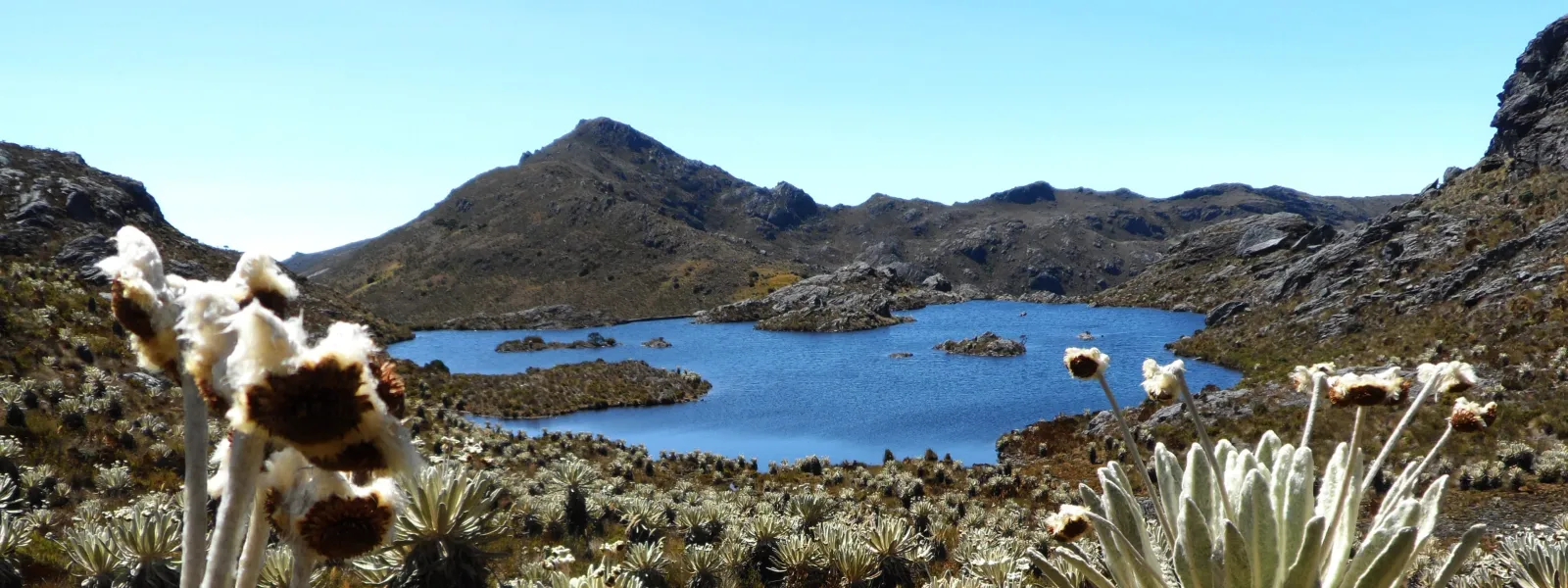
In the Andean region, high-mountain ecosystems known as páramos capture water from the fog and supply it to the lowlands. One such ecosystem is the Santurbán páramo, which provides fresh water to more than two million people in Colombia.
Santurbán, like the other páramos on the continent, also captures large amounts of carbon, making it a key ally in mitigating the climate crisis. It is also a refuge for hundreds of endangered species, including the iconic spectacled bear.
The land in and around the páramo contains gold and other minerals. This has put Santurbán in the spotlight of the multinational mining industry, which for decades has sought to establish large-scale projects in the ecosystem that threaten to degrade it.
The Committee for the Defense of Water and the Santurbán Páramo—a coalition of environmental advocates—has thwarted these ongoing attempts, with support from AIDA and other civil society organizations.
Background
The Santurbán páramo is located in the heart of the Eastern Cordillera of the Colombian Andes, in the departments of Santander and Norte de Santander, at an elevation ranging from 2,200 to 4,290 meters above sea level.
It covers an area of 129,743 hectares and is home to 57 lakes. It serves as a habitat for 457 plant species and 293 species of vertebrate fauna.
There are mineral deposits in Santurbán, primarily gold, but also silver and copper. This explains the region’s mining tradition, particularly in the part of the páramo located in Santander, in the province of Soto Norte. The communities in the area have built their culture and identity around gold mining, which is mainly artisanal and small-scale.
But since the 1990s, the gold deposits in the páramo have also attracted foreign mining conglomerates seeking to develop large-scale projects. This has raised concerns among the population that relies on the Santurbán water sources, who have mobilized in defense of water, their land, and life.
Although national and international regulations prohibit mining in páramos, the Colombian government has granted mining concessions to transnational corporations in Santurbán.
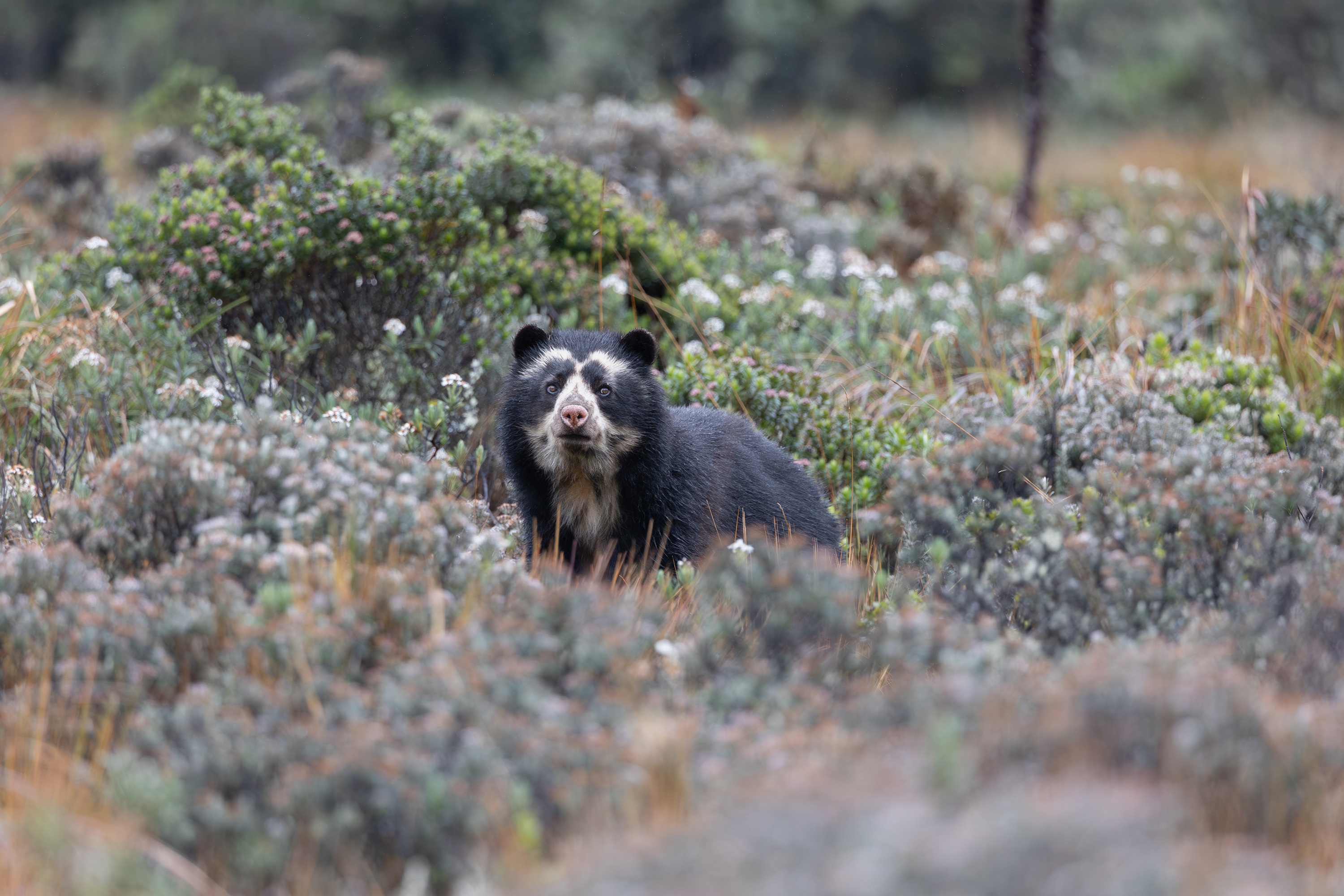
Photo: Keishpixl / Pixabay.
The long struggle to protect the páramo
One of the companies that sought to develop large-scale mining in Santurbán is Eco Oro Minerals Corp.—formerly Greystar Resources—a Canadian company that intended to establish the Angostura open-pit mine there to extract gold and silver. Between 1994 and 1995, the company acquired its mining titles and conducted exploration. And in 2010, it applied for a mining permit.
That was the year AIDA became involved in defending the ecosystem, supporting the Committee for the Defense of Water and the Santurbán Páramo. Our legal work helped convince the Colombian government to deny the mine an environmental permit in May 2011.
In January 2013, the government designated a portion of the páramo (11,700 hectares) as a Regional Natural Park. That year—together with the committee and partner organizations—we carried out a campaign and advocacy efforts to urge the government to recognize the entire Santurbán area as a páramo ecosystem through a delimitation based on scientific criteria. In December 2014, the Ministry of the Environment established a delimitation that protected 76% of the páramo (98,954 hectares).
Furthermore, as a result of a litigation supported by AIDA, in February 2016, Colombia’s highest court reaffirmed that mining in páramos is prohibited.
That same year, in December, the International Finance Corporation (IFC), the World Bank Group’s private sector arm, decided to divest from Eco Oro Minerals. This achievement was the result of a process that began in 2012, when the committee—advised and supported by AIDA and international partner organizations—filed a complaint before an independent accountability mechanism, which concluded that the IFC’s investment in the Angostura project failed to take into account the project’s social and environmental impacts, thereby contradicting the financial institution’s internal policies.
Also in 2016, Eco Oro Minerals filed an arbitration claim against the Colombian government with the International Centre for Settlement of Investment Disputes (ICSID), arguing that it had been adversely affected by government decisions aimed at protecting the country’s páramos, including the delimitation of Santurbán.
In 2017, the Constitutional Court invalidated the delimitation because the affected communities were not consulted. The high court ordered that a participatory delimitation be carried out.
And that year, a new threat to Santurbán emerged when the Canadian multinational Aris Mining applied for an environmental permit for Soto Norte, a gold mining project located near the páramo. Following citizen protests and technical objections, in October 2020, the National Environmental Licensing Authority shelved the project.
Photo: Aztlec.
Current situation
In March 2025, the Colombian government designated the western flank of the Santurbán massif as a temporary renewable natural resource reserve area, delimiting and protecting an area of 75,344.65 hectares. This resulted in a two-year suspension of the Soto Norte project. However, Aris Mining's contract to formalize Calimineros' small-scale mining activities through the purchase and processing of mineralized material remains in effect.
In addition, the Canadian mining company continues to move the project forward. In September 2025, it released its prefeasibility study, revising the mine’s original design.
Meanwhile, members of the Committee for the Defense of Water and the Santurbán Páramo face threats and stigmatization because of their work. In March 2025, UN Special Rapporteurs and the Working Group on Business and Human Rights denounced these incidents in communications sent to the governments of Colombia, Canada, and the United Arab Emirates, as well as to the companies Aris Mining and MDC Industry Holding Company LLC, the former co-owner of the Soto Norte project.
Regarding the arbitration claim filed by Eco Oro Minerals, in July 2024, ICSID ruled in favor of the Colombian government and rejected the Canadian company’s claim for USD 1.1 billion in compensation.
Concerning the delimitation of Santurbán, in July 2026, the Ministry of the Environment issued a resolution introducing the concept of "progressive delimitation." On that basis, the government proposes to progressively demarcate the páramo, covering 29,199 hectares across 19 municipalities—those where the participatory agreements required by the Constitutional Court in its 2017 ruling have already been finalized. It also proposes two measures on the creation and expansion of reserves to restrict mining in the ecosystem.
Learn more about the impacts of mining on the páramos of Latin America (in Spanish).
Partners:
Related projects
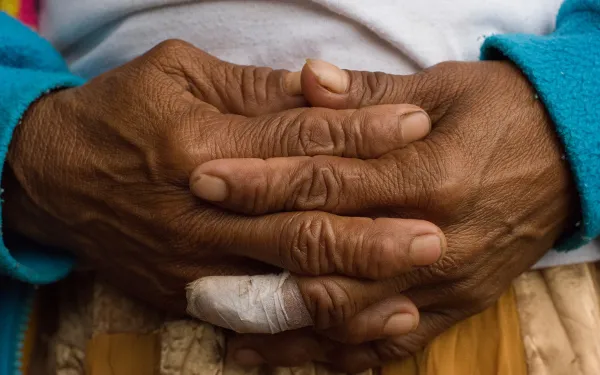
Inter-American Court upholds indigenous rights in Argentina
In Argentina’s Rivadavia department, along the border of Bolivia and Paraguay, the lands have been inhabited by indigenous people for at least 60 years. Communities there subsist primarily from hunting, gathering, and fishing. Many of these ancestral peoples have been battling for governmental recognition of their land rights since 1984, when the country’s transition from dictatorship to democracy began. This lack of recognition has had profound impacts on the lives of indigenous inhabitants, affected by changes in their land and its use. As Creole families settled in the area, they brought their own customs and economic activities, such as animal grazing and illegal logging. Barbed wire fence was erected without consulting indigenous populations, and an international bridge was built that crosses into their land. These developments have changed how the indigenous people eat and disrupted their access to water, threatening their very cultural identity. With no protection from the Argentine government, in 1998 a coalition of indigenous groups took their struggle before the Inter-American Commission on Human Rights. Grouped in the Lhaka Honhat (Nuestra Tierra) Association—made up of Wichí (Mataco), Iyjwaja (Chorote), Komlek (Toba), Niwackle (Chulupí) and Tapy'y (Tapiete) indigenous peoples—, they were represented by the Centre for Legal and Social Studies. In 2012, the Commission issued its Merits Report, establishing the violation of indigenous communities' rights and recommending that the State adopt reparation measures. When Argentina failed to comply with the provision, the case was referred to the Inter-American Court of Human Rights. On April 2, 2020, the Court’s decision declared Argentina responsible for the violation of the indigenous peoples’ rights to community property, cultural identity, a healthy environment, and adequate food and water. The ruling marks an important milestone in the struggle for indigenous rights. It is the first time that the Court, in a contentious case, has analyzed these rights autonomously on the basis of Article 26 of the American Convention, and ordered specific measures for their restitution, including actions for access to food and water, the recovery of forest resources, and the recovery of indigenous culture. Actions for Reparation Among other implications, the Court's decision could lead to solutions to the health issues afflicting the indigenous communities of Lhaka Honhat. The violation of their rights to food and water has caused deaths from malnutrition and dehydration. The Court demanded that the State present a study within six months that identifies critical situations of lack of access to drinking water and food, formulates a plan of action to address them, and begins its implementation. It also ordered the creation and implementation of a community development fund within a period of no more than four years. As for the territory, the State shall, within a maximum period of six years: Delineate, demarcate, and grant a single collective title without subdivisions or fragmentations for the indigenous communities. Transfer the Creole population out of the indigenous territory through specific mechanisms that promote, above all, voluntary transfer. Remove barbed wire fences and livestock belonging to Creole settlers from indigenous lands. Refrain from carrying out acts, works or undertakings in indigenous territory. Additionally, the Court requested the adoption of legislative and/or other measures to provide legal certainty to the right to indigenous community property in Argentina. Supporting the Indigenous Struggle In March 2019, AIDA helped author and amicus brief in support of the climate of the indigenous communities of the Lhaka Honhat Association. We did so alongside our allies on the litigation group of the International Network for Economic, Social and Cultural Rights (ESCR-Net), including Amnesty International, the Asociación Civil por Igualdad y Justicia, the Colombian Commission of Jurists, Dejusticia, FIAN International, International Women's Rights Action Watch - Asia Pacific, and the Minority Rights Group International. Our arguments highlighted the importance of recognizing economic, social, cultural, and environmental rights as real enforceable rights—similar to others such as the right to life or personal integrity—due to their independent and indivisible nature. In this sense, AIDA recalled the important advance that the Court promoted with Advisory Opinion 023, which recognizes the right to a healthy environment as fundamental to human life. Our brief called on the government to respect the rights of indigenous peoples—as outlined in Article 26 of the American Convention on Human Rights—to a healthy environment, food and water, and cultural identity. The Court's decision establishes an important regional precedent for the protection of the environment in the Americas. It contributes to the consolidation of standards to protect the land of indigenous communities, as well as their rights to a healthy environment, water and culture.
Read moreInter-American Court upholds indigenous rights in Argentina
In Argentina’s Rivadavia department, along the border of Bolivia and Paraguay, the lands have been inhabited by indigenous people for at least 60 years. Communities there subsist primarily from hunting, gathering, and fishing. Many of these ancestral peoples have been battling for governmental recognition of their land rights since 1984, when the country’s transition from dictatorship to democracy began. This lack of recognition has had profound impacts on the lives of indigenous inhabitants, affected by changes in their land and its use. As Creole families settled in the area, they brought their own customs and economic activities, such as animal grazing and illegal logging. Barbed wire fence was erected without consulting indigenous populations, and an international bridge was built that crosses into their land. These developments have changed how the indigenous people eat and disrupted their access to water, threatening their very cultural identity. With no protection from the Argentine government, in 1998 a coalition of indigenous groups took their struggle before the Inter-American Commission on Human Rights. Grouped in the Lhaka Honhat (Nuestra Tierra) Association—made up of Wichí (Mataco), Iyjwaja (Chorote), Komlek (Toba), Niwackle (Chulupí) and Tapy'y (Tapiete) indigenous peoples—, they were represented by the Centre for Legal and Social Studies. In 2012, the Commission issued its Merits Report, establishing the violation of indigenous communities' rights and recommending that the State adopt reparation measures. When Argentina failed to comply with the provision, the case was referred to the Inter-American Court of Human Rights. On April 2, 2020, the Court’s decision declared Argentina responsible for the violation of the indigenous peoples’ rights to community property, cultural identity, a healthy environment, and adequate food and water. The ruling marks an important milestone in the struggle for indigenous rights. It is the first time that the Court, in a contentious case, has analyzed these rights autonomously on the basis of Article 26 of the American Convention, and ordered specific measures for their restitution, including actions for access to food and water, the recovery of forest resources, and the recovery of indigenous culture. Actions for Reparation Among other implications, the Court's decision could lead to solutions to the health issues afflicting the indigenous communities of Lhaka Honhat. The violation of their rights to food and water has caused deaths from malnutrition and dehydration. The Court demanded that the State present a study within six months that identifies critical situations of lack of access to drinking water and food, formulates a plan of action to address them, and begins its implementation. It also ordered the creation and implementation of a community development fund within a period of no more than four years. As for the territory, the State shall, within a maximum period of six years: Delineate, demarcate, and grant a single collective title without subdivisions or fragmentations for the indigenous communities. Transfer the Creole population out of the indigenous territory through specific mechanisms that promote, above all, voluntary transfer. Remove barbed wire fences and livestock belonging to Creole settlers from indigenous lands. Refrain from carrying out acts, works or undertakings in indigenous territory. Additionally, the Court requested the adoption of legislative and/or other measures to provide legal certainty to the right to indigenous community property in Argentina. Supporting the Indigenous Struggle In March 2019, AIDA helped author and amicus brief in support of the climate of the indigenous communities of the Lhaka Honhat Association. We did so alongside our allies on the litigation group of the International Network for Economic, Social and Cultural Rights (ESCR-Net), including Amnesty International, the Asociación Civil por Igualdad y Justicia, the Colombian Commission of Jurists, Dejusticia, FIAN International, International Women's Rights Action Watch - Asia Pacific, and the Minority Rights Group International. Our arguments highlighted the importance of recognizing economic, social, cultural, and environmental rights as real enforceable rights—similar to others such as the right to life or personal integrity—due to their independent and indivisible nature. In this sense, AIDA recalled the important advance that the Court promoted with Advisory Opinion 023, which recognizes the right to a healthy environment as fundamental to human life. Our brief called on the government to respect the rights of indigenous peoples—as outlined in Article 26 of the American Convention on Human Rights—to a healthy environment, food and water, and cultural identity. The Court's decision establishes an important regional precedent for the protection of the environment in the Americas. It contributes to the consolidation of standards to protect the land of indigenous communities, as well as their rights to a healthy environment, water and culture.
Read more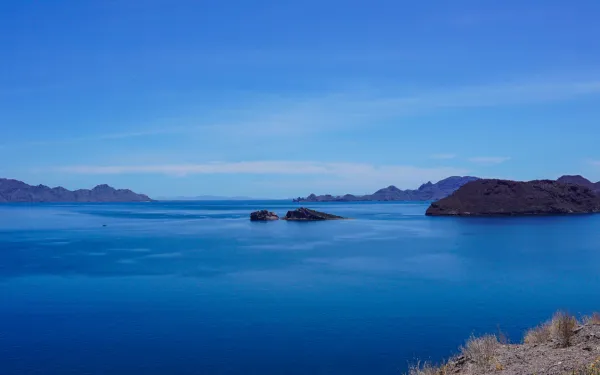
What I learned from my internship at AIDA
Last year, I completed a three-month internship with AIDA in La Paz, the capital of Baja California Sur, Mexico. It was part of the academic process to become a lawyer in Germany, my home country. The internship allowed me to combine my professional training with my passion for nature, as well as to gain experience working with an international NGO in the field of environmental law. I applied to the internship with AIDA's Marine Biodiversity and Coastal Protection Program without specifying a preferred location. Imagine my delight to learn that the internship would take place in La Paz, Mexico, a small city surrounded by nature. Coming from one of the most densely populated countries in the world, it was amazing to live in a place with so much space. I was fascinated by the diversity of ecosystems in the area: deserts, mangroves, mountainous pine forests, and the rock and coral reefs of the Gulf of California. On my first weekend, I was able to take in the abundance of wildlife in La Paz when Camilo Thompson, AIDA attorney and my supervisor, and Mario del Angel, his neighbor and a kayak guide, took me on a tour of the El Mogote wetlands, an ecosystem of international importance. I was impressed to see, in the first light of day, a group of dolphins in the bay. The morning was complete when I had my first chilaquiles, a typical Mexican dish, for breakfast. As we toured the waterways taking pictures of herons among the mangroves, I learned about the importance of coastal wetlands—they serve as habitat for key species and are natural carbon sinks. From the beginning of my internship, I participated in the virtual meetings of AIDA’s marine team, distributed throughout several countries of the region. I learned about the variety of animals and ecosystems that AIDA works to protect. From the office in La Paz, our contribution was focused on Mexico. I learned about national regulations related to reefs, herbivorous fish, and Natural Protected Areas. I supported research on the state of protection of these fish, which are essential for keeping Latin American and global coral reefs healthy. The combination of direct contact with nature and working in the office for local and regional projects gave me a different perspective on the nature of environmental law, and increased my motivation to learn. I learned that AIDA has worked for years with other organizations, local stakeholders, and scientists to protect fisheries and endangered species such as whales and sea turtles. One of the most enriching aspects of my internship was being able to experience first-hand the natural wealth that AIDA seeks to preserve. Though I’d been a diver for many years, I never ceased to be amazed by the sight of sea lions, bull and hammerhead sharks, killer whales, rays, sea turtles, and countless species of reef fish in their natural habitat. While in La Paz, I finished my rescue diver course and accompanied a team of marine biologists to conduct a visual census of marine life on Espiritu Santo Island. On four occasions, I visited Cabo Pulmo National Park, the largest coral reserve in the Gulf of California. I went diving and snorkeling. I participated in meetings of the Cabo Pulmo Vivo coalition, dedicated to protecting the park and its area of influence. It was gratifying to know that I was doing my small part for the site’s conservation. The internship gave my professional training a multidisciplinary approach. La Paz is one of the scientific centers of marine biology in Mexico and, while there, I was able to exchange ideas with marine biologists on diving trips and while socializing in bars in the city. Around La Paz, I was also able to spend time bird watching, one of my hobbies. The state of Baja California Sur is home to roughly 432 species of birds. I was able to see a wide variety of migratory species, as well five of the six endemic ones. I completed the internship very grateful for the experiences I had gained. Now, I’m back in Berlin, but I plan to return soon to La Paz to see the birds, whale sharks, and other majestic species that inhabit the area and are living proof of the valuable work of organizations like AIDA.
Read more