
Project
Alberto Peña Kay
Protecting the Santurban páramo from mining's damage
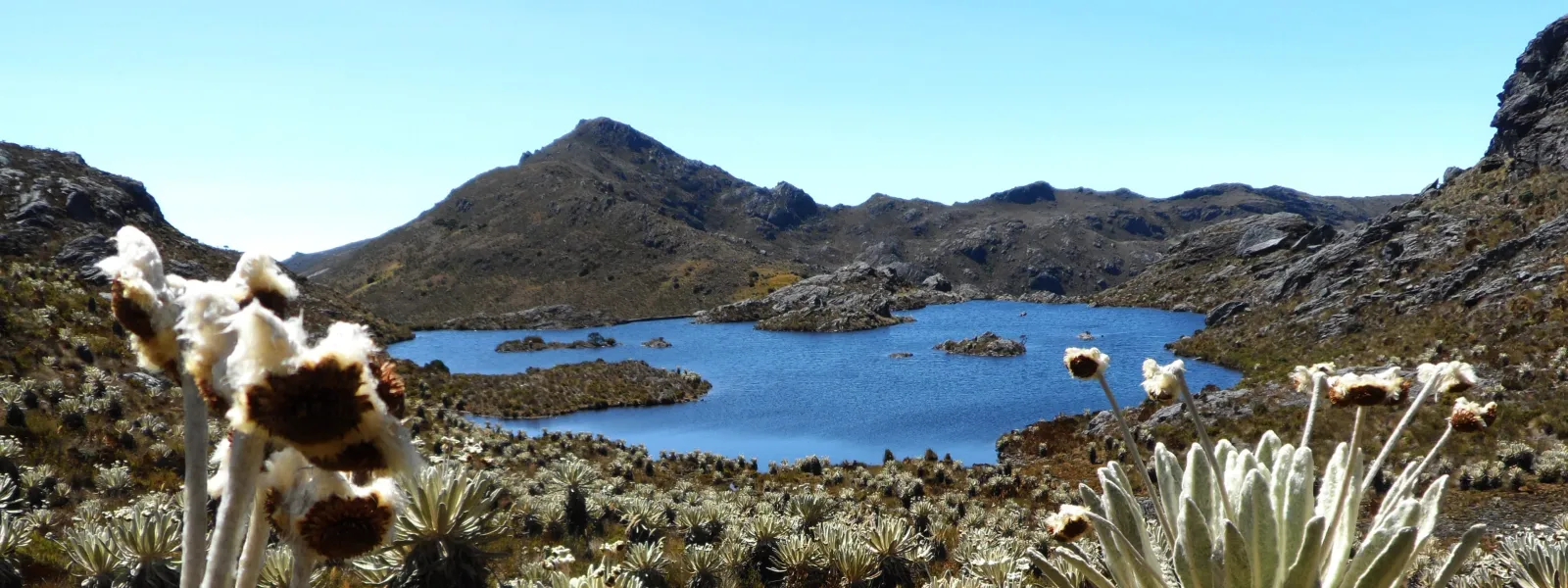
In the Andean region, high-mountain ecosystems known as páramos capture water from the fog and supply it to the lowlands. One such ecosystem is the Santurbán páramo, which provides fresh water to more than two million people in Colombia.
Santurbán, like the other páramos on the continent, also captures large amounts of carbon, making it a key ally in mitigating the climate crisis. It is also a refuge for hundreds of endangered species, including the iconic spectacled bear.
The land in and around the páramo contains gold and other minerals. This has put Santurbán in the spotlight of the multinational mining industry, which for decades has sought to establish large-scale projects in the ecosystem that threaten to degrade it.
The Committee for the Defense of Water and the Santurbán Páramo—a coalition of environmental advocates—has thwarted these ongoing attempts, with support from AIDA and other civil society organizations.
Background
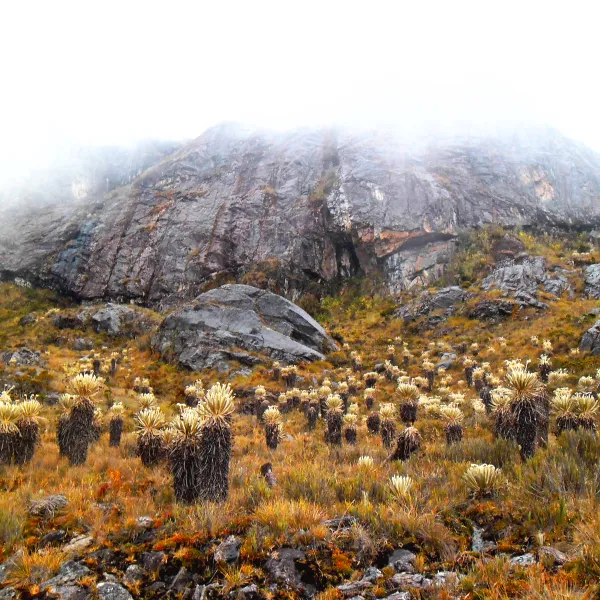
The Santurbán páramo is located in the heart of the Eastern Cordillera of the Colombian Andes, in the departments of Santander and Norte de Santander, at an elevation ranging from 2,200 to 4,290 meters above sea level.
It covers an area of 129,743 hectares and is home to 57 lakes. It serves as a habitat for 457 plant species and 293 species of vertebrate fauna.
There are mineral deposits in Santurbán, primarily gold, but also silver and copper. This explains the region’s mining tradition, particularly in the part of the páramo located in Santander, in the province of Soto Norte. The communities in the area have built their culture and identity around gold mining, which is mainly artisanal and small-scale.
But since the 1990s, the gold deposits in the páramo have also attracted foreign mining conglomerates seeking to develop large-scale projects. This has raised concerns among the population that relies on the Santurbán water sources, who have mobilized in defense of water, their land, and life.
Although national and international regulations prohibit mining in páramos, the Colombian government has granted mining concessions to transnational corporations in Santurbán.

Photo: Keishpixl / Pixabay.
The long struggle to protect the páramo
One of the companies that sought to develop large-scale mining in Santurbán is Eco Oro Minerals Corp.—formerly Greystar Resources—a Canadian company that intended to establish the Angostura open-pit mine there to extract gold and silver. Between 1994 and 1995, the company acquired its mining titles and conducted exploration. And in 2010, it applied for a mining permit.
That was the year AIDA became involved in defending the ecosystem, supporting the Committee for the Defense of Water and the Santurbán Páramo. Our legal work helped convince the Colombian government to deny the mine an environmental permit in May 2011.
In January 2013, the government designated a portion of the páramo (11,700 hectares) as a Regional Natural Park. That year—together with the committee and partner organizations—we carried out a campaign and advocacy efforts to urge the government to recognize the entire Santurbán area as a páramo ecosystem through a delimitation based on scientific criteria. In December 2014, the Ministry of the Environment established a delimitation that protected 76% of the páramo (98,954 hectares).
Furthermore, as a result of a litigation supported by AIDA, in February 2016, Colombia’s highest court reaffirmed that mining in páramos is prohibited.
That same year, in December, the International Finance Corporation (IFC), the World Bank Group’s private sector arm, decided to divest from Eco Oro Minerals. This achievement was the result of a process that began in 2012, when the committee—advised and supported by AIDA and international partner organizations—filed a complaint before an independent accountability mechanism, which concluded that the IFC’s investment in the Angostura project failed to take into account the project’s social and environmental impacts, thereby contradicting the financial institution’s internal policies.
Also in 2016, Eco Oro Minerals filed an arbitration claim against the Colombian government with the International Centre for Settlement of Investment Disputes (ICSID), arguing that it had been adversely affected by government decisions aimed at protecting the country’s páramos, including the delimitation of Santurbán.
In 2017, the Constitutional Court invalidated the delimitation because the affected communities were not consulted. The high court ordered that a participatory delimitation be carried out.
And that year, a new threat to Santurbán emerged when the Canadian multinational Aris Mining applied for an environmental permit for Soto Norte, a gold mining project located near the páramo. Following citizen protests and technical objections, in October 2020, the National Environmental Licensing Authority shelved the project.
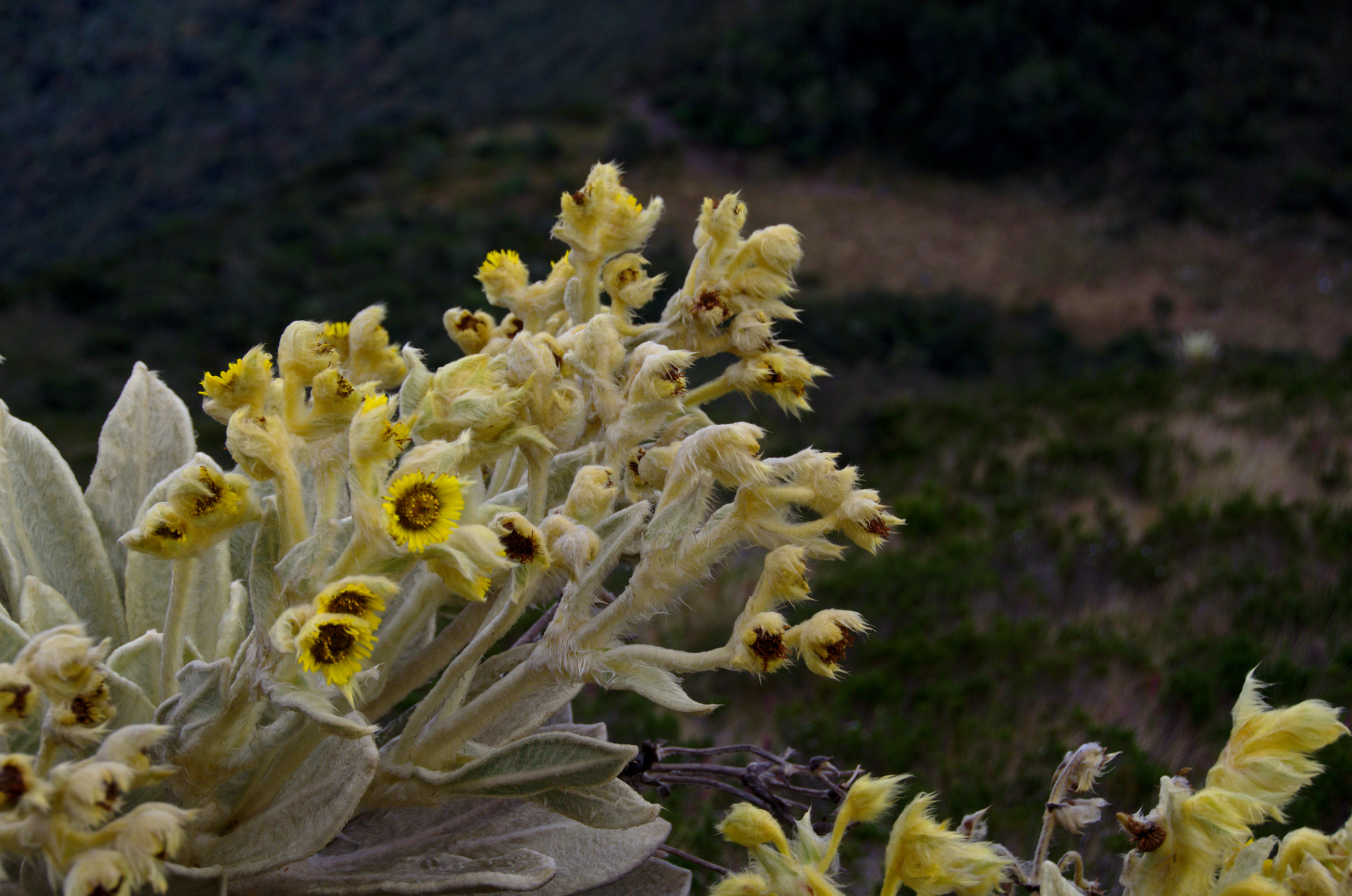
Photo: Aztlec.
Current situation
In March 2025, the Colombian government designated the western flank of the Santurbán massif as a temporary renewable natural resource reserve area, delimiting and protecting an area of 75,344.65 hectares. This resulted in a two-year suspension of the Soto Norte project. However, Aris Mining's contract to formalize Calimineros' small-scale mining activities through the purchase and processing of mineralized material remains in effect.
In addition, the Canadian mining company continues to move the project forward. In September 2025, it released its prefeasibility study, revising the mine’s original design.
Meanwhile, members of the Committee for the Defense of Water and the Santurbán Páramo face threats and stigmatization because of their work. In March 2025, UN Special Rapporteurs and the Working Group on Business and Human Rights denounced these incidents in communications sent to the governments of Colombia, Canada, and the United Arab Emirates, as well as to the companies Aris Mining and MDC Industry Holding Company LLC, the former co-owner of the Soto Norte project.
Regarding the arbitration claim filed by Eco Oro Minerals, in July 2024, ICSID ruled in favor of the Colombian government and rejected the Canadian company’s claim for USD 1.1 billion in compensation.
Concerning the delimitation of Santurbán, in July 2026, the Ministry of the Environment issued a resolution introducing the concept of "progressive delimitation." On that basis, the government proposes to progressively demarcate the páramo, covering 29,199 hectares across 19 municipalities—those where the participatory agreements required by the Constitutional Court in its 2017 ruling have already been finalized. It also proposes two measures on the creation and expansion of reserves to restrict mining in the ecosystem.
Learn more about the impacts of mining on the páramos of Latin America (in Spanish).
Partners:
Related projects
Why fracking is not an energy transition
The current global health crisis is forcing society to reflect on our ever increasing need for change. It’s putting us face-to-face with the fragility and unfeasibility of an energy system based on fossil fuels. This is evidenced by the historic collapse of oil prices associated with lower international demand for hydrocarbons—due to measures adopted in response to the pandemic—as well as overproduction and speculation in oil contracts, among other factors. Demand for gas is also expected to fall by 5 percent, following a decade of uninterrupted growth. Latin America is highly dependent on fossil fuels, both as an export commodity and for its own domestic consumption—88 percent of the energy used on the continent comes from nonrenewable resources. Since 2010, governments and private businesses have been pushing for fracking, or hydraulic fracturing of unconventional deposits, due in large part to the overexploitation of conventional hydrocarbons. Some countries describe fracking as a ‘bridge’ to reducing dependence on coal and petroleum as energy sources, claiming it gives them time to develop alternatives to fossil fuels. Following this logic, fracking has been promoted as a step toward energy transition. But how can a process that demonstrates a clear lack of economic, environmental, and social viability be labeled a transition? Reasons to say “No!” to fracking To resort to fracking is to continue to promote an energy system characterized by high private ownership and appropriation, the use of non-renewable resources, and negative impacts on affected populations and territories. What’s more, this system is defined by a great inequity in terms of access to, and use of, energy. Hydraulic fracturing involves the injection of toxic substances into the subsoil, which can cause the contamination of aquifers and air due to the volatility of some compounds. What’s more, leaks in the production and transport of gas and oil extracted vía fracking have been related to the increase in global emissions of methane, a pollutant responsible for about a quarter of all global warming. The technique also requires large amounts of water, which is especially relevant in a region that continues to confront serious problems concerning access to this basic resource. The use of fracking affects the ways of life of communities, both in terms of health—due to toxic substances in the air, water and soil—and in the violation of human rights and democracy. Many communities, particularly indigenous ones, lack access to information and are not properly consulted on fracking projects in their territories. The damages may be more serious for women, aggravating previously existing structural inequities. In economic terms, hydraulic fracturing requires large investments and, in order to be viable, it needs a market with high prices. In that sense, the unpredictability of oil prices makes it so that any nation that depends on hydrocarbons for its energy sovereignty is taking a dubious risk. Also, in fracking the rate of return on energy is lower. This means that the extraction process demands much more energy that it can capture. All this results in an energy benefit that is sometimes non-existent, and in which profits come from financial speculation. To promote fracking today would be to take a step backward, rather than forward. It simply does not meet the definition of a transition away from fossil fuels, and the logic of fracking has little to do with satisfying the social and economic needs of the people, among them environmental sustainability. A Movement for Change A growing number of organizations, institutions, communities and individuals throughout the Americas have organized to prevent the advance of fracking. These joint efforts, like the Latin American Alliance On Fracking, promote access to information and dismantle the position of businessmen and governments that claim fracking and more extractive activities are the only way out. Initiatives have emerged that seek energy alternatives by promoting dialogue and creating working groups on a just transition. Examples range from the experience of energy autonomy through small community hydroelectric plants in Guatemala, the Rio Negro Production and Energy Transition Working Group in Argentina, and the various experiences of Censat Agua Viva in Colombia, including a Social Working Group for a New Mining, Energy and Environmental Model. Meanwhile, using legal and administrative mechanisms, several municipalities and communities in Argentina, Mexico, Brazil and Uruguay have prohibited or declared a moratorium on fracking in their territories. Thinking about another society requires thinking about another energy system, one that is just and democratic. These spaces of resistance and the construction of alternatives give us a roadmap to promote structural changes and to jointly confront our society’s health, economic, and climate crises. Only then can we move beyond a system in which what was once considered "normal" simply wasn’t working.
Read more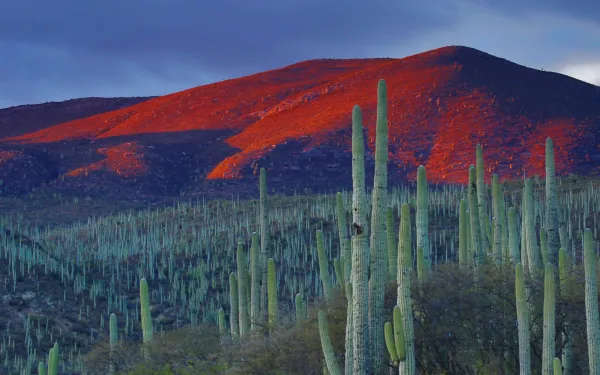
Challenges and conditions to advance towards energy justice in Mexico
This blog entry accompanies the launch of the first ever Benchmark on Renewable Energy and Human Rights. It was originally published by the Business & Human Rights Information Centre. By Rosa Peña Lizarazo and Astrid Puentes Riaño The climate crisis, in the words of Michelle Bachelet, the UN High Commissioner for Human Rights, is the greatest current threat to human rights, and one that requires urgent political decisions and collective action. One such decision concerns progress in the energy transition, that is, the shift from the use of energy derived from fossil fuels to the use of energy that is renewable and less emission-intensive. By reducing greenhouse gas emissions, this transition would help to address the climate crisis and improve air quality. In Mexico, this transition has motivated multi-sector debates and requires a participatory, inclusive, and transparent dialogue with a human rights approach and a territorial perspective. There are four main challenges to this: main challenges 1. The socioeconomic context Mexico has some of the highest levels of inequality on the planet, with ten of the country’s richest people holding wealth the equivalent to 50% of its poorest. Understanding this context is key to adapting energy transition policies that meet international climate obligations without creating more inequity. It is also essential to learn from the past. The 2013 energy reform set in motion a model for the massive implementation of renewable energy projects, both large-scale and private. This made it impossible to overcome the wide gaps in exclusion for socio-economic and territorial reasons. 2. Energy consensus Another challenge is achieving regulatory and social consensus on what clean and renewable energy is and what the goal should be in its implementation. Despite the proposals of some environmental organizations, the Mexican Government accepted vague and more convenient definitions to fulfill its climate commitments. It defined clean energies as those that do not generate polluting emissions during their production, ignoring whether they can generate other negative impacts on the environment. 3. Respect and protection of human rights The generation of energy from fossil fuels has violated human rights, provoking scenarios of exclusion and serious implications for Mexico’s indigenous and rural communities. Likewise, many non-conventional renewable energy projects, like those developments in the Isthmus of Tehuantepec or in the Yucatan Peninsula, have generated new socio-environmental conflicts. These relate to the lack of transparency and participation, violation of the rights of native peoples, lack of knowledge of traditional ownership and uses of land, obstacles to access natural resources, and environmental degradation. It is therefore a challenge to undertake a transition that considers and prevents these harms from a human rights perspective. 4. Energy diversification and reliability Given current dependence on fossil fuels in the energy grid - which by 2018 generated 75.88% of the country's energy - progress towards mitigation and adaptation to climate change requires a process of diversification of energy sources that takes advantage of Mexico's potential to develop renewable energy. Another associated challenge is to guarantee the reliability of the system to ensure it can continuously meet the country's energy demand. how can a fair transition come about? At AIDA, we believe this can be done by building energy justice in Mexico, through the following: Adapting to the socioeconomic context: Betting on a transition that becomes an engine of local development, through for example, the generation of jobs, the democratization of energy and energy generation in the scale necessary for self-supply. This requires overcoming existing barriers to exclusion by implementing, for example, community energy projects. Designing participatory energy policy: Propose scenarios of effective and inclusive participation in order to agree on the minimum aspects of the goals of energy policy in the country, in response to the climate crisis. Compliance with environmental and human rights standards: Advisory Opinion 23 of the Inter-American Court of Human Rights highlights that any policy or project must guarantee access rights in environmental matters and labour rights, comply with the principles of prevention and precaution, respect the rights of indigenous and Afro-Mexican peoples, and have a gender perspective. Diversification of the energy grid: Promote financing mechanisms that encourage clean technological innovation and investment in decentralized renewable energies and with better storage strategies. Without a doubt, a just energy transition is necessary and urgent in Mexico. The country now has the opportunity to undertake a progressive and timely transition that allows for better scenarios of social, environmental and climate justice, and that responds to current social demands.
Read more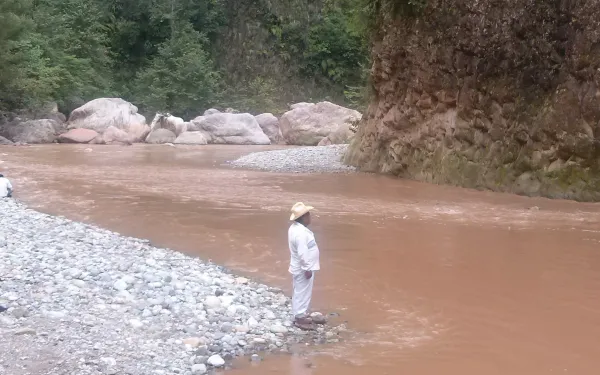
Mexico’s Federal Mining Law threatens human rights of indigenous peoples
International civil society organizations submitted amicus curiae briefs to the Mexican Supreme Court in support of the State of Puebla-based Masewal people’s constitutional action.Groups also delivered to the Court’s Second Chamber more than 4,000 signatures supporting the defense of indigenous people’s rights, collected through www.change.org.mx International civil society organizations are supporting a lawsuit filed by the Masewal indigenous people of Cuetzalan del Progreso, based in the Sierra Norte of the Mexican state of Puebla, against Mexico’s Mining Law. The Masewal request that the Supreme Court of Justice of the Nation (SCJN) declare the law unconstitutional because it violates indigenous peoples’ fundamental rights. Earthjustice, the Environmental Defender Law Center (EDLC) and the Interamerican Association for Environmental Defense (AIDA) filed separate amicus curiae (“friend of the court”) briefs to provide information in order to help the SCJN rule on litigation initiated by the Altepetajpianij Maseual Council and the Mexican Center for Environmental Law (CEMDA). The constitutional suit, originally filed in March 2015, argues that Mexico adopted the new Mining Law in violation of indigenous rights by not previously consulting or informing indigenous peoples before passing the law. As a result, the law failed to take into account indigenous values or perspectives and contained no mechanism to protect their human rights, even though many mining concessions already affect their territories. Above all, this law violates indigenous peoples’ rights to self-determination by excluding them from decision-making on mining within their territories, thus threatening local communities’ quality of life. “As the First Peoples, we are convinced that, in order to have a good life –Yeknemilis, as we say in Nahuatl– it is necessary that we be well and have social peace. And we cannot be well, nor can we build social peace in our territories, when extractive projects such as destructive mining threaten our way of life,” the Masewal people told SCJN justices in their brief. “Our contribution presented in our amicus brief highlights that Mexico’s international obligations require free, prior, and informed consultations with indigenous peoples before approving any legislative measure that affects them, especially when it comes to their territorial rights,” said Guillermo Zúñiga, Earthjustice international attorney. “This also includes laws on the extraction of natural resources found in their territories, which applies directly to the case of the Mining Law.” “Mining concessions cannot be granted solely based on mining legislation. A higher-level legal framework, based on human rights and environmental law, and on the interrelation between the two issues, is must be applied in this case. This broader, legal framework determines and limits the granting of mining titles in the case of lands and territories,” says EDLC in its amicus’ conclusions. "Mexico’s Supreme Court of Justice of the Nation has the opportunity to set an exemplary precedent for the region with respect to the protection of indigenous rights," said attorney Carlos Lozano Acosta of AIDA. "In turn, the SCJN can learn from regional experience, adopting the relevant standards that courts in other countries have provided in favor of indigenous peoples, as evidenced in our amicus brief." Letters of support from other indigenous groups in Mexico, Colombia, Brazil, Bolivia, and Guatemala, as well as 4,091 signatures collected through the platform change.org.mx as of June 26, were sent to the Ministers of the SCJN’s Second Chamber supporting the Masewal People's suit. press contacts Ricardo Ruiz (Mexico), CEMDA, 5559644162, [email protected] Victor Quintanilla (Mexico), AIDA, 5570522107, [email protected] Robert Valencia (US), Earthjustice, [email protected]
Read more