
Project
Alberto Peña Kay
Protecting the Santurban páramo from mining's damage
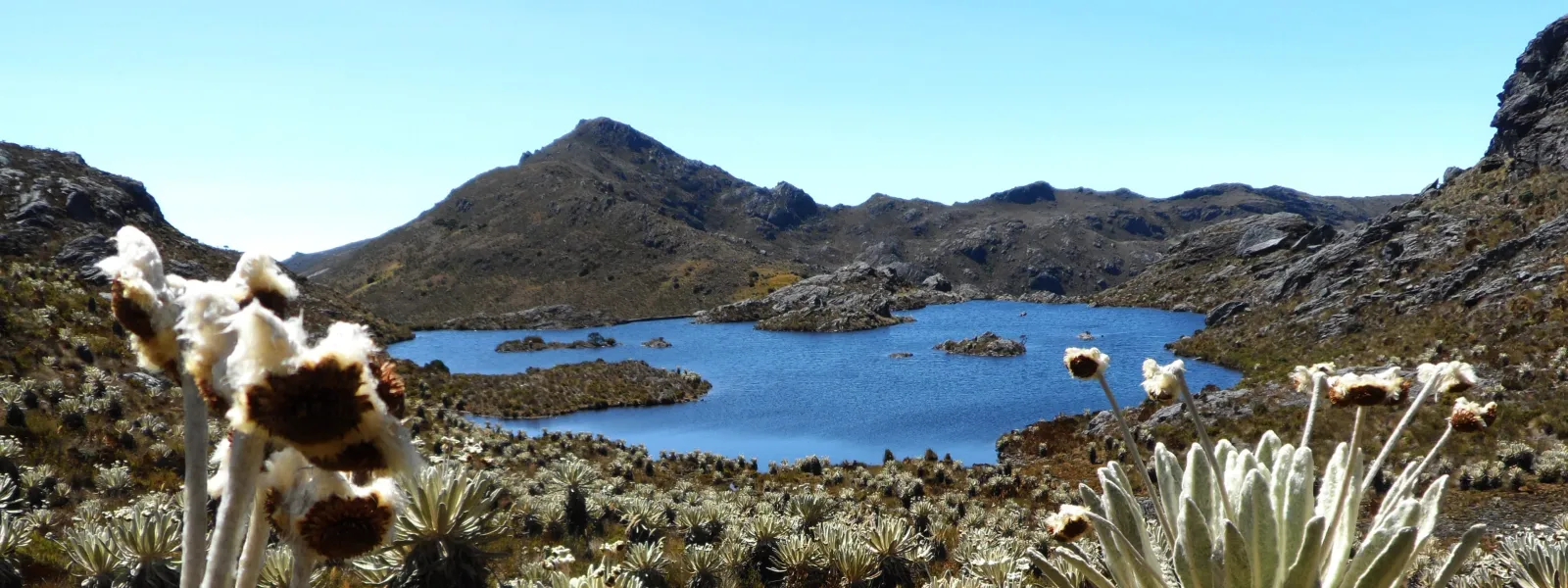
In the Andean region, high-mountain ecosystems known as páramos capture water from the fog and supply it to the lowlands. One such ecosystem is the Santurbán páramo, which provides fresh water to more than two million people in Colombia.
Santurbán, like the other páramos on the continent, also captures large amounts of carbon, making it a key ally in mitigating the climate crisis. It is also a refuge for hundreds of endangered species, including the iconic spectacled bear.
The land in and around the páramo contains gold and other minerals. This has put Santurbán in the spotlight of the multinational mining industry, which for decades has sought to establish large-scale projects in the ecosystem that threaten to degrade it.
The Committee for the Defense of Water and the Santurbán Páramo—a coalition of environmental advocates—has thwarted these ongoing attempts, with support from AIDA and other civil society organizations.
Background
The Santurbán páramo is located in the heart of the Eastern Cordillera of the Colombian Andes, in the departments of Santander and Norte de Santander, at an elevation ranging from 2,200 to 4,290 meters above sea level.
It covers an area of 129,743 hectares and is home to 57 lakes. It serves as a habitat for 457 plant species and 293 species of vertebrate fauna.
There are mineral deposits in Santurbán, primarily gold, but also silver and copper. This explains the region’s mining tradition, particularly in the part of the páramo located in Santander, in the province of Soto Norte. The communities in the area have built their culture and identity around gold mining, which is mainly artisanal and small-scale.
But since the 1990s, the gold deposits in the páramo have also attracted foreign mining conglomerates seeking to develop large-scale projects. This has raised concerns among the population that relies on the Santurbán water sources, who have mobilized in defense of water, their land, and life.
Although national and international regulations prohibit mining in páramos, the Colombian government has granted mining concessions to transnational corporations in Santurbán.

Photo: Keishpixl / Pixabay.
The long struggle to protect the páramo
One of the companies that sought to develop large-scale mining in Santurbán is Eco Oro Minerals Corp.—formerly Greystar Resources—a Canadian company that intended to establish the Angostura open-pit mine there to extract gold and silver. Between 1994 and 1995, the company acquired its mining titles and conducted exploration. And in 2010, it applied for a mining permit.
That was the year AIDA became involved in defending the ecosystem, supporting the Committee for the Defense of Water and the Santurbán Páramo. Our legal work helped convince the Colombian government to deny the mine an environmental permit in May 2011.
In January 2013, the government designated a portion of the páramo (11,700 hectares) as a Regional Natural Park. That year—together with the committee and partner organizations—we carried out a campaign and advocacy efforts to urge the government to recognize the entire Santurbán area as a páramo ecosystem through a delimitation based on scientific criteria. In December 2014, the Ministry of the Environment established a delimitation that protected 76% of the páramo (98,954 hectares).
Furthermore, as a result of a litigation supported by AIDA, in February 2016, Colombia’s highest court reaffirmed that mining in páramos is prohibited.
That same year, in December, the International Finance Corporation (IFC), the World Bank Group’s private sector arm, decided to divest from Eco Oro Minerals. This achievement was the result of a process that began in 2012, when the committee—advised and supported by AIDA and international partner organizations—filed a complaint before an independent accountability mechanism, which concluded that the IFC’s investment in the Angostura project failed to take into account the project’s social and environmental impacts, thereby contradicting the financial institution’s internal policies.
Also in 2016, Eco Oro Minerals filed an arbitration claim against the Colombian government with the International Centre for Settlement of Investment Disputes (ICSID), arguing that it had been adversely affected by government decisions aimed at protecting the country’s páramos, including the delimitation of Santurbán.
In 2017, the Constitutional Court invalidated the delimitation because the affected communities were not consulted. The high court ordered that a participatory delimitation be carried out.
And that year, a new threat to Santurbán emerged when the Canadian multinational Aris Mining applied for an environmental permit for Soto Norte, a gold mining project located near the páramo. Following citizen protests and technical objections, in October 2020, the National Environmental Licensing Authority shelved the project.
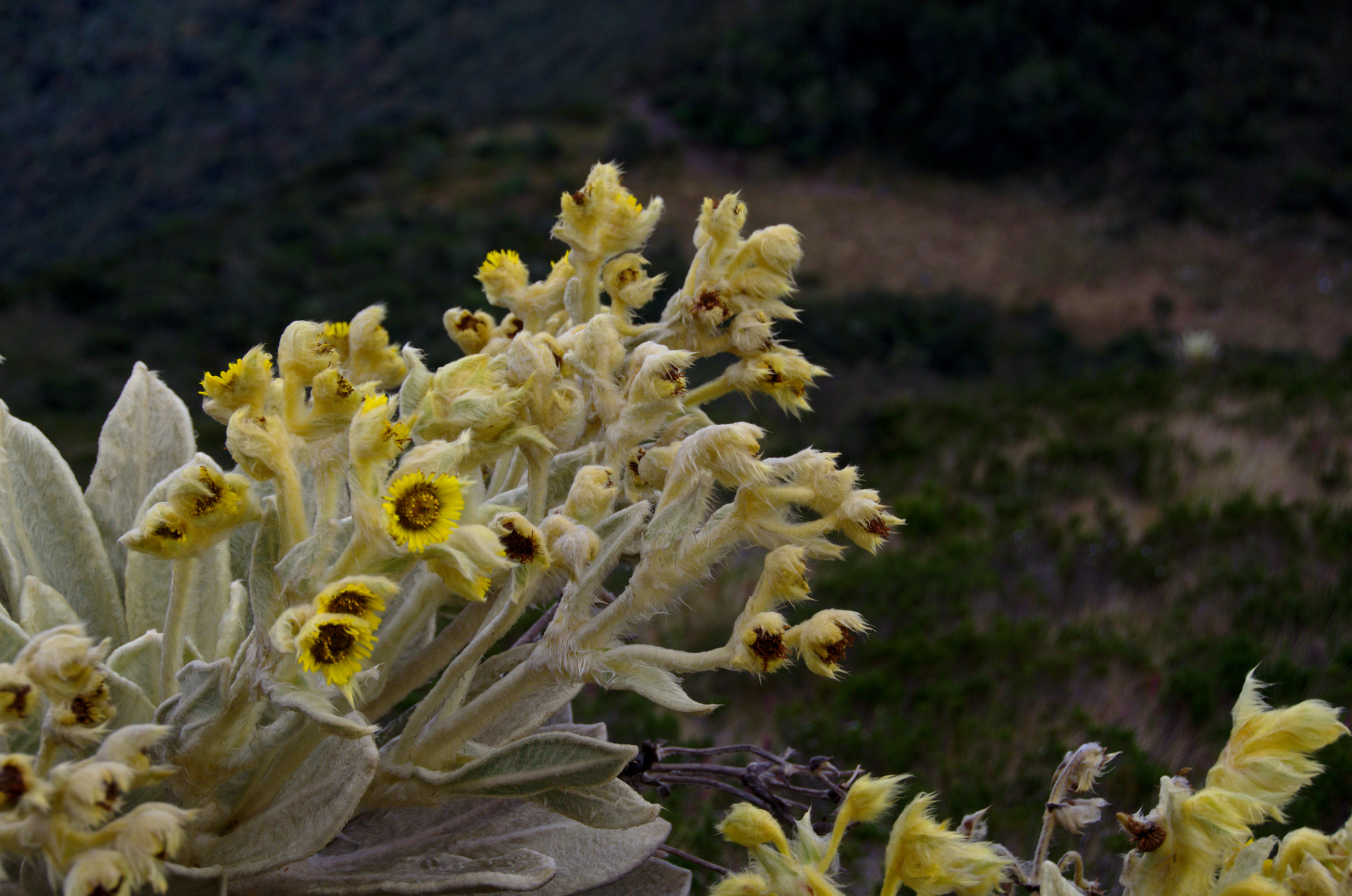
Photo: Aztlec.
Current situation
In March 2025, the Colombian government designated the western flank of the Santurbán massif as a temporary renewable natural resource reserve area, delimiting and protecting an area of 75,344.65 hectares. This resulted in a two-year suspension of the Soto Norte project. However, Aris Mining's contract to formalize Calimineros' small-scale mining activities through the purchase and processing of mineralized material remains in effect.
In addition, the Canadian mining company continues to move the project forward. In September 2025, it released its prefeasibility study, revising the mine’s original design.
Meanwhile, members of the Committee for the Defense of Water and the Santurbán Páramo face threats and stigmatization because of their work. In March 2025, UN Special Rapporteurs and the Working Group on Business and Human Rights denounced these incidents in communications sent to the governments of Colombia, Canada, and the United Arab Emirates, as well as to the companies Aris Mining and MDC Industry Holding Company LLC, the former co-owner of the Soto Norte project.
Regarding the arbitration claim filed by Eco Oro Minerals, in July 2024, ICSID ruled in favor of the Colombian government and rejected the Canadian company’s claim for USD 1.1 billion in compensation.
Concerning the delimitation of Santurbán, in July 2026, the Ministry of the Environment issued a resolution introducing the concept of "progressive delimitation." On that basis, the government proposes to progressively demarcate the páramo, covering 29,199 hectares across 19 municipalities—those where the participatory agreements required by the Constitutional Court in its 2017 ruling have already been finalized. It also proposes two measures on the creation and expansion of reserves to restrict mining in the ecosystem.
Learn more about the impacts of mining on the páramos of Latin America (in Spanish).
Partners:
Related projects
5 things you should know about methane
Although its presence in the atmosphere is less than that of carbon dioxide (CO2)—the most abundant and well-known greenhouse gas—methane is much more effective at retaining heat due to its chemical composition. Therefore, adding smaller amounts of methane to the atmosphere can have an effect equal to that of adding tremendous amounts of CO2. Since 2006, the amount of methane in the atmosphere has grown considerably—by about 25 million tons per year. Studies have associated this increase with the leakage and burning of methane from the extraction of unconventional hydrocarbons through the process of fracking, or hydraulic fracturing. Although extracting gas through fracking is sold as a “greener” alternative to other fossil fuels, it is a false narratiave that must be combatted. In general, all activities that cause methane emissions aggravate the climate crisis and the increasingly urgent need to combat air pollution. The common understanding of methane is inaccurate. Therefore, it’s necessary to generate more awareness about what it is and what its real impacts are. What follows are five basic facts about methane. 1. Methane is a short-lived greenhouse gas and climate pollutant Methane is a greenhouse gas.The Greenhouse Effect is a natural phenomena in which the atmosphere, composed of different gases, captures some rays of the sun and keeps them trapped in order to balance the temperature of the planet. When an excess of gases such as methane are emitted, the atmosphere traps more heat than necessary, leading to global warming. Methane has 67 times more power than CO2 to warm the planet over a 20-year period. Its emissions are responsible for nearly 25 percent of global warming. And since it stays less time in the atmosphere—12 years on average (CO2 stays for centuries)—it is among the Short Lived Climate Pollutants (SLCPs), which cause 40-45 percent of global warming and damage air quality. 2. Methane primarily is produced from human sources About 60 percent of the methane in the atmosphere is considered by scientists to be caused by human activity, while the other 40 percent comes from natural sources like wetlands, volcanoes, and permafrost. Human sources include livestock, gas and petroleum exploitation, rice farming, mining (particularly coal mining), and landfills. It should be noted that, according to scientific evidence, reservoirs are also an important source of methane. They generate 1.3 percent of all greenhouse gases worldwide each year, more than all of Canada's polluting emissions, and 80 percent of that pollution is from methane. 3. Methane directly and indirectly degrades air quality Large amounts of methane are intentionally leaked or released during the exploitation, processing, and transportation of oil and gas. In the United States alone, such direct emissions amount to 13 million tons each year. When released into the atmosphere, methane is accompanied by other toxic pollutants such as benzene, formaldehyde, and ethylbenzene. In addition, by interacting with solar radiation, methane promotes the formation of ground-level ozone (O3), another short-lived climate pollutant (CCVC) and the main component of smog. Methane gas flaring also produces black carbon and volatile organic compounds (VOCs), which are also CCVCs. 4. Methane causes serious damage to human health As mentioned, methane emissions promote the formation of ozone found in the lower layers of the atmosphere, which has serious impacts on public health. It irritates the airways, generates a feeling of burning and shortness of breath, complicates asthma, causes lung dysfunction and even premature death, and alters the immune system's response, reducing its ability to respond to diseases such as COVID-19, which mainly affects the airways. And since methane burning generates black carbon, it is relevant to point out that it is a key component of particulate matter (PM 2.5)—particles that are 35 times smaller than a grain of sand. These particles cannot be filtered or retained naturally in the nose, and can even enter the lungs. Particulate matter is the air pollutant most frequently associated with cardiovascular, respiratory, and pulmonary diseases, including lung cancer. 5. It is urgent to regulate and curb methane emissions Since methane, in addition to aggravating the climate crisis, deteriorates air quality and with it human health, it is urgent to act to curb its emissions. Civil society must demand that governments efficiently regulate methane emissions from the hydrocarbon industry and other sectors such as coal mining and industrial livestock. In addition, we must demand the monitoring of emissions, as well as the production and dissemination of timely information about methane’s damage to our air quality.
Read more5 things you should know about methane
Although its presence in the atmosphere is less than that of carbon dioxide (CO2)—the most abundant and well-known greenhouse gas—methane is much more effective at retaining heat due to its chemical composition. Therefore, adding smaller amounts of methane to the atmosphere can have an effect equal to that of adding tremendous amounts of CO2. Since 2006, the amount of methane in the atmosphere has grown considerably—by about 25 million tons per year. Studies have associated this increase with the leakage and burning of methane from the extraction of unconventional hydrocarbons through the process of fracking, or hydraulic fracturing. Although extracting gas through fracking is sold as a “greener” alternative to other fossil fuels, it is a false narratiave that must be combatted. In general, all activities that cause methane emissions aggravate the climate crisis and the increasingly urgent need to combat air pollution. The common understanding of methane is inaccurate. Therefore, it’s necessary to generate more awareness about what it is and what its real impacts are. What follows are five basic facts about methane. 1. Methane is a short-lived greenhouse gas and climate pollutant Methane is a greenhouse gas.The Greenhouse Effect is a natural phenomena in which the atmosphere, composed of different gases, captures some rays of the sun and keeps them trapped in order to balance the temperature of the planet. When an excess of gases such as methane are emitted, the atmosphere traps more heat than necessary, leading to global warming. Methane has 67 times more power than CO2 to warm the planet over a 20-year period. Its emissions are responsible for nearly 25 percent of global warming. And since it stays less time in the atmosphere—12 years on average (CO2 stays for centuries)—it is among the Short Lived Climate Pollutants (SLCPs), which cause 40-45 percent of global warming and damage air quality. 2. Methane primarily is produced from human sources About 60 percent of the methane in the atmosphere is considered by scientists to be caused by human activity, while the other 40 percent comes from natural sources like wetlands, volcanoes, and permafrost. Human sources include livestock, gas and petroleum exploitation, rice farming, mining (particularly coal mining), and landfills. It should be noted that, according to scientific evidence, reservoirs are also an important source of methane. They generate 1.3 percent of all greenhouse gases worldwide each year, more than all of Canada's polluting emissions, and 80 percent of that pollution is from methane. 3. Methane directly and indirectly degrades air quality Large amounts of methane are intentionally leaked or released during the exploitation, processing, and transportation of oil and gas. In the United States alone, such direct emissions amount to 13 million tons each year. When released into the atmosphere, methane is accompanied by other toxic pollutants such as benzene, formaldehyde, and ethylbenzene. In addition, by interacting with solar radiation, methane promotes the formation of ground-level ozone (O3), another short-lived climate pollutant (CCVC) and the main component of smog. Methane gas flaring also produces black carbon and volatile organic compounds (VOCs), which are also CCVCs. 4. Methane causes serious damage to human health As mentioned, methane emissions promote the formation of ozone found in the lower layers of the atmosphere, which has serious impacts on public health. It irritates the airways, generates a feeling of burning and shortness of breath, complicates asthma, causes lung dysfunction and even premature death, and alters the immune system's response, reducing its ability to respond to diseases such as COVID-19, which mainly affects the airways. And since methane burning generates black carbon, it is relevant to point out that it is a key component of particulate matter (PM 2.5)—particles that are 35 times smaller than a grain of sand. These particles cannot be filtered or retained naturally in the nose, and can even enter the lungs. Particulate matter is the air pollutant most frequently associated with cardiovascular, respiratory, and pulmonary diseases, including lung cancer. 5. It is urgent to regulate and curb methane emissions Since methane, in addition to aggravating the climate crisis, deteriorates air quality and with it human health, it is urgent to act to curb its emissions. Civil society must demand that governments efficiently regulate methane emissions from the hydrocarbon industry and other sectors such as coal mining and industrial livestock. In addition, we must demand the monitoring of emissions, as well as the production and dissemination of timely information about methane’s damage to our air quality.
Read more
Science as a human right and a tool for environmental justice
By María Fernanda Ordoñez y Andrés Ángel According to the Encyclopedia Britannica, science is any system of knowledge that is concerned with the physical world and its phenomena and that entails unbiased observations and systematic experimentation. For its part, the United Nations (UN) defines science as the tool created by human beings to understand the world around them, and thus apply that knowledge to their benefit. If science is such an important tool, why is it not available to everyone? There is still a long way to go before science is recognized as a human right, and even the advances that have been made to that end are not well enough known. The so-called right to science was formed in the 1948 Universal Declaration of Human Rights, article 27 of which states that "everyone has the right to participate in scientific progress and in the benefits resulting therefrom.” It is also referred to in the Charter (Article 38) of the Organization of American States and in the American Declaration of the Rights and Duties of Man. In addition, the International Covenant on Economic, Social and Cultural Rights—which entered into force in 1976—recognizes in its Article 15 the right of every person to "enjoy the benefits of scientific progress and its applications.” It is precisely to raise public awareness of the responsible use of science for the benefit of society that World Science Day for Peace and Development is celebrated every November 10. The big gaps remaining Although the right to science is promoted by various world class scientific organizations, like the American Association for the Advancement of Science (AAAS), its application is still relatively unknown. This may be due in part to ignorance and economic difficulties in some countries. In Latin America and the Caribbean, socioeconomic, racial, and gender gaps are the major obstacles to the establishment of the universal right to science, which is closely linked to other rights, such as the right to education. According to UNESCO’s 2017-2018 World Education Report, 52 percent of children and adolescents in the region fail to reach minimum levels in mathematics and 36 percent fail in reading. In addition, in 2015 the rate of out-of-school youth of secondary school age reached 15.3 percent. A more telling indicator is the percentage of the Gross Domestic Product (GDP) allocated to public education, which stands at an average of 5 percent. In terms of the percentage of GDP allocated to research and development, the World Bank data shows that the countries that allocated the most resources for this purpose in 2017 were Brazil (1.26%) and Argentina (0.54%), followed by Cuba (0.43%) and Costa Rica (0.42%). The lowest figures were recorded in Guatemala (0.03%), Honduras (0.04%) and Peru (0.12%). These figures demonstrate that there are profound challenges to be faced in order to create the necessary conditions for the effective exercise of the right to science. Science in the Service of Environmental Justice Scientific advances allow us to find solutions to the new economic, social and environmental challenges we face on our way to a more just and sustainable future. Most communities in Latin America lack access to basic tools, or the training to develop programs for independent monitoring of environmental parameters, such as air or water quality. Thus, communities are at a serious disadvantage in the context of socio-ecological conflicts that may result from proposals for large mining, oil, and agro-industrial projects. However, it’s worth highlighting and promoting progress where it exists. It is encouraging to hear from empowered communities that have decided to implement community water quality monitoring programs, epidemiology initiatives, and many others. There is also hope because UNESCO data shows gross enrollment in higher education rose from 22 to 46 percent between 2000 and 2015. Likewise, many of the region’s civil society organizations are supporting the recognition of the right to science. At AIDA, scientific knowledge is used to strengthen our legal strategies to protect people and environments in the region. During the AAAS’s Conference on Science, Technology, and Human Rights in October 2019, we explained the link between science and human rights advocacy, and how we apply it in our work. Two months earlier, in August, UNESCO organized their first Latin American workshop in Argentina to discuss the development and implications of the right to science. There, the right to science was defined as a major focus of the organizattion’s work in the region. Strengthening the right to science in Latin America is vital for promoting more just and sustainable societies, where socioeconomic, racial, and gender gaps do not impede access to information as a common good. It’s essential to involve trained people committed to research in projects, organizations, and entities that promote social and environmental justice. In addition, the support of scientific professionals is fundamental to the process of knowledge transfer between countries and regions. This support is indispensable for the development of effective and efficient public policies. Finally, it should be noted that science should not only contribute to overcoming information asymmetries among actors in society, but should also be practiced and developed within a framework of respect for the rights of nature and human rights. At AIDA, we will continue to promote the right to science, building new capacities and strengthening existing ones, both for our partners and for the communities we support.
Read more