
Project
Alberto Peña Kay
Protecting the Santurban páramo from mining's damage
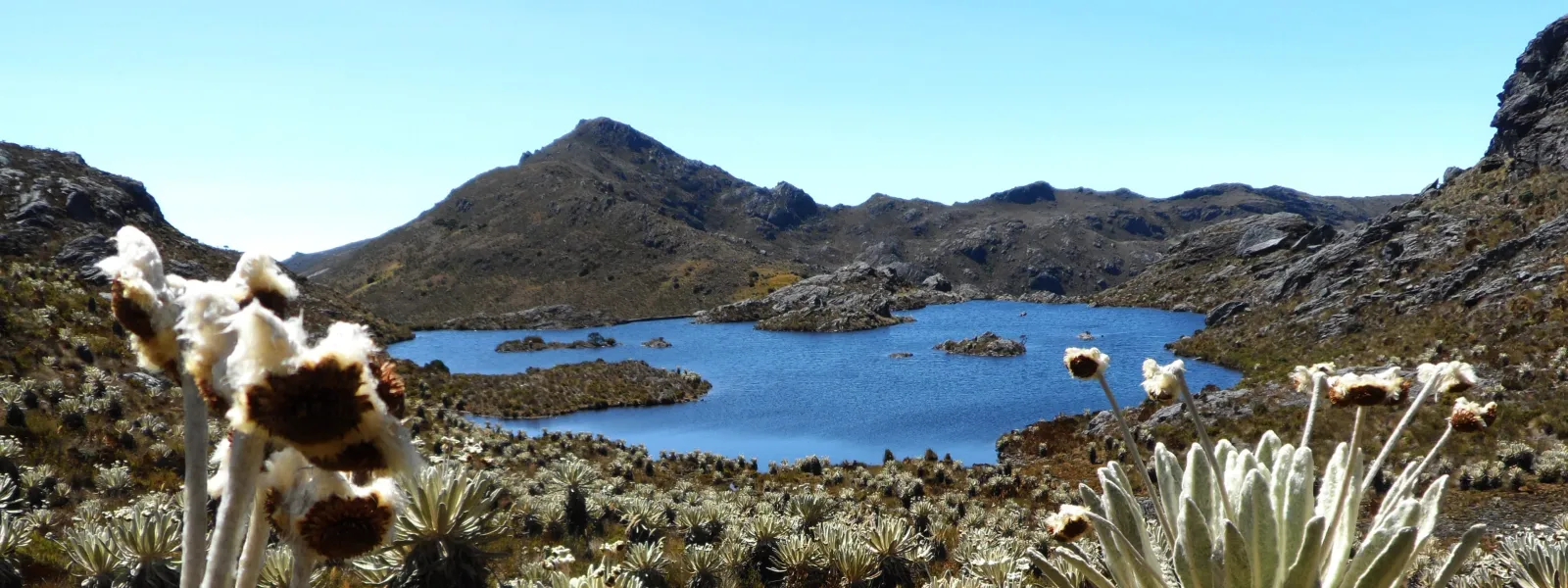
In the Andean region, high-mountain ecosystems known as páramos capture water from the fog and supply it to the lowlands. One such ecosystem is the Santurbán páramo, which provides fresh water to more than two million people in Colombia.
Santurbán, like the other páramos on the continent, also captures large amounts of carbon, making it a key ally in mitigating the climate crisis. It is also a refuge for hundreds of endangered species, including the iconic spectacled bear.
The land in and around the páramo contains gold and other minerals. This has put Santurbán in the spotlight of the multinational mining industry, which for decades has sought to establish large-scale projects in the ecosystem that threaten to degrade it.
The Committee for the Defense of Water and the Santurbán Páramo—a coalition of environmental advocates—has thwarted these ongoing attempts, with support from AIDA and other civil society organizations.
Background
The Santurbán páramo is located in the heart of the Eastern Cordillera of the Colombian Andes, in the departments of Santander and Norte de Santander, at an elevation ranging from 2,200 to 4,290 meters above sea level.
It covers an area of 129,743 hectares and is home to 57 lakes. It serves as a habitat for 457 plant species and 293 species of vertebrate fauna.
There are mineral deposits in Santurbán, primarily gold, but also silver and copper. This explains the region’s mining tradition, particularly in the part of the páramo located in Santander, in the province of Soto Norte. The communities in the area have built their culture and identity around gold mining, which is mainly artisanal and small-scale.
But since the 1990s, the gold deposits in the páramo have also attracted foreign mining conglomerates seeking to develop large-scale projects. This has raised concerns among the population that relies on the Santurbán water sources, who have mobilized in defense of water, their land, and life.
Although national and international regulations prohibit mining in páramos, the Colombian government has granted mining concessions to transnational corporations in Santurbán.

Photo: Keishpixl / Pixabay.
The long struggle to protect the páramo
One of the companies that sought to develop large-scale mining in Santurbán is Eco Oro Minerals Corp.—formerly Greystar Resources—a Canadian company that intended to establish the Angostura open-pit mine there to extract gold and silver. Between 1994 and 1995, the company acquired its mining titles and conducted exploration. And in 2010, it applied for a mining permit.
That was the year AIDA became involved in defending the ecosystem, supporting the Committee for the Defense of Water and the Santurbán Páramo. Our legal work helped convince the Colombian government to deny the mine an environmental permit in May 2011.
In January 2013, the government designated a portion of the páramo (11,700 hectares) as a Regional Natural Park. That year—together with the committee and partner organizations—we carried out a campaign and advocacy efforts to urge the government to recognize the entire Santurbán area as a páramo ecosystem through a delimitation based on scientific criteria. In December 2014, the Ministry of the Environment established a delimitation that protected 76% of the páramo (98,954 hectares).
Furthermore, as a result of a litigation supported by AIDA, in February 2016, Colombia’s highest court reaffirmed that mining in páramos is prohibited.
That same year, in December, the International Finance Corporation (IFC), the World Bank Group’s private sector arm, decided to divest from Eco Oro Minerals. This achievement was the result of a process that began in 2012, when the committee—advised and supported by AIDA and international partner organizations—filed a complaint before an independent accountability mechanism, which concluded that the IFC’s investment in the Angostura project failed to take into account the project’s social and environmental impacts, thereby contradicting the financial institution’s internal policies.
Also in 2016, Eco Oro Minerals filed an arbitration claim against the Colombian government with the International Centre for Settlement of Investment Disputes (ICSID), arguing that it had been adversely affected by government decisions aimed at protecting the country’s páramos, including the delimitation of Santurbán.
In 2017, the Constitutional Court invalidated the delimitation because the affected communities were not consulted. The high court ordered that a participatory delimitation be carried out.
And that year, a new threat to Santurbán emerged when the Canadian multinational Aris Mining applied for an environmental permit for Soto Norte, a gold mining project located near the páramo. Following citizen protests and technical objections, in October 2020, the National Environmental Licensing Authority shelved the project.
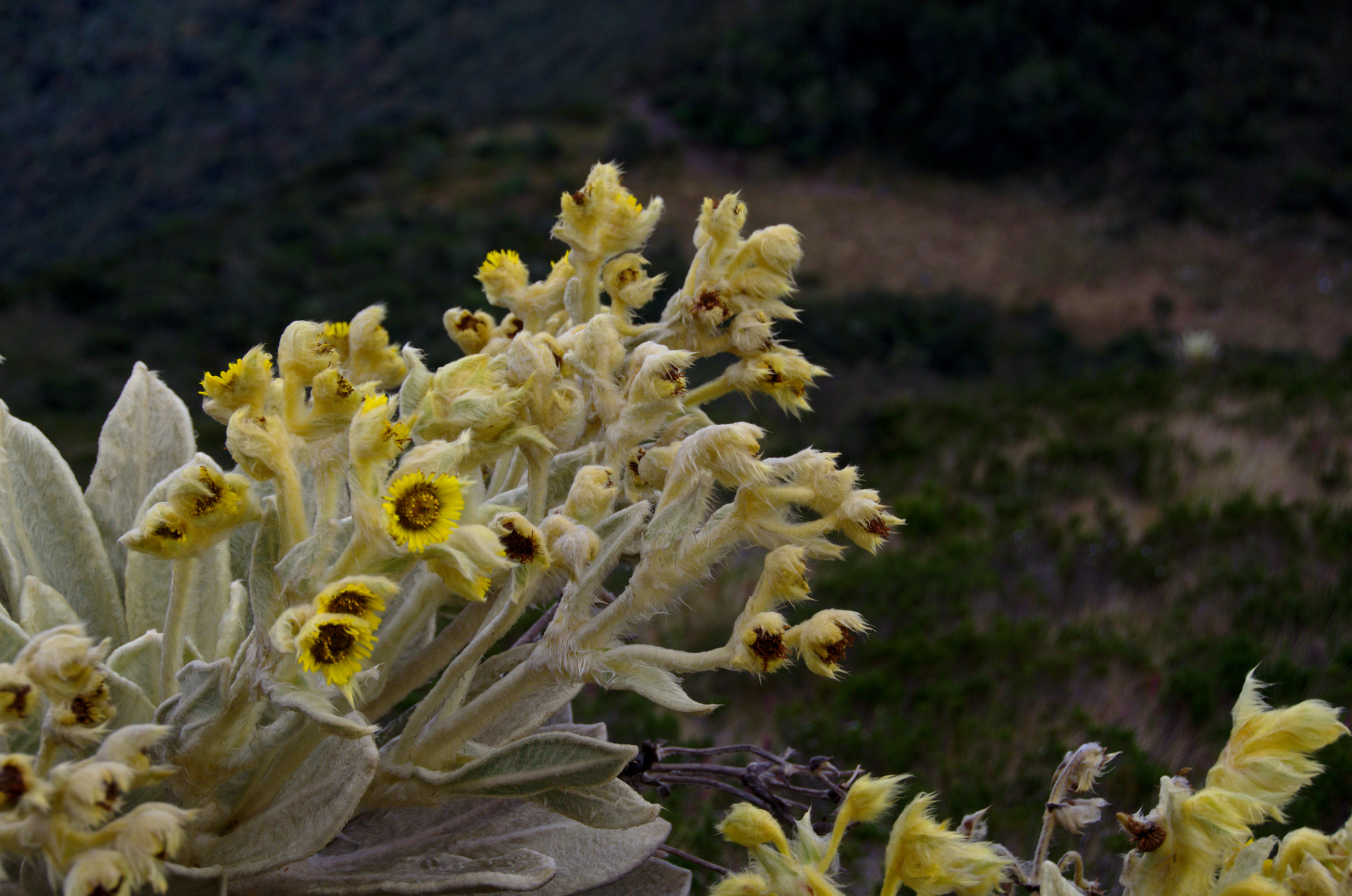
Photo: Aztlec.
Current situation
In March 2025, the Colombian government designated the western flank of the Santurbán massif as a temporary renewable natural resource reserve area, delimiting and protecting an area of 75,344.65 hectares. This resulted in a two-year suspension of the Soto Norte project. However, Aris Mining's contract to formalize Calimineros' small-scale mining activities through the purchase and processing of mineralized material remains in effect.
In addition, the Canadian mining company continues to move the project forward. In September 2025, it released its prefeasibility study, revising the mine’s original design.
Meanwhile, members of the Committee for the Defense of Water and the Santurbán Páramo face threats and stigmatization because of their work. In March 2025, UN Special Rapporteurs and the Working Group on Business and Human Rights denounced these incidents in communications sent to the governments of Colombia, Canada, and the United Arab Emirates, as well as to the companies Aris Mining and MDC Industry Holding Company LLC, the former co-owner of the Soto Norte project.
Regarding the arbitration claim filed by Eco Oro Minerals, in July 2024, ICSID ruled in favor of the Colombian government and rejected the Canadian company’s claim for USD 1.1 billion in compensation.
Concerning the delimitation of Santurbán, in July 2026, the Ministry of the Environment issued a resolution introducing the concept of "progressive delimitation." On that basis, the government proposes to progressively demarcate the páramo, covering 29,199 hectares across 19 municipalities—those where the participatory agreements required by the Constitutional Court in its 2017 ruling have already been finalized. It also proposes two measures on the creation and expansion of reserves to restrict mining in the ecosystem.
Learn more about the impacts of mining on the páramos of Latin America (in Spanish).
Partners:
Related projects
Fracking regulation in Mendoza violates Argentina's climate commitments
AIDA filed a legal brief before the Supreme Court of Mendoza arguing the unconstitutionality of a decree allowing for unconventional oil and gas drilling through hydraulic fracturing in the Argentine province. Mendoza, Argentina. In support of a lawsuit filed by Argentine ally OIKOS, the Interamerican Association for Environmental Defense (AIDA) filed a “friend of the court” brief claiming the unconstitutionality of local regulations allowing for the exploration and exploitation of unconventional hydrocarbons, known as fracking. Using arguments based on international law, the brief outlines how Mendoza’s Decree 248 violates Argentina’s climate commitments and disregards the precautionary principle. "As a party to the United Nations Framework Convention on Climate Change and a signatory of the Paris Agreement, the Argentine State has assumed international obligations to reduce greenhouse gas emissions and mitigate the climate crisis," explained AIDA attorney Claudia Velarde. "Betting on fracking implies an increase in those emissions and non-compliance with the nation’s climate commitments.” Several studies of fracking in the United States have posited that leakage and flaring during fracking operations are associated with a significant increase of methane in the atmosphere. Though less notorious than carbon dioxide, methane emissions are responsible for around 25 percent of global warming. Decree 248 fails to contemplate any provision to control greenhouse gas emissions generated by fracking or limit their climate impacts. “There are not sufficient grounds for the government of Mendoza to claim they can effectively regulate fracking,” Velarde said. "It’s clear that this regulation is insufficient, and that it ignores the precautionary principle.” The precautionary principle establishes that, when there is danger of serious or irreversible damage, the lack of absolute scientific certainty should not prevent the adoption of effective measures to prevent environmental degradation. In fracking, being an unconventional technique with a high degree of technical and scientific difficulty, there is no certainty about its impacts, which merits the application of the precautionary principle. The brief also documents the applicability of this argument based on similar cases in other countries of Latin America. Colombia currently has a moratorium on fracking based on this legal principle. "In recent decades, the development of fracking has raised alarms worldwide due to evidence of serious and irreversible damages to the environment and public health, both of which are aggravated by the climate crisis," Velarde added. AIDA’s brief joins others filed by national and international organizations against the decree regulating fracking in Mendoza, including Xumek, FARN (Environment and Natural Resource Foundation) and Earthjustice. Press contact: Victor Quintanilla (Mexico), [email protected], +5215570522107.
Read more
What you should know about deep-sea mining
Deep-sea mining consists of the exploitation of mineral deposits located deeper than 200 meters in the ocean. Although interest in the technique dates back to 1960, initial ideas were never implemented due to factors such as low metal prices, relatively easy access to raw materials in the countries of the Global South, multiple technical difficulties, and legal uncertainty. On the ocean floor, there are three types of resources of great economic interest: polymetallic nodules, ferromagnesian crusts, and seafloor massive sulfides generated by hydrothermal vents. Currently, interest in these resources has regained strength due to geopolitical changes and greater demand from the non-conventional renewable energy sector. To date, 30 mining exploration contracts have been confirmed in the Pacific, Atlantic, and Indian oceans involving 21 contractors from around the world among companies, government authorities, and science and technology institutes. Unfortunately, we know very little about the ecosystems on the ocean floor and the real impacts of this type of mining. Some scientists believe that the recovery of the habitat would take decades to centuries and that, in some cases, the damage could be irreversible since certain environments are unique. Socio-ecological impacts Although ocean mining could stimulate the economy, the social impacts it entails must be emphasized, especially for the most vulnerable local communities, which depend on natural resources for their livelihoods. Ocean mining has been associated with dilemmas such as foreign interference, cultural disruption, unequal distribution of wealth, loss of access to natural hunting grounds, and alterations in the distribution and migration of species, which would generate variations in the quantity and quality of fishing. Ecological impacts include, among others: an increase of particulate matter in the water, greater mortality of organisms, habitat destruction, the risk of encountering unknown bacteria and viruses in the oceans, the arrival of invasive species through extraction equipment, and the risk of accidental spills caused by the inputs used. The environmental management of this activity is also a concern. The agency in charge of regulating ocean mining is the International Seabed Authority (ISA), founded in 1994 by the United Nations Convention on the Law of the Sea. ISA has jurisdiction over the seabed and subsoil in international waters. It is currently developing a proposal for regulations for ocean mining, which has been faced with multiple challenges. The Deep Sea Conservation Coalition—an alliance of more than 80 organizations that has been operating since 2004 with the objective of protecting the deep sea—questioned whether the proposal establishes that the form of environmental monitoring should depend on ISA or on the contractors. As early as 2018, the coalition stated that independent scientific review and assessment is key to all environmental documents, especially Environmental Impact Assessments and Environmental Monitoring and Management Plans. It is pertinent to mention that, in addition to regulating mining in international waters, ISA is responsible for ensuring the ecological protection of the oceans from the potential harmful effects of activities developed or related to the seabed. The fact that those promoting the projects may carry out environmental monitoring implies the risk of environmental problems due to conflicts of interest. Looking ahead The ocean floor is the largest living area on our planet. There, ecosystems of splendid beauty exist, of which we know practically nothing, and which could suffer irreversible damage from deep-sea mining projects, scientists and conservationists have warned. Healthy oceans play an integral role in global climate regulation and are essential to ensuring food security and livelihoods for millions of people around the world. In addition, significant ignorance about how the deep ocean works make any attempt at Environmental Impact Assessment (EIA) and future projections difficult. In fact, on almost every new dive, new species are discovered. And much remains to be learned about the relationship between the ocean floor and the climate crisis, water acidification, and pressures from anthropogenic (human-induced) activities. Without adequate knowledge of species, ecosystems, ecological processes, and their connections, EIAs cannot be effective. The concept of the common heritage of mankind should be central to any proposal. Besides, it would be prudent to adopt legal protection measures such as the Precautionary Principle, as well as engage in prior exploration and research activities. With all this in mind, ISA has an immense responsibility before the planet and humanity. For the sake of a sustainable future and the natural legacy of future generations, ISA must ensure adequate protection of the oceans. Should deep-sea mining finally be permitted on the high seas, they must pay close attention to prevention and mitigation measures using a precautionary and adaptive approach, in collaboration with other international bodies.
Read more
OECD to investigate human rights abuses filed against the owners of Cerrejón coal mine; BHP, Anglo American and Glencore
Parallel complaints also filed in Ireland against state owned-company for purchasing coal and Dublin-based sales wing of mining enterprise. Multiple National Contact Points (NCPs) of the Organisation for Economic Co-operation and Development (OECD) will begin the process of investigating three international mining giants (BHP, Anglo American and Glencore) and Ireland’s state-owned energy provider, the ESB, over serious human rights abuses and devastating environmental pollution at the Cerrejón coal mine in Colombia. Parallel complaints were filed simultaneously in Australia, Ireland, Switzerland and the UK by the Global Legal Action Network (GLAN) with the support of international development agency Christian Aid Ireland as well as Colombian and international human rights and environmental NGOs - CINEP, CAJAR, AIDA, ABColombia and ASK. If successful, the three companies which jointly own the Cerrejón mine will have to take steps to comply with the OECD Guidelines for Multinational Enterprises, including progressively closing down the mine in full and environmental restoration. The complaints against the mining giants also call for the full compensation of communities for the harms they have suffered. The complaints outline how the Cerrejón mine, one of the largest open-pit mines in the world, is linked to the forced displacement of indigenous and Afro-Colombian communities and the widespread, persistent and extreme pollution of the air and water in the vicinity of the mine. High concentrations of harmful metals, which can cause diseases such as cancer, were found by Colombia’s Constitutional Court to exist in the blood of those living nearby. The complaints point to Cerrejón’s failure to comply with multiple Colombian court judgments against it. In September, several prominent UN human rights experts called for some of the mine’s operations to be suspended following a request to intervene by Wayuu indigenous people. The complaints allege that the parent companies of the Cerrejón mine, as its joint owners, are responsible under the OECD Guidelines for Multinational Enterprises for the harms caused by its operations. Separate complaints have also been lodged against Dublin-based Coal Marketing Company (CMC), which is the exclusive marketer of coal from the Colombian mine, as well as Ireland’s Electricity Supply Board (ESB), which has been a major purchaser of the mine’s coal. In 2019, the UN Committee on the Elimination of Racial Discrimination recommended that Ireland “consider stopping purchasing coal from the Cerrejón mine”. All five complaints have been lodged with the relevant National Contact Points for the OECD, which are tasked with ensuring that companies comply with the OECD Guidelines for Multinational Enterprises. Director of GLAN Dr Gearóid Ó Cuinn said: “These parallel complaints in four different countries point to a systematic failure to respect basic human rights standards from the extraction, to the marketing, to the purchasing of Cerrejon coal. The long-standing abuses at the mine have been so egregious that there is no way for enterprises to respect human rights law and do business with Cerrejón.” Sorley McCaughey of Christian Aid Ireland said: “We see the impact that corporate human rights abuses are having in every corner of the world and the Cerrejón case underscores the inadequacy of voluntary guidelines for multinational companies. Governments globally, including the UK and Ireland, must introduce mandatory human rights and environmental due diligence legislation for companies to ensure they do not undermine the human rights of workers or the communities in which they work.” Rosa María Mateus Parra, lawyer with CAJAR, a Colombian human rights organisation and signatory to the complaints, said: “This is a striking example of the role played by large multinational companies in fuelling injustice. The people of La Guajira have borne the huge social and environmental costs of the mine, while harmful fossil fuel coal is exported around the world in the midst of the climate crisis and a small number of companies record huge profits.” Notes for editors If upheld the complaints filed in Australia, Switzerland and the UK would require joint-owners BHP, Glencore and Anglo American to close down the Cerrejón mine and compensate the affected communities for the harms it has caused. If upheld the separate complaint in Ireland against Dublin-based CMC would require it to stop selling Cerrejón coal. The complaint was submitted by Global Legal Action Network (GLAN), supported by Christian Aid Ireland, the Centro de Investigación y Educación Popular (CINEP), the Colectivo de Abogados ‘José Alvear Restrepo’ (CAJAR), Interamerican Association for Environmental Defense (AIDA), ABColombia and ASK - Arbeitsgruppe Schweiz Kolumbien. The Global Legal Action Network (GLAN) is a non-profit organisation that works to pursue innovative legal actions across borders to challenge powerful actors involved in human rights violations and systemic injustice by working with affected communities. GLAN has offices in the UK (London) and Ireland (Galway) | @glan_law | www.glanlaw.org. press contacts: Victor Quintanilla (México), AIDA, [email protected], +5215570522107 Dr Gearóid Ó Cuinn (Director), GLAN, [email protected], +447521203427
Read more