
Project
Alberto Peña Kay
Protecting the Santurban páramo from mining's damage
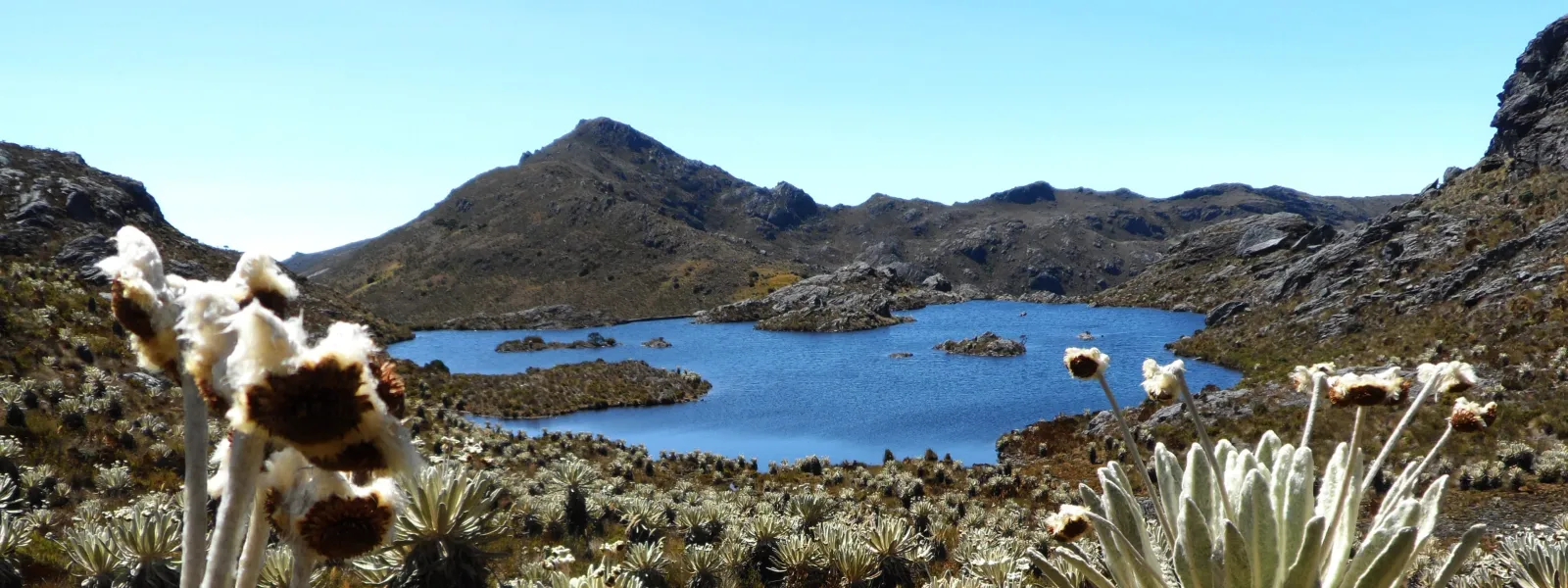
In the Andean region, high-mountain ecosystems known as páramos capture water from the fog and supply it to the lowlands. One such ecosystem is the Santurbán páramo, which provides fresh water to more than two million people in Colombia.
Santurbán, like the other páramos on the continent, also captures large amounts of carbon, making it a key ally in mitigating the climate crisis. It is also a refuge for hundreds of endangered species, including the iconic spectacled bear.
The land in and around the páramo contains gold and other minerals. This has put Santurbán in the spotlight of the multinational mining industry, which for decades has sought to establish large-scale projects in the ecosystem that threaten to degrade it.
The Committee for the Defense of Water and the Santurbán Páramo—a coalition of environmental advocates—has thwarted these ongoing attempts, with support from AIDA and other civil society organizations.
Background
The Santurbán páramo is located in the heart of the Eastern Cordillera of the Colombian Andes, in the departments of Santander and Norte de Santander, at an elevation ranging from 2,200 to 4,290 meters above sea level.
It covers an area of 129,743 hectares and is home to 57 lakes. It serves as a habitat for 457 plant species and 293 species of vertebrate fauna.
There are mineral deposits in Santurbán, primarily gold, but also silver and copper. This explains the region’s mining tradition, particularly in the part of the páramo located in Santander, in the province of Soto Norte. The communities in the area have built their culture and identity around gold mining, which is mainly artisanal and small-scale.
But since the 1990s, the gold deposits in the páramo have also attracted foreign mining conglomerates seeking to develop large-scale projects. This has raised concerns among the population that relies on the Santurbán water sources, who have mobilized in defense of water, their land, and life.
Although national and international regulations prohibit mining in páramos, the Colombian government has granted mining concessions to transnational corporations in Santurbán.

Photo: Keishpixl / Pixabay.
The long struggle to protect the páramo
One of the companies that sought to develop large-scale mining in Santurbán is Eco Oro Minerals Corp.—formerly Greystar Resources—a Canadian company that intended to establish the Angostura open-pit mine there to extract gold and silver. Between 1994 and 1995, the company acquired its mining titles and conducted exploration. And in 2010, it applied for a mining permit.
That was the year AIDA became involved in defending the ecosystem, supporting the Committee for the Defense of Water and the Santurbán Páramo. Our legal work helped convince the Colombian government to deny the mine an environmental permit in May 2011.
In January 2013, the government designated a portion of the páramo (11,700 hectares) as a Regional Natural Park. That year—together with the committee and partner organizations—we carried out a campaign and advocacy efforts to urge the government to recognize the entire Santurbán area as a páramo ecosystem through a delimitation based on scientific criteria. In December 2014, the Ministry of the Environment established a delimitation that protected 76% of the páramo (98,954 hectares).
Furthermore, as a result of a litigation supported by AIDA, in February 2016, Colombia’s highest court reaffirmed that mining in páramos is prohibited.
That same year, in December, the International Finance Corporation (IFC), the World Bank Group’s private sector arm, decided to divest from Eco Oro Minerals. This achievement was the result of a process that began in 2012, when the committee—advised and supported by AIDA and international partner organizations—filed a complaint before an independent accountability mechanism, which concluded that the IFC’s investment in the Angostura project failed to take into account the project’s social and environmental impacts, thereby contradicting the financial institution’s internal policies.
Also in 2016, Eco Oro Minerals filed an arbitration claim against the Colombian government with the International Centre for Settlement of Investment Disputes (ICSID), arguing that it had been adversely affected by government decisions aimed at protecting the country’s páramos, including the delimitation of Santurbán.
In 2017, the Constitutional Court invalidated the delimitation because the affected communities were not consulted. The high court ordered that a participatory delimitation be carried out.
And that year, a new threat to Santurbán emerged when the Canadian multinational Aris Mining applied for an environmental permit for Soto Norte, a gold mining project located near the páramo. Following citizen protests and technical objections, in October 2020, the National Environmental Licensing Authority shelved the project.
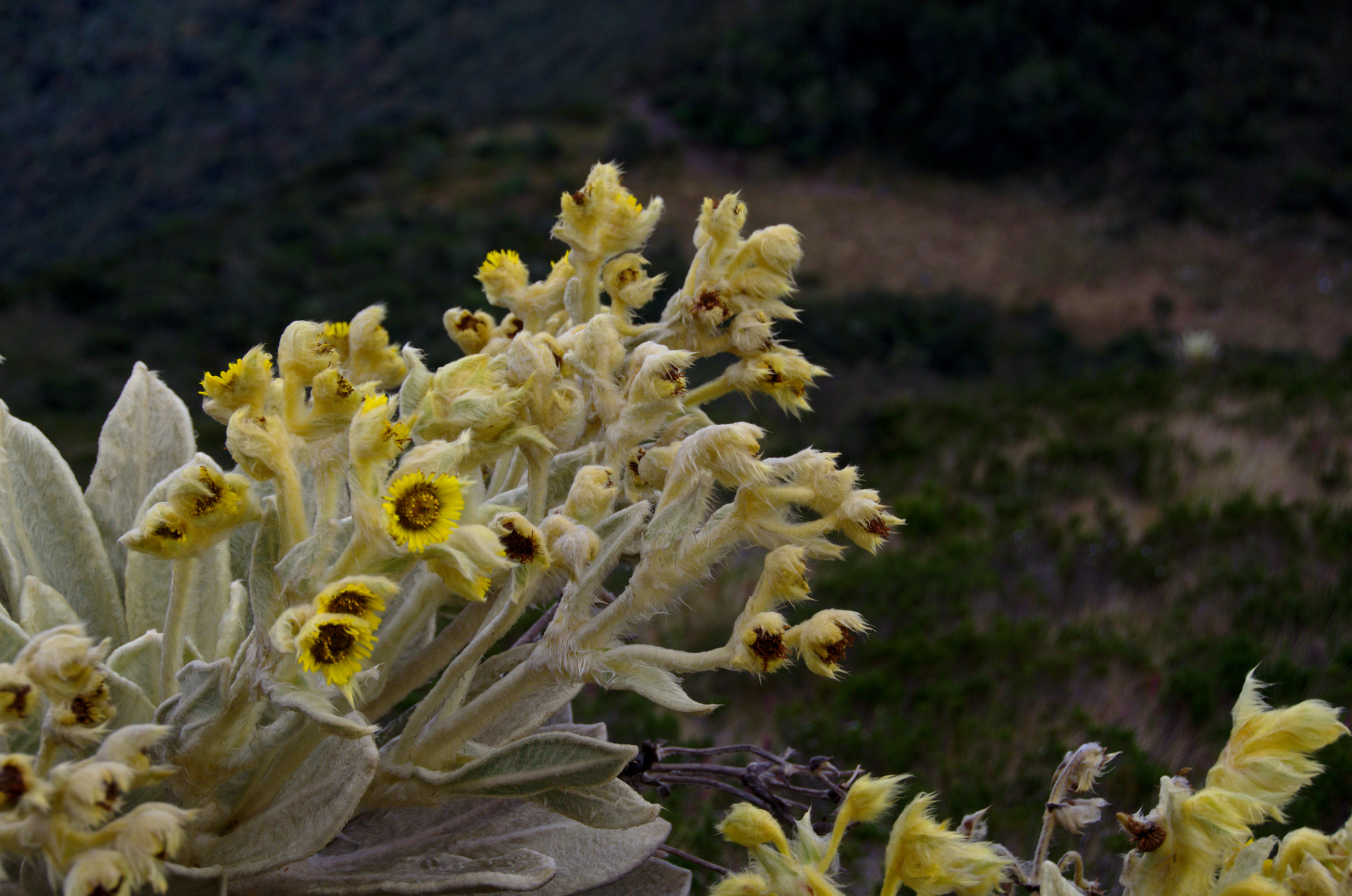
Photo: Aztlec.
Current situation
In March 2025, the Colombian government designated the western flank of the Santurbán massif as a temporary renewable natural resource reserve area, delimiting and protecting an area of 75,344.65 hectares. This resulted in a two-year suspension of the Soto Norte project. However, Aris Mining's contract to formalize Calimineros' small-scale mining activities through the purchase and processing of mineralized material remains in effect.
In addition, the Canadian mining company continues to move the project forward. In September 2025, it released its prefeasibility study, revising the mine’s original design.
Meanwhile, members of the Committee for the Defense of Water and the Santurbán Páramo face threats and stigmatization because of their work. In March 2025, UN Special Rapporteurs and the Working Group on Business and Human Rights denounced these incidents in communications sent to the governments of Colombia, Canada, and the United Arab Emirates, as well as to the companies Aris Mining and MDC Industry Holding Company LLC, the former co-owner of the Soto Norte project.
Regarding the arbitration claim filed by Eco Oro Minerals, in July 2024, ICSID ruled in favor of the Colombian government and rejected the Canadian company’s claim for USD 1.1 billion in compensation.
Concerning the delimitation of Santurbán, in July 2026, the Ministry of the Environment issued a resolution introducing the concept of "progressive delimitation." On that basis, the government proposes to progressively demarcate the páramo, covering 29,199 hectares across 19 municipalities—those where the participatory agreements required by the Constitutional Court in its 2017 ruling have already been finalized. It also proposes two measures on the creation and expansion of reserves to restrict mining in the ecosystem.
Learn more about the impacts of mining on the páramos of Latin America (in Spanish).
Partners:
Related projects

Fact Sheet: SPAW Protocol (Specially Protected Areas and Wildlife)
The Convention for the Protection and Development of the Marine Environment in the Wider Caribbean Region (Cartagena Convention) and its Protocol for Specially Protected Areas and Wildlife (SPAW Protocol) establishes that Contracting Parties have the obligation to regulate the protection of the vulnerable species and ecosystems of the region.The revised criteria for the nomination of species (1, 3, 4, 5, 6 and 10) determines the need to include essential species for vulnerable ecosystems - such as coral reefs, mangroves and seagrasses - in the species lists of Annexes II and III of the SPAW Protocol.The national or regional measures imply in a different way protection processes, biological monitoring of species, fishing recovery zones; analysis of catch data, health status of ecosystems, population dynamics and size; closed periods; and regulation of the capture, possession, transport, trade or total prohibition of the use of the species.In 2018, the Scientific and Technical Advisory Committee (STAC) prioritized the evaluation of herbivorous fish and currently the Species Working Group carries out the evaluation of parrotfish through the integration and analysis of scientific and regulatory data.Eleven of the 17 countries that have signed the Protocol have generated regulatory measures on herbivorous fish. Some regulatory experiences are in force, others are not, and there are those that came into force recently. Download the Fact Sheet in EnglishDownload the Fact Sheet in SpanishDownload the Fact Sheet in French
Read more
7 AIDA Advances of 2020
It was a year unlike any other. This new reality makes our victories and daily accomplishments all the more sweet. So we’re especially proud to report on the progress we've made toward a healthy environment and climate justice in Latin America. 1. Safeguarding the High Seas More than 99% of the global high seas—waters beyond national jurisdiction—are unprotected. To remedy this, over the past year we have led Latin American representation in the High Seas Alliance, collaborating with governments to negotiate an ambitious United Nations treaty to protect these waters and key migratory species of sharks, whales, turtles and tuna. The high seas are both essential to long-term ocean health and a critical carbon sink that helps mitigate climate change. 2. Influencing Divestment in the Amazon For nearly a decade we have worked to halt Brazil’s Belo Monte dam, which has displaced thousands of indigenous people and devastated hundreds of rare species. This year, our testimony led the Norwegian Pension Fund, the world's largest state-owned fund, to exclude one of the dam’s main financers, Eletrobras, from its portfolio because of environmental and human rights violations caused by the dam. This is a notable step toward justice for affected communities. 3. Defending Páramos from Mining We continued to protect páramos in Colombia and Ecuador from mining. These biodiverse, high-altitude forests and wetlands are critical carbon sinks that also provide fresh water for millions of people and habitat for endangered species. Our team contributed legal and technical expertise, and, in the case of Santurbán in Colombia, helped build capacity among local attorneys who are now leading the lawsuit to protect this páramo. 4. Protecting Environmental Defenders Latin America is the most dangerous region in the world for environmental defenders. This year, AIDA brought together more than 70 prominent environment defenders from 14 countries across Latin America to share current information about risks and effective strategies for defense. Participants discussed their challenges, identified gaps in knowledge, and developed new approaches for protecting themselves and their territories. 5. Halting Extractive Energy Development Our ongoing legal and technical expertise was critical to halting fossil fuel expansion. We continued litigation to uphold the moratorium on fracking and, helped prevent further coal mining expansion in Colombia, supported communities in Chile affected by coal power plants, and led efforts to hold International Financial Institutions accountable for funding harmful hydropower Guatemala and Colombia. This work is key to promoting the just transition toward truly clean energy. 6. Preserving Marine Biodiversity in Patagonia The Chilean Magallanes region is home to some of the largest whales and dolphins and one of the most pristine areas on our planet. The greatest environmental threat for this region is the salmon farming industry. Building on our past work, we used the law to halt expanded salmon farming and expose the harms the industry brings. Our work closed one salmon farm and set a precedent for the closure of seven others, all of which are under review by Chilean courts. 7. Strengthening Indigenous Land Management in Colombia In coalition with four indigenous communities of the Sierra Nevada de Santa Marta, we continued protecting their lands from illegal mining. Facing hundreds of proposed projects, we helped implement legal strategies demanding a new territorial management plan that recognizes the traditional governing authority of the indigenous. We also helped strengthen community capacity through workshops on environmental protection.
Read more
Five years after the Paris Agreement, climate justice is more urgent than ever
On December 12, 2015, the Paris Agreement was reached. Five years later, its effective implementation is more important than ever. One of the agreement’s most significant advances was to reiterate that States must, "when taking action to address climate change, respect, promote and consider their respective obligations on human rights, the right to health, the rights of indigenous peoples, local communities, migrants, children, persons with disabilities and people in vulnerable situations and the right to development, as well as gender equality, empowerment of women and intergenerational equity.” This aspect is one of the outstanding issues, and also one of the great opportunities, of the Paris Agreement. In 2015, I had the privilege of participating in the twenty-first Conference of the Parties (COP21) to the United Nations Framework Convention on Climate Change, where the agreement was adopted. Thanks to the live broadcast, I saw the last hammer blow of this historic summit on my phone while on the train to the airport. I traded celebratory hugs with dozens of colleagues for arriving a day earlier to celebrate with my family. It was worth it. After all, my contribution had concluded a few hours earlier. Over the five years prior, and with full intensity during the COP21, I reviewed drafts, and spoke with missions and colleagues about how crucial it was to include human rights in the climate agreement. My priority—shared by colleagues from organizations, some government representatives and international entities—was to ensure a strong agreement, including the obligation to consider and respect human rights. For some people, this was an obstacle, even inappropriate, as they saw the climate crisis as a purely technical issue. Some delegations told me that human rights issues are another area entirely. We insisted on the point until we achieved it, not out of stubbornness (although there may have been some of that), but because in essence the climate crisis affects our rights, our lives and all of us. That’s why it is vital to put human rights at the center of climate action. Otherwise, these actions are incomplete. This is evidenced by the reality of the climate crisis, translated for example into the damages sustained by millions of people and communities by the hurricanes and storms that have, in recent months, devastated coastal areas in Nicaragua, Guatemala, Mexico and the Caribbean; the floods in South Asia; the droughts in northern Mexico; and the devastating fires in the Amazon, California and Australia. The most vulnerable people and communities who have contributed least to the crisis are disproportionately affected. It is therefore possible, and necessary, to find balance through a human rights approach. It’s necessary to hold States, companies and even some sectors of the population accountable. Responsibility with a sense of equity is one of the fundamental principles of human rights. In fact, the 2020 UN Emissions Gap Report concludes by saying, "Equity is central to addressing lifestyles. The emissions of the richest 1 per cent of the global population account for more than twice the combined share of the poorest 50 per cent." Communities, movements and peoples around the world have demanded—even in court—effective climate action that respects their rights. This has been reiterated by the United Nations. But climate action is still largely considered a question of numbers, tons of emissions to be reduced and hectares to be conserved. People and communities, despite being the ones who live the consequences, remain on the periphery of this action. Ensuring a true human rights perspective would help raise ambition and the level of obligations and outcomes. It would also allow impacts to be considered in a comprehensive manner and, as the IPCC concluded, take into account ancestral knowledge and social justice, which are central elements in finding effective solutions. Therein lies the opportunity that is being lost. The scientific community today confirms the widening gap between the current situation and where we should be in reducing emissions. According to the recent UN emissions gap report, emissions were reduced in the last year due to the suspension of activities caused by the pandemic, while in the previous year they had continued to increase. In fact, despite the pandemic, which is also linked to environmental degradation, countries in Latin America and the Caribbean, as in other regions, continue to rely mostly on fossil fuels, even for the economic recovery following the pandemic. This trend ignores the provisions of the Paris Agreement on the obligation of States to reduce emissions and implement effective measures while respecting human rights. It’s an element yet to be fulfilled, and a fundamental tool for States to increase their ambition and move towards the solutions that have as yet proven elusive. The five-year anniversary of this Agreement is a good time to remember it and to demand its implementation. If not, the most vulnerable communities will continue to suffer the consequences, and global inequalities will continue to deepen. Then, there will also be an increase in lawsuits and demands for a solution that the agreement itself incorporated. One element of leadership would be to put people and communities at the center of climate action. This is what I mean when I talk about climate justice, a great opportunity that many of us will continue to promote.
Read more