
Project
Alberto Peña Kay
Protecting the Santurban páramo from mining's damage
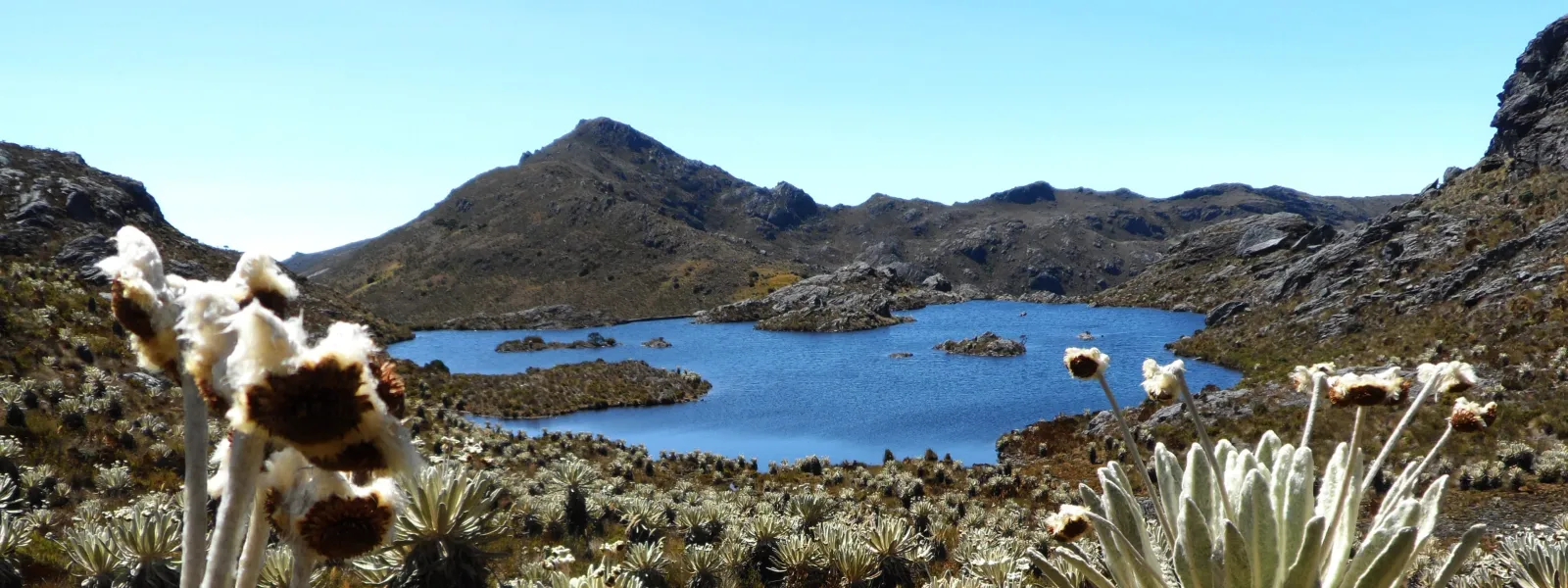
In the Andean region, high-mountain ecosystems known as páramos capture water from the fog and supply it to the lowlands. One such ecosystem is the Santurbán páramo, which provides fresh water to more than two million people in Colombia.
Santurbán, like the other páramos on the continent, also captures large amounts of carbon, making it a key ally in mitigating the climate crisis. It is also a refuge for hundreds of endangered species, including the iconic spectacled bear.
The land in and around the páramo contains gold and other minerals. This has put Santurbán in the spotlight of the multinational mining industry, which for decades has sought to establish large-scale projects in the ecosystem that threaten to degrade it.
The Committee for the Defense of Water and the Santurbán Páramo—a coalition of environmental advocates—has thwarted these ongoing attempts, with support from AIDA and other civil society organizations.
Background
The Santurbán páramo is located in the heart of the Eastern Cordillera of the Colombian Andes, in the departments of Santander and Norte de Santander, at an elevation ranging from 2,200 to 4,290 meters above sea level.
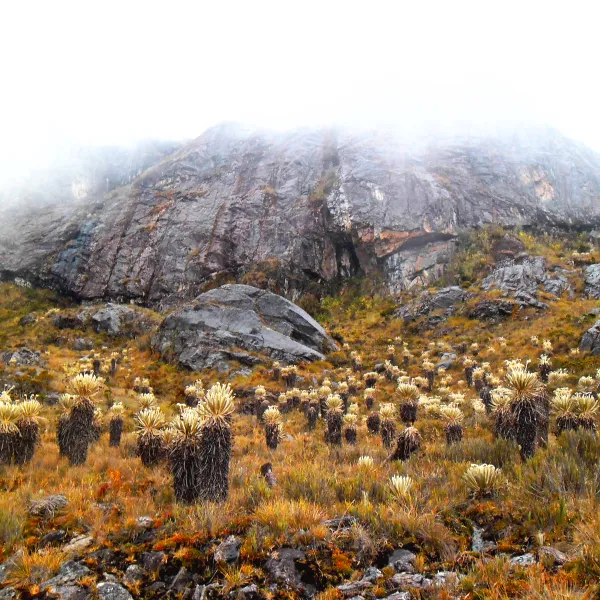
It covers an area of 129,743 hectares and is home to 57 lakes. It serves as a habitat for 457 plant species and 293 species of vertebrate fauna.
There are mineral deposits in Santurbán, primarily gold, but also silver and copper. This explains the region’s mining tradition, particularly in the part of the páramo located in Santander, in the province of Soto Norte. The communities in the area have built their culture and identity around gold mining, which is mainly artisanal and small-scale.
But since the 1990s, the gold deposits in the páramo have also attracted foreign mining conglomerates seeking to develop large-scale projects. This has raised concerns among the population that relies on the Santurbán water sources, who have mobilized in defense of water, their land, and life.
Although national and international regulations prohibit mining in páramos, the Colombian government has granted mining concessions to transnational corporations in Santurbán.
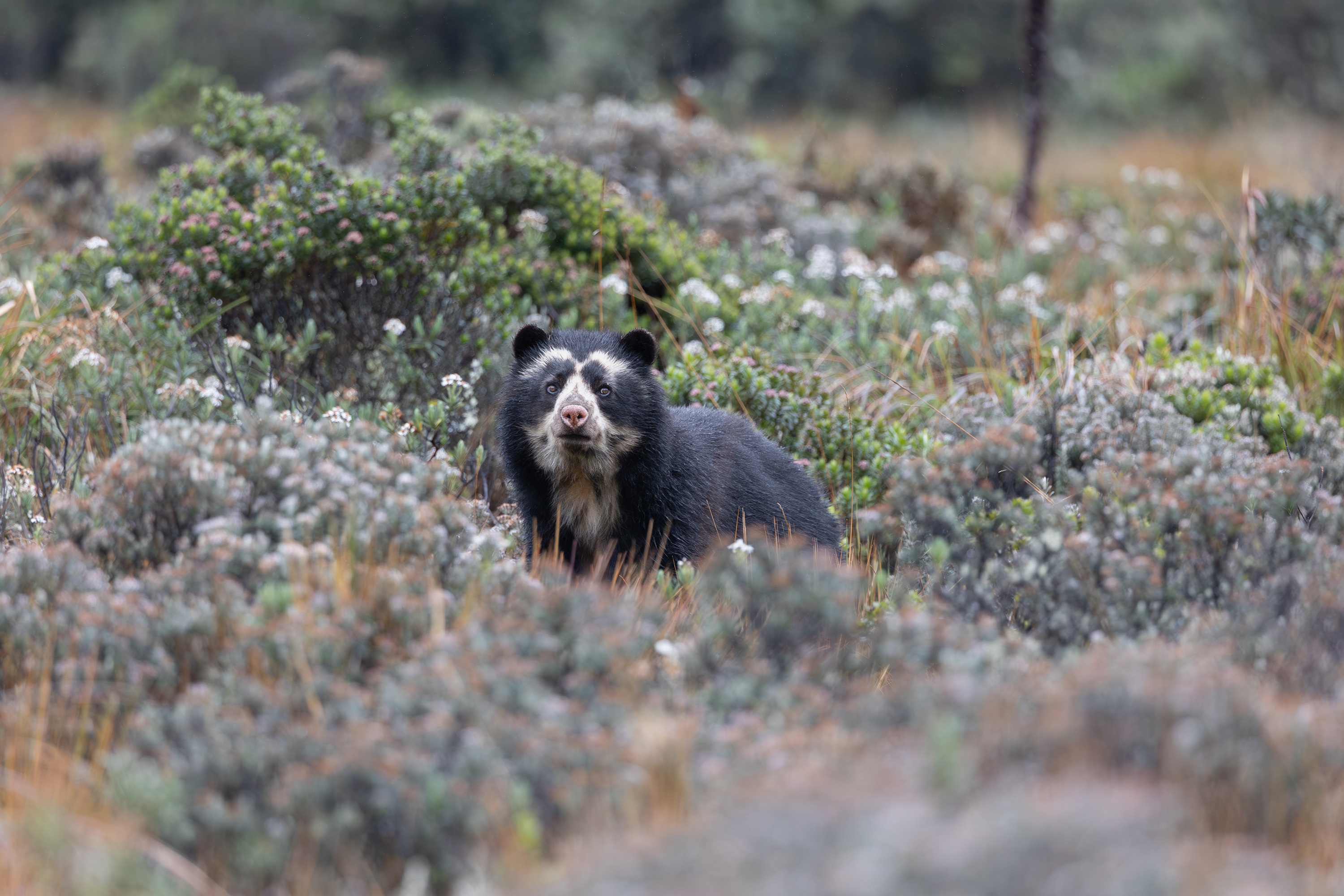
Photo: Keishpixl / Pixabay.
The long struggle to protect the páramo
One of the companies that sought to develop large-scale mining in Santurbán is Eco Oro Minerals Corp.—formerly Greystar Resources—a Canadian company that intended to establish the Angostura open-pit mine there to extract gold and silver. Between 1994 and 1995, the company acquired its mining titles and conducted exploration. And in 2010, it applied for a mining permit.
That was the year AIDA became involved in defending the ecosystem, supporting the Committee for the Defense of Water and the Santurbán Páramo. Our legal work helped convince the Colombian government to deny the mine an environmental permit in May 2011.
In January 2013, the government designated a portion of the páramo (11,700 hectares) as a Regional Natural Park. That year—together with the committee and partner organizations—we carried out a campaign and advocacy efforts to urge the government to recognize the entire Santurbán area as a páramo ecosystem through a delimitation based on scientific criteria. In December 2014, the Ministry of the Environment established a delimitation that protected 76% of the páramo (98,954 hectares).
Furthermore, as a result of a litigation supported by AIDA, in February 2016, Colombia’s highest court reaffirmed that mining in páramos is prohibited.
That same year, in December, the International Finance Corporation (IFC), the World Bank Group’s private sector arm, decided to divest from Eco Oro Minerals. This achievement was the result of a process that began in 2012, when the committee—advised and supported by AIDA and international partner organizations—filed a complaint before an independent accountability mechanism, which concluded that the IFC’s investment in the Angostura project failed to take into account the project’s social and environmental impacts, thereby contradicting the financial institution’s internal policies.
Also in 2016, Eco Oro Minerals filed an arbitration claim against the Colombian government with the International Centre for Settlement of Investment Disputes (ICSID), arguing that it had been adversely affected by government decisions aimed at protecting the country’s páramos, including the delimitation of Santurbán.
In 2017, the Constitutional Court invalidated the delimitation because the affected communities were not consulted. The high court ordered that a participatory delimitation be carried out.
And that year, a new threat to Santurbán emerged when the Canadian multinational Aris Mining applied for an environmental permit for Soto Norte, a gold mining project located near the páramo. Following citizen protests and technical objections, in October 2020, the National Environmental Licensing Authority shelved the project.
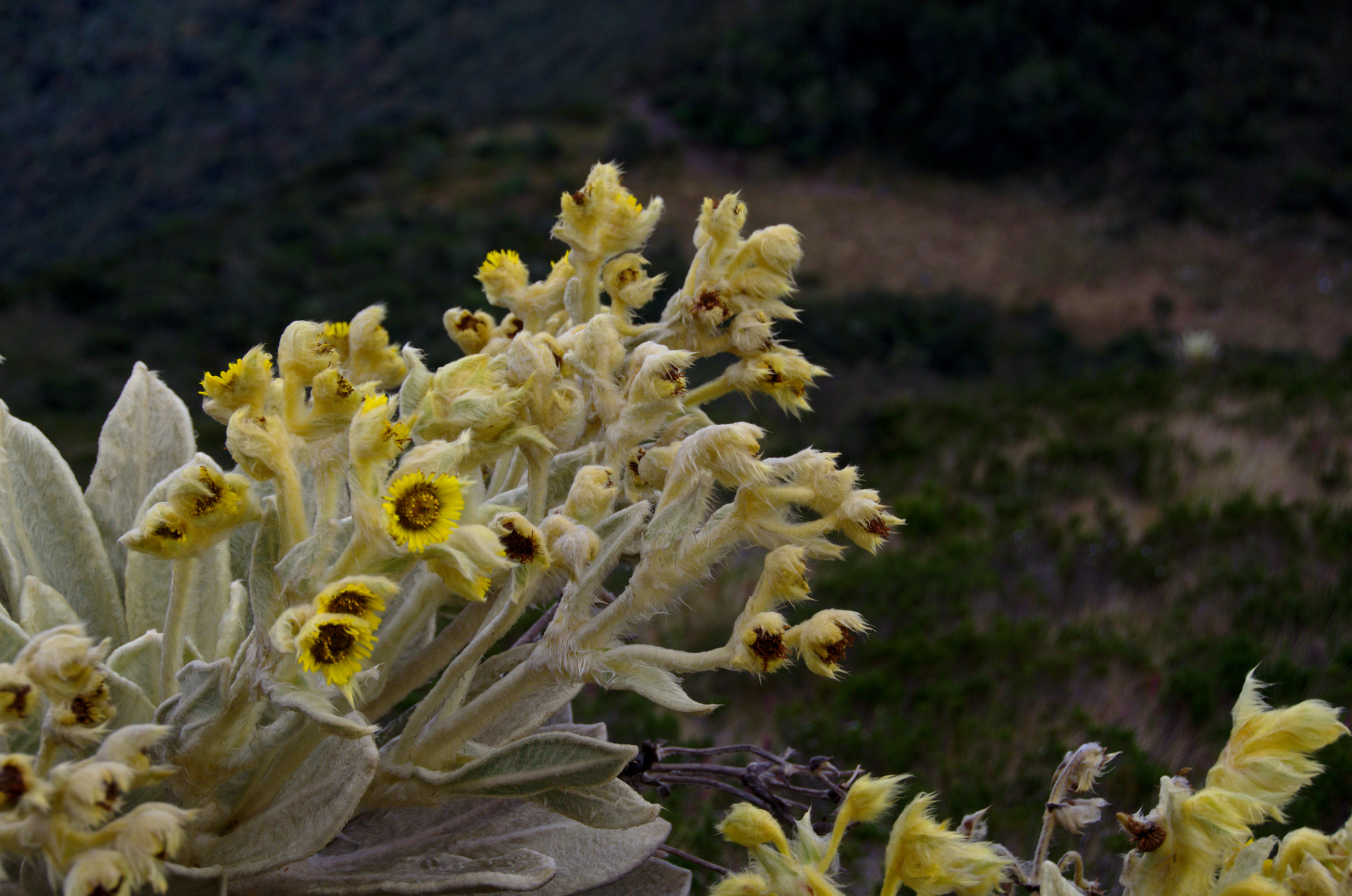
Photo: Aztlec.
Current situation
In March 2025, the Colombian government designated the western flank of the Santurbán massif as a temporary renewable natural resource reserve area, delimiting and protecting an area of 75,344.65 hectares. This resulted in a two-year suspension of the Soto Norte project. However, Aris Mining's contract to formalize Calimineros' small-scale mining activities through the purchase and processing of mineralized material remains in effect.
In addition, the Canadian mining company continues to move the project forward. In September 2025, it released its prefeasibility study, revising the mine’s original design.
Meanwhile, members of the Committee for the Defense of Water and the Santurbán Páramo face threats and stigmatization because of their work. In March 2025, UN Special Rapporteurs and the Working Group on Business and Human Rights denounced these incidents in communications sent to the governments of Colombia, Canada, and the United Arab Emirates, as well as to the companies Aris Mining and MDC Industry Holding Company LLC, the former co-owner of the Soto Norte project.
Regarding the arbitration claim filed by Eco Oro Minerals, in July 2024, ICSID ruled in favor of the Colombian government and rejected the Canadian company’s claim for USD 1.1 billion in compensation.
Concerning the delimitation of Santurbán, in July 2026, the Ministry of the Environment issued a resolution introducing the concept of "progressive delimitation." On that basis, the government proposes to progressively demarcate the páramo, covering 29,199 hectares across 19 municipalities—those where the participatory agreements required by the Constitutional Court in its 2017 ruling have already been finalized. It also proposes two measures on the creation and expansion of reserves to restrict mining in the ecosystem.
Learn more about the impacts of mining on the páramos of Latin America (in Spanish).
Partners:
Related projects

Moving towards clean food production, without glyphosate
By Sofía García, AIDA intern, and Johans Isaza, former AIDA intern In recent decades, the practice of healthy eating, and with it the quality of the food we eat, has gained particular relevance in western society. Many have grown concerned about industrial food production and its negative impacts on the environment and public health. In response, environmental organizations, ethnic communities, rural farmers, international organizations and even some governments have spoken of the need to move towards an agro-ecological model. This model implies the development of sustainable agricultural practices to optimize food production, and do so without the use of agrotoxins, while also promoting social justice and recognizing ancestral knowledge and traditional practices. The serious harms of glyphosate, a popular herbicide In recent weeks, public debate around glyphosate—the most widely used agrotoxin in the world—has regained prominence in Mexico and Colombia. Glyphosate is used most frequently and intensively in the large-scale cultivation of genetically modified crops. In Mexico, roughly 45 percent of glyphosate usage is focused on transgenic soybean, corn, canola and cotton crops. The rest goes to the sowing of sugar cane and to forestry or fruit production. In Colombia, glyphosate is used primarily on cotton, corn, rice, tomato, sugar cane and palm plantations, as well as in the pastures where cattle are raised. Though a visible tool of the war on drugs, until 2013 less than 5 percent of total glyphosate usage in Colombia was destined to eradicate crops of illicit use. As a non-selective herbicide, glyphosate not only affects the crop to which it is applied. Retained in the most superficial layers of the soil, it throws entire ecosystems out of balance and harms the health of the plants and animals that depend on them. What’s more, glyphosate use affects biodiversity in a variety of ways and causes both direct and indirect short and long-term impacts. It damages aquifers, causing harm to aquatic organisms; can be deadly for some species of amphibians; causes biological malformations in animals like rats; reduces nutrient absorption in plants, increasing their likelihood of becoming sick or attracting pests; and affects pollination processes, which are fundamental for life on this planet. When looking at the harms of glyphosate, we mustn’t fail to mention the serious social damages it causes as it filters into bodies of water, and becomes present in the food we consume on a daily basis. Since 2015, the World Health Organization has classified glyphosate as a probable carcinogen (placing it in the second strongest category of evidence on a four-tier scale). Several studies have shown that glyphosate can irritate the eyes and skin, damage the respiratory system at the lung level, cause dizziness, lower blood pressure and destroy red blood cells. The negative impacts of glyphosate use can result in the violation of various human rights, among them the rights to a healthy environment, to water, to health, to life and to integrity. Its use in indigenous and traditional lands may also violate the rights to cultural identity and territory. The transition to sustainable agriculture Though evidence exists of glyphosate’s negative environmental and health impacts, it is not irrefutable. There is no scientific certainty that glyphosate impacts the environment or harms human health and wellbeing. There is also no scientific certainty that the herbicide is harmless. What is certain is that the above-described impacts are sufficient to necessitate the application of the precautionary principle. According to this principle, in cases that threaten serious and irreversible damage, and in the absence of scientific certainty, States have the obligation to adopt necessary and effective measures to prevent environmental degradation. There’s no justification for postponing the measures necessary to mitigate the harms supposedly caused by glyphosate, until it is proven with absolute scientific certainty that glyphosate is not harmful. Ongoing discussions in Mexico and Colombia provide an opportunity to reflect on our forms of food production and encourage a shift towards the agro-ecological model. The future of agriculture could be one that seeks wellbeing and prosperity, and promotes clean food production. To this end, it’s essential that governments implement regulations to protect and ensure the return of native seeds, gradually eliminate agro-industrial technologies, and promote a return to the use of natural pesticides. Public policies must be implemented that respect both farmers and the environment. The transition must include an intercultural approach that includes dialogue with and exchanges between rural farmers, indigenous peoples and scientists. Achieving such a system would contribute to a more peaceful coexistence with other forms of life, and a healthier planet for present and future generations.
Read more
Championing Lake Poopó’s recovery to protect the life it holds
Calixta Mamani thinks with nostalgia of the tall, green cattails growing along the shores of Lake Poopó, in the arid central plateau of the Bolivian Andes. She once used the reeds as feed for her livestock. "Now, everything has dried up,” she reflected. “There is no life here, the land no longer produces." She thinks also of the birds—Titicaca grebes and Andean flamingos—and of the fish that were once so abundant in the area. "Now you don't see them anymore,” she lamented. “Everything, our culture, is gone." The losses described by Calixta represent a plundering. The indigenous and rural communities living near Lake Poopó have been deprived, not only of their primary water source, but of their livelihood, their way of life, and their culture. Bolivia's second largest lake, Poopó has been damaged by the diversion of rivers, the climate crisis, and mining activities—which have continued despite the pandemic—to the point of putting at risk all the life systems that depend on it. Calixta is a member of the National Network of Women in Defense of Mother Earth (RENAMAT), an organization that defends the rights of indigenous and peasant women against the destructive impacts of extractive industries in the regions of Oruro, La Paz, and Potosí. Responsible for grazing the animals, food preparation, and other household tasks, Calixta and other local women live with the lake on a daily basis. As a result, they more acutely suffer the effects of its degradation. It’s because of the respectful relationship they have with Mother Earth and Mother Water that the communities around Lake Poopó are fighting to save it. Decades of Pollution According to a report by the Collective for the Coordination of Socio-Environmental Actions (Colectivo CASA), complaints related to Lake Poopó’s contamination by mining activities date back to 1981, when researchers revealed that 120 lead, tin, and gold mines were discharging their waste directly into its waters. The situation, which has continued over the years, has led to sedimentation. This means that considerable amounts of cadmium, zinc, arsenic, and lead have become sediment in the lake, making its waters unsuitable for human and animal consumption and of limited use for crop irrigation. "With the passage of time and the advance of mining, the exploitation of minerals has intensified,” said Petrona Lima, from Ayllu San Agustín de Puñaca, municipality of Poopó, in a testimony collected by the Center for Andean Communication and Development (CENDA). “Little by little all this has been disappearing, water veins have been cut, and everything has come to be as it is now; it looks like everything is burned." In an effort to preserve its biodiversity—which includes endemic and migratory birds and the largest number of flamingos in the Bolivian highlands—in 2002 Lake Poopó, along with Lake Uru Uru, was declared a Wetland of International Importance under the Ramsar Convention. Despite this protection, the ecosystem remains in serious danger. In December 2015, water levels in Poopó reduced to such an extent that the body of water actually disappeared—an event considered one of Bolivia’s greatest environmental catastrophes. Although the lake managed to recover its flow during the rainy season, the situation remains critical in the dry months. The Climate Crisis and River Diversion The degradation of the lake is also a result of the global climate crisis, which brings intense droughts and increased temperatures. If the global average temperature increased by 0.8°C due to climate change, in Lake Poopó the increase was 2.5°C, according to information published in 2015, accelerating the evaporation of its waters. Another major source of the degradation of these high-Andean lakes is the diversion of two of the rivers that feed it: the Desaguadero and Mauri rivers. The former has decreased due to mining and agricultural operations, while the later, located on the border with Peru, has been diverted. Currently threatening the Poopó Basin is the implementation of the second phase of a canal project that would divert more than 500 liters of water per second from the Mauri River to feed the agro-industry in Tacna, Peru. The implementation of the project’s first phase was one of the primary causes of the lake’s disappearance in 2015. Defending Their Source of Life Rural communities, the Aymara and Quechua peoples, the Uru Murato—among Bolivia’s oldest native nations—all depend on the Poopó and Uru Uru lakes. The Uru Murato used to live from fishing, but the contamination of Poopó has forced them to migrate to work in the salt mines. In addition to causing serious environmental damages, what’s happening to this ecosystem is a serious violation of affected peoples’ rights to water, health, territory, food, and work. That’s why AIDA and local organizations have joined forces to defend Lake Poopó, its biodiversity, and the communities that depend on it. In July of last year, we asked the Ramsar Convention Secretariat to send a mission of experts to the country to assess the health of Lakes Poopó and Uru Uru and make recommendations to the government for their recovery. This month, we launched the campaign #LagoPoopóEsVida to make the situation visible and to draw the attention of national and international authorities to the risks facing the lakes and its people. Protecting Lake Poopó would be tantamount to saving lives and preserving one of Bolivia’s cultural cornerstones.
Read more
The unbridled use of disposable plastic: A new global crisis
The massive spread of COVID-19 has created a global health crisis, leaving millions of people sick and thousands dead. Due to the nature of the disease and the ease of contagion, protective and biosecurity measures have been implemented on a massive scale. These include confinement and safe distancing, constant disinfection of hands and surfaces, and the use disinfectant bottles, bags, and personal protective equipment like mouthpieces, masks, gloves, and other objects. Unfortunately, plastic—single-use plastic, in particular—is the primary material used to make these objects, which implies an indiscriminate increase in the use and disposal of this material. The processes needed to manage those single-use plastics have become another major challenge in the face of a crisis that is collapsing economies and health systems. It’s clear that our greatest global concern is to defeat the pandemic, and prevent more deaths and infections. But also of concern are the side effects it’s producing, like the backsliding of global efforts to reduce plastic waste and prevent environmental damage. Before the pandemic, contamination by plastic waste was already considered one of the main threats to the environment and biodiversity. According to a recent study, only 9 percent of the plastic produced worldwide is recycled. The rest is left as accumulated waste that damages ecosystems, mainly the oceans, and the species that live in them. Plastic pollution directly affects thousands of species, like marine mammals or birds that get entangled in the waste. Other species confuse the debris with food, as is the case with fish and sea turtles. Our greatest global concern right now must be overcoming the pandemic and preventing further death and infection. But let’s also be aware that, because of it, we’re moving backwards in the reduction of plastic waste and the prevention of the damages it causes. Backsliding in the Regulation of Plastics In December 2018, the European Union's parliament approved a ban on single-use plastics, which was due to come into effect next year. However, due to the pandemic, the plastic products industry has asked the European Commission to delay the implementation of the standard by at least one year. Although many countries had committed themselves to reducing the use of plastics this year, the pandemic has forced some of them to postpone such plans. In California, the governor temporarily lifted the ban on single-use grocery bags because of the risk of transmission through reusable bags. In Thailand, where single-use bags had been banned since January, officials expect up to a 30 percent increase in their use. According to that country's Environment Institute, 62 percent more plastic was consumed in Bangkok in April compared to the previous year, most of it being food packaging, which is difficult to recycle. In Latin America, the situation is similar. In the Mexican state of Jalisco, an era free from plastic bags and disposable straws was set to begin in January 2020, after a rule banning their use came into force. When the pandemic struck, the ban was abandoned and consumption of these products by establishments and citizens was only 10 percent less than last year, according to recent data. Greenpeace denounced the plastic industry in Mexico for seeking to reverse local bans using the argument that plastic is the ideal material to avoid COVID-19 infections. The environmental organization warned that nothing replaces continuous hand washing and surface disinfection. It explained that using disposable plastic containers, utensils, and cutlery neither guarantees hygiene nor prevents infection since the virus can remain on these surfaces for two to six days. The Importance of Debate and Seeking Alternatives Before the pandemic, there was greater social awareness of the need to reduce the use of plastics, especially single-use plastics. However, the need to contain the spread of the virus and industry strategies to capitalize on the health concerns of the population have led to the re-emergence of plastic as an indispensable material. Now more than ever, we must take care of each other. We also must protect the natural world that sustains life. The pandemic has exposed our weaknesses, and one of them is vulnerability to pollution. It’s possible that when containment measures are lifted or relaxed we’ll find that our dependence on plastic has increased significantly and that our planet is in more danger than before. We must continue the global debate on plastics and work together to find effective alternatives, taking into account the economic recovery of the sectors most affected by the crisis. Some urgent actions that could be taken in short and medium term include: Promoting environmental awareness and responsible consumption, encouraging non-healthcare workers to use reusable personal protection items made from environmentally friendly materials. Adopting best practices for recycling and policies against pollution by plastics at the national level, as part of a global action plan. Promoting the development of the circular economy, which aims to eliminate waste through the continuous reuse of resources. Requiring companies to make greater investments in sustainability, ensuring compliance with their environmental policies and corporate social responsibility. Encouraging investment in the research and development of alternative materials, which are more biodegradable and recyclable, as well as progress in the design of new, less contaminating, chemical additives. When it comes to plastics, we cannot control everything. But these actions can help give the new normal a more sustainable form.
Read more