
Project
Alberto Peña Kay
Protecting the Santurban páramo from mining's damage
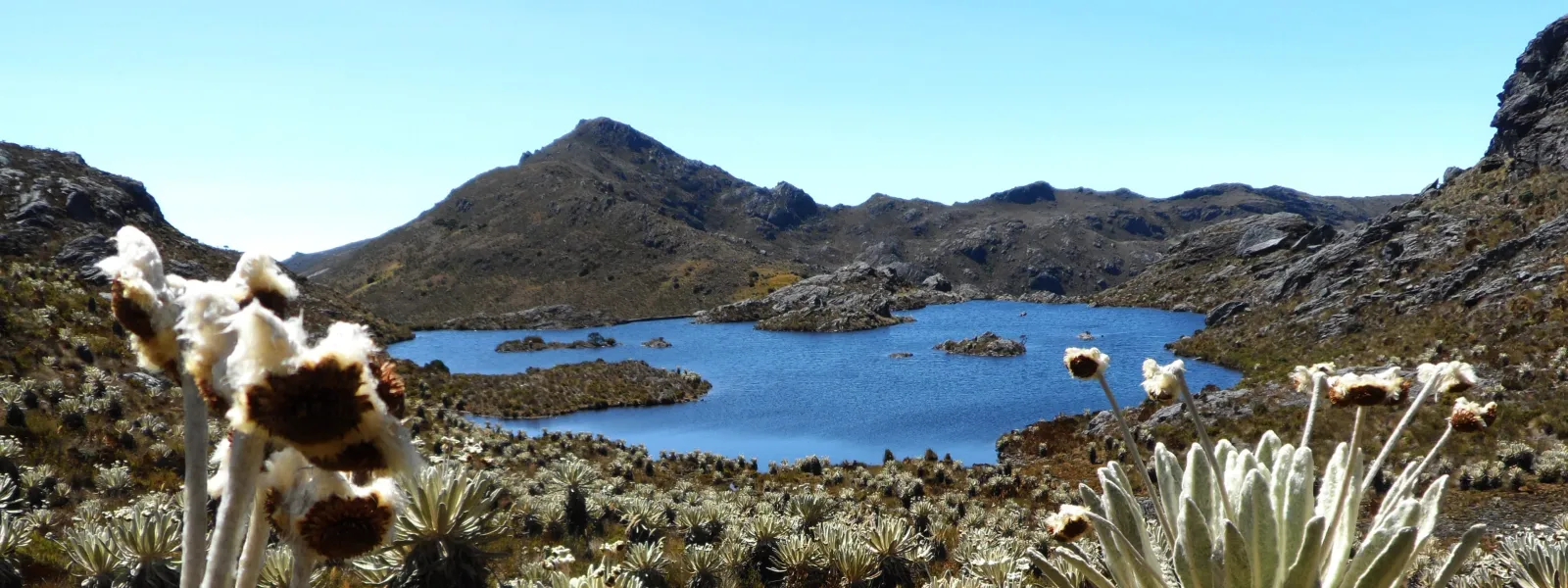
In the Andean region, high-mountain ecosystems known as páramos capture water from the fog and supply it to the lowlands. One such ecosystem is the Santurbán páramo, which provides fresh water to more than two million people in Colombia.
Santurbán, like the other páramos on the continent, also captures large amounts of carbon, making it a key ally in mitigating the climate crisis. It is also a refuge for hundreds of endangered species, including the iconic spectacled bear.
The land in and around the páramo contains gold and other minerals. This has put Santurbán in the spotlight of the multinational mining industry, which for decades has sought to establish large-scale projects in the ecosystem that threaten to degrade it.
The Committee for the Defense of Water and the Santurbán Páramo—a coalition of environmental advocates—has thwarted these ongoing attempts, with support from AIDA and other civil society organizations.
Background
The Santurbán páramo is located in the heart of the Eastern Cordillera of the Colombian Andes, in the departments of Santander and Norte de Santander, at an elevation ranging from 2,200 to 4,290 meters above sea level.
It covers an area of 129,743 hectares and is home to 57 lakes. It serves as a habitat for 457 plant species and 293 species of vertebrate fauna.
There are mineral deposits in Santurbán, primarily gold, but also silver and copper. This explains the region’s mining tradition, particularly in the part of the páramo located in Santander, in the province of Soto Norte. The communities in the area have built their culture and identity around gold mining, which is mainly artisanal and small-scale.
But since the 1990s, the gold deposits in the páramo have also attracted foreign mining conglomerates seeking to develop large-scale projects. This has raised concerns among the population that relies on the Santurbán water sources, who have mobilized in defense of water, their land, and life.
Although national and international regulations prohibit mining in páramos, the Colombian government has granted mining concessions to transnational corporations in Santurbán.
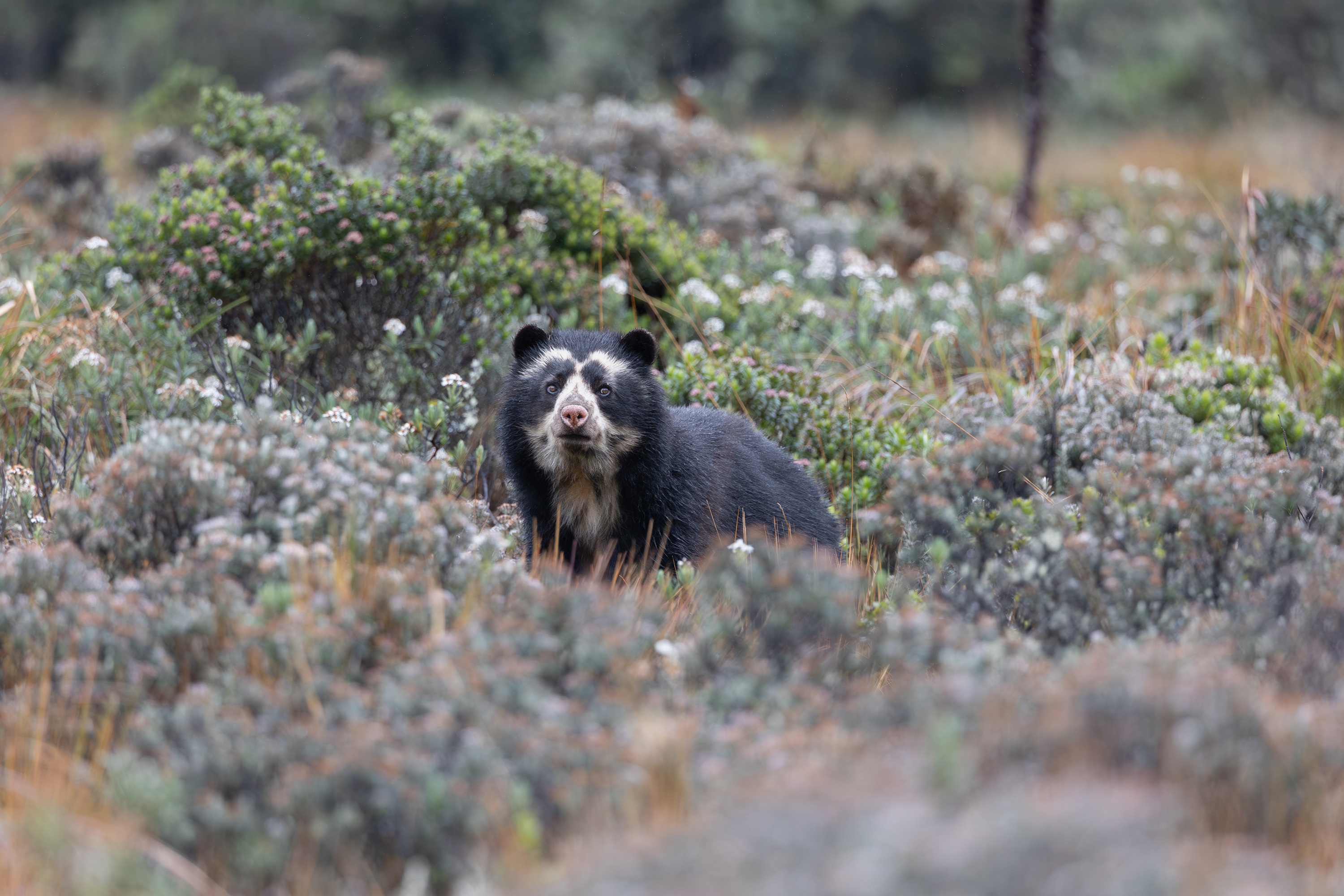
Photo: Keishpixl / Pixabay.
The long struggle to protect the páramo
One of the companies that sought to develop large-scale mining in Santurbán is Eco Oro Minerals Corp.—formerly Greystar Resources—a Canadian company that intended to establish the Angostura open-pit mine there to extract gold and silver. Between 1994 and 1995, the company acquired its mining titles and conducted exploration. And in 2010, it applied for a mining permit.
That was the year AIDA became involved in defending the ecosystem, supporting the Committee for the Defense of Water and the Santurbán Páramo. Our legal work helped convince the Colombian government to deny the mine an environmental permit in May 2011.
In January 2013, the government designated a portion of the páramo (11,700 hectares) as a Regional Natural Park. That year—together with the committee and partner organizations—we carried out a campaign and advocacy efforts to urge the government to recognize the entire Santurbán area as a páramo ecosystem through a delimitation based on scientific criteria. In December 2014, the Ministry of the Environment established a delimitation that protected 76% of the páramo (98,954 hectares).
Furthermore, as a result of a litigation supported by AIDA, in February 2016, Colombia’s highest court reaffirmed that mining in páramos is prohibited.
That same year, in December, the International Finance Corporation (IFC), the World Bank Group’s private sector arm, decided to divest from Eco Oro Minerals. This achievement was the result of a process that began in 2012, when the committee—advised and supported by AIDA and international partner organizations—filed a complaint before an independent accountability mechanism, which concluded that the IFC’s investment in the Angostura project failed to take into account the project’s social and environmental impacts, thereby contradicting the financial institution’s internal policies.
Also in 2016, Eco Oro Minerals filed an arbitration claim against the Colombian government with the International Centre for Settlement of Investment Disputes (ICSID), arguing that it had been adversely affected by government decisions aimed at protecting the country’s páramos, including the delimitation of Santurbán.
In 2017, the Constitutional Court invalidated the delimitation because the affected communities were not consulted. The high court ordered that a participatory delimitation be carried out.
And that year, a new threat to Santurbán emerged when the Canadian multinational Aris Mining applied for an environmental permit for Soto Norte, a gold mining project located near the páramo. Following citizen protests and technical objections, in October 2020, the National Environmental Licensing Authority shelved the project.
Photo: Aztlec.
Current situation
In March 2025, the Colombian government designated the western flank of the Santurbán massif as a temporary renewable natural resource reserve area, delimiting and protecting an area of 75,344.65 hectares. This resulted in a two-year suspension of the Soto Norte project. However, Aris Mining's contract to formalize Calimineros' small-scale mining activities through the purchase and processing of mineralized material remains in effect.
In addition, the Canadian mining company continues to move the project forward. In September 2025, it released its prefeasibility study, revising the mine’s original design.
Meanwhile, members of the Committee for the Defense of Water and the Santurbán Páramo face threats and stigmatization because of their work. In March 2025, UN Special Rapporteurs and the Working Group on Business and Human Rights denounced these incidents in communications sent to the governments of Colombia, Canada, and the United Arab Emirates, as well as to the companies Aris Mining and MDC Industry Holding Company LLC, the former co-owner of the Soto Norte project.
Regarding the arbitration claim filed by Eco Oro Minerals, in July 2024, ICSID ruled in favor of the Colombian government and rejected the Canadian company’s claim for USD 1.1 billion in compensation.
Concerning the delimitation of Santurbán, in July 2026, the Ministry of the Environment issued a resolution introducing the concept of "progressive delimitation." On that basis, the government proposes to progressively demarcate the páramo, covering 29,199 hectares across 19 municipalities—those where the participatory agreements required by the Constitutional Court in its 2017 ruling have already been finalized. It also proposes two measures on the creation and expansion of reserves to restrict mining in the ecosystem.
Learn more about the impacts of mining on the páramos of Latin America (in Spanish).
Partners:
Related projects
Expert report: proposed gold mine in Brazilian Amazon presents unacceptable risk
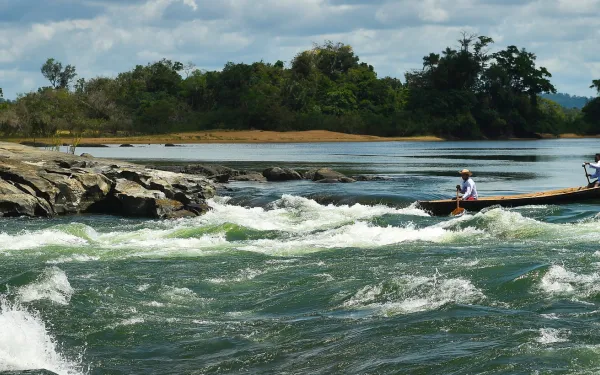
Altamira, Brazil. An expert study released today reveals serious deficiencies in the environmental impact assessment submitted to Brazilian authorities by Canadian mining company Belo Sun. The analysis exposes an unacceptable degree of risk that the tailings dam at the proposed Volta Grande gold mine will fail, contaminating the Xingu River and harming nearby indigenous and other communities. The report’s author, Dr. Steven Emerman, explains that despite the presence of geological faults at the mine site, the company has not produced any seismicity studies. Nor has the dam been designed with seismic safety in mind, in violation of Brazilian tailings dam regulations. Dr. Emerman also raises concern about the company’s use of its tailings reservoir to capture water. Industry best practice is to prevent the flow of surface runoff into tailings ponds in order to minimize the risk of dam failure. Moreover, the report reveals that Belo Sun has provided contradictory information regarding its tailings storage plan to investors and Brazilian regulatory authorities. Dr. Emerman recommends that the project’s licence be revoked. Brazilian courts suspended Belo Sun’s installation licence in 2017 because the company failed to study the project’s impact on indigenous and other traditional communities, or to consult these populations. Belo Sun has been criticized for publishing misleading statements to bolster sagging interest in the project among potential investors, amidst growing evidence of social, environmental, financial and reputational risks. Last week local movements Rede Xingu+ and Xingo Vivo para Sempre submitted Dr. Emerman’s report to government agencies responsible for project licensing. These organizations demand that additional studies be undertaken, which they argue are “indispensable to assess the social and environmental viability of Belo Sun’s mining project considering the grave risk to indigenous and other river-dwelling communities located next to the project and its tailings dam.” FAILURES, INSECURITY AND CONFLICTING INFORMATION From conflicting information to the absence of seismic safety criteria, Dr. Emerman's opinion highlights eight main points that support the recommendation to reject the Volta Grande project: The tailings dam was not designed under any seismic safety criteria, violating Brazilian regulations in this regard. Any tailings dam should be designed to withstand events such as floods and earthquakes. Contrary to the Brazilian standard, the company did not include in its studies an analysis of local seismicity nor did it simulate the response of the structure to a hypothetical seismic acceleration. Although geological faults have been mapped at the tailings dam site, no local seismicity studies have been done, which also violates Brazilian tailings dam regulations. Seismic activity is responsible for causing the dissolution of saturated debris into water, one of the most common causes of tailings dam failures. In Brazil, in 2019 alone, there were three dam failures, including the rupture of the Vale dam in Brumadinho (Minas Gerais), which caused at least 250 deaths. Cases like these demonstrate the need for and importance of local seismicity studies and are indispensable for the proper assessment of the risk of failure of a tailings dam. No risk analysis has been made of the geological faults mapped in the vicinity of the project site. Three of these faults, which are structures present in rocks and which can promote seismic movements, intersect at the exact site of the proposed tailings dam. The official simulation of the rupture assumes, without justification, that the flow of the waste would be interrupted when it reaches the Xingu River, ignoring the capacity of the toxic elements to travel tens of kilometers along the Volta Grande. The conclusions of the EIA also support the hypothesis that the tailings flow would take 97 minutes to reach the Xingu, but without mentioning the details of the calculation used. According to the modelling presented in the opinion, considering the volume of tailings stored on the order of 35 million cubic metres and assuming a spill of approximately 25%, under a conservative scenario the flood would cover an initial distance of up to 41 kilometres along the river. At a speed of 20 km/h, the flooding of Belo Sun's dam would reach the Xingu in only seven minutes, covering the distance of 41 km in only two hours, reaching the Volta Grande Indigenous Land. After the rupture of the Vale Dam in Brumadinho, the tailings flow reached 120 km/hr, 100 km/hr more than the more conservative scenario proposed in the report. In the worst case, with the release of 100% of the stored tailings, the initial flow would cover 98 kilometers along the Xingu River and could reach the Amazon River and the Atlantic Ocean. There is a high risk of toxic water spillage into the Xingu. The project provides for the recycling of cyanide leachate, a substance used to separate gold, which can result in waste water that is highly enriched with toxic elements such as arsenic and mercury. The result, whose analysis is absent from official documents, could be the spillage of a waste-water mixture that is highly toxic to aquatic organisms into the Xingu River in the event of a dam failure or spill. There is no plan in the EIA to close the mine or tailings dam, a key issue for the social and environmental viability of the mining project. The document contains a promise by the business group to find out, after the event, how to permanently stabilize the tailings dam. The waste storage system adopted at the time is not viable and runs counter to good mining practice. Part of the solution to reduce the probability of tailings dam failure is to reduce the water content in the tailings tank. But the Belo Sun project envisages that all the waste will be saturated and under seven metres of free water, above the surface of the solid waste. Aware of the issue raised in the previous point, the company seems to have decided that the current plan to flood the waste is not feasible. The Chief Executive Officer of Belo Sun Mining stated o MiningWatch Canada that he would abandon the current plan for a filtered tailings storage facility, which should have a significantly lower water content. However, the company provided conflicting information to Brazilian organizations and regulatory authorities: in a presentation to FUNAI in October 2019, the company described the same wet waste storage plan as the EIA. "The provision of contradictory information to different audiences by Belo Sun Mining and its Brazilian subsidiary is very serious in terms of the reliability of the information provided in the administrative processes," the opinion reiterates. Rede Xingu+ is an articulation of indigenous, riverine and partner organizations that work in the Xingu River basin. Movimento Xingu Vivo para Sempre is a collective formed in 2008 by local, national and international civil society organizations; threatened indigenous and non-indigenous communities; and social, human rights and environmental movements that oppose the construction of hydroelectric dams on the Xingu River and that fight in defence of the rights of local people. Contacts Dr. Steven Emerman, Malach Consulting, +1-801-921-1228 (Utah, USA) Brent Milikan, Amazon Program Director, International Rivers, +55-61-98153-7009 (Brasilia, Brazil). Mr. Milikan can connect journalists to representatives of Rede Xingu+ and Movimento Xingu Vivo para Sempre. Karyn Keenan, Director, Above Ground, +1-613-791-7532 (Ottawa, Canada)
Read more
ON WORLD OCEAN DAY: An open letter
If we have learned anything from the Covid-19 pandemic it is that we are all inextricably connected with each other and the natural world. Without greater balance and cooperation we cannot survive as a species. Human wellbeing is at the heart of what we do. Our work, to protect the ocean is driven by the reality that humankind needs a healthy planet that can sustain life, for the sake of our homes, health, livelihoods and food. Many have taken the rupture to our lives caused by Covid-19 to think about this and about how we can rebuild better, learning from the pandemic to achieve a greater balance and to protect the fundamentals which make life on Earth possible. Doing so is a necessity. We do not have the luxury of choosing between paths which damage the natural world and those which do not. If we continue to harm nature at the rate we have been, our world will not be able to sustain human wellbeing – from jobs to food security and health. We have been given a stark warning. Once we emerge and start to rebuild, we need to do so in a way that protects the fundamentals that all human beings rely upon, foremost among these being a planet capable of sustaining human life. Governments will be put under pressure to drop environmental protections to make it easier for industry to operate; to privilege short term economics and job increases over other considerations. These will be presented as a choice – choose humans over nature - but it is not a real choice. For the good of humankind, we must achieve balance with the natural world, a coexistence which ultimately enables us to thrive. If we do not achieve that balance, take action to do better now, the rupture in our lives will get bigger, we will face other, escalating global disasters. We ask governments to protect human wellbeing and to make decisions which keep a functioning blue planet beneath our feet. Deep Sea Conservation Coalition Ecology Action Centre Global Fishing Watch Global Ocean Trust Greenovation Hub High Seas Alliance Interamerican Association for Environmental Defense International Programme on the State of the Ocean Marine CoLABoration Marine Conservation Institute Marine Conservation Society Oceans North Our Fish Seas at Risk Shark Project International Turkish Marine Research Foundation One Ocean
Read more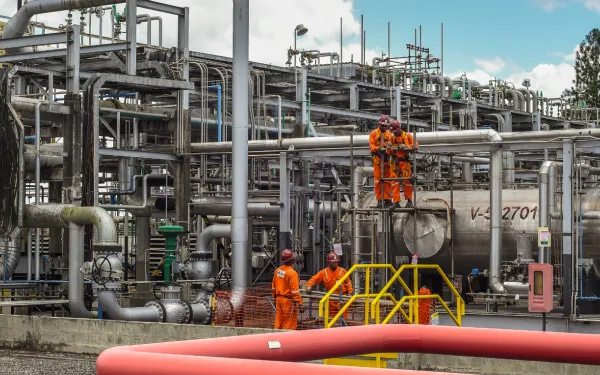
Continued extractive activities put indigenous and rural communities at increased risk from the pandemic
In most Latin American nations, governments have implemented health and social isolation measures to contain the spread of the COVID-19 pandemic. Within the framework of these restrictions, exceptions have been established for activities considered essential, including emergency care, the provision of health services, and the marketing and supply of essential goods. However, the governments of Bolivia, Ecuador and Peru have also exempted mining and oil activities from the restrictions, stating they are in the national interest. The exceptional treatment accorded to extractive activities in some countries of the region has significantly increased the vulnerability of indigenous peoples, and amplified the risks and threats they face, since these operations are carried out in their territories. In addition, the entry and exit of workers without proper health measures diminishes the effectiveness of the protective measures adopted by these peoples, such as epidemiological fences or social isolation. Thus, there is an increase in the spread of the virus and in the number of infected persons. In addition, in practice, these rural populations have little or no access to the health and sanitation services needed to deal with a health crisis such as that generated by COVID-19. At the regional level, the Coordinating Body of Indigenous Organizations of the Amazon Basin (COICA) has demanded that States guarantee access to health and food for the indigenous peoples and nationalities of the Pan-Amazon, as well as to intensify surveillance and protection of the territories "invaded by oil, mining, logging and other people." The particular situation of each country is as follows: BOLIVIA In late March, the government issued a Supreme Decree establishing that companies that "provide services for the supply of gasoline, gas, diesel and other fuels" are authorized to continue their operations "without interruption.” The decision has generated concern among indigenous organizations. "In Tarija and part of Santa Cruz, as well as in El Chaco, the oil companies continue to work with total normality. There are changes in personnel that arrive in vehicles continuously. Our fear is that they will bring the virus to the indigenous communities," indigenous leader Alex Villca, member of the Coordinating Committee for the Defense of Indigenous, Native, Peasant and Protected Areas Territories (Contiocap), told Mongabay. ECUADOR The organization of the Waorani Nationality of Ecuador (NAWE) alerted the national government to the detection of two positive cases of coronavirus among the workers of Block 16, which would be operated by the company Repsol YPF. The Waorani called on the government to adopt special protocols for "the protection of territories and indigenous populations," adopting measures to control and restrict the activities of oil company personnel who "are operating legally in indigenous territories and to prevent the propagation of the pandemic." Repsol Ecuador S.A. informed in a press release that the two positive cases correspond to workers of a contracting company who, after being previously tested, did not enter the company's operations. PERU In March, the government issued a Supreme Decree to combat the health crisis resulting from the pandemic. The decree provides for restrictions on the right to freedom of movement, exempting from this measure certain welfare and economic activities considered essential. Mining was not one of them. However, the Ministry of Energy and Mines included mining among the essential activities that must still be carried out in quarantine to ensure minimum operations, saying it would do so without affecting the integrity of workers and communities. This decision came after the National Society of Mining, Oil and Energy and the National Confederation of Private Business Institutions separately stated that the mining industry could not be stopped. The National Organization of Andean and Amazonian Indigenous Women of Peru criticized this decision. The presence of mining and oil operations in indigenous territories "puts the lives and health" of those peoples at risk, they said. In the context of the pandemic, states must implement comprehensive and concerted health strategies to respect, guarantee and protect indigenous and peasant communities near mining or oil exploitation projects and other activities that put them at risk.
Read more