
Project
Alberto Peña Kay
Protecting the Santurban páramo from mining's damage
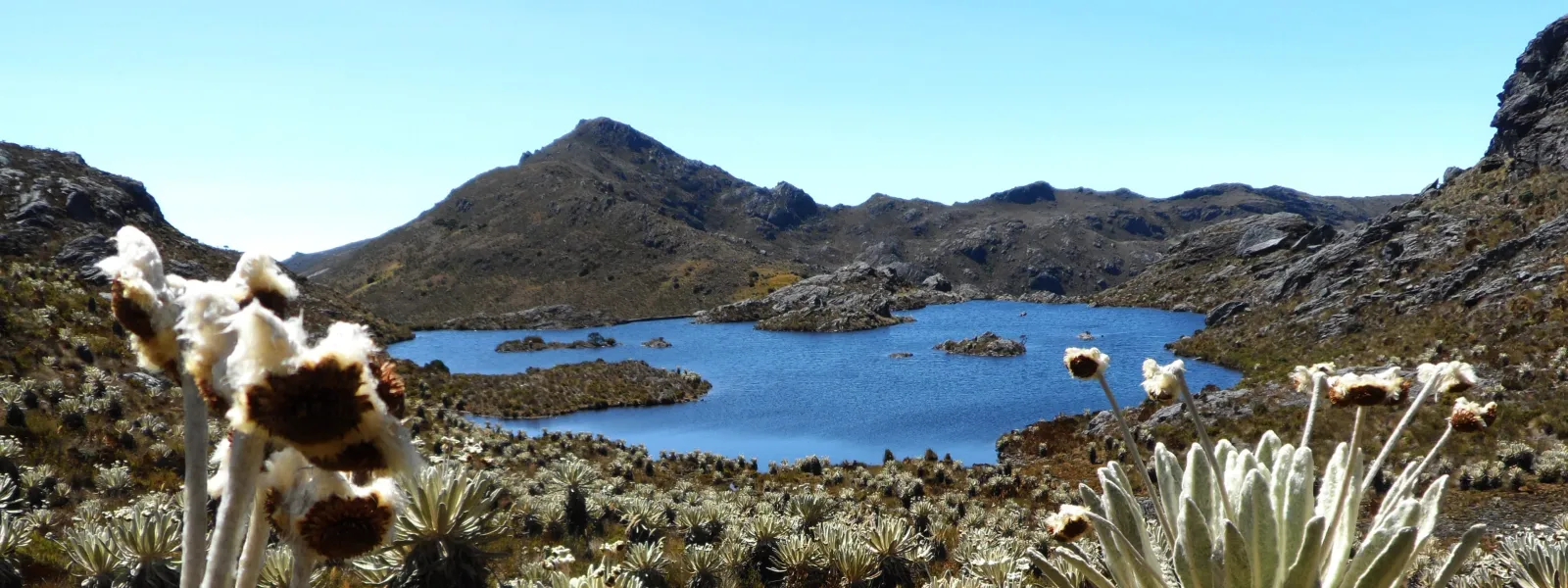
In the Andean region, high-mountain ecosystems known as páramos capture water from the fog and supply it to the lowlands. One such ecosystem is the Santurbán páramo, which provides fresh water to more than two million people in Colombia.
Santurbán, like the other páramos on the continent, also captures large amounts of carbon, making it a key ally in mitigating the climate crisis. It is also a refuge for hundreds of endangered species, including the iconic spectacled bear.
The land in and around the páramo contains gold and other minerals. This has put Santurbán in the spotlight of the multinational mining industry, which for decades has sought to establish large-scale projects in the ecosystem that threaten to degrade it.
The Committee for the Defense of Water and the Santurbán Páramo—a coalition of environmental advocates—has thwarted these ongoing attempts, with support from AIDA and other civil society organizations.
Background
The Santurbán páramo is located in the heart of the Eastern Cordillera of the Colombian Andes, in the departments of Santander and Norte de Santander, at an elevation ranging from 2,200 to 4,290 meters above sea level.
It covers an area of 129,743 hectares and is home to 57 lakes. It serves as a habitat for 457 plant species and 293 species of vertebrate fauna.
There are mineral deposits in Santurbán, primarily gold, but also silver and copper. This explains the region’s mining tradition, particularly in the part of the páramo located in Santander, in the province of Soto Norte. The communities in the area have built their culture and identity around gold mining, which is mainly artisanal and small-scale.
But since the 1990s, the gold deposits in the páramo have also attracted foreign mining conglomerates seeking to develop large-scale projects. This has raised concerns among the population that relies on the Santurbán water sources, who have mobilized in defense of water, their land, and life.
Although national and international regulations prohibit mining in páramos, the Colombian government has granted mining concessions to transnational corporations in Santurbán.
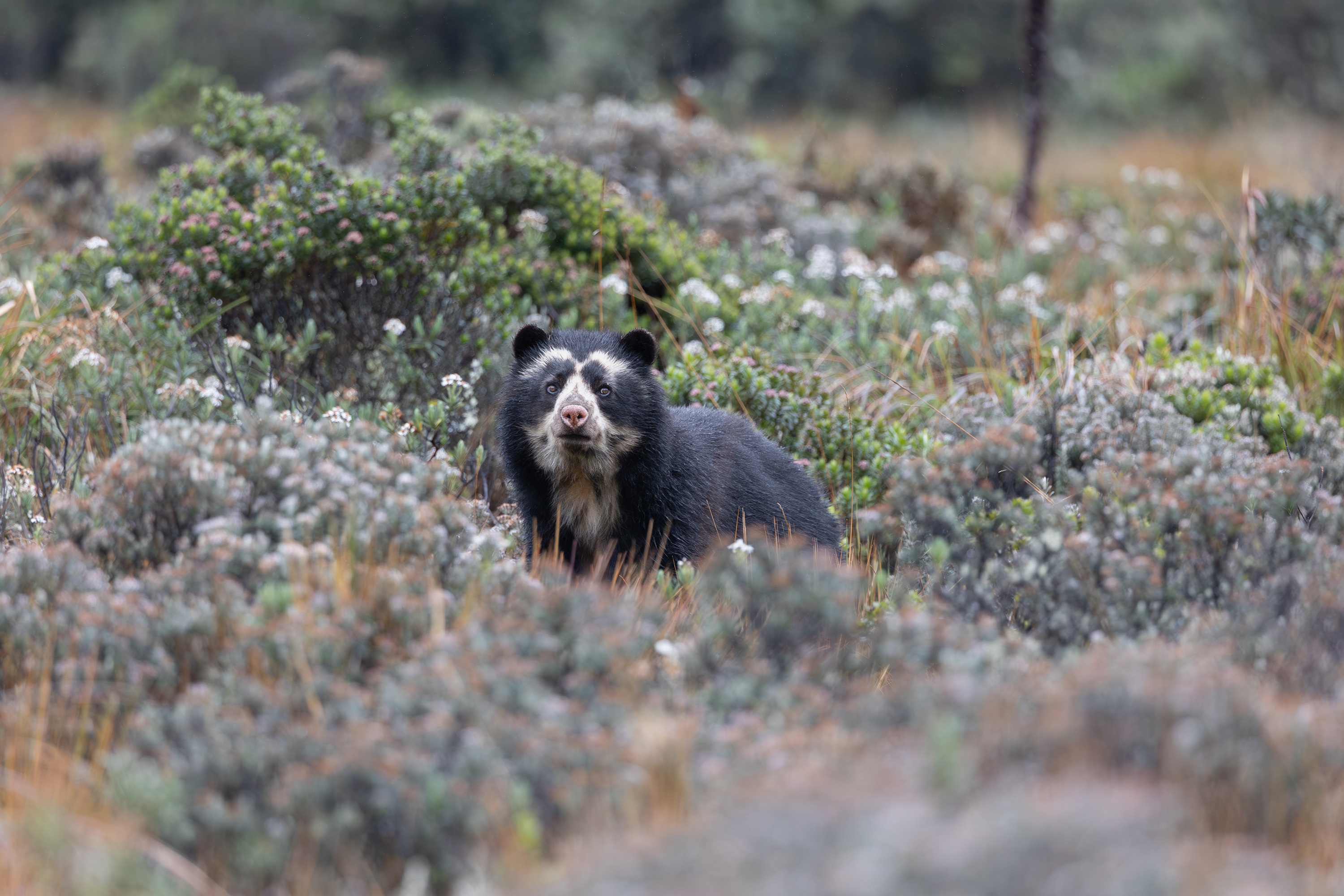
Photo: Keishpixl / Pixabay.
The long struggle to protect the páramo
One of the companies that sought to develop large-scale mining in Santurbán is Eco Oro Minerals Corp.—formerly Greystar Resources—a Canadian company that intended to establish the Angostura open-pit mine there to extract gold and silver. Between 1994 and 1995, the company acquired its mining titles and conducted exploration. And in 2010, it applied for a mining permit.
That was the year AIDA became involved in defending the ecosystem, supporting the Committee for the Defense of Water and the Santurbán Páramo. Our legal work helped convince the Colombian government to deny the mine an environmental permit in May 2011.
In January 2013, the government designated a portion of the páramo (11,700 hectares) as a Regional Natural Park. That year—together with the committee and partner organizations—we carried out a campaign and advocacy efforts to urge the government to recognize the entire Santurbán area as a páramo ecosystem through a delimitation based on scientific criteria. In December 2014, the Ministry of the Environment established a delimitation that protected 76% of the páramo (98,954 hectares).
Furthermore, as a result of a litigation supported by AIDA, in February 2016, Colombia’s highest court reaffirmed that mining in páramos is prohibited.
That same year, in December, the International Finance Corporation (IFC), the World Bank Group’s private sector arm, decided to divest from Eco Oro Minerals. This achievement was the result of a process that began in 2012, when the committee—advised and supported by AIDA and international partner organizations—filed a complaint before an independent accountability mechanism, which concluded that the IFC’s investment in the Angostura project failed to take into account the project’s social and environmental impacts, thereby contradicting the financial institution’s internal policies.
Also in 2016, Eco Oro Minerals filed an arbitration claim against the Colombian government with the International Centre for Settlement of Investment Disputes (ICSID), arguing that it had been adversely affected by government decisions aimed at protecting the country’s páramos, including the delimitation of Santurbán.
In 2017, the Constitutional Court invalidated the delimitation because the affected communities were not consulted. The high court ordered that a participatory delimitation be carried out.
And that year, a new threat to Santurbán emerged when the Canadian multinational Aris Mining applied for an environmental permit for Soto Norte, a gold mining project located near the páramo. Following citizen protests and technical objections, in October 2020, the National Environmental Licensing Authority shelved the project.
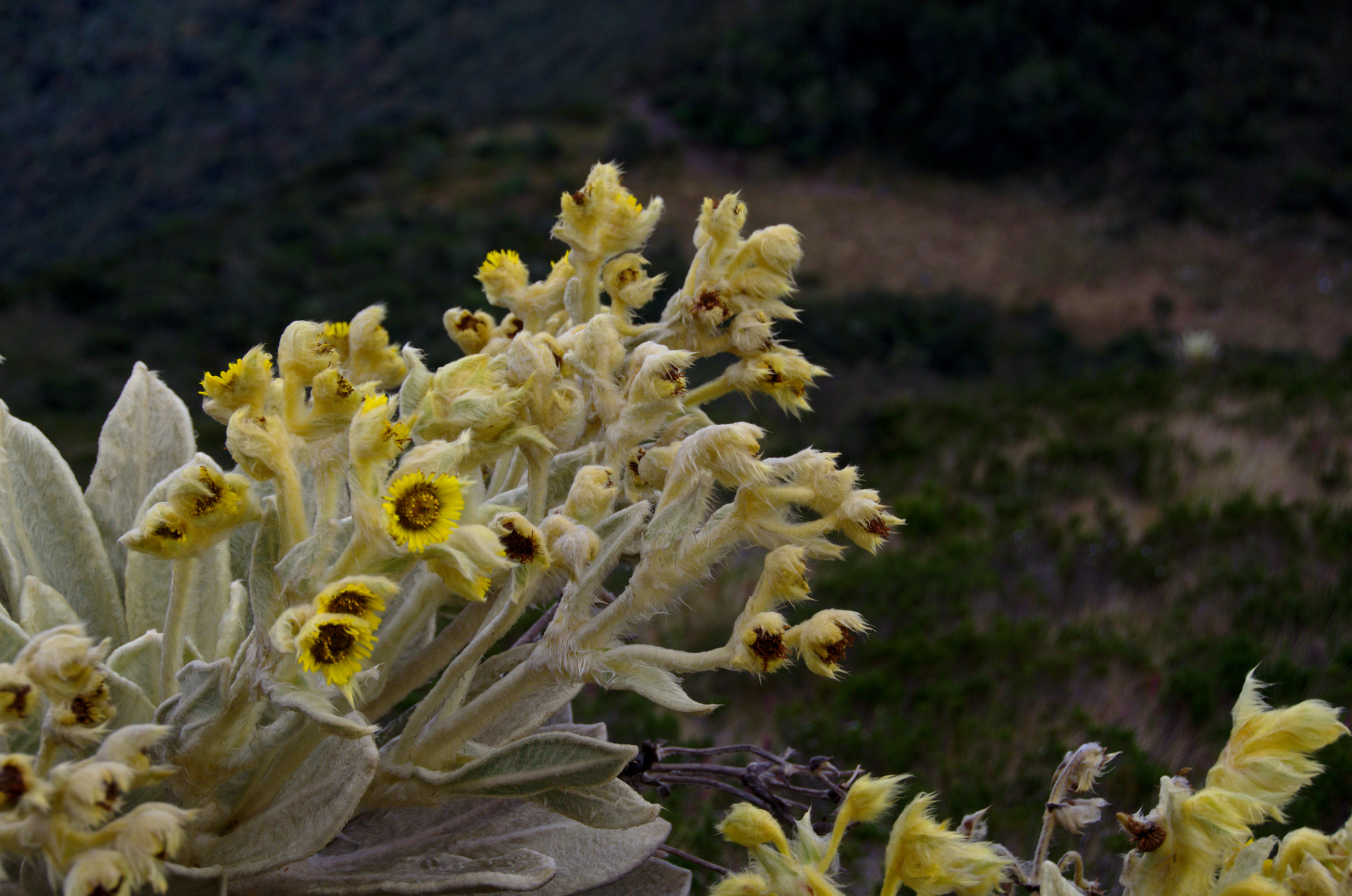
Photo: Aztlec.
Current situation
In March 2025, the Colombian government designated the western flank of the Santurbán massif as a temporary renewable natural resource reserve area, delimiting and protecting an area of 75,344.65 hectares. This resulted in a two-year suspension of the Soto Norte project. However, Aris Mining's contract to formalize Calimineros' small-scale mining activities through the purchase and processing of mineralized material remains in effect.
In addition, the Canadian mining company continues to move the project forward. In September 2025, it released its prefeasibility study, revising the mine’s original design.
Meanwhile, members of the Committee for the Defense of Water and the Santurbán Páramo face threats and stigmatization because of their work. In March 2025, UN Special Rapporteurs and the Working Group on Business and Human Rights denounced these incidents in communications sent to the governments of Colombia, Canada, and the United Arab Emirates, as well as to the companies Aris Mining and MDC Industry Holding Company LLC, the former co-owner of the Soto Norte project.
Regarding the arbitration claim filed by Eco Oro Minerals, in July 2024, ICSID ruled in favor of the Colombian government and rejected the Canadian company’s claim for USD 1.1 billion in compensation.
Concerning the delimitation of Santurbán, in July 2026, the Ministry of the Environment issued a resolution introducing the concept of "progressive delimitation." On that basis, the government proposes to progressively demarcate the páramo, covering 29,199 hectares across 19 municipalities—those where the participatory agreements required by the Constitutional Court in its 2017 ruling have already been finalized. It also proposes two measures on the creation and expansion of reserves to restrict mining in the ecosystem.
Learn more about the impacts of mining on the páramos of Latin America (in Spanish).
Partners:
Related projects
International alert issued on threats of uncontrolled fishing near Galapagos
The Interamerican Association for Environmental Defense (AIDA) and the Ecuadorian Coordinator of Organizations for the Defense of Nature and the Environment (CEDENMA) sent an international alert about the problem and threats of uncontrolled fishing on the high seas, particularly in the vicinity of the Galapagos Marine Reserve. The document calls for the adoption of preventive, urgent and effective measures to stop overfishing from causing irreversible damage to ecosystems and species in the Galapagos Islands and throughout the Tropical Eastern Pacific. The call comes after an industrial fleet of 260 fishing boats (243 flying the Chinese flag)—one of the largest in the world—was registered in July in Ecuador's Exclusive Economic Zone (EEZ), near the Galapagos Marine Reserve. The fleet included vessels from companies with records of violations of sovereign rights and the jurisdiction of coastal states, such as illegal, unreported and unregulated fishing, rule breaking and intentional environmental degradation. "The ocean is a highly connected system where what happens in one area will affect many others, so coordinated and cooperative actions between countries are key for the effective conservation of marine resources," explained Gladys Martinez, Senior Attorney with AIDA's Marine Biodiversity and Coastal Protection Program. "The role of international law is also fundamental in the sense that countries must enforce in good faith what has been agreed upon in conventions, treaties and other international instruments aimed at protecting the ocean.” The alert was sent to authorities overseeing the following international treaties and organizations: the United Nations Convention on the Law of the Sea (UNCLOS), the Convention on Biological Diversity (CBD), the Convention on International Trade in Endangered Species of Wild Fauna and Flora, and the Convention on the Conservation of Migratory Species of Wild Animals, the World Trade Organization, the Permanent Commission for the South Pacific (CPPS), the Eastern Tropical Pacific Marine Corridor (ETPMC) and the United Nations Educational, Scientific and Cultural Organization (UNESCO). Overfishing in the high seas (areas beyond national jurisdiction) can affect not only exploited areas, but also nearby marine and coastal ecosystems, as well as the food security of less developed countries. Therefore, activities such as those recorded in July represent a serious threat to the Galapagos Islands and three other World Heritage Sites—Cocos, Malpelo and Coiba in Costa Rica, Colombia and Panama, respectively—as well as to biodiversity on the high seas. "At CEDENMA we are very concerned about the situation related to industrial fishing activities in international waters that affect the fishing, biological and ecological resources of the seas under Ecuadorian jurisdiction and the Tropical Eastern Pacific region," said Gustavo Redín, President of CEDENMA. "We therefore urge Ecuadorian authorities to act on this issue and defend this natural heritage, which is unique in the world." The alert details the ecological, economic and social importance of the Galapagos; the current fishing situation inside and outside of the Marine Reserve; the impacts that overfishing on the high seas has on local fauna; the international obligations that countries have to protect the ocean and its resources; and the regional mechanisms for coordination between countries on marine conservation. Finally, AIDA and CEDENMA request a series of measures from the international organizations and authorities in charge of treaty compliance, including that they: Urgently investigate the facts set out in the document. Urge the Government of China and other governments with vessels present in the vicinity of Ecuador's EEZ to comply with their obligations to protect highly migratory species. Urge the Ecuadorian State to improve its monitoring efforts to effectively protect valuable natural resources. Review China's fishing subsidies, which are encouraging overfishing on the high seas. Continue negotiations within the framework of the Convention on Biological Diversity so that State Parties commit to protecting 30 percent of the ocean by 2030, including areas on the high seas and highly productive areas such as the Galapagos Islands. Urge Ecuador to continue supporting the negotiations to reach a global agreement for the conservation and sustainable use of biodiversity in areas beyond national jurisdiction (the High Seas Treaty) and to favor fishing management in that part of the ocean. Adopt coordinated, joint, and cooperative actions among the countries of the Eastern Tropical Pacific in favor of marine conservation. Strengthen the application of the rules that bind coastal states to ensure that fishing activities on the high seas are subject to standards of sustainability and the protection of marine biodiversity. Press contact: Victor Quintanilla (Mexico), AIDA, [email protected], +5215570522107
Read more
Civil society calls on the Human Rights Council to recognize the right to a #HealthyEnvironment4All
More than 850 civil society organizations, indigenous peoples’ groups, social movements and local communities are calling on the United Nations Human Rights Council to recognize the universal human right to a safe, clean, healthy and sustainable environment. The open letter, sent on September 10 and still open online for signatures, comes ahead of the Human Rights Council meeting in Geneva from September 14 to October 6. It argues that people must be protected from the deadly impacts of environmental degradation and climate change - such as the increased spread of diseases like COVID-19. “In view of the global environmental crisis that currently violates and jeopardizes the human rights of billions of people on our planet, global recognition of this right is a matter of utmost urgency,” the letter states. “As we all know, there are no human rights on a dead planet.” The right to a safe, clean, healthy and sustainable environment is already covered in constitutions and laws in a substantial majority of countries around the world, as well as regional systems. There is a growing legal system for implementing and applying the right, too. Now advocates for human rights, indigenous peoples, climate action and social justice are urging the UN Human Rights Council to formalize this recognition and make it universal. In doing so, the Human Rights Council would prompt countries to strengthen policies and legislation to take better care of nature and biodiversity, the letter says. This would lead to cleaner air, greater access to safe drinking water and lower greenhouse gas emissions. It would also provide environmental justice for communities that are exposed to degraded and dangerous environments, such as toxic air or disease. Deforestation and environmental degradation increase humans’ exposure to zoonotic viruses, like COVID-19, and vector-borne diseases, like malaria and Dengue fever. Scientists warn that the risk of spreading diseases will grow as natural ecosystems continue to break down. New research also suggests that the effects of air pollution on lungs, hearts and general health makes people more susceptible to the worst impacts of COVID-19. To protect people around the world from future shocks, and build greater resilience to catastrophes like this pandemic, the letter urges states to “recognize, respect, protect and fulfil the human right of all to enjoy a safe, clean, healthy and sustainable environment”. #HealthyEnvironment4All Press contact Victor Quintanilla (Mexico), AIDA, [email protected], +5215570522107
Read more
Environmental racism and the differentiated harm of the pandemic
By Tayná Lemos and Marcella Ribeiro Brazil’s major cities are reopening—with packed bars in Rio de Janeiro and restaurants serving up crowds in São Paulo—despite the lethality of COVID-19, which had caused more than 112 thousand deaths as of August 20. The reopening of bars and restaurants during the height of the pandemic demonstrates how the virus differentially affects people of different races and socioeconomic levels. A study by the Health Operations and Intelligence Center (NOIS), an initiative involving several Brazilian universities, found that a Black person without schooling is four times more likely to die from the novel coronavirus in Brazil than a white person with a higher level of education. Based on cases through May, the study also shows that the overall mortality rate of 38 percent for the white population climbs to nearly 55 percent for the Brazil’s Black population. "The mortality rate in Brazil is influenced by inequalities in access to treatment," Silvio Hamacher, NOIS coordinator and one of the study's authors, told EFE. Painfully, this trend is repeated in countries like the United States and the United Kingdom. This demonstrates that one of the factors behind the high mortality rate of COVID-19 is environmental racism—a phenomenon in which the negative and unintended consequences of economic activities are unevenly distributed. Unequal Distribution of Damages The term environmental racism was coined in the United States by researcher Benjamin Chavis, after he observed that chemical pollution from industries was dumped only in Black neighborhoods. "Environmental racism is racial discrimination in environmental policy-making and enforcement of regulations and laws, the deliberate targeting of communities of color for toxic waste facilities, the official sanctioning of the presence of life threatening poisons and pollutants in communities of color, and the history of excluding people of color from leadership of the environmental movement,” Chavis wrote. While all activity generates some environmental impact, the territories chosen to carry it out are usually regions located on the outskirts of the city, inhabited by traditional or outlying communities. In Brazil, environmental racism affects both outlying urban communities and traditional rural communities. And, as in the United States, one of its characteristics is the disproportionate pollution suffered by these minority groups in comparison with the white middle class. This includes the contamination of air and water with toxic agents, heavy metals, pesticides, chemicals, plastics, and so on. In his 2019 report, Bashkut Tuncak, then-UN Special Rapporteur on the implications for human rights of the environmentally sound management and disposal of hazardous substances and wastes, warned that there is a silent pandemic of disease and disability resulting from the accumulation of toxic substances in our bodies. In 2020, following a country-visit to Brazil, he noted that there is a connection between environmental pollution and mortality from the novel coronavirus and that fewer people would die in Brazil if stricter environmental and public health policies were in place. "There are synergies between exposure to pollution and exposure to COVID-19. Toxic substances in the environment contribute to the Brazil’s elevated mortality rate," Tuncak affirmed. The underlying health conditions that exacerbate the pandemic are not "bad luck," but largely "the impacts of toxic substances in the air we breathe, the water we drink, the food we eat, the toys we give to our children, and the places where we work.” An Increase in Vulnerability Tuncak confirmed that those most vulnerable to the pandemic are the urban poor as well as traditional and indigenous communities, because they are also the most affected by environmental and public health problems. This leads to hyper-vulnerability. An example of this situation is that of the 17 quilombos (Afro-descendant settlements) in the municipality of Salvaterra, in the state of Pará, home to around 7,000 people. Twenty years ago, an open dump was installed without consulting the families living there. Children, adults and the elderly were forced to live with domestic garbage and toxic and hospital waste, among other refuse. Their vulnerability increased with the pandemic. Despite the size of the country, there are no territorial gaps in Brazil. When an industry, a landfill, a monoculture, a hydroelectric project, a mine, or a nuclear plant is installed, a historically forgotten community is impacted. The invisible damage of pollution caused by these activities is difficult to prove, but it profoundly affects the health and quality of life of people who live nearby and are already extremely vulnerable. Another example is that of the indigenous community of Tey Jusu, which in April 2015 received a rain of toxic agro-chemicals spilled by an airplane over a corn monoculture. The fumigation intoxicated people in the community, damaging their health. Unfortunately, the direct ingestion of pesticides by members of communities living near monoculture plantations is a recurring reality. What’s worse is that the current government authorized 118 new agrochemicals during the pandemic, adding to the 474 approved in 2019 and another 32 launched in the first months of 2020. These pesticides cause several diseases but it is not yet possible to determine their exact consequences on the human body, much less their interaction with other toxic substances or with diseases like COVID-19. According to an analysis by the Coordination of Indigenous Organizations of the Brazilian Amazon and the Amazon Research Institute, the death rate from the pandemic among indigenous people in the legal Amazon is 150 percent higher than the national average. The rate of COVID-19 infection among this population is also 84 percent higher than the national average. This is due to historical factors such as the lack of health posts, distance from hospitals, absence of any kind of assistance from the federal government, land invasion, and environmental degradation. In fact, one of the greatest threats to indigenous communities in Brazil is the invasion of their lands by illegal miners, which causes, among other human rights violations, mercury contamination in water sources. Last year, a study by the Oswaldo Cruz Foundation found that 56 percent of the Yanomami Indians had mercury concentrations above the limits set by the World Health Organization, which implies serious damage to public health. In this sense, environmental racism is a term that exposes a historical separation between those who reap the fruits of economic growth and those who become ill and die due to the environmental consequences of that same economic growth. The array of systemic damage to the health of these vulnerable communities makes them especially susceptible to the worst effects of COVID-19. Therefore, in discussing and addressing the pandemic, it is essential to know that it does not reach all people in the same way, that it puts traditional communities at risk of extinction, and that environmental issues are also public health issues. To overcome the global health crisis, we must bring this racism to the center of the debate.
Read more