
Project
Alberto Peña Kay
Protecting the Santurban páramo from mining's damage
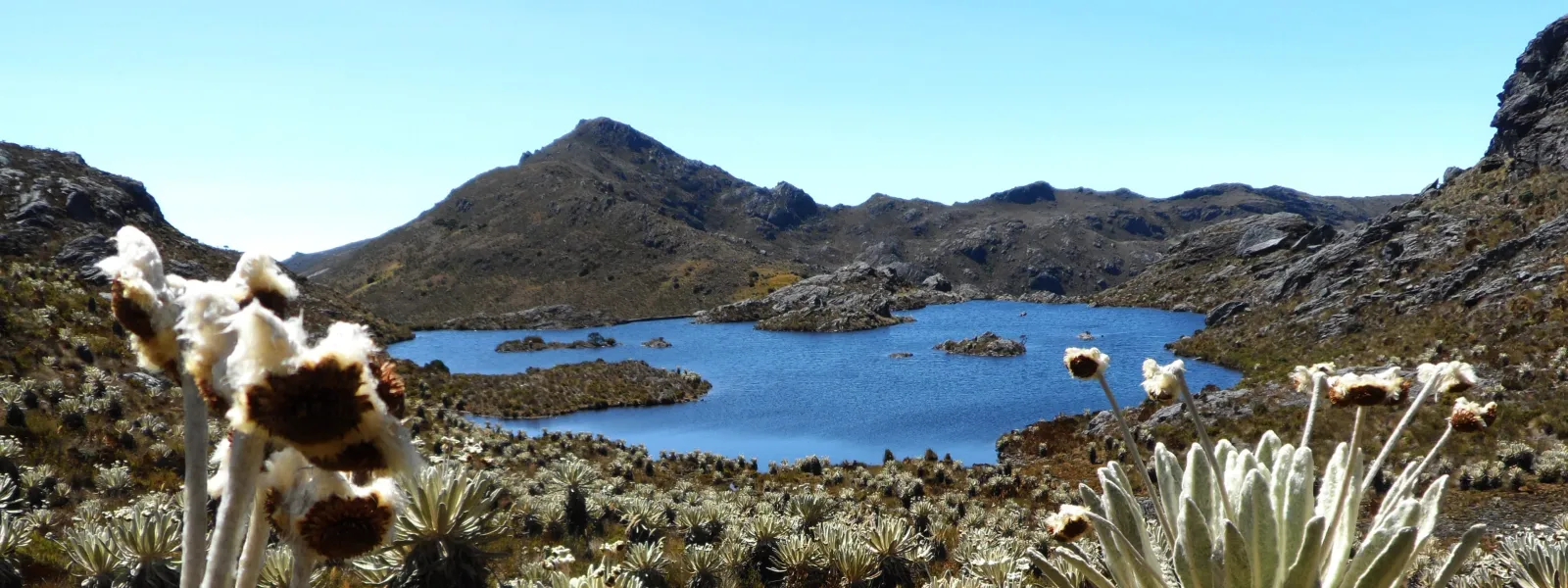
In the Andean region, high-mountain ecosystems known as páramos capture water from the fog and supply it to the lowlands. One such ecosystem is the Santurbán páramo, which provides fresh water to more than two million people in Colombia.
Santurbán, like the other páramos on the continent, also captures large amounts of carbon, making it a key ally in mitigating the climate crisis. It is also a refuge for hundreds of endangered species, including the iconic spectacled bear.
The land in and around the páramo contains gold and other minerals. This has put Santurbán in the spotlight of the multinational mining industry, which for decades has sought to establish large-scale projects in the ecosystem that threaten to degrade it.
The Committee for the Defense of Water and the Santurbán Páramo—a coalition of environmental advocates—has thwarted these ongoing attempts, with support from AIDA and other civil society organizations.
Background
The Santurbán páramo is located in the heart of the Eastern Cordillera of the Colombian Andes, in the departments of Santander and Norte de Santander, at an elevation ranging from 2,200 to 4,290 meters above sea level.
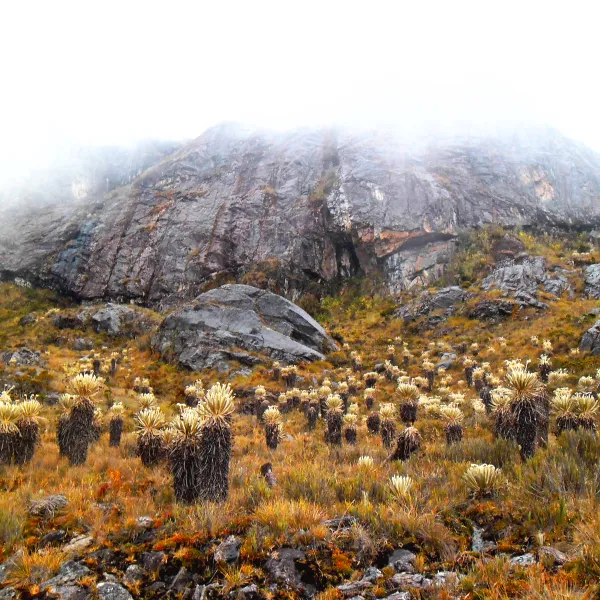
It covers an area of 129,743 hectares and is home to 57 lakes. It serves as a habitat for 457 plant species and 293 species of vertebrate fauna.
There are mineral deposits in Santurbán, primarily gold, but also silver and copper. This explains the region’s mining tradition, particularly in the part of the páramo located in Santander, in the province of Soto Norte. The communities in the area have built their culture and identity around gold mining, which is mainly artisanal and small-scale.
But since the 1990s, the gold deposits in the páramo have also attracted foreign mining conglomerates seeking to develop large-scale projects. This has raised concerns among the population that relies on the Santurbán water sources, who have mobilized in defense of water, their land, and life.
Although national and international regulations prohibit mining in páramos, the Colombian government has granted mining concessions to transnational corporations in Santurbán.

Photo: Keishpixl / Pixabay.
The long struggle to protect the páramo
One of the companies that sought to develop large-scale mining in Santurbán is Eco Oro Minerals Corp.—formerly Greystar Resources—a Canadian company that intended to establish the Angostura open-pit mine there to extract gold and silver. Between 1994 and 1995, the company acquired its mining titles and conducted exploration. And in 2010, it applied for a mining permit.
That was the year AIDA became involved in defending the ecosystem, supporting the Committee for the Defense of Water and the Santurbán Páramo. Our legal work helped convince the Colombian government to deny the mine an environmental permit in May 2011.
In January 2013, the government designated a portion of the páramo (11,700 hectares) as a Regional Natural Park. That year—together with the committee and partner organizations—we carried out a campaign and advocacy efforts to urge the government to recognize the entire Santurbán area as a páramo ecosystem through a delimitation based on scientific criteria. In December 2014, the Ministry of the Environment established a delimitation that protected 76% of the páramo (98,954 hectares).
Furthermore, as a result of a litigation supported by AIDA, in February 2016, Colombia’s highest court reaffirmed that mining in páramos is prohibited.
That same year, in December, the International Finance Corporation (IFC), the World Bank Group’s private sector arm, decided to divest from Eco Oro Minerals. This achievement was the result of a process that began in 2012, when the committee—advised and supported by AIDA and international partner organizations—filed a complaint before an independent accountability mechanism, which concluded that the IFC’s investment in the Angostura project failed to take into account the project’s social and environmental impacts, thereby contradicting the financial institution’s internal policies.
Also in 2016, Eco Oro Minerals filed an arbitration claim against the Colombian government with the International Centre for Settlement of Investment Disputes (ICSID), arguing that it had been adversely affected by government decisions aimed at protecting the country’s páramos, including the delimitation of Santurbán.
In 2017, the Constitutional Court invalidated the delimitation because the affected communities were not consulted. The high court ordered that a participatory delimitation be carried out.
And that year, a new threat to Santurbán emerged when the Canadian multinational Aris Mining applied for an environmental permit for Soto Norte, a gold mining project located near the páramo. Following citizen protests and technical objections, in October 2020, the National Environmental Licensing Authority shelved the project.
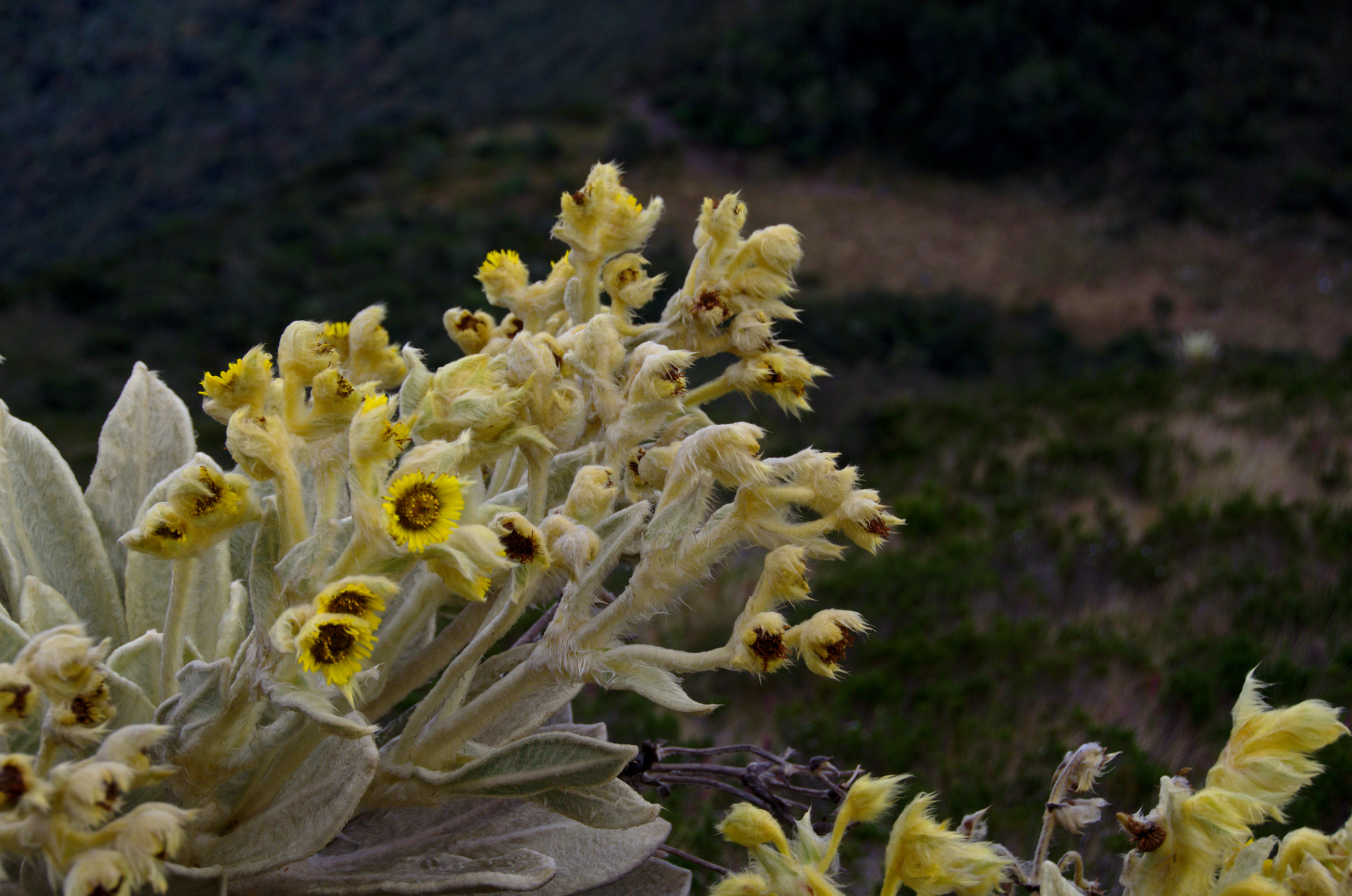
Photo: Aztlec.
Current situation
In March 2025, the Colombian government designated the western flank of the Santurbán massif as a temporary renewable natural resource reserve area, delimiting and protecting an area of 75,344.65 hectares. This resulted in a two-year suspension of the Soto Norte project. However, Aris Mining's contract to formalize Calimineros' small-scale mining activities through the purchase and processing of mineralized material remains in effect.
In addition, the Canadian mining company continues to move the project forward. In September 2025, it released its prefeasibility study, revising the mine’s original design.
Meanwhile, members of the Committee for the Defense of Water and the Santurbán Páramo face threats and stigmatization because of their work. In March 2025, UN Special Rapporteurs and the Working Group on Business and Human Rights denounced these incidents in communications sent to the governments of Colombia, Canada, and the United Arab Emirates, as well as to the companies Aris Mining and MDC Industry Holding Company LLC, the former co-owner of the Soto Norte project.
Regarding the arbitration claim filed by Eco Oro Minerals, in July 2024, ICSID ruled in favor of the Colombian government and rejected the Canadian company’s claim for USD 1.1 billion in compensation.
Concerning the delimitation of Santurbán, in July 2026, the Ministry of the Environment issued a resolution introducing the concept of "progressive delimitation." On that basis, the government proposes to progressively demarcate the páramo, covering 29,199 hectares across 19 municipalities—those where the participatory agreements required by the Constitutional Court in its 2017 ruling have already been finalized. It also proposes two measures on the creation and expansion of reserves to restrict mining in the ecosystem.
Learn more about the impacts of mining on the páramos of Latin America (in Spanish).
Partners:
Related projects

A Plan to Decontaminate Our Cities and Contain the Climate Crisis
In an open letter made public at COP25, more than 100 organizations from Latin America and around the world urged governments to include ambitious and measurable targets for confronting air pollution in their new climate commitments, which must be submitted to the United Nations by March 2020.Join the Global Call for Clean Air! SIGN NOW!Read it in Spanish In Portuguese Poor air quality is the environmental problem that claims the most lives worldwide.Each year, more than four million people die from the health damages caused by air pollution. Official data shows that, globally, nine out of ten people breathe polluted air, and that the problem affects more than 80 percent of urban residents. The majority of those affected are in developing countries and the damages most severely impact the most vulnerable sectors of the population: children, pregnant women and the elderly.At the same time, humanity is seriously threatened by a climatic emergency whose impacts are also suffered with greater force by the most vulnerable segments of the population.Both problems, the climate crisis and poor air quality, are related to the atmosphere around us and are a matter of human rights. In this sense, there is an efficient way forward on both fronts. It’s an opportunity we must seize, and it has to do with reducing emissions of short-lived climate pollutants (SLCPs).Short-lived climate pollutants are atmospheric agents that contribute to the climate crisis with much more intensity than carbon dioxide (CO2) and, as their name indicates, remain in the atmosphere a relatively short time, from days to decades—unlike CO2, which can last millennia in the atmosphere. In addition, these pollutants degrade air quality, affect glacial areas and reduce crop yields. They include black carbon, methane, tropospheric ozone and hydrofluorocarbons (HFCs).Aiming to mitigate them implies reducing global warming in the short term and, at the same time, advancing in the decontamination of cities.This opportunity has already been supported by science.The United Nations Intergovernmental Panel on Climate Change (IPCC), which brings together experts on the subject, stressed in its Special Report on 1.5°C that, in order to confront global warming, we must incorporate into our efforts the mitigation of pollutants other than CO2, specifically black carbon and methane.Recently, more than 11 thousand scientists from around the world joined the call. In a public declaration recognizing the climate emergency, they identified among the measures necessary to solve it the prompt reduction of short-lived climate pollutants, noting that this would reduce warming by more than 50 percent in the coming decades.The forthcoming update of Nationally Determined Contributions (NDCs)— containing the climate commitments that governments must submit to the United Nations Framework Convention on Climate Change (UNFCCC)—opens the possibility of betting on the mitigation of these pollutants and contributing effectively to the fight against the climate crisis and poor air quality.The deadline for governments to submit new and more ambitious Nationally Determined Contributions is March 2020.For all of the reasons stated above, the undersigned organizations consider that the States that are part of the UNFCCC must respect human rights, protect them with the highest standards, and consider them in their climate commitments.In this sense, we ask that governments:Include ambitious and measurable targets for the reduction of short-lived climate pollutants in the update of their NDCs by March 2020.Detail in their commitments the means of implementation, which must ensure compliance with the targets they set.Frame the fulfillment of commitments in comprehensive policies that recognize the different levels of impact among the population, with special emphasis on the protection of children and other vulnerable groups.Specify the monitoring, reporting and verification procedures that will accompany the implementation of their commitments.Ensure that local governments and companies respect the policies established and adapt their actions to the urgent need to improve air quality. Download the letter
Read moreA Plan to Decontaminate Our Cities and Contain the Climate Crisis
In an open letter made public at COP25, more than 100 organizations from Latin America and around the world urged governments to include ambitious and measurable targets for confronting air pollution in their new climate commitments, which must be submitted to the United Nations by March 2020.Join the Global Call for Clean Air! SIGN NOW!Read it in Spanish In Portuguese Poor air quality is the environmental problem that claims the most lives worldwide.Each year, more than four million people die from the health damages caused by air pollution. Official data shows that, globally, nine out of ten people breathe polluted air, and that the problem affects more than 80 percent of urban residents. The majority of those affected are in developing countries and the damages most severely impact the most vulnerable sectors of the population: children, pregnant women and the elderly.At the same time, humanity is seriously threatened by a climatic emergency whose impacts are also suffered with greater force by the most vulnerable segments of the population.Both problems, the climate crisis and poor air quality, are related to the atmosphere around us and are a matter of human rights. In this sense, there is an efficient way forward on both fronts. It’s an opportunity we must seize, and it has to do with reducing emissions of short-lived climate pollutants (SLCPs).Short-lived climate pollutants are atmospheric agents that contribute to the climate crisis with much more intensity than carbon dioxide (CO2) and, as their name indicates, remain in the atmosphere a relatively short time, from days to decades—unlike CO2, which can last millennia in the atmosphere. In addition, these pollutants degrade air quality, affect glacial areas and reduce crop yields. They include black carbon, methane, tropospheric ozone and hydrofluorocarbons (HFCs).Aiming to mitigate them implies reducing global warming in the short term and, at the same time, advancing in the decontamination of cities.This opportunity has already been supported by science.The United Nations Intergovernmental Panel on Climate Change (IPCC), which brings together experts on the subject, stressed in its Special Report on 1.5°C that, in order to confront global warming, we must incorporate into our efforts the mitigation of pollutants other than CO2, specifically black carbon and methane.Recently, more than 11 thousand scientists from around the world joined the call. In a public declaration recognizing the climate emergency, they identified among the measures necessary to solve it the prompt reduction of short-lived climate pollutants, noting that this would reduce warming by more than 50 percent in the coming decades.The forthcoming update of Nationally Determined Contributions (NDCs)— containing the climate commitments that governments must submit to the United Nations Framework Convention on Climate Change (UNFCCC)—opens the possibility of betting on the mitigation of these pollutants and contributing effectively to the fight against the climate crisis and poor air quality.The deadline for governments to submit new and more ambitious Nationally Determined Contributions is March 2020.For all of the reasons stated above, the undersigned organizations consider that the States that are part of the UNFCCC must respect human rights, protect them with the highest standards, and consider them in their climate commitments.In this sense, we ask that governments:Include ambitious and measurable targets for the reduction of short-lived climate pollutants in the update of their NDCs by March 2020.Detail in their commitments the means of implementation, which must ensure compliance with the targets they set.Frame the fulfillment of commitments in comprehensive policies that recognize the different levels of impact among the population, with special emphasis on the protection of children and other vulnerable groups.Specify the monitoring, reporting and verification procedures that will accompany the implementation of their commitments.Ensure that local governments and companies respect the policies established and adapt their actions to the urgent need to improve air quality. Download the letter
Read more
Six measures to ensure our actions achieve climate justice
On December 2, the twenty-fifth Conference of the Parties (COP25) to the United Nations Framework Convention on Climate Change opened in Madrid. It’s a vital meeting for the planet, during which governments must drastically increase their ambitions and climate commitments if we hope to preserve life, as we know it today. So far, there have been more announcements than actions. That’s why I’d like to highlight six measures that will help us move towards the results the planet needs. The outlook is not encouraging. Change remains urgent. Every day, the climate crisis causes greater harm, particularly for the most vulnerable among us. According to the United Nations Emissions Gap report, emissions continue to rise and current actions are insufficient to achieving the necessary reductions. In an evident political and financial weakening, nations that once led climate actions are now withdrawing or refusing to comply with the agreements. Added to this are emerging social protests, particularly in Latin America. The governments of Ecuador, Chile and Colombia have declared curfews in recent weeks to deal with the serious situations in their countries; COP25 was moved from Santiago de Chile to Madrid. In some instances, abuse of force caused several deaths and hundreds of other injuries. All this demonstrates the urgency of heeding the social call, of acknowledging and dealing with inequality, of finding solutions and building countries where all have a place. One thing is clear: we’ve been moving in the wrong direction and we must change course. We need profound changes in energy, transportation and food systems, as well as in the negotiation, decision-making and implementation of climate actions. This is essential if we are to arrive at peak global emissions as soon as possible, cut them in half by 2030, and reach zero emissions by 2050. Significant efforts are undoubtedly being made. There are billion-dollar investments by governments, businesses, organizations and individuals. But it’s not enough. We must stop and assess what is serving us and what is not; what we should continue to do and what we must do differently. These six measures could make climate action more effective and help us achieve climate justice: 1. Include human rights as a transversal element (seriously). Although it’s been a petition of social movements, indigenous peoples and organizations for decades, official recognition of human rights has yet to materialize. Responding to this call is vital to increasing the ambition and responsibility that is so needed. While the Cancun and Paris Agreements refer to the importance of respecting human rights, their implementation has failed to include this perspective. This, despite the fact that human rights bodies have reminded States of their obligation to do so; and IPCC scientists have highlighted the importance of addressing social inequality and including the wisdom of indigenous communities as a fundamental element in resolving the climate crisis. 2. Ensure the effective participation of affected people and communities in the planning, discussion, decision-making and monitoring of climate actions. Indigenous peoples, rural communities, Afro-descendants, and youth are among the groups most affected by the climate crisis. In addition, local communities have protected millions of hectares of forests and other natural areas, essential for climate resilience. Yet spaces for the participation for these actors remain scarce and spaces for decision-making, in COPs and other instances, are almost non-existent. Ensuring that discussions and decisions are truly diverse is an essential step towards increasing climate ambition and effectiveness. Communities should be considered subjects of rights, not simply objects of protection projects and actions. 3. Secure the equitable distribution of funds We live in the midst of immense inequality, where wealth, property and privileges belong to a few, while the majority assume the negative impacts. The climate crisis is partly a result of this situation. Although Latin America is the most unequal region on the planet, inequality is underestimated, according to ECLAC. That’s why the distribution of economic and human resources must address this reality, ensuring that the Global South has access to opportunities to participate on equal footing towards true climate justice. This would increase the possibility of finding alternative solutions and replicating those already in place. 4. Hold accountable those responsible for the climate crisis Those causing the climate crisis should be held accountable for it, instead of attacking those who seek accountability and climate justice. This is one of the great obstacles to moving forward. It’s time to name those responsible and demand that they take charge and repair the damages, rather than accepting false solutions and ineffective voluntary actions. 5. Incorporate a feminine perspective, based in maternal love By this I mean the need to rescue a perspective of collaboration and serious dialogue in order to reach consensus, assuming responsibilities over differences and competition. Let us include a perspective that prioritizes the care of the Earth, of nature and of people. Let's stop putting economic interests and short-term vision above the health of our planet. Let's focus our efforts on agreeing how we can achieve climate justice, coming out of denial, and leaving behind excuses about why it can't be done. 6. Acknowledge the true costs of the climate crisis: social, economic, environmental and human. So far most economic assessments have focused on calculating the costs of the transition to a zero-emission economy. While there are estimates of the costs involved in not implementing the transition, these ignore the social, environmental and cultural impacts. This is particularly significant for regions such as Latin America, which, in addition to suffering human and cultural losses, are losing their natural wealth. Scientists have concluded that the changes will be more costly the longer they take to be implemented. COP25 could be an opportunity to incorporate these and many other measures in the battle against the climate emergency. At this point, insisting on the same thing will only bring more frustration and failures. Not taking action will condemn millions more people to suffer the consequences of the climate crisis, and of inadequate solutions that violate their rights. The reality is indisputable, which makes it imperative to include human rights as the crosscutting axis of our climate actions. If we do not, the actions resulting from the Conference of the Parties will resemble the emperor of the Brothers Grimm’s story. They will come out to the parade naked, proudly wearing a costly suit made with climate ambition, yet insufficient for what the planet needs. We must instead cover climate actions with a suit of climate justice—a visible one that we must weave together. We have no time to spare.
Read more