
Project
Alberto Peña Kay
Protecting the Santurban páramo from mining's damage
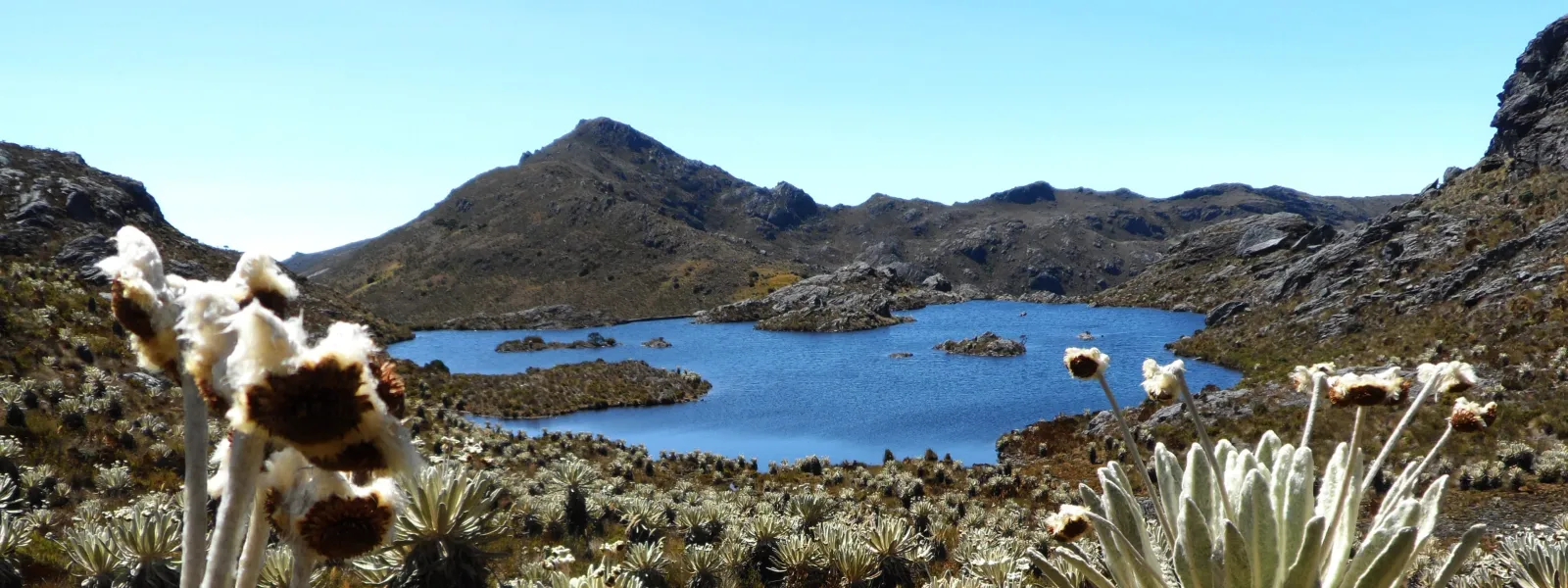
In the Andean region, high-mountain ecosystems known as páramos capture water from the fog and supply it to the lowlands. One such ecosystem is the Santurbán páramo, which provides fresh water to more than two million people in Colombia.
Santurbán, like the other páramos on the continent, also captures large amounts of carbon, making it a key ally in mitigating the climate crisis. It is also a refuge for hundreds of endangered species, including the iconic spectacled bear.
The land in and around the páramo contains gold and other minerals. This has put Santurbán in the spotlight of the multinational mining industry, which for decades has sought to establish large-scale projects in the ecosystem that threaten to degrade it.
The Committee for the Defense of Water and the Santurbán Páramo—a coalition of environmental advocates—has thwarted these ongoing attempts, with support from AIDA and other civil society organizations.
Background
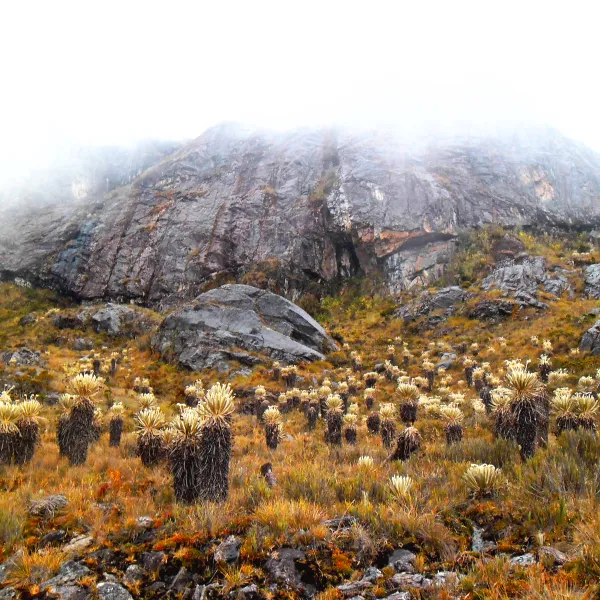
The Santurbán páramo is located in the heart of the Eastern Cordillera of the Colombian Andes, in the departments of Santander and Norte de Santander, at an elevation ranging from 2,200 to 4,290 meters above sea level.
It covers an area of 129,743 hectares and is home to 57 lakes. It serves as a habitat for 457 plant species and 293 species of vertebrate fauna.
There are mineral deposits in Santurbán, primarily gold, but also silver and copper. This explains the region’s mining tradition, particularly in the part of the páramo located in Santander, in the province of Soto Norte. The communities in the area have built their culture and identity around gold mining, which is mainly artisanal and small-scale.
But since the 1990s, the gold deposits in the páramo have also attracted foreign mining conglomerates seeking to develop large-scale projects. This has raised concerns among the population that relies on the Santurbán water sources, who have mobilized in defense of water, their land, and life.
Although national and international regulations prohibit mining in páramos, the Colombian government has granted mining concessions to transnational corporations in Santurbán.
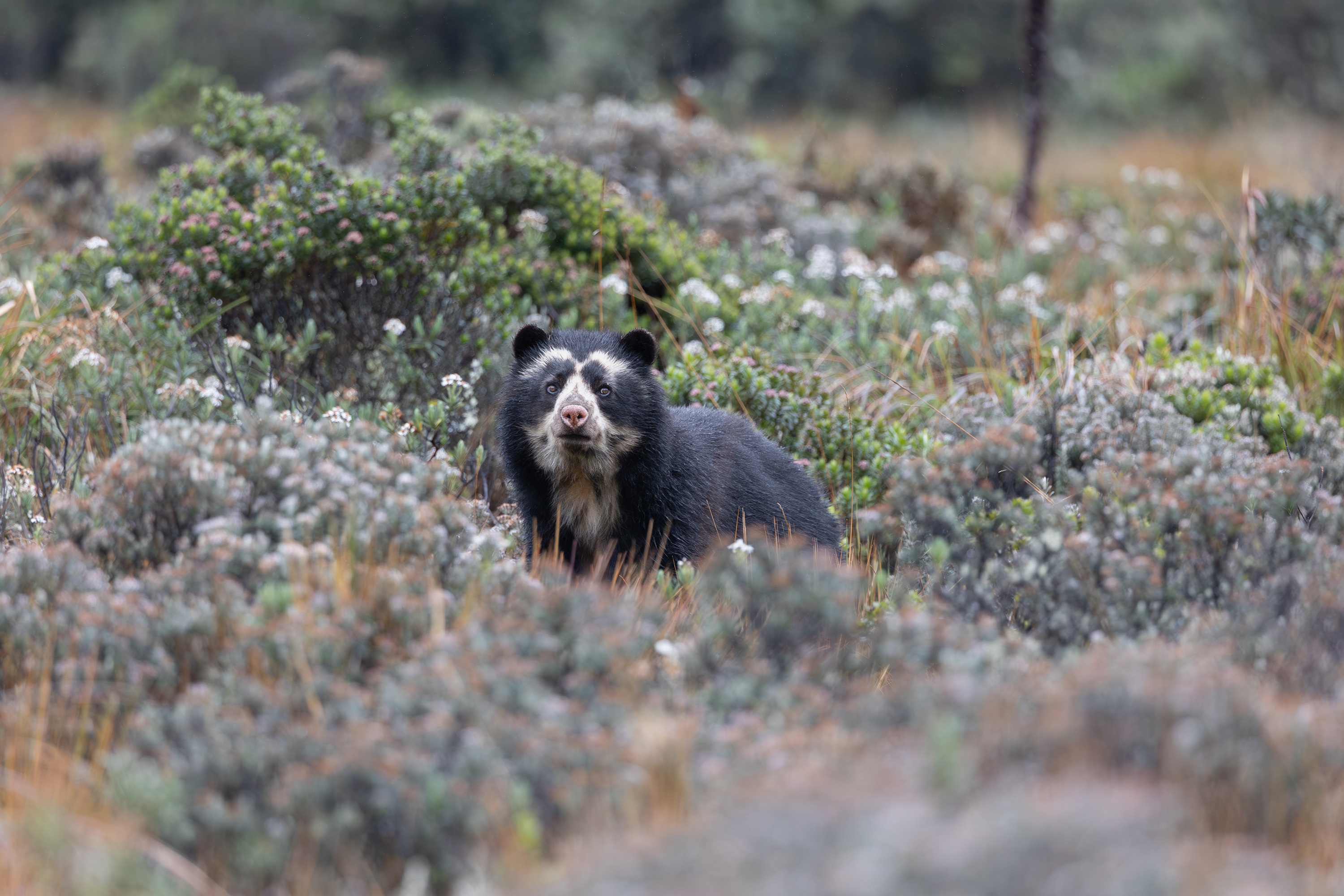
Photo: Keishpixl / Pixabay.
The long struggle to protect the páramo
One of the companies that sought to develop large-scale mining in Santurbán is Eco Oro Minerals Corp.—formerly Greystar Resources—a Canadian company that intended to establish the Angostura open-pit mine there to extract gold and silver. Between 1994 and 1995, the company acquired its mining titles and conducted exploration. And in 2010, it applied for a mining permit.
That was the year AIDA became involved in defending the ecosystem, supporting the Committee for the Defense of Water and the Santurbán Páramo. Our legal work helped convince the Colombian government to deny the mine an environmental permit in May 2011.
In January 2013, the government designated a portion of the páramo (11,700 hectares) as a Regional Natural Park. That year—together with the committee and partner organizations—we carried out a campaign and advocacy efforts to urge the government to recognize the entire Santurbán area as a páramo ecosystem through a delimitation based on scientific criteria. In December 2014, the Ministry of the Environment established a delimitation that protected 76% of the páramo (98,954 hectares).
Furthermore, as a result of a litigation supported by AIDA, in February 2016, Colombia’s highest court reaffirmed that mining in páramos is prohibited.
That same year, in December, the International Finance Corporation (IFC), the World Bank Group’s private sector arm, decided to divest from Eco Oro Minerals. This achievement was the result of a process that began in 2012, when the committee—advised and supported by AIDA and international partner organizations—filed a complaint before an independent accountability mechanism, which concluded that the IFC’s investment in the Angostura project failed to take into account the project’s social and environmental impacts, thereby contradicting the financial institution’s internal policies.
Also in 2016, Eco Oro Minerals filed an arbitration claim against the Colombian government with the International Centre for Settlement of Investment Disputes (ICSID), arguing that it had been adversely affected by government decisions aimed at protecting the country’s páramos, including the delimitation of Santurbán.
In 2017, the Constitutional Court invalidated the delimitation because the affected communities were not consulted. The high court ordered that a participatory delimitation be carried out.
And that year, a new threat to Santurbán emerged when the Canadian multinational Aris Mining applied for an environmental permit for Soto Norte, a gold mining project located near the páramo. Following citizen protests and technical objections, in October 2020, the National Environmental Licensing Authority shelved the project.
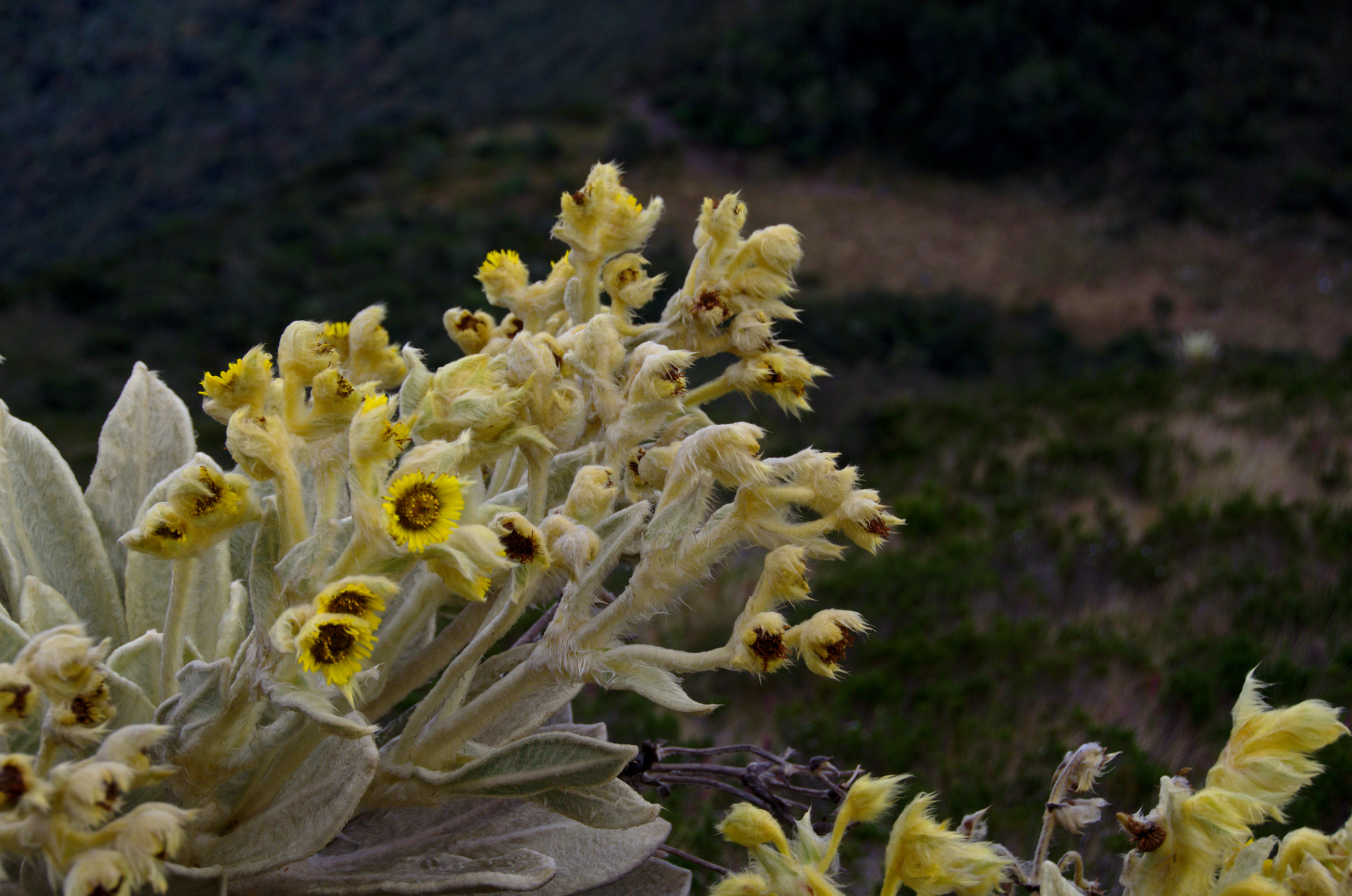
Photo: Aztlec.
Current situation
In March 2025, the Colombian government designated the western flank of the Santurbán massif as a temporary renewable natural resource reserve area, delimiting and protecting an area of 75,344.65 hectares. This resulted in a two-year suspension of the Soto Norte project. However, Aris Mining's contract to formalize Calimineros' small-scale mining activities through the purchase and processing of mineralized material remains in effect.
In addition, the Canadian mining company continues to move the project forward. In September 2025, it released its prefeasibility study, revising the mine’s original design.
Meanwhile, members of the Committee for the Defense of Water and the Santurbán Páramo face threats and stigmatization because of their work. In March 2025, UN Special Rapporteurs and the Working Group on Business and Human Rights denounced these incidents in communications sent to the governments of Colombia, Canada, and the United Arab Emirates, as well as to the companies Aris Mining and MDC Industry Holding Company LLC, the former co-owner of the Soto Norte project.
Regarding the arbitration claim filed by Eco Oro Minerals, in July 2024, ICSID ruled in favor of the Colombian government and rejected the Canadian company’s claim for USD 1.1 billion in compensation.
Concerning the delimitation of Santurbán, in July 2026, the Ministry of the Environment issued a resolution introducing the concept of "progressive delimitation." On that basis, the government proposes to progressively demarcate the páramo, covering 29,199 hectares across 19 municipalities—those where the participatory agreements required by the Constitutional Court in its 2017 ruling have already been finalized. It also proposes two measures on the creation and expansion of reserves to restrict mining in the ecosystem.
Learn more about the impacts of mining on the páramos of Latin America (in Spanish).
Partners:
Related projects
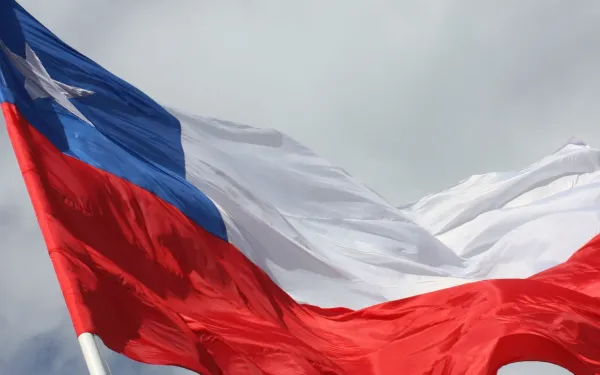
Statement on the suspension of COP25 in Chile
Today the Chilean government, after two weeks of mass demonstrations, cancelled the twenty-fifth Conference of the Parties (COP25) to the United Nations Framework Convention on Climate Change, scheduled for December in Santiago. We lament the decision and express our support to the Chilean people, facing a difficult situation that makes the nation unable to guarantee the safety that an event of such magnitude requires. We call on the Chilean State to ensure that the process of change the country is going through is developed with respect for the human rights of all those involved. Abuse from public forces is unacceptable, especially in a process that seeks to repair the social wounds that tarnish our societies. The Chilean government must comply with its human rights obligations. We also urge the State and private sector to take firm steps towards transforming Chile into a country with greater social, environmental and climate justice; and to set an example for Latin America, a region where inequality and injustice have intensified over the years. Underlying the social crisis in Chile is a very serious environmental crisis that has long corroded equity and is part of the spark that ignited social discontent. Two examples of this inadmissible reality include sacrifice zones, where coal-fired power plants have condemned families to suffering a large part of the country's atmospheric pollution, making them sick and truncating their development; and the privatization of water, meaning Chile fails to recognize access to drinking water and sanitation as a human right, and does not prioritize their use for human consumption and the maintenance of ecosystems. Similar problems occur in other countries of the region. We hope that Chile will continue in its role as President of the COP, pushing with more force than ever toward ambitious climate commitments that will help us keep global warming under control while complying with the Paris Agreement. The events of the past month clearly demonstrate that, in the face of crises, changes must come from the people, always protecting and favoring the most vulnerable members of society. Indigenous peoples and rural communities, who have suffered hardest from social and environmental injustice, can often best contribute to the solutions our planet needs. All efforts to combat the climate crisis must ensure a just, participatory energy transition that respects human rights. Chile today has the opportunity to make history by including environmental protection and climate justice as pillars in the construction of a cleaner, fairer and more equitable future. We warmly call on the international community to join in this show of support for the people of Chile. PRESS CONTACT: Victor Quintanilla (México), [email protected], +5215570522107
Read more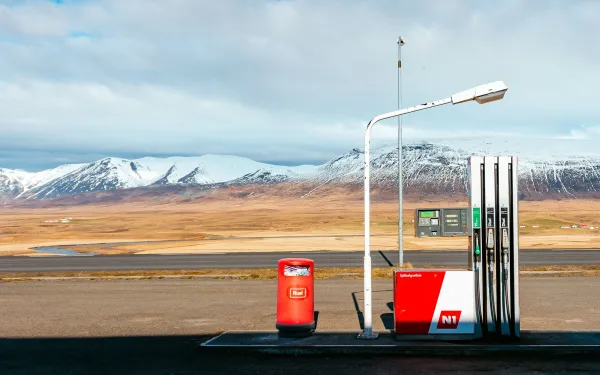
Lessons for moving into a world without fossil fuels
By Javier Dávalos and Florencia Ortúzar Recent social conflict in Ecuador, triggered by the abrupt suspension of diesel and gasoline subsidies, has demonstrated the need for a just energy transition that takes people into account. Measures aimed at ending government support for the production and use of fossil fuels must be progressive and consensual. The extraction of coal, oil and gas produces significant emissions of carbon dioxide and methane, contaminants that cause global warming. Burning these fuels to produce energy also contributes greatly to air pollution, which kills millions of people annually. Nevertheless, governments worldwide spend between 160 and 400 billion dollars each year to subsidize the fossil fuel industry, according to information from the United Nations Environment Program. Total financial support for renewable energy reaches only 121 billion. If we really want to combat the climate crisis and improve our air quality, we much change this situation. Understanding subsidies Public incentives to producers and consumers of coal, oil and natural gas include payments to consumers or businesses and tax deductions. Therefore, even if fuel prices rise steadily, subsidies keep them artificially low. As a result, transportation and trade costs are contained and remain internationally competitive. These subsidies weigh heavily on national economies, which are left without resources that could well be allocated to sectors such as health and education. Support for the industry deepens our dependence on fossil fuels and ties us to a crippling economic system that the planet desperately needs us to escape. It’s important to understand that this dependence is much more acute for the most vulnerable among us, for whom each dollar counts toward quality of life. A just energy transition The events in Ecuador have taught us a valuable lesson: a desirable result does not necessarily justify the way it is carried out. There, the subsidies for diesel and gasoline were eliminated by decree, unilaterally and without prior national dialogue, hitting the poorest sectors of society hardest. This provoked an intense and violent social conflict that forced the government to revoke its decree, which had not even considered the fight against the climate crisis (let alone a just energy transition). Actions of this type, which imply important changes in the basic needs of the population, like the fuel needed for transportation, must be accompanied by protective measures for society’s most vulnerable. It’s time to leave fossil fuel subsidies behind. But their elimination must be framed in serious plans that seek a real transition to a low-carbon way of life. And must be accompanied by supportive actions such as the promotion of local economies, the protection of ecosystems that naturally regulate the climate, the effective improvement of public transport systems, and investment in renewable energy sources. Only in this way will we begin walking in the direction of climate justice. A new social pact to tackle inequality Chile has also erupted in protests in recent weeks. Events there confirm that forgotten segments of society will no longer bear the burden of inequality, and that the time has come to change course. The Chilean crisis is not directly related to fossil fuels subsidies, but it is related to a fundamental problem in Latin America: abysmal social inequality that has for too reigned in our region. Deep social discontent erupted after the government increased the price of public transportation without considering the social consequences it would have. When commodity prices rise, the most vulnerable will always be the hardest hit. Therefore, these changes must incorporate actions that close social gaps rather than aggravate them. Like Ecuador, Chile has shown us that it is time to aim further, beyond palliative measures that affect the pockets of the poorest, in search of a new social pact. The current social and environmental crisis can be taken as a unique opportunity to begin building a more just society, putting an end to the serious inequalities that have long afflicted our countries, our region and the world.
Read more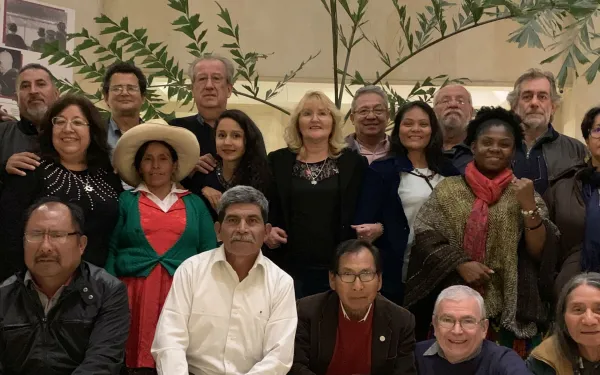
Bogota Declaration for the protection of environmental defenders
As people from 10 different countries who have been awarded the Goldman Environmental Prize, in addition to other environmental defenders, who are contributing to the protection of the environment and the struggle for life, who have come together today in Bogotá with colleagues from throughout our region, we express our solidarity with advocates and communities in Colombia and throughout Latin America and the Caribbean that are currently facing the highest level of risk for their work to protect life on Earth. Therefore, we call on governments, companies, financial institutions, investors, and entities to actively and effectively protect and respect the life and rights of advocates, those of their families, and their communities. We are aware of the serious human rights violations of vulnerable populations, especially of local communities and indigenous people, communities of African descent and farmers, which we face in Latin America and throughout the world. We demand an end to legal persecution and criminalization of our brothers and sisters who defend life and justice, and justice for those whose lives have been forcibly taken from them in this struggle. We hope that our work inspires many young people and others, whose work in turn inspires many more globally. We are convinced that, together, we can address the climate crisis—through collaborative work focused around knowledge and respect for the rights and diverse communities of the world. We call on humanity to stand in solidarity and act in accordance with the work of advocates, and to use peaceful means, art, and motherly love to continue achieving the transformation that the planet and humanity require to protect both people and life. We urge Colombia to continue promoting the dream of achieving peace between Colombians and nature. Turning the page on violence is the path for the next generations to inherit: a better Colombia, Latin America, Caribbean and world. Signatories Francia Márquez (Colombia) Goldman Environmental Prize, 2018 Bertha Zuñiga Cáceres (Honduras), daughter of Bertha Cáceres, Goldman Environmental Prize, 2015 Ruth Buendía (Peru), Goldman Environmental Prize, 2014 Nohra Padilla (Colombia) Goldman Environmental Prize, 2013 Sofía Gatica (Argentina) Goldman Environmental Prize, 2012 Francisco Pineda (El Salvador) Goldman Environmental Prize, 2011 Humbero Ríos Labrada (Cuba) Goldman Environmental Prize, 2010 Jesús León Santos (Mexico) Goldman Environmental Prize, 2008 María Elena Foronda Farro (Peru) Goldman Environmental Prize, 2003 Jean La Rose (Guyana) Goldman Environmental Prize, 2002 Elías Díaz Peña (Paraguay) Goldman Environmental Prize, 2000 Oscar Rivas (Paraguay) Goldman Environmental Prize, 2000 Jorge Varela (Honduras) Goldman Environmental Prize, 1999 Berito Kuwaruwa (Colombia) Goldman Environmental Prize, 1998 Juan Pablo Orrego (Chile) Goldman Environmental Prize, 1997 Evaristo Nugkuag (Peru) Goldman Environmental Prize, 1991 Stiefen Petrust (Suriname) Eliana Torrico Tejada (Bolivia) Danielle Duarte Gomes (Brazil) Antonia Melo Da Silva (Brazil) Liliana Ávila (Colombia) Juana Hofman (Colombia) Javier Ibarraga Ospina (Colombia) Alix Mancilla (Colombia) Blanca Inés Pérez (Colombia) Rosa Peña (Colombia) Astrid Puentes Riaño (Colombia, Mexico) Andrea Cerami (Mexico) Jorge García Lucas (Guatemala) Severina Morales Pérez (Guatemala) Joaquín Raymundo González (Guatemala) Jovita Tzul (Guatemala) Julián López (Mexico) Marcelina López (Mexico) Leydy Aracely Pech Martín (Mexico) Elena Villafuerte (Mexico) Liliana Caruhuaz (Peru) Eddy Peña (Peru) Katherine Sánchez (Peru)
Read more