
Project
Alberto Peña Kay
Protecting the Santurban páramo from mining's damage
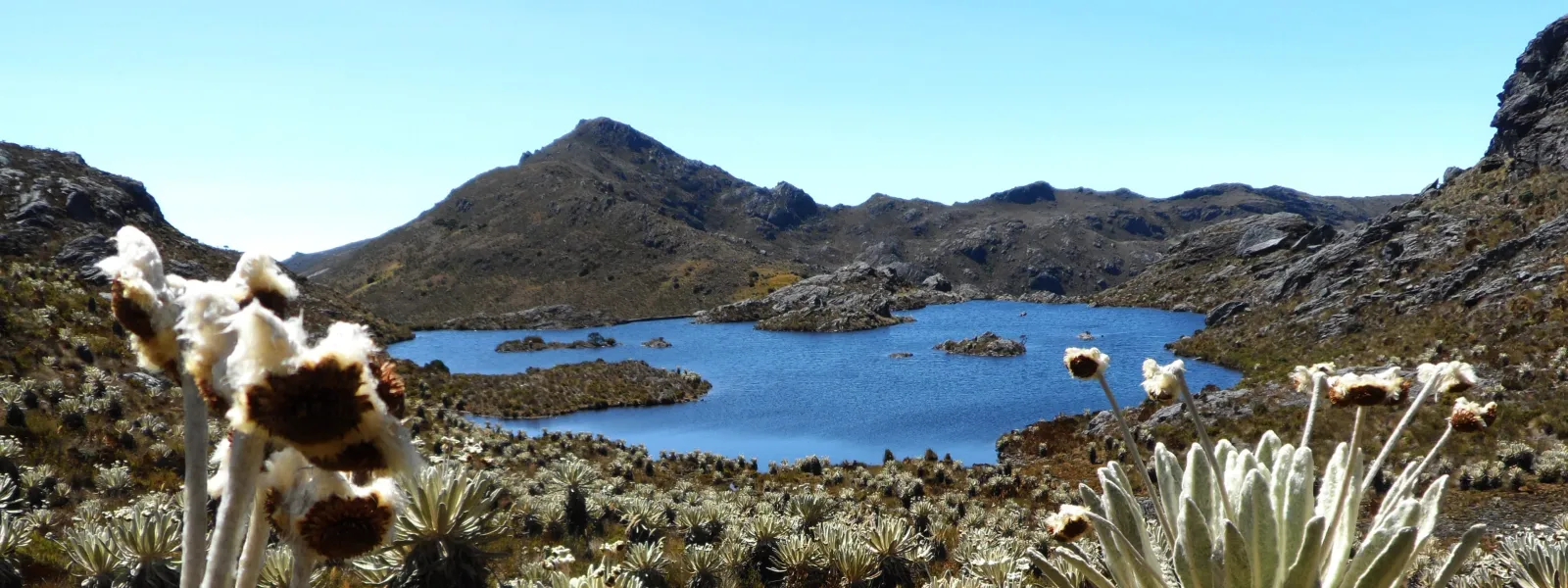
In the Andean region, high-mountain ecosystems known as páramos capture water from the fog and supply it to the lowlands. One such ecosystem is the Santurbán páramo, which provides fresh water to more than two million people in Colombia.
Santurbán, like the other páramos on the continent, also captures large amounts of carbon, making it a key ally in mitigating the climate crisis. It is also a refuge for hundreds of endangered species, including the iconic spectacled bear.
The land in and around the páramo contains gold and other minerals. This has put Santurbán in the spotlight of the multinational mining industry, which for decades has sought to establish large-scale projects in the ecosystem that threaten to degrade it.
The Committee for the Defense of Water and the Santurbán Páramo—a coalition of environmental advocates—has thwarted these ongoing attempts, with support from AIDA and other civil society organizations.
Background
The Santurbán páramo is located in the heart of the Eastern Cordillera of the Colombian Andes, in the departments of Santander and Norte de Santander, at an elevation ranging from 2,200 to 4,290 meters above sea level.
It covers an area of 129,743 hectares and is home to 57 lakes. It serves as a habitat for 457 plant species and 293 species of vertebrate fauna.
There are mineral deposits in Santurbán, primarily gold, but also silver and copper. This explains the region’s mining tradition, particularly in the part of the páramo located in Santander, in the province of Soto Norte. The communities in the area have built their culture and identity around gold mining, which is mainly artisanal and small-scale.
But since the 1990s, the gold deposits in the páramo have also attracted foreign mining conglomerates seeking to develop large-scale projects. This has raised concerns among the population that relies on the Santurbán water sources, who have mobilized in defense of water, their land, and life.
Although national and international regulations prohibit mining in páramos, the Colombian government has granted mining concessions to transnational corporations in Santurbán.
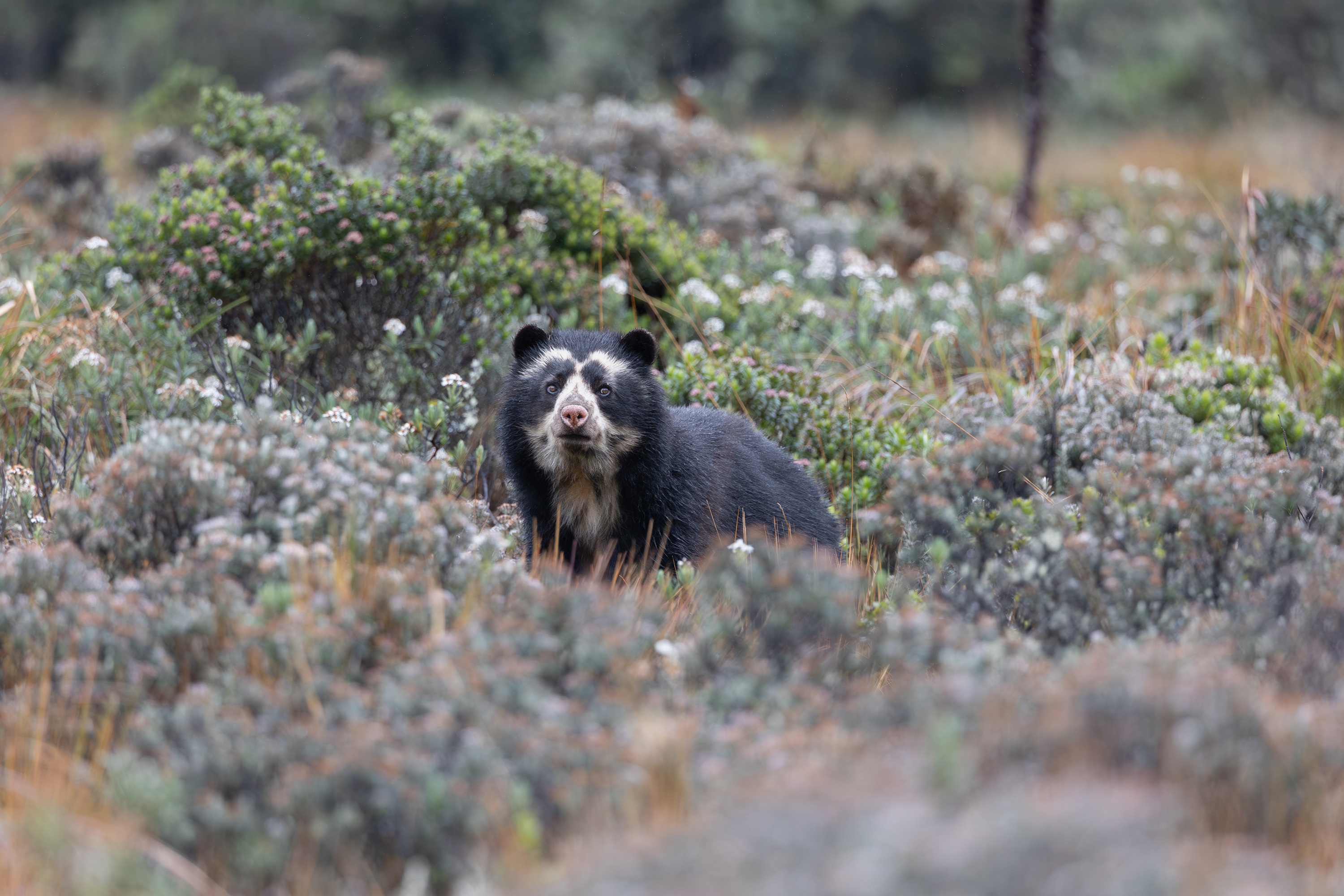
Photo: Keishpixl / Pixabay.
The long struggle to protect the páramo
One of the companies that sought to develop large-scale mining in Santurbán is Eco Oro Minerals Corp.—formerly Greystar Resources—a Canadian company that intended to establish the Angostura open-pit mine there to extract gold and silver. Between 1994 and 1995, the company acquired its mining titles and conducted exploration. And in 2010, it applied for a mining permit.
That was the year AIDA became involved in defending the ecosystem, supporting the Committee for the Defense of Water and the Santurbán Páramo. Our legal work helped convince the Colombian government to deny the mine an environmental permit in May 2011.
In January 2013, the government designated a portion of the páramo (11,700 hectares) as a Regional Natural Park. That year—together with the committee and partner organizations—we carried out a campaign and advocacy efforts to urge the government to recognize the entire Santurbán area as a páramo ecosystem through a delimitation based on scientific criteria. In December 2014, the Ministry of the Environment established a delimitation that protected 76% of the páramo (98,954 hectares).
Furthermore, as a result of a litigation supported by AIDA, in February 2016, Colombia’s highest court reaffirmed that mining in páramos is prohibited.
That same year, in December, the International Finance Corporation (IFC), the World Bank Group’s private sector arm, decided to divest from Eco Oro Minerals. This achievement was the result of a process that began in 2012, when the committee—advised and supported by AIDA and international partner organizations—filed a complaint before an independent accountability mechanism, which concluded that the IFC’s investment in the Angostura project failed to take into account the project’s social and environmental impacts, thereby contradicting the financial institution’s internal policies.
Also in 2016, Eco Oro Minerals filed an arbitration claim against the Colombian government with the International Centre for Settlement of Investment Disputes (ICSID), arguing that it had been adversely affected by government decisions aimed at protecting the country’s páramos, including the delimitation of Santurbán.
In 2017, the Constitutional Court invalidated the delimitation because the affected communities were not consulted. The high court ordered that a participatory delimitation be carried out.
And that year, a new threat to Santurbán emerged when the Canadian multinational Aris Mining applied for an environmental permit for Soto Norte, a gold mining project located near the páramo. Following citizen protests and technical objections, in October 2020, the National Environmental Licensing Authority shelved the project.
Photo: Aztlec.
Current situation
In March 2025, the Colombian government designated the western flank of the Santurbán massif as a temporary renewable natural resource reserve area, delimiting and protecting an area of 75,344.65 hectares. This resulted in a two-year suspension of the Soto Norte project. However, Aris Mining's contract to formalize Calimineros' small-scale mining activities through the purchase and processing of mineralized material remains in effect.
In addition, the Canadian mining company continues to move the project forward. In September 2025, it released its prefeasibility study, revising the mine’s original design.
Meanwhile, members of the Committee for the Defense of Water and the Santurbán Páramo face threats and stigmatization because of their work. In March 2025, UN Special Rapporteurs and the Working Group on Business and Human Rights denounced these incidents in communications sent to the governments of Colombia, Canada, and the United Arab Emirates, as well as to the companies Aris Mining and MDC Industry Holding Company LLC, the former co-owner of the Soto Norte project.
Regarding the arbitration claim filed by Eco Oro Minerals, in July 2024, ICSID ruled in favor of the Colombian government and rejected the Canadian company’s claim for USD 1.1 billion in compensation.
Concerning the delimitation of Santurbán, in July 2026, the Ministry of the Environment issued a resolution introducing the concept of "progressive delimitation." On that basis, the government proposes to progressively demarcate the páramo, covering 29,199 hectares across 19 municipalities—those where the participatory agreements required by the Constitutional Court in its 2017 ruling have already been finalized. It also proposes two measures on the creation and expansion of reserves to restrict mining in the ecosystem.
Learn more about the impacts of mining on the páramos of Latin America (in Spanish).
Partners:
Related projects
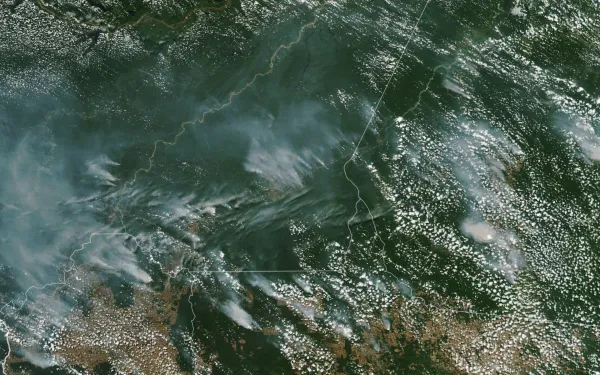
AIDA Statement on the crisis in the Amazon
AIDA expresses deep concern about the grave situation confronting the Amazon, which is being ravaged by a large number of fires in Brazil and other Amazonian countries. The consequences of these fires are devastating for the biodiversity of the area and for the communities that inhabit it, but also for the planet, which is facing a climate crisis that requires increasingly urgent and effective actions. The Amazon holds 20% of the Earth's unfrozen fresh water and is home to a quarter of the world's species. In addition, the Amazon jungle releases about 20% of the oxygen we breathe and stores 90 to 140 billion tons of carbon dioxide, regulating the global climate. The international scientific community has emphatically pointed out that the destruction of tropical forests causes 20% of greenhouse gas emissions. For this reason, the Amazon ecosystem is vital for mitigating the climate crisis. The current fires demonstrate that the Amazon is now more vulnerable than before due to a combination of factors, including increased droughts, deforestation, unsustainable use of soil and subsoil, and the increase in global temperatures. The record number of fires in the Amazon rainforest aggravates the climate crisis and with it the threat of increasingly harmful natural disasters. The policies, rhetoric and actions of Jair Bolsonaro's government have the same impact, actively dismantling due protection of the Amazon and its indigenous peoples. They irresponsibly promote the expansion of the agricultural, livestock and extractive frontier in the Amazon, resulting in increased deforestation and the consequences we are witnessing today. This worrying trend is repeated in the rest of the countries called upon to protect the Amazon basin—Bolivia, Peru, Ecuador, Colombia and Venezuela—whose governments also have not done enough to preserve the Amazon. AIDA urges the governments of the Amazon basin to adopt urgent measures to stop the fires. In addition, we call on citizens and the international community to pressure the governments of Brazil and the other countries of the region to reverse course and effectively protect the Amazon, its biodiversity, and the people who depend on it. We demand that governments take concrete actions to: Strengthen institutions and environmental norms, Immediately suspend rhetoric that encourages deforestation and the destruction of the Amazon, Stop the indiscriminate expansion of the agricultural, livestock and extractive frontier in the area, Adopt proper land use and planning, Ensure the existence and restoration of ecosystem life cycles, and Control deforestation and conserve the Amazon with the financial and technical support of multilateral international cooperation. Learn more about our work in the Amazon. PRESS CONTACT: Victor Quintanilla (México), [email protected], +5215570522107
Read more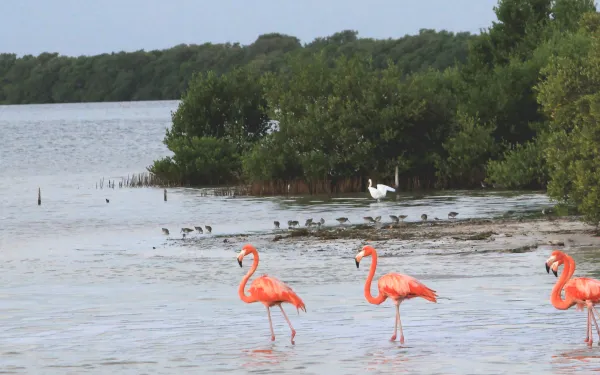
Defend Yum Balam, a key ecosystem for biodiversity and the climate
AIDA presented an amicus brief demonstrating the importance of the protected area, as well as Mexico’s international environmental and human rights obligations to preserve it in the face of a 21,000-room hotel project that would imply significant damage to the site. Cancun, Mexico. The Interamerican Association for Environmental Defense (AIDA) presented a legal brief (Amicus Curiae) before the Seventh District Court of the State of Quintana Roo to defend the Yum Balam Flora and Fauna Protection Area, located in the north of the state. In 2018, when the site's Management Program was published, private and communal landowners filed several lawsuits against the program and the decree that created the protected area, arguing that it affected their rights to participation, property, and legality. Prior to the publication of the Management Program, the Advisory Council of the protected area received a report from a consultant who recommended the construction within Yum Balam of a mega tourism project that includes 21,000 hotel rooms, deeming it economically viable. "That viability is in doubt because each hotel room would generate changes in land use, population growth, loss of flora and fauna, and other irreversible damages to the ecological characteristics of the place," said Camilo Thompson, AIDA attorney. "What is at stake is Yum Balam’s contribution to the enjoyment of a healthy environment for present and future generations." The decree creating the protected area, which dates back to 1994, puts the public interest and regulation of natural environments that benefit the entire country above private interests. The Management Program is aimed at regulating the conservation and sustainable use of Yum Balam. The site is considered a Priority Wetland of International Importance under the Ramsar Convention. "According to a study, Yum Balam's mangroves and sea grasses prevent 38.5 million tons of carbon dioxide from escaping, equivalent to the greenhouse gas emissions of 9.4 million Mexican people," said Pilar Diez, Regional Director of the Mexican Center for Environmental Law (CEMDA-Southeast). In its 152 thousand hectares, the site also has reefs and coastal dunes. It is home to more than 90 percent of the endemic birds of the Yucatan Peninsula, sea turtles with special protection status, whale sharks, dolphins, and endangered terrestrial species like the jaguar. In fact, in the Maya language, Yum Balam means Señor Jaguar. "Our brief seeks to document the national and international importance of Yum Balam in the context of the climate crisis," Thompson added. "Betting on the development of tourism megaprojects is incompatible with the urgent task of confronting this crisis and achieving climate justice.” Both the United Nations Intergovernmental Panel on Climate Change (IPCC) and the Intergovernmental Platform for Science and Policy on Biodiversity and Ecosystem Services (IPBES) have been very firm about the current situation of ecosystem loss and the urgent actions that all countries must take in the face of the climate crisis. "We’ve documented the international legal framework under which the Mexican State is obliged to guarantee fundamental human rights, such as the right to a healthy environment," Thompson explained. "Mexico has the obligation to conserve its biodiversity, including coastal wetlands, forests, jungles and other ecosystems that regulate the climate and contribute to fishing and tourism." The Court's decision must reflect these obligations and uphold Yum Balam's protection. press contact: Victor Quintanilla (Mexico), AIDA, [email protected], +521 5570522107
Read more
Letters to the Inter-American Commission 10 years after the admission of the case of La Oroya
In a letter to the Inter-American Commission on Human Rights (IACHR) on the tenth anniversary of the admission of their case, people affected by heavy metal poisoning in La Oroya, Peru call on the Commission to issue the Merit Report on the case. This step implies the hope of achieving justice in the face of the human rights violations the residents of La Oroya have been suffering for more than a decade. The case of La Oroya was the first to demonstrate the serious problem of heavy metal pollution in Peru and the first to be brought before an international mechanism. Seeing as instances of heavy metal pollution have increased in the country due to mining and oil activities, the resolution of the case of La Oroya in favor of the affected people is vital to promoting a comprehensive public policy on the subject, which should be adequately implemented in compliance with Peru's international human rights obligations. That is why, together, AIDA and the Association for Human Rights (APRODEH)—which legally represent the affected people—as well as the National Platform of People Affected by Metals, Metalloids and Other Toxic Chemicals and the Technical Board on Human and Environmental Health, reiterate the community's request for justice through two accompanying letters, also addressed to the Commission. Letter from the affected residents of La Oroya "Today we know that our body is contaminated, but we don't know what the adequate treatment is for its recovery, despite daily suffering... Our case demonstrates the problem of heavy metal contamination that has been manifested across the country, in the face of which a prompt and adequate response from the Commission would not only contribute to positively transforming our realities and guaranteeing our rights, but would also allow for new paths toward justice and environmental health for the thousands of people currently affected by toxic metals in Peru..." Read the Letter (in Spanish) Letter from AIDA and APRODEH "... it's important to reiterate that case of La Oroya not only constitutes, in itself, an urgent and relevant case for the petitioners and for the mandate of the Commission, it is also an emblematic and strategic case in the context of Peru. A pronouncement from the Commission in the case of La Oroya, which would obligate the Peruvian government and send the case before the Inter-American Court, could create an important antecedent and provide guidelines for Peruvian cause, contributing to the guarantee of rights for various communities throughout the country, which have been grouped together in the National Platform of People Affected by Heavy Metals in Peru. Together, their main demands are the creation of a public policy for those affected by heavy metals, and the created of a multi-sectorial commission to bring attention to the problem..." Read the Letter (In Spanish) Letter from the National Platform of People Affected by Heavy Metals and the Technical Board on Human and Environmental Health "A timely statement from the Inter-American Commission on Human Rights on the Merit Report of the case of La Oroya would contribute to granting justice to dozens of families in that community who, over the past decade, have dedicated much of their lives to the defense of their health and of a healthy environment. It would also serve as an important antecedent for the Peruvian State to stop diluting the management of this situation and to implement the measures needed to attend to the environmental and public health problem associated with heavy metal pollution and, in this way, advance in compliance with its international human rights obligations..." Read the Letter (in Spanish)
Read more