
Project
Alberto Peña Kay
Protecting the Santurban páramo from mining's damage
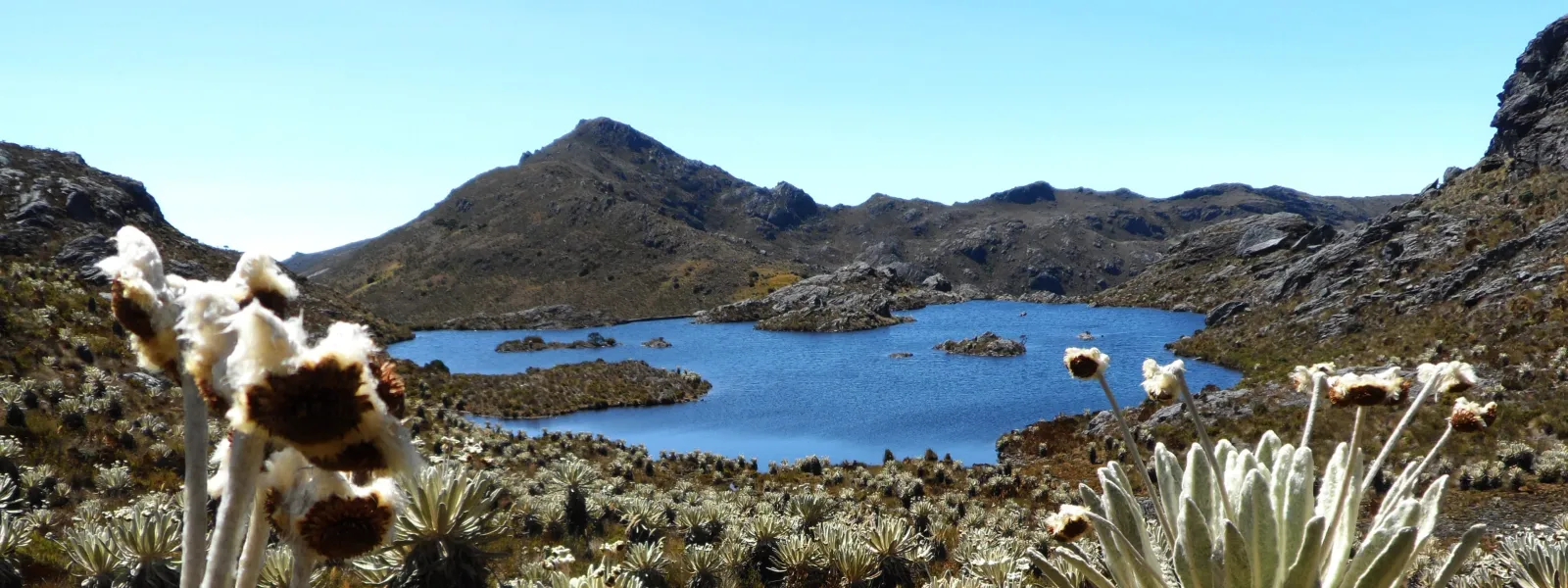
In the Andean region, high-mountain ecosystems known as páramos capture water from the fog and supply it to the lowlands. One such ecosystem is the Santurbán páramo, which provides fresh water to more than two million people in Colombia.
Santurbán, like the other páramos on the continent, also captures large amounts of carbon, making it a key ally in mitigating the climate crisis. It is also a refuge for hundreds of endangered species, including the iconic spectacled bear.
The land in and around the páramo contains gold and other minerals. This has put Santurbán in the spotlight of the multinational mining industry, which for decades has sought to establish large-scale projects in the ecosystem that threaten to degrade it.
The Committee for the Defense of Water and the Santurbán Páramo—a coalition of environmental advocates—has thwarted these ongoing attempts, with support from AIDA and other civil society organizations.
Background
The Santurbán páramo is located in the heart of the Eastern Cordillera of the Colombian Andes, in the departments of Santander and Norte de Santander, at an elevation ranging from 2,200 to 4,290 meters above sea level.
It covers an area of 129,743 hectares and is home to 57 lakes. It serves as a habitat for 457 plant species and 293 species of vertebrate fauna.
There are mineral deposits in Santurbán, primarily gold, but also silver and copper. This explains the region’s mining tradition, particularly in the part of the páramo located in Santander, in the province of Soto Norte. The communities in the area have built their culture and identity around gold mining, which is mainly artisanal and small-scale.
But since the 1990s, the gold deposits in the páramo have also attracted foreign mining conglomerates seeking to develop large-scale projects. This has raised concerns among the population that relies on the Santurbán water sources, who have mobilized in defense of water, their land, and life.
Although national and international regulations prohibit mining in páramos, the Colombian government has granted mining concessions to transnational corporations in Santurbán.
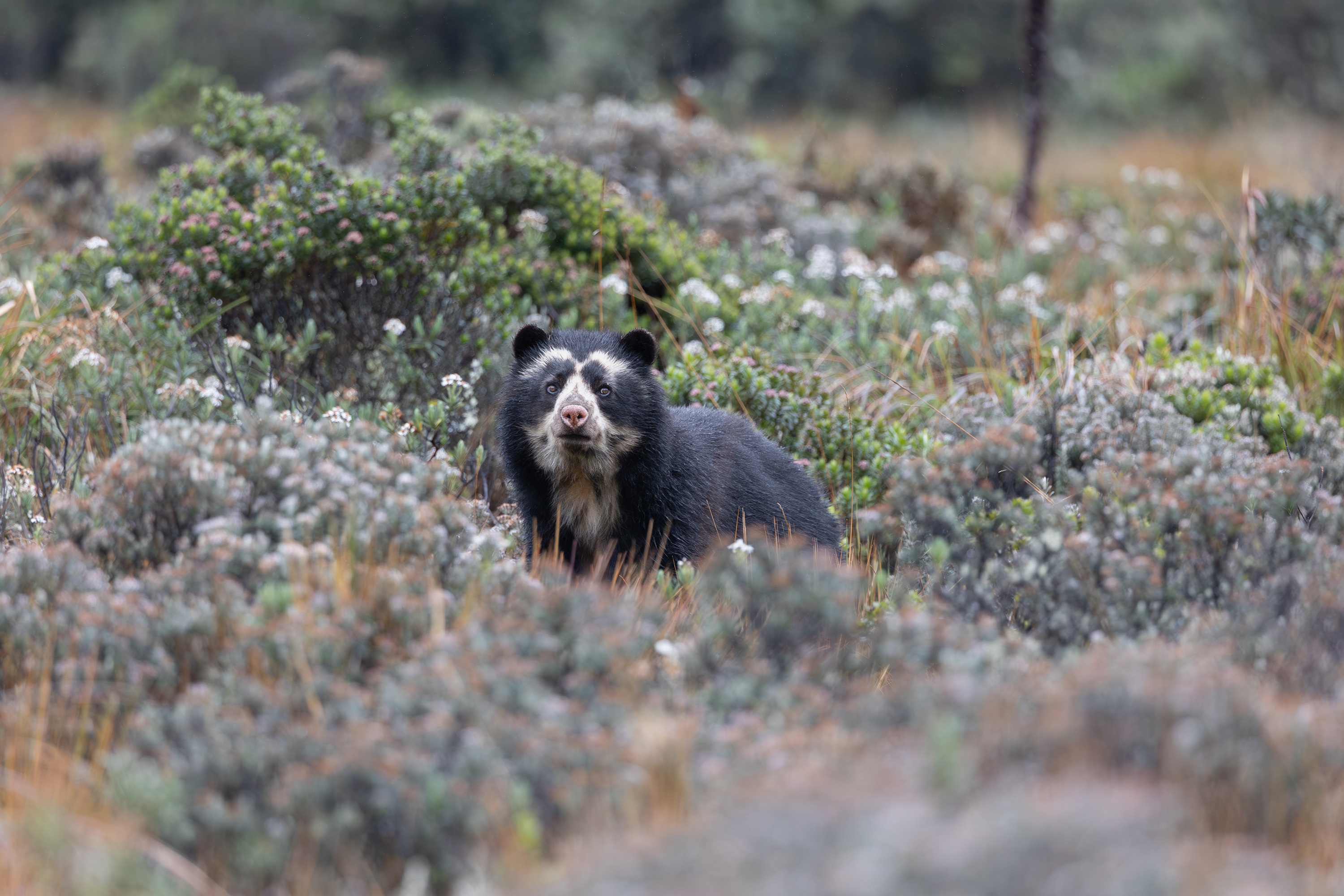
Photo: Keishpixl / Pixabay.
The long struggle to protect the páramo
One of the companies that sought to develop large-scale mining in Santurbán is Eco Oro Minerals Corp.—formerly Greystar Resources—a Canadian company that intended to establish the Angostura open-pit mine there to extract gold and silver. Between 1994 and 1995, the company acquired its mining titles and conducted exploration. And in 2010, it applied for a mining permit.
That was the year AIDA became involved in defending the ecosystem, supporting the Committee for the Defense of Water and the Santurbán Páramo. Our legal work helped convince the Colombian government to deny the mine an environmental permit in May 2011.
In January 2013, the government designated a portion of the páramo (11,700 hectares) as a Regional Natural Park. That year—together with the committee and partner organizations—we carried out a campaign and advocacy efforts to urge the government to recognize the entire Santurbán area as a páramo ecosystem through a delimitation based on scientific criteria. In December 2014, the Ministry of the Environment established a delimitation that protected 76% of the páramo (98,954 hectares).
Furthermore, as a result of a litigation supported by AIDA, in February 2016, Colombia’s highest court reaffirmed that mining in páramos is prohibited.
That same year, in December, the International Finance Corporation (IFC), the World Bank Group’s private sector arm, decided to divest from Eco Oro Minerals. This achievement was the result of a process that began in 2012, when the committee—advised and supported by AIDA and international partner organizations—filed a complaint before an independent accountability mechanism, which concluded that the IFC’s investment in the Angostura project failed to take into account the project’s social and environmental impacts, thereby contradicting the financial institution’s internal policies.
Also in 2016, Eco Oro Minerals filed an arbitration claim against the Colombian government with the International Centre for Settlement of Investment Disputes (ICSID), arguing that it had been adversely affected by government decisions aimed at protecting the country’s páramos, including the delimitation of Santurbán.
In 2017, the Constitutional Court invalidated the delimitation because the affected communities were not consulted. The high court ordered that a participatory delimitation be carried out.
And that year, a new threat to Santurbán emerged when the Canadian multinational Aris Mining applied for an environmental permit for Soto Norte, a gold mining project located near the páramo. Following citizen protests and technical objections, in October 2020, the National Environmental Licensing Authority shelved the project.
Photo: Aztlec.
Current situation
In March 2025, the Colombian government designated the western flank of the Santurbán massif as a temporary renewable natural resource reserve area, delimiting and protecting an area of 75,344.65 hectares. This resulted in a two-year suspension of the Soto Norte project. However, Aris Mining's contract to formalize Calimineros' small-scale mining activities through the purchase and processing of mineralized material remains in effect.
In addition, the Canadian mining company continues to move the project forward. In September 2025, it released its prefeasibility study, revising the mine’s original design.
Meanwhile, members of the Committee for the Defense of Water and the Santurbán Páramo face threats and stigmatization because of their work. In March 2025, UN Special Rapporteurs and the Working Group on Business and Human Rights denounced these incidents in communications sent to the governments of Colombia, Canada, and the United Arab Emirates, as well as to the companies Aris Mining and MDC Industry Holding Company LLC, the former co-owner of the Soto Norte project.
Regarding the arbitration claim filed by Eco Oro Minerals, in July 2024, ICSID ruled in favor of the Colombian government and rejected the Canadian company’s claim for USD 1.1 billion in compensation.
Concerning the delimitation of Santurbán, in July 2026, the Ministry of the Environment issued a resolution introducing the concept of "progressive delimitation." On that basis, the government proposes to progressively demarcate the páramo, covering 29,199 hectares across 19 municipalities—those where the participatory agreements required by the Constitutional Court in its 2017 ruling have already been finalized. It also proposes two measures on the creation and expansion of reserves to restrict mining in the ecosystem.
Learn more about the impacts of mining on the páramos of Latin America (in Spanish).
Partners:
Related projects
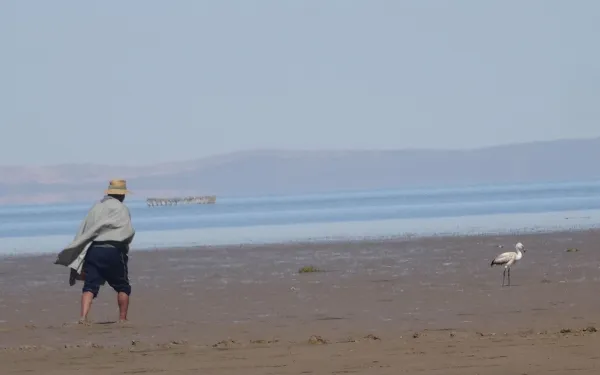
Communities request international support to save Bolivia’s Poopó and Uru Uru lakes
Local communities and organizations call on the Ramsar Convention to visit the lakes and issue recommendations for their preservation. The lakes are at grave risk from mining, river diversion and the climate crisis, threatening the subsistence of indigenous communities and the region’s unique plant and animal species. La Paz, Bolivia. Local communities along with a coalition of organizations request that the Ramsar Convention, an intergovernmental treaty for the protection of wetlands, send an expert mission to evaluate the health of lakes Poopó and Uru Uru, and issue recommendations to the Bolivian government for the urgent recovery of these key ecosystems. “The Ramsar Convention’s specialized knowledge on wetlands can be of great use to save lakes Poopó and Uru Uru,” said Carlos Lozano Acosta, senior attorney with the Interamerican Association for Environmental Defense (AIDA). These lakes are an important source of water for the plants and animals of the Central-Eastern Bolivian highlands, particularly for several endemic and migratory bird species. Lake Poopó is the second largest lake in Bolivia, after the iconic Lake Titicaca. Together, the lakes host the largest number of flamingos in the Bolivian highlands and, quite possibly, in the entire high Andean region of South America. These highland ecosystems are also home to unique species such as the Titicaca grebe (Rollandia microptera), an endangered species of flightless bird. The lives and livelihoods of peasant and indigenous populations—including Quechua, Aymara, and Uru Murato communities—depend on the preservation of lakes Poopó and Uru Uru. The Uru Murato are known as the “people of water” due to their dependence on the lakes, and are among the oldest native indigenous communities in Bolivia. “It was precisely to preserve the lakes that, in 2002, the government registered Poopó and Uru Uru as wetlands of international importance under the Ramsar Convention,” explained Sergio Vásquez, director of the Andean Communication and Development Center (CENDA). “As such, we ask that Ramsar support the Bolivian government in the protection of these and other high Andean wetlands.” In December 2015, the water levels of Lake Poopó were reduced to such a degree that the body of water actually disappeared, in what is now considered one of the largest environmental catastrophes in the country. The causes were various: sedimentation produced by mining activity; the diversion of the lake’s tributary rivers; and natural phenomenon aggravated by the climate crisis. Although the lake’s levels have since increased in times of rain, the situation remains critical during the dry season. “We’re requesting that Ramsar experts identify measures to strengthen the surveillance and monitoring of these ecosystems,” said Angela Cuenca, of the Coordinated Collective for Socio-Environmental Actions (CASA Collective). “We’d also like them to recommend mitigation and restoration actions for the damages caused by mining activities.” The degradation of lakes Poopó and Uru Uru directly affects the wellbeing of the people who depend on them, causing harms to public health, particularly among women, girls and boys. The grave situation of the lakes forced the Uru Murato people, previously dedicated to fishing, to migrate for work in the mines, placing them among the region’s first climate refugees. “We indigenous and rural women live and feel the effects of pollution and the lake’s disappearance, because we are responsible for feeding and sustaining our families,” explained Margarita Aquino, from the National Network of Women Defenders of Mother Earth (RENAMAT). “These water sources are vital for our communities and for Mother Earth Press contact: Victor Quintanilla (Mexico), AIDA, [email protected], +5215570522107
Read more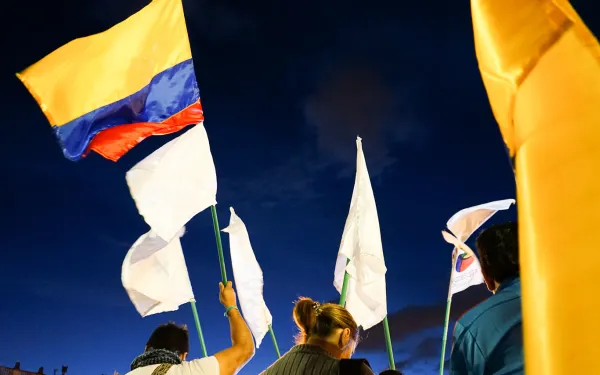
We Too Demand Peace: International Civil Society Organizations Join with Colombians Marching for Peace
Washington, D.C. Colombians march for peace in their country on July 26, we echo their call for a permanent end to the war that claimed 260,000 lives and forced 8 million people, the majority from Afro-descendant and indigenous communities, and mostly women and children, to flee their homes. We join their call for the Colombian government to protect the social leaders building peace in their communities. Hundreds have been killed since the peace accords were signed in 2016, while many more live under the constant pressure of daily threats and attacks. This tragedy must end. We vigorously support their demand that the Colombian government fully and faithfully implement the peace accords signed between the government and the FARC guerrillas—or this once-in-a-lifetime chance for peace will be lost. Finally, we call on the United States and the international community at large to back the effective implementation of the peace accords wholeheartedly. We stand in solidarity with the millions of Colombians who are struggling to build a just, complete, and lasting peace and who tomorrow say #26deJulioElGrito. Signed, 350.org Abogadas y Abogados para la Justicia y los Derechos Humanos Acción Solidaria ActionAid USA AFL-CIO ÁGORA Espacio Civil Paraguay Amazon Watch Asistencia Legal por los Derechos Humanos A.C. (ASILEGAL) Asociación Interamericana para la Defensa del Ambiente (AIDA) Center for Justice and International Law (CEJIL) Center for Reproductive Rights Centro de Derechos Humanos Fray Bartolomé de Las Casas, A.C. - México Centro de Derechos Humanos y Ambiente (CEDHA) Centro de Documentación en Derechos Humanos "Segundo Montes Mozo S.J." (CSMM) Chicago Religious Leadership Network on Latin America (CRLN) Christian Peacemaker Teams Ciudadanos en Apoyo a los Derechos Humanos, A.C. (CADHAC) CIVICUS - World Alliance for Citizen Participation Colombia Grassroot Support, New Jersey Colombia Human Rights Committee, Washington DC Comisión Ecuménica de Derechos Humanos Comisión Mexicana de Defensa y Promoción de los Derechos Humanos Comité de América Latina y el Caribe para la Defensa de los Derechos de las Mujeres Convergencia por los Derechos Humanos Coordinadora Nacional de Derechos Humanos Corporación Humanas Chile CSW Defensor de derechos humanos en México Equipo de Reflexión, Investigación y Comunicación de la Compañía de Jesús en Honduras (ERIC-SJ) Global Witness International Institute on Race, Equality and Human Rights (Race and Equality) International Labor Rights Forum International Rivers InterReligious Task Force On Central America and Colombia Latin America Working Group (LAWG) Movimiento Autónomo de Mujeres, Nicaragua Mujeres Libres COLEM, A.C. Grupo de Mujeres de San Cristóbal Las Casas, A.C. NJ Peace Council Not1More Oxfam Paz y Esperanza Presbyterian Church USA Presbyterian Peace Fellowship Red Para la Infancia y la Adolescencia de El Salvador (RIA) Redes por los Derechos de la Infancia (REDIM) Robert F. Kennedy Human Rights Servicio Internacional para los Derechos Humanos (ISHR) United Church of Christ, Justice and Witness Ministries Washington Office on Latin America (WOLA) Witness for Peace Solidarity Collective
Read more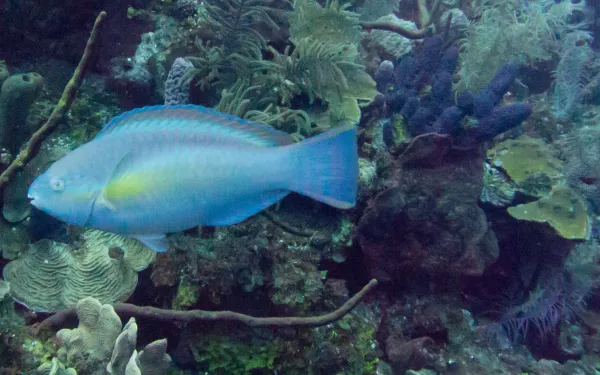
Resolution provides measures to protect corals in the Colombia Caribbean
Setting a positive precedent in Colombia and an important region of the Greater Caribbean, CORALINA has prohibited the fishing and commercialization of several species of herbivorous and omnivorous fish, a measure aimed at conserving the area’s coral reef ecosystems. San Andrés, Colombia. With the objective of conserving the coral reef and beach ecosystems of the Archipelago of San Andrés, Providencia and Santa Catalina, Colombia, the region’s autonomous corporation authority emitted a resolution prohibiting the capture and commercialization of several species of herbivorous and omnivorous fish. The waters around these Caribbean islands host the greatest marine and coastal biodiversity in Colombia, with more than 2,354 marine species registered to date. “This progress towards the conservation of corals and beaches occurs after a process of more than 20 years that included environmental education, research and monitoring,” said Nacor Bolaños, coordinator of protected areas for the Corporation for the Sustainable Development of the Archipelago of San Andrés, Providencia and Santa Catalina (CORALINA). “The need to protect parrotfish and other species of herbivorous and omnivorous fish was supported by artisanal fishermen themselves and by local communities, with whom we met.” The resolution issued by the decentralized public entity protects 14 species of parrotfish, four of surgeonfish, five of butterfly fish and six species of angelfish. It completely prohibits commercial, industrial, sport, or recreational fishing of these species. It also prohibits commercial fishing using harpoons and/or similar fishing gears. It also completely restricts their commercialization, possession and storage, as well as their transfer to other areas of the country. “The resolution is of great importance because it recognizes the benefits of corals for fishing, tourism, pharmaceutical resources, and protection against the impacts of the climate crisis,” said Maria José Gonzalez-Bernat, scientific advisor to AIDA. “It also recognizes the vital role several species of fish play in keeping these ecosystems healthy.” By feeding on algae that take away light and space from corals, herbivorous fish support the survival of these fragile environments. Numerous studies have demonstrated that parrotfish contribute to the growth of corals and the creation of sand for beaches. Some omnivorous species like angelfish also help to clean algae from corals. AIDA has supported CORALINA’s initiative since its inception, providing technical, scientific and legal information; and has advocated for the inclusion in the resolution of international and regional commitments that protect these fish. The Archipelago of San Andrés, Providencia and Santa Catalina concentrates 77 percent of the surface coral areas of Colombia and houses the third largest coral reef in the world. The area was declared a UNESCO Biosphere Reserve in 2000, and borders eight nations of the Greater Caribbean: Venezuela, the Dominican Republic, Haiti, Jamaica, Honduras, Nicaragua, Costa Rica and Panama. Yet its coral coverage has deteriorated over time due to natural phenomenon and human activities, as have populations of herbivorous fish like the parrotfish. “In this sense, this regulation is an example for other countries with coral reefs along their coasts,” said Gonzalez-Bernat. “The resolution is based on scientific information and emphasizes the international legal framework that recommends the protection of corals and the fish that support their conservation.” Press contacts: Victor Quintanilla (Mexico), AIDA, [email protected], +52 155 70522107 Claudia Marcela Delgado (Colombia), CORALINA, [email protected], +57 313 8517300
Read more