
Project
Alberto Peña Kay
Protecting the Santurban páramo from mining's damage
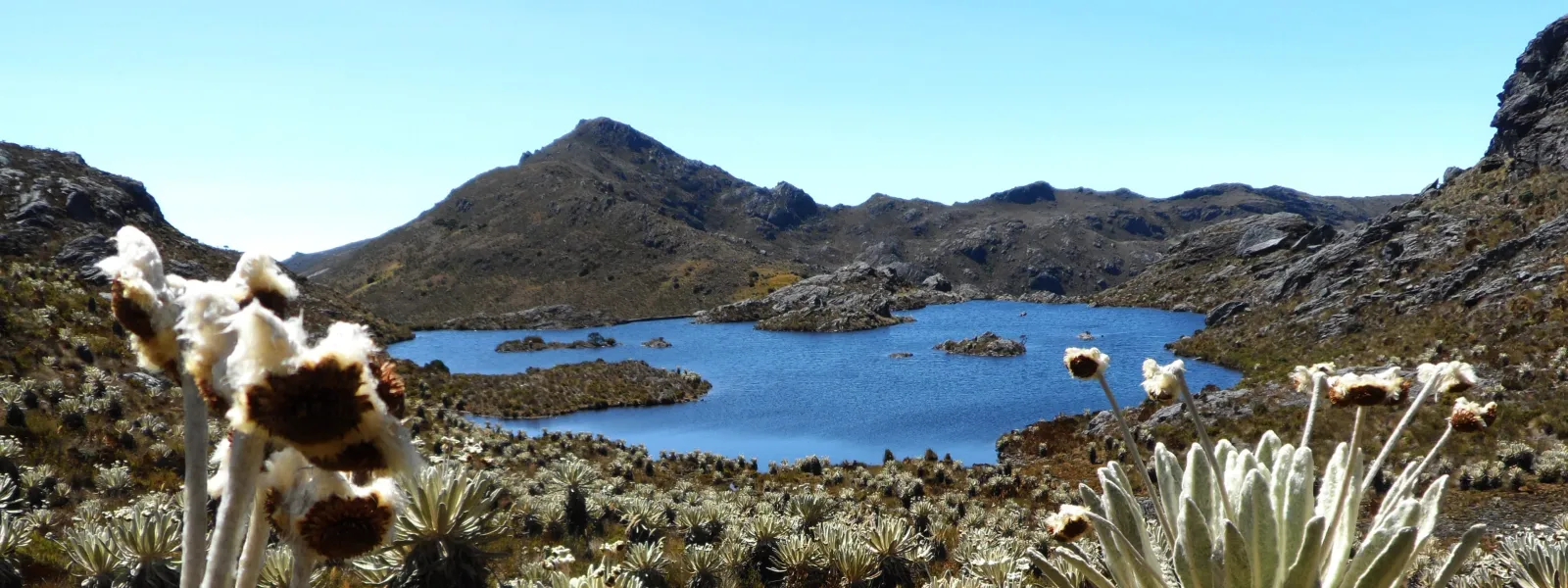
In the Andean region, high-mountain ecosystems known as páramos capture water from the fog and supply it to the lowlands. One such ecosystem is the Santurbán páramo, which provides fresh water to more than two million people in Colombia.
Santurbán, like the other páramos on the continent, also captures large amounts of carbon, making it a key ally in mitigating the climate crisis. It is also a refuge for hundreds of endangered species, including the iconic spectacled bear.
The land in and around the páramo contains gold and other minerals. This has put Santurbán in the spotlight of the multinational mining industry, which for decades has sought to establish large-scale projects in the ecosystem that threaten to degrade it.
The Committee for the Defense of Water and the Santurbán Páramo—a coalition of environmental advocates—has thwarted these ongoing attempts, with support from AIDA and other civil society organizations.
Background
The Santurbán páramo is located in the heart of the Eastern Cordillera of the Colombian Andes, in the departments of Santander and Norte de Santander, at an elevation ranging from 2,200 to 4,290 meters above sea level.
It covers an area of 129,743 hectares and is home to 57 lakes. It serves as a habitat for 457 plant species and 293 species of vertebrate fauna.
There are mineral deposits in Santurbán, primarily gold, but also silver and copper. This explains the region’s mining tradition, particularly in the part of the páramo located in Santander, in the province of Soto Norte. The communities in the area have built their culture and identity around gold mining, which is mainly artisanal and small-scale.
But since the 1990s, the gold deposits in the páramo have also attracted foreign mining conglomerates seeking to develop large-scale projects. This has raised concerns among the population that relies on the Santurbán water sources, who have mobilized in defense of water, their land, and life.
Although national and international regulations prohibit mining in páramos, the Colombian government has granted mining concessions to transnational corporations in Santurbán.
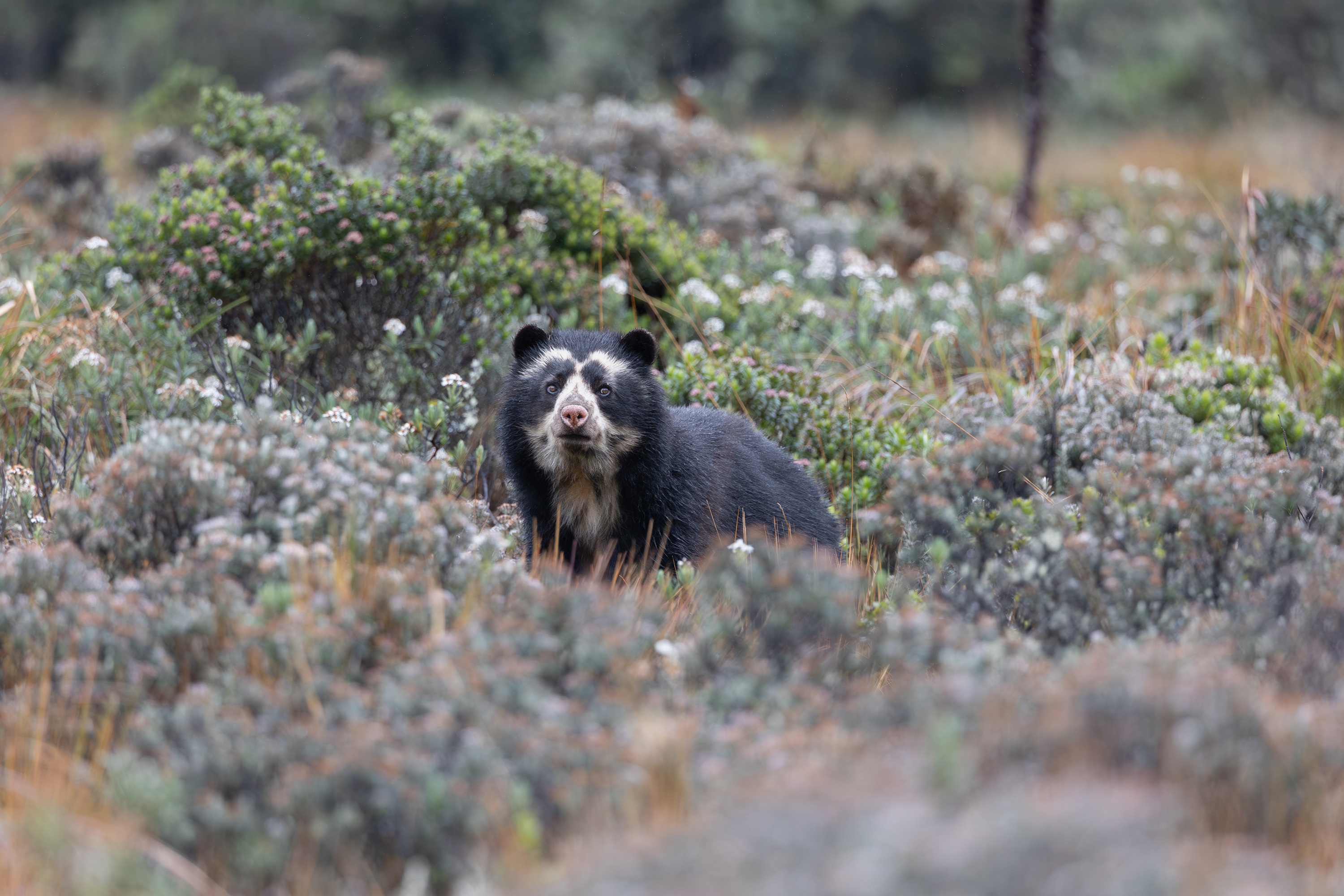
Photo: Keishpixl / Pixabay.
The long struggle to protect the páramo
One of the companies that sought to develop large-scale mining in Santurbán is Eco Oro Minerals Corp.—formerly Greystar Resources—a Canadian company that intended to establish the Angostura open-pit mine there to extract gold and silver. Between 1994 and 1995, the company acquired its mining titles and conducted exploration. And in 2010, it applied for a mining permit.
That was the year AIDA became involved in defending the ecosystem, supporting the Committee for the Defense of Water and the Santurbán Páramo. Our legal work helped convince the Colombian government to deny the mine an environmental permit in May 2011.
In January 2013, the government designated a portion of the páramo (11,700 hectares) as a Regional Natural Park. That year—together with the committee and partner organizations—we carried out a campaign and advocacy efforts to urge the government to recognize the entire Santurbán area as a páramo ecosystem through a delimitation based on scientific criteria. In December 2014, the Ministry of the Environment established a delimitation that protected 76% of the páramo (98,954 hectares).
Furthermore, as a result of a litigation supported by AIDA, in February 2016, Colombia’s highest court reaffirmed that mining in páramos is prohibited.
That same year, in December, the International Finance Corporation (IFC), the World Bank Group’s private sector arm, decided to divest from Eco Oro Minerals. This achievement was the result of a process that began in 2012, when the committee—advised and supported by AIDA and international partner organizations—filed a complaint before an independent accountability mechanism, which concluded that the IFC’s investment in the Angostura project failed to take into account the project’s social and environmental impacts, thereby contradicting the financial institution’s internal policies.
Also in 2016, Eco Oro Minerals filed an arbitration claim against the Colombian government with the International Centre for Settlement of Investment Disputes (ICSID), arguing that it had been adversely affected by government decisions aimed at protecting the country’s páramos, including the delimitation of Santurbán.
In 2017, the Constitutional Court invalidated the delimitation because the affected communities were not consulted. The high court ordered that a participatory delimitation be carried out.
And that year, a new threat to Santurbán emerged when the Canadian multinational Aris Mining applied for an environmental permit for Soto Norte, a gold mining project located near the páramo. Following citizen protests and technical objections, in October 2020, the National Environmental Licensing Authority shelved the project.
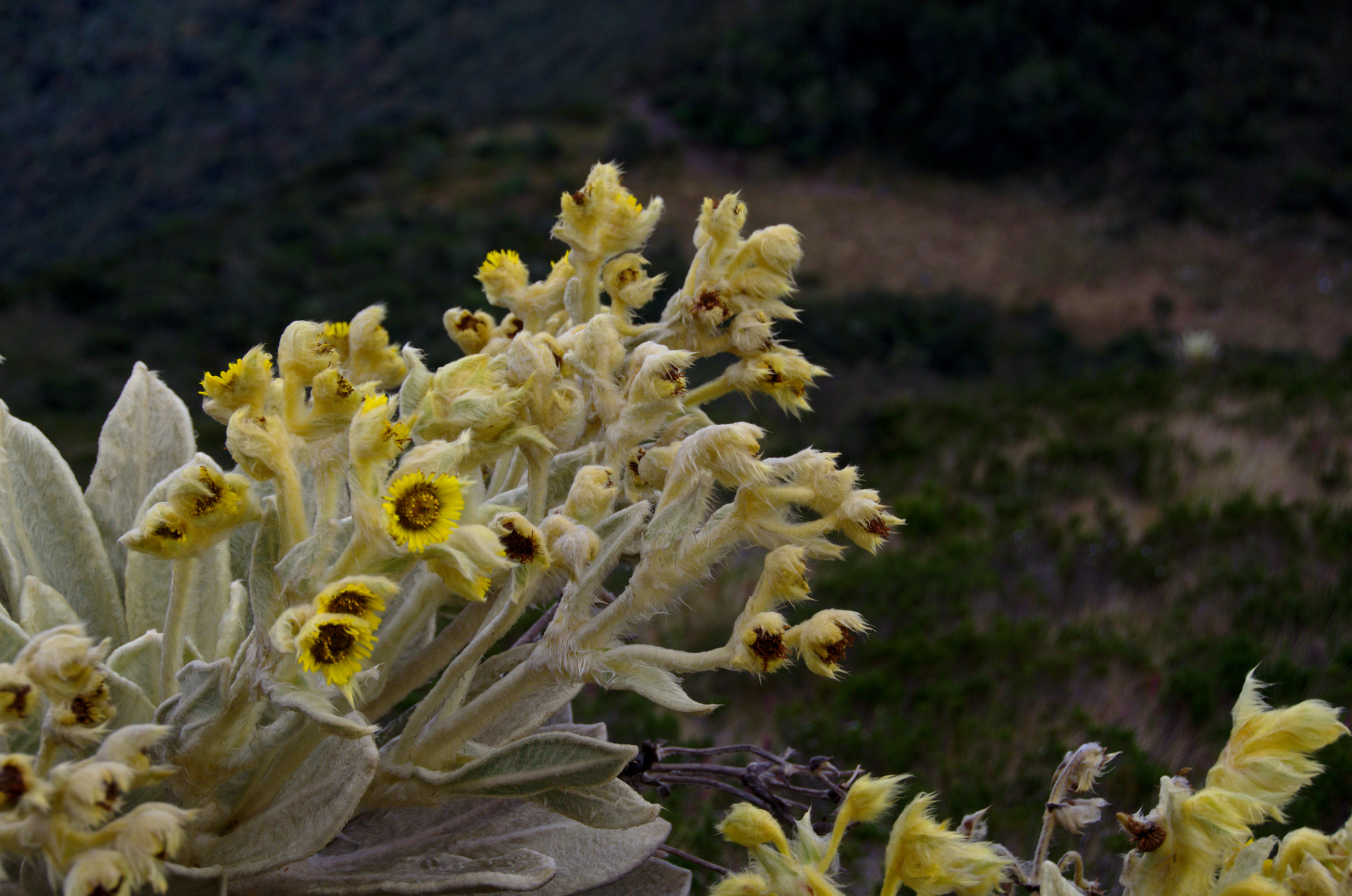
Photo: Aztlec.
Current situation
In March 2025, the Colombian government designated the western flank of the Santurbán massif as a temporary renewable natural resource reserve area, delimiting and protecting an area of 75,344.65 hectares. This resulted in a two-year suspension of the Soto Norte project. However, Aris Mining's contract to formalize Calimineros' small-scale mining activities through the purchase and processing of mineralized material remains in effect.
In addition, the Canadian mining company continues to move the project forward. In September 2025, it released its prefeasibility study, revising the mine’s original design.
Meanwhile, members of the Committee for the Defense of Water and the Santurbán Páramo face threats and stigmatization because of their work. In March 2025, UN Special Rapporteurs and the Working Group on Business and Human Rights denounced these incidents in communications sent to the governments of Colombia, Canada, and the United Arab Emirates, as well as to the companies Aris Mining and MDC Industry Holding Company LLC, the former co-owner of the Soto Norte project.
Regarding the arbitration claim filed by Eco Oro Minerals, in July 2024, ICSID ruled in favor of the Colombian government and rejected the Canadian company’s claim for USD 1.1 billion in compensation.
Concerning the delimitation of Santurbán, in July 2026, the Ministry of the Environment issued a resolution introducing the concept of "progressive delimitation." On that basis, the government proposes to progressively demarcate the páramo, covering 29,199 hectares across 19 municipalities—those where the participatory agreements required by the Constitutional Court in its 2017 ruling have already been finalized. It also proposes two measures on the creation and expansion of reserves to restrict mining in the ecosystem.
Learn more about the impacts of mining on the páramos of Latin America (in Spanish).
Partners:
Related projects
Inter-American Commission to examine rollback of indigenous rights in Brazil
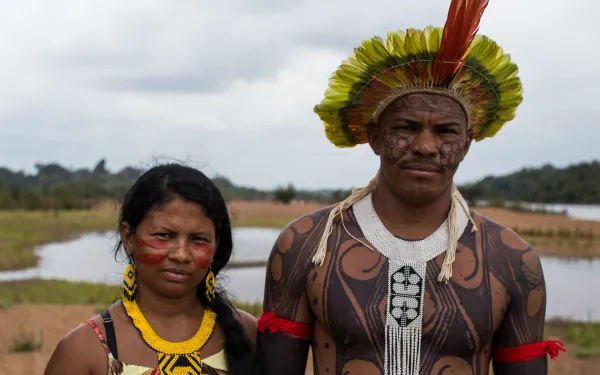
In a hearing before the Inter-American Commission on Human Rights, civil society organizations will demonstrate how measures adopted by the administration of Brazilian President Jair Bolsonaro are undoing decades of human rights protections in the country. Rio De Janiero, Brazil. On May 9, the Inter-American Commission on Human Rights (IACHR) will hear how measures adopted by the government of President Jair Bolsonaro have rolled back protections for human rights in the country, creating a dangerous situation for indigenous communities and violating Brazil’s international obligations to protect human rights. The hearing was requested by the Interamerican Association for Environmental Defense, International Rivers, Conectas, Teles Pires Forum, Operation Native Amazon and Brazil Indigenous People Articulation (APIB) in an effort to halt further rollbacks, and to demand a reversal of the government’s actions that are currently threatening indigenous communities. The hearing will form part of the Commission’s 172 Period of Sessions, which is taking place in Kingston, Jamaica from May 3 to 10, 2019. During the hearing, organizations will detail how reforms made by the Bolsonaro government in matters of law, public policy, foreign policy, and other areas, violate the preservation of indigenous communities’ way of life in the country. The case will also show how those reforms violate communities’ rights to life, culture, food, a healthy environment, clean water, and the delimitation of their ancestral homelands, among others. The government has diminished legal and administrative protections for indigenous communities through the following actions: The transfer of key functions from the Ministry of Environment to the Ministry of Agriculture. Increased precarity for employees at the Brazilian Institute for the Environment and Renewable Natural Resources. Weakening of the Chico Mendes Institute for the Conservation of Biodiversity and of the process for granting environmental permits. The threat of exposing indigenous lands to the dangers of mining. Measures adopted by the Ministry of Environment that fragment the legal order that guarantees minimum conditions for the protection of the environment and indigenous rights. The transfer of authority for the demarcation of indigenous lands from the National Indian Foundation to the Ministry of Agriculture. The threat of withdrawing Brazil from international treaties like the Paris Agreement and others valuable agreements to protect the environment and human rights. In addition to these rollbacks, the above organizations assert that the situation has been aggravated by increased deforestation, encroachment on indigenous lands, and violence against environmental and human rights defenders. press contacts Victor Quintanilla (Mexico), AIDA, [email protected], +521 5570522107 Eloy Terena (Brazil), Brazil Indigenous People Articulation (APIB), [email protected], +55 61 9695-1377
Read more
Clean air and climate justice: the best gifts for our children
Today Mexico celebrates Children’s Day. The best gift we can give to millions of boy and girls is clean air and climate justice. It’s the only thing I want to give to my children that, sadly, I can’t, at least not this year. Mexico City, where we live, has had bad air quality 112 of the 120 days of 2019, thus far. Those of us who live in this city have suffered from contamination, particularly over the last month; three “environmental contingencies” (air pollution alerts) for ozone were declared for a total of seven days. In recent years, contingencies have occurred during peak ozone season—February 15 to June 15—a period in which tropospheric ozone (present in the air we breathe) exceed the maximum levels allowed by Official Mexican Law. This gas, present throughout the year, rises when the burning of fossil fuels by vehicles and industries is compounded by changing weather conditions: less rain and winds, and more solar radiation. This prevents the air pollution that we produce from dispersing into nearby areas. Increased ozone causes serious damages to the environment and public health, particularly to children. According to the Pan American Health Organization, ozone in the air can affect lung function, making breathing difficult. Thus, the group most vulnerable to contamination also includes people with respiratory diseases, older adults and athletes. Authorities recommend that the people, particularly vulnerable groups, abstain from outdoor activities during the contingencies, particularly between 1:00 and 7:00 p.m. Other measures include increasing vehicle restrictions and reducing the consumption of liquefied petroleum gas. Despite its harsh realities, ozone season is not a new or surprising phenomenon, nor is it normal. It shouldn’t be normal for parents to resign ourselves to its presence, to birthday parties indoors and not letting our children go to the park with their friends. I understand the impossibility of controlling the rain, sun and wind; but ozone is another story. There are clear measures that could and should have been implemented years ago to prevent the ozone season from being unavoidable in Mexico City. Already fully identified, they include: improving the quality of gasoline, vehicular technology and fixed sources; ensuring safe and adequate public transportation and bicycle infrastructure; and effectively controlling fleets of private and public transport. Until now, these actions have been incomplete, inefficient and unable to solve the underlying problem. But the improvement of air quality during gasoline shortages has demonstrated that such solutions are possible. What’s more, actions aimed at reducing air pollution could have a double benefit. Tropospheric ozone is a greenhouse gas that aggravates climate change. It is a short-lived climate pollutant that stays in the atmosphere for only a few weeks, meaning that actions to control it have an almost immediate effect on public health, ecosystems and the climate. Therefore, in addition to improving the health of millions of people living in cities, Mexico has the opportunity to fulfill its international obligations on climate change. Diminishing ozone season requires the urgent and structural change of public policies, laws and their application. New standards must include a human rights perspective that prioritizes public interest and the health of children, and others, above vehicular mobility. While the development and implementation of these measures may not be easy, it’s essential we take the first steps toward the results we want to achieve. Government efforts require the support of our entire society. Companies must contribute to the implementation of solutions, acting with due diligence. Academics, civil society organizations, trade unions and other sectors must contribute with our knowledge and participation to ensure that the plans and programs are ambitious and effective, and that they promote a just transition. Every resident of the city has a duty to contribute. A few weeks ago, Professor David Boyd, the United Nations Special Rapporteur for Human Rights and the Environment, published a report reiterating the obligation of States to guarantee the right to clean air, and the duty of companies to contribute. The report has recommendations related to tropospheric ozone that could be very useful for Mexican authorities. The enjoyment of clean air is a right that has yet to be met. Today almost two million children (from 0 to 14 years old) live in Mexico City, including mine. They and a large part of the more than 35 million children across the country could enjoy clean air; most live in cities and towns with air quality problems. According to organized trade, the celebration of Children's Day in Mexico involves an expenditure of 17 billion pesos ($900 million dollars) in gifts, an amount that could be used for authorities, companies and individuals to implement actions to ensure that the children of the country have something much more valuable: the ability to breathe air that does not endanger their health. This would be aligned with the goal of those who instituted the celebration of Children's Day in Mexico in 1924, and with the intention of the United Nations to establish one day a year to honor the importance of children's rights. Air pollution is, unfortunately, a regional and a global problem. Peru and Colombia also celebrate their children this month. Since their cities are among the most polluted in Latin America, what is reflected here can also be applied to those countries, and the continent as a whole. My gift for my children this year will be to continue working for better air quality in Mexico City, and to collaboratively build a future—hopefully a not-so-distant one—in which climate justice is a reality.
Read more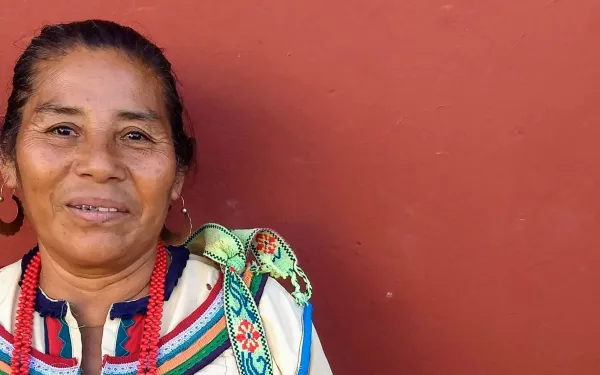
Listening to indigenous peoples to save the planet
More than 400 indigenous groups live throughout Latin America, many at home in the region’s protected areas, according to the United Nations Food and Agriculture Organization. Their ancestral knowledge of and connection to the natural world has been recognized as a way to guarantee a healthy environment and cope with climate change. Yet society seldom listens to them to learn how to best protect our natural resources. Pu’amé is a Cora expression that means “you first.” It’s used to give way to someone, but also as an expression of respect when someone is talking; it’s a way of saying, “Continue, I’m listening.” Julián López, a Náyeri indigenous leader who speaks Cora, explains this to me in a meeting with members of rural communities in Nayarit, México. I’ve come to listen. During the meeting, pu’amé becomes a way of helping us pay attention and understand. To listen to representatives of indigenous communities is to confront a different worldview, particularly for those of us who exist in the urban, western world. While our way of life is focused on consumption and dependent on exploitation, indigenous communities see the Earth as a source of bounty that requires care and gratitude; it provides them with food and health. These conflicting visions have resulted in the incessant violation of indigenous rights, putting at risk not only their cultural integrity, but also their very lives. To achieve real dialogue with indigenous peoples, you must understand them, Julián tells me, while teaching me a few words in Cora. Opposing visions of development Representatives of rural Mexicanero and Cora communities from the upper and lower regions of the San Pedro Mezquital river basin have come to this meeting to discuss the Las Cruces hydroelectric project. Their concerns are many: if the dam, or any other sacred site, is constructed, what will be the fate of their children and their sacred sites? What will happen to the life of the river, the quality of the fish, and the natural balance? Odilión de Jesús López, also Náyeri, expresses his concern that authorities “don’t value that caring for nature is for the good of all.” He questions the pushback he has received for defending the river and his community’s sacred sites. “How do we use sacred sites? We bring offerings, and give thanks for the good in life.” Julián raises his hand and questions the conflicting ways of seeing development. “Development at what cost? We can’t compete with the way they see development, because what they see is money. We need to ask, what do we want in our villages?” Julián reminds us all that real wealth can be found in clean air, in a river full of fish. But he also speaks of something else: poverty. While it’s true that indigenous people want to protect their land and culture, Julián admits that inaction is not an option. There are families that can’t even fulfill their children’s basic needs: health, education and a balanced diet. But he also knows that won’t be achieved by destroying the world around them. “What if we were trained to use forests sustainably?” he suggests. The representatives of the lower basin, almost all Mexicaneros, agree with him. They want to learn how to use the resources available downstream to ensure steady work. Julián mentions something else that concerns us all: instability. He himself has been the victim of threats and harassment since he began opposing the dam. During a visit to Mexico, the United Nations Special Rapporteur on the situation of human rights defenders pointed out that indigenous activists and environmentalists are the most criminalized defenders. Their work is often related to large-scale mining, energy and infrastructure projects. Julián understands the situation of defenders throughout the region. He says that he doesn’t feel alone in the fight to protect the rivers, and he understands that risks are everywhere. “If they kill a defender in Colombia,” he says, “it harms us too.” Women and Mother Earth If the situation is complicated for indigenous men who seek to make their voices heard, it’s even more so for women who speak out in defense of their territory. Marcelina López, a Náyeri leader, speaks softly, glances down at her hands, and shares how difficult it’s been to fight for her community. Then, with a clear and strong voice, she explains, “The authorities treat me badly because I am indigenous and a woman. Of course, we are poor and indigenous; but we are rich because of Mother Earth.” Marcelina speaks of the little they have been consulted for development projects, of the purchase of consent through municipal services, and of the constant discourse that indigenous people don’t know how to see “beyond,” to see progress. “What they don’t understand is that we choose not to exploit some things because we are afraid of contaminating, and the river always comes first,” she explains. Gila de la Cruz, also Náyeri, timidly agrees with Marcelina. She tells us that, as a woman, she’s only been consulted on issues related to children. She says she has an opinion about the river, the services in her community, and the production of food; she mentions a drainage project that she and a large portion of her community disapprove of. She asks us not to misunderstand her, but she believes things shouldn’t happen just because they’ve always been done that way. She’s worried that they haven’t explained everything. “What happens after they put the tubes in? Where does the water go, to the river? Why can’t we reuse the water?” Gila’s complaint makes sense: the river could be at risk, the authorities don’t explain what they're doing, and then they scold her for questioning them. “There are other options, I've seen them,” she says. “There are ways to be more sustainable and not contaminate the water. " Angry now, she says that her opinions have not been heard because she is a woman. Why we must listen to indigenous voices All the representatives agree on one thing: they do not want to be seen as a closed opposition, without the desire to have a better life. They’re merely asking for dialogue. Among their activities as peasants, artisans and fishermen, they’ve made time to organize themselves, to learn about their rights, to master a language that is not their own, and take their concerns to the relevant institutions. They all agree that there are sustainable ways to better their quality of life without affecting the environment. Julián hopes that, ultimately, indigenous groups and authorities can reach a mutual understanding. “Can we all work together—organizations, governments and indigenous peoples? I think so,” he says. Julián asks for training; he wants to learn about infrastructure, and about a socially responsible economy. Gila and Marcelina have dedicated themselves to seeking more sustainable options to produce their food, to build something, to be healthy. "We just need to be taught," Gila says. Humanity is going through a period in which it's become necessary to question all our schemes: our ways of consumption, of using resources, of seeking comfort. Indigenous peoples have lived for centuries in a much more sustainable way than societies constructed under the ethos of the industrial revolution. They offer us, in many ways, examples and opportunities to learn again, to change and to improve. "One day there will be a public space where there is no fear, where I can say anything," Gila says. She speaks about progress made in recent years, noting that they’ve been slowly gaining space. "They should start listening to women,” she says. “They think we should be at home, but we’re here, organizing." Marcelina adds, with satisfaction, "This is how you feel when you’re fighting for your life.”
Read more