
Project
Alberto Peña Kay
Protecting the Santurban páramo from mining's damage
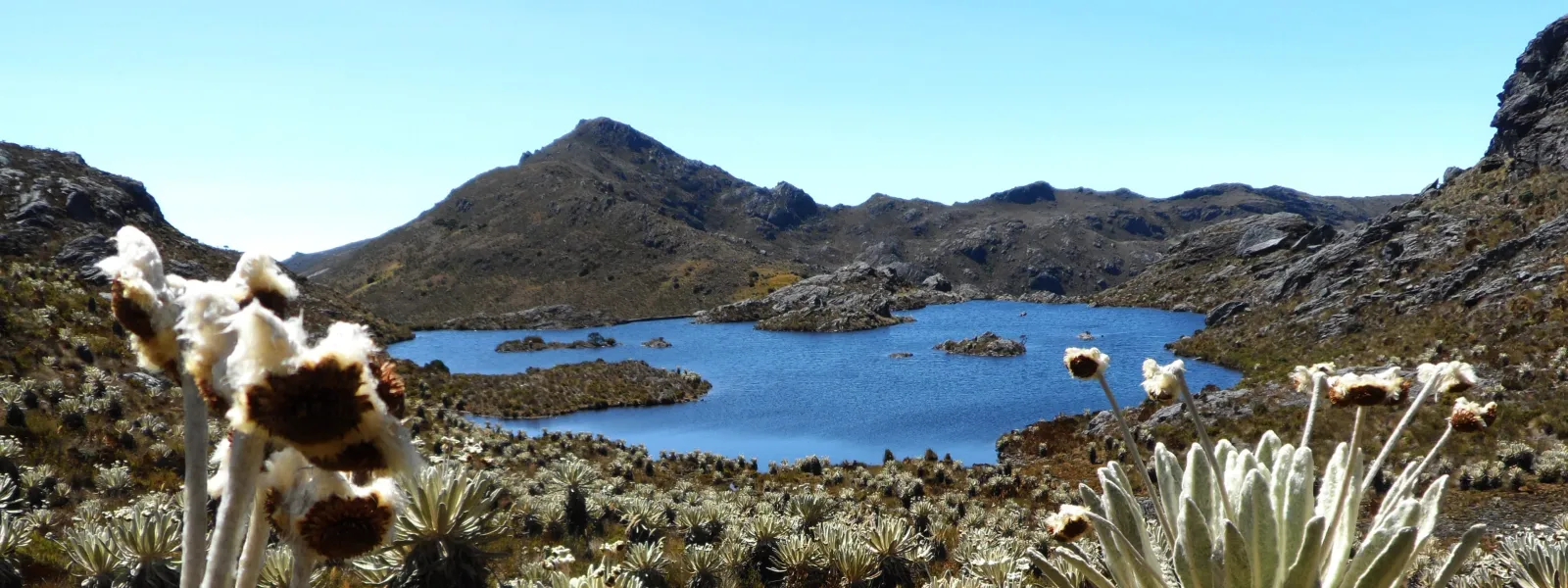
In the Andean region, high-mountain ecosystems known as páramos capture water from the fog and supply it to the lowlands. One such ecosystem is the Santurbán páramo, which provides fresh water to more than two million people in Colombia.
Santurbán, like the other páramos on the continent, also captures large amounts of carbon, making it a key ally in mitigating the climate crisis. It is also a refuge for hundreds of endangered species, including the iconic spectacled bear.
The land in and around the páramo contains gold and other minerals. This has put Santurbán in the spotlight of the multinational mining industry, which for decades has sought to establish large-scale projects in the ecosystem that threaten to degrade it.
The Committee for the Defense of Water and the Santurbán Páramo—a coalition of environmental advocates—has thwarted these ongoing attempts, with support from AIDA and other civil society organizations.
Background
The Santurbán páramo is located in the heart of the Eastern Cordillera of the Colombian Andes, in the departments of Santander and Norte de Santander, at an elevation ranging from 2,200 to 4,290 meters above sea level.
It covers an area of 129,743 hectares and is home to 57 lakes. It serves as a habitat for 457 plant species and 293 species of vertebrate fauna.
There are mineral deposits in Santurbán, primarily gold, but also silver and copper. This explains the region’s mining tradition, particularly in the part of the páramo located in Santander, in the province of Soto Norte. The communities in the area have built their culture and identity around gold mining, which is mainly artisanal and small-scale.
But since the 1990s, the gold deposits in the páramo have also attracted foreign mining conglomerates seeking to develop large-scale projects. This has raised concerns among the population that relies on the Santurbán water sources, who have mobilized in defense of water, their land, and life.
Although national and international regulations prohibit mining in páramos, the Colombian government has granted mining concessions to transnational corporations in Santurbán.
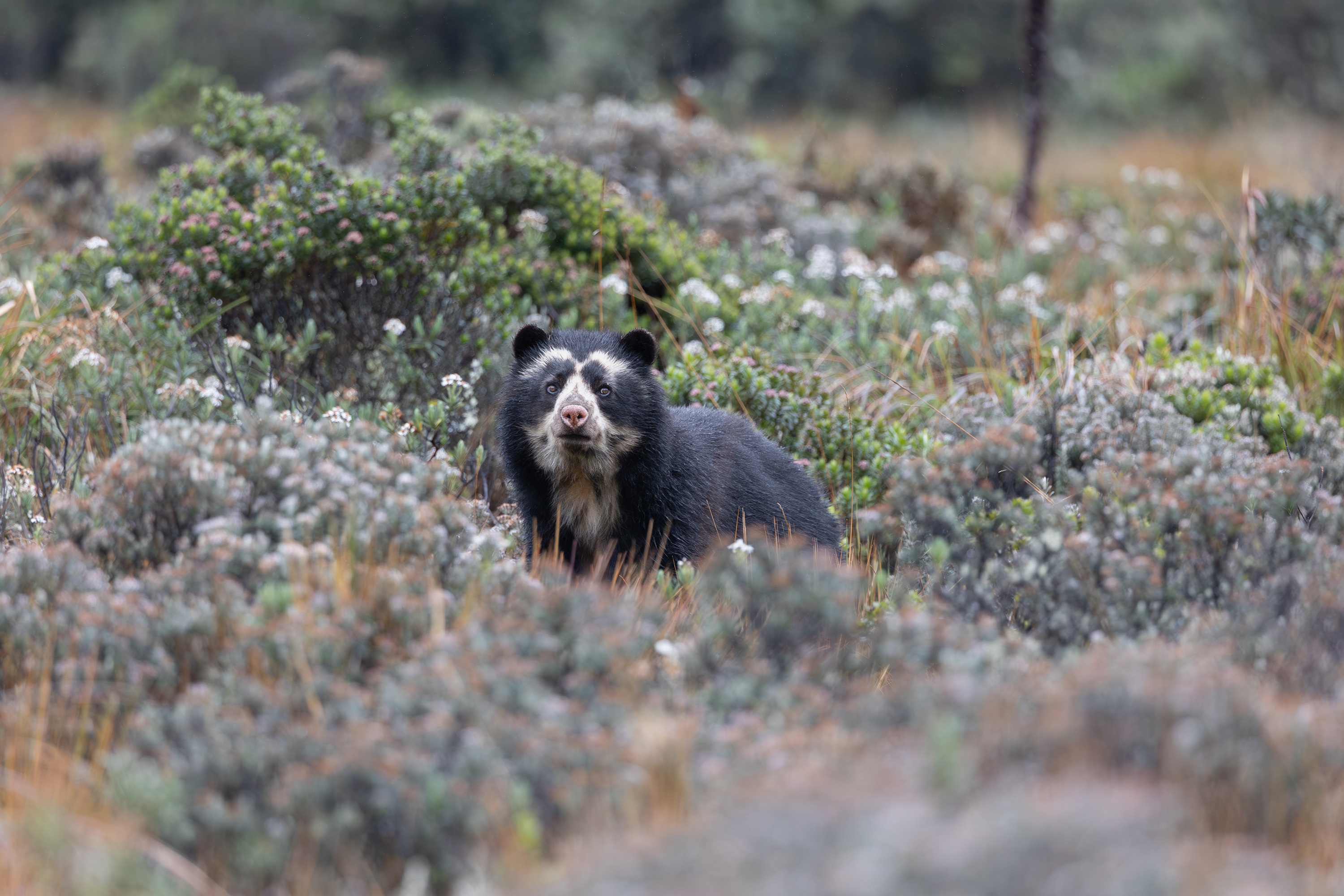
Photo: Keishpixl / Pixabay.
The long struggle to protect the páramo
One of the companies that sought to develop large-scale mining in Santurbán is Eco Oro Minerals Corp.—formerly Greystar Resources—a Canadian company that intended to establish the Angostura open-pit mine there to extract gold and silver. Between 1994 and 1995, the company acquired its mining titles and conducted exploration. And in 2010, it applied for a mining permit.
That was the year AIDA became involved in defending the ecosystem, supporting the Committee for the Defense of Water and the Santurbán Páramo. Our legal work helped convince the Colombian government to deny the mine an environmental permit in May 2011.
In January 2013, the government designated a portion of the páramo (11,700 hectares) as a Regional Natural Park. That year—together with the committee and partner organizations—we carried out a campaign and advocacy efforts to urge the government to recognize the entire Santurbán area as a páramo ecosystem through a delimitation based on scientific criteria. In December 2014, the Ministry of the Environment established a delimitation that protected 76% of the páramo (98,954 hectares).
Furthermore, as a result of a litigation supported by AIDA, in February 2016, Colombia’s highest court reaffirmed that mining in páramos is prohibited.
That same year, in December, the International Finance Corporation (IFC), the World Bank Group’s private sector arm, decided to divest from Eco Oro Minerals. This achievement was the result of a process that began in 2012, when the committee—advised and supported by AIDA and international partner organizations—filed a complaint before an independent accountability mechanism, which concluded that the IFC’s investment in the Angostura project failed to take into account the project’s social and environmental impacts, thereby contradicting the financial institution’s internal policies.
Also in 2016, Eco Oro Minerals filed an arbitration claim against the Colombian government with the International Centre for Settlement of Investment Disputes (ICSID), arguing that it had been adversely affected by government decisions aimed at protecting the country’s páramos, including the delimitation of Santurbán.
In 2017, the Constitutional Court invalidated the delimitation because the affected communities were not consulted. The high court ordered that a participatory delimitation be carried out.
And that year, a new threat to Santurbán emerged when the Canadian multinational Aris Mining applied for an environmental permit for Soto Norte, a gold mining project located near the páramo. Following citizen protests and technical objections, in October 2020, the National Environmental Licensing Authority shelved the project.
Photo: Aztlec.
Current situation
In March 2025, the Colombian government designated the western flank of the Santurbán massif as a temporary renewable natural resource reserve area, delimiting and protecting an area of 75,344.65 hectares. This resulted in a two-year suspension of the Soto Norte project. However, Aris Mining's contract to formalize Calimineros' small-scale mining activities through the purchase and processing of mineralized material remains in effect.
In addition, the Canadian mining company continues to move the project forward. In September 2025, it released its prefeasibility study, revising the mine’s original design.
Meanwhile, members of the Committee for the Defense of Water and the Santurbán Páramo face threats and stigmatization because of their work. In March 2025, UN Special Rapporteurs and the Working Group on Business and Human Rights denounced these incidents in communications sent to the governments of Colombia, Canada, and the United Arab Emirates, as well as to the companies Aris Mining and MDC Industry Holding Company LLC, the former co-owner of the Soto Norte project.
Regarding the arbitration claim filed by Eco Oro Minerals, in July 2024, ICSID ruled in favor of the Colombian government and rejected the Canadian company’s claim for USD 1.1 billion in compensation.
Concerning the delimitation of Santurbán, in July 2026, the Ministry of the Environment issued a resolution introducing the concept of "progressive delimitation." On that basis, the government proposes to progressively demarcate the páramo, covering 29,199 hectares across 19 municipalities—those where the participatory agreements required by the Constitutional Court in its 2017 ruling have already been finalized. It also proposes two measures on the creation and expansion of reserves to restrict mining in the ecosystem.
Learn more about the impacts of mining on the páramos of Latin America (in Spanish).
Partners:
Related projects

Putting my heart in the conservation of wetlands
Coral reefs are my favorite wetlands. They’re full of so many colors and shapes, and simply teeming with life. When I’m underwater, my heart is full of peace and excitement, as I see myself surrounded by so many forms of life, so many species living together. As a marine biologist, I’ve had the opportunity to scuba dive in a variety of countries and see many of these beautiful ecosystems up close. Of all my dives, the ones I enjoyed most were those I did—for work and for pleasure—in the Bay Islands of Honduras. As a recent college graduate and volunteer with the Atlantic and Gulf Rapid Reef Assessment Program, I was in charge of monitoring the countless organisms that live in or on the reefs—seaweed, sea urchins, lobsters, queen snails, and so many others. Without a doubt, my time diving in the Cayos Cochinos sparked my personal and professional journey. Since then, I’ve set out to protect these magical ecosystems, vital to all life this planet. My current role, as scientific advisor to AIDA, uses science to strengthen the legal arguments employed to protect these and other at-risk natural environments in Latin America. Wetlands, vital and at-risk In addition to coral reefs, wetlands—characterized by the presence of water—include lakes and rivers, underground aquifers, swamps and marshes, grasslands, peat bogs, estuaries and deltas, mangroves, and sea grasses. Wetlands act as the “kidneys” of the planet because they recycle water and waste, retain sediment and nutrients, reduce erosion, and absorb carbon dioxide from the atmosphere, in turn mitigating climate change. However, it’s estimated that since 1700 we’ve lost nearly 87 percent of our wetlands at a speed three times greater than the loss of our natural forests. This has caused a drastic reduction in biodiversity, affecting 81 percent of continental species and 36 percent of marine and coastal species. Among the greatest threats to our wetlands are contamination by garbage, wastewater and industrial pollution; changes in land use; agricultural runoff, erosion and climate change. What’s more, global warming is increasing the temperature of the oceans, raising sea levels, and melting the poles. According to the Intergovernmental Panel on Climate Change, an increase of 1.5°C in global temperature could kill almost 90 percent of the world’s coral reefs—an irreversible and heartbreaking loss. Taking action to save wetlands Given this frightening global scenario, urgent action is required to protect our planet’s wetlands. In fact, there are many ways we can begin to do so immediately, such as: Creating restoration campaigns for vital ecosystems like mangroves and coral reefs. Declaring natural protected areas, to conserve wetlands and the species that depend on them. Developing policies that allow for the rational use of wetlands, where conservation is prioritized. Prohibiting the destruction of these ecosystems in any type of project, be it tourism, development or infrastructure. Establishing water treatment plans to prevent drainage and runoff from contaminating wetlands. Every year, on February 2, we celebrate World Wetlands Day, commemorating the signing of the Ramsar Convention, the only intergovernmental treaty for the conservation and rational use of our planet’s wetlands. This year’s celebration is focused on wetlands and climate change, inviting us all to reflect on the value of our wetlands, the critical services they provide, and urgency with which we must protect them. We are not powerless in the face of climate change. Saving our wetlands may just be the first step toward saving our planet, and ourselves.
Read more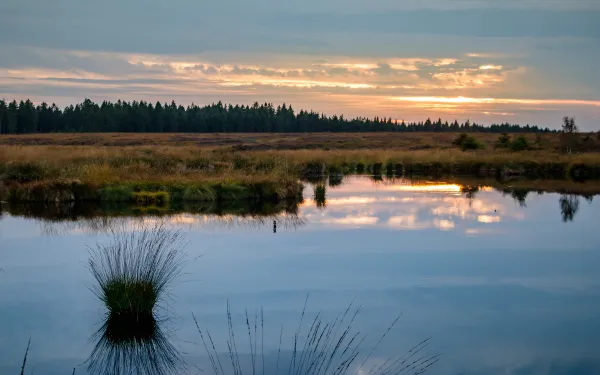
Protecting Wetlands: A Ramsar Infographic
Wetlands worldwide are at threat due to changes in land use, pollution and unsustainable development. The Ramsar Convention is an intergovernmental treaty that works to protect wetlands across international borders, and advocates for their wise use. This infographic breaks down why wetlands are so important, and how the application of the Ramsar Convention can help us protect these sensitive and vital ecosystems.
Read moreProtecting Wetlands: A Ramsar Infographic
Wetlands worldwide are at threat due to changes in land use, pollution and unsustainable development. The Ramsar Convention is an intergovernmental treaty that works to protect wetlands across international borders, and advocates for their wise use. This infographic breaks down why wetlands are so important, and how the application of the Ramsar Convention can help us protect these sensitive and vital ecosystems.
Read more