
Project
Alberto Peña Kay
Protecting the Santurban páramo from mining's damage
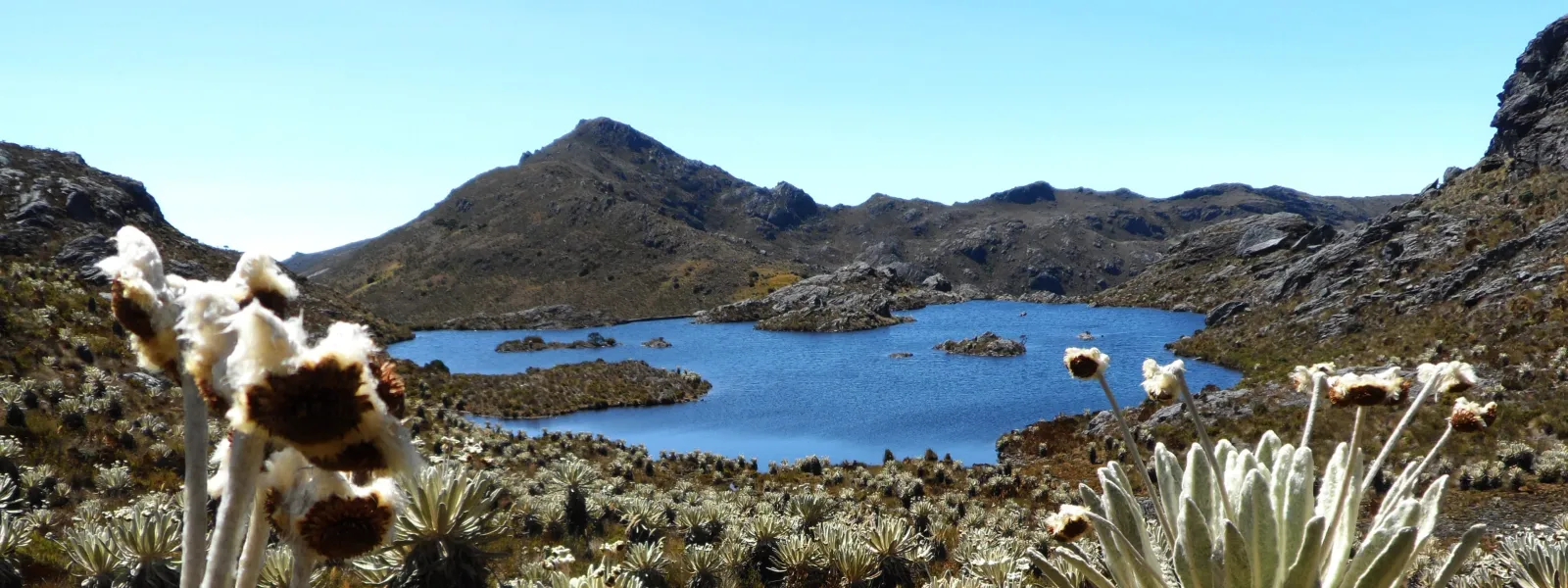
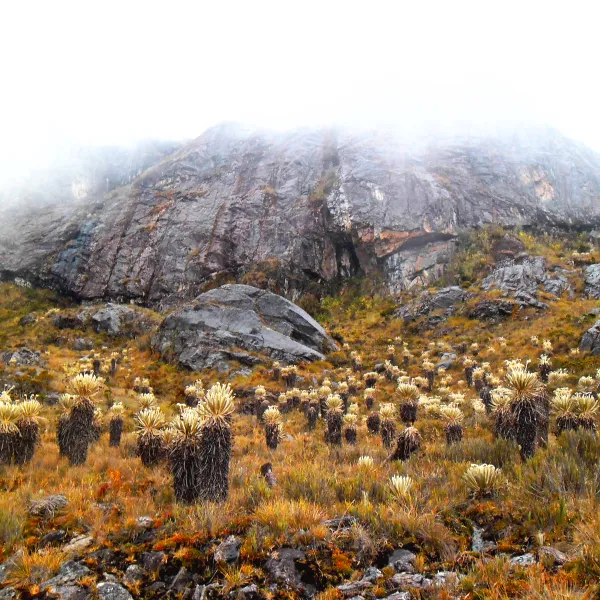
In the Andean region, high-mountain ecosystems known as páramos capture water from the fog and supply it to the lowlands. One such ecosystem is the Santurbán páramo, which provides fresh water to more than two million people in Colombia.
Santurbán, like the other páramos on the continent, also captures large amounts of carbon, making it a key ally in mitigating the climate crisis. It is also a refuge for hundreds of endangered species, including the iconic spectacled bear.
The land in and around the páramo contains gold and other minerals. This has put Santurbán in the spotlight of the multinational mining industry, which for decades has sought to establish large-scale projects in the ecosystem that threaten to degrade it.
The Committee for the Defense of Water and the Santurbán Páramo—a coalition of environmental advocates—has thwarted these ongoing attempts, with support from AIDA and other civil society organizations.
Background
The Santurbán páramo is located in the heart of the Eastern Cordillera of the Colombian Andes, in the departments of Santander and Norte de Santander, at an elevation ranging from 2,200 to 4,290 meters above sea level.
It covers an area of 129,743 hectares and is home to 57 lakes. It serves as a habitat for 457 plant species and 293 species of vertebrate fauna.
There are mineral deposits in Santurbán, primarily gold, but also silver and copper. This explains the region’s mining tradition, particularly in the part of the páramo located in Santander, in the province of Soto Norte. The communities in the area have built their culture and identity around gold mining, which is mainly artisanal and small-scale.
But since the 1990s, the gold deposits in the páramo have also attracted foreign mining conglomerates seeking to develop large-scale projects. This has raised concerns among the population that relies on the Santurbán water sources, who have mobilized in defense of water, their land, and life.
Although national and international regulations prohibit mining in páramos, the Colombian government has granted mining concessions to transnational corporations in Santurbán.
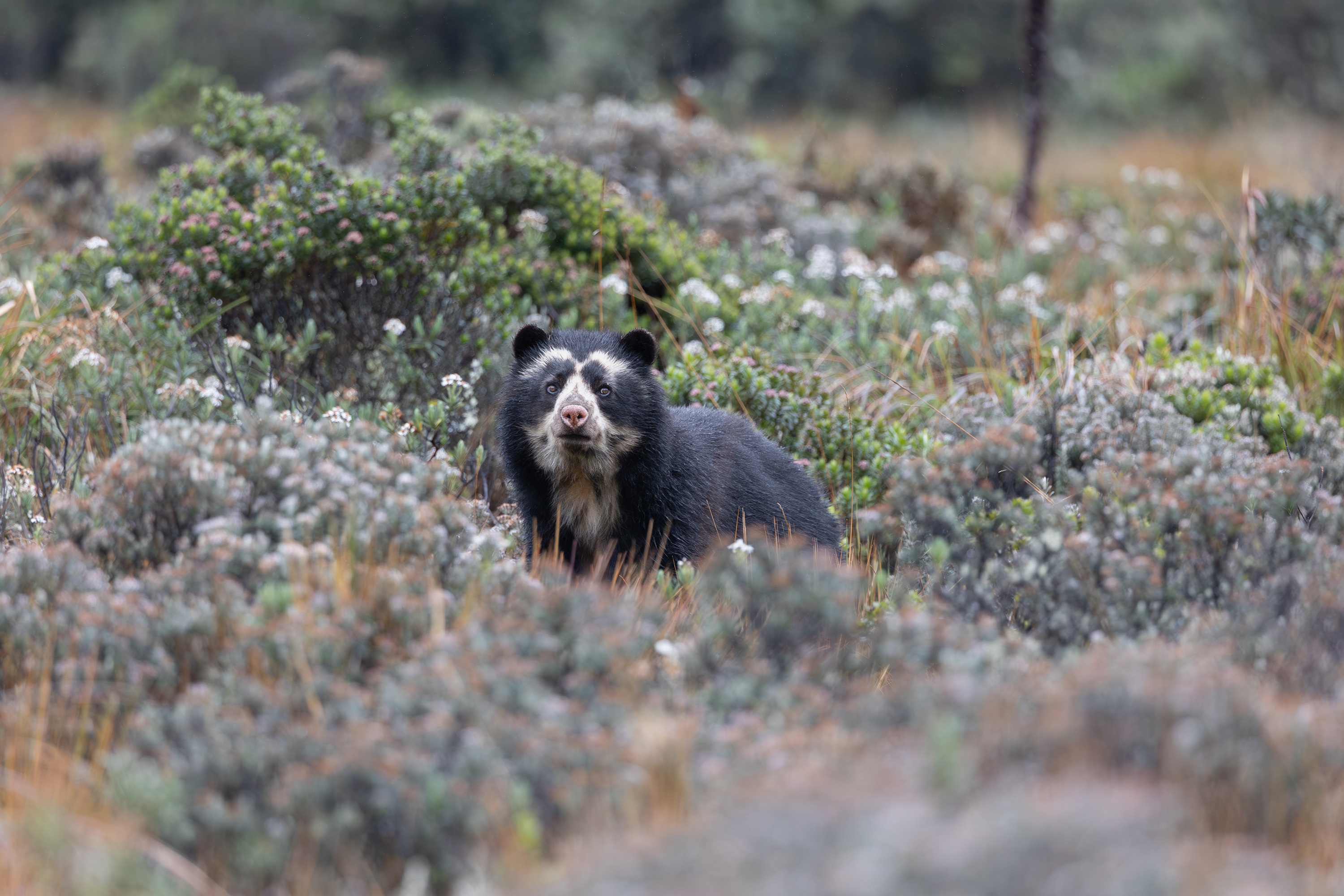
Photo: Keishpixl / Pixabay.
The long struggle to protect the páramo
One of the companies that sought to develop large-scale mining in Santurbán is Eco Oro Minerals Corp.—formerly Greystar Resources—a Canadian company that intended to establish the Angostura open-pit mine there to extract gold and silver. Between 1994 and 1995, the company acquired its mining titles and conducted exploration. And in 2010, it applied for a mining permit.
That was the year AIDA became involved in defending the ecosystem, supporting the Committee for the Defense of Water and the Santurbán Páramo. Our legal work helped convince the Colombian government to deny the mine an environmental permit in May 2011.
In January 2013, the government designated a portion of the páramo (11,700 hectares) as a Regional Natural Park. That year—together with the committee and partner organizations—we carried out a campaign and advocacy efforts to urge the government to recognize the entire Santurbán area as a páramo ecosystem through a delimitation based on scientific criteria. In December 2014, the Ministry of the Environment established a delimitation that protected 76% of the páramo (98,954 hectares).
Furthermore, as a result of a litigation supported by AIDA, in February 2016, Colombia’s highest court reaffirmed that mining in páramos is prohibited.
That same year, in December, the International Finance Corporation (IFC), the World Bank Group’s private sector arm, decided to divest from Eco Oro Minerals. This achievement was the result of a process that began in 2012, when the committee—advised and supported by AIDA and international partner organizations—filed a complaint before an independent accountability mechanism, which concluded that the IFC’s investment in the Angostura project failed to take into account the project’s social and environmental impacts, thereby contradicting the financial institution’s internal policies.
Also in 2016, Eco Oro Minerals filed an arbitration claim against the Colombian government with the International Centre for Settlement of Investment Disputes (ICSID), arguing that it had been adversely affected by government decisions aimed at protecting the country’s páramos, including the delimitation of Santurbán.
In 2017, the Constitutional Court invalidated the delimitation because the affected communities were not consulted. The high court ordered that a participatory delimitation be carried out.
And that year, a new threat to Santurbán emerged when the Canadian multinational Aris Mining applied for an environmental permit for Soto Norte, a gold mining project located near the páramo. Following citizen protests and technical objections, in October 2020, the National Environmental Licensing Authority shelved the project.
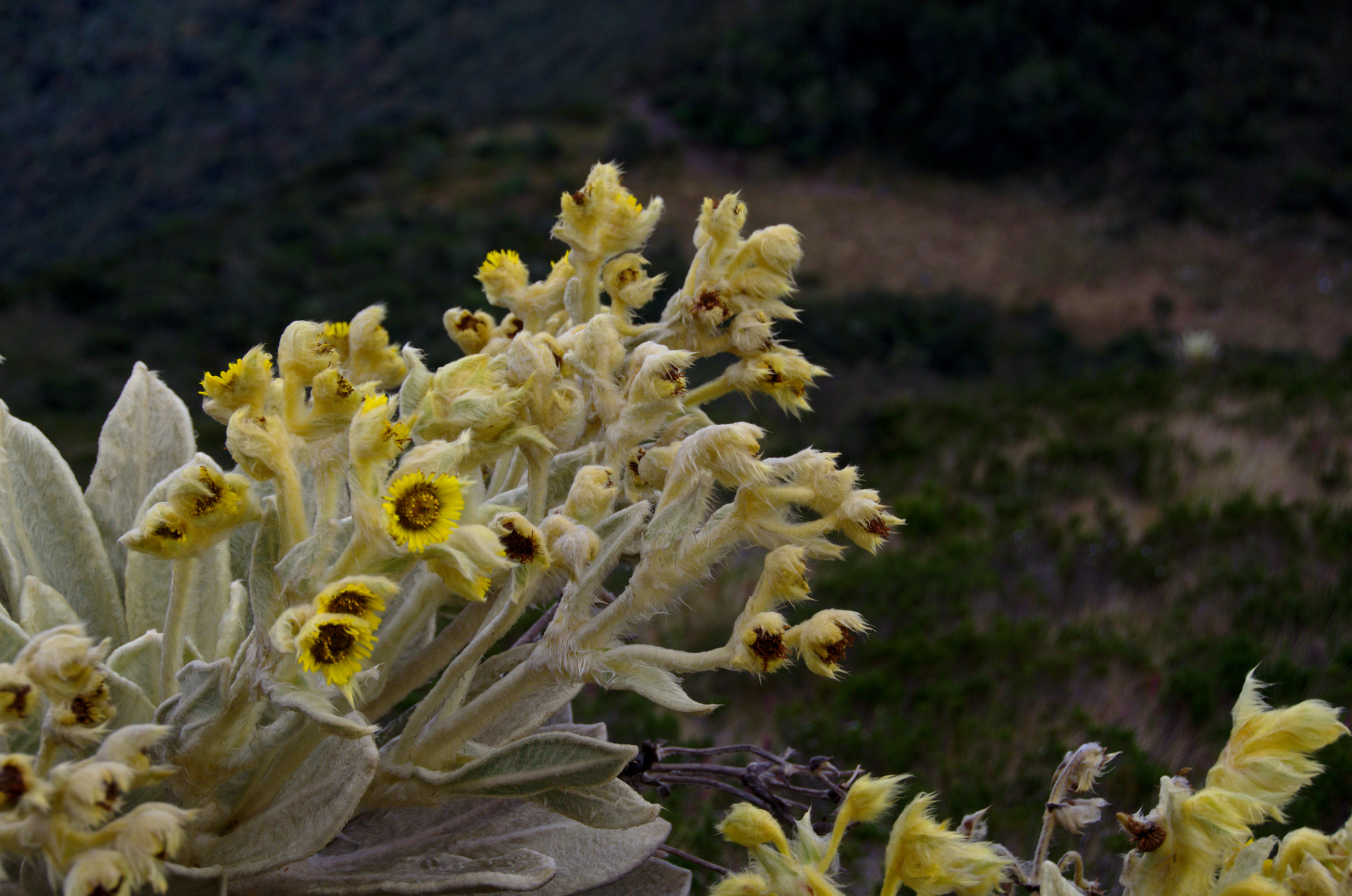
Photo: Aztlec.
Current situation
In March 2025, the Colombian government designated the western flank of the Santurbán massif as a temporary renewable natural resource reserve area, delimiting and protecting an area of 75,344.65 hectares. This resulted in a two-year suspension of the Soto Norte project. However, Aris Mining's contract to formalize Calimineros' small-scale mining activities through the purchase and processing of mineralized material remains in effect.
In addition, the Canadian mining company continues to move the project forward. In September 2025, it released its prefeasibility study, revising the mine’s original design.
Meanwhile, members of the Committee for the Defense of Water and the Santurbán Páramo face threats and stigmatization because of their work. In March 2025, UN Special Rapporteurs and the Working Group on Business and Human Rights denounced these incidents in communications sent to the governments of Colombia, Canada, and the United Arab Emirates, as well as to the companies Aris Mining and MDC Industry Holding Company LLC, the former co-owner of the Soto Norte project.
Regarding the arbitration claim filed by Eco Oro Minerals, in July 2024, ICSID ruled in favor of the Colombian government and rejected the Canadian company’s claim for USD 1.1 billion in compensation.
Concerning the delimitation of Santurbán, in July 2026, the Ministry of the Environment issued a resolution introducing the concept of "progressive delimitation." On that basis, the government proposes to progressively demarcate the páramo, covering 29,199 hectares across 19 municipalities—those where the participatory agreements required by the Constitutional Court in its 2017 ruling have already been finalized. It also proposes two measures on the creation and expansion of reserves to restrict mining in the ecosystem.
Learn more about the impacts of mining on the páramos of Latin America (in Spanish).
Partners:
Related projects

AIDA calls on financial institutions to join the fight against climate change
International Financial Institutions (IFIs) have a significant influence on large infrastructure projects and energy development in the western hemisphere. Many of them finance projects that accelerate climate change. These include large dams that emit methane gas, mines that disturb carbon sinks, and power plants that inefficiently use highly polluting coal- and oil-based technologies. This financing, for example, is behind “La Colosa,” a huge gold mining project in Colombia. The project could affect the paramos and release the huge amounts of carbon dioxide retained by these high-altitude wetlands. The Inter-American Development Bank (IDB), the World Bank Group (WBG) and its member institution, the International Finance Corporation (IFC), recently carried out research to redesign their energy investment strategies. AIDA took part in this process, pressing the IFIs to prioritize the development of clean and sustainable energy sources. We urged them to: Consider climate change and human rights in every stage of the process; Incorporate the highest standards of human rights, social equity, energy efficiency and natural resource planning in decisions; Set aggressive but achievable targets for reducing carbon dioxide emissions for the projects they support; and Prioritize energy efficiency and renewable energies while also discouraging a continued dependence on fossil fuels. AIDA also participated in the public consultation at which the IDB was called on to give comments on the current policy of the Independent Consultation and Investigation Mechanism (ICIM). While not perfect, the ICIM is the only grievance system available to people affected by activities funded by the institution. AIDA, together with other organizations in the region, sent a letter with the comments, which was a great opportunity to increase the transparency, accountability and effectiveness of the mechanism. Along with the IDB and the institutions of the World Bank Group, there is the National Development Bank of Brazil (BNDES), which, although not officially an IFI, behaves as such and wields a huge influence in the region. It has amassed such financial power to allow it expand outside its borders and participate in large investment projects in more than 11 countries in Latin America. The concern is that BNDES doesn’t have socio-environmental safeguards or transparency and participation policies in line with its size and influence. Instead, it is governed by much lower standards than the IFIs working in the region. BNDES doesn’t have mechanisms to ensure the protection of the environment and communities affected by the projects it finances, nor does it have an effective system for addressing complaints or claims. In fact, the projects supported by BNDES have been drawing attention from environmentalists and human rights defenders in the region for years. We have focused much of our work on influencing this organization so it will promptly implement appropriate environmental and social policies. What is interesting and encouraging is that we’re not alone in this task. In November 2012, we created a coalition called “BNDES na Mira,” which brings together over 90 people from more than 25 organizations in the region. The group is a reflection of the need to work together to achieve ambitious and needed results. At the same time and as part of the ongoing training of our team and the group in general, we are developing a report to explain the inner workings of BNDES so that we can understand their decision-making process and pressure points. We also hope to make contacts to help us have an impact in and outside the bank. To address BNDES’ lack of recognition as an IFI and hence its need to comply with the responsibilities that entails, AIDA is working on a third document that will develop this argument and provide a comparison between the safeguard and transparency policies of BNDES and other IFIs working in the region such as the World Bank and the IDB. Also as part of “BNDES na Mira,” we participate in workshops and seminars to further strengthen our joint work, share information and develop common strategies for the future and a possible long-term channel of communication with representatives of the bank. Given the huge amounts of money that IFIs and BNDES provide to projects and programs around the continent, any influence that we can have on their policymaking can lead to significant reductions in the emissions that cause climate change. These institutions have the opportunity to choose new tools to redirect their path toward truly sustainable development, and therefore to help protect our health and the environment from climate change. AIDA will continue examining and influencing the IFIs and BNDES on a constant basis and especially during their process of reshaping internal policies.
Read moreCEMDA and AIDA Present Report to Inter-American Court of Human Rights: Environmental Advocates Are Key to Protecting Human Rights and Are At-Risk in Mexico
FOR IMMEDIATE RELEASE: Sept. 15, 2010 CONTACTS: Juan Carlos Arjona Estévez, CEMDA (Mexico) +52-55-5286-332, [email protected], Skype: juancarlosarjonaestevez Jacob Kopas, AIDA, (Bogota) +57-1-338-1277, [email protected], Skype: jacobkopas Mexico City, Mexico – On September 10, 2010, the Centro Mexicano de Derecho Ambiental (CEMDA) and the Interamerican Association for Environmental Defense (AIDA) presented information about the important work of environmental advocates in protecting human rights, and about the trend of increasing attacks against such advocates in Mexico. In a "friend of the court" brief submitted to the Inter-American Court of Human Rights in the case of Cabrera Garcia and Montiel Flores v. Mexico, the two organizations demonstrated how attacks against Teodoro Cabrera and Montiel Flores relating to their work as environmental advocates impedes effective environmental protection. "In Mexico, it is still very difficult to protect the right to a healthy environment due to the lack of, or in some cases, the ineffectiveness of judicial protections," emphasized Juan Carlos Arjona Estevez, coordinator of CEMDA’s Human Rights and Environment Program. "This makes the pattern of aggressions against environmental advocates even more troubling—it affects the rights of everyone in Mexico." In 1998, Mr. Cabrera and Mr. Montiel founded the Organization of Peasant Ecologists of the Sierra de Petatlán and Coyuca de Catalán (OCESP), to protect the forests in Guerrero state from uncontrolled and illegal timber extraction. A year later, they were victims of arbitrary detentions and torture due to their work as environmental advocates. Despite being released in 2001, they had to leave their community because of continued threats. Nine years after their release, the Inter-American Court heard Montiel and Cabrera’s claims against Mexican authorities for failing to compensate them for harms or to guarantee their personal safety. The ineffectiveness of the legal system for protecting the environment in Mexico led Mr. Cabrera and Mr. Montiel to found their organization, OCESP. However, the threats and harassments they suffered, and the lack of response from authorities, created a generalized fear that prevented them and others from defending their community’s right to a healthy environment. Later, this pattern grew to include attacks against environmental advocates throughout Mexico. This situation forced Mr. Cabrera and Mr. Montiel to limit their work as environmental advocates and curtail the work of OCESP. Jacob Kopas, a lawyer with AIDA considers that "This case is emblematic for the region, and highlights the need for governments to recognize the value and importance of the work done by environmental advocates, and to also guarantee protection for their rights." "With this report, we are seeking to help strengthen protection of the right to a healthy environment in Mexico and safeguard the people who defend this human right" said Samantha Namnum, director of CEMDA’s Mexico City office. "This is why we asked the Inter-American Court to recognize the important work of environmental defenders and to declare that Mexico, in addition to other human rights, also violated Mr. Cabrera and Mr. Montiel’s right to freedom of association as a result of the arbitrary detentions and tortures they suffered and the impunity surrounding those events."
Read moreNGOs Request International Intervention to Protect Threatened Wetlands of Nayarit and Sinaloa (Spanish only)
ONGS PIDEN INTERVENCIÓN INTERNACIONAL POR AMENAZAS A HUMEDALES DE NAYARIT Y SINALOA • Organizaciones ambientalistas piden intervención de la Secretaría de RAMSAR por amenaza a ecosistemas vitales de Nayarit y Sinaloa • Solicitan una misión diplomática internacional ante la Secretaría RAMSAR, en razón de que gobierno mexicano garantice la protección de los ecosistemas –Marismas Nacionales y Laguna Huizache-Caimanero– PARA PUBLICACIÓN INMEDIATA México D.F. a 16 de junio de 2009. Ante las amenazas a los recursos hídricos de la región, por la construcción del proyecto turístico más grande del Fondo Nacional de Fomento al Turismo (FONATUR), el Centro Integralmente Planeado de la Costa del Pacífico (CIP) y el proyecto de la hidroeléctrica de Las Cruces en el Río Baluarte de la Comisión Federal de Electricidad (CFE), que podrían causar graves daños a humedales de importancia internacional; la Asociación Interamericana para la Defensa del Ambiente (AIDA) y el Centro Mexicano de Derecho Ambiental A.C (CEMDA), apoyados por Greenpeace México, WildCoast, Conselva y la Red Manglar Internacional solicitaron la intervención de la Secretaría del Convenio Ramsar para hacer cumplir el Convenio Internacional. Específicamente se pidieron tres acciones ante la Secretaría de RAMSAR: que se llame la atención al gobierno mexicano para que cumpla con sus obligaciones internacionales; que ejerza su autoridad para que el Estado considere los potenciales daños a estos humedales; y, finalmente, la visita de una misión técnica internacional para estudiar los impactos ambientales que ambos proyectos producirían en los humedales amenazados. “Estos humedales están amenazados por las potenciales consecuencias que les traerán el proyecto turístico más grande del Fondo Nacional de Fomento al Turismo (FONATUR) denominado Centro Integralmente Planeado de la Costa del Pacífico (CIP) y el proyecto de la hidroeléctrica de las Cruces en el Río Baluarte. Ambos proyectos tendrán una incidencia negativa sobre los sitios Ramsar”, señaló Pablo Uribe, Director de CEMDA La Paz. “Lo que buscamos es proteger ecosistemas estratégicos y de gran importancia para México y el mundo a través del cumplimiento del tratado internacional que específicamente protege estos humedales”, señaló Sofía Cortina abogada de AIDA. ”Además que se estudie la posibilidad de incluirlos en la lista de humedales en donde pueden producirse o se están produciendo daños negativos, para elevar su nivel de protección” continuó Cortina. El CIP está cercano a la Laguna Huizache-Caimanero y colinda con el área de Marismas Nacionales, que cuenta con el sistema de manglar más importante del Pacífico mexicano y que representa el 10% de los manglares del país. Esta zona es de vital importancia ambiental para el país e incluso está catalogada como un humedal de importancia mundial (sitio Ramsar), como región Prioritaria Terrestre y Marina para la Conservación y como Área de Importancia para la Conservación de Aves (AICA) de acuerdo con la Comisión Nacional para el Conocimiento y Uso de la Biodiversidad (Conabio). En esta región están en riesgo 14 especies de flora nativa, hay 73 especies amenazadas o en peligro de extinción y 99 especies de fauna endémica. Además es una zona donde habitan jaguares y venados (1). La hidroeléctrica de Las Cruces con capacidad de 480 MW creará una presa de agua con una capacidad de 840 mil metros cúbicos, disminuyendo el flujo y la calidad de agua hacia las Marismas Nacionales, entre otros daños que posiblemente se pueden causar. Esta Laguna costera es el hábitat de 83 especies de peces y de importantes poblaciones de aves playeras, en ella habitan diversas especies en riesgo como el cocodrilo de río, el lagarto enchaquirado, la boa, pato mexicano y la tortuga Golfina, entre otras. “Los proyectos de la Presa de Las Cruces y el CIP dañarán una de las áreas más importantes de manglares del Golfo de California. Es por ello que cuando se realice la evaluación de impacto ambiental de ambos proyectos, la Secretaría de Medio Ambiente y Recursos Naturales (SEMARNAT) deberá dar aviso a la Secretaría de la Convención de Ramsar sobre los impactos ambientales que Marismas Nacionales sufrirían. Si la SEMARNAT no implementa acciones que eviten el deterioro de Marismas Nacionales la Secretaría de Ramsar podrá incluir a Marismas Nacionales como un humedal costero en condiciones graves de deterioro” afirmó Uribe, del CEMDA. “Las grandes hidroeléctricas como Las Cruces tienen impactos ambientales negativos muy altos. Por ejemplo, los desechos son generadores de gases de efecto invernadero como metano y bióxido de carbono. El origen de estos gases se encuentra en la descomposición de la vegetación y las tierras inundadas en los embalses, así como materia orgánica en forma de plantas, plancton, algas, que son generadas y circulan dentro de las aguas. Además, causan impactos ambientales como la desviación de ríos, pérdida de biodiversidad, disminución de la humedad en las tierras para siembra, entre otros. Para poder desarrollar este tipo de proyectos se requiere que cumplan con la legislación nacional e internacional vigente, que se hagan evaluaciones ambientales detalladas y que se desarrollen con el cumplimiento de estándares internacionales” dijo Alejandro Olivera, Coordinador de campañas de Greenpeace México. Cabe señalar que en febrero de 2009 el CEMDA y Greenpeace presentaron una denuncia ante la Procuraduría Federal de Protección al Ambiente (PROFEPA) en contra del proyecto de FONATUR por iniciar obras sin ningún permiso ambiental. Hasta la fecha, la PROFEPA no ha clausurado las obras. “La Convención de Ramsar al ser ratificada por México conlleva obligaciones que el Estado debe cumplir. Por lo tanto es urgente que la CFE y FONATUR consideren las implicaciones ambientales que sus proyectos causarían al ambiente. Por lo cual, deberán incluir en sus estudios las directrices de evaluación de impacto ambiental de la Secretaría de Ramsar y demás aplicables. De no hacerlo, estarán incumpliendo con lo establecido por dicha Convención” finalizó Astrid Puentes Codirectora de AIDA. Notas: 1. Estudio Técnico Justificativo para el establecimiento del área natural protegida Reserva de la Biosfera Marismas nacionales Sinaloa. Junio 2008. Conanp. 2. Ficha informativa de los humedales Ramsar. Comisión nacional de Áreas naturales Protegidas. PARA MAYOR INFORMACIÓN CONTACTAR: Claudia Gómez-Portugal M. Sofía Cortina 55256136 / 5518506827 04455-34005490 [email protected] [email protected]
Read more