
Project
Alberto Peña Kay
Protecting the Santurban páramo from mining's damage
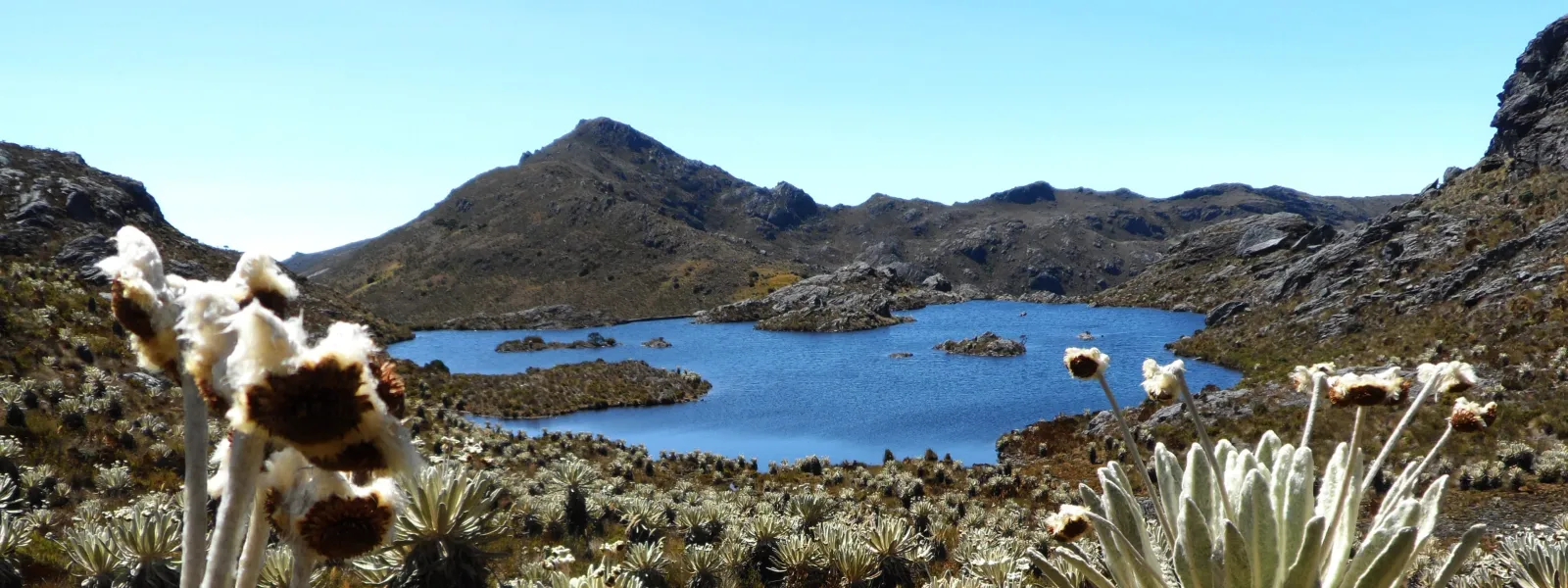
In the Andean region, high-mountain ecosystems known as páramos capture water from the fog and supply it to the lowlands. One such ecosystem is the Santurbán páramo, which provides fresh water to more than two million people in Colombia.
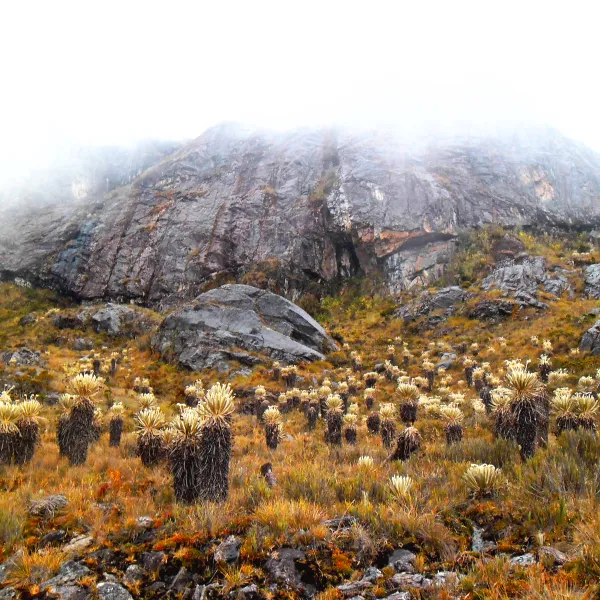
Santurbán, like the other páramos on the continent, also captures large amounts of carbon, making it a key ally in mitigating the climate crisis. It is also a refuge for hundreds of endangered species, including the iconic spectacled bear.
The land in and around the páramo contains gold and other minerals. This has put Santurbán in the spotlight of the multinational mining industry, which for decades has sought to establish large-scale projects in the ecosystem that threaten to degrade it.
The Committee for the Defense of Water and the Santurbán Páramo—a coalition of environmental advocates—has thwarted these ongoing attempts, with support from AIDA and other civil society organizations.
Background
The Santurbán páramo is located in the heart of the Eastern Cordillera of the Colombian Andes, in the departments of Santander and Norte de Santander, at an elevation ranging from 2,200 to 4,290 meters above sea level.
It covers an area of 129,743 hectares and is home to 57 lakes. It serves as a habitat for 457 plant species and 293 species of vertebrate fauna.
There are mineral deposits in Santurbán, primarily gold, but also silver and copper. This explains the region’s mining tradition, particularly in the part of the páramo located in Santander, in the province of Soto Norte. The communities in the area have built their culture and identity around gold mining, which is mainly artisanal and small-scale.
But since the 1990s, the gold deposits in the páramo have also attracted foreign mining conglomerates seeking to develop large-scale projects. This has raised concerns among the population that relies on the Santurbán water sources, who have mobilized in defense of water, their land, and life.
Although national and international regulations prohibit mining in páramos, the Colombian government has granted mining concessions to transnational corporations in Santurbán.

Photo: Keishpixl / Pixabay.
The long struggle to protect the páramo
One of the companies that sought to develop large-scale mining in Santurbán is Eco Oro Minerals Corp.—formerly Greystar Resources—a Canadian company that intended to establish the Angostura open-pit mine there to extract gold and silver. Between 1994 and 1995, the company acquired its mining titles and conducted exploration. And in 2010, it applied for a mining permit.
That was the year AIDA became involved in defending the ecosystem, supporting the Committee for the Defense of Water and the Santurbán Páramo. Our legal work helped convince the Colombian government to deny the mine an environmental permit in May 2011.
In January 2013, the government designated a portion of the páramo (11,700 hectares) as a Regional Natural Park. That year—together with the committee and partner organizations—we carried out a campaign and advocacy efforts to urge the government to recognize the entire Santurbán area as a páramo ecosystem through a delimitation based on scientific criteria. In December 2014, the Ministry of the Environment established a delimitation that protected 76% of the páramo (98,954 hectares).
Furthermore, as a result of a litigation supported by AIDA, in February 2016, Colombia’s highest court reaffirmed that mining in páramos is prohibited.
That same year, in December, the International Finance Corporation (IFC), the World Bank Group’s private sector arm, decided to divest from Eco Oro Minerals. This achievement was the result of a process that began in 2012, when the committee—advised and supported by AIDA and international partner organizations—filed a complaint before an independent accountability mechanism, which concluded that the IFC’s investment in the Angostura project failed to take into account the project’s social and environmental impacts, thereby contradicting the financial institution’s internal policies.
Also in 2016, Eco Oro Minerals filed an arbitration claim against the Colombian government with the International Centre for Settlement of Investment Disputes (ICSID), arguing that it had been adversely affected by government decisions aimed at protecting the country’s páramos, including the delimitation of Santurbán.
In 2017, the Constitutional Court invalidated the delimitation because the affected communities were not consulted. The high court ordered that a participatory delimitation be carried out.
And that year, a new threat to Santurbán emerged when the Canadian multinational Aris Mining applied for an environmental permit for Soto Norte, a gold mining project located near the páramo. Following citizen protests and technical objections, in October 2020, the National Environmental Licensing Authority shelved the project.
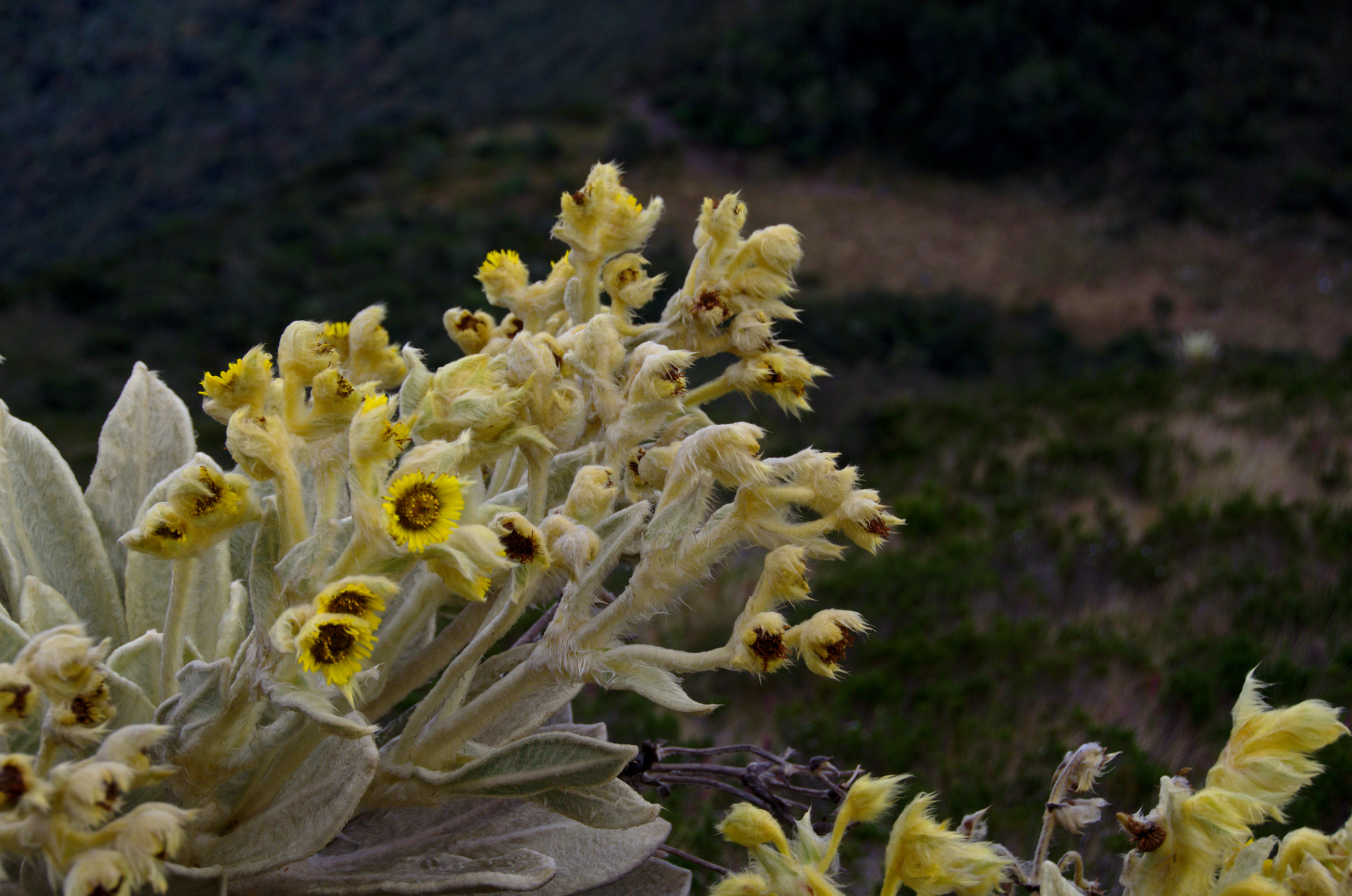
Photo: Aztlec.
Current situation
In March 2025, the Colombian government designated the western flank of the Santurbán massif as a temporary renewable natural resource reserve area, delimiting and protecting an area of 75,344.65 hectares. This resulted in a two-year suspension of the Soto Norte project. However, Aris Mining's contract to formalize Calimineros' small-scale mining activities through the purchase and processing of mineralized material remains in effect.
In addition, the Canadian mining company continues to move the project forward. In September 2025, it released its prefeasibility study, revising the mine’s original design.
Meanwhile, members of the Committee for the Defense of Water and the Santurbán Páramo face threats and stigmatization because of their work. In March 2025, UN Special Rapporteurs and the Working Group on Business and Human Rights denounced these incidents in communications sent to the governments of Colombia, Canada, and the United Arab Emirates, as well as to the companies Aris Mining and MDC Industry Holding Company LLC, the former co-owner of the Soto Norte project.
Regarding the arbitration claim filed by Eco Oro Minerals, in July 2024, ICSID ruled in favor of the Colombian government and rejected the Canadian company’s claim for USD 1.1 billion in compensation.
Concerning the delimitation of Santurbán, in July 2026, the Ministry of the Environment issued a resolution introducing the concept of "progressive delimitation." On that basis, the government proposes to progressively demarcate the páramo, covering 29,199 hectares across 19 municipalities—those where the participatory agreements required by the Constitutional Court in its 2017 ruling have already been finalized. It also proposes two measures on the creation and expansion of reserves to restrict mining in the ecosystem.
Learn more about the impacts of mining on the páramos of Latin America (in Spanish).
Partners:
Related projects
La Oroya before the Inter-American Commission on Human Rights
In an effort to compel the Peruvian government to resolve the health crisis in La Oroya, AIDA appealed to the Inter-American Commission on Human Rights (IACHR) in 2005, requesting that the Commission take urgent precautionary measures (in Spanish) to safeguard human rights. Working together with Earthjustice, CEDHA, and our Peruvian colleagues, we brought this case on behalf of more than 60 adults and children who live in La Oroya and suffer from health problems believed to be caused by the smelter’s pollution. The following year, after the government failed to heed Peruvian court mandates to clean up La Oroya, we submitted a full petition to the IACHR, asking the Commission to thoroughly evaluate the human rights situation and obligate the State of Peru to prevent the Doe Run Peru smelter from further contaminating the city. The Commission responded favorably to our efforts. In 2007, the IACHR requested that the State of Peru take precautionary measures to prevent irreversible harm to the health, integrity, and lives of the people of La Oroya. Specifically, as a first step, the Commission requested that the Peruvian government diagnose and provide specialized medical treatment to the group of people we represent. When the government was slow to comply, the Commission met with the parties again in 2008 and 2009, and successfully motivated the state to implement the measures appropriately, a process currently in progress. In August 2009, the IACHR accepted AIDA’s petition to fully evaluate the case against Peru. It based its decision on the fact that the illnesses and deaths allegedly resulting from the severe pollution constitute potential violations of the human rights to life and integrity. It also found that the State of Peru likely violated the public’s right to information when it manipulated and failed to publish important human health information. Finally, the Commission concluded that the State of Peru unjustifiably delayed compliance with the 2006 decision of the Peruvian Constitutional Tribunal, and thus may be violating citizen’s rights of access to justice and to effective domestic remedies. Now, several years after the IACHR first ordered Peru to provide precautionary measures, it is clear that the state’s efforts have been woefully inadequate. The 65 residents represented by AIDA have received spotty medical attention that falls far short of the “specialized” care that was promised, and the government’s efforts have not reduced health risks in a meaningful way. In March 2010, AIDA and its partners returned for another public hearing at the IACHR, to present evidence that the Peruvian government’s actions fail to satisfy the terms of the 2007 recommendations. Backed by findings from independent experts, AIDA argued that the medical evaluations conducted by the government were never completed and that the city is still contaminated by heavy metal pollution that causes a range of debilitating conditions, especially among children. The State denied these claims, insisting that it has taken sufficient action and the case should be closed. While we wait for a final decision on the case, AIDA will continue to pressure the Peruvian Ministry of Health to comply with its obligations, and to encourage the IACHR to maintain a spotlight on the Peruvian State until the pollution in La Oroya no longer threatens people’s fundamental human rights. Positive changes resulting from this case will not only benefit those we represent, but all residents of La Oroya. A decision from the IACHR will also create a vital precedent that can be applied in other cases throughout the hemisphere. IACHR hearing - La Oroya Follow us on Twitter: @AIDAorg "Like" our page on Facebook: https://www.facebook.com/AIDAorg
Read more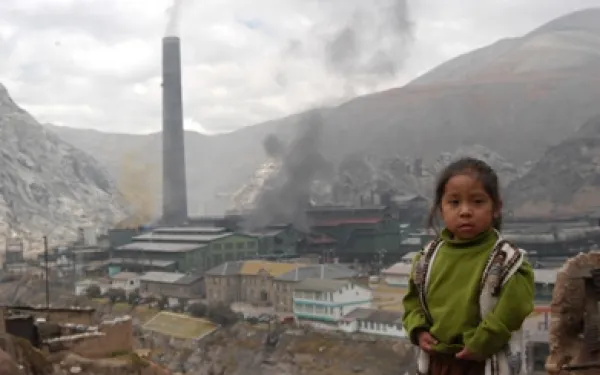
La Oroya triumphed in the Constitutional Court, but the ruling was not implemented
In 2006, the Peruvian Constitutional Tribunal recognized that high levels of pollution in La Oroya were causing serious health problems for the local population. The Tribunal ordered the Ministry of Health to comply with the law and take urgent action to prevent additional irreversible impacts to the environment and human health. This decision was supported by numerous scientific reports from the government, civil society organizations, and Doe Run Peru, which operates the smelter. In its decision, the Tribunal accepted all the arguments presented by the Peruvian Society for Environmental Law (SPDA), which represented La Oroya citizens in the case with AIDA’s support. The court gave the government 30 days to: Provide emergency medical attention for people contaminated with lead, giving priority to pregnant women and children; Implement an action plan to improve air quality in La Oroya; Declare States of Alert when pollution levels are excessive; Establish epidemiological and environmental monitoring programs. This ruling established a key legal precedent for three fundamental reasons. First, it recognized that extremely high pollution levels like those in La Oroya can cause serious and irreversible harm to people’s health, violating human rights. Second, it reiterated the State’s obligation to protect citizen rights, requiring specific actions to reduce health threats. Third, by ordering the State to coordinate with the polluting company, the Tribunal confirmed that corporations are responsible for conducting their businesses in ways that respect the human rights to health, to life, and to a healthy environment. In response to this ruling, the Peruvian government made some changes, but by no means complied fully with the order. Thus, in 2006, AIDA, in conjunction with Peruvian lawyers, Earthjustice, and CEDHA, brought the case to the Inter-American Commission on Human Rights. Through this case, we seek enforcement of the Peruvian court’s order and implementation of additional measures that would truly protect health in La Oroya. Follow us on Twitter: @AIDAorg "Like" our page on Facebook: https://www.facebook.com/AIDAorg
Read moreInter-American Commission on Human Rights Examines Impacts of Large Dams in Latin America
Inter-American Commission on Human Rights Examines Impacts of Large Dams in Latin America Washington, D.C. - On November 2, 2009 the Inter-American Commission on Human Rights will hold a hearing on the impacts that large dams in Latin America have on human rights and the environment. Dam-affected peoples and non-governmental organizations (NGOs) will present information showing that Latin-American governments are building dams at great social, environmental and economic costs, often disregarding national and international laws and violating human rights. “More than a million people have already been affected by large dams in Latin America, many of whom are from indigenous and small farming communities,” said Rafael González, Board Member of the Interamerican Association for Environmental Defense (AIDA). “More than 300 new dams are being planned throughout the region, which could destroy the livelihoods of hundreds of thousands of people and harm precious ecosystems.” The over 40 national and international NGOs requesting this hearing will present findings from AIDA’s forthcoming publication, Large Dams in the Americas: Is the Cure Worse than the Disease?, to the IACHR documenting the poor track record of dam construction in the hemisphere. They will also encourage the Inter-American Commission to make recommendations to member States on how to avoid major environmental damages and human rights violations. “The granting of this hearing by the IACHR is a positive demonstration of their interest in examining the link between large dams and human rights violations,” said Astrid Puentes co-Director of AIDA. “We hope that the IACHR will begin an investigation and recommend that States strictly enforce international standards and human rights law, to avoid major environmental impacts and human rights tragedies.” The human rights impacts of large dams are numerous. Affected communities and stakeholders—mostly indigenous, fishing and farming communities—rarely have the opportunity to participate in decisions on dam developments, and frequently are subjected to intimidation, harassment and even military actions when they oppose projects. Families displaced by large dams often receive inadequate or no compensation. Equally troubling are poorly developed resettlement plans that do not account for lost livelihoods or lack of access to medical attention, fishing areas and farming land, leaving families worse off as a result. Large dams have also had profound environmental impacts. Enormous reservoirs inundate biodiverse wildlife habitats and fertile farmlands. Dams and river diversions also harm fish populations, and are the main cause for the extinction or endangerment of one-third of the world’s freshwater fish species. “We are not against development.” said Father Gabriel Espinoza, spokesperson for communities affected by the El Zapotillo dam in Mexico, and who will speak before the Inter-American Commission. “We understand that a country’s needs for energy and water should be met as a fundamental right of all peoples.” “But governments cannot proceed without consulting and providing information for local communities, according to national and international law. That would violate our fundamental freedoms and disrespect our lives, history, culture and livelihoods.” “There are often better, cheaper, and less-destructive alternatives to building a large dam, whether to meet energy or water needs, or to reduce the impacts from floods,” said Monti Aguirre of International Rivers. “Small-scale, decentralized water supplies and new renewable energy sources, as well as large-scale efficiency and conservation plans are only some of the options available. Unfortunately, governments and corporations frequently ignore these choices or dismiss them out-of-hand when a large dam project is on the table.” The World Commission on Dams, in its ground-breaking report on large dams, Dams and Development, recommends using a comprehensive, participatory process to evaluate needs for water and energy and to assess the full range of available options. The hearing is open to the public and will take place on November 2, 2009, from 5:30 to 6:15 p.m., Room Rubén Darío, 8th Floor of the OAS General Secretariat Building, 1889 F Street NW, Washington, D.C. Guidelines for press coverage of public hearings at http://www.cidh.org/Prensa/guidelinespresscoverageENGL.htm. Opportunities for interviews with presenters after the hearing. For more information on large dams in the Americas: International Rivers, Redlar
Read more