
Project
Alberto Peña Kay
Protecting the Santurban páramo from mining's damage
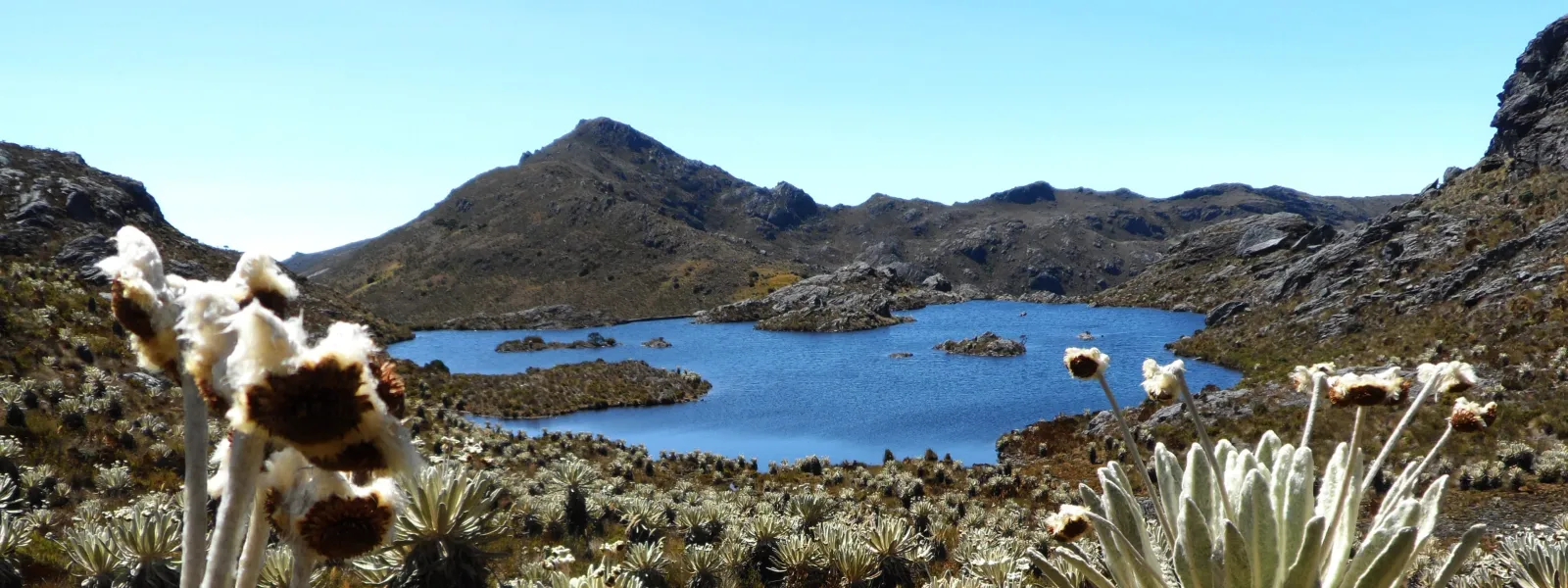
In the Andean region, high-mountain ecosystems known as páramos capture water from the fog and supply it to the lowlands. One such ecosystem is the Santurbán páramo, which provides fresh water to more than two million people in Colombia.
Santurbán, like the other páramos on the continent, also captures large amounts of carbon, making it a key ally in mitigating the climate crisis. It is also a refuge for hundreds of endangered species, including the iconic spectacled bear.
The land in and around the páramo contains gold and other minerals. This has put Santurbán in the spotlight of the multinational mining industry, which for decades has sought to establish large-scale projects in the ecosystem that threaten to degrade it.
The Committee for the Defense of Water and the Santurbán Páramo—a coalition of environmental advocates—has thwarted these ongoing attempts, with support from AIDA and other civil society organizations.
Background
The Santurbán páramo is located in the heart of the Eastern Cordillera of the Colombian Andes, in the departments of Santander and Norte de Santander, at an elevation ranging from 2,200 to 4,290 meters above sea level.
It covers an area of 129,743 hectares and is home to 57 lakes. It serves as a habitat for 457 plant species and 293 species of vertebrate fauna.
There are mineral deposits in Santurbán, primarily gold, but also silver and copper. This explains the region’s mining tradition, particularly in the part of the páramo located in Santander, in the province of Soto Norte. The communities in the area have built their culture and identity around gold mining, which is mainly artisanal and small-scale.
But since the 1990s, the gold deposits in the páramo have also attracted foreign mining conglomerates seeking to develop large-scale projects. This has raised concerns among the population that relies on the Santurbán water sources, who have mobilized in defense of water, their land, and life.
Although national and international regulations prohibit mining in páramos, the Colombian government has granted mining concessions to transnational corporations in Santurbán.

Photo: Keishpixl / Pixabay.
The long struggle to protect the páramo
One of the companies that sought to develop large-scale mining in Santurbán is Eco Oro Minerals Corp.—formerly Greystar Resources—a Canadian company that intended to establish the Angostura open-pit mine there to extract gold and silver. Between 1994 and 1995, the company acquired its mining titles and conducted exploration. And in 2010, it applied for a mining permit.
That was the year AIDA became involved in defending the ecosystem, supporting the Committee for the Defense of Water and the Santurbán Páramo. Our legal work helped convince the Colombian government to deny the mine an environmental permit in May 2011.
In January 2013, the government designated a portion of the páramo (11,700 hectares) as a Regional Natural Park. That year—together with the committee and partner organizations—we carried out a campaign and advocacy efforts to urge the government to recognize the entire Santurbán area as a páramo ecosystem through a delimitation based on scientific criteria. In December 2014, the Ministry of the Environment established a delimitation that protected 76% of the páramo (98,954 hectares).
Furthermore, as a result of a litigation supported by AIDA, in February 2016, Colombia’s highest court reaffirmed that mining in páramos is prohibited.
That same year, in December, the International Finance Corporation (IFC), the World Bank Group’s private sector arm, decided to divest from Eco Oro Minerals. This achievement was the result of a process that began in 2012, when the committee—advised and supported by AIDA and international partner organizations—filed a complaint before an independent accountability mechanism, which concluded that the IFC’s investment in the Angostura project failed to take into account the project’s social and environmental impacts, thereby contradicting the financial institution’s internal policies.
Also in 2016, Eco Oro Minerals filed an arbitration claim against the Colombian government with the International Centre for Settlement of Investment Disputes (ICSID), arguing that it had been adversely affected by government decisions aimed at protecting the country’s páramos, including the delimitation of Santurbán.
In 2017, the Constitutional Court invalidated the delimitation because the affected communities were not consulted. The high court ordered that a participatory delimitation be carried out.
And that year, a new threat to Santurbán emerged when the Canadian multinational Aris Mining applied for an environmental permit for Soto Norte, a gold mining project located near the páramo. Following citizen protests and technical objections, in October 2020, the National Environmental Licensing Authority shelved the project.
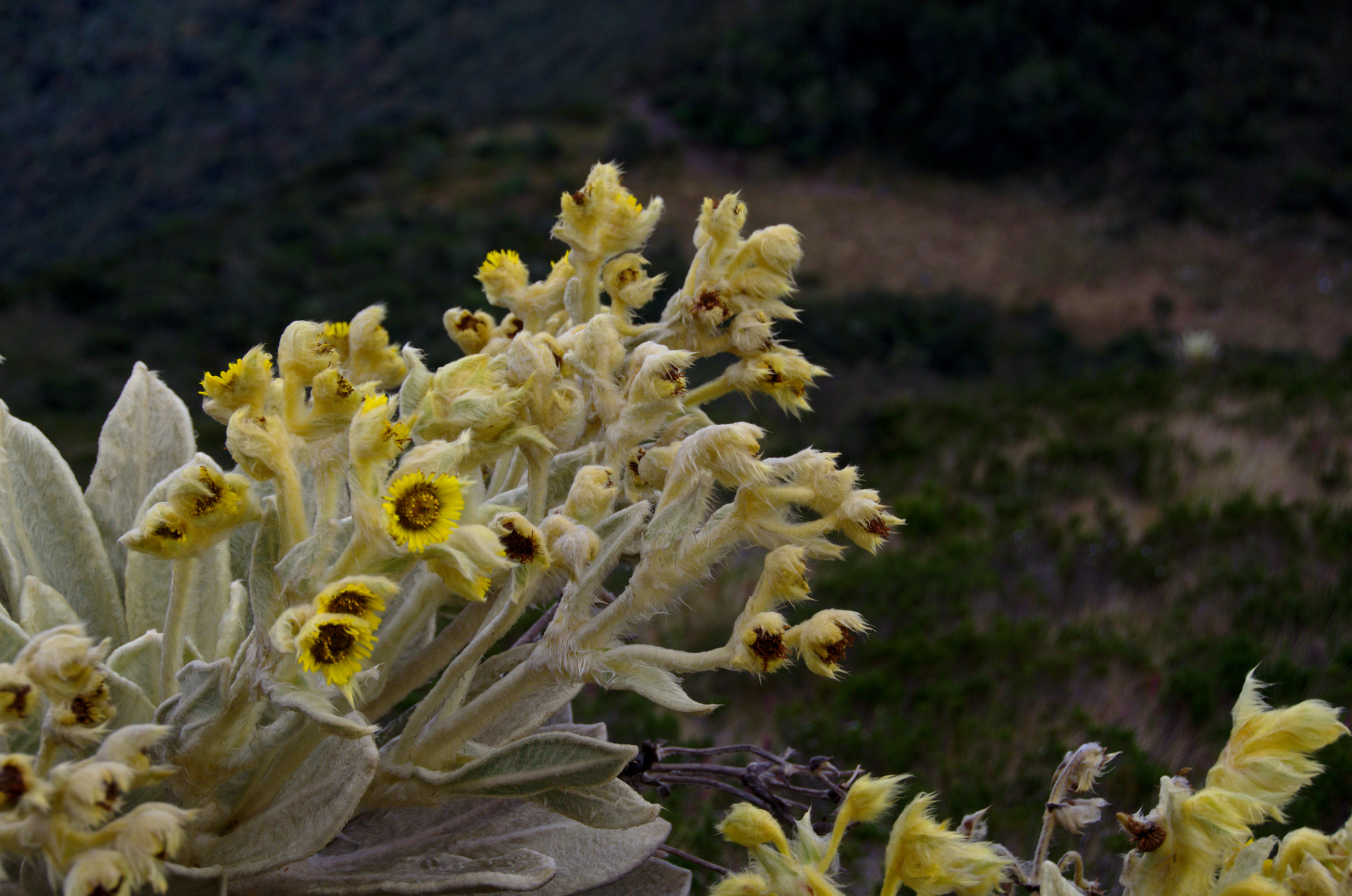
Photo: Aztlec.
Current situation
In March 2025, the Colombian government designated the western flank of the Santurbán massif as a temporary renewable natural resource reserve area, delimiting and protecting an area of 75,344.65 hectares. This resulted in a two-year suspension of the Soto Norte project. However, Aris Mining's contract to formalize Calimineros' small-scale mining activities through the purchase and processing of mineralized material remains in effect.
In addition, the Canadian mining company continues to move the project forward. In September 2025, it released its prefeasibility study, revising the mine’s original design.
Meanwhile, members of the Committee for the Defense of Water and the Santurbán Páramo face threats and stigmatization because of their work. In March 2025, UN Special Rapporteurs and the Working Group on Business and Human Rights denounced these incidents in communications sent to the governments of Colombia, Canada, and the United Arab Emirates, as well as to the companies Aris Mining and MDC Industry Holding Company LLC, the former co-owner of the Soto Norte project.
Regarding the arbitration claim filed by Eco Oro Minerals, in July 2024, ICSID ruled in favor of the Colombian government and rejected the Canadian company’s claim for USD 1.1 billion in compensation.
Concerning the delimitation of Santurbán, in July 2026, the Ministry of the Environment issued a resolution introducing the concept of "progressive delimitation." On that basis, the government proposes to progressively demarcate the páramo, covering 29,199 hectares across 19 municipalities—those where the participatory agreements required by the Constitutional Court in its 2017 ruling have already been finalized. It also proposes two measures on the creation and expansion of reserves to restrict mining in the ecosystem.
Learn more about the impacts of mining on the páramos of Latin America (in Spanish).
Partners:
Related projects
Colombian Constitutional Court Admits AIDA's Complaint Against Mining Code (Spanish Text Only)
CORTE CONSTITUCIONAL ADMITE NUEVA DEMANDA CONTRA CÓDIGO DE MINAS PARA DEFENDER EL PRINCIPIO DE PRECAUCIÓN FRENTE A LAS ACTIVIDADES MINERAS PARA PUBLICACIÓN INMEDIATA CONTACTOS: Jerónimo Rodríguez, AIDA, Tel. (571) 2681804 Andrés Idarraga, CENSAT, Tel. (571) 2440581 [email protected] [email protected] BOGOTÁ, 20 de mayo de 2009.- La Corte Constitucional colombiana admitió esta semana la acción de inconstitucionalidad presentada por la Asociación Interamericana para la Defensa del Ambiente (AIDA), CENSAT – Agua Viva, el Observatorio de Conflictos Ambientales de la Universidad de Caldas y la Corporación Gestión por los Intereses Ambientales y Públicos (Iniciativa GESAP) contra los artículos 203 y 213 del Código de Minas, que permiten el uso de los recursos naturales para la exploración minera sin licencia ambiental y limitan las causales por las que las autoridades ambientales pueden negar una licencia ambiental para actividades mineras. Los artículos del Código de Minas demandados violan la Constitución de Colombia y la legislación ambiental internacional. Estos artículos priorizan la actividad minera sobre la protección ambiental, al punto de limitar las capacidades de las propias autoridades para verificar las condiciones de la explotación, y eventualmente autorizar la exploración y explotación con condiciones que sean ambientalmente sostenibles. Por esto, se violan entre otros, los principios de desarrollo sostenible y el principio de precaución que son parte fundamental de nuestra legislación. “Reconocemos que la minería es una industria importante para nuestro país, pero también lo es la protección de los recursos naturales, que garantizan la existencia misma de la especie humana en la actualidad y en el futuro. Por esto solicitamos a la Corte que aplique el principio de desarrollo sostenible reconocido en nuestra Constitución para que la minería se implemente sin la generación de daños severos e irreversibles a zonas estratégicas, como los páramos, y de las que dependen muchas comunidades”, señaló Jerónimo Rodríguez, asesor legal de AIDA en Colombia. Esta demanda se une a la presentada por AIDA y otros contra el artículo 34 del Código de Minas, que está pendiente de sentencia por la Corte Constitucional Colombiana. Ambas demandas recogen e insisten sobre las preocupaciones del Ministerio de Ambiente y de la Procuraduría General de la Nación frente a los efectos de las actividades mineras en el ambiente y la necesidad imperiosa de control, sin debilitar aún más las normas. “Buscamos con esta demanda de inconstitucionalidad la efectiva protección al ambiente y que el uso ocasional o transitorio de los recursos naturales en las actividades de exploración deba evaluarse por las autoridades ambientales. Además que las licencias ambientales no estén limitadas por causales formales, sino que las autoridades ambientales puedan, cuando sea necesario para protección ambiental y del interés público, negar licencias para la minería en aplicación del principio de precaución y de normas ambientales aplicables”, concluyó Rodríguez. AIDA es una ONG legal ambiental hemisférica que trabaja para fortalecer la capacidad de las personas para garantizar su derecho individual y colectivo a un ambiente sano por medio del desarrollo, aplicación y cumplimiento efectivo de la legislación nacional e internacional. Entre otros temas, AIDA prioriza la protección del derecho al agua y asegurar recursos de agua dulce adecuados para las comunidades y los ecosistemas.
Read moreCosta Rican Court Orders Expropriation Of Land Slated For Tourism Development In The Leatherback Marine National Park
For immediate release: May 14, 2008 Press contacts: Rolando Castro, Attorney, CEDARENA Gladys Martínez, Attorney, AIDA (506) 2837080, [email protected] (506) 2837080, [email protected] COSTA RICAN COURT ORDERS EXPROPRIATION OF LAND SLATED FOR TOURISM DEVELOPMENT IN THE LEATHERBACK MARINE NATIONAL PARK SAN JOSÉ— On May 5th, the Constitutional Chamber of the Supreme Court of Justice of Costa Rica ordered the Ministry of Environment and Energy (MINAE) to begin expropriating private lands slated for tourism development within the Leatherback Marine National Park (LMNP) in Guanacaste. This decision follows a lawsuit filed in March 2005 by AIDA and its participating organizations in Costa Rica, the Center for Environmental Law and Natural Resources (CEDARENA), and Justice for Nature (JPN). The complaint alleged that the National Environmental Technical Secretary (SETENA), the Municipality of Santa Cruz, the Ministry of Finance, and MINAE violated the constitutional right to a healthy and ecologically balanced environment by not protecting the LMNP and the nesting sites of the leatherback turtle located therein. This is a very important precedent in Costa Rica and the hemisphere, given that tourism development is proceeding at an unprecedented pace throughout the Americas. The Municipality of Santa Cruz and SETENA had issued construction permits within the park, ignoring the impacts that tourism development would have upon the leatherback turtles. With this decision, these permits are now invalid. “We hope that the Municipality and SETENA have received a clear message that they must take extreme caution with regard to national parks, and not approve projects that endanger what the parks were created to protect,” stated Rolando Castro, an attorney for CEDARENA. “Construction and operation of tourist sites within the LMNP would aggravate existing threats to the beach,” he added. Leatherback turtles are animals from the Jurassic age that have been declared an endangered species on the international level. They require particular nesting conditions that can be easily disturbed by the presence of human beings and construction lights. Hence, the development of tourist sites can severely affect the turtles’ reproduction, and consequently, their survival. The Leatherback Marine National Park has become the most important nesting site for this species in the Western Pacific Ocean. “MINAE should immediately heed this order to prevent the destruction that has occurred at other Costa Rican nesting beaches, such as Flamingo and Tamarindo,” affirmed Gladys Martinez, AIDA attorney. “All authorities within the Costa Rican government have an obligation to protect this species, which is part of our common patrimony, in addition to being a tourist attraction and hence a valuable economic resource for the country,” she added.
Read moreConstitutional Court Orders Change in Environmental License for Baba Dam, Ecuador
CONSTITUTIONAL COURT ORDERS CHANGE IN ENVIRONMENTAL LICENSE FOR BABA DAM, ECUADOR FOR IMMEDIATE PUBLICATION: CONTACTS: Silvana Rivadeneira (593 3) 2 459822 Astrid Puentes, AIDA (5255) 5212-0141 [email protected] [email protected] Quito, January 8, 2009 - The Constitutional Court of Ecuador ordered the country's Ministry of Environment to review and reformulate the environmental authorization granted to Baba's Multi-purpose Project (PMB), and the Attorney-General to audit the procedures and the approval of the environmental impact evaluations. According to the court's decision, there are risks of severe, irreparable damage to the Ecuatorian biodiversity that weren't properly assessed, in accordance with the conclusions of the Inter-American Development Bank experts. This resolution from Ecuador's highest court is a consequence of the lawsuit promoted by ECOLEX in May, 2007, which was rejected by the initial judge. ECOLEX then appealed to the Constitutional Court, insisting that it consisted in a violation of the human rights to a safe environment, to water, to property, to work, and to food, among others. Last June AIDA and the international organizations International Rivers and FIAN International supported the appeal through an amicus curiae document, denouncing the violations to international environmental standards and human rights, all of those binding the State of Ecuador. In addition to that, experts from the US organization ELAW also had mentioned serious mistakes in the study. The Constitutional Court's decision effectively recognized that the lack of a adequate evaluation violated the previously mentioned rights, as well as the principle of environmental caution. Silvana Rivadeneira, from ECOLEX, stated that "the decision is a great triumph to the affected communities and to the country, since it reinforces that the environmental protection is also a matter of national interest." The PMB would have implied in the flooding of more than 2.500 acres of important ecosystems at the province of Los Rios, affecting the river populations of the Baba Quevedo Vinces river and the habitat of endangered species such as the rascón bird, the small deer and chaleco's ant-eating bear. The project was authorized by the Ministry of Environment in November 2006 and it is being executed by the company Hidronación S.A., which took it over after the Brazilian Odebrecht was expeled from the country by the Ecuatorian government. In September 2008, AIDA, Earthjustice and ECOLEX, FIAN International and International Rivers requested for the international credits from the Clean Development Mechanism (a tool from the Kyoto Protocol to help fight climate change) not to be granted to the PMB. "The Baba project is an example of unclean energy and it could worsen the climate change, the court's decision confirms its lack of sustainability", said Monti Aguirre from International Rivers. "It is very significant that the court issued such decision a few days after the World Conference on Climate Change in Poland" mentioned Astrid Puentes, co-director of AIDA. "Given the negative effects for the environment, the people and the climate change caused by the hydroelectric dams - the very reason for which we supported such demand - the order to completely evaluate Baba's project is outstanding news. We will be following the review closely, and we expect this decision to serve as a precedent for the hundreds of hydroelectric powerplants that are currently ongoing in the Americas with flaws very similar to those present in Baba.
Read more