
Project
Alberto Peña Kay
Protecting the Santurban páramo from mining's damage
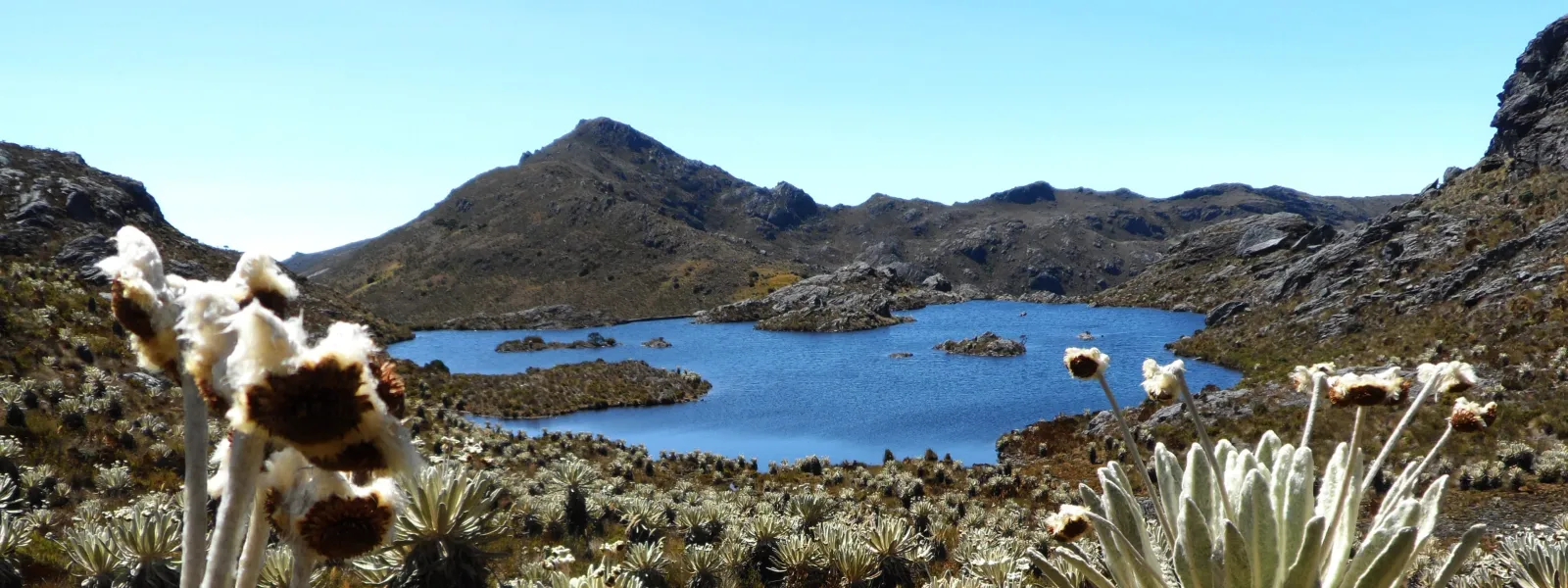
In the Andean region, high-mountain ecosystems known as páramos capture water from the fog and supply it to the lowlands. One such ecosystem is the Santurbán páramo, which provides fresh water to more than two million people in Colombia.
Santurbán, like the other páramos on the continent, also captures large amounts of carbon, making it a key ally in mitigating the climate crisis. It is also a refuge for hundreds of endangered species, including the iconic spectacled bear.
The land in and around the páramo contains gold and other minerals. This has put Santurbán in the spotlight of the multinational mining industry, which for decades has sought to establish large-scale projects in the ecosystem that threaten to degrade it.
The Committee for the Defense of Water and the Santurbán Páramo—a coalition of environmental advocates—has thwarted these ongoing attempts, with support from AIDA and other civil society organizations.
Background
The Santurbán páramo is located in the heart of the Eastern Cordillera of the Colombian Andes, in the departments of Santander and Norte de Santander, at an elevation ranging from 2,200 to 4,290 meters above sea level.
It covers an area of 129,743 hectares and is home to 57 lakes. It serves as a habitat for 457 plant species and 293 species of vertebrate fauna.
There are mineral deposits in Santurbán, primarily gold, but also silver and copper. This explains the region’s mining tradition, particularly in the part of the páramo located in Santander, in the province of Soto Norte. The communities in the area have built their culture and identity around gold mining, which is mainly artisanal and small-scale.
But since the 1990s, the gold deposits in the páramo have also attracted foreign mining conglomerates seeking to develop large-scale projects. This has raised concerns among the population that relies on the Santurbán water sources, who have mobilized in defense of water, their land, and life.
Although national and international regulations prohibit mining in páramos, the Colombian government has granted mining concessions to transnational corporations in Santurbán.
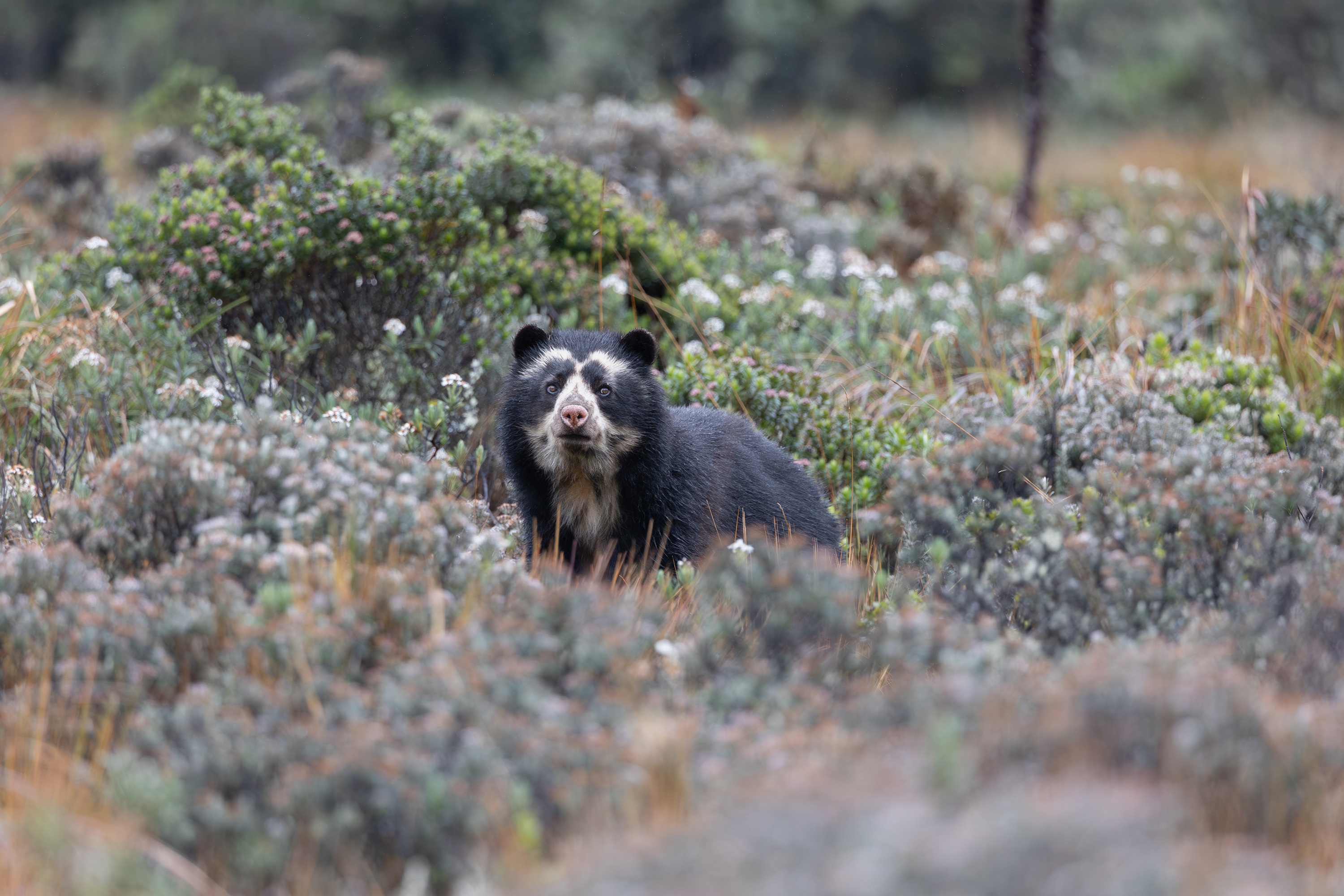
Photo: Keishpixl / Pixabay.
The long struggle to protect the páramo
One of the companies that sought to develop large-scale mining in Santurbán is Eco Oro Minerals Corp.—formerly Greystar Resources—a Canadian company that intended to establish the Angostura open-pit mine there to extract gold and silver. Between 1994 and 1995, the company acquired its mining titles and conducted exploration. And in 2010, it applied for a mining permit.
That was the year AIDA became involved in defending the ecosystem, supporting the Committee for the Defense of Water and the Santurbán Páramo. Our legal work helped convince the Colombian government to deny the mine an environmental permit in May 2011.
In January 2013, the government designated a portion of the páramo (11,700 hectares) as a Regional Natural Park. That year—together with the committee and partner organizations—we carried out a campaign and advocacy efforts to urge the government to recognize the entire Santurbán area as a páramo ecosystem through a delimitation based on scientific criteria. In December 2014, the Ministry of the Environment established a delimitation that protected 76% of the páramo (98,954 hectares).
Furthermore, as a result of a litigation supported by AIDA, in February 2016, Colombia’s highest court reaffirmed that mining in páramos is prohibited.
That same year, in December, the International Finance Corporation (IFC), the World Bank Group’s private sector arm, decided to divest from Eco Oro Minerals. This achievement was the result of a process that began in 2012, when the committee—advised and supported by AIDA and international partner organizations—filed a complaint before an independent accountability mechanism, which concluded that the IFC’s investment in the Angostura project failed to take into account the project’s social and environmental impacts, thereby contradicting the financial institution’s internal policies.
Also in 2016, Eco Oro Minerals filed an arbitration claim against the Colombian government with the International Centre for Settlement of Investment Disputes (ICSID), arguing that it had been adversely affected by government decisions aimed at protecting the country’s páramos, including the delimitation of Santurbán.
In 2017, the Constitutional Court invalidated the delimitation because the affected communities were not consulted. The high court ordered that a participatory delimitation be carried out.
And that year, a new threat to Santurbán emerged when the Canadian multinational Aris Mining applied for an environmental permit for Soto Norte, a gold mining project located near the páramo. Following citizen protests and technical objections, in October 2020, the National Environmental Licensing Authority shelved the project.
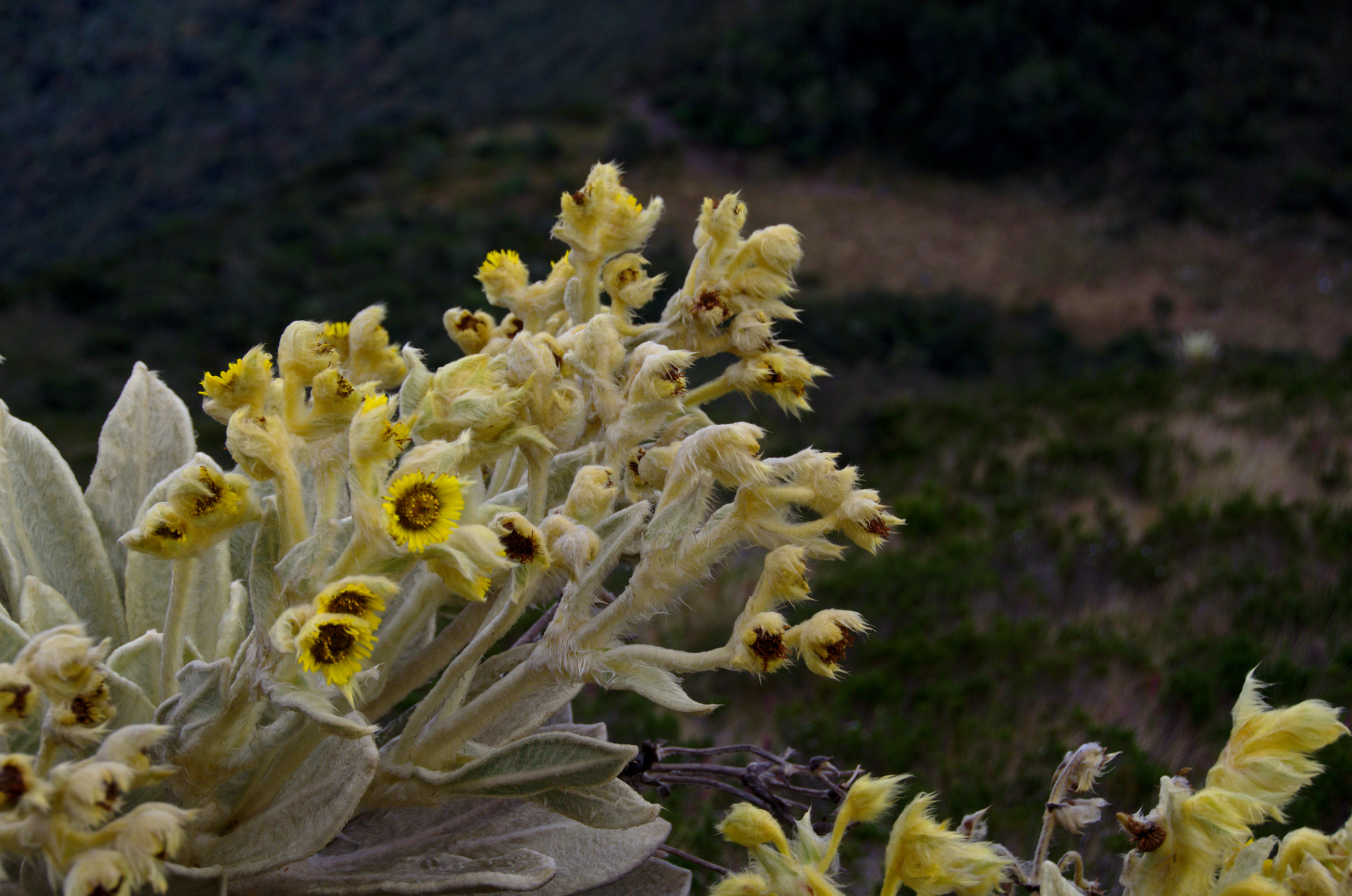
Photo: Aztlec.
Current situation
In March 2025, the Colombian government designated the western flank of the Santurbán massif as a temporary renewable natural resource reserve area, delimiting and protecting an area of 75,344.65 hectares. This resulted in a two-year suspension of the Soto Norte project. However, Aris Mining's contract to formalize Calimineros' small-scale mining activities through the purchase and processing of mineralized material remains in effect.
In addition, the Canadian mining company continues to move the project forward. In September 2025, it released its prefeasibility study, revising the mine’s original design.
Meanwhile, members of the Committee for the Defense of Water and the Santurbán Páramo face threats and stigmatization because of their work. In March 2025, UN Special Rapporteurs and the Working Group on Business and Human Rights denounced these incidents in communications sent to the governments of Colombia, Canada, and the United Arab Emirates, as well as to the companies Aris Mining and MDC Industry Holding Company LLC, the former co-owner of the Soto Norte project.
Regarding the arbitration claim filed by Eco Oro Minerals, in July 2024, ICSID ruled in favor of the Colombian government and rejected the Canadian company’s claim for USD 1.1 billion in compensation.
Concerning the delimitation of Santurbán, in July 2026, the Ministry of the Environment issued a resolution introducing the concept of "progressive delimitation." On that basis, the government proposes to progressively demarcate the páramo, covering 29,199 hectares across 19 municipalities—those where the participatory agreements required by the Constitutional Court in its 2017 ruling have already been finalized. It also proposes two measures on the creation and expansion of reserves to restrict mining in the ecosystem.
Learn more about the impacts of mining on the páramos of Latin America (in Spanish).
Partners:
Related projects
Doe Run Smelter in La Oroya, Peru, Loses Environmental Certification
FOR IMMEDIATE PUBLICATION: April 9, 2008 Press Contacts: Perry Gottesfeld, Executive Director OK International 415-362-9898 [email protected] Anna Cederstav, Ph.D. AIDA and Earthjustice 510-550-6700 [email protected] DOE RUN SMELTER IN LA OROYA, PERU, LOSES ENVIRONMENTAL CERTIFICATION Lima, Peru – Doe Run Peru, which operates one of the largest metal-smelters in the hemisphere, has lost its Environmental Certification in a highly unusual move taken by the company’s independent third-party auditors. TUV Rheinland initially granted the certification less than two years ago, but revoked it March 11, 2008 citing non-compliance with Peruvian environmental laws and the lack of adequate pollution prevention measures. The loss of the certification comes on the heels of a $234,000 US fine imposed last year against Doe Run Peru for several serious violations of environmental laws in Peru. This week, Peruvian authorities released a report detailing those violations, including noncompliance with the standards for lead and particulate matter. Doe Run Peru obtained the environmental certification under ISO 14001 in 2006 calling it a “significant milestone in delivering on our commitments to our communities, our employees and the environment." The Doe Run Company’s web site calls the ISO certification an “internationally recognized symbol of a company’s dedication to superior quality, customer satisfaction and continuous improvement.” Nevertheless, a number of studies conducted by the government as well as international health experts have shown that almost all of the children living in the area surrounding Doe Run Peru’s smelter have unacceptably high levels of lead in their bodies. Many are severely exposed and require immediate medical treatment. “TUV Rheinland acted responsibly in taking this unprecedented action to underscore the need for Doe Run Peru to do more to protect public health in La Oroya” said Perry Gottesfeld, Executive Director of Occupational Knowledge International (USA). “Revoking the certification should send a strong message to Doe Run that they have much more work to do,.” said Anna Cederstav, Staff Scientist with AIDA and Earthjustice, and author of the book La Oroya Cannot Wait. “Nevertheless, we are still concerned that, if paid enough, another certifying body will agree to provide Doe Run with a similar certification.” she added. In 2006, several organizations filed a petition with the Inter-American Commission on Human Rights of the Organization of American States, seeking a recommendation that the Peruvian government implement urgent measures to halt the grave violations against the health and lives of the citizens of La Oroya. Last year, the Commission agreed and requested that the state implement such precautionary measures. The World Health Organization (WHO) estimates that 120 million people are overexposed to lead (approximately three times the number infected by HIV/AIDS) and 99 percent of the most severely affected reside in the developing world. Lead affects both children and adults and causes brain damage, metal retardation, and other learning disabilities in children. In addition to lead, the population of La Oroya is also exposed to extreme levels of other harmful contaminants, including arsenic, cadmium, and sulfur dioxide.
Read moreThreats from Proposed Dam in La Parota, Mexico, Challenged in Amicus Curiae Legal Brief
AIDA and other international and Mexican organizations submitted a legal brief (Amicus Curiae) to the Collegiate Tribunal of Guerrero in Acapulco in support of a constitutional lawsuit brought by CECOP and the Mexican Center for Environmental Law against the Federal Commission of Electricity (CFE) and other authorities. The lawsuit alleges that the Mexican authorities failed to consult with affected parties and adequately evaluate the environmental impacts of the construction of La Parota dam. Approval of the hydroelectric project disregards national laws, as well as international human rights and environmental laws, including those that protect the rights to a fair trial and economic, social and environmental rights. Among other things, the project’s major human rights violations are a lack of information provided to those affected by the dam and gaps in the comprehensive environmental impact study, which is designed to evaluate damages the dam will cause, measures to prevent impacts, as well as alternatives to the project. Considering these flaws and the human rights violations of people affected by the La Parota megaproject, we appealed to the Collegiate Tribunal of Guerrero, arguing that it should make use of its power, accept the arguments of the Amicus, and cancel all work related to the construction of the La Parota dam until the Mexican government completely complies with local people’s demands and applicable national and international laws. AIDA will continue pursing this paradigmatic case because it is an example of how infrastructure development can cause severe environmental damages and human rights violations in the hemisphere.
Read moreHuman Rights Body Calls on Peru to Protect Citizens from Contamination by American-Owned Smelter
For immediate release: September 5, 2007 PRESS CONTACTS: Astrid Puentes, AIDA (+5255) 52120141 [email protected] Martin Wagner, (510) 550-6700 [email protected] Human Rights Body Calls on Peru to Protect Citizens from Contamination by American-owned Smelter Oakland, CA; Lima, Peru – The Inter-American Commission on Human Rights (IACHR) has asked the government of Peru to take immediate steps to protect the health of inhabitants of La Oroya, Peru, who suffer severe health impacts due to contamination from a smelter owned by American billionaire Ira Rennert. Rennert’s company, Doe Run Peru, owns and operates the smelter. La Oroya residents suffer health problems related to emissions of lead, arsenic, cadmium, sulfur dioxide and other pollution from the smelter. In 2006, the Blacksmith Institute identified La Oroya as one of the ten most polluted places in the world (http://www.blacksmithinstitute.org/ten.php). The Commission ordered Peru to conduct comprehensive medical examinations to determine the extent of the injury to local people and to provide medical treatment to those who need it. The Commission acted in response to a petition submitted by lawyers from the Peruvian Society for Environmental Law (SPDA), the Inter-American Association for Environmental Defense (AIDA), Earthjustice, and the Center for Human Rights and Environment. The petition was filed on behalf of a group of La Oroya residents claiming that Peru’s failure to control the smelter pollution violates their human rights, and especially those of the most vulnerable population – the children impacted by the severe lead contamination. “Controlling contamination from the smelter is crucial to protect the rights and lives of these people,” said Astrid Puentes of AIDA. “The Commission’s action confirms that neither Peru nor the company have taken adequate steps to protect health and human rights in La Oroya,” she added. Since 1999, the Government of Peru has known that almost all the children living near the complex suffer from lead poisoning, yet has failed to remedy the situation. A March 2005 study showed that 99 percent of the children tested had blood lead levels vastly exceeding the safe limits established by the US EPA and the World Health Organization. “We are celebrating, with the hope that we will finally have positive results for the protection of the health of our children, and ourselves,” said one La Oroya petitioner, who, like all the petitioners, has asked to remain anonymous for fear of retaliation by company workers. “In calling on Peru to protective the people of La Oroya, the Commission is indicating its support for people throughout the hemisphere who are threatened by extreme toxic contamination,” said Earthjustice’s Martin Wagner. “The Commission is acknowledging that this kind of pollution violates human rights, and that international law thus requires governments to prevent such tragedies and to take steps to remedy them when they happen. The Commission’s request is based on its interpretation of Peru’s international legal obligations, and it is the government’s responsibility to satisfy those obligations.” “We hope to see the transparent, effective, and rapid implementation of these precautionary measures by Peruvian government authorities” declared Carlos Chirinos, from the SPDA. “The government has moved far too slow in addressing this health crisis,” he added. The Commission’s decision is a preliminary step in its consideration of the petition from the residents of La Oroya. “The Commission has clearly decided that the people in La Oroya cannot afford to await the outcome of the full petition process,” said Wagner. “No matter what the details of its final decision, the Commission is obviously convinced that rights are being violated and the government must act now.”
Read more