
Project
Alberto Peña Kay
Protecting the Santurban páramo from mining's damage
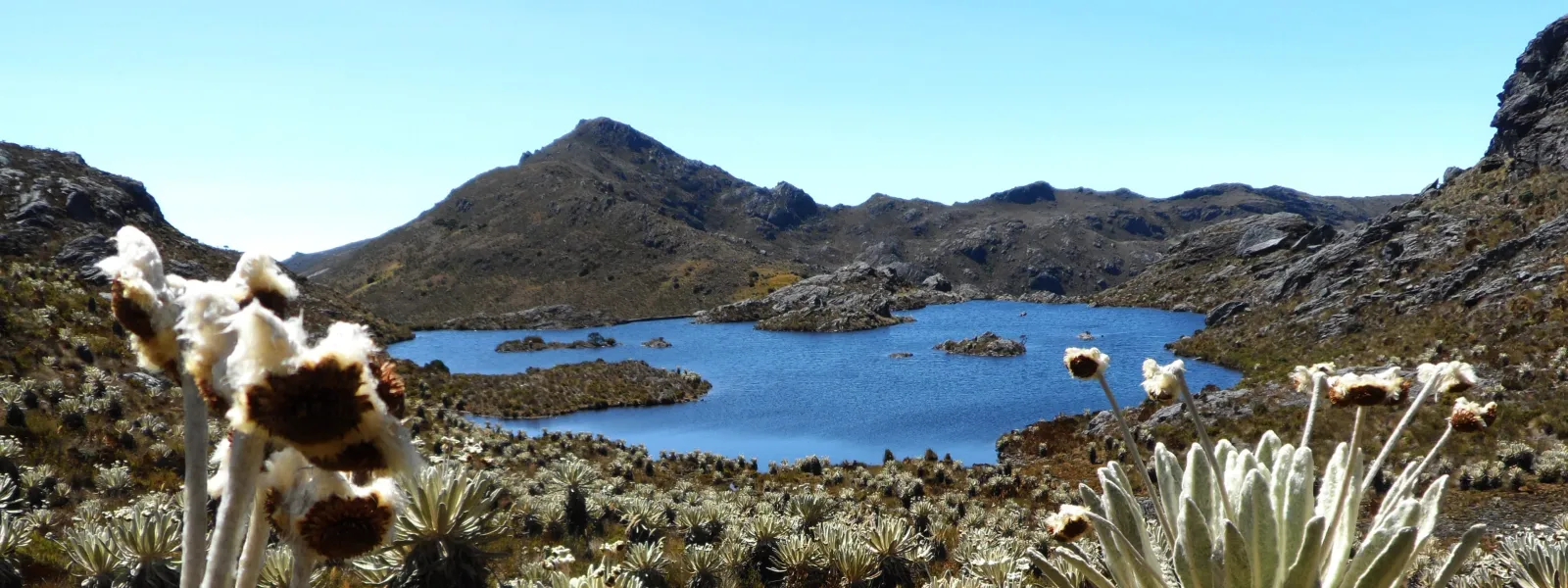
In the Andean region, high-mountain ecosystems known as páramos capture water from the fog and supply it to the lowlands. One such ecosystem is the Santurbán páramo, which provides fresh water to more than two million people in Colombia.
Santurbán, like the other páramos on the continent, also captures large amounts of carbon, making it a key ally in mitigating the climate crisis. It is also a refuge for hundreds of endangered species, including the iconic spectacled bear.
The land in and around the páramo contains gold and other minerals. This has put Santurbán in the spotlight of the multinational mining industry, which for decades has sought to establish large-scale projects in the ecosystem that threaten to degrade it.
The Committee for the Defense of Water and the Santurbán Páramo—a coalition of environmental advocates—has thwarted these ongoing attempts, with support from AIDA and other civil society organizations.
Background
The Santurbán páramo is located in the heart of the Eastern Cordillera of the Colombian Andes, in the departments of Santander and Norte de Santander, at an elevation ranging from 2,200 to 4,290 meters above sea level.
It covers an area of 129,743 hectares and is home to 57 lakes. It serves as a habitat for 457 plant species and 293 species of vertebrate fauna.
There are mineral deposits in Santurbán, primarily gold, but also silver and copper. This explains the region’s mining tradition, particularly in the part of the páramo located in Santander, in the province of Soto Norte. The communities in the area have built their culture and identity around gold mining, which is mainly artisanal and small-scale.
But since the 1990s, the gold deposits in the páramo have also attracted foreign mining conglomerates seeking to develop large-scale projects. This has raised concerns among the population that relies on the Santurbán water sources, who have mobilized in defense of water, their land, and life.
Although national and international regulations prohibit mining in páramos, the Colombian government has granted mining concessions to transnational corporations in Santurbán.
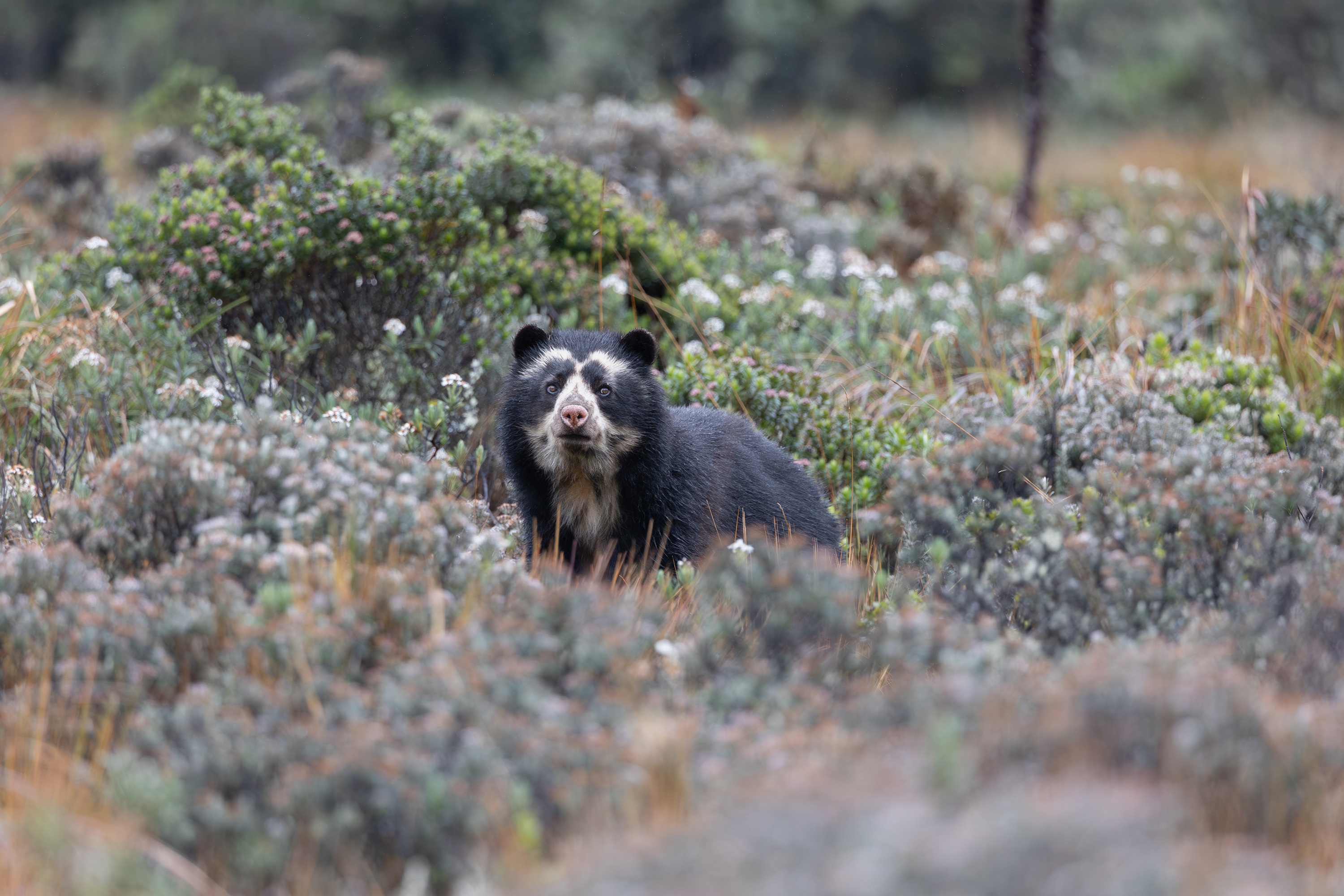
Photo: Keishpixl / Pixabay.
The long struggle to protect the páramo
One of the companies that sought to develop large-scale mining in Santurbán is Eco Oro Minerals Corp.—formerly Greystar Resources—a Canadian company that intended to establish the Angostura open-pit mine there to extract gold and silver. Between 1994 and 1995, the company acquired its mining titles and conducted exploration. And in 2010, it applied for a mining permit.
That was the year AIDA became involved in defending the ecosystem, supporting the Committee for the Defense of Water and the Santurbán Páramo. Our legal work helped convince the Colombian government to deny the mine an environmental permit in May 2011.
In January 2013, the government designated a portion of the páramo (11,700 hectares) as a Regional Natural Park. That year—together with the committee and partner organizations—we carried out a campaign and advocacy efforts to urge the government to recognize the entire Santurbán area as a páramo ecosystem through a delimitation based on scientific criteria. In December 2014, the Ministry of the Environment established a delimitation that protected 76% of the páramo (98,954 hectares).
Furthermore, as a result of a litigation supported by AIDA, in February 2016, Colombia’s highest court reaffirmed that mining in páramos is prohibited.
That same year, in December, the International Finance Corporation (IFC), the World Bank Group’s private sector arm, decided to divest from Eco Oro Minerals. This achievement was the result of a process that began in 2012, when the committee—advised and supported by AIDA and international partner organizations—filed a complaint before an independent accountability mechanism, which concluded that the IFC’s investment in the Angostura project failed to take into account the project’s social and environmental impacts, thereby contradicting the financial institution’s internal policies.
Also in 2016, Eco Oro Minerals filed an arbitration claim against the Colombian government with the International Centre for Settlement of Investment Disputes (ICSID), arguing that it had been adversely affected by government decisions aimed at protecting the country’s páramos, including the delimitation of Santurbán.
In 2017, the Constitutional Court invalidated the delimitation because the affected communities were not consulted. The high court ordered that a participatory delimitation be carried out.
And that year, a new threat to Santurbán emerged when the Canadian multinational Aris Mining applied for an environmental permit for Soto Norte, a gold mining project located near the páramo. Following citizen protests and technical objections, in October 2020, the National Environmental Licensing Authority shelved the project.
Photo: Aztlec.
Current situation
In March 2025, the Colombian government designated the western flank of the Santurbán massif as a temporary renewable natural resource reserve area, delimiting and protecting an area of 75,344.65 hectares. This resulted in a two-year suspension of the Soto Norte project. However, Aris Mining's contract to formalize Calimineros' small-scale mining activities through the purchase and processing of mineralized material remains in effect.
In addition, the Canadian mining company continues to move the project forward. In September 2025, it released its prefeasibility study, revising the mine’s original design.
Meanwhile, members of the Committee for the Defense of Water and the Santurbán Páramo face threats and stigmatization because of their work. In March 2025, UN Special Rapporteurs and the Working Group on Business and Human Rights denounced these incidents in communications sent to the governments of Colombia, Canada, and the United Arab Emirates, as well as to the companies Aris Mining and MDC Industry Holding Company LLC, the former co-owner of the Soto Norte project.
Regarding the arbitration claim filed by Eco Oro Minerals, in July 2024, ICSID ruled in favor of the Colombian government and rejected the Canadian company’s claim for USD 1.1 billion in compensation.
Concerning the delimitation of Santurbán, in July 2026, the Ministry of the Environment issued a resolution introducing the concept of "progressive delimitation." On that basis, the government proposes to progressively demarcate the páramo, covering 29,199 hectares across 19 municipalities—those where the participatory agreements required by the Constitutional Court in its 2017 ruling have already been finalized. It also proposes two measures on the creation and expansion of reserves to restrict mining in the ecosystem.
Learn more about the impacts of mining on the páramos of Latin America (in Spanish).
Partners:
Related projects
AIDA Supports Legal Action Against Baba Dam (Spanish Text Only)
Para publicación inmediata Contactos: Astrid Puentes (México) Natalia Landivar (Quito) Monti Aguirre (Berkeley, EEUU) (5255) 55212-0141 (593) 2 22 24 962 (1-510) 848-1155 [email protected] [email protected] [email protected] Organizaciones Internacionales apoyan amparo contra Proyecto Multipropósito Baba ante Tribunal Constitucional de Ecuadorpara proteger derechos humanos y ambiente QUITO, MÉXICO, BERKELEY, 19 DE JUNIO DE 2008-- La Asociación Interamericana para la Defensa del Ambiente (AIDA), presentó un amicus curiae (escrito de amigo de la corte) ante el Tribunal Constitucional de Ecuador, suscrito por International Rivers y FoodFirst Information and Action Network (FIAN) International, apoyando la demanda de Amparo Constitucional interpuesta por afectados del Proyecto Multipropósito Baba. Las organizaciones internacionales argumentaron violaciones a los derechos humanos y al ambiente en la aprobación del proyecto, por lo cual se unen a los demandantes para solicitar la suspensión de su ejecución. “Existen sinnúmero de experiencias donde la implementación inadecuada de mega-represas ha generado daños irreversibles, es necesario aprender de ellas” aseguró Astrid Puentes de AIDA. “La producción de energía no puede implementarse a costa del ambiente y de los derechos humanos, más aún cuando existen alternativas que ni siquiera se han evaluado y que a la larga, podrían evitar mayores costos para los países” puntualizó. El Proyecto Baba, que incluye la construcción de una represa que inundará más de 1,000 hectáreas, fue aprobado por el Ministerio de Medio Ambiente en noviembre de 2006 sin los estudios de impacto ambiental y sociales integrales que se exigen en la legislación nacional e internacionalmente. Estos estudios son de vital importancia, pues el proyecto afectará importantes zonas y tierras de cultivo, impactando seriamente la vida de cientos de personas que dependen de la pesca y la agricultura. Además, se dañará seriamente el hábitat de biodiversidad endémica y en peligro de extinción, como el ave rascón, el venado pequeño y el oso hormiguero de chaleco. “Tenemos la confianza que el Tribunal considerará los estándares internacionales en su decisión” mencionó Monti Aguirre de International Rivers. Dentro de los derechos afectados con este proyecto se incluyen el derecho a la calidad de vida, a la alimentación y a la vivienda, al ambiente sano, al debido proceso y a las garantías judiciales, y a la consulta previa, consagrados en la Constitución Ecuatoriana, en la Convención Americana, el Convenio 169 de la OIT, el Pacto Internacional de Derechos Económicos, Sociales y Culturales y el Protocolo de San Salvador, entre otros. “Buscamos aportar argumentos ante el Tribunal Constitucional evidenciando que la aprobación del proyecto ignora normas internacionales ambientales y de derechos humanos, lo cual puede generar responsabilidad internacional del gobierno ecuatoriano” aseguró Natalia Landivar de FIAN ECUADOR. “Confiamos en que se fallará de acuerdo a las normas” agregó.
Read moreCosta Rican Court Reinforces Protection of Leatherback National Marine Park: Declares Ruling Allowing Construction in Park Unconstitutional
SAN JOSÉ, Costa Rica, June 2, 2008 – On May 23rd, the Constitutional Chamber of the Supreme Court of Justice of Costa Rica repealed a municipal zoning regulation because of its impacts on the most important nesting zone for the leatherback sea turtle in the Eastern Pacific Ocean: the Leatherback National Marine Park (LNMP). The court resolution confirms that the park is necessary to guarantee protection of the leatherback turtle, an internationally declared endangered species, and therefore development within the park must be prevented. The court ruled in favor of the plaintiff, the Leatherback Trust, which filed suit in July 2006 against the zoning regulation for the Cabo Velas district of the city of Santa Cruz in the province of Guanacaste. In filing this suit, the Trust was advised by the Environmental and Natural Resources Law Center (CEDARENA), with the support the Interamerican Association for Environmental Defense (AIDA) regarding applicable aspects of international law. Only two weeks ago, the same court ordered the Ministry of Environment and Energy (MINAE) to begin expropriating private lands inside the park due to the impact of private developments on the leatherback turtles. This decision resulted from a case brought by CEDARENA, AIDA, and the Costa Rican organization, Justice for Nature (JPN). The zoning regulation that the court annulled in the May 23rd ruling allowed the City of Santa Cruz to issue construction permits inside the park, ignoring the serious impacts that such operations can have on leatherback turtles. “As is well known, leatherbacks require special nesting conditions and thus people’s presence and lights from construction operations on nesting beaches seriously impacts the turtles,” declared Mario Boza, biologist for The Leatherback Trust. The LNMP was created to preserve the conditions necessary for the turtles’ reproduction, but the zoning regulation disregarded this intention. “We are very pleased with the court decision in Costa Rica because it sets a precedent that builds hope for the conservation of this species,” declared Astrid Puentes, Legal Director for AIDA. “We hope that this decision will be replicated in other countries in the region,” added Puentes. The court’s decision is retroactive, so it should cancel all the permits granted and constructions operations initiated under the regulation. “With this decision the court is not only protecting Costa Rica’s ecological balance, as established in article 50 of the Costa Rican Constitution, but also ordering the country to comply with its commitments to international agreements,” declared Rolando Castro, a lawyer with CEDARENA. Press Contacts Rolando Castro, Attorney, (506) 283-7080 [email protected] CEDARENA Gladys Martínez, Attorney, AIDA: (506) 283-7080 [email protected]
Read moreDoe Run Smelter in La Oroya, Peru, Loses Environmental Certification
FOR IMMEDIATE PUBLICATION: April 9, 2008 Press Contacts: Perry Gottesfeld, Executive Director OK International 415-362-9898 [email protected] Anna Cederstav, Ph.D. AIDA and Earthjustice 510-550-6700 [email protected] DOE RUN SMELTER IN LA OROYA, PERU, LOSES ENVIRONMENTAL CERTIFICATION Lima, Peru – Doe Run Peru, which operates one of the largest metal-smelters in the hemisphere, has lost its Environmental Certification in a highly unusual move taken by the company’s independent third-party auditors. TUV Rheinland initially granted the certification less than two years ago, but revoked it March 11, 2008 citing non-compliance with Peruvian environmental laws and the lack of adequate pollution prevention measures. The loss of the certification comes on the heels of a $234,000 US fine imposed last year against Doe Run Peru for several serious violations of environmental laws in Peru. This week, Peruvian authorities released a report detailing those violations, including noncompliance with the standards for lead and particulate matter. Doe Run Peru obtained the environmental certification under ISO 14001 in 2006 calling it a “significant milestone in delivering on our commitments to our communities, our employees and the environment." The Doe Run Company’s web site calls the ISO certification an “internationally recognized symbol of a company’s dedication to superior quality, customer satisfaction and continuous improvement.” Nevertheless, a number of studies conducted by the government as well as international health experts have shown that almost all of the children living in the area surrounding Doe Run Peru’s smelter have unacceptably high levels of lead in their bodies. Many are severely exposed and require immediate medical treatment. “TUV Rheinland acted responsibly in taking this unprecedented action to underscore the need for Doe Run Peru to do more to protect public health in La Oroya” said Perry Gottesfeld, Executive Director of Occupational Knowledge International (USA). “Revoking the certification should send a strong message to Doe Run that they have much more work to do,.” said Anna Cederstav, Staff Scientist with AIDA and Earthjustice, and author of the book La Oroya Cannot Wait. “Nevertheless, we are still concerned that, if paid enough, another certifying body will agree to provide Doe Run with a similar certification.” she added. In 2006, several organizations filed a petition with the Inter-American Commission on Human Rights of the Organization of American States, seeking a recommendation that the Peruvian government implement urgent measures to halt the grave violations against the health and lives of the citizens of La Oroya. Last year, the Commission agreed and requested that the state implement such precautionary measures. The World Health Organization (WHO) estimates that 120 million people are overexposed to lead (approximately three times the number infected by HIV/AIDS) and 99 percent of the most severely affected reside in the developing world. Lead affects both children and adults and causes brain damage, metal retardation, and other learning disabilities in children. In addition to lead, the population of La Oroya is also exposed to extreme levels of other harmful contaminants, including arsenic, cadmium, and sulfur dioxide.
Read more