
Project
Alberto Peña Kay
Protecting the Santurban páramo from mining's damage
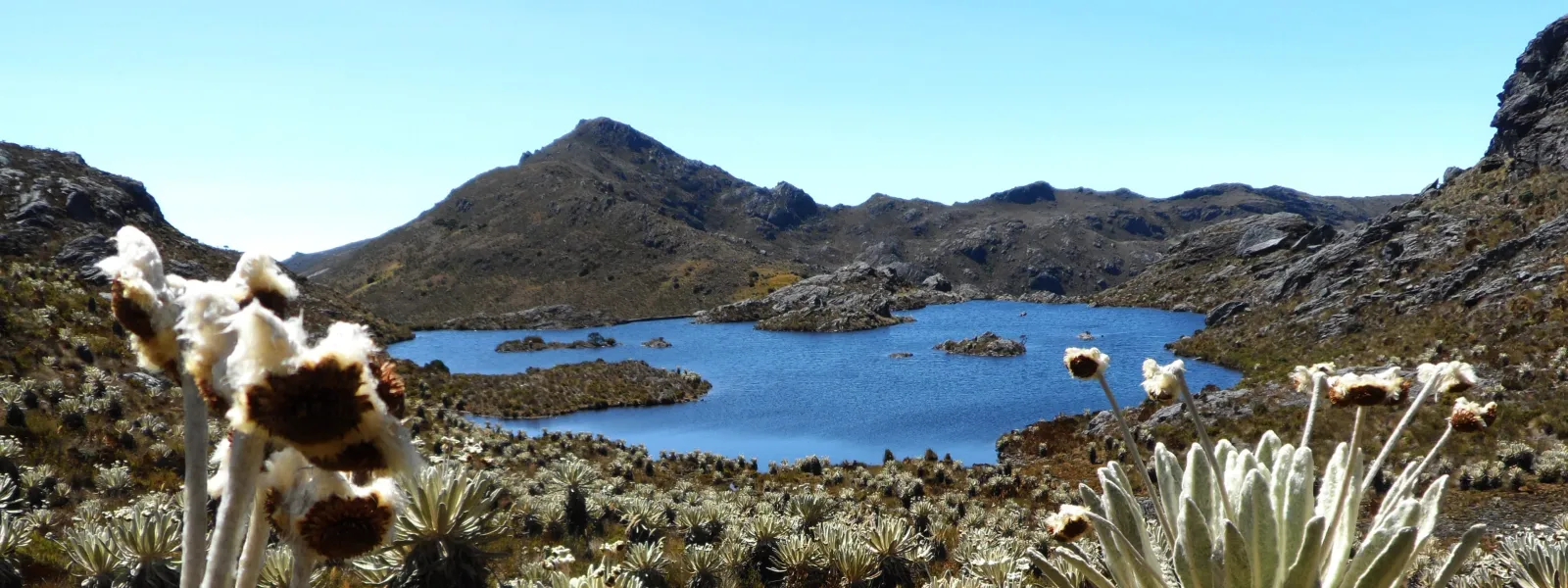
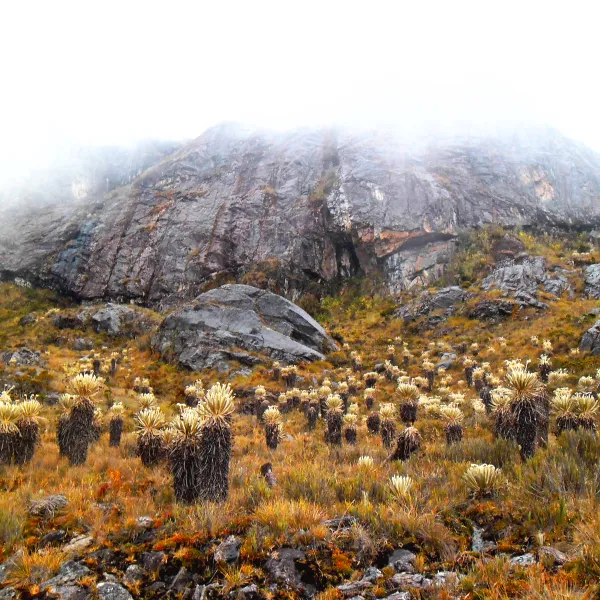
In the Andean region, high-mountain ecosystems known as páramos capture water from the fog and supply it to the lowlands. One such ecosystem is the Santurbán páramo, which provides fresh water to more than two million people in Colombia.
Santurbán, like the other páramos on the continent, also captures large amounts of carbon, making it a key ally in mitigating the climate crisis. It is also a refuge for hundreds of endangered species, including the iconic spectacled bear.
The land in and around the páramo contains gold and other minerals. This has put Santurbán in the spotlight of the multinational mining industry, which for decades has sought to establish large-scale projects in the ecosystem that threaten to degrade it.
The Committee for the Defense of Water and the Santurbán Páramo—a coalition of environmental advocates—has thwarted these ongoing attempts, with support from AIDA and other civil society organizations.
Background
The Santurbán páramo is located in the heart of the Eastern Cordillera of the Colombian Andes, in the departments of Santander and Norte de Santander, at an elevation ranging from 2,200 to 4,290 meters above sea level.
It covers an area of 129,743 hectares and is home to 57 lakes. It serves as a habitat for 457 plant species and 293 species of vertebrate fauna.
There are mineral deposits in Santurbán, primarily gold, but also silver and copper. This explains the region’s mining tradition, particularly in the part of the páramo located in Santander, in the province of Soto Norte. The communities in the area have built their culture and identity around gold mining, which is mainly artisanal and small-scale.
But since the 1990s, the gold deposits in the páramo have also attracted foreign mining conglomerates seeking to develop large-scale projects. This has raised concerns among the population that relies on the Santurbán water sources, who have mobilized in defense of water, their land, and life.
Although national and international regulations prohibit mining in páramos, the Colombian government has granted mining concessions to transnational corporations in Santurbán.

Photo: Keishpixl / Pixabay.
The long struggle to protect the páramo
One of the companies that sought to develop large-scale mining in Santurbán is Eco Oro Minerals Corp.—formerly Greystar Resources—a Canadian company that intended to establish the Angostura open-pit mine there to extract gold and silver. Between 1994 and 1995, the company acquired its mining titles and conducted exploration. And in 2010, it applied for a mining permit.
That was the year AIDA became involved in defending the ecosystem, supporting the Committee for the Defense of Water and the Santurbán Páramo. Our legal work helped convince the Colombian government to deny the mine an environmental permit in May 2011.
In January 2013, the government designated a portion of the páramo (11,700 hectares) as a Regional Natural Park. That year—together with the committee and partner organizations—we carried out a campaign and advocacy efforts to urge the government to recognize the entire Santurbán area as a páramo ecosystem through a delimitation based on scientific criteria. In December 2014, the Ministry of the Environment established a delimitation that protected 76% of the páramo (98,954 hectares).
Furthermore, as a result of a litigation supported by AIDA, in February 2016, Colombia’s highest court reaffirmed that mining in páramos is prohibited.
That same year, in December, the International Finance Corporation (IFC), the World Bank Group’s private sector arm, decided to divest from Eco Oro Minerals. This achievement was the result of a process that began in 2012, when the committee—advised and supported by AIDA and international partner organizations—filed a complaint before an independent accountability mechanism, which concluded that the IFC’s investment in the Angostura project failed to take into account the project’s social and environmental impacts, thereby contradicting the financial institution’s internal policies.
Also in 2016, Eco Oro Minerals filed an arbitration claim against the Colombian government with the International Centre for Settlement of Investment Disputes (ICSID), arguing that it had been adversely affected by government decisions aimed at protecting the country’s páramos, including the delimitation of Santurbán.
In 2017, the Constitutional Court invalidated the delimitation because the affected communities were not consulted. The high court ordered that a participatory delimitation be carried out.
And that year, a new threat to Santurbán emerged when the Canadian multinational Aris Mining applied for an environmental permit for Soto Norte, a gold mining project located near the páramo. Following citizen protests and technical objections, in October 2020, the National Environmental Licensing Authority shelved the project.
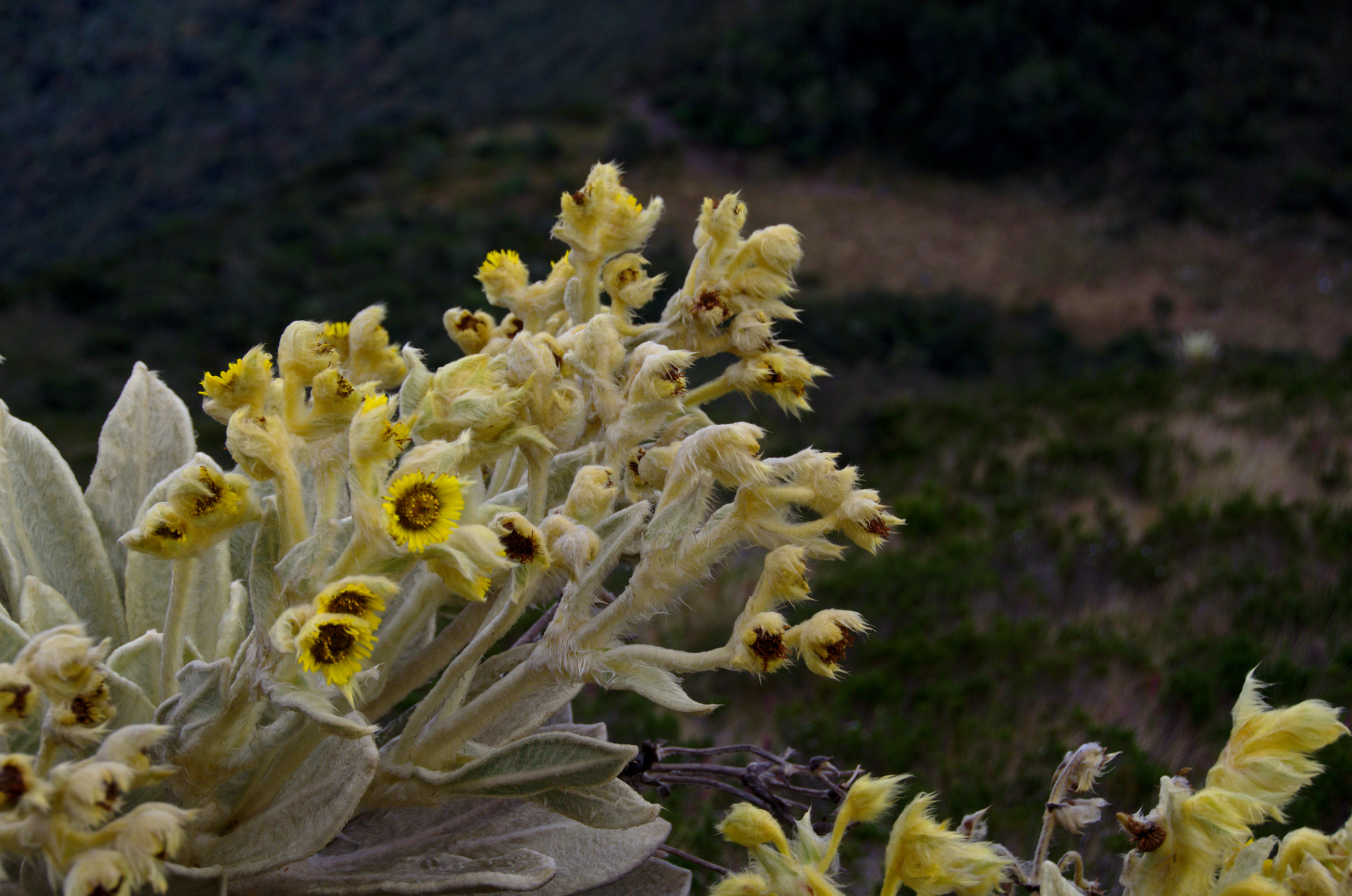
Photo: Aztlec.
Current situation
In March 2025, the Colombian government designated the western flank of the Santurbán massif as a temporary renewable natural resource reserve area, delimiting and protecting an area of 75,344.65 hectares. This resulted in a two-year suspension of the Soto Norte project. However, Aris Mining's contract to formalize Calimineros' small-scale mining activities through the purchase and processing of mineralized material remains in effect.
In addition, the Canadian mining company continues to move the project forward. In September 2025, it released its prefeasibility study, revising the mine’s original design.
Meanwhile, members of the Committee for the Defense of Water and the Santurbán Páramo face threats and stigmatization because of their work. In March 2025, UN Special Rapporteurs and the Working Group on Business and Human Rights denounced these incidents in communications sent to the governments of Colombia, Canada, and the United Arab Emirates, as well as to the companies Aris Mining and MDC Industry Holding Company LLC, the former co-owner of the Soto Norte project.
Regarding the arbitration claim filed by Eco Oro Minerals, in July 2024, ICSID ruled in favor of the Colombian government and rejected the Canadian company’s claim for USD 1.1 billion in compensation.
Concerning the delimitation of Santurbán, in July 2026, the Ministry of the Environment issued a resolution introducing the concept of "progressive delimitation." On that basis, the government proposes to progressively demarcate the páramo, covering 29,199 hectares across 19 municipalities—those where the participatory agreements required by the Constitutional Court in its 2017 ruling have already been finalized. It also proposes two measures on the creation and expansion of reserves to restrict mining in the ecosystem.
Learn more about the impacts of mining on the páramos of Latin America (in Spanish).
Partners:
Related projects
Large Dams in the Americas: Is the Cure Worse than the Disease?
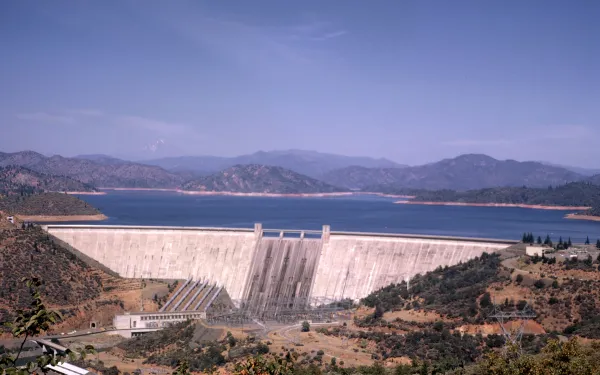
"Large Dams in the Americas: Is the Cure Worse than the Disease?", analyses the problems with large dams from the perspective of human rights and international environmental law. Our objective is to promote a greater understanding of the situation, demonstrate the connection between the grave environmental impacts and human rights violations potentially caused by large dams, and to encourage a more comprehensive assessment and implementation of these projects. Through the analysis of five case studies representing different regions of Latin America, including México, Central America, the Andean region, Brazil and the Southern Cone, we describe how States and other actors are continuously causing serious impacts to the environment and ignoring multiple international laws and standards when implementing large dam projects. Among the most important impacts that this report covers, are, among others: the destruction of strategic ecosystems; the forced displacement of communities, particularly disadvantages ones such as indigenous, campesino and afro-descendent communities; the loss of food sources and livelihoods; the lack of public participation and access to information; and the contribution to and impacts from climate change. Read and download the Executive summary (in English) Read the full report (in Spanish)
Read moreInter-American Commission admits case on human rights violations in La Oroya
FOR IMMEDIATE RELEASE: August 19, 2009 IACHR Will Examine Case Against Peru for Violating the Human Rights of Residents of La Oroya, A City Extensively Contaminated by the Doe Run Peru Smelter ► According to the Inter-American Commission on Human Rights of the Organization of American States, Peru may be violating the rights to life, personal integrity, and to information and access to justice, due to toxic pollution from Doe Run Peru’s multi-metal smelter in La Oroya, Peru. ► The potential extension of an environmental management plan for the complex, announced by Peruvian President Garcia, must include effective measures to guarantee against further human rights violations. WASHINGTON, D.C. – The Inter-American Commission on Human Rights (IACHR) will examine a complaint against Peru for human rights violations in La Oroya, a Peruvian town described as one of the “most contaminated places on earth.” AIDA, Earthjustice and CEDHA submitted this case in 2006 with the local support of the Peruvian Society for Environmental Law (SPDA). In the Inter-American Commission’s recent report accepting the case, it “considers that the alleged deaths and/or health effects of the presumed victims are a consequence of acts and omissions by the State with regard to environmental pollution arising from the multi-metal complex operating in La Oroya, which if proved could constitute a violation of the rights conferred in Articles 4 [life] and 5 [personal integrity] of the American Convention.” “This claim stems from the lack of action by Peru, considering that the government has known about the impacts of the pollution on persons and the environment for at least ten years without acting to resolve the contamination problem,” states AIDA Co-Director, Astrid Puentes. “Even if some steps have been taken in La Oroya, the measures implemented have not been effective in safeguarding health and the environment, as noted by the Peruvian Constitutional Court, the Ministry of Health, and the Commission.” “This is excellent news that brings us hope that things will finally improve in La Oroya” said one of the case’s plaintiffs, whose names are confidential. In 2006 the Constitutional Court of Peru ordered actions to protect public health in the city. The “unjustified delay” in complying with this order may also constitute a violation of the human rights of access to justice and judicial guarantees. The Commission will also investigate whether Peru’s actions violate the right to access to information and freedom of expression. In addition to serious health effects, this case alleges unjustifiable limits to accessing information about the community’s environmental and human health situation and pressure toward those trying to distribute this information. The IACHR’s decision to examine the complaint coincides with negotiations between the Peruvian Government and the Doe Run Peru company, owner of the Multi-Metal Complex, over a potential extension for the complex’s Environmental Management Plan (PAMA). The effective implementation of this plan would improve environmental quality in the area. There is little certainty whether the company will ever meet its obligations for environmental controls under this Plan, as the government has already granted several extensions. The Commission will likely monitor the compliance process and consider the results in any final decision regarding the violations of human rights in Peru. The PAMA does not actually allow for extensions, and the government could fine the company for violating the Plan. If Peru does not impose fines, it would further prolong the unjustified delay of actions necessary to control the pollution in La Oroya and protect the human rights of its inhabitants,” states José Luis Capella, of SPDA. “Any future decision regarding the PAMA must include effective measures to enforce the obligations to improve health and the environment in the city already contained within the Plan.” Connected with this case, the IACHR also requested in 2007 that Peru implement urgent precautionary measures to guarantee the life and safety of La Oroya residents. These measures insist that Peru provide specialized medical evaluations and treatment for those affected by the toxic pollution. “The IACHR’s acceptance of this case is vital to protect human rights in La Oroya. It demonstrates that the severe pollution in the city has an impact, not only on the environment, but on human health, and that it affects their human rights,” stated Martin Wagner Director of the International Program of Earthjustice. “We hope the case has positive impact on the protection of human rights in La Oroya and in the region."
Read moreCosta Rican Constitutional Chamber Orders the Fisheries Authority to Issue Regulations Within the Next 3 Months
PRESS CONTACT: Gladys Martínez de Lemos, AIDA (506) 83214263 [email protected] Costa Rican Constitutional Chamber Orders the Fisheries Authority to Issue Regulations Within the Next 3 Months SAN JOSÉ, Costa Rica, May 20, 2009 – The Constitutional Chamber of the Supreme Court of Justice of Costa Rica favorably resolved an injunction brought by students from the University of Costa Rica, represented by Attorney Alvaro Sagot and supported by the Interamerican Association for Environmental Defense (AIDA) and other Costa Rican NGOs (APREFLOFAS, CEDARENA, Fundación Keto, Humane Society International, Justicia para la Naturaleza, MARVIVA, PRETOMA and PROMAR)., In its ruling, The Chamber ordered the Executive Authority, within a maximum of 3 months, to administrate the fishery law in a manner that protects the constitutional right to a healthy environment. The Chamber also mandated that this process be carried out with public participation, which is essential to protecting this human right. “This decision is vital to the protection of coastal marine resources. The Fishery and Aquaculture Law had given the Executive Authority a period of 90 days to promulgate regulations, starting from April 25th, 2005 when the law was first published. However, after more than four years, the Executive Authority, represented by INCOPESCA, had still not issued the regulation,” stated attorney Gladys Martínez. “We understand the complexities of the issue, but these cannot be excuses to continue leaving a legal void that directly affects the conservation of Costa Rican and the planet’s, resources”, added Martínez. The plaintiffs petitioned the Constitutional Chamber to protect the human right to a healthy environment and balanced ecology and assure compliance with international obligations by carrying out its responsibility to promulgate regulations to implement this law. There are fundamental aspects to marine resource protection, such as aquaculture development, illegal fishing in protected areas, and containment of excessive fishing, the control of which is nonexistent or deficient, making this regulation imperative. “We at AIDA applaud the Chamber’s decision, as it recognizes the importance of effective protection of marine biodiversity and establishes a precedent of requiring public participation in the process”, commented Anna Cederstav from California, Co-Director of AIDA, “Given the grave situation of the world’s oceans and marine resources, and the necessity to counteract excessive exploitation and avoid impacts to current and future generations, it is urgent that this issue be resolved as soon as possible. Furthermore, Costa Rica has the opportunity to be an example in the conservation of oceans and their resources”, concluded Cederstav.
Read more