
Project
Alberto Peña Kay
Protecting the Santurban páramo from mining's damage
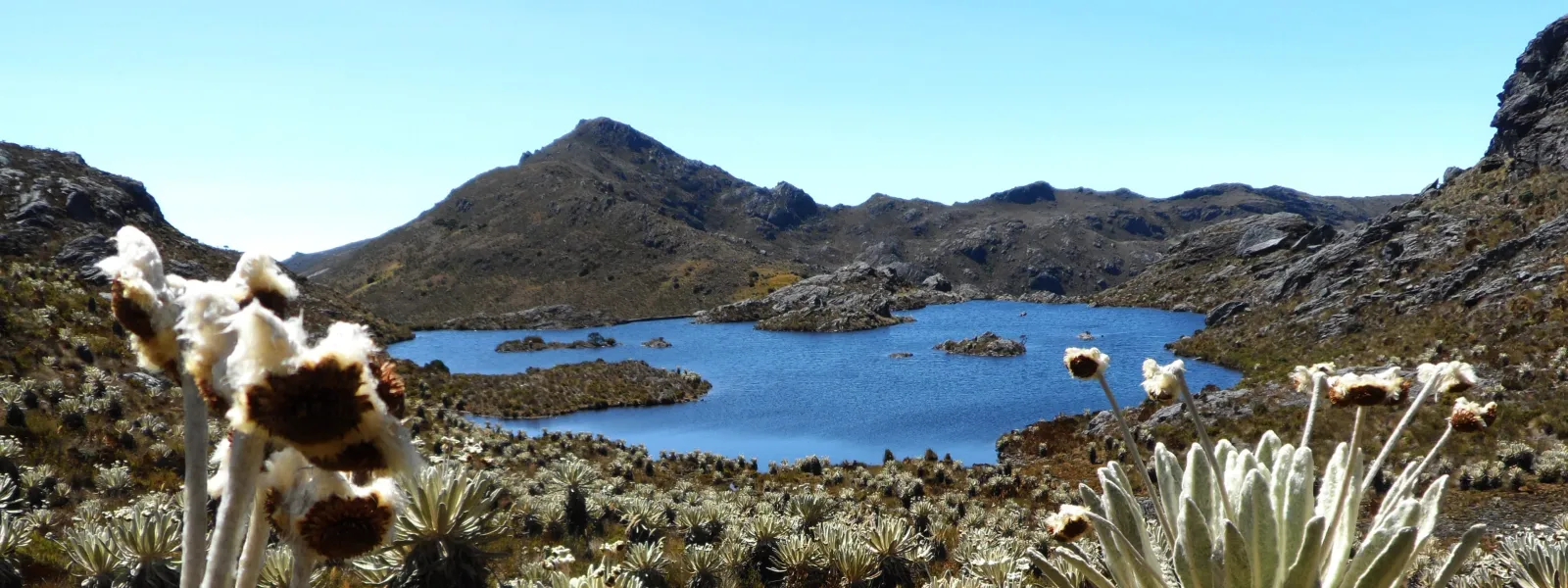
In the Andean region, high-mountain ecosystems known as páramos capture water from the fog and supply it to the lowlands. One such ecosystem is the Santurbán páramo, which provides fresh water to more than two million people in Colombia.
Santurbán, like the other páramos on the continent, also captures large amounts of carbon, making it a key ally in mitigating the climate crisis. It is also a refuge for hundreds of endangered species, including the iconic spectacled bear.
The land in and around the páramo contains gold and other minerals. This has put Santurbán in the spotlight of the multinational mining industry, which for decades has sought to establish large-scale projects in the ecosystem that threaten to degrade it.
The Committee for the Defense of Water and the Santurbán Páramo—a coalition of environmental advocates—has thwarted these ongoing attempts, with support from AIDA and other civil society organizations.
Background
The Santurbán páramo is located in the heart of the Eastern Cordillera of the Colombian Andes, in the departments of Santander and Norte de Santander, at an elevation ranging from 2,200 to 4,290 meters above sea level.
It covers an area of 129,743 hectares and is home to 57 lakes. It serves as a habitat for 457 plant species and 293 species of vertebrate fauna.
There are mineral deposits in Santurbán, primarily gold, but also silver and copper. This explains the region’s mining tradition, particularly in the part of the páramo located in Santander, in the province of Soto Norte. The communities in the area have built their culture and identity around gold mining, which is mainly artisanal and small-scale.
But since the 1990s, the gold deposits in the páramo have also attracted foreign mining conglomerates seeking to develop large-scale projects. This has raised concerns among the population that relies on the Santurbán water sources, who have mobilized in defense of water, their land, and life.
Although national and international regulations prohibit mining in páramos, the Colombian government has granted mining concessions to transnational corporations in Santurbán.
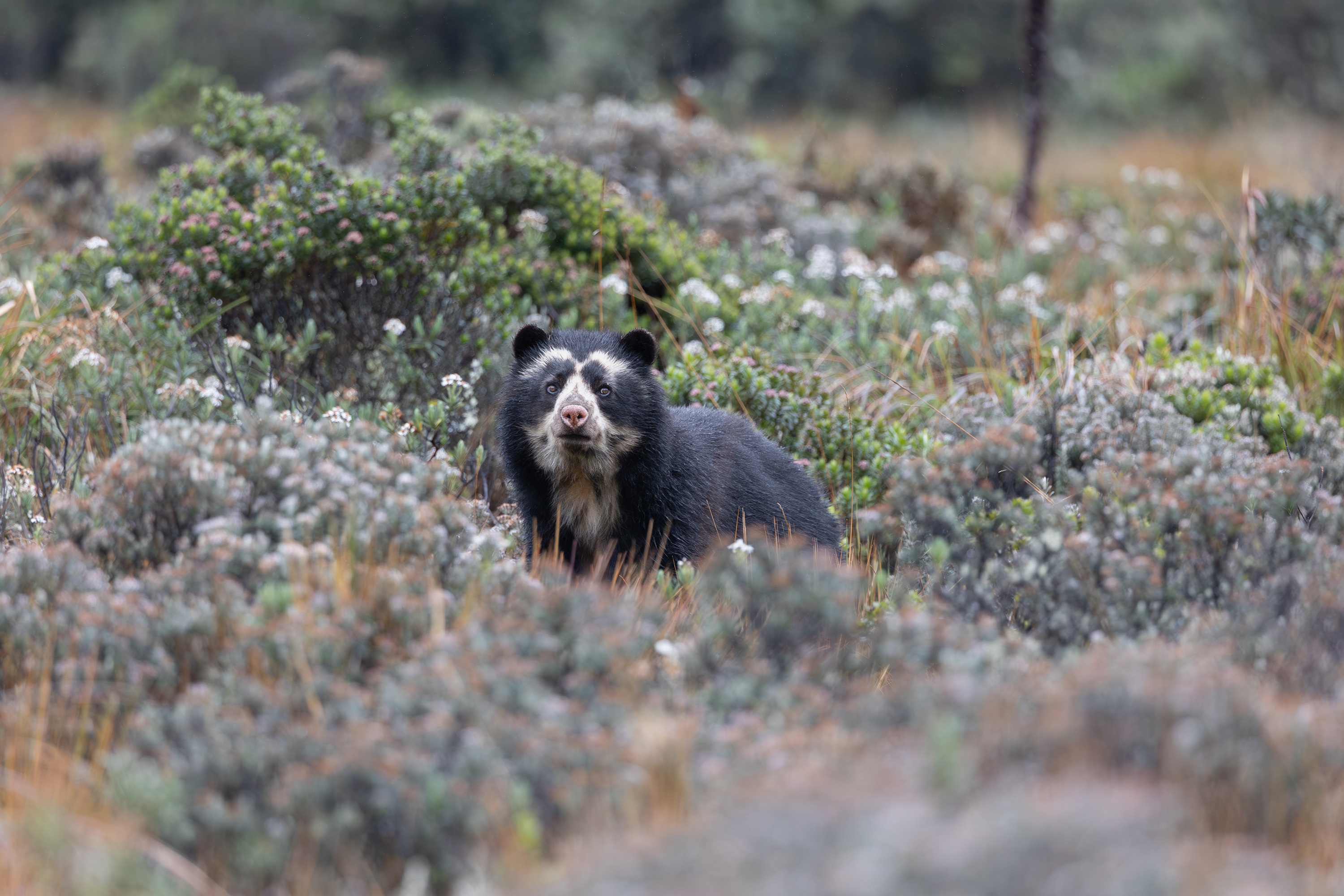
Photo: Keishpixl / Pixabay.
The long struggle to protect the páramo
One of the companies that sought to develop large-scale mining in Santurbán is Eco Oro Minerals Corp.—formerly Greystar Resources—a Canadian company that intended to establish the Angostura open-pit mine there to extract gold and silver. Between 1994 and 1995, the company acquired its mining titles and conducted exploration. And in 2010, it applied for a mining permit.
That was the year AIDA became involved in defending the ecosystem, supporting the Committee for the Defense of Water and the Santurbán Páramo. Our legal work helped convince the Colombian government to deny the mine an environmental permit in May 2011.
In January 2013, the government designated a portion of the páramo (11,700 hectares) as a Regional Natural Park. That year—together with the committee and partner organizations—we carried out a campaign and advocacy efforts to urge the government to recognize the entire Santurbán area as a páramo ecosystem through a delimitation based on scientific criteria. In December 2014, the Ministry of the Environment established a delimitation that protected 76% of the páramo (98,954 hectares).
Furthermore, as a result of a litigation supported by AIDA, in February 2016, Colombia’s highest court reaffirmed that mining in páramos is prohibited.
That same year, in December, the International Finance Corporation (IFC), the World Bank Group’s private sector arm, decided to divest from Eco Oro Minerals. This achievement was the result of a process that began in 2012, when the committee—advised and supported by AIDA and international partner organizations—filed a complaint before an independent accountability mechanism, which concluded that the IFC’s investment in the Angostura project failed to take into account the project’s social and environmental impacts, thereby contradicting the financial institution’s internal policies.
Also in 2016, Eco Oro Minerals filed an arbitration claim against the Colombian government with the International Centre for Settlement of Investment Disputes (ICSID), arguing that it had been adversely affected by government decisions aimed at protecting the country’s páramos, including the delimitation of Santurbán.
In 2017, the Constitutional Court invalidated the delimitation because the affected communities were not consulted. The high court ordered that a participatory delimitation be carried out.
And that year, a new threat to Santurbán emerged when the Canadian multinational Aris Mining applied for an environmental permit for Soto Norte, a gold mining project located near the páramo. Following citizen protests and technical objections, in October 2020, the National Environmental Licensing Authority shelved the project.
Photo: Aztlec.
Current situation
In March 2025, the Colombian government designated the western flank of the Santurbán massif as a temporary renewable natural resource reserve area, delimiting and protecting an area of 75,344.65 hectares. This resulted in a two-year suspension of the Soto Norte project. However, Aris Mining's contract to formalize Calimineros' small-scale mining activities through the purchase and processing of mineralized material remains in effect.
In addition, the Canadian mining company continues to move the project forward. In September 2025, it released its prefeasibility study, revising the mine’s original design.
Meanwhile, members of the Committee for the Defense of Water and the Santurbán Páramo face threats and stigmatization because of their work. In March 2025, UN Special Rapporteurs and the Working Group on Business and Human Rights denounced these incidents in communications sent to the governments of Colombia, Canada, and the United Arab Emirates, as well as to the companies Aris Mining and MDC Industry Holding Company LLC, the former co-owner of the Soto Norte project.
Regarding the arbitration claim filed by Eco Oro Minerals, in July 2024, ICSID ruled in favor of the Colombian government and rejected the Canadian company’s claim for USD 1.1 billion in compensation.
Concerning the delimitation of Santurbán, in July 2026, the Ministry of the Environment issued a resolution introducing the concept of "progressive delimitation." On that basis, the government proposes to progressively demarcate the páramo, covering 29,199 hectares across 19 municipalities—those where the participatory agreements required by the Constitutional Court in its 2017 ruling have already been finalized. It also proposes two measures on the creation and expansion of reserves to restrict mining in the ecosystem.
Learn more about the impacts of mining on the páramos of Latin America (in Spanish).
Partners:
Related projects
Federal Judge Suspends Construction of the La Parota Hydroelectric Project!
FOR IMMEDIATE RELEASE August 28, 2007 CONTACT: Claudia Gómez-Portugal, (5255) 5268-3323 ext. 23, [email protected] Federal Judge Suspends Construction of the La Parota Hydroelectric Project! Mexico DF. August 28, 2007 - On August 14th, a federal judge in Acapulco, in the state of Guerrero, ordered the temporary suspension of all work related to the La Parota Hydroelectric Project, in response to an accion de amparo (similar to an injunction) filed by small-scale farmers in the Community of Common Goods of Cacahuatepec. The farmers are represented by the Mexican Center for Environmental Law (CEMDA). The judge granted the suspension to prevent irreversible damage to the farmers’ constitutional rights to a healthy environment, a fair trail, and adequate judicial protection . The judge also accepted the amparo on the grounds that these rights could be violated by the environmental impact assessment authorization granted by SEMARNAT, and the water concession for the Papagayo River granted to the Federal Electricity Commission (CFE) by the National Water Commission to construct the hydroelectric project. Once completed, this dam will tower more than 700 feet high and have a capacity of 30 megawatts. It will flood approximately 41,000 acres of land, affecting more than 25,000 small farmers. “The suspension of La Parota is an important precedent in Mexico, because it places protection of the environment ahead of a very large infrastructure project, and enables the public interest to be protected,” asserted Xavier Martínez Esponda, a CEMDA lawyer. “Constructing the dam would cause grave and irreversible damage to the low and medium deciduous forests, impacting hundreds of threatened and endangered plant and animal species. It would also affect the quality and quantity of water in the Papagayo River, in addition to impacting the communities in the region,” he noted. In the amparo, the farmers allege that both the General Law of Ecological Equilibrium and Environmental Protection (LGEEPA) and the National Water Law (LAN) are unconstitutional because they do not allow the affected communities to participate in the procedures to grant the authorizations. This, in turn, violates their individual constitutional rights which grant that no one can be deprived of their life, liberty, property, possessions or rights without a fair trial. In this case, the authorities granted the environmental impact authorization and water concession without notifying the communities, despite the fact that these decisions would affect their lands and their right to water. “The goal of the injunction is to permanently suspend the unconstitutional construction of the dam. If the dam is constructed, the farmers would lose their lands, be displaced from their town, and additional irreversible social and environmental harm would take place. Therefore, this legal action attempts to prevent, as occurs in many cases, the development of a large-scale infrastructure project without adequate compensation and indemnization,” explains Astrid Puentes Riaño, Legal Director of AIDA. Past projects implemented by CFE have not included fair compensation, and when they were granted, did so long after the damages occurred. This injunction brought suit against eight government authorities, including the President of the Republic, the Federal Congress, the National Water Commission, the Secretary of the Environment and Natural Resources, and the Federal Electricity Commission. The decisions of each of these authorities are directly involved in the illegalities and violations of rights alleged in this legal action.
Read moreIACHR Forwards La Oroya Human Rights Petition to Peruvian Government for Comment
For immediate release: April 24, 2007 PRESS CONTACTS: Astrid Puentes, AIDA (+5255) 52120141 [email protected] Martin Wagner, Earthjustice (510) 550-6700 [email protected] Carlos Chirinos (+511) 422-2720 [email protected] U.S. Smelter's Pollution Now Human Rights Issue for Peru IACHR to Examine Peru’s Responsibility for Contamination from Doe Run Corp. Facility WASHINGTON DC, LIMA – The Inter-American Commission on Human Rights (a division of the Organization of American States) forwarded a petition alleging human rights violations to the Government of Peru, giving them two months to respond. The petition asserts that severe contamination from a smelter owned by U.S.-based Doe Run Corporation, and lack of effective pollution and human health controls by the government, gravely threaten the rights of the residents of La Oroya, Peru, including their rights to life, health, and integrity. “This first step by the IACHR is good news,” assured Carlos Chirinos, an attorney with the Peruvian Society for Environmental Defense (SPDA), an organization that has been associated with the case since its inception, and one of the lawyers representing the community. “It shows the strength of our petition, and is a positive step in the process to identify the government’s responsibilities.” The IACHR determined that the petition, prepared by Earthjustice, the Interamerican Association for Environmental Defense (AIDA), the Center for Human Rights and Environment (CEDHA), and Peruvian lawyer, Carlos Chirinos, met the Commission’s procedural requirements and forwarded it to the Peruvian government last week. According to the Commission’s rules, after this two-month period the IACHR will take into account Peru’s comments in evaluating the admissibility of the case, determining whether the contamination violates human rights, and the resulting responsibilities of the Peruvian government. The Commission is simultaneously evaluating a request by these groups for precautionary measures to address the urgent health threats to the citizens in La Oroya. “We are now waiting for the government’s comments on the petition, as well as a decision by the Commission on the request for precautionary measures. These measures could help considerably to provide effective protection for the people’s human rights in La Oroya,” added Astrid Puentes of AIDA. The precautionary measures requested include: adequate diagnosis and medical treatment for the persons represented, education programs and efficient access to information, effective emissions and contamination controls, an evaluation of contamination in key areas of the city, and implementation of adequate clean-up measures. According to Martin Wagner of Earthjustice, the goal of the precautionary measures is “to improve human rights conditions for the people we represent in La Oroya, and ensure that those responsible take definitive action to control the contamination.”
Read moreAIDA and Participating Organizations Submit La Oroya Petition to the Inter-American Commission on Human Rights
FOR IMMEDIATE RELEASE: March 21, 2007 Press Contacts: Astrid Puentes, AIDA (+5255) 52120141 [email protected] Luis Eduardo Cisneros (+511) 422-2720 [email protected] Martin Wagner (510) 550-6700 [email protected] Inter-American Commission on Human Rights to Examine Responsibility for Violations at La Oroya, Peru Children breathe sulfur dioxide pollution at 300 times level permitted by WHO Lima, Peru, Washington, D.C. — Public health and environmental organizations from throughout the Western Hemisphere today announced the filing of a petition with the human rights division of the Organization of American States in Washington, D.C. The petition accuses the Peruvian government of doing little to halt contamination from a metallurgical complex that is impacting the lives and health of the citizens of La Oroya, Peru. The petition’s filing was announced at a press conference in Lima, Peru this morning by Carlos Chirinos of the Sociedad Peruana de Derecho Ambiental (SPDA), Astrid Puentes of the Interamerican Association Environmental Defense (AIDA), Earthjustice, and the Centro de Derechos Humanos y Ambiente (CEDHA). The petition claims the Peruvian government failed to place pollution controls on the metallurgical complex that operates in La Oroya, a situation that tramples on the human rights of the town’s citizens. Located in the city of La Oroya, some 175 kms from Lima, the complex has been operating for 80 years. Doe Run Peru, a subsidiary of Doe Run Company of St. Louis, Missouri, USA owns the complex. Recent monitoring of air quality – performed by Doe Run itself – has shown that daily average sulfur dioxide levels are between 80 and 300 times the maximum level permitted by the World Health Organization. The Blacksmith Institute even declared the city of La Oroya one of the Top Ten Most Polluted cities in the world. The petition asks the Inter-American Commission on Human Rights (IACHR) to recommend that the Peruvian government implement urgent measures to halt the grave violations against the health and lives of the citizens of La Oroya. Learn more about the conditions in La Oroya by watching a short film: http://www.youtube.com/v/gY6WXa9aKrM More Background http://www.aida-americas.org/en/project/doerun_en Read a copy of the petition here (in Spanish).
Read more