
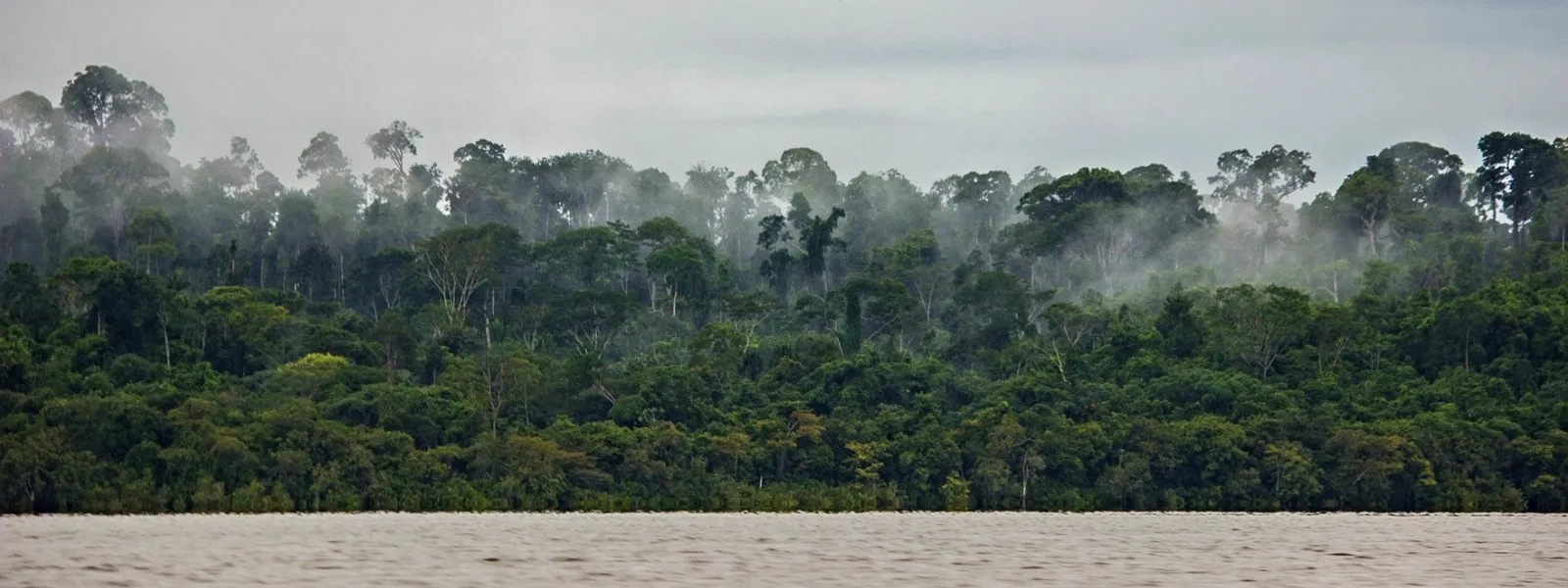
Project
Amazon Watch / Maíra Irigaray
The Belo Monte Dam on the Xingu River: 10 years of impacts in the Amazon and the search for reparations
The Belo Monte Dam has caused an environmental and social disaster in the heart of the Amazon—one of the most important ecosystems on the planet.
This situation has only worsened since the hydroelectric plant began operations in 2016. The quest for justice and reparations by the affected indigenous, fishing, and riverine communities continues to this day.
In 2011, the Inter-American Commission on Human Rights (IACHR) granted them protective measures that, to date, have not been fully implemented by the Brazilian State.
Furthermore, since June of that same year, the IACHR has yet to rule on a complaint against the State regarding its international responsibility in the case.
The IACHR may refer the case to the Inter-American Court of Human Rights, which has the authority to issue a ruling condemning the Brazilian State.
After 10 years of the hydroelectric plant's operation and more than 15 years of documented human rights violations, it is time for justice to be served for the affected communities.
Read the open letter from the organizations bringing the case before the IACHR
Background
The Belo Monte hydroelectric plant—the fourth largest in the world by installed capacity (11,233 MW)—was built on the Xingu River in Pará, a state in northern Brazil.
It was inaugurated on May 5, 2016, with a single turbine. At that time, 80% of the river’s course was diverted, flooding 516 km² of land—an area larger than the city of Chicago. Of that area, 400 km² was native forest. The dam began operating at full capacity in November 2019.
Belo Monte was built and is operated by the Norte Energia S.A. consortium, which is composed primarily of state-owned companies. It was financed by the Brazilian Development Bank (BNDES), which provided the consortium with 25.4 billion reais (approximately US$10.16 billion), the largest investment in the bank’s history. Therefore, the BNDES is also legally responsible for the socio-environmental impacts associated with the hydroelectric plant.
Decades of harm to the environment and people
Human rights violations and degradation of the Amazon have been occurring since the project’s inception. In March 2011, Norte Energía began construction of the dam without adequate consultation and without the prior, free, and informed consent of the affected communities.
The construction caused the forced displacement of more than 40,000 people, severing social and cultural ties. The resettlement plan in Altamira—a city directly affected by the hydroelectric dam—involved housing units located on the outskirts, lacking adequate public services and decent living conditions for the relocated families, with no special provisions for those from indigenous communities.
Belo Monte's operations have caused a permanent, man-made drought in the Volta Grande (or "Great Bend") of the Xingu River, exacerbated by the historic droughts in the Amazon in 2023 and 2024. As a result, the deaths of millions of fish eggs were documented for four consecutive years (from 2021 to 2024), and for the past three years, there has been no upstream migration of fish to spawn and reproduce. Thus, artisanal fishing, the main source of protein for indigenous peoples and riverside communities, was severely affected: fish dropped from 50% to 30% of total protein consumed, replaced by processed foods. In summary, there was an environmental and humanitarian collapse that resulted in the breakdown of fishing as a traditional way of life, food insecurity, and access to drinking water for thousands of families, impoverishment, and disease.
Furthermore, the construction of the dam increased deforestation and intensified illegal logging and insecurity on indigenous and tribal lands, putting the survival of these communities at risk. Another consequence was the deepening of poverty and social conflicts, as well as the strain on health, education, and public safety systems in Altamira—a city ranked as the most violent in the country in 2017, where human trafficking and sexual violence increased. Violence was also reported against human rights defenders involved in the case.
In 2025, during the 30th UN Climate Change Conference (COP30), held in Brazil, the Federal Public Prosecutor’s Office labeled the damage caused by the Belo Monte dam as ecocide.
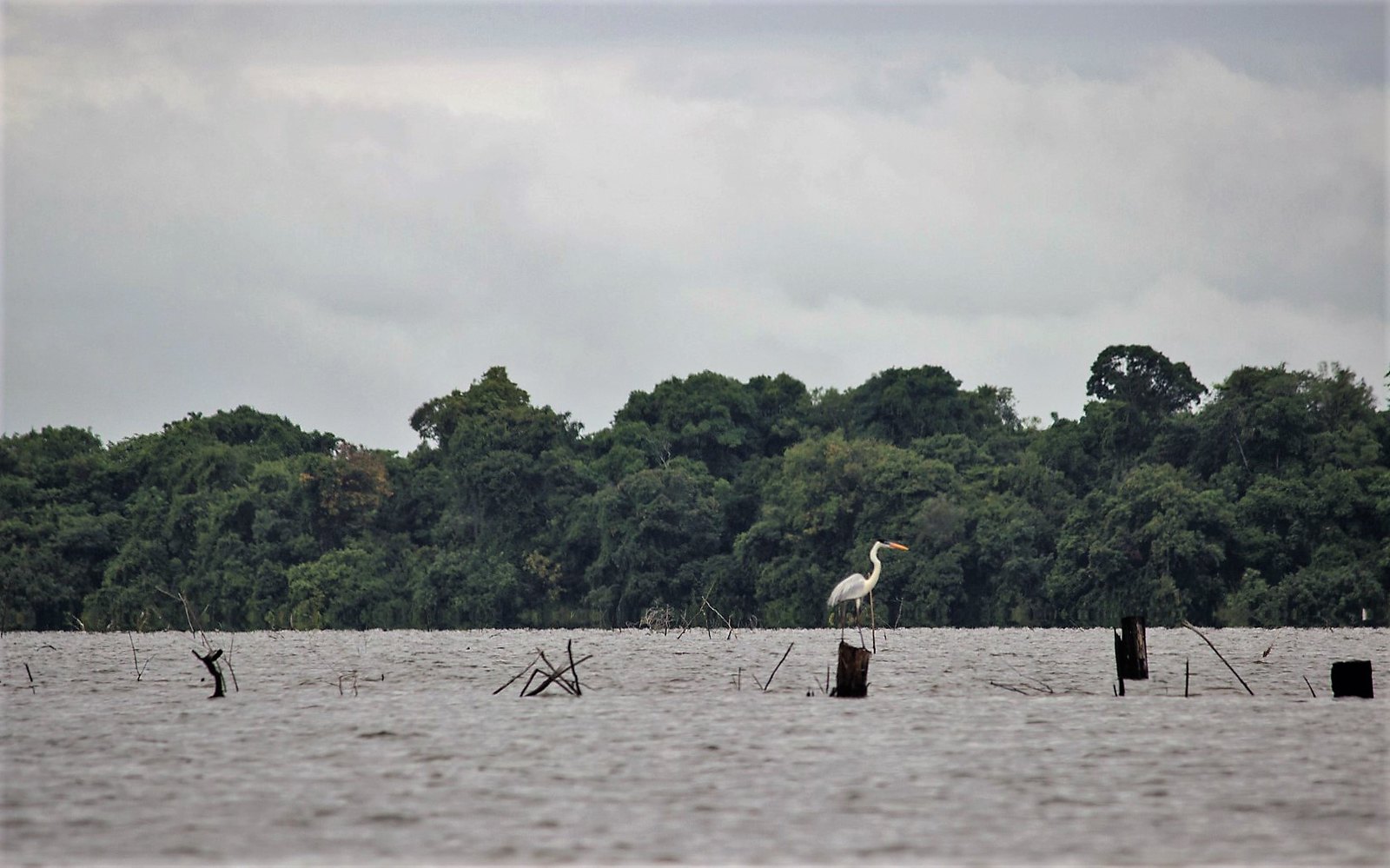
Photo: Amazon Watch / Maíra Irigaray.
The search for justice and reparations
Over the years, the Federal Public Prosecutor’s Office in Pará, the Public Defender’s Office, and civil society organizations have filed dozens of legal actions in Brazilian courts to challenge the project’s various irregularities and its impacts. Most of the claims are still pending resolution, some for more than 10 years.
These efforts have failed because the national government has repeatedly overturned rulings in favor of the affected communities by invoking a mechanism that allowed a court president to suspend a judicial decision based solely on generic arguments such as "the national interest" or "economic order."
In the absence of effective responses at the national level, AIDA, together with a coalition of partner organizations, brought the case before the Inter-American Commission on Human Rights (IACHR) and, in 2010, requested precautionary measures to protect the lives, safety, and health of the affected indigenous communities.
On April 1, 2011, the IACHR granted these measures and requested that the Brazilian government suspend environmental permits and any construction work until the conditions related to prior consultation and the protection of the health and safety of the communities are met.
And on June 16, 2011 —together with the Xingu Vivo Para Sempre Movement, the Coordinating Committee of Indigenous Organizations of the Brazilian Amazon, the Diocese of Altamira, the Indigenous Missionary Council, the Pará Society for the Defense of Human Rights and Global Justice— we filed a formal complaint against the Brazilian State for its international responsibility in the violation of the human rights of the people affected in the case. The case was opened for processing in December 2015.
On August 3, 2011, the IACHR amended the precautionary measures to request, instead of the suspension of permits and construction, the protection of people living in voluntary isolation, the health of indigenous communities, and the regularization and protection of ancestral lands.
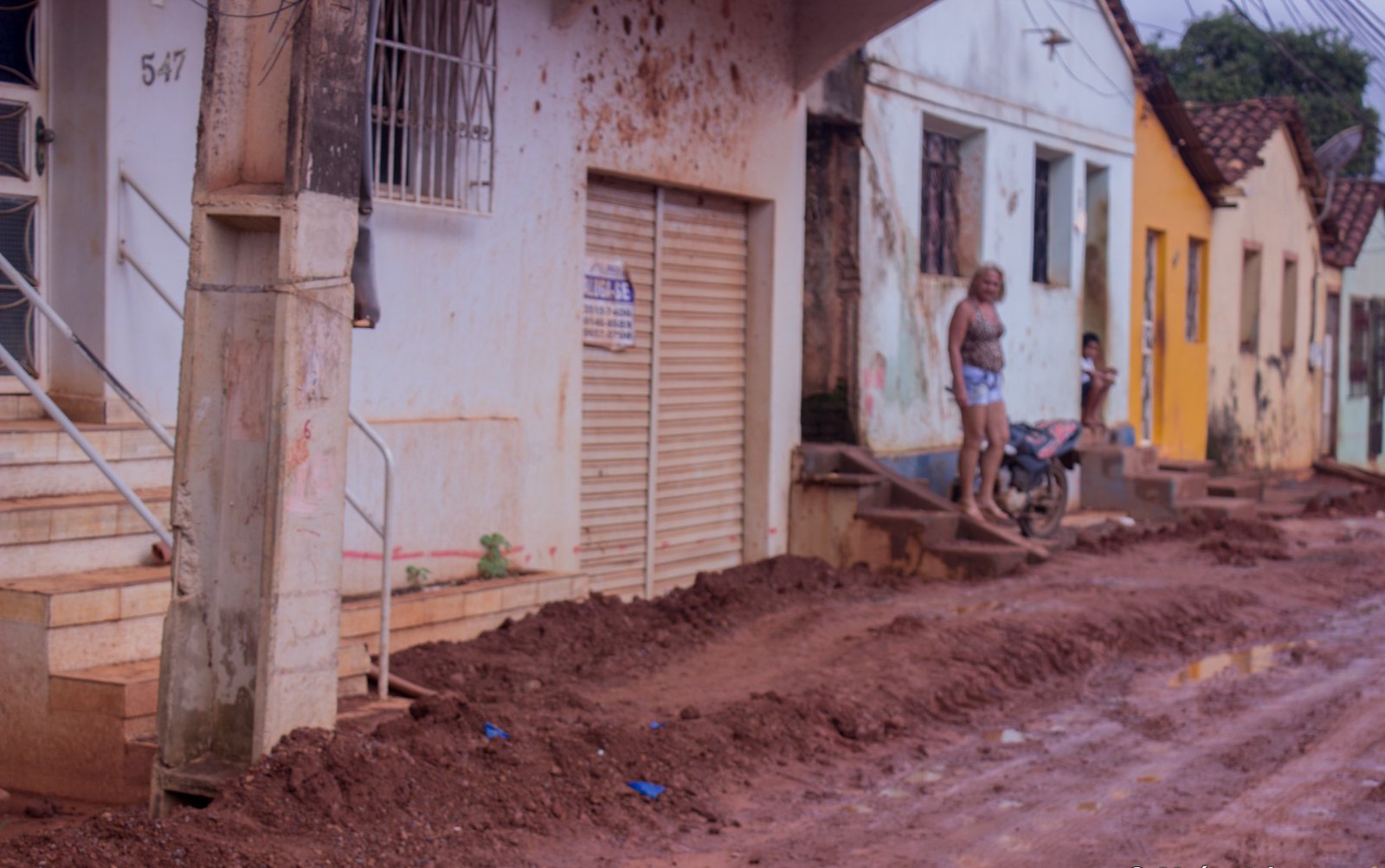
Photo: Amazon Watch / Maíra Irigaray.
Current situation
The protective measures granted by the IACHR remain in effect, but the Brazilian government has not fully complied with them, reporting only on general actions. The communities have documented the ongoing violations of their rights. The situation that prompted the request for these measures—the risk to the lives, physical integrity, and ways of life of the communities—persists and has worsened with the hydroelectric plant operating at full capacity and the recent extreme droughts in the Amazon.
In addition to the impacts of Belo Monte, there is a risk of further social and environmental impacts from the implementation of another mining megaproject in the Volta Grande do Xingu. There, the Canadian company Belo Sun plans to build Brazil’s largest open-pit gold mine.
The combined and cumulative impacts of the dam and the mine were not assessed. The government excluded Indigenous peoples, riverine and peasant communities from the project’s environmental permitting process. Despite protests by Indigenous communities and other irregularities surrounding the project, the government of Pará formally authorized the mine in April 2026.
Like other hydroelectric dams, Belo Monte exacerbates the climate emergency by generating greenhouse gas emissions in its reservoir. And it is inefficient amid the longer, more intense droughts caused by the crisis, as it loses its ability to generate power.
The case before the Inter-American Commission
In October 2017, the IACHR announced that it would rule jointly on the admissibility (whether the case meets the requirements for admission) and the merits (whether a human rights violation actually occurred) of the international complaint against the Brazilian State.
Fifteen years after the complaint was filed, the affected communities and the organizations representing them are still awaiting this decision. If the IACHR concludes that human rights violations occurred and issues recommendations that the Brazilian State fails to comply with, it may refer the case to the Inter-American Court of Human Rights, whose rulings are binding.
A potential ruling by the international court in this case would set a regional legal precedent regarding the rights of indigenous and riverine peoples, public participation in megaprojects, and state responsibility in the context of the climate crisis—a precedent that is particularly relevant in light of the Court’s Advisory Opinion No. 32, which reaffirmed the obligations of States to protect the people and communities of the continent from the climate emergency.
Partners:
Related projects

How supporting women is linked to environmental justice
Although women lead struggles for the conservation of nature around the world, they are often excluded from decisions about the use of land, water and other natural resources. They’re disproportionately affected when inadequately implemented projects pollute air and water, or cause forced displacements and other damages. And they’re often more seriously impacted by climate change. In all of these cases, women—particularly indigenous women—are highly vulnerable to losing their way of life, their income, and their homes. At AIDA, we incorporate a gender perspective into our defense of the environment and human rights, recognizing that combating inequalities and differentiated harms is fundamental to achieving environmental justice in Latin America. “The gender approach allows us to defend the rights of women in an integral way, understanding that the risks and harms, as well as the policies needed to confront them, are different for men and women,” explained Senior Attorney Liliana Ávila. “Making this visible helps break through discrimination scenarios and effectively guarantee the right to equality.” Uplifting women’s voices Working with a gender focus, Liliana explained, has been a fascinating professional experience that has allowed her to understand how environmental damage affects men and women differently. She has listened to women explain how they view their territory, and what happens to it, distinctly from the men in their communities. In Northwest Guatemala, in the micro-region of Ixquisis, the construction of the Pojom II and San Andrés dams has damaged water sources. It has spread diseases and harmed fishing and agriculture, subsistence activities for local communities, largely made up of indigenous Mayan women. “It’s necessary to promote methodologies and spaces that make women’s voices heard, that enable and strengthen their participation, that demonstrate the differentiated harms they face, and that promote change to guarantee their rights,” Liliana said. AIDA legally supports the resistance of the women of Ixquisis to the dam projects, both in national courts and before the Inter-American Development Bank, which finances the projects despite obvious conflict with its operating policies. Our work in Guatemala is possible thanks to the Global Alliance for Green and Gender Action (GAGGA), which supports collaboration between movements and grassroots organizations to strengthen their role in the defense and promotion of women's rights and environmental justice. Since 2016, GAGGA has provided funds to women's movements and environmental organizations at the national, regional and global levels in more than 30 countries across Latin America, Africa, Asia and Europe. Women’s role in environmental defense By working hand in hand with communities across Latin America, AIDA attorneys have a close knowledge of the fundamental role that women play in protecting the environment and building equitable societies. “In Nayarit, Mexico indigenous women are playing a key role in defense of their land, water and the San Pedro Mezquital River,” said Camilo Thompson, AIDA attorney in Mexico. “And in the Gulf of California, women are leading efforts toward proper fisheries management.” Claudia Velarde, an AIDA attorney in Bolivia, says that her country has recognized that peasant women produce more food, so their experiences, visions, and knowledge must be incorporated into public food policies. “Personally, it has been very enriching for me to work both with and from the perspective of women,” she explained. “I’ve have had the opportunity to meet incredible women fighting to defend their territories from extractive activities like fracking. It’s helped me understand that the impacts of a single activity are experienced quite differently according to socially assigned gender roles.”
Read more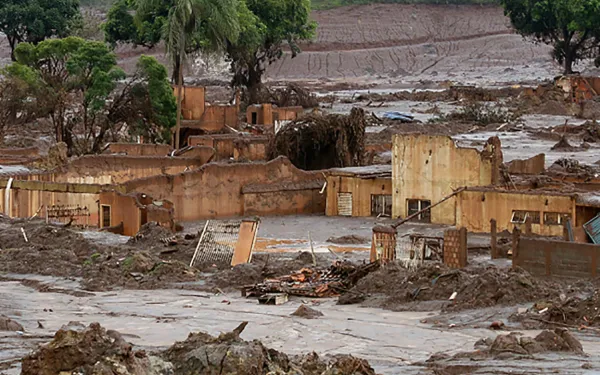
Mine tailings dams: a history of failures
Once again, tragedy looms over Brazil. Last Friday, for the second time in less than four years, a tailings dam broke in the State of Minas Gerais—this time in the municipality of Brumadinho—leaving catastrophic human and environmental damage in its wake. Once again, the losses are incalculable. We’re faced with disappearances and death. We see the same, disconcerting images: survivors evacuated by helicopter; trees, animals, and homes covered in toxic sludge; a swollen river carrying mining waste downstream. Once again, nature and society have been damaged, torn apart. As if in an endless loop, the tragedy has repeated in Minas Gerais. Five similar incidents, at least of which there is evidence, occurred in 1986, 2001, 2007, 2014, and 2015. The tragedy in November 2015 in the city of Mariana is considered the worst environmental disaster in the history of Brazil. It destroyed the town of Bento Rodrigues and contaminated the Doce River basin, carrying toxic sludge all the way to the Atlantic Ocean. A tragic cycle Far from isolated events, the failures of mine tailings dams have become a common occurrence, and statistics suggest we can expect many more in the future. Like any infrastructure work, a dam has a certain useful life—a period of operation with a firm beginning and end. That period is based on the dam having adequate design, execution, and maintenance, something that often does not occur. Thanks to the World Information Service on Energy’s Uranium Project, we know that over the last 30 years there have been 73 accidents or incidents involving mine tailings dams worldwide. The United States (17), China (8) and the Philippines (7) lead the list of affected countries. The project’s database offers an account of the main accidents and indicators including breakdowns, overshoots, collapses, partial failures, and lining ruptures. These figures should lead us to reflect on large-scale mining, particularly metal mining, which requires these types of dams and impoundments. Instead of continuing to build mines, wouldn’t it be better to concentrate our efforts on recovering and reusing the metal we discard? When will we transition to a circular economy that avoids such catastrophes? How many more disasters can our ecosystems and our human populations endure? Quite often, affected communities do not have objective or sufficient information about the benefits and harms of the mining projects proposed near their homes. Breaking that information gap is urgent. At AIDA we contribute to this task by providing useful information about the potential harms of mining, and using it to strengthen legal actions undertaken to protect people and the environment. It’s urgent that the governmental, non-governmental and private sectors do whatever is necessary to avoid more tragedies like those we’ve seen in Brazil. They must make a conscious decision to put the value of people and nature above profit. For more information, consult the database of major tailings dam failures: http://www.wise-uranium.org/mdaf.html 73 tailings dams have failed over the last 30 years, wreaking havoc on the environment and affected communities: https://t.co/G6xZibNIAk How many more avoidable disasters can we endure? #MinasGerais #BrumadinhoSOS #ValeAssassina #mining pic.twitter.com/ceuNTUUpkL — AIDA Americas (@AIDAorg) January 28, 2019
Read more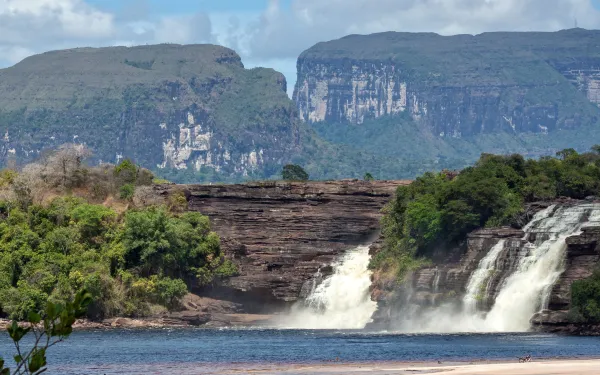
Mining Arc threatens majestic lands of Southern Venezuela
For decades, one of the greatest socio-ecological tragedies in Latin America has been developing in Venezuela. Small-scale gold mining is inflicting irreversible damage to one of the continent’s most biodiverse natural areas. It’s happening South of the Orinoco River, amidst majestic waterfalls, impressive mesas, and long-established indigenous communities. Despite its major impacts on the states of Amazonas and Bolívar, mining there has advanced rather silently. Up until a few years ago, not many researchers were even paying attention. The situation changed in 2011, when then-President Hugo Chavez announced the creation of the Orinoco Mining Arc National Strategic Development Zone, a project finalized five years later through a presidential decree. Photo: Bram Ebus / Infoamazonía. Mining’s large-scale damages The Orinoco Mining Arc involves permitting undefined mining activities in 111,843 square kilometers of territory—an area larger than Guatemala and almost twice the size of the Orinoco Oil Belt. Its implementation has legitimized and exacerbated the damages of small-scale mining, chief among them water pollution, deforestation and the destruction of fertile soils. The project also aims to develop large-scale mining in this mega-diverse region. Now, independent researchers like Carlos Eduardo Pacheco and others, hailing from organizations such as the Venezuelan Society of Ecology and Provita, warn of the huge damages that may occur due to the nation’s lack of environmental regulation. Thanks to their studies, additional research, and an analysis of satellite images, we know that: in the area around the Mining Arc there exist at least five or six large pockets of deforestation, and hundreds of smaller ones; the Caroní and Ikabarú river basins are being destroyed; and damages have reached Caura and Canaima National Parks, as well as the territories of the Pemón, Yekuana, Akawayo and Yanomami indigenous people, among others. The consequences, the researchers warn, are not only ecological; they are social as well. There has been a mass exodus from major cities, people fleeing poverty and heading to the Mining Arc to seek economic opportunity. Photo: Bram Ebus / Infoamazonía. In addition, mining activity has lead to multiple reports of human trafficking, prostitution, drug trafficking, extortion, murder, and the presence of both paramilitary groups and guerillas from Colombia. Many of the mining projects in the zone are under the control of a mafia known as “Pranato Minero,” whose leaders are relatively unknown. Increased mining has also caused serious harms to the health of informal miners and their families due to the use of mercury. Statistics from the Ministry of People’s Power for Health demonstrate a strong increase in mortality—at least 500 percent between 2002 and 2013 in municipalities close to the Arc, including Sifontes, El Callao, Cedeño and Roscio. And large-scale transnational mining hasn’t been left out of the picture. Even Canadian companies that recently sued Venezuela for controversies related to their investments have returned as partners in the mining exploitation of Orinoco. Raising awareness of Orinoco In all this development, where is the social and environmental responsibility? There seems to be no place for accountability in Venezuela, a nation with non-existent institutions and inapplicable laws. We must to ask what we can do, as members of civil society, in the face of this latest chronicle of deforestation, mercury contamination, and outright destruction of the natural world of Southern Venezuela. At AIDA, we’re doing what we can by providing technical and scientific support to the Venezuelan organizations studying the Mining Arc’s development. By supporting them, we’re working to raise awareness of the issue and put one of the most serious social and environmental attacks in the region in the public eye.
Read more