

Project
Amazon Watch / Maíra Irigaray
The Belo Monte Dam on the Xingu River: 10 years of impacts in the Amazon and the search for reparations
The Belo Monte Dam has caused an environmental and social disaster in the heart of the Amazon—one of the most important ecosystems on the planet.
This situation has only worsened since the hydroelectric plant began operations in 2016. The quest for justice and reparations by the affected indigenous, fishing, and riverine communities continues to this day.
In 2011, the Inter-American Commission on Human Rights (IACHR) granted them protective measures that, to date, have not been fully implemented by the Brazilian State.
Furthermore, since June of that same year, the IACHR has yet to rule on a complaint against the State regarding its international responsibility in the case.
The IACHR may refer the case to the Inter-American Court of Human Rights, which has the authority to issue a ruling condemning the Brazilian State.
After 10 years of the hydroelectric plant's operation and more than 15 years of documented human rights violations, it is time for justice to be served for the affected communities.
Read the open letter from the organizations bringing the case before the IACHR
Background
The Belo Monte hydroelectric plant—the fourth largest in the world by installed capacity (11,233 MW)—was built on the Xingu River in Pará, a state in northern Brazil.
It was inaugurated on May 5, 2016, with a single turbine. At that time, 80% of the river’s course was diverted, flooding 516 km² of land—an area larger than the city of Chicago. Of that area, 400 km² was native forest. The dam began operating at full capacity in November 2019.
Belo Monte was built and is operated by the Norte Energia S.A. consortium, which is composed primarily of state-owned companies. It was financed by the Brazilian Development Bank (BNDES), which provided the consortium with 25.4 billion reais (approximately US$10.16 billion), the largest investment in the bank’s history. Therefore, the BNDES is also legally responsible for the socio-environmental impacts associated with the hydroelectric plant.
Decades of harm to the environment and people
Human rights violations and degradation of the Amazon have been occurring since the project’s inception. In March 2011, Norte Energía began construction of the dam without adequate consultation and without the prior, free, and informed consent of the affected communities.
The construction caused the forced displacement of more than 40,000 people, severing social and cultural ties. The resettlement plan in Altamira—a city directly affected by the hydroelectric dam—involved housing units located on the outskirts, lacking adequate public services and decent living conditions for the relocated families, with no special provisions for those from indigenous communities.
Belo Monte's operations have caused a permanent, man-made drought in the Volta Grande (or "Great Bend") of the Xingu River, exacerbated by the historic droughts in the Amazon in 2023 and 2024. As a result, the deaths of millions of fish eggs were documented for four consecutive years (from 2021 to 2024), and for the past three years, there has been no upstream migration of fish to spawn and reproduce. Thus, artisanal fishing, the main source of protein for indigenous peoples and riverside communities, was severely affected: fish dropped from 50% to 30% of total protein consumed, replaced by processed foods. In summary, there was an environmental and humanitarian collapse that resulted in the breakdown of fishing as a traditional way of life, food insecurity, and access to drinking water for thousands of families, impoverishment, and disease.
Furthermore, the construction of the dam increased deforestation and intensified illegal logging and insecurity on indigenous and tribal lands, putting the survival of these communities at risk. Another consequence was the deepening of poverty and social conflicts, as well as the strain on health, education, and public safety systems in Altamira—a city ranked as the most violent in the country in 2017, where human trafficking and sexual violence increased. Violence was also reported against human rights defenders involved in the case.
In 2025, during the 30th UN Climate Change Conference (COP30), held in Brazil, the Federal Public Prosecutor’s Office labeled the damage caused by the Belo Monte dam as ecocide.
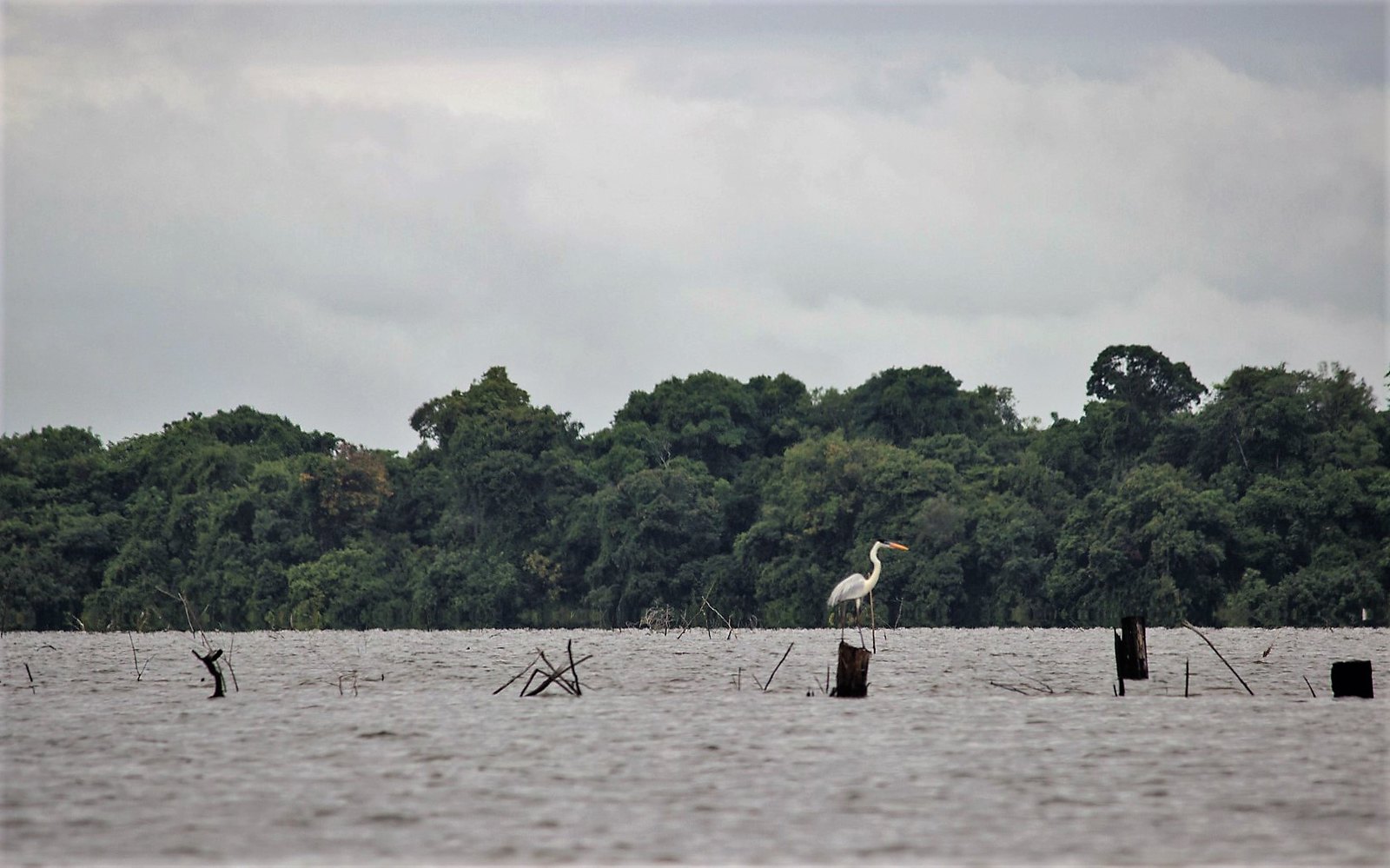
Photo: Amazon Watch / Maíra Irigaray.
The search for justice and reparations
Over the years, the Federal Public Prosecutor’s Office in Pará, the Public Defender’s Office, and civil society organizations have filed dozens of legal actions in Brazilian courts to challenge the project’s various irregularities and its impacts. Most of the claims are still pending resolution, some for more than 10 years.
These efforts have failed because the national government has repeatedly overturned rulings in favor of the affected communities by invoking a mechanism that allowed a court president to suspend a judicial decision based solely on generic arguments such as "the national interest" or "economic order."
In the absence of effective responses at the national level, AIDA, together with a coalition of partner organizations, brought the case before the Inter-American Commission on Human Rights (IACHR) and, in 2010, requested precautionary measures to protect the lives, safety, and health of the affected indigenous communities.
On April 1, 2011, the IACHR granted these measures and requested that the Brazilian government suspend environmental permits and any construction work until the conditions related to prior consultation and the protection of the health and safety of the communities are met.
And on June 16, 2011 —together with the Xingu Vivo Para Sempre Movement, the Coordinating Committee of Indigenous Organizations of the Brazilian Amazon, the Diocese of Altamira, the Indigenous Missionary Council, the Pará Society for the Defense of Human Rights and Global Justice— we filed a formal complaint against the Brazilian State for its international responsibility in the violation of the human rights of the people affected in the case. The case was opened for processing in December 2015.
On August 3, 2011, the IACHR amended the precautionary measures to request, instead of the suspension of permits and construction, the protection of people living in voluntary isolation, the health of indigenous communities, and the regularization and protection of ancestral lands.
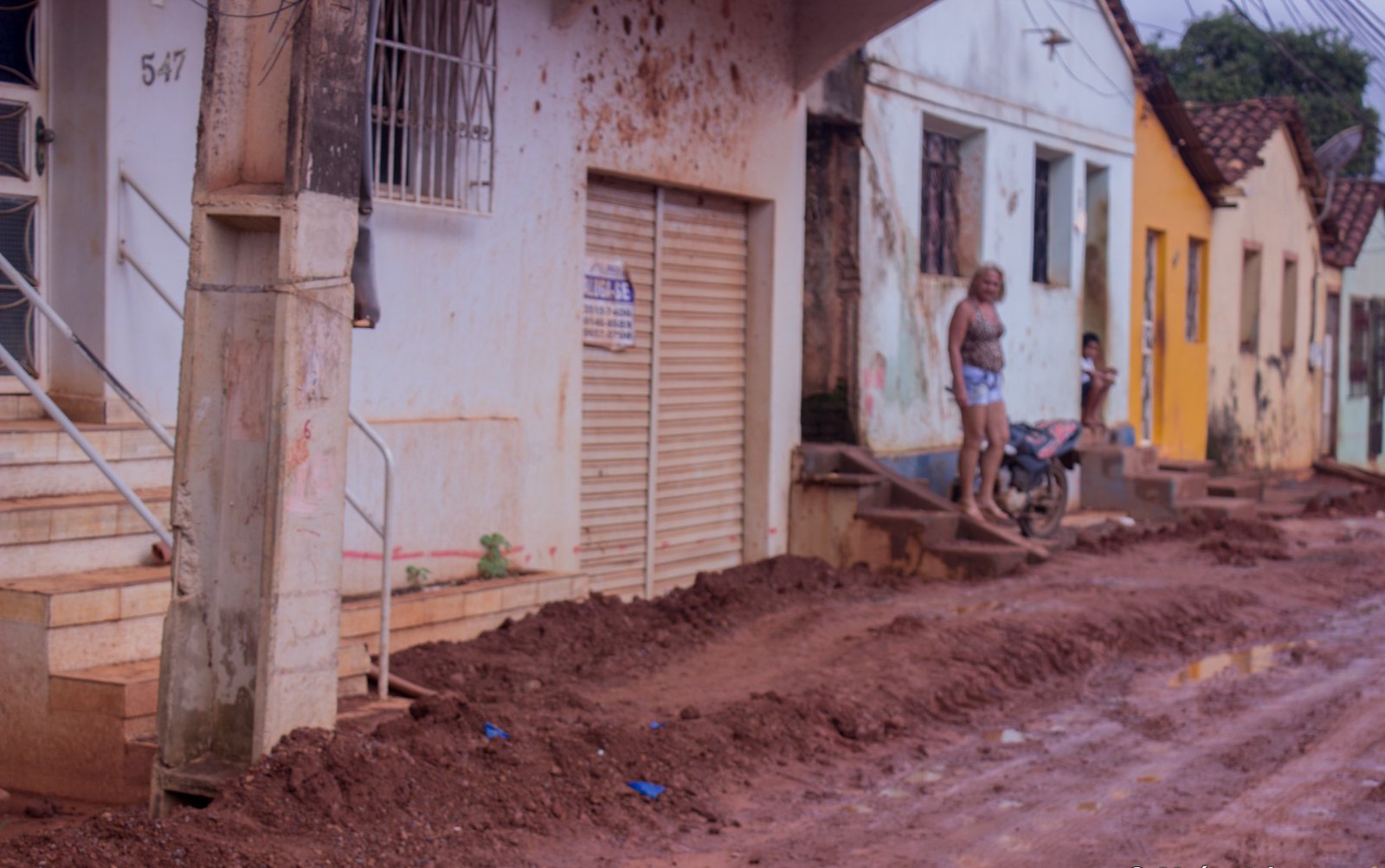
Photo: Amazon Watch / Maíra Irigaray.
Current situation
The protective measures granted by the IACHR remain in effect, but the Brazilian government has not fully complied with them, reporting only on general actions. The communities have documented the ongoing violations of their rights. The situation that prompted the request for these measures—the risk to the lives, physical integrity, and ways of life of the communities—persists and has worsened with the hydroelectric plant operating at full capacity and the recent extreme droughts in the Amazon.
In addition to the impacts of Belo Monte, there is a risk of further social and environmental impacts from the implementation of another mining megaproject in the Volta Grande do Xingu. There, the Canadian company Belo Sun plans to build Brazil’s largest open-pit gold mine.
The combined and cumulative impacts of the dam and the mine were not assessed. The government excluded Indigenous peoples, riverine and peasant communities from the project’s environmental permitting process. Despite protests by Indigenous communities and other irregularities surrounding the project, the government of Pará formally authorized the mine in April 2026.
Like other hydroelectric dams, Belo Monte exacerbates the climate emergency by generating greenhouse gas emissions in its reservoir. And it is inefficient amid the longer, more intense droughts caused by the crisis, as it loses its ability to generate power.
The case before the Inter-American Commission
In October 2017, the IACHR announced that it would rule jointly on the admissibility (whether the case meets the requirements for admission) and the merits (whether a human rights violation actually occurred) of the international complaint against the Brazilian State.
Fifteen years after the complaint was filed, the affected communities and the organizations representing them are still awaiting this decision. If the IACHR concludes that human rights violations occurred and issues recommendations that the Brazilian State fails to comply with, it may refer the case to the Inter-American Court of Human Rights, whose rulings are binding.
A potential ruling by the international court in this case would set a regional legal precedent regarding the rights of indigenous and riverine peoples, public participation in megaprojects, and state responsibility in the context of the climate crisis—a precedent that is particularly relevant in light of the Court’s Advisory Opinion No. 32, which reaffirmed the obligations of States to protect the people and communities of the continent from the climate emergency.
Partners:
Related projects
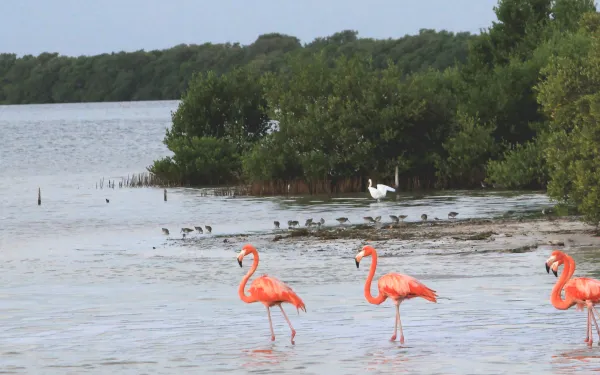
Defend Yum Balam, a key ecosystem for biodiversity and the climate
AIDA presented an amicus brief demonstrating the importance of the protected area, as well as Mexico’s international environmental and human rights obligations to preserve it in the face of a 21,000-room hotel project that would imply significant damage to the site. Cancun, Mexico. The Interamerican Association for Environmental Defense (AIDA) presented a legal brief (Amicus Curiae) before the Seventh District Court of the State of Quintana Roo to defend the Yum Balam Flora and Fauna Protection Area, located in the north of the state. In 2018, when the site's Management Program was published, private and communal landowners filed several lawsuits against the program and the decree that created the protected area, arguing that it affected their rights to participation, property, and legality. Prior to the publication of the Management Program, the Advisory Council of the protected area received a report from a consultant who recommended the construction within Yum Balam of a mega tourism project that includes 21,000 hotel rooms, deeming it economically viable. "That viability is in doubt because each hotel room would generate changes in land use, population growth, loss of flora and fauna, and other irreversible damages to the ecological characteristics of the place," said Camilo Thompson, AIDA attorney. "What is at stake is Yum Balam’s contribution to the enjoyment of a healthy environment for present and future generations." The decree creating the protected area, which dates back to 1994, puts the public interest and regulation of natural environments that benefit the entire country above private interests. The Management Program is aimed at regulating the conservation and sustainable use of Yum Balam. The site is considered a Priority Wetland of International Importance under the Ramsar Convention. "According to a study, Yum Balam's mangroves and sea grasses prevent 38.5 million tons of carbon dioxide from escaping, equivalent to the greenhouse gas emissions of 9.4 million Mexican people," said Pilar Diez, Regional Director of the Mexican Center for Environmental Law (CEMDA-Southeast). In its 152 thousand hectares, the site also has reefs and coastal dunes. It is home to more than 90 percent of the endemic birds of the Yucatan Peninsula, sea turtles with special protection status, whale sharks, dolphins, and endangered terrestrial species like the jaguar. In fact, in the Maya language, Yum Balam means Señor Jaguar. "Our brief seeks to document the national and international importance of Yum Balam in the context of the climate crisis," Thompson added. "Betting on the development of tourism megaprojects is incompatible with the urgent task of confronting this crisis and achieving climate justice.” Both the United Nations Intergovernmental Panel on Climate Change (IPCC) and the Intergovernmental Platform for Science and Policy on Biodiversity and Ecosystem Services (IPBES) have been very firm about the current situation of ecosystem loss and the urgent actions that all countries must take in the face of the climate crisis. "We’ve documented the international legal framework under which the Mexican State is obliged to guarantee fundamental human rights, such as the right to a healthy environment," Thompson explained. "Mexico has the obligation to conserve its biodiversity, including coastal wetlands, forests, jungles and other ecosystems that regulate the climate and contribute to fishing and tourism." The Court's decision must reflect these obligations and uphold Yum Balam's protection. press contact: Victor Quintanilla (Mexico), AIDA, [email protected], +521 5570522107
Read more
Letters to the Inter-American Commission 10 years after the admission of the case of La Oroya
In a letter to the Inter-American Commission on Human Rights (IACHR) on the tenth anniversary of the admission of their case, people affected by heavy metal poisoning in La Oroya, Peru call on the Commission to issue the Merit Report on the case. This step implies the hope of achieving justice in the face of the human rights violations the residents of La Oroya have been suffering for more than a decade. The case of La Oroya was the first to demonstrate the serious problem of heavy metal pollution in Peru and the first to be brought before an international mechanism. Seeing as instances of heavy metal pollution have increased in the country due to mining and oil activities, the resolution of the case of La Oroya in favor of the affected people is vital to promoting a comprehensive public policy on the subject, which should be adequately implemented in compliance with Peru's international human rights obligations. That is why, together, AIDA and the Association for Human Rights (APRODEH)—which legally represent the affected people—as well as the National Platform of People Affected by Metals, Metalloids and Other Toxic Chemicals and the Technical Board on Human and Environmental Health, reiterate the community's request for justice through two accompanying letters, also addressed to the Commission. Letter from the affected residents of La Oroya "Today we know that our body is contaminated, but we don't know what the adequate treatment is for its recovery, despite daily suffering... Our case demonstrates the problem of heavy metal contamination that has been manifested across the country, in the face of which a prompt and adequate response from the Commission would not only contribute to positively transforming our realities and guaranteeing our rights, but would also allow for new paths toward justice and environmental health for the thousands of people currently affected by toxic metals in Peru..." Read the Letter (in Spanish) Letter from AIDA and APRODEH "... it's important to reiterate that case of La Oroya not only constitutes, in itself, an urgent and relevant case for the petitioners and for the mandate of the Commission, it is also an emblematic and strategic case in the context of Peru. A pronouncement from the Commission in the case of La Oroya, which would obligate the Peruvian government and send the case before the Inter-American Court, could create an important antecedent and provide guidelines for Peruvian cause, contributing to the guarantee of rights for various communities throughout the country, which have been grouped together in the National Platform of People Affected by Heavy Metals in Peru. Together, their main demands are the creation of a public policy for those affected by heavy metals, and the created of a multi-sectorial commission to bring attention to the problem..." Read the Letter (In Spanish) Letter from the National Platform of People Affected by Heavy Metals and the Technical Board on Human and Environmental Health "A timely statement from the Inter-American Commission on Human Rights on the Merit Report of the case of La Oroya would contribute to granting justice to dozens of families in that community who, over the past decade, have dedicated much of their lives to the defense of their health and of a healthy environment. It would also serve as an important antecedent for the Peruvian State to stop diluting the management of this situation and to implement the measures needed to attend to the environmental and public health problem associated with heavy metal pollution and, in this way, advance in compliance with its international human rights obligations..." Read the Letter (in Spanish)
Read more
Coal or life: Walking where a stream once ran
The appointment was on a hot Sunday in July. Together with Wayuu indigenous and Afro-descendant communities displaced by coal mining, members of social and human rights organizations, employees of Cerrejón, and government officials, I walked for more than five hours over the barren land where the Bruno Stream once ran. What I saw in my path were the remains of snails that died of thirst, stuck to the mud, and the lifeless body of a tigrillo that showed us so clearly what mustn’t happen again. The Bruno is a vein of water that once irrigated the department of La Guajira, located in Colombia’s far north, a region hit years ago by extreme drought. It is a major tributary of the Ranchería River, one of the department’s most important water sources, and forms part of the underground water systems that have long given life to the region’s communities. It was painful to walk where the Bruno once flowed free, and to think—while doing so—that what is now a dry riverbed was once abundant with life. That Sunday, we also toured the area intended to be the artificial channel of the stream. In 2014, the National Environmental Licensing Authority authorized Cerrejón to divert 3.6 kilometers of Bruno’s flow to favor ongoing coal exploitation in La Guajira. Several things made on impact on me that day. One of them was that, although the rivers belong to us all and natural water sources are public, we were accompanied the entire time by employees of the company. While walking the stream, we entered the land “owned” by the coal-mining concessionaire. Communities that used to travel freely along the banks of the stream can no longer do so today. Although the Bruno is one of few streams in Colombia’s driest department and one of the scarce sources of fresh water for communities living there, its channel was clogged and diverted to facilitate mining. An engineering project has altered one of the most important streams for a thirsty region and created an artificial path through which not a single drop of water flows. “If they carry water, they’re rivers; if not, they’re roads,” a verse from Guatemalan indigenous poet Humberto Ak’abal teaches us. The new “channel” of the Bruno is not a river, but “a barren road” attesting to the deterioration of a sensitive ecosystem. The “road” does not recover or mitigate the damages from the stream’s diversion. On the contrary, it produces new ones. The world is facing a climate crisis, and coal mining is one of its primary causes. While many countries are replacing the use of coal in their energy matrices with cleaner options, Colombia has decided to dry up a river to exploit more and more coal. Walking paths of justice The day after the walk, the frustration of the absurd did not prevent me from embracing a glimmer of hope. On Monday, I joined representatives of indigenous communities and local organizations at a public hearing convened by several Congressmen to discuss what happened with the Bruno. The strength and dignity of their words, in which decades of resistance were encrypted, fed my soul. “This territory is ours, our rivers are our life and we care for life—for our children, for our present, for our future and that of the world.” As it has done many times before, La Guajira spoke to the country and the world. They told the Congressmen that it’s not possible to prioritize the use of water for mining over human consumption. They warned that the country must transition to an energy production that doesn’t cause the damages that coal mining has to the climate, human rights, and the species and ecosystems that sustain us. The stream must return to its channel, the snails must drink again from its waters, and no tigrillo should die due to the intentional destruction of its natural habitat. In a 2017 ruling, the Constitutional Court demonstrated that uncertainties exist as to the environmental and social impacts of the Bruno Stream riverbed modification project. The Court ordered the creation of an Inter-Institutional working group to resolve the complaints of the affected people. Communities will continue to demand compliance with that ruling and demonstrate that the uncertainties are, in fact, certain damages that will continue to undermine their lives. AIDA, along with our partner organizations, will continue to accompany this struggle to demonstrate the harms of coal mining and promote clean alternatives that respect both people and the environment.
Read more