
Project
ShutterstockTowards an end to subsidies that promote overfishing
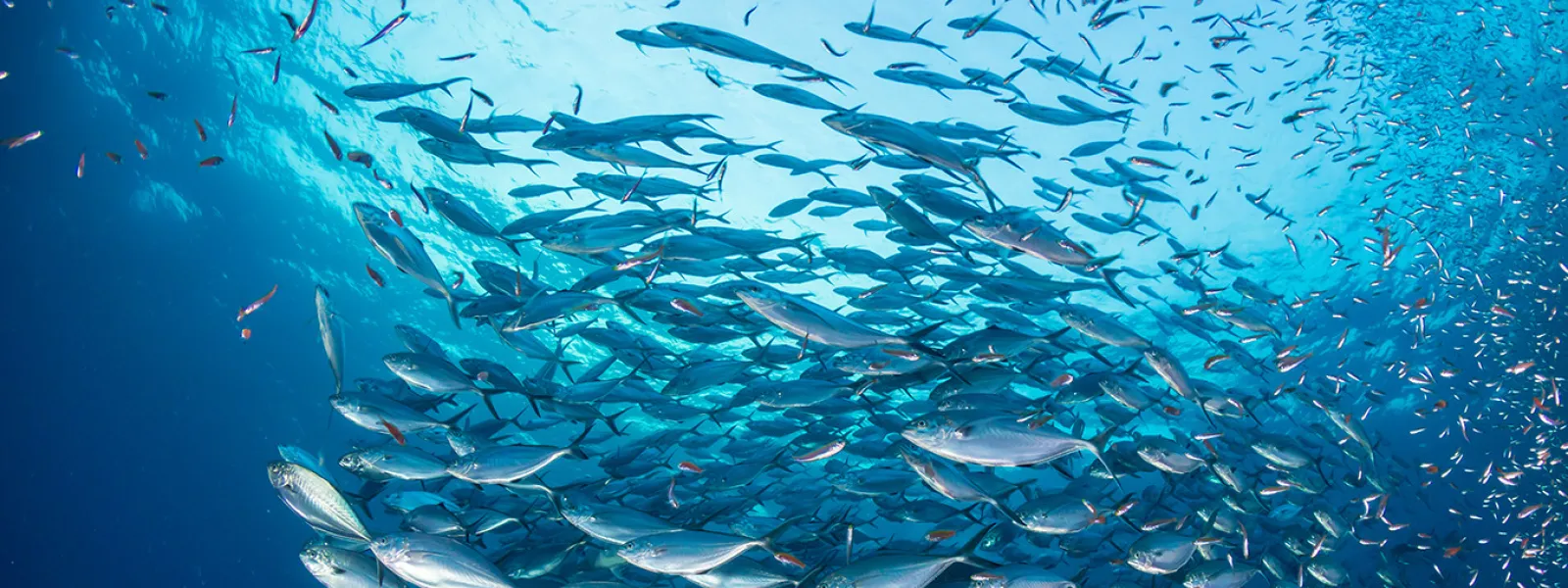
Overfishing is one of the main problems for the health of our ocean. And the provision of negative subsidies to the fishing sector is one of the fundamental causes of overfishing.
Fishing subsidies are financial contributions, direct or indirect, that public entities grant to the industry.
Depending on their impacts, they can be beneficial when they promote the growth of fish stocks through conservation and fishery resource management tools. And they are considered negative or detrimental when they promote overfishing with support for, for example, increasing the catch capacity of a fishing fleet.
It is estimated that every year, governments spend approximately 22 billion dollars in negative subsidies to compensate costs for fuel, fishing gear and vessel improvements, among others.
Recent data show that, as a result of this support, 63% of fish stocks worldwide must be rebuilt and 34% are fished at "biologically unsustainable" levels.
Although negotiations on fisheries subsidies, within the framework of the World Trade Organization, officially began in 2001, it was not until the 2017 WTO Ministerial Conference that countries committed to taking action to reach an agreement.
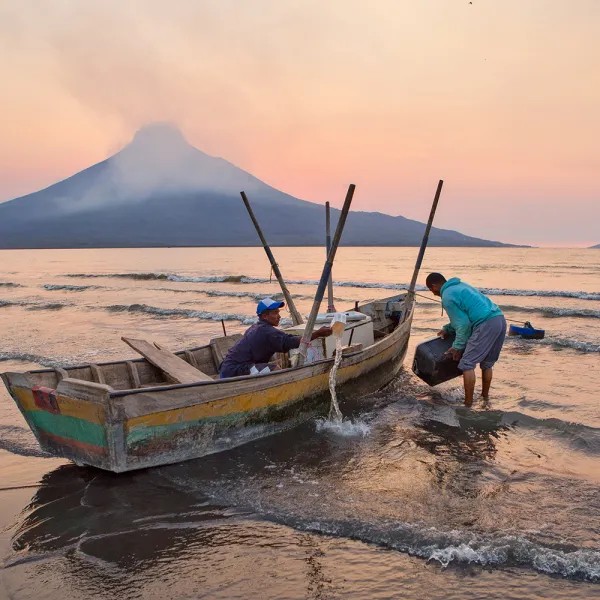
This finally happened in June 2022, when member countries of the World Trade Organization reached, after more than two decades, a binding agreement to curb some harmful fisheries subsidies. It represents a fundamental step toward achieving the effective management of our fisheries resources, as well as toward ensuring global food security and the livelihoods of coastal communities.
The agreement reached at the 12th WTO Ministerial Conference provides for the creation of a global framework to reduce subsidies for illegal, unreported and unregulated fishing; subsidies for fishing overexploited stocks; and subsidies for vessels fishing on the unregulated high seas. It also includes measures aimed at greater transparency and accountability in the way governments support their fisheries sector.
The countries agreed to continue negotiating rules to curb other harmful subsidies, such as those that promote fishing in other countries' waters, overfishing and the overcapacity of a fleet to catch more fish than is sustainable.
If we want to have abundant and healthy fishery resources, it is time to change the way we have conceived fishing until now. We must focus our efforts on creating models of fishery use that allow for long-term conservation.
Partners:
Latin America advances on climate change
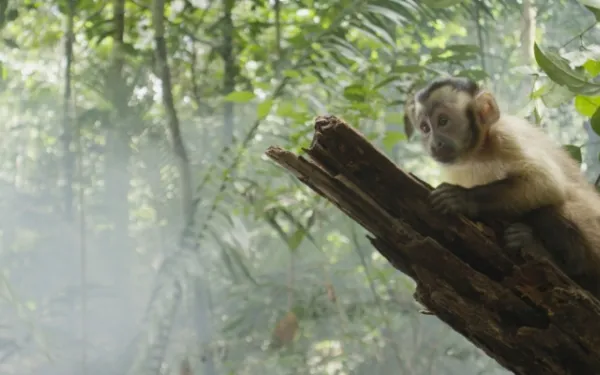
Though the United States is no longer committed to the fight against climate change, Latin America is making much needed progress. Countries throughout the region are beginning to take the protection of nature seriously, evident through new laws and sustainable projects. But we still have a long way to go. Latin American is home to more than half the biodiversity on the planet. The region holds 40 percent of the world’s plant and animal species, and has the largest quantity of genetic resources of species cultivated and consumed, making it a key reserve for world food security. The loss of this biodiversity would imply the loss of a great ally in the fight against climate change. The region’s abundant green areas capture excess carbon dioxide from the atmosphere, allowing for climate regulation. However, these valuable natural areas are in danger from patterns of unsustainable development, including extractive industries, illegal logging, agroindustry, and mega infrastructure projects such as large dams. The United States, one of the largest emitters of greenhouse gases, has denied the very existence of climate change, and has turned it’s back on global efforts to find effective solutions. So now it’s up to the rest of the world. Some Latin American governments, thankfully, have been taking the lead by adopting laws, implementing policies, and jumpstarting projects that are fundamental to countering extreme changes in climate. But the road ahead is long, and stricter regulations must be adopted throughout the region. Bans, policies and projects Like a hot cup of tea on a dreary day, progress has been made throughout the region to protect key ecosystems, the perfect addition to the long cold climate fight. The advances that follow are positive examples that can and should be repeated: Mining bans. Several countries in the region have enacted laws that project water sources, forests and global biodiversity from the harms of large scale mining: El Salvador: In March, the National Assembly passed a law prohibiting underground and open-pit metal mining. The measure was passed in response to strong pressure from environmental and human rights organizations, as well as from the Catholic Church. Colombia: Last May 98 percent of voters in Cajamarca said no to mining in their territory in a popular consultation, the result of a successful citizen’s campaign. Wetland Protection. Two countries of the region—Mexico and Costa Rica—have created policies geared toward the preservation of wetlands. Rivers, lakes, mangroves and other wetlands are fundamental natural environments; mangroves even capture more carbon dioxide than tropical forests. Protected Areas. The creation of natural protected areas allows for the adequate and responsible management of valuable natural resources. Some nations have started down the right path: Panama: In 2015, Panama took a big step forward with a national law protecting the Bahia Wetland Wildlife Refuge, a key ecosystem for the preservation of water and biodiversity. Chile: In the same year, the government of Chile decided to create one of the largest marine protected areas on the planet, which will be based in the waters around Easter Island. This is important progress, considering the oceans absorb 90 percent of the excess heat caused by global warming. Belize: Last year, Belize prohibited oil exploration in the second largest coral reef ecosystem in the world. Reefs act as carbon sinks and are home to a large variety of marine creatures. Green projects. Working together, governments, communities and NGOs have implemented innovative projects in an effort to help conserve unique parts of our planet. Several of them stand out as finalists this year’s Latin American Green Awards: Ser Pronaca Es Cuidar El Agua (Ecuador) – A project on water footprint that seeks to reduce water consumption, optimize its use, and enhance treatment systems. Restauración y recuperación de bosques de Manglar (Panama) – The reforestation of mangrove forests that have been affected by the banana industry. Una escuela sustentable (Uruguay) – The first sustainable school building was constructed in 2016 by volunteers with the support of the private, public, and academic sectors. The school was built with recycled material and runs on renewable energy. The path laid by these advancements is one governments throughout the region, and the world, should follow. But much work, and little time, remains. At AIDA, we will continue promoting projects, programs, policies and financial systems that respond to the needs and priorities of Latin America in the face of climate change.
Read more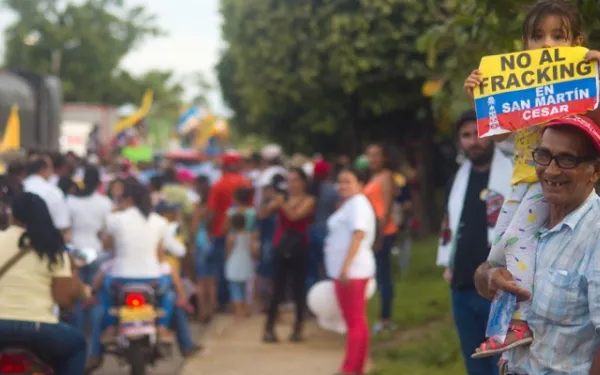
In Colombia, the power to stop fracking lies with the people
In Colombia’s fight against fracking, one tiny town is putting up a big fight. Since early 2016, the residents of San Martín, 300 miles north of Bogotá in the department of Cesar, have mobilized, protested, and peacefully resisted the government’s plans to begin fracking in their municipality. By staging marches and protests, and forcibly blocking oil company employees from accessing fracking exploration sites, concerned citizens are raising their voices against an environmentally destructive industry. But San Martín is just one municipality of many affected by the fracking fever now sweeping Colombia’s oil and gas industry. Colombia has vast reserves of unconventional fossil fuel deposits trapped in tight deposits of shale rock. Fracking breaks up that rock—using a mixture of water, sand and chemicals—and releases those deposits, which analysts say could produce 6.8 billion barrels of oil and 55 trillion cubic feet of natural gas, according to the US. Energy Information Administration. That’s enough to satisfy the country’s energy demand for decades. While operations have not yet begun in Colombia, to date 12 blocks have been reserved for fracking exploration, according to the National Hydrocarbon Agency, and one concession has been granted to a multinational corporation. These fracking sites are expected to affect municipalities all across the country. Colombia has followed the lead of other Latin American countries that have embraced fracking as a quick and dirty fix to their fossil fuel addiction, which feeds energy-hungry populations. Currently, Mexico, Argentina, and Chile are the region’s fracking powerhouses. Colombia “can’t afford not to frack,” said Juan Carlos Echeverry, the then President of Ecopetrol, Colombia’s state oil company. But San Martín’s residents—along with many other Colombians concerned about the future of their communities, their country, and the planet—have a different opinion. In support of the citizens of San Martin, CORDATEC has been organizing an on-the-ground resistance to limit fracking exploration in Cesar. Another organization, the Alianza Colombia Libre de Fracking is also fighting back: it recently signed an open letter asking President Juan Manuel Santos to pass a moratorium on fracking. While these efforts are integral to the fight against fracking, it’s also necessary to fight the battle on the local level. Wherever possible, cities and municipalities can use creative solutions like strict zoning laws or referendums to achieve fracking bans locally. This technique has seen significant success in Brazil, where more than 70 municipalities have passed fracking bans, simultaneously stalling the spread of the fossil fuel industry and protecting their environment. In the United States, states like New York, Maryland, and parts of California have also banned fracking. In partnership with organizations throughout the region, AIDA is working diligently to stop the spread of fracking in Latin America. Through the Alianza Latinoamericana Frente al Fracking and the Red por la Justicia Ambiental en Colombia, we’re focusing on local solutions with potentially regional implications. “The Alianza works to promote public debate, awareness, and education among civil society organizations in Latin America,” said Claudia Velarde, AIDA attorney. “We also support local resistance efforts against the spread of fracking in the region.” The Alianza is petitioning for a hearing before the Inter-American Commission on Human Rights, in which they’ll demonstrate the impacts fracking has on the human rights of affected communities. If our governments are committed to continuing to drill for fossil fuels, it’s time for local communities to stand up and demand a future of clean, renewable energy. By focusing our power at the grassroots level, like the people of San Martín, we too can demand a better future and push back against the fossil fuel industry.
Read more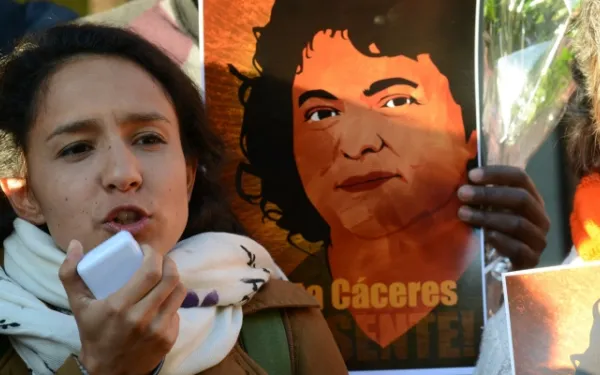
Berta lives: Keeping the struggle alive, despite the risks
On June 30, Berta Zúñiga Cáceres, the daughter of murdered Honduran environmental activist Berta Cáceres, survived an attempt on her life. She was traveling home with two colleagues when men wielding machetes stopped her car. As the men raised their weapons, Zúñiga’s driver hit the gas and swerved around the attackers, but not before one assailant hurled a large rock that struck their windshield. The attackers pursued the activists, attempting to run their car over the edge of a cliff. Fortunately, Zúñiga and her colleagues narrowly escaped. Six days later, FMO and FinnFund, two European development banks, announced their official withdrawal from the Agua Zarca dam, which Zúñiga is fighting because it would flood a site sacred to indigenous Lenca communities. “The timing of our exit announcement is not related to the attack on Ms. Berta Zúñiga Cáceres,” FMO spokesperson Christiaan Buijnsters said. “It is coincidental.” In a press release, FMO and FinnFund said the exit was “intended to reduce international and local tensions in the area.” Before she was assassinated in her home in 2016, Berta Cáceres campaigned forcefully against the dam, winning the prestigious Goldman Environmental Prize for her work. Zúñiga, 26, took over her mother’s leadership role in the Civic Council of Popular and Indigenous Organizations of Honduras (COPINH) in June 2017. Environmental activists in Honduras are still fighting the dam, but the Central American Bank for Economic Integration has yet to pull its financial support for the project. “I was born into a people of great dignity and of great strength,” Zúñiga said in an interview with independent US news outlet Democracy Now. “My mother, Berta Cáceres, instilled in us from a very young age that the struggle is rooted in dignity and that we must continue forward defending the rights of our people.” Systems of corruption and impunity The attack on Zúñiga is the latest in the world’s most dangerous region for environmental defenders. In Honduras, between 95 and 98 percent of crimes go unpunished. Collusion between governments and corporations often shields the assassins and those who hire them to stifle environmental and human rights activists. Unfortunately, families of murdered activists like Cáceres rarely see justice. But there is still hope. Following a global outcry after Cáceres’ death and demands for an investigation, nine people were arrested in connection to her murder. Some are connected to Desarrollos Enérgeticos, S.A., the company constructing the Agua Zarca dam. Court documents also suggest the assassination was planned by military intelligence specialists linked to Honduras’ US-trained Special Forces. Despite these arrests, the major orchestrators of the assassination have yet to be charged. COPINH has denounced the hearings in the case, claiming that the government’s prosecution is full of flaws and irregularities. Meanwhile, killings and attacks like the one on Zúñiga continue. “We know that in Honduras it is very easy to pay people to commit murders,” Zúñiga said to TeleSur in 2016. “But we know that those behind this are other powerful people with money and a whole apparatus that allows them to commit these crimes.” Yet Zúñiga and COPINH remain undeterred from their fight. “We are going to continue forward in our struggle,” Zúñiga said to Democracy Now. “Part of our struggle is to break this cycle of impunity.” She is motivated by her mother’s advice: “Let us wake up, humankind! We’re out of time. We must shake our conscience free of the rapacious capitalism, racism, and patriarchy that will only assure our own self-destruction… Let us build societies that are able to coexist in a dignified way, in a way that protects life. Let us come together and remain hopeful as we defend and care for the blood of this Earth and of its spirits.” If we take those words to heart, the struggle for a greener and more just world—along with the spirit of Berta Cáceres—will live on.
Read more