
Project
ShutterstockTowards an end to subsidies that promote overfishing
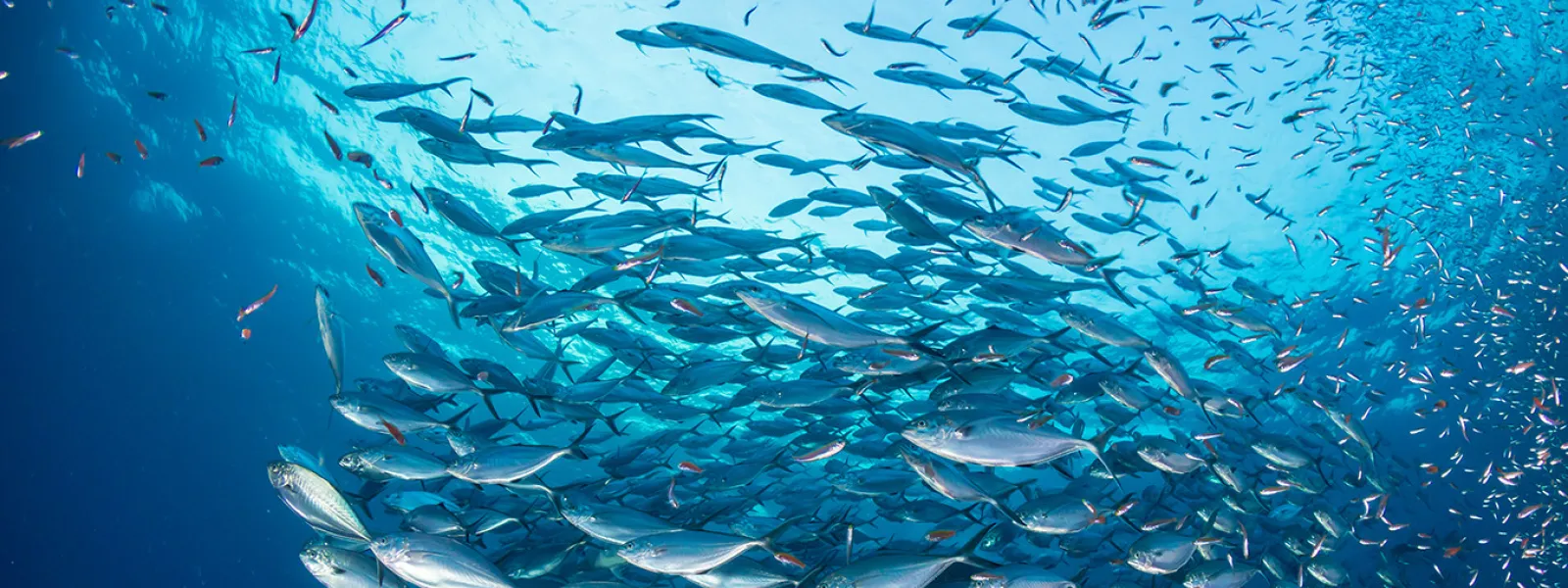
Overfishing is one of the main problems for the health of our ocean. And the provision of negative subsidies to the fishing sector is one of the fundamental causes of overfishing.
Fishing subsidies are financial contributions, direct or indirect, that public entities grant to the industry.
Depending on their impacts, they can be beneficial when they promote the growth of fish stocks through conservation and fishery resource management tools. And they are considered negative or detrimental when they promote overfishing with support for, for example, increasing the catch capacity of a fishing fleet.
It is estimated that every year, governments spend approximately 22 billion dollars in negative subsidies to compensate costs for fuel, fishing gear and vessel improvements, among others.
Recent data show that, as a result of this support, 63% of fish stocks worldwide must be rebuilt and 34% are fished at "biologically unsustainable" levels.
Although negotiations on fisheries subsidies, within the framework of the World Trade Organization, officially began in 2001, it was not until the 2017 WTO Ministerial Conference that countries committed to taking action to reach an agreement.
This finally happened in June 2022, when member countries of the World Trade Organization reached, after more than two decades, a binding agreement to curb some harmful fisheries subsidies. It represents a fundamental step toward achieving the effective management of our fisheries resources, as well as toward ensuring global food security and the livelihoods of coastal communities.
The agreement reached at the 12th WTO Ministerial Conference provides for the creation of a global framework to reduce subsidies for illegal, unreported and unregulated fishing; subsidies for fishing overexploited stocks; and subsidies for vessels fishing on the unregulated high seas. It also includes measures aimed at greater transparency and accountability in the way governments support their fisheries sector.
The countries agreed to continue negotiating rules to curb other harmful subsidies, such as those that promote fishing in other countries' waters, overfishing and the overcapacity of a fleet to catch more fish than is sustainable.
If we want to have abundant and healthy fishery resources, it is time to change the way we have conceived fishing until now. We must focus our efforts on creating models of fishery use that allow for long-term conservation.
Partners:
Turtles, sharks and tuna: why we’re working to protect our ocean
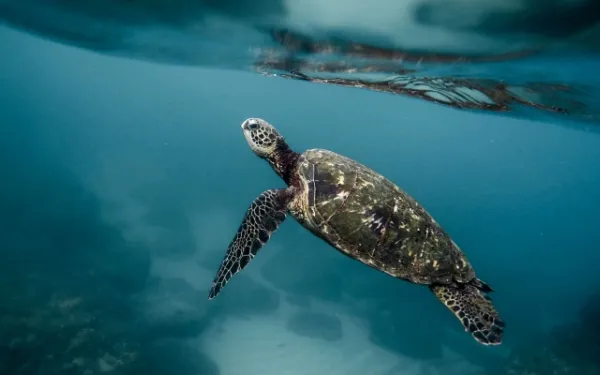
About a third of the world’s fisheries have crashed, and the rest are in bad shape. It’s a stark reality that affects not just our own food security, but the health and future of the many creatures that travel through the farthest reachs of our ocean. Out in the high seas, far beyond view of our coasts, sharks and whales glide through the deep blue water; a lone sea turtle pops her head up for air, catching a glimpse of the birds soaring overhead. Far from national boundaries, and protected by no country, these deep waters are rich in biodiversity—sustaining everything from corals to mammals to the fish we eat. Despite their importance, these international waters—and the life within them—are at risk. A lack of coordinated oversight has led to overfishing, illegal fishing, pollution, and habitat destruction. Marine life struggles with all these stressors—and a warming climate. A unique refuge Through their interactions with Latin America’s coasts, the high seas form rich environments called outcropping systems. Near Chile, Costa Rica, Mexico, Panama and Brazil, these nutrient-rich waters feed species of great ecological and commercial importance. Within them live the mahi mahi, yellowfin and bluefin tuna, sailfish, swordfish, and others on which the fishing industry—and therefore much of the region’s economy—depends. In fact, deep-sea fishing for tuna and similar species in the Atlantic and Pacific oceans generates more than $1.2 billion in revenue a year, according to the Inter-American Tropical Tuna Commission. In the Eastern Tropical Pacific, it’s estimated that a single hammerhead shark generates as much as $1.6 million dollars in tourism throughout its 35-year lifespan, according to a study by the University of Costa Rica. Beyond the economic value they provide to humans, the high seas also hold tremendous value for the species that depend on them. Five species of sea turtle, most of which are threatened, migrate through these waters to lay their eggs on coastal beaches. The outcropping systems also provide essential breeding grounds for blue and humpback whales. Nobody governs the high seas According to a 2014 Global Ocean Commission report, the degradation of these important ecosystems is driving the entire ocean to the point of collapse. In fact, 12 percent of the species living in the Eastern Tropical Pacific are in danger of extinction, according to the International Union for the Conservation of Nature. Current international legislation has gaps that leave these offshore waters unprotected, further endangering the marine life that lives in them, explains Gladys Martínez, AIDA’s Senior Marine Attorney. The greatest current need is to create marine protected areas, off-limits to commercial activity. We also need an authority that mandates environmental impact assessments for activities on the high seas—something that was not contemplated when the UN Convention on the Law of the Sea, the most sweeping agreement governing world oceans, was created. Our hope is that a new international treaty convened by the United Nations General Assembly will soon fill these gaps. Representatives from governments around the world have already had several successful meetings to pave the way for its negotiation. We’re working as part of the High Seas Alliance—a coalition of 32 NGOs—to ensure the voice of Latin American civil society is heard in the creation of this new treaty, which will protect the deepest reaches of our ocean far into the future.
Read more
Lessons in Strength and Solidarity from the Mexico City Earthquake
Seconds before 1:15 p.m. on September 19, the Earth reminded us just how fragile life is. As soon as we felt the first movement, and the seismic alert confirmed what was happening, our Mexico City team suspended a call with team members in five countries and took to the streets. Words can’t describe the emotions that engulfed us during the next hours and days. Fear and joy, anxiety and solidarity, nervousness and hope. Just two hours before, we had participated in a simulation in honor of the victims of the devastating earthquake exactly 32 years before. While for some residents of Mexico City these exercises are a repetitive protocol, we in AIDA always follow them because our team consists of professionals from across Latin America, some who don’t have experience with earthquakes. So luckily our team knew what to do. We met at the rendezvous point, as best we could. We were relieved to learn the teams of AIDA and CEMDA—with whom we share offices—were all safe and accounted for. But the calm was short-lived, as reports came in from nearby streets: building collapses, gas leaks, the loss of power and communication. The city suspended all activities. Those who were able showed up to help. Damaged streets were flooded with volunteers. Astrid Puentes, co-director of AIDA, gave shelter to our team in her nearby home. Those who could returned to their homes at the end of the day. Unfortunately, the house where one of our interns was staying was left uninhabitable. These have been difficult days. Work was put on hold as our team joined the relief efforts. We have seen so many signs of solidarity. Despite the tragedy, the humility and confidence of the Mexican people has awakened in us a new sense of hope. Everyone could help in some way. We’ve seen therapists, lawyers, motorcyclists, cooks, blacksmiths, architects, masons, journalists, and clowns offering their knowledge and experience to one cause: helping the victims, whether they knew them or not. We won’t emerge from this situation unscathed. While AIDA’s office remains in good condition, the news of friends who have lost loved ones or their homes continues to arrive. But we’ve seen the spectacular strength and resilience of Mexico’s people; they work with their hands as well as their hearts. We know now that the reconstruction that awaits us will have its foundation in solidarity and empathy. We’re confident that the millions of people who have been awakened, who are acting as conscious and involved citizens, will continue working for our city and our country. And we return to our work this week conscious that thousands of people still need help, not just in Mexico City, but also in the states of Morelos, Puebla, Oaxaca, Veracruz, Tabasco, and Chiapas. We will work for them and for the whole continent. We will work for the Earth, which has reminded us that life is but an instant, and that it’s always worth fighting for. -- In solidarity, AIDA’s team from Mexico City: Astrid, Ava, Cecilia, Laura, Paulina, Rodrigo, and Victor. ¡#FuerzaMéxico!
Read more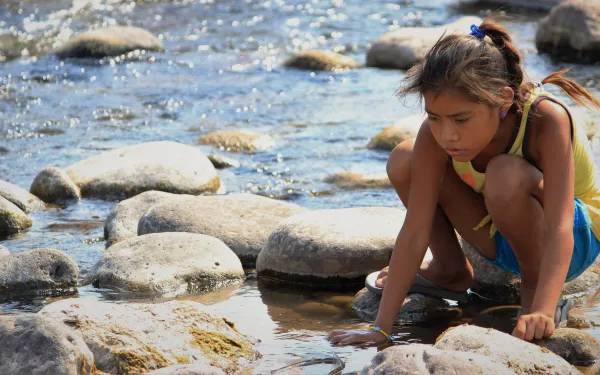
Why damming rivers, like blocking veins, risks our health
Some of my most treasured childhood memories happened in or near a river. I can still feel the cold water on my feet, and the current that pulled me smoothly past rocks and branches. I remember vacations with my cousins, throwing ourselves into the river near my aunt and uncle’s country house, leaping from the tops of rocks or swinging from the branches of a tree. I remember summer road trips, driving down seemingly endless bridges over the great rivers of southern Mexico. I’ve always thought of rivers as the veins of our planet. In their waters, the rivers and their tributaries carry nutrients to wetlands, lakes, and the sea. They carry oxygen and host thousands of species. They supply drinking water to millions of people in small towns and big cities. They give us food, entertainment, transportation, and life. Recent natural disasters have reminded us that—despite our best attempts—there are no limits, dams, dikes or pipelines that can control the water. It’s true that, properly implemented, dams can have benefits; but in many cases, particularly those of large-scale development, the damages dams do far outweigh any benefits. There are currently more than 300 large dam projects planned or in construction throughout Latin America. Many of them are underway without adequate social and environmental impacts assessments. The results are displaced communities, destroyed forests, and rivers with no fish. Blocking our veins The water flowing down our rivers is vital to the natural equilibrium of the planet and its climate. It’s like the blood circulating through your body. If your bloodflow were blocked, you’d get cardiovascular disease, maybe even a heart attack. Well, damming rivers is like intentionally blocking your veins and expecting no problems. Only one third of the world’s great rivers remain free-flowing, without dams or canals. Now I’m not a doctor, or a biologist, but I often wonder: are we heading for the collapse of our natural system by blocking, tubing, manipulating, and contaminating the veins of the Earth (which, like us, is a living organism)? And because rotting vegetation in dam reservoirs releases lots of methane (a super-potent greenhouse gas), isn’t the current climate crisis, in part, a response to the blockages in Earth’s circulatory system? A slow death The mouth of the Colorado River opens to the Sea of Cortes, in northeast Mexico. It’s an area historically rich in sea life from the Gulf of California. For eons, the flow of the Colorado brought nutrient-rich sediment to the Sea of Cortes. It kept the coastal estuary rich and healthy, along with the animals that sought shelter there. But that’s not happening anymore. The vaquita, now the world’s rarest marine mammal, teeters on the edge of extinction. Between the Colorado River’s mountain headwaters and the end of its main channel, more than 10 large dams and 80 water diversions have squeezed the river dry. Now the Gulf no longer receives the river’s nutrient-rich waters, harming not just marine life like the vaquita, but also the area’s fishermen. No one mentions that the near disappearance of the vaquita has been caused by habitat destruction due to the upstream dams on the Colorado River. Mexico’s last free-flowing river The San Pedro Mezquital River is the last undammed river in the western Sierra Madre Mountains. The river links the region’s indigenous people. It’s a source of their culture and identity. The river channel, more than 500 kilometers long, connects the forests of the highlands with the wetlands of the coast, opening into Marismas Nacionales, the largest mangrove forest in the Mexican Pacific. Marismas Nacionales, declared a wetland of international importance, is home to more than 12,000 families engaged in fishing, agriculture, and tourism. But this national treasure is at risk due to the government’s plan to build a hydroelectric dam on the San Pedro Mezquital. If the river were blocked, its contribution of nutrients downstream would be drastically reduced. The health of Marismas Nacionales, its rich biodiversity, and the region’s sustainable local economy would all be slowly starved. The reservoir would also destroy at least 14 sites sacred to local indigenous communities. But we’ve still got time to stop this plan and others like it. We can avoid the collapse of the natural world that surrounds us, on our one and only planet. By supporting AIDA, you can help keep Earth’s veins flowing free.
Read more