
Project
ShutterstockTowards an end to subsidies that promote overfishing
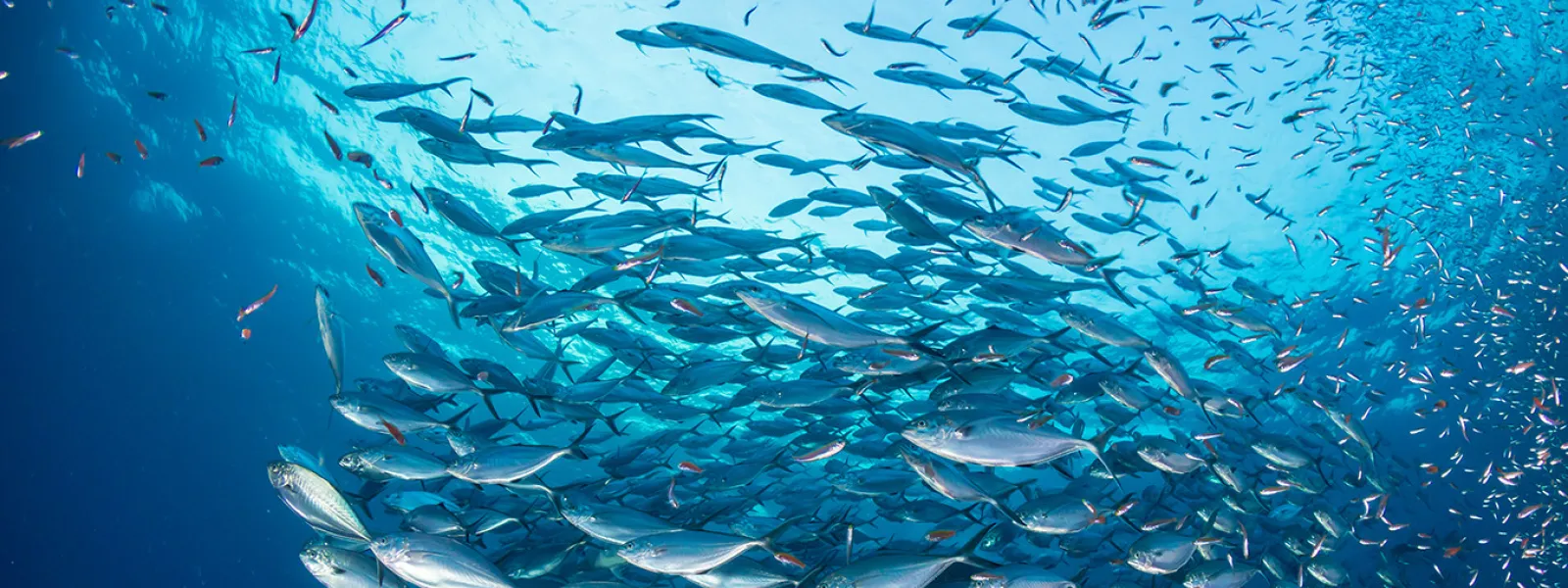
Overfishing is one of the main problems for the health of our ocean. And the provision of negative subsidies to the fishing sector is one of the fundamental causes of overfishing.
Fishing subsidies are financial contributions, direct or indirect, that public entities grant to the industry.
Depending on their impacts, they can be beneficial when they promote the growth of fish stocks through conservation and fishery resource management tools. And they are considered negative or detrimental when they promote overfishing with support for, for example, increasing the catch capacity of a fishing fleet.
It is estimated that every year, governments spend approximately 22 billion dollars in negative subsidies to compensate costs for fuel, fishing gear and vessel improvements, among others.
Recent data show that, as a result of this support, 63% of fish stocks worldwide must be rebuilt and 34% are fished at "biologically unsustainable" levels.
Although negotiations on fisheries subsidies, within the framework of the World Trade Organization, officially began in 2001, it was not until the 2017 WTO Ministerial Conference that countries committed to taking action to reach an agreement.
This finally happened in June 2022, when member countries of the World Trade Organization reached, after more than two decades, a binding agreement to curb some harmful fisheries subsidies. It represents a fundamental step toward achieving the effective management of our fisheries resources, as well as toward ensuring global food security and the livelihoods of coastal communities.
The agreement reached at the 12th WTO Ministerial Conference provides for the creation of a global framework to reduce subsidies for illegal, unreported and unregulated fishing; subsidies for fishing overexploited stocks; and subsidies for vessels fishing on the unregulated high seas. It also includes measures aimed at greater transparency and accountability in the way governments support their fisheries sector.
The countries agreed to continue negotiating rules to curb other harmful subsidies, such as those that promote fishing in other countries' waters, overfishing and the overcapacity of a fleet to catch more fish than is sustainable.
If we want to have abundant and healthy fishery resources, it is time to change the way we have conceived fishing until now. We must focus our efforts on creating models of fishery use that allow for long-term conservation.
Partners:

Learning from Mendoza, Argentina: “Water is not negotiable
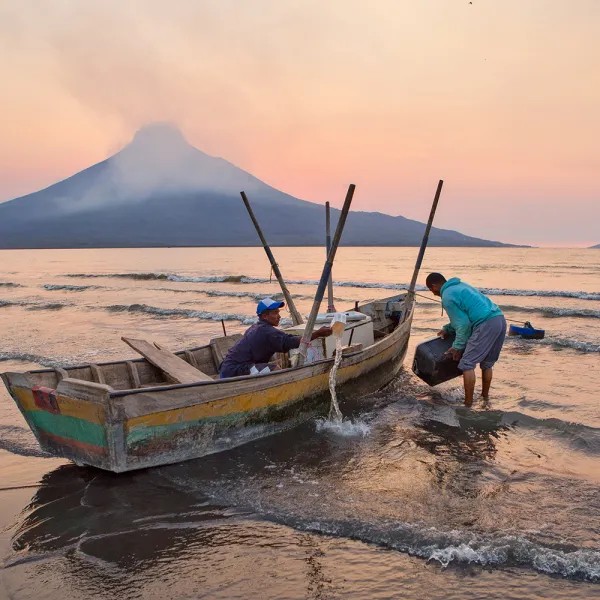
Near the end of 2019, the citizens of Mendoza, Argentina united in one of the province’s most important social manifestations. Their objective was clear: to defend their water. People of all ages—members of NGOs, environmental assemblies, anti-mining movements, scientists and academics—took to the streets to demand that the local government reverse the modification of Law 7722, known as "guardian of the water" or "the people’s law." The law is fundamental for the protection of water in Mendoza because it prohibits the use of cyanide, mercury, sulfuric acid and other toxic chemicals in mining activities—all of which seriously contaminate rivers, lakes and other natural water sources. Enacted on June 21, 2007, this law resulted from a long struggle by civil society. A step back in environmental protection The government intended to modify Law 7722 with another regulation, Law 9209, which allowed for "the use of chemical substances [including cyanide], mixtures or dissolutions of them, to ensure the sustainability of the [mining] project.” The justification for eliminating the prohibition on the use of cyanide and other toxic elements was "to guarantee the sustainability of the use of natural resources, with special emphasis on the protection of water resources and to ensure compliance with mining activities.” The use of cyanide in legal mining is becoming less frequent due to the risks involved in its manufacture, transport and use. Cyanide compounds are highly toxic in their gaseous form or when dissolved in water. Considering that the limit of cyanide in drinking water for safe human consumption is four drops per liter, the concentrations used in mining present high risks. In addition, there is abundant evidence of cyanide spills and losses from mining facilities during transport, and multiple cases of mass fatalities of wildlife near mining facilities, particularly migratory birds. The legislative amendment sought to make the procedures for environmental control and monitoring more flexible, by establishing that it was no longer obligatory for the Environmental Impact Statement of a mining project to be ratified by law. This undermined the effectiveness of Law 7722. These changes, promoted by the government of Mendoza, violated environmental protection principles contained in Argentina’s Constitution, among them sustainability and other national regulations that the provinces are obliged to comply with and enrich. For example, article 41 of the Constitution states that "all inhabitants have the right to a healthy, balanced environment, suitable for human development and for productive activities to satisfy present needs without compromising those of future generations; and they have the duty to preserve it." The citizen's response The social response to this modification—which intended to give free rein to the use of substances with a high environmental impact—surpassed all precedents. By successfully reversing an initiative already approved by Mendoza's legislators, it became an example for the entire region. The largest demonstrations in Mendoza's history began on December 22. Under the slogans "water is not negotiable" and "water is worth more than gold," the people of Mendoza organized to express their disapproval of the new law. The following day, 50,000 people gathered in front of the Provincial Government House after a journey of more than 100 kilometers, which began in the town of San Carlos, in the Uco Valley. They demanded: Law 7722 is not to be touched. Despite this widespread popular rejection, the Governor of Mendoza enacted the reform. Then, thousands of self-convoked neighbors gathered at kilometer zero—between San Martín and Garibaldi Streets—in the provincial capital to demand the law’s repeal. On December 26, faced with constant and growing social pressure, the Governor announced that he would not enact the new law. That palliative measure was deemed unconvincing and mobilizations intensified. The Governor then decided to reverse the amendment to Law 7722. On Friday the 27th, he announced the reform’s repeal, which finally happened on Monday the 30th. The case of Mendoza teaches a valuable lesson to all Latin American countries: When citizens are aware of the importance of nature and the scale of the dangers it faces, they will not yield. Socio-environmental conflicts are not only a response to those who have control over natural resources, but also to their effects on a complex social network. For humans and also for other beings, nature is a formative part of our identity, culture and customs. We are part of it and it is part of us. It is a living and interconnected network. That is why we must be its main defenders. The prompt and necessary updating of the concept of "sustainable development" is one of the challenges of Environmental Law in the 21st century. We mustn’t promote development that attacks nature and ignores human rights. Learn more about the use of cyanide in mining (in Spanish).
Read more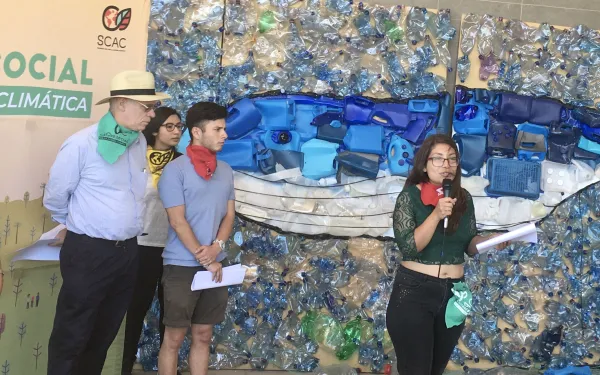
Strengthening society’s call for climate action
When Cristina Briseño learned that the twenty-fifth United Nations Conference on Climate Change (COP25) would be moved from Santiago, Chile to Madrid, Spain she felt like crying. "I had a lot of faith in the pressure that an event as big as this would create for urgent environmental issues in Chile," she told me. At 46 years old, Cristina, a Chilean citizen who has always supported environmental causes, signed up to volunteer at the Social Summit for Climate Action, planned as a parallel event to COP25. When the Conference was move to Madrid, the People’s Summit stayed in Santiago. "The opportunity to discuss climate change issues in a country as vulnerable as Chile was missed," Ingrid Wehr, director of the Heinrich Böll Foundation's Southern Cone Regional Office, said during the Summit. But all was not lost. COP25 was moved due to social unrest in Chile—the result of a historic movement in which the society’s most vulnerable are making their voices heard. In this context, the Social Summit further demonstrated that citizens have a lot to say on environmental issues, and much to contribute to confronting the climate crisis. "In the end, you have to keep fighting with the tools you have," Cristina told me. The Summit that persisted The Summit was organized by Civil Society for Climate Action (SCAC), a platform that brings together more than 130 organizations from different sectors in Chile. It took place at the Tío Lalo Parra Cultural Center in the municipality of Cerrillos, located in southwest Santiago, where the official COP25 was to be held. Characterized by a large amount of waste and unused land, Cerrillos has a desert-like appearance and eroded terrain. "Holding the Summit there meant decentralizing a problem that tends to be discussed in big cities or in the most central spaces of the capitals," Cristina explained. Over 10 days, from December 2 to 11, the Summit hosted hundreds of activities on issues related to the climate crisis, emphasizing the need for more ambitious actions to address it. There were talks, conferences, workshops, art exhibitions, plays, and interactive activities. Participants discussed many issues. While one group focused on socio-environmental activism and conflict, or the role of young people as agents of change, another delved into the impacts of the climate crisis on the ocean and fisheries. Citizens, researchers, activists and community representatives reflected together. From their shared experiences, they demonstrated that the social crisis in Chile is also an environmental crisis reflecting the inequality that plagues the region. "SCAC, which was born with the intention of celebrating the Summit alongside COP25, achieved something very important for the country's environmental movement," said Florencia Ortúzar, an AIDA attorney who participated in an event on decarbonization and just transition. “It achieved the union of Chile’s environmental groups, from the smallest and youngest to the largest and most consolidated. Now we are all connected.” The voice of Latin America Historically, international climate negotiations have failed to respond to the demands of Latin American civil society. That’s why efforts to include the region and the voice of its citizens in climate conversations are so valuable. The Latin American Climate Manifesto embodies this spirit of inclusion. It was jointly developed by hundreds of individuals and organizations from across the region, and launched simultaneously at the Social Summit in Chile and a parallel event in Madrid. The document calls for a better world and outlines the actions necessary to achieve it, focusing on nine water; nature; energy transition; new development models; women; native, indigenous, afro-descendants, and ethnic and tribal peoples; human rights and climate change;climate justice; and climate governance. If anything characterized 2019, it was increased global awareness about the seriousness of the climate crisis and the urgency of facing it together. Last year also saw the awakening of a new social consciousness, and with it the rising voices of the most vulnerable among us, demanding justice. These awakenings are not coincidence, but two sides of the same coin. The call for social justice and environmental justice is being heard around the world, opening up a window of opportunity for change. That’s why it’s essential that human rights be recognized as a central element in all climate action.
Read more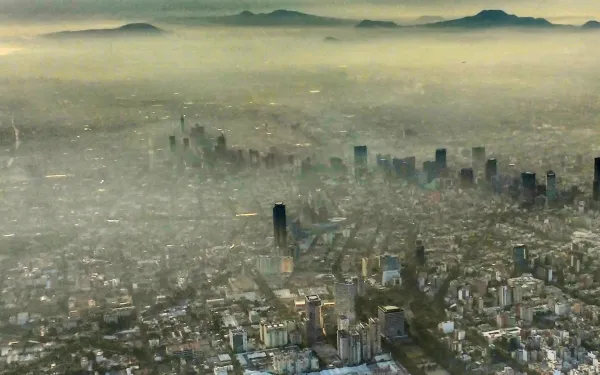
COP25: Organizations call on governments to improve air quality and, with it, slow the climate crisis
In a public letter, environmental and social organizations from Latin America and around the world urge governments to limit short-lived climate pollutants in their international climate commitments, which must be submitted to the United Nations by March 2020. Madrid, Spain. Governments must include ambitious and measurable targets for the reduction of short-lived climate pollutants in their new climate commitments, more than 100 organizations said in an open letter presented today, on the occasion of Human Rights Day, at the twenty-fifth Conference of the Parties (COP25) to the United Nations Framework Convention on Climate Change. "Mitigating short-lived climate pollutants implies reducing global warming in the short term and, at the same time, advancing in the decontamination of our cities," said Javier Dávalos, coordinator of the Climate Change Program at the Interamerican Association for Environmental Defense (AIDA). These pollutants are sometimes called "super climate pollutants" because they contribute to the climate crisis with much more intensity than carbon dioxide (CO2). As their name indicates, they stay a relatively short time in the atmosphere—from days to decades—unlike CO2, which can remain for millennia. Short-lived climate pollutants include black carbon, methane, tropospheric ozone and hydrofluorocarbons. They degrade air quality, affect glacial areas, and reduce crop yields. Poor air quality is the world's most deadly environmental problem. Each year, more than four million people die from the health damages caused by air pollution. The benefit of reducing these harmful emissions has been backed by science. The United Nations Intergovernmental Panel on Climate Change (IPCC), which brings together experts on the subject, stressed that to tackle global warming we must incorporate the mitigation of non-CO2 pollutants, specifically black carbon and methane. In addition, more than 11,000 scientists from around the world noted that the early reduction of short-lived climate pollutants would reduce warming by more than 50 percent over the next several decades. "The coming update of Nationally Determined Contributions opens up the possibility of governments betting on the elimination of these pollutants and thus contributing effectively to the fight against climate change and poor air quality," said Florencia Ortúzar, AIDA attorney. The deadline for governments to update their contributions is March 2020. That’s why the signatory organizations have called for the inclusion of ambitious and measurable goals for the reduction of these short-lived climate pollutants, and for governments to detail how the targets will be implemented, monitored and reported in the new commitments before the United Nations. "The solutions needed to reduce and eliminate each of the four short-lived climate pollutants are not mysteries. They are known and have been proven. But we need governments to prioritize those solutions if we are going to be able to avoid the worst impacts of climate change," commented Amanda Maxwell, director of the Latin America Project for the Natural Resources Defense Council (NRDC). In addition to the open letter, the organizations have launched an online petition for the cause to be supported with signatures from individuals around the world. Both problems, the climate crisis and poor air quality, most severely affect the most vulnerable segments of the population, among them children, pregnant women and the elderly. Confronting poor air quality is a human rights issue. Read the letter to governments. Read and sign the citizen petition. pRESS CONTACTS Victor Quintanilla (Mexico), AIDA, [email protected], +521 5570522107 Fabiola Nuñez, NRDC, [email protected], +1 (646) 889-1405 Renata Assumpção (Brazil), Instituto Alana, [email protected] Ricardo Ruiz (Mexico), CEMDA, [email protected], +5215559644162
Read more