
Project
Victory: Constitutional Court Defends Right to Prior Consultation
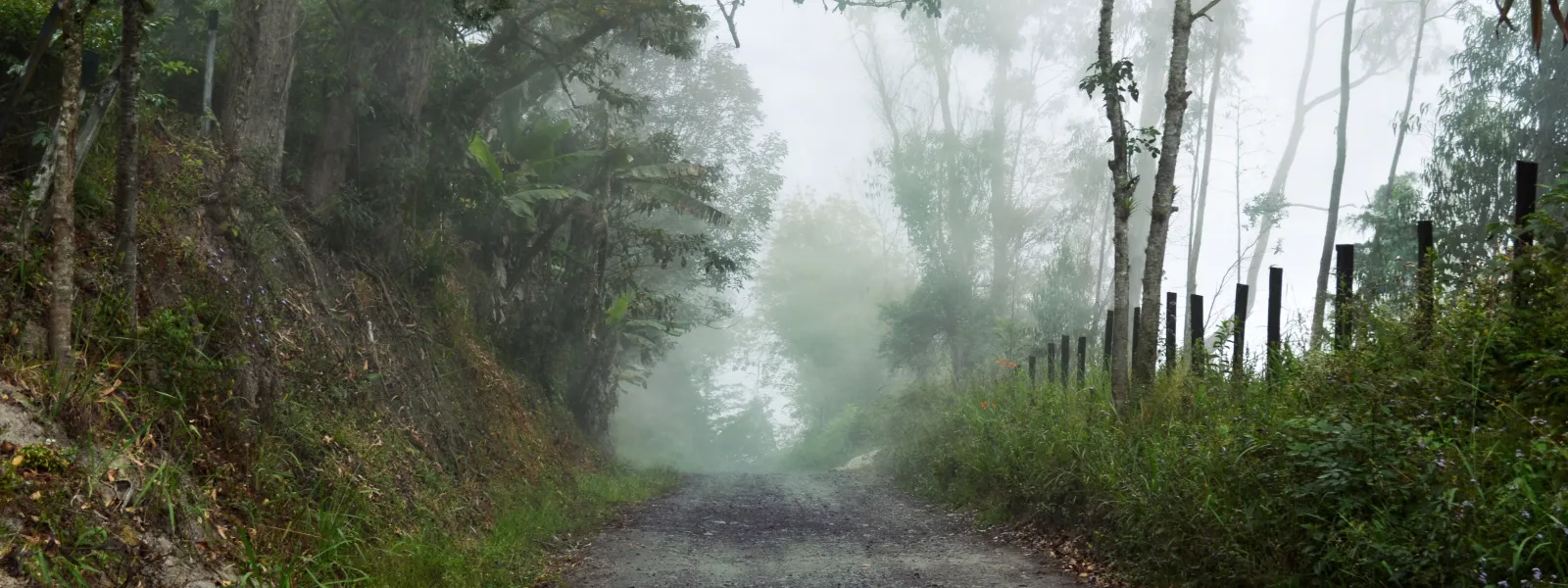
On January 23, 2008, the Colombian Constitutional Court declared the Forest Law of 2006 to be unconstitutional and therefore, invalid, because lawmakers did not consult with indigenous, afrodescendant, and tribal communities during development of the law as required.
This decision is an advance for these Colombian communities who view many economic development projects and policies as a threat to their traditional territory and cultural identity, as well as the environment. The ruling also establishes a valuable legal precedent that can be used to bolster indigenous and tribal communities’ rights in other legal cases throughout the Americas.
The Colombian government is required by law to consult with indigenous and tribal communities regarding administrative and legislative decisions that may affect them. It is obligated to do so because the Colombian Congress previously adopted into law “Convention 169,” a treaty of the International Labour Organization that protects this right and others.
In this case, the Court decided that indigenous and tribal communities should have been consulted because the Forest Law regulates forest issues in general terms, and contains provisions that “will likely affect areas generally used by the communities, which could impact their lifestyles and their close relationships with the forests.”
The court also declared that the requirement to consult with indigenous and traditional communities cannot be replaced with the general public participation process that the government carried out regarding the Forest bill. Rather, to comply with the law, the government should inform the communities about the proposed law, explain its implications and how it could affect them, and give them opportunities to effectively state their opinions regarding the bill.
As a result of this court ruling and civil society’s call to respect the right to prior and informed consultation, the Colombian government proposed a law to regulate and enforce this fundamental right. The Ministry of Agriculture also began developing a new forest law, this time using a process that complies with prior and informed consent procedures.
The lawsuit was brought by a group of students and professors from the University of Los Andes Law School in Bogota with the support of AIDA. Social organizations including the Proceso de Comunidades Negras, the National Indigenous Organization of Colombia (ONIC) and CENSAT Agua Viva also supported the group in presenting this case.
This group also filed a second lawsuit against the Forest Law alleging that the law violated Constitutional provisions protecting the environment. However, because of the January court decision, no decision will be made on this second suit.
Related projects

Brazilian Court overturns suspension of Belo Monte’s operating license
Brasilia, Brazil. The Federal Regional Court of the First Region (TRF1) overturned the preliminary decision suspending the operating license of the Belo Monte Dam. On January 11, the Federal Justice of Altamira decided to suspend the license until the federal government and Norte Energia, the company in charge of the dam’s construction, complied with their obligation to restructure the National Indian Foundation (FUNAI) of Altamira. However, a federal judge from TRF1 decided today that this decision disproportionately “affects the public interest, causing grave repercussions on the economy and public order.” Another argument presented was that the suspension would prevent the implementation of various plans designed to benefit indigenous peoples. “This is yet another attack on the rights of the affected indigenous communities. The decision manipulates the arguments of public interest, order, security and the economy, and then uses the plans – which should have been implemented when the previous license was granted in 2010 – to justify why it is not possible to suspend the operating license. The bottom line is that the operating license never should have been granted in the first place without the fulfillment of those plans,” said María José Veramendi, AIDA attorney. For more information, please consult the factual record of the case and the latest news about our case before the IACHR.
Read more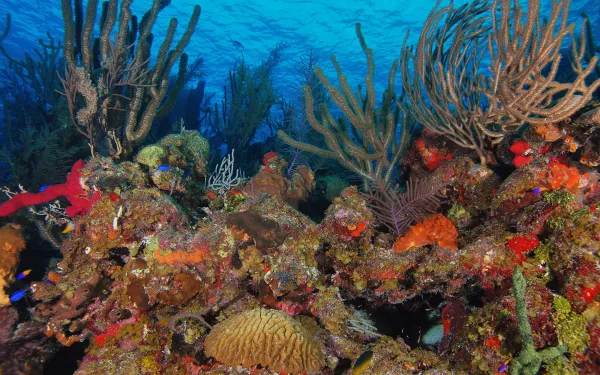
Coral Reefs and the Unintended Impacts of Tourism
By Camila Cossio, former AIDA intern During my internship in AIDA’s San Jose office, I met up one day with a friend from the States for lunch. She told me about her trip visiting the beaches of Costa Rica. Everything she described sounded beautiful: the clear, blue water; hermit crabs that left their shells to eat breakfast in the early morning hours; sweet fruits that fell down onto the smooth sand; and the cool, green trees that provided shade from the hot Costa Rican sun. But her mood changed suddenly, from bliss to concern, when she explained how her co-worker swam too close to a coral reef one afternoon and badly cut his thigh. She was concerned with how unprepared their tour guide was to handle the situation, and how irresponsible it seemed that tourists were allowed – with no diving experience – to swim that close to the reefs. Leaving aside the physical dangers to humans, accidents like his, though they may seem inconsequential, have a severe impact on sensitive marine ecosystems like coral reefs. Coral reefs are a unique and complex ecosystem, vital to the health of oceans. Yet 93 percent of the reefs in Costa Rica are in danger, and tourism is a significant factor in their degradation. Tourism’s threats to corals When tourists accidently touch, pollute, or break parts of the reef, corals experience stress. The coral organisms try to naturally fight off pollutants, but this process often leads to coral bleaching – when corals lose their bright colors and become completely white. Once corals are bleached, they can no longer contribute to the biodiversity of the reef community, which depends upon symbiotic interactions between fish, invertebrates, and their habitats. Additionally, since the disruption of one ocean ecosystem gravely impacts others, sea grass and mangrove communities – shallow-water plant species vital to health of the marine ecosystem – are also severely threatened by coral stress. Another significant problem facing coral reefs is sedimentation. When solid residues are deposited into the depths of water bodies, they pollute marine ecosystems and block light needed for photosynthesis. When light is blocked, immobile coral reefs bleach and die. In Costa Rica, sources of sedimentation include dredging, logging, agriculture and coastal development driven by the tourism sector. A Reef Under Siltation Stress: A Decade of Degradation, a study by Costa Rican biologist Jorge Cortés, documents the negative impacts of tourism on coral reefs in the Cauhita region of Costa Rica. Another case study on the reefs of Bahía Culebra found that coastal development related to the tourism sector was essentially unregulated. Because of this, coral reefs in the Pacific continue to suffer. Sedimentation will continue to destroy reefs if better management principles are not enacted. In 1994 in Bahía Culebra, for example, a reef was burned due to sediments leftover from construction of a tourist center. Eighty percent of the reef was completely destroyed. Scientific literature predicts that 50 percent of all coral reefs in Latin America are at risk of degradation in the next five to 10 years. Studies show that, globally, 30 percent of reefs are already seriously damaged and 70 percent of all coral reefs are expected to disappear by 2030 if corrective measures are not taken to stop the negative anthropogenic impacts on coral reef communities. Building a future for coral reefs Sustainable tourism is a great concept on paper, but hard to enforce in reality. Construction of coastal properties requires waters to be dredged. It creates pollutant runoff from roads and parking lots and airports. Sewage is dumped into the ocean, and more intensive agriculture to support all the people increases sedimentation. Although it’s difficult for an individual to stop massive projects like these, it’s easy to take small but powerful steps: not picking up wildlife for souvenirs (shells, coral rubble, plants); being conscious of what you bring with you – reusable water bottles instead of plastic bottles, a backpack for your trash in case there isn’t an area nearby to dispose of waste properly; taking the bus instead of a car; and – if possible – doing research on the hotels or hostels in which you stay. Many coastal hotels dump their graywater – wastewater from laundry, cooking, and non-toilet related household processes – into the ocean, contributing to sedimentation and contaminating coral reef ecosystems. It’s important to be aware that many land-based activities may directly harm the marine eco-system. Being an environmentally friendly tourist is not about being perfect, but individual actions, though they may seem small, really can have a big impact. AIDA provides much-needed recommendations for effective laws and practices to preserve and protect reefs. Check out our new "Best Practices" guide
Read moreCoral Reefs and the Unintended Impacts of Tourism
By Camila Cossio, former AIDA intern During my internship in AIDA’s San Jose office, I met up one day with a friend from the States for lunch. She told me about her trip visiting the beaches of Costa Rica. Everything she described sounded beautiful: the clear, blue water; hermit crabs that left their shells to eat breakfast in the early morning hours; sweet fruits that fell down onto the smooth sand; and the cool, green trees that provided shade from the hot Costa Rican sun. But her mood changed suddenly, from bliss to concern, when she explained how her co-worker swam too close to a coral reef one afternoon and badly cut his thigh. She was concerned with how unprepared their tour guide was to handle the situation, and how irresponsible it seemed that tourists were allowed – with no diving experience – to swim that close to the reefs. Leaving aside the physical dangers to humans, accidents like his, though they may seem inconsequential, have a severe impact on sensitive marine ecosystems like coral reefs. Coral reefs are a unique and complex ecosystem, vital to the health of oceans. Yet 93 percent of the reefs in Costa Rica are in danger, and tourism is a significant factor in their degradation. Tourism’s threats to corals When tourists accidently touch, pollute, or break parts of the reef, corals experience stress. The coral organisms try to naturally fight off pollutants, but this process often leads to coral bleaching – when corals lose their bright colors and become completely white. Once corals are bleached, they can no longer contribute to the biodiversity of the reef community, which depends upon symbiotic interactions between fish, invertebrates, and their habitats. Additionally, since the disruption of one ocean ecosystem gravely impacts others, sea grass and mangrove communities – shallow-water plant species vital to health of the marine ecosystem – are also severely threatened by coral stress. Another significant problem facing coral reefs is sedimentation. When solid residues are deposited into the depths of water bodies, they pollute marine ecosystems and block light needed for photosynthesis. When light is blocked, immobile coral reefs bleach and die. In Costa Rica, sources of sedimentation include dredging, logging, agriculture and coastal development driven by the tourism sector. A Reef Under Siltation Stress: A Decade of Degradation, a study by Costa Rican biologist Jorge Cortés, documents the negative impacts of tourism on coral reefs in the Cauhita region of Costa Rica. Another case study on the reefs of Bahía Culebra found that coastal development related to the tourism sector was essentially unregulated. Because of this, coral reefs in the Pacific continue to suffer. Sedimentation will continue to destroy reefs if better management principles are not enacted. In 1994 in Bahía Culebra, for example, a reef was burned due to sediments leftover from construction of a tourist center. Eighty percent of the reef was completely destroyed. Scientific literature predicts that 50 percent of all coral reefs in Latin America are at risk of degradation in the next five to 10 years. Studies show that, globally, 30 percent of reefs are already seriously damaged and 70 percent of all coral reefs are expected to disappear by 2030 if corrective measures are not taken to stop the negative anthropogenic impacts on coral reef communities. Building a future for coral reefs Sustainable tourism is a great concept on paper, but hard to enforce in reality. Construction of coastal properties requires waters to be dredged. It creates pollutant runoff from roads and parking lots and airports. Sewage is dumped into the ocean, and more intensive agriculture to support all the people increases sedimentation. Although it’s difficult for an individual to stop massive projects like these, it’s easy to take small but powerful steps: not picking up wildlife for souvenirs (shells, coral rubble, plants); being conscious of what you bring with you – reusable water bottles instead of plastic bottles, a backpack for your trash in case there isn’t an area nearby to dispose of waste properly; taking the bus instead of a car; and – if possible – doing research on the hotels or hostels in which you stay. Many coastal hotels dump their graywater – wastewater from laundry, cooking, and non-toilet related household processes – into the ocean, contributing to sedimentation and contaminating coral reef ecosystems. It’s important to be aware that many land-based activities may directly harm the marine eco-system. Being an environmentally friendly tourist is not about being perfect, but individual actions, though they may seem small, really can have a big impact. AIDA provides much-needed recommendations for effective laws and practices to preserve and protect reefs. Check out our new "Best Practices" guide
Read more