
Project
Victory: Constitutional Court Defends Right to Prior Consultation
On January 23, 2008, the Colombian Constitutional Court declared the Forest Law of 2006 to be unconstitutional and therefore, invalid, because lawmakers did not consult with indigenous, afrodescendant, and tribal communities during development of the law as required.
This decision is an advance for these Colombian communities who view many economic development projects and policies as a threat to their traditional territory and cultural identity, as well as the environment. The ruling also establishes a valuable legal precedent that can be used to bolster indigenous and tribal communities’ rights in other legal cases throughout the Americas.
The Colombian government is required by law to consult with indigenous and tribal communities regarding administrative and legislative decisions that may affect them. It is obligated to do so because the Colombian Congress previously adopted into law “Convention 169,” a treaty of the International Labour Organization that protects this right and others.
In this case, the Court decided that indigenous and tribal communities should have been consulted because the Forest Law regulates forest issues in general terms, and contains provisions that “will likely affect areas generally used by the communities, which could impact their lifestyles and their close relationships with the forests.”
The court also declared that the requirement to consult with indigenous and traditional communities cannot be replaced with the general public participation process that the government carried out regarding the Forest bill. Rather, to comply with the law, the government should inform the communities about the proposed law, explain its implications and how it could affect them, and give them opportunities to effectively state their opinions regarding the bill.
As a result of this court ruling and civil society’s call to respect the right to prior and informed consultation, the Colombian government proposed a law to regulate and enforce this fundamental right. The Ministry of Agriculture also began developing a new forest law, this time using a process that complies with prior and informed consent procedures.
The lawsuit was brought by a group of students and professors from the University of Los Andes Law School in Bogota with the support of AIDA. Social organizations including the Proceso de Comunidades Negras, the National Indigenous Organization of Colombia (ONIC) and CENSAT Agua Viva also supported the group in presenting this case.
This group also filed a second lawsuit against the Forest Law alleging that the law violated Constitutional provisions protecting the environment. However, because of the January court decision, no decision will be made on this second suit.
Related projects
Strengthening the Sea Turtle Treaty
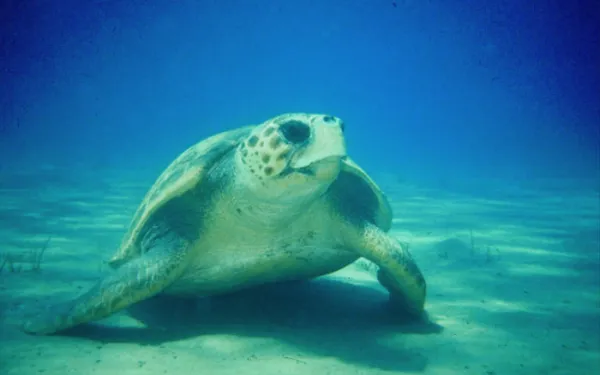
By Gladys Martínez When baby sea turtles first break through their shells, they slowly stick their heads out into the world. Then, they run as fast as they can to the vast body of salt water before them, where they will spend their lives. Sea turtles are migratory creatures that swim in the oceans, and nest on the beaches, of many different countries. Their survival is at risk from the impacts of human activity, such as unsustainable fishing, poorly planned development, and mining projects in marine and coastal areas. In an effort to confront these threats, the Inter-American Convention for the Protection and Conservation of Sea Turtles was created in 2001. The international treaty promotes the protection, conservation and recovery of sea turtle populations. From June 24 to 26 in Mexico City, representatives from member States will discuss achievements and plan for the future of the Convention during the 7th Conference of Parties. AIDA will be there advocating for the States to continue meeting their obligations and making new commitments. Fifteen Contracting Parties have signed the Convention: Argentina, Belize, Brazil, Chile, Costa Rica, Ecuador, Honduras, Mexico, Nicaragua, Netherlands (Antilles), Panama, Peru, Uruguay, Venezuela and the United States. Thirty-two accredited observers, including academic institutions and NGOs, may participate in meetings of Scientific and Consultative committees of experts. The 7th Conference of the Parties will focus on adopting three key resolutions, on: The conservation of leatherback sea turtles (Dermochelys Coriacea) in the Pacific Ocean. The conservation of loggerhead sea turtles (Caretta Caretta). Exceptions to the subsistence harvest of olive ridley turtle eggs in Costa Rica. The Conference will also review the States’ compliance with regards to their annual reports, present the Secretariat’s work plan, and elect a new President, Vice President and Rapporteur. AIDA will seek for the States to: Commit to avoiding threats to turtle nesting habitats by mining projects. Continue restricting and prohibiting developments that affect sea turtle migration routes. Strengthen measures for responsible fishing and bycatch (sea turtles are captured and killed incidentally by fishermen targeting other species). We will concentrate our outreach efforts on creating awareness and promoting measures to curb the risks that the Don Diego marine mining project will have on the loggerhead turtle and Mexico’s marine ecosystem. AIDA has worked since 1998 to protect sea turtles. First we advocated the Convention’s ratification. A campaign organized by AIDA and other sea turtle advocates helped secure the signatures necessary to continue the negotiation process, and, in 2011, for the Convention to enter into force. We have advocated before Courts and decision-makers for the protection of sea turtles in several countries of Latin America, basing our advocacy on the obligations assumed by States under the Convention. Using this strategy, we have protected the green turtle from illegal poaching on Costa Rica’s Atlantic coast, avoided loss of nesting habitat of the leatherback turtle, and guaranteed that hawksbill and olive ridley turtles continue to enjoy one of their favorite coral reefs, Coiba National Park in Panama. Follow us on Facebook and Twitter to learn more about the 7th Conference of Parties of the international treaty to protect sea turtles!
Read more
AIDA applauds Pope Francis’ recognition of urgent environmental challenges
The Interamerican Association for Environmental Defense (AIDA) applauds Pope Francis’ new Encyclical, Laudato Si: On Care For Our Common Home, released today. In it, the Pope addresses the environmental challenges facing humanity, which must be urgently addressed in order to protect the earth “with which we share existence.” His Holiness highlights the recommendations of organizations, like AIDA, which we hope will finally be echoed in governments, international organizations, corporations, and by all the people of this planet. We all have a responsibility to act to protect our home. The encyclical is comprehensive and covers many important issues. We would like to emphasize the Pope’s recognition of the following: The work performed by organizations and individuals to protect the environment. We are grateful for his gesture, and feel honored and committed to continuing this hard work. That fact that “recent World Summits on the environment have not lived up to expectations because, due to lack of political will, they were unable to reach truly meaningful and effective global agreements on the environment.” He concludes, “Reducing greenhouse gases requires honesty, courage and responsibility, above all on the part of those countries which are more powerful and pollute the most.” Social inequality and the impact of environmental degradation, which worsens the misery of the poor, including migrants and indigenous communities. We therefore reiterate our call to protect Earth, taking into particular consideration solutions that address this inequality. The rich and complex biodiversity of the planet’s ecosystems, which must be preserved, as well as the human right to water, which “is essential to human survival and, as such, is a condition for the exercise of other human rights.” The Precautionary Principle as a tool to avoid serious and irreversible harm to the environment. With this Encyclical, Pope Francis joins other religious leaders who have made an urgent call for the adoption of immediate measures to protect the planet.
Read more
Closing Statement by NGOs at Ramsar COP12
Presented by Rafaela Nicola, World Wetland Network Committee’s Neo-Tropics delegate We would like to thank the Secretary General and the Parties for this opportunity to address the meeting, to share our message that NGOS are committed to Ramsar and we want to do more. We also wish to thank the government of Uruguay for hosting the COP. We appreciated the field trips yesterday, which introduced us to the beautiful wetlands in this country, some of which are Ramsar Sites. World Wetland Network was launched at Ramsar COP 10; this is our third COP. Our participation in Ramsar is recognized in Resolution 11.6.We were formed to complement the activity of the IOPs. We fully appreciate the value and expertise of the non-governmental IOPs, who work in strong partnership with local communities and indigenous peoples. WWN was formed at the initiative of smaller, grass-roots NGOs and CSOs seeking a voice at the table. I speak on behalf of our 2000 members worldwide and our friends at the COP: local and sub-regional organizations who have been meeting daily to engage with and monitor this important process. The core work of the Ramsar COP 12 has been the resolutions. Crafting and revising resolutions. Collaborating, negotiating and finally reaching agreement. We humbly acknowledge the co- operation and hard work of the Secretariat, Contracting Parties and IOPs to create meaningful resolutions that ensure conservation and wise of our world’s wetlands. When we all return home the real challenge begins, turning these resolutions into action. We urge the Contracting Parties to show steadfast commitment and leadership. We stand ready to help at the local level. The Fourth Strategic Plan is the most significant outcome of this COP, guiding our combined efforts for the next nine years. World Wetland Network welcomes the Contracting Parties initiative to strengthen engagement of NGOs, civil society groups, local communities and indigenous peoples in the Strategic Plan. These stakeholders provide a long-term and often continuous connection to wetland sites and are essential partners to achieve the Ramsar vision. We note that the top priority of the Strategic Plan is to prevent, stop and reverse the loss and degradation of wetlands. Your recognition of the key threats including unsustainable agriculture, forestry and extractive industries, especially oil, gas, mining, and urbanization closely reflects the local knowledge and concerns of our members, in Latin America and globally. We encourage Contracting Parties to work cohesively across ministries and prioritize long-term sustainability when approving developments. A healthy environment is fundamental to our economic and social security. Cohesive implementation will be supported by the effective mobilization of National Wetland Committees. We note that establishment of these committees, with both government and non- government representatives, is an indicator for success of Goal 1 in the Plan, and we urge the parties to comply. The theme of the COP has been “Wetlands for our future.” That future starts today. Every planning and development decision taken today will directly impact on wetlands and the communities that depend on them. Our message is loud and clear: we are committed to Ramsar and we want to do more. We trust our activities at Ramsar COP 12 have enhanced the meeting and we pledge our commitment to the conservation and wise use of wetlands. Thank you
Read more