
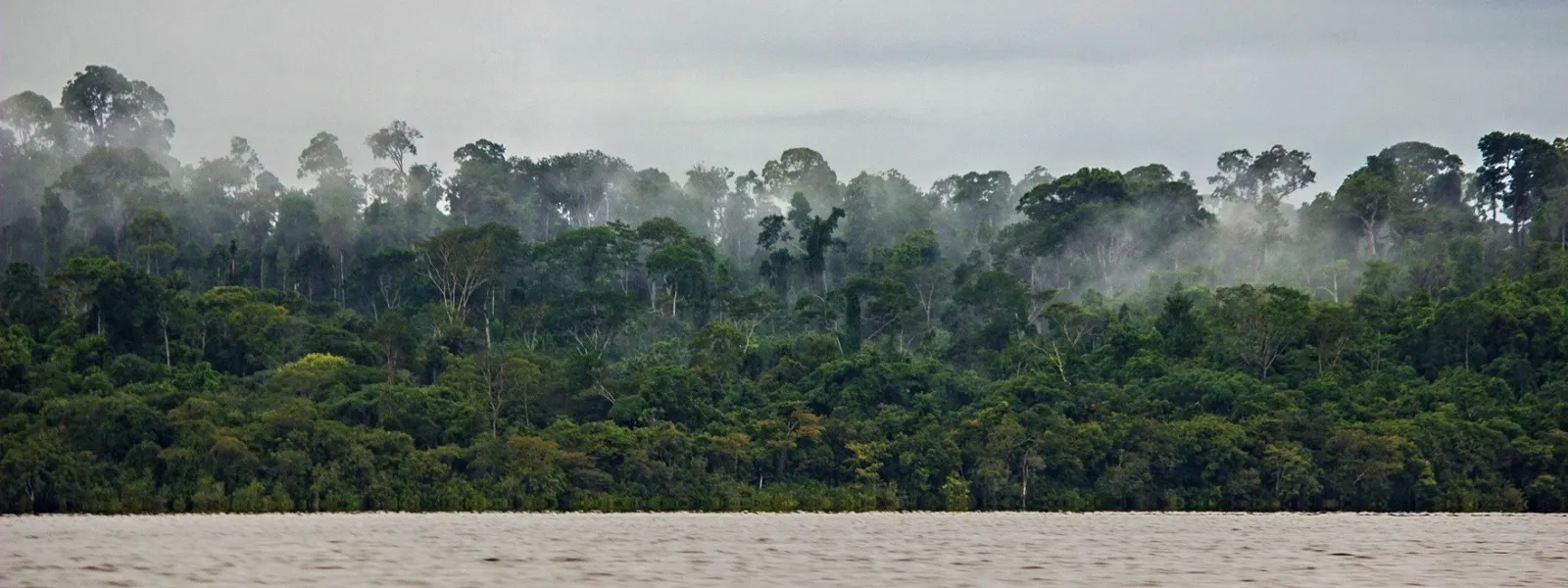
Project
Amazon Watch / Maíra Irigaray
Barragem de Belo Monte no rio Xingu: 10 anos de impactos na Amazônia e de busca por reparações
A usina hidrelétrica de Belo Monte causou um desastre ambiental e social no coração da Amazônia: um dos ecossistemas mais importantes do planeta.
Essa situação só piorou desde que a usina começou a operar em 2016. A busca por justiça e reparação para as comunidades indígenas e ribeirinhas afetadas continua até hoje.
Em 2011, a Comissão Interamericana de Direitos Humanos (CIDH) concedeu a essas comunidades medidas de proteção, que até hoje não foram totalmente implementadas pelo Estado brasileiro.
E, desde junho daquele mesmo ano, a CIDH mantém um processo contra o Estado por sua responsabilidade internacional no caso.
A CIDH pode encaminhar o caso à Corte Interamericana de Direitos Humanos, que tem o poder de emitir uma sentença condenatória contra o Estado brasileiro.
Consulta o expediente de fatos do caso
Após 10 anos de operação da usina hidrelétrica e mais de 15 anos de violações de direitos humanos documentadas, é hora da justiça ser feita para as comunidades afetadas.
Leia a carta aberta das organizações que levam o caso à CIDH
Leia nosso comunicado à imprensa
Contexto
A usina hidrelétrica de Belo Monte — a quarta maior do mundo em capacidade instalada (11.233 MW) — foi construída no rio Xingu, no estado do Pará, norte do Brasil.
Foi inaugurada em 5 de maio de 2016, com uma única turbina. Naquela época, 80% do curso do rio foi desviado e 516 km² de terra foram inundados, uma área maior que a cidade de Chicago. Desse total, 400 km² eram de mata nativa. A usina começou a operar em plena capacidade em novembro de 2019.
Belo Monte foi construída e é operada pelo consórcio Norte Energia S.A., composto principalmente por empresas estatais. Foi financiada pelo Banco Nacional de Desenvolvimento Econômico e Social (BNDES), que aportou ao consórcio 25,4 bilhões de reais (aproximadamente US$ 10,16 bilhões), o maior investimento de sua história. Portanto, o BNDES também é legalmente responsável pelos impactos socioambientais associados ao projeto hidrelétrico.
Décadas de danos ambientais e humanos
As violações dos direitos humanos e a degradação da Amazônia remontam ao início do projeto. Em março de 2011, a Norte Energia iniciou a construção da barragem sem consulta adequada e sem o consentimento prévio, livre e informado das comunidades afetadas.
A construção levou ao deslocamento forçado de mais de 40.000 pessoas, rompendo laços sociais e culturais. O plano de reassentamento em Altamira — cidade diretamente afetada pelo projeto hidrelétrico — incluía moradias na periferia da cidade, sem serviços públicos adequados, moradias dignas para as famílias reassentadas e moradias diferenciadas para aqueles pertencentes a comunidades indígenas.
A operação da barragem de Belo Monte impôs uma seca permanente e artificial na Volta Grande do rio Xingu, agravada pelas secas históricas na Amazônia em 2023 e 2024. Como resultado, a morte de milhões de ovos de peixe foi documentada por quatro anos consecutivos (de 2021 a 2024) e, nos últimos três anos, não houve migração de peixes rio acima para desovar e se reproduzir. Assim, a pesca artesanal, principal fonte de proteína para os povos indígenas e comunidades ribeirinhas, foi severamente afetada: o consumo de peixe caiu de 50% para 30% do total de proteínas consumidas, sendo substituído por alimentos processados. Em suma, houve um colapso ambiental e humanitário que resultou no colapso da pesca como modo de vida tradicional, insegurança alimentar e falta de acesso à água potável para milhares de famílias, empobrecimento e doenças.
Além disso, a construção da barragem aumentou o desmatamento e intensificou a extração ilegal de madeira e a insegurança em terras indígenas e tribais, colocando em risco a sobrevivência dessas comunidades. Outra consequência foi o agravamento da pobreza e dos conflitos sociais, bem como a sobrecarga dos sistemas de saúde, educação e segurança pública em Altamira, cidade considerada a mais violenta do país em 2017, onde houve aumento do tráfico de pessoas e da violência sexual. Também foram registrados casos de violência contra defensores de direitos humanos envolvidos no caso.
Em 2025, durante a 30ª Conferência das Nações Unidas sobre Mudanças Climáticas (COP30), realizada no Brasil, o Ministério Público Federal classificou os danos causados por Belo Monte como ecocídio.
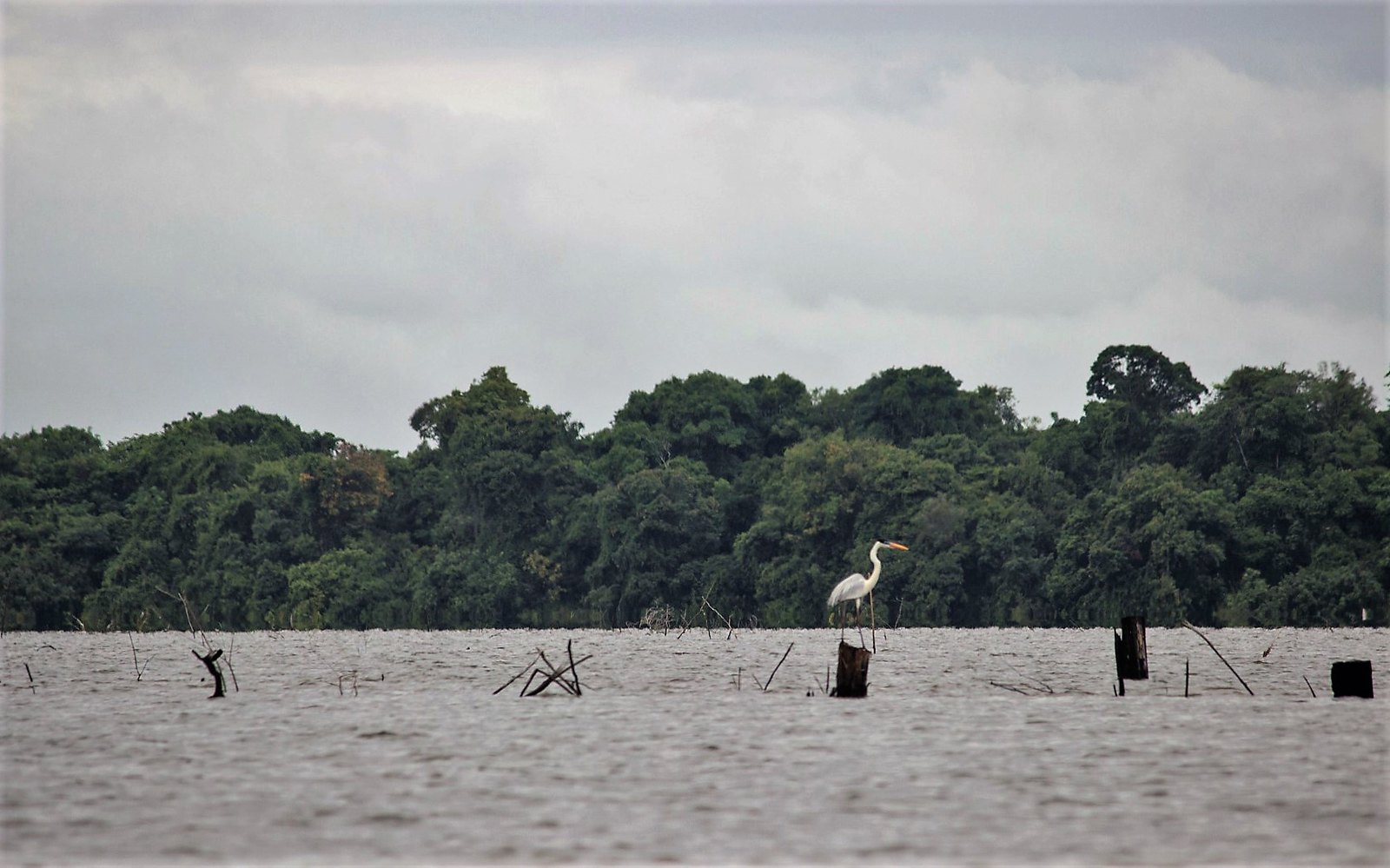
Foto: Amazon Watch / Maíra Irigaray.
A busca por justiça e reparação
Ao longo dos anos, o Ministério Público Federal do Pará, a Defensoria Pública e organizações da sociedade civil impetraram dezenas de ações judiciais em tribunais brasileiros para contestar as diversas irregularidades do projeto, bem como seus impactos. A maioria das ações permanece sem solução, algumas há mais de 10 anos.
Essas ações não obtiveram sucesso porque o governo federal tem reiteradamente anulado decisões favoráveis às comunidades afetadas, recorrendo a um mecanismo pelo qual o presidente do Supremo Tribunal Federal pode suspender uma decisão judicial com base unicamente em argumentos genéricos como "interesse nacional" ou "ordem econômica".
Diante da falta de respostas eficazes em nível nacional, a AIDA — juntamente com uma coalizão de organizações aliadas — levou o caso à Comissão Interamericana de Direitos Humanos (CIDH) e, em 2010, solicitou medidas cautelares para proteger a vida, a integridade e a saúde das comunidades indígenas afetadas.
Em 1º de abril de 2011, a CIDH concedeu essas medidas e solicitou ao Estado brasileiro a suspensão das licenças ambientais e de quaisquer obras de construção até que as condições relativas à consulta prévia e à proteção da saúde e integridade das comunidades fossem atendidas.
E, em 16 de junho de 2011, apresentamos uma denúncia formal à CIDH — juntamente com o Movimento Xingu Vivo Para Siempre, a Coordenação das Organizações Indígenas da Amazônia Brasileira, a Diocese de Altamira, o Conselho Missionário Indígena, a Sociedade Pará de Defesa dos Direitos Humanos e a Global Justice — contra o Estado brasileiro por sua responsabilidade internacional nas violações de direitos humanos contra os povos afetados neste caso. A denúncia foi apresentada em dezembro de 2015.
Em 3 de agosto de 2011, a CIDH modificou as medidas cautelares para solicitar — em vez da suspensão de licenças e obras — a proteção dos povos que vivem em isolamento voluntário, a saúde das comunidades indígenas e a regularização e proteção das terras ancestrais.
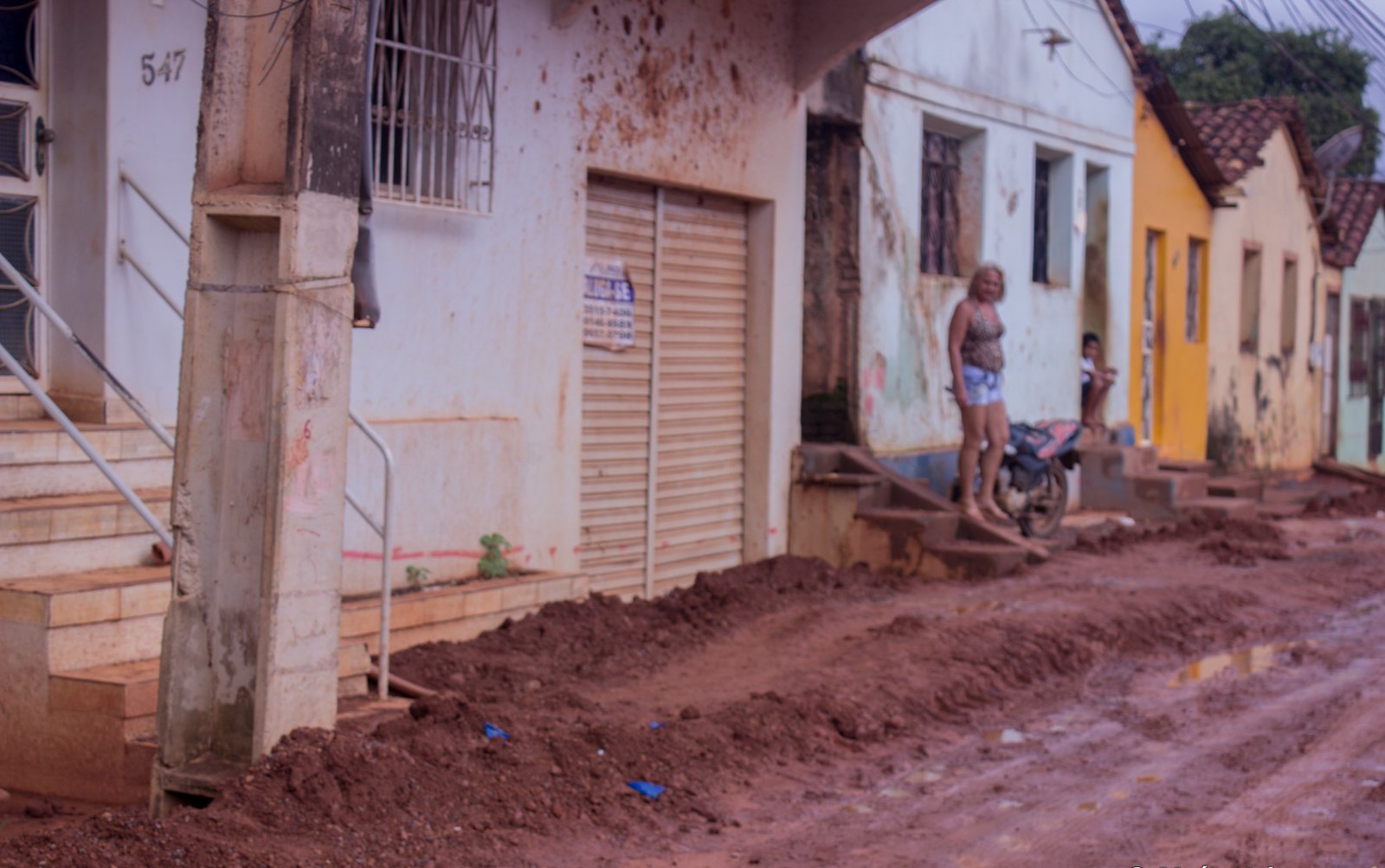
Foto: Amazon Watch / Maíra Irigaray.
Situação atual
As medidas de proteção concedidas pela CIDH permanecem em vigor, mas o Estado brasileiro não as cumpriu integralmente, relatando apenas ações genéricas. As comunidades documentaram as contínuas violações de seus direitos. A situação que motivou o pedido dessas medidas — o risco à vida, à segurança e aos meios de subsistência das comunidades — persiste e se agravou com a usina hidrelétrica operando em plena capacidade e com as recentes secas extremas na Amazônia.
Além do ocorrido em Belo Monte, existe o risco de maiores danos sociais e ambientais decorrentes da implementação de outro megaprojeto de mineração na Volta Grande do Xingu. Lá, a empresa canadense Belo Sun pretende construir a maior mina de ouro a céu aberto do Brasil.
Os impactos sinérgicos e cumulativos da usina e da mina não foram avaliados. O Estado excluiu povos indígenas, comunidades ribeirinhas e comunidades camponesas do processo de licenciamento ambiental do projeto. Apesar disso, dos protestos indígenas e de outras irregularidades em torno do projeto, o governo do estado do Pará autorizou formalmente a mina em abril de 2026.
Belo Monte, assim como outras usinas hidrelétricas, agrava a emergência climática ao gerar emissões de gases de efeito estufa em seu reservatório. Além disso, é ineficiente diante das secas prolongadas e intensas causadas pela crise, pois perde capacidade de geração de energia.
O caso perante a Comissão Interamericana
Em outubro de 2017, a CIDH anunciou que decidiria conjuntamente sobre a admissibilidade (se o caso preenche os requisitos para admissão) e o mérito (se houve, de fato, violação de direitos humanos) da denúncia internacional contra o Estado brasileiro.
Quinze anos após a apresentação da denúncia, as comunidades afetadas e as organizações que as representam ainda aguardam essa decisão. Caso a CIDH conclua que houve violações de direitos humanos e emita recomendações que o Estado brasileiro não cumpra, poderá encaminhar o caso à Corte Interamericana de Direitos Humanos, cujas decisões são vinculativas.
Uma possível decisão da Corte Internacional de Direitos Humanos neste caso estabeleceria um precedente jurídico regional em relação aos direitos dos povos indígenas e ribeirinhos, à participação pública em megaprojetos e à responsabilidade do Estado no contexto da crise climática. Isso é particularmente relevante à luz do Parecer Consultivo nº 32 da Corte, que reafirmou as obrigações dos Estados de proteger pessoas e comunidades em todo o continente da emergência climática.
Partners:
Related projects
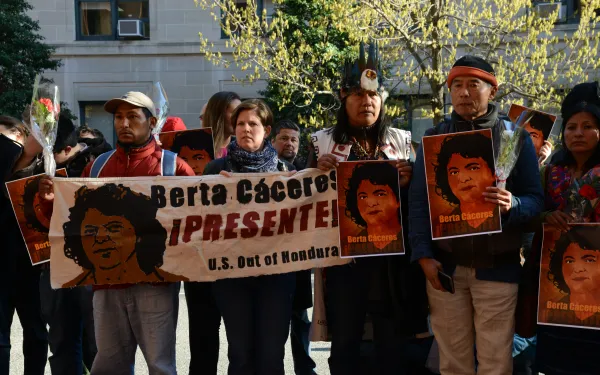
Activist Deaths Demand Accountability
Last year 185 environmental activists were murdered world-wide, two-thirds from Latin America, according to Global Witness. Of the ten most dangerous countries in the world for environmental defenders, seven are in Latin America. The brave activists we lost were killed for resisting mines, dams, and other destructive industrial projects. Now, more than ever, we must demand accountability. For the loss to the environment, the loss of indigenous cultures, the loss of human rights. That just got harder. On May 23 the Inter-American Commission on Human Rights announced a severe financial crisis leading to “suspension of [scheduled] hearings and imminent layoff of nearly half of its staff.” While the Commission has long been short on funds, this is the worst financial crisis it has ever seen. The Commission depends on funding from the Organization of American States (OAS), governments in the Americas and Europe, organizations, and foundations. Nearly all governments have decreased or failed to honor their financial commitments. The financial crisis demonstrates that our work, and the work of colleagues, communities, and movements, is having an impact. The Commission has produced important decisions in cases involving indigenous and community rights, land and environmental protection, and destructive development projects. For a few years countries have complained that the Commission is going beyond its mandate in cases involving development projects. But of course, when development projects violate human rights, they clearly fall within the purview of the Inter-American Human Rights System. The Belo Monte Dam case provides clear evidence that this manufactured crisis is a result of our effectiveness. In 2011 the Commission granted the precautionary measures our colleagues and we requested on behalf of affected indigenous communities. Brazil reacted by immediately withdrawing its ambassador to the OAS and by withholding funding for the rest of the year. A new ambassador did not return until 2015 and Brazil’s payments haven’t normalized since. In addition, after the precautionary measures were issued Brazil started an aggressive process to “reform” the Commission that ended by weakening its power. At AIDA we have analyzed how the crisis affects our cases before the Commission; how it affects future cases that need international attention; and how it affects human rights protection in the Americas. Current cases will likely be delayed. Our case on toxic poisoning in La Oroya, Peru is already seriously delayed. The Commission has promised to release a report on the merits so the case can be taken to the next level, the Inter-American Court of Human Rights. We have been told the Commission will approve the report, which has been completed, this year—despite losing 40% of its staff. This remains to be seen. Of course, we have contacted the Commission and stressed the importance of advancing the case. Informally, some judges from the Inter-American Court have indicated their eagerness to receive the case. Processing the Belo Monte case has only just started, after pending four years at the Commission. Strong political pressure from Brazil will likely delay it further. But political pressure on Brazil and the Commission can help the case move faster. As Belo Monte is linked to the biggest corruption scandal in Brazil, maybe the Commission will understand how relevant it is to advance the case. We will continue advocating for priority processing. New cases require further evaluation. We plan to bring at least one new case to the Commission soon, because unless we meet a deadline in a few weeks, the statute of limitations will prevent its consideration. All domestic remedies have been pursued; the Commission represents the last chance for justice. Despite the uncertainties of the current situation, it is important to preserve our clients’ rights in case the Commission’s funding is brought back to an adequate level. In other cases, we are looking for different ways to achieve justice. For example, we are exploring more than ever the use of national courts and national authorities. In addition, we are looking for new ways to engage financial institutions to prevent funding of projects that harm the environment and human rights. We are working with other organizations to develop response strategies. One of our attorneys, Rodrigo Sales, a Brazilian lawyer, recently represented AIDA at the General Assembly of the OAS. He advocated for human rights solutions in the region, among other issues. We consider collaboration and cooperation among the human rights and environmental communities to be essential. We need to stand together, showing governments and the public that human rights and the Commission are of vital importance. The financial crisis of the Commission—an international entity for hearing and resolving hemispheric human rights concerns—is an urgent issue that requires common understanding, thinking, strategizing, and acting. AIDA is working to make this happen.
Read more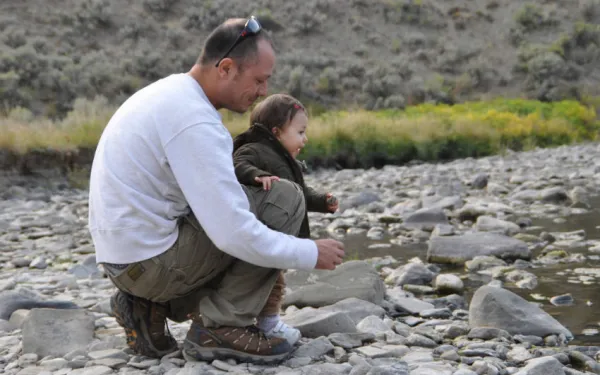
The love of nature, a lesson from father to daughter
By Aida Navarro, AIDA Communications and Human Resources Advisor On Father’s Day, I’d like to share the vision that my daughter Constanza has of her father. At AIDA we celebrate all the fathers who instill in their children a profound love for nature. We share your desire for all children to inherit a healthy planet on which environmental justice thrives. We also celebrate all the lawyers, like those on our team, who fight daily to defend the environment and human rights. We firmly believe that the love of our natural world begins in the cradle. I was barely a year old when my dad took me to one of the most magical places on Earth: Yellowstone National Park, the world’s first protected area. Nature and all the special creatures that live in it have enveloped my childhood ever since. When my teachers at school asked me what my father did for a living, I proudly told him that he is a defender of the planet. In his office, the walls are lined with photos of animals. My favorite is the white shark, which he took in a place called Guadalupe Island, where he’ll take me when I’m older. Every night I choose a book about sharks to read at bedtime. I already know the names of most species of sharks and I know what I must do to protect them. My dad Fernando says that being an environmental attorney is hard sometimes because he has to fight against people that do things to destroy the planet. Attorneys, he said, have to study a lot, know a lot of laws and use their brains to find ways to avoid damage to people and the environment. My mom knows a lot of lawyers who do the same work as my dad. She works with them in an organization that shares her name: AIDA. She helps them so that other people know what the organization does and can help them to defend nature. A Passing Dream I’m not sure if my memories of Yellowstone are real or if they’re all mixed up with photographs and the stories I’ve heard. I remember seeing a huge herd of buffalo out of the car window. They were so close I could smell them. I remember how patient my dad was when we was waiting to take a photo of a group of wolves that looked just like the tattoo on his arm. I can almost still smell the forest and hear the funny sounds that the squirrels make. I remember how amazing it was to discover, beneath the bark of trees, entire worlds so hidden from the gaze of us giants. Among so many other things, on that trip I learned to climb trees and throw stones, important skills for a young girl like me. I remember a mama bear with her two cubs crossing the road right in front of us. All of us in cars smiled an unforgettable smile and waited patiently for the animals to pass. My dad waited for me to grow a little bigger before he took me to meet the giants he had told me so much about: the grey whales. We drove for many hours. On the way, we stopped to walk among giant cactuses that grew up among the rocks. It was very hot and my dad told me about all the animals that lived in the desert. When we finally arrived to where we were going, we got on a small boat. We shouted with joy and excitement when a whale swam up and played with us as if we were a little toy boat in a bathtub. My dad held me tight in his arms as I stretched out to touch the whale. Her skin felt thick and airy, like those inflatable castles I love to jump in. I didn’t like it when the whale blew into my face; it smelled like fish! Living with Nature Even though he grew up in Mexico City, one of the biggest cities in the world, my parents chose to live in a much quieter place, on the Baja California peninsula. The view of the ocean delights every sunrise. We breathe clean air. In the mornings, my dad takes me to school down a long dirt road. On the way there, I like to greet a honey-colored horse that rests beneath a tree. At school, we have chickens and guinea pigs. We make compost, plant vegetables, run between trees and listen to birdsongs. It’s so much fun. When my dad travels, I miss him a lot, but I’m so happy that he’s out there saving the whales, dolphins and turtles. “Save so many dolphins,” I tell him when we talk on the phone. I imagine him as a super hero sailing in distant seas to rescue animals trapped in nets that fishermen forgot, or animals that would die from eating plastic they confused with food. I don’t want them to kill the animals. I think that when I’m older, I’ll be a veterinarian, or maybe a lawyer like my dad. That way I can defend the bears, sharks, trees and rivers; and also the children who have lost their homes to floods, or don’t have clean water to drink. Now that I’m almost five years old, I want my cake to have animals in danger of extinction on it... or maybe reptiles! I have so many unforgettable memories of Yellowstone, and even more photos, but the best memory, the one that still floods his face with happiness, is that on this trip I learned to say, “dad.”
Read more
Victims of business-influenced human rights violations face obstacles to achieving justice
The asymmetry of power between companies and affected people, among other factors, makes access to justice difficult in the Americas. Organizations provided detailed information on this problem during a hearing before the Inter-American Commission on Human Rights (IACHR). Santiago, Chile. Across the Americas, people and communities whose human rights have been violated by business activities face obstacles when exercising their right to access justice and achieve reparations for damages done. They are often confronted with criminalization, harassment and threats. Among other reasons, the situation reflects the reality that, in many countries, businesses are not properly controlled and may even receive government incentives to continue operations, despite the fact that they violate human rights. In a hearing before the Inter-American Commission on Human Rights, civil society organizations[1] demonstrated, through emblematic cases in South America, that this is a problem that happens throughout the region. One of these cases occurred in Brazil on November 5, 2015, when a dam of mining waste owned by Samarco burst in the Río Doce basin. The rupture caused the worst socio-environmental disaster in the country’s history: tons of toxic sludge moved down the river, destroying homes, schools, crops and livestock on its slow and deadly path to the Atlantic Ocean. The government and the company have since closed the case on the disaster, after reaching a settlement in which the victims were not even able to participate. “I lived a quiet life. I never would have expected to see what I saw, to witness families destroyed. We need employment, but we need it responsibly, not in a way that ends up killing people. We are asking for help now, because we can’t let these companies do whatever they want. If this Commission can help us, we would be grateful,” said Antonio Gregorio Santos, a victim of the case in Brazil. In the hearing, the organizations also referred to the case of Southern Peaks Mining, financed by the British-owned Barclays Bank, in which they are accused of breaching agreements with Mala communities in Peru. Here the victims found persecution and illegal detention in their search for justice. “We have identified various barriers to access to justice for the victims. Some—such as socio-economic, cultural and linguistic barriers—were identified in the Commission’s Report on indigenous peoples, afro-descendent communities and extractive industries,” said María José Veramendi Villa, attorney at the Inter-American Association for Environmental Defense, one of the petitioning organizations at the hearing. “Many obstacles are exacerbated in disputes with companies due, in large part, to the sharp asymmetry that exists in this relationship, expressed, for example, in political interference on the part of companies and in the lack of adequate independent safeguards for judicial power in many countries of South America.” The organizations requested that the Commission remind the States of their obligation to guarantee access to justice for those who have suffered human rights violations at the hands of companies, and urge them to strengthen domestic legislation accordingly. They also requested that the Commission develop binding standards regarding business and human rights in its rulings on petitions and individual cases—as well as in its thematic reports—in particular with regards to access to redress mechanisms. Finally, they highlighted the work of those who defend human rights against the actions of companies and reminded States that they must provide adequate conditions for their operation. [1] Interamerican Association for Environmental Defense (AIDA, regional); Centro de Información sobre Empresas y Derechos Humanos (CIEDH, regional); Centro por la Justicia y el Derecho Internacional (CEJIL, regional); Centro de Derechos Humanos y Ambiente (CEDHA, Argentina); Campanha para parar o poder das Corporações (Brasil); Justiça Global (Brasil); Pensamiento y Acción Social (PAS, Colombia); Project on Organizing, Development, Education, and Research (PODER, México); Fundar Centro de Análisis e Investigación A.C (México); Proyecto de Derechos Económicos, Sociales y Culturales (ProDESC, México); Centro Mexicano de Derecho Ambiental (CEMDA, México); Código DH - Comité de Defensa Integral de Derechos Humanos Gobixha (México) y Asociación Pro Derechos Humanos (Perú).
Read more