

Project
Amazon Watch / Maíra Irigaray
Barragem de Belo Monte no rio Xingu: 10 anos de impactos na Amazônia e de busca por reparações
A usina hidrelétrica de Belo Monte causou um desastre ambiental e social no coração da Amazônia: um dos ecossistemas mais importantes do planeta.
Essa situação só piorou desde que a usina começou a operar em 2016. A busca por justiça e reparação para as comunidades indígenas e ribeirinhas afetadas continua até hoje.
Em 2011, a Comissão Interamericana de Direitos Humanos (CIDH) concedeu a essas comunidades medidas de proteção, que até hoje não foram totalmente implementadas pelo Estado brasileiro.
E, desde junho daquele mesmo ano, a CIDH mantém um processo contra o Estado por sua responsabilidade internacional no caso.
A CIDH pode encaminhar o caso à Corte Interamericana de Direitos Humanos, que tem o poder de emitir uma sentença condenatória contra o Estado brasileiro.
Consulta o expediente de fatos do caso
Após 10 anos de operação da usina hidrelétrica e mais de 15 anos de violações de direitos humanos documentadas, é hora da justiça ser feita para as comunidades afetadas.
Leia a carta aberta das organizações que levam o caso à CIDH
Leia nosso comunicado à imprensa
Contexto
A usina hidrelétrica de Belo Monte — a quarta maior do mundo em capacidade instalada (11.233 MW) — foi construída no rio Xingu, no estado do Pará, norte do Brasil.
Foi inaugurada em 5 de maio de 2016, com uma única turbina. Naquela época, 80% do curso do rio foi desviado e 516 km² de terra foram inundados, uma área maior que a cidade de Chicago. Desse total, 400 km² eram de mata nativa. A usina começou a operar em plena capacidade em novembro de 2019.
Belo Monte foi construída e é operada pelo consórcio Norte Energia S.A., composto principalmente por empresas estatais. Foi financiada pelo Banco Nacional de Desenvolvimento Econômico e Social (BNDES), que aportou ao consórcio 25,4 bilhões de reais (aproximadamente US$ 10,16 bilhões), o maior investimento de sua história. Portanto, o BNDES também é legalmente responsável pelos impactos socioambientais associados ao projeto hidrelétrico.
Décadas de danos ambientais e humanos
As violações dos direitos humanos e a degradação da Amazônia remontam ao início do projeto. Em março de 2011, a Norte Energia iniciou a construção da barragem sem consulta adequada e sem o consentimento prévio, livre e informado das comunidades afetadas.
A construção levou ao deslocamento forçado de mais de 40.000 pessoas, rompendo laços sociais e culturais. O plano de reassentamento em Altamira — cidade diretamente afetada pelo projeto hidrelétrico — incluía moradias na periferia da cidade, sem serviços públicos adequados, moradias dignas para as famílias reassentadas e moradias diferenciadas para aqueles pertencentes a comunidades indígenas.
A operação da barragem de Belo Monte impôs uma seca permanente e artificial na Volta Grande do rio Xingu, agravada pelas secas históricas na Amazônia em 2023 e 2024. Como resultado, a morte de milhões de ovos de peixe foi documentada por quatro anos consecutivos (de 2021 a 2024) e, nos últimos três anos, não houve migração de peixes rio acima para desovar e se reproduzir. Assim, a pesca artesanal, principal fonte de proteína para os povos indígenas e comunidades ribeirinhas, foi severamente afetada: o consumo de peixe caiu de 50% para 30% do total de proteínas consumidas, sendo substituído por alimentos processados. Em suma, houve um colapso ambiental e humanitário que resultou no colapso da pesca como modo de vida tradicional, insegurança alimentar e falta de acesso à água potável para milhares de famílias, empobrecimento e doenças.
Além disso, a construção da barragem aumentou o desmatamento e intensificou a extração ilegal de madeira e a insegurança em terras indígenas e tribais, colocando em risco a sobrevivência dessas comunidades. Outra consequência foi o agravamento da pobreza e dos conflitos sociais, bem como a sobrecarga dos sistemas de saúde, educação e segurança pública em Altamira, cidade considerada a mais violenta do país em 2017, onde houve aumento do tráfico de pessoas e da violência sexual. Também foram registrados casos de violência contra defensores de direitos humanos envolvidos no caso.
Em 2025, durante a 30ª Conferência das Nações Unidas sobre Mudanças Climáticas (COP30), realizada no Brasil, o Ministério Público Federal classificou os danos causados por Belo Monte como ecocídio.
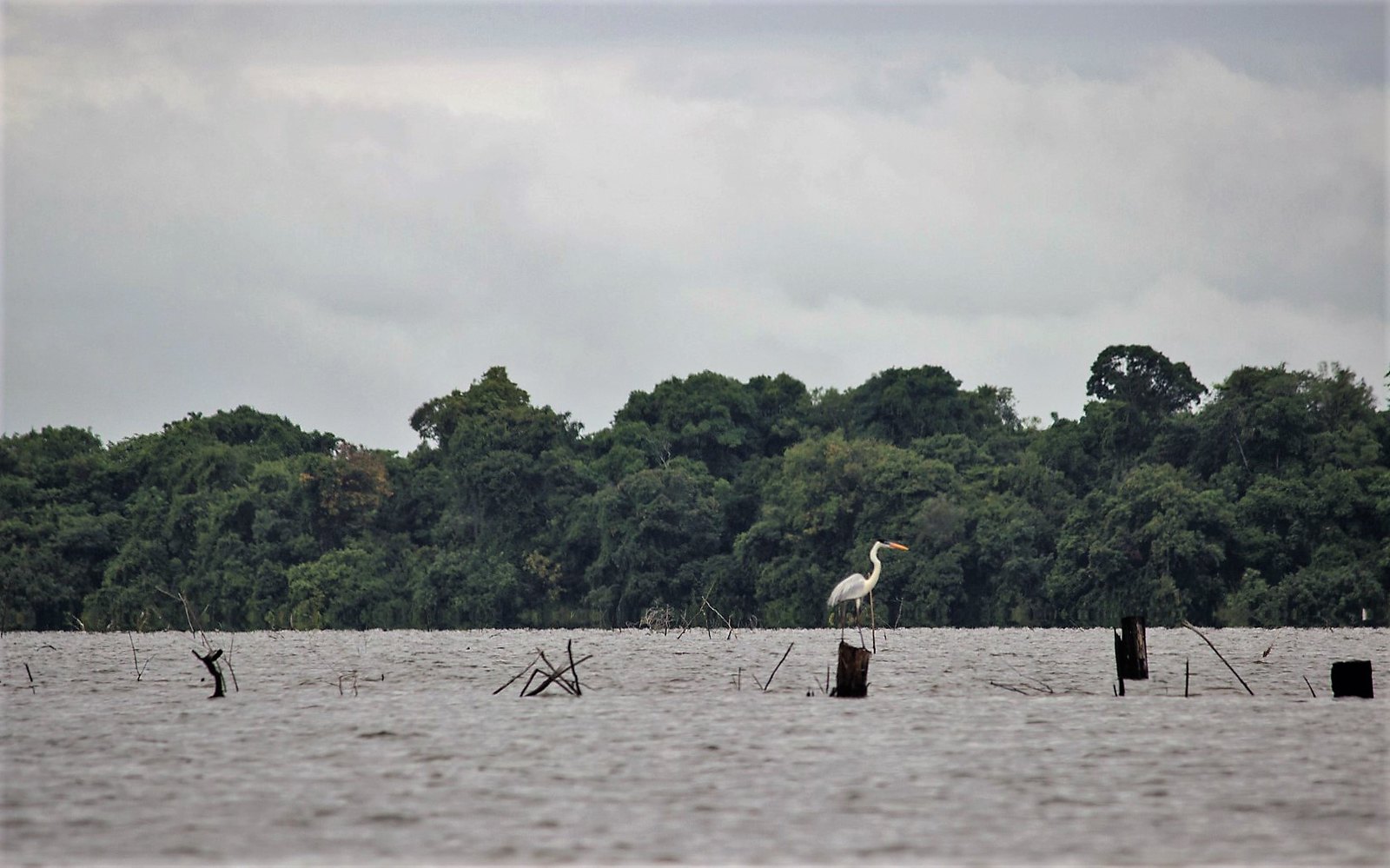
Foto: Amazon Watch / Maíra Irigaray.
A busca por justiça e reparação
Ao longo dos anos, o Ministério Público Federal do Pará, a Defensoria Pública e organizações da sociedade civil impetraram dezenas de ações judiciais em tribunais brasileiros para contestar as diversas irregularidades do projeto, bem como seus impactos. A maioria das ações permanece sem solução, algumas há mais de 10 anos.
Essas ações não obtiveram sucesso porque o governo federal tem reiteradamente anulado decisões favoráveis às comunidades afetadas, recorrendo a um mecanismo pelo qual o presidente do Supremo Tribunal Federal pode suspender uma decisão judicial com base unicamente em argumentos genéricos como "interesse nacional" ou "ordem econômica".
Diante da falta de respostas eficazes em nível nacional, a AIDA — juntamente com uma coalizão de organizações aliadas — levou o caso à Comissão Interamericana de Direitos Humanos (CIDH) e, em 2010, solicitou medidas cautelares para proteger a vida, a integridade e a saúde das comunidades indígenas afetadas.
Em 1º de abril de 2011, a CIDH concedeu essas medidas e solicitou ao Estado brasileiro a suspensão das licenças ambientais e de quaisquer obras de construção até que as condições relativas à consulta prévia e à proteção da saúde e integridade das comunidades fossem atendidas.
E, em 16 de junho de 2011, apresentamos uma denúncia formal à CIDH — juntamente com o Movimento Xingu Vivo Para Siempre, a Coordenação das Organizações Indígenas da Amazônia Brasileira, a Diocese de Altamira, o Conselho Missionário Indígena, a Sociedade Pará de Defesa dos Direitos Humanos e a Global Justice — contra o Estado brasileiro por sua responsabilidade internacional nas violações de direitos humanos contra os povos afetados neste caso. A denúncia foi apresentada em dezembro de 2015.
Em 3 de agosto de 2011, a CIDH modificou as medidas cautelares para solicitar — em vez da suspensão de licenças e obras — a proteção dos povos que vivem em isolamento voluntário, a saúde das comunidades indígenas e a regularização e proteção das terras ancestrais.
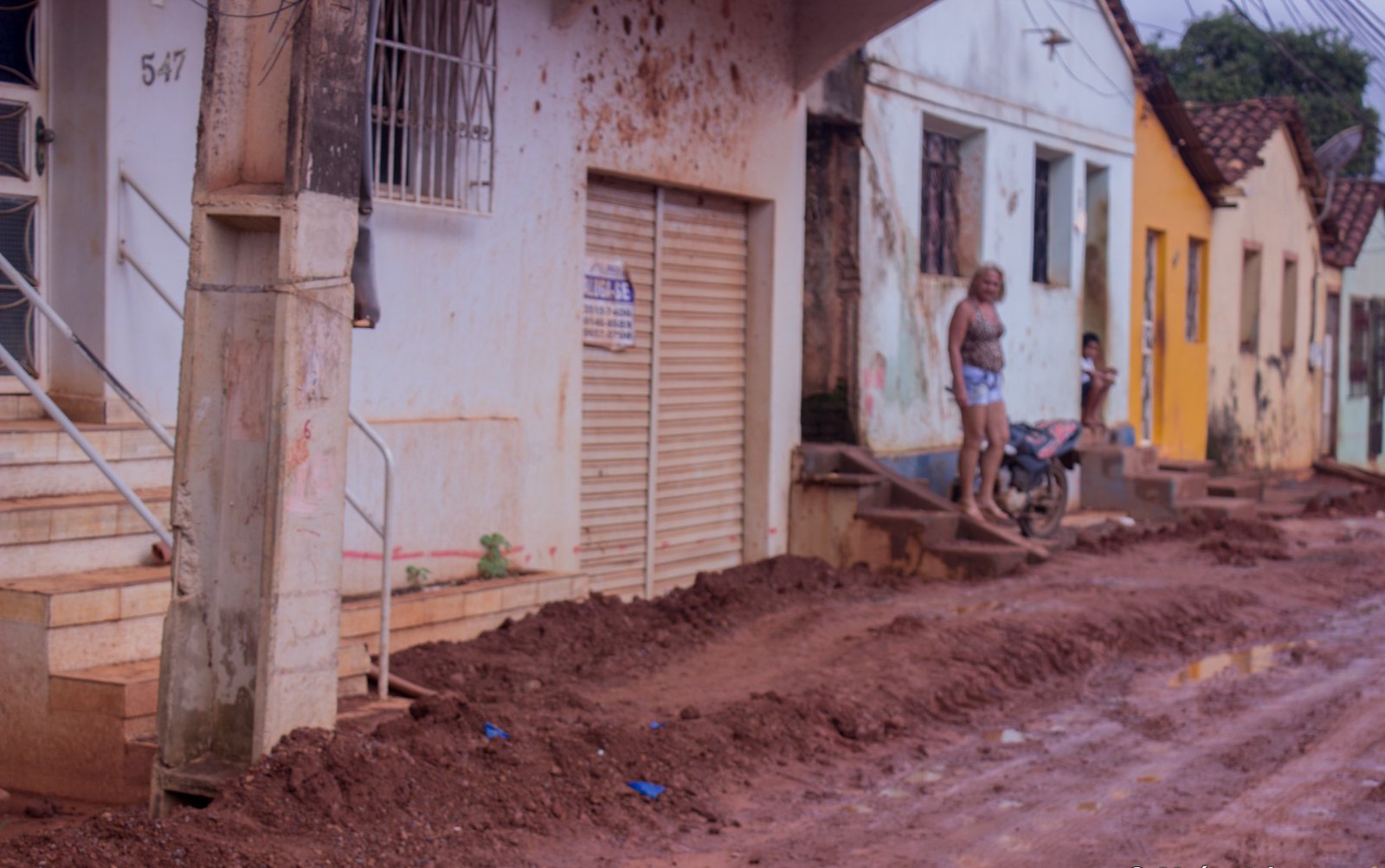
Foto: Amazon Watch / Maíra Irigaray.
Situação atual
As medidas de proteção concedidas pela CIDH permanecem em vigor, mas o Estado brasileiro não as cumpriu integralmente, relatando apenas ações genéricas. As comunidades documentaram as contínuas violações de seus direitos. A situação que motivou o pedido dessas medidas — o risco à vida, à segurança e aos meios de subsistência das comunidades — persiste e se agravou com a usina hidrelétrica operando em plena capacidade e com as recentes secas extremas na Amazônia.
Além do ocorrido em Belo Monte, existe o risco de maiores danos sociais e ambientais decorrentes da implementação de outro megaprojeto de mineração na Volta Grande do Xingu. Lá, a empresa canadense Belo Sun pretende construir a maior mina de ouro a céu aberto do Brasil.
Os impactos sinérgicos e cumulativos da usina e da mina não foram avaliados. O Estado excluiu povos indígenas, comunidades ribeirinhas e comunidades camponesas do processo de licenciamento ambiental do projeto. Apesar disso, dos protestos indígenas e de outras irregularidades em torno do projeto, o governo do estado do Pará autorizou formalmente a mina em abril de 2026.
Belo Monte, assim como outras usinas hidrelétricas, agrava a emergência climática ao gerar emissões de gases de efeito estufa em seu reservatório. Além disso, é ineficiente diante das secas prolongadas e intensas causadas pela crise, pois perde capacidade de geração de energia.
O caso perante a Comissão Interamericana
Em outubro de 2017, a CIDH anunciou que decidiria conjuntamente sobre a admissibilidade (se o caso preenche os requisitos para admissão) e o mérito (se houve, de fato, violação de direitos humanos) da denúncia internacional contra o Estado brasileiro.
Quinze anos após a apresentação da denúncia, as comunidades afetadas e as organizações que as representam ainda aguardam essa decisão. Caso a CIDH conclua que houve violações de direitos humanos e emita recomendações que o Estado brasileiro não cumpra, poderá encaminhar o caso à Corte Interamericana de Direitos Humanos, cujas decisões são vinculativas.
Uma possível decisão da Corte Internacional de Direitos Humanos neste caso estabeleceria um precedente jurídico regional em relação aos direitos dos povos indígenas e ribeirinhos, à participação pública em megaprojetos e à responsabilidade do Estado no contexto da crise climática. Isso é particularmente relevante à luz do Parecer Consultivo nº 32 da Corte, que reafirmou as obrigações dos Estados de proteger pessoas e comunidades em todo o continente da emergência climática.
Partners:
Related projects
Civil society urges the United Nations to document human rights violations committed by businesses in Mexico
A group of organizations delivered their report highlighting more than 60 cases of violations across the country. Mining, infrastructure and energy projects—including hydroelectric and wind—were responsible for the greatest number of human rights violations. Mexico City, Mexico. On the occasion of the United Nations Working Group on Business and Human Rights’ official visit to Mexico, a coalition of more than 100 civil society organizations, movements and networks prepared a report outlining cases of human rights violations perpetrated by corporations in Mexico. The report highlights Mexico’s current human rights crisis, which has been recognized by various UN agencies[1] and the Inter-American Commission on Human Rights.[2] It lays out the clear dangers facing those who protect human rights, the land and their own territory.[3] Documented cases of human rights abuses involve 50 foreign, 41 national, and eight public companies. More than half the cases involved intimidation and/or attacks against human rights defenders. The most frequent violations were to the rights to: land and territory; access to information; health; a healthy environment; and consultation and free, prior and informed consent. During the Working Group’s regional visits, affected communities will show the experts the negative impacts caused by companies linked to mining, wind power, hydroelectric dams, agribusiness, infrastructure, oil and gas exploitation, real estate, tourism and maquilas (manufacturing facilities), among others. At the suggestion of civil society, the Working Group will meet with companies including: Grupo México, Grupo Higa, Grupo BAL, Bimbo, Goldcorp, TransCanada, Eólica del Sur, and CEMEX. They will also meet with the state-run production companies, Petróleos Mexicanos (Pemex) and the Federal Electricity Commission (CFE). Situations in Mexico that systematically hinder compliance with the UN Guiding Principles on Business and Human Rights include: State Capture: complicity, corruption and impunity. In many documented cases, the Mexican State, at all levels (federal, state and municipal), has served business interests above public interest. This has been evident in: the promotion of rules and regulations that benefit business interests over human rights; the use of public force against peaceful social mobilization; the support of extractive projects against community interests; the lack of inquiry and sanction by the judiciary regarding allegations of human rights abuses; and the criminalization of environmental advocates. Structural reforms that weaken the protection of human rights and support companies, such as the energy reform, which does not always consider its impacts on human rights, and does not guarantee the participation and right of access to information of affected communities. Lack of consultation and the free, prior, informed, culturally appropriate, and in good faith consent of affected communities; lack of due diligence on the part of companies; and the proliferation of megaprojects with severe impacts on human rights. Lack of access to justice and non-compliance with rules and judgments, by companies as well as the Mexican State. On multiple occasions, affected people who have reported rights violations have later been the victim of attacks. And, even if a court—including the Mexican Supreme Court— ruled in their favor, the fulfillment of that ruling was not observed. Reduction of participation mechanisms and an increase in abuses against human rights defenders. The cases illustrate an increase in murders, criminalization, threats and attacks on human rights defenders who have spoken out against mega-projects and business activities. In 2011, the United Nations Human Rights Council issued the "Guiding Principles on Business and Human Rights" in order to empower States to exercise control over business activities, ensure due diligence, and guarantee access to effective and appropriate remedial measures. In order to monitor the application of these principles, the Council established the Working Group on Business and Human Rights, whose visit Mexico from August 29th to September 7th 2016 will be their second visit to Latin America. On behalf of the organizations and communities that prepared this report, we hope that the conclusions reached by the Working Group at the close of their visit will reflect what Mexico truly needs. We urge companies operating in Mexico, as well as the Mexican State, to consider the recommendations seriously and implement them in current and future operations. For more information in social media, following along: #ONUenMX The report was created with the participation of the following organizations and human rights groups (in alphabetical order): Alianza de la Costa Verde Ambiente y Desarrollo Humano Asociación Interamericana para la Defensa del Ambiente (AIDA) Bios Iguana Campaña Nacional Sin Maíz No Hay País Cartocrítica Casa del Migrante Saltillo Centro de Derechos Humanos “Fray Bartolomé de Las Casas” Centro de Derechos Humanos “Fray Francisco de Vitoria” Centro de Derechos Humanos “Miguel Agustín Pro Juárez” (Centro Prodh) Centro de Derechos Humanos de la Montaña, Tlachinollan Centro de Derechos Humanos Toaltepeyolo Centro de Derechos Humanos Zeferino Ladrillero (CDHZL) Centro “Fray Julián Garcés” Derechos Humanos Centro de Información sobre Empresas y Derechos Humanos (CIEDH) Centro de Reflexión y Acción Laboral (CEREAL) Centro Diocesano para los Derechos Humanos “Fray Juan de Larios” Centro Mexicano de Derecho Ambiental (CEMDA) Colectivo sí a la vida No al basurero tóxico en Noria de la Sabina Comités de Cuenca Río Sonora (CCRS) Comité de Defensa Integral de Derechos Humanos Gobixha (CODIGODH) Comité de Derechos Humanos de Tabasco (CODEHUTAB) Comisión Mexicana para la Defensa y Promoción de los Derechos Humanos (CMDPDH) Consejo en Defensa de la Vida y el Territorio TiyatTlali DECA Equipo Pueblo DH Rayoactivo El Barzón Chihuahua EcoRed Feminista la Lechuza Buza Enfoque DH Estancia del Migrante en Querétaro Frente de Pueblos en Defensa de la Tierra y el Agua (FPDTA) Fundar, Centro de Análisis e Investigación Foro de Derechos Humanos y Resistencias de la Sierra de Puebla Greenpeace México Grupo de Estudios Ambientales Grupo Focal sobre Empresas y Derechos Humanos Indignación, Promoción y Defensa de los Derechos Humanos Instituto Mexicano para el Desarrollo Comunitario (IMDEC) Movimiento Ciudadano en Defensa de la Loma Movimiento Mexicano de Afectados por las Presas y en Defensa de los Ríos (MAPDER) Movimiento Mesoamericano contra el Modelo Extractivo Minero (M4) OrganicConsumersAssociation (México) Oxfam México Programa Universitario de Derechos Humanos, Programa de Incidencia, Programa de Medio Ambiente, UIA Proyecto de Derechos Económicos, Sociales y Culturales (ProDESC) Proyecto sobre Organización, Desarrollo, Educación e Investigación (PODER) Red Mexicana de Afectados por la Minería (REMA) Semillas de Vida SMR, Scalabrinianas: misión con Migrantes y Refugiados Serapaz, Servicios y Asesoría para la Paz Y la Red Nacional de Organismos Civiles de Derechos Humanos “Todos los Derechos para Todas y Todos” (conformada por 80 organizaciones en 21 estados de la República mexicana). The information was collected based on the baseline questionnaire for documenting abuses of companies prepared by the Business Information Center and Human Rights(CIEDH) and the network(DESC) https://goo.gl/YLhbSM [1] Declaration of the United Nations High Commissioner for Human Rights, ZeidRa’ad Al Hussein, done in his visit to Mexico in October 7, 2015: http://www.ohchr.org/en/NewsEvents/Pages/DisplayNews.aspx?NewsID=16578&LangID=E [2] Inter-American Commission on Human Rights. Human Rights situation in Mexico, (OAS.Official Documentation; OEA/Ser.L) ISBN I. Title. II. Series. OAS. Official Documentation; OEA/Ser.L. OEA/Ser.L/V/II.Doc. 44/15 p. 11 http://www.oas.org/es/cidh/informes/pdfs/Mexico2016-es.pdf [3] Institute for Economics & Peace, Global Peace Index 2015 Measuring peace, its causes and its economic value p. 8 http://economicsandpeace.org/wp-content/uploads/2015/06/Global-Peace-Index-Report-2015_0.pdf Mexico´s Rank 140 out of 163 http://www.visionofhumanity.org/#page/indexes/global-peace-index/2016/MEX/OVER
Read moreCivil society urges the United Nations to document human rights violations committed by businesses in Mexico
A group of organizations delivered their report highlighting more than 60 cases of violations across the country. Mining, infrastructure and energy projects—including hydroelectric and wind—were responsible for the greatest number of human rights violations. Mexico City, Mexico. On the occasion of the United Nations Working Group on Business and Human Rights’ official visit to Mexico, a coalition of more than 100 civil society organizations, movements and networks prepared a report outlining cases of human rights violations perpetrated by corporations in Mexico. The report highlights Mexico’s current human rights crisis, which has been recognized by various UN agencies[1] and the Inter-American Commission on Human Rights.[2] It lays out the clear dangers facing those who protect human rights, the land and their own territory.[3] Documented cases of human rights abuses involve 50 foreign, 41 national, and eight public companies. More than half the cases involved intimidation and/or attacks against human rights defenders. The most frequent violations were to the rights to: land and territory; access to information; health; a healthy environment; and consultation and free, prior and informed consent. During the Working Group’s regional visits, affected communities will show the experts the negative impacts caused by companies linked to mining, wind power, hydroelectric dams, agribusiness, infrastructure, oil and gas exploitation, real estate, tourism and maquilas (manufacturing facilities), among others. At the suggestion of civil society, the Working Group will meet with companies including: Grupo México, Grupo Higa, Grupo BAL, Bimbo, Goldcorp, TransCanada, Eólica del Sur, and CEMEX. They will also meet with the state-run production companies, Petróleos Mexicanos (Pemex) and the Federal Electricity Commission (CFE). Situations in Mexico that systematically hinder compliance with the UN Guiding Principles on Business and Human Rights include: State Capture: complicity, corruption and impunity. In many documented cases, the Mexican State, at all levels (federal, state and municipal), has served business interests above public interest. This has been evident in: the promotion of rules and regulations that benefit business interests over human rights; the use of public force against peaceful social mobilization; the support of extractive projects against community interests; the lack of inquiry and sanction by the judiciary regarding allegations of human rights abuses; and the criminalization of environmental advocates. Structural reforms that weaken the protection of human rights and support companies, such as the energy reform, which does not always consider its impacts on human rights, and does not guarantee the participation and right of access to information of affected communities. Lack of consultation and the free, prior, informed, culturally appropriate, and in good faith consent of affected communities; lack of due diligence on the part of companies; and the proliferation of megaprojects with severe impacts on human rights. Lack of access to justice and non-compliance with rules and judgments, by companies as well as the Mexican State. On multiple occasions, affected people who have reported rights violations have later been the victim of attacks. And, even if a court—including the Mexican Supreme Court— ruled in their favor, the fulfillment of that ruling was not observed. Reduction of participation mechanisms and an increase in abuses against human rights defenders. The cases illustrate an increase in murders, criminalization, threats and attacks on human rights defenders who have spoken out against mega-projects and business activities. In 2011, the United Nations Human Rights Council issued the "Guiding Principles on Business and Human Rights" in order to empower States to exercise control over business activities, ensure due diligence, and guarantee access to effective and appropriate remedial measures. In order to monitor the application of these principles, the Council established the Working Group on Business and Human Rights, whose visit Mexico from August 29th to September 7th 2016 will be their second visit to Latin America. On behalf of the organizations and communities that prepared this report, we hope that the conclusions reached by the Working Group at the close of their visit will reflect what Mexico truly needs. We urge companies operating in Mexico, as well as the Mexican State, to consider the recommendations seriously and implement them in current and future operations. For more information in social media, following along: #ONUenMX The report was created with the participation of the following organizations and human rights groups (in alphabetical order): Alianza de la Costa Verde Ambiente y Desarrollo Humano Asociación Interamericana para la Defensa del Ambiente (AIDA) Bios Iguana Campaña Nacional Sin Maíz No Hay País Cartocrítica Casa del Migrante Saltillo Centro de Derechos Humanos “Fray Bartolomé de Las Casas” Centro de Derechos Humanos “Fray Francisco de Vitoria” Centro de Derechos Humanos “Miguel Agustín Pro Juárez” (Centro Prodh) Centro de Derechos Humanos de la Montaña, Tlachinollan Centro de Derechos Humanos Toaltepeyolo Centro de Derechos Humanos Zeferino Ladrillero (CDHZL) Centro “Fray Julián Garcés” Derechos Humanos Centro de Información sobre Empresas y Derechos Humanos (CIEDH) Centro de Reflexión y Acción Laboral (CEREAL) Centro Diocesano para los Derechos Humanos “Fray Juan de Larios” Centro Mexicano de Derecho Ambiental (CEMDA) Colectivo sí a la vida No al basurero tóxico en Noria de la Sabina Comités de Cuenca Río Sonora (CCRS) Comité de Defensa Integral de Derechos Humanos Gobixha (CODIGODH) Comité de Derechos Humanos de Tabasco (CODEHUTAB) Comisión Mexicana para la Defensa y Promoción de los Derechos Humanos (CMDPDH) Consejo en Defensa de la Vida y el Territorio TiyatTlali DECA Equipo Pueblo DH Rayoactivo El Barzón Chihuahua EcoRed Feminista la Lechuza Buza Enfoque DH Estancia del Migrante en Querétaro Frente de Pueblos en Defensa de la Tierra y el Agua (FPDTA) Fundar, Centro de Análisis e Investigación Foro de Derechos Humanos y Resistencias de la Sierra de Puebla Greenpeace México Grupo de Estudios Ambientales Grupo Focal sobre Empresas y Derechos Humanos Indignación, Promoción y Defensa de los Derechos Humanos Instituto Mexicano para el Desarrollo Comunitario (IMDEC) Movimiento Ciudadano en Defensa de la Loma Movimiento Mexicano de Afectados por las Presas y en Defensa de los Ríos (MAPDER) Movimiento Mesoamericano contra el Modelo Extractivo Minero (M4) OrganicConsumersAssociation (México) Oxfam México Programa Universitario de Derechos Humanos, Programa de Incidencia, Programa de Medio Ambiente, UIA Proyecto de Derechos Económicos, Sociales y Culturales (ProDESC) Proyecto sobre Organización, Desarrollo, Educación e Investigación (PODER) Red Mexicana de Afectados por la Minería (REMA) Semillas de Vida SMR, Scalabrinianas: misión con Migrantes y Refugiados Serapaz, Servicios y Asesoría para la Paz Y la Red Nacional de Organismos Civiles de Derechos Humanos “Todos los Derechos para Todas y Todos” (conformada por 80 organizaciones en 21 estados de la República mexicana). The information was collected based on the baseline questionnaire for documenting abuses of companies prepared by the Business Information Center and Human Rights(CIEDH) and the network(DESC) https://goo.gl/YLhbSM [1] Declaration of the United Nations High Commissioner for Human Rights, ZeidRa’ad Al Hussein, done in his visit to Mexico in October 7, 2015: http://www.ohchr.org/en/NewsEvents/Pages/DisplayNews.aspx?NewsID=16578&LangID=E [2] Inter-American Commission on Human Rights. Human Rights situation in Mexico, (OAS.Official Documentation; OEA/Ser.L) ISBN I. Title. II. Series. OAS. Official Documentation; OEA/Ser.L. OEA/Ser.L/V/II.Doc. 44/15 p. 11 http://www.oas.org/es/cidh/informes/pdfs/Mexico2016-es.pdf [3] Institute for Economics & Peace, Global Peace Index 2015 Measuring peace, its causes and its economic value p. 8 http://economicsandpeace.org/wp-content/uploads/2015/06/Global-Peace-Index-Report-2015_0.pdf Mexico´s Rank 140 out of 163 http://www.visionofhumanity.org/#page/indexes/global-peace-index/2016/MEX/OVER
Read more
The Olympics and the Record We Mustn't Break
By Florencia Ortúzar Greene, AIDA attorney The 2016 Río Olympics have come to an end. Over the last few weeks, the world has once again borne witness to the greatest achievements of the human body, to the forging of new world records. But, amid high levels of air and water pollution, the thousands of competitors that met in Brazil affirmed that one record must not be broken: 1.5 degrees Celsius. The Earth has been warming steadily in recent years, causing the melting of permafrost, rising oceans, increasingly dangerous storms and floods, and more intense and frequent droughts. Exceeding a global temperature increase of 1.5 °C would trigger a global catastrophe with unknown consequences. The opening message The Olympics put the issue of climate change on the table once again. Athletes from around the world called on us all to do something about it. During the opening ceremony on August 5, images of clouds of pollution filled Maracaná Stadium in Río de Janeiro. Alarming projections showed cities and regions of the world being flooded. The peace symbol, altered to resemble a tree, was projected on the ground while a voice warned that our planet’s ice caps are melting quickly. Athletes from around the world joined in a campaign to ask the world not to break the record of 1.5 degrees, implying that the union of all nations is necessary to control global warming. Each Olympian received a tree seed, which will grow into the Athlete’s Forest, cementing their legacy in Río’s Deodoro Olympic Park. Bad air and water quality In a report on water quality in Río, the World Health Organization (WHO) made recommendations to athletes competing in aquatic events. The organization told them to cover cuts and scrapes with waterproof bandages; to avoid ingesting the water; to wash as soon as possible after exposure; to stay in it as briefly as possible; and to avoid contact with all water after it rains. Clearly, water in Río carries significant health risks. Air pollution in Río has also reached dangerous levels, authorities have warned. Promises to improve air quality before the big event were not fulfilled. According to government data, since 2008 the city’s air has contained airborne particles that cause respiratory illnesses at a concentration three times higher than annual WHO-recommended limits. Another key to the planet’s health is the Amazon rainforest, of which Brazil is the principle guardian. The Amazon stores huge amounts of carbon, taking up some of what we release into the atmosphere. But this natural treasure is at risk. According to the World Wildlife Fund, over the last several years the Amazon has lost at least 17 percent of its vegetation, and deforestation has released large amounts of carbon into the atmosphere. The protection of this treasure is a responsibility humanity is failing to live up to. The fight we must win This month, nearly 11 thousand competitors from all around the world united in the world’s most important athletic competition. It was a unique occasion to reflect on the urgent challenges facing humanity. AIDA helps the nations of Latin America tackle these challenges. We work to improve air quality, and mitigate short-lived climate pollutants, which remain in the air for a relatively short time, yet generate extreme changes in climate, degrade air quality, and damage crop yields. We believe the fight against climate change is the most critical of all fights. To truly achieve victory, we must ensure we don’t break the 1.5 °C record. Our ability to win it requires us all to work as one global team.
Read more