
Project
Shutterstock.
Pollution of the Motagua River in Guatemala: The Poqomam Maya people’s quest for environmental justice
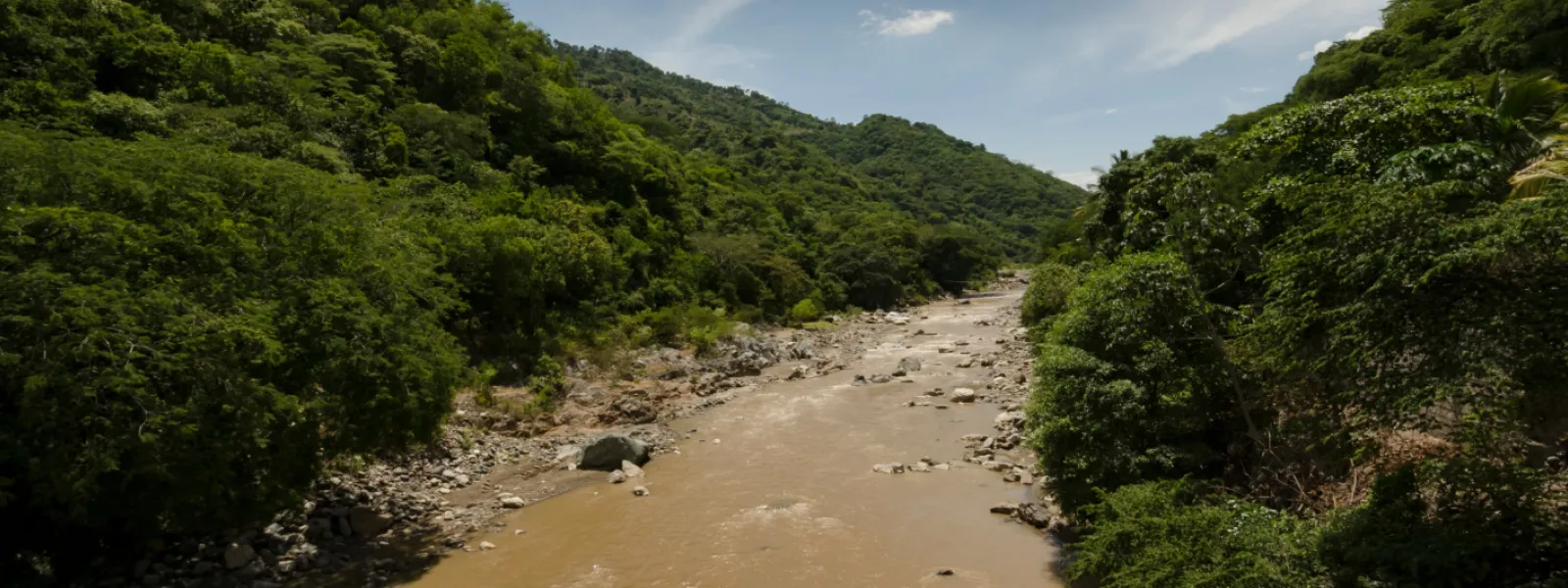
The Motagua River basin—Guatemala’s largest and most important river—is severely polluted with wastewater, solid waste, and other types of debris.
This is a cross-border issue because the Motagua’s polluted waters flow into the Caribbean Sea, reach the coast of Honduras, and threaten the Mesoamerican Reef System.
For decades, this has violated the rights to health, water, development, and a healthy environment of all the people living in the river basin.
In June 2025, the Poqomam Maya community of Santa Cruz Chinautla—supported by AIDA, the Indigenous Peoples’ Law Firm, and allied organizations—achieved an unprecedented legal victory to halt degradation in the basin. In response to the lawsuit it filed, a Guatemalan court ordered the municipality of Chinautla to comply with a series of obligations to curb the pollution of the area’s rivers and soil.
The government's response to the ruling has so far been limited to technical working group meetings. Meanwhile, the community continues to work toward the proper implementation of the ruling and to take other actions to defend its territory and its rights.
Background
The Motagua River, which is 486 km long, flows through 96 municipalities and 14 departments in Guatemala. It originates in Quiché, a department located in the northwest, and empties into the Caribbean Sea.
Polluting activities occur throughout the entire basin, including sub-basins and micro-basins. The largest volume of pollution comes from Guatemala City, the country’s capital, and is carried by the waters of the Las Vacas River, which in turn receives a large amount of waste from the Chinautla River.
The Chinautla River, which flows through the municipality of the same name, carries solid waste from a landfill located in Zone 3 of the capital—where trash from at least 14 municipalities in the department of Guatemala is dumped—as well as sewage generated by some 500,000 people living in the northern part of the capital, which undergoes no prior treatment.
Other sources of pollution include the numerous illegal dumps in the municipality of Chinautla, the waste that private vehicles and garbage trucks dump along the banks of its rivers, as well as the sand-mining companies—which began setting up operations in the area between 1996 and 1997—whose activities weaken the rivers' basins, causing solid waste to be more easily carried away by the river currents.
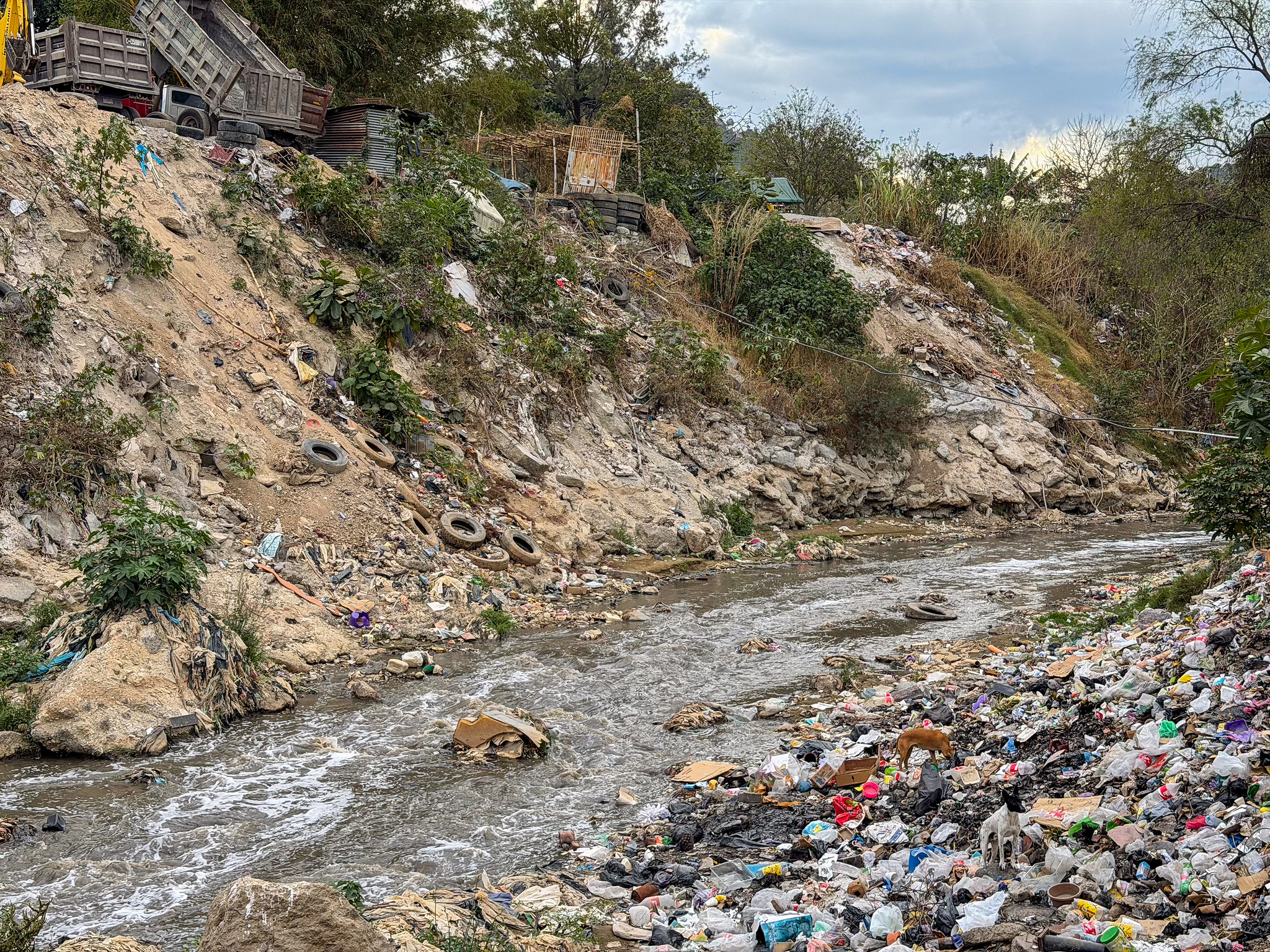
Photo: Mayela Sánchez García.
The situation extends beyond national borders. Every year, the Motagua River discharges some 20,000 metric tons of plastic into the Caribbean Sea, making it one of the rivers that contributes the most plastic pollution to the ocean worldwide, according to estimates contained in a 2025 report by the Inter-American Commission on Human Rights (IACHR).
The river flows into the Mesoamerican Reef at its mouth, so pollution also threatens to degrade one of the largest and most biodiverse transboundary reefs on the planet, which spans the territorial waters of Belize, Guatemala, Honduras, and Mexico.
In addition, the contaminated water reaches the coast of Honduras and spreads into Amatique Bay, located along the eastern coast of Guatemala, affecting the Caribbean Sea.
The roots of this chronic, cross-border problem are structural. Data from the Integrated Environmental Management of the Motagua River Basin project, funded by the United Nations Development Program (UNDP), show that in Guatemala, 66% of municipal solid waste is not collected, and there is no guarantee that the remaining 34% is disposed of properly. Furthermore, of all landfills nationwide, 88.32% are illegal or lack municipal authorization.
In other words, the core issues that need to be addressed are the mismanagement of solid waste and water resources in Guatemala; noncompliance with existing regulations on wastewater discharge and the disposal and treatment of solid waste and residues; and the lack of a water law.
The Poqomam Maya people's quest for justice
The rivers of Santa Cruz Chinautla, a community of the Poqomam Maya people located just twelve kilometers from Guatemala City, have become conduits of pollution that are degrading the Motagua River.
For decades, the local population has seen its health and livelihoods—including pottery, one of the main economic activities and a source of identity—damaged due to the lack of waste management in the municipality of Chinautla and the urban area of the country’s capital, as well as the activities of sand-mining companies.
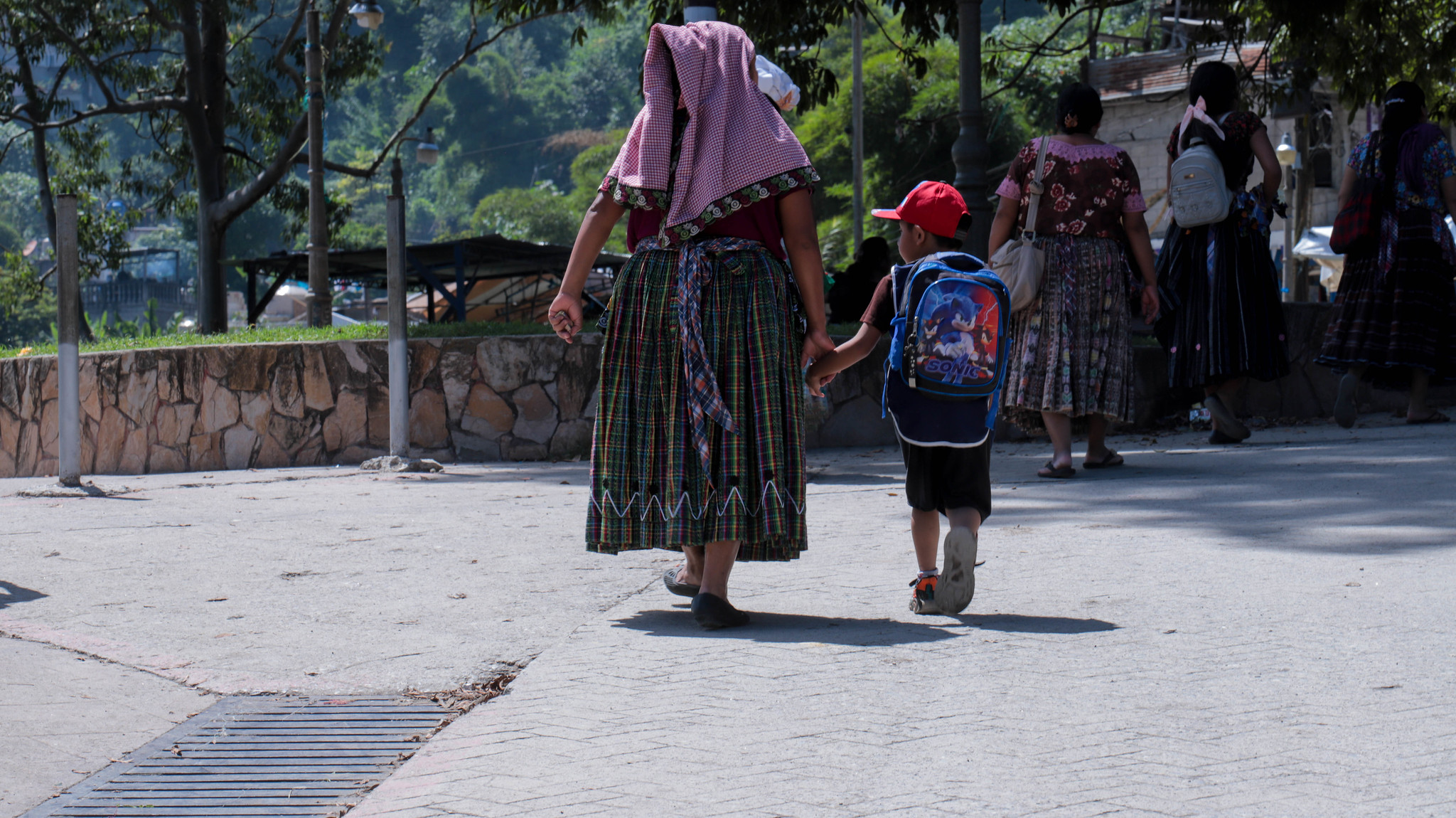
Photo: Mario Winter.
Voices for the Motagua River: Olga Vázquez.
Voices for the Motagua River: Nazario Pascual.
In early 2000, the Maya community organized to stop sand mining on their territory. At that time, the companies held mining permits that remained valid through 2021 and 2022. And although the permits expired, some companies continued to operate after requesting extensions. In June 2022, the indigenous authorities of the Poqomam people began a sit-in protest in front of the Piedrinera San Luis company, which they maintained for four years.
In July 2024, the Special Rapporteur on Economic, Social, Cultural, and Environmental Rights of the IACHR visited Santa Cruz Chinautla. During his visit, traditional authorities and community members spoke about the environmental, water-related, health, economic, and cultural impacts of the pollution in their rivers.
That same year, in October, the community—with support from AIDA, the Indigenous Peoples’ Law Firm, and partner organizations—filed a lawsuit (petition for amparo) against the municipality of Chinautla over its failure to take measures to address the contamination of its rivers and soil caused by improper solid waste management and the existence of illegal landfills.
AIDA’s scientific team, together with local residents and community authorities, collected key information on illegal landfills in the area. This community science initiative supported the litigation by highlighting the severity of the pollution, demonstrating the ongoing use of such practices, and providing evidence of the municipal authorities’ failure to fulfill their legal obligations regarding waste management.
Learn more about this community science initiative.
In June 2025, the Poqomam community won the support of the Guatemalan justice system when a constitutional court ordered the municipality of Chinautla to effectively address the claims in the lawsuit aimed at stopping the pollution of the rivers and soil in Santa Cruz Chinautla.
This is the first time a Guatemalan court has recognized a community's right to a healthy environment and its central role in finding solutions.
Find out the details of the legal victory.
Current situation
Since the ruling was issued, the municipality of Chinautla has held a series of “technical working groups” with representatives from the central government, civil society, and the community. A smaller group of technical experts was later created to develop a work plan with clear goals. Several months have passed without the municipality convening these working groups.
Furthermore, in December 2025, the IACHR noted in its report Human Rights Situation in Guatemala that the Motagua River basin is facing a severe pollution crisis that has had profound impacts on biodiversity and has resulted in systematic violations of the human rights of local communities, including the Maya Poqomam people.
And in May 2026, the Ministry of the Environment and Natural Resources revoked the license of the sand mining company Piedrinera San Luis for "failure to comply with environmental commitments."
AIDA continues to monitor the implementation of the court ruling to ensure the right to a healthy environment for the Poqomam Maya community and all those living in the Motagua River basin. Meanwhile, the residents of Santa Cruz Chinautla remain organized and mobilized to improve their environment and defend their rights.
Related projects
Lessons in Strength and Solidarity from the Mexico City Earthquake
Seconds before 1:15 p.m. on September 19, the Earth reminded us just how fragile life is. As soon as we felt the first movement, and the seismic alert confirmed what was happening, our Mexico City team suspended a call with team members in five countries and took to the streets. Words can’t describe the emotions that engulfed us during the next hours and days. Fear and joy, anxiety and solidarity, nervousness and hope. Just two hours before, we had participated in a simulation in honor of the victims of the devastating earthquake exactly 32 years before. While for some residents of Mexico City these exercises are a repetitive protocol, we in AIDA always follow them because our team consists of professionals from across Latin America, some who don’t have experience with earthquakes. So luckily our team knew what to do. We met at the rendezvous point, as best we could. We were relieved to learn the teams of AIDA and CEMDA—with whom we share offices—were all safe and accounted for. But the calm was short-lived, as reports came in from nearby streets: building collapses, gas leaks, the loss of power and communication. The city suspended all activities. Those who were able showed up to help. Damaged streets were flooded with volunteers. Astrid Puentes, co-director of AIDA, gave shelter to our team in her nearby home. Those who could returned to their homes at the end of the day. Unfortunately, the house where one of our interns was staying was left uninhabitable. These have been difficult days. Work was put on hold as our team joined the relief efforts. We have seen so many signs of solidarity. Despite the tragedy, the humility and confidence of the Mexican people has awakened in us a new sense of hope. Everyone could help in some way. We’ve seen therapists, lawyers, motorcyclists, cooks, blacksmiths, architects, masons, journalists, and clowns offering their knowledge and experience to one cause: helping the victims, whether they knew them or not. We won’t emerge from this situation unscathed. While AIDA’s office remains in good condition, the news of friends who have lost loved ones or their homes continues to arrive. But we’ve seen the spectacular strength and resilience of Mexico’s people; they work with their hands as well as their hearts. We know now that the reconstruction that awaits us will have its foundation in solidarity and empathy. We’re confident that the millions of people who have been awakened, who are acting as conscious and involved citizens, will continue working for our city and our country. And we return to our work this week conscious that thousands of people still need help, not just in Mexico City, but also in the states of Morelos, Puebla, Oaxaca, Veracruz, Tabasco, and Chiapas. We will work for them and for the whole continent. We will work for the Earth, which has reminded us that life is but an instant, and that it’s always worth fighting for. -- In solidarity, AIDA’s team from Mexico City: Astrid, Ava, Cecilia, Laura, Paulina, Rodrigo, and Victor. ¡#FuerzaMéxico!
Read more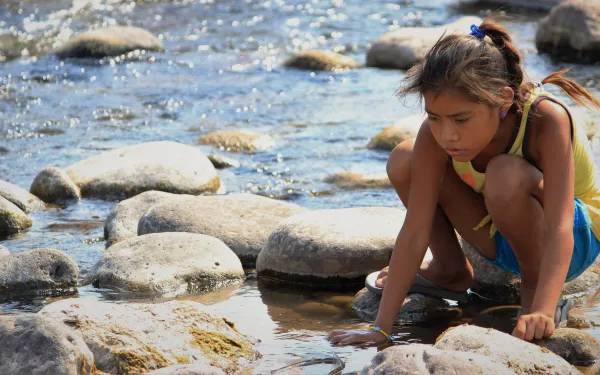
Why damming rivers, like blocking veins, risks our health
Some of my most treasured childhood memories happened in or near a river. I can still feel the cold water on my feet, and the current that pulled me smoothly past rocks and branches. I remember vacations with my cousins, throwing ourselves into the river near my aunt and uncle’s country house, leaping from the tops of rocks or swinging from the branches of a tree. I remember summer road trips, driving down seemingly endless bridges over the great rivers of southern Mexico. I’ve always thought of rivers as the veins of our planet. In their waters, the rivers and their tributaries carry nutrients to wetlands, lakes, and the sea. They carry oxygen and host thousands of species. They supply drinking water to millions of people in small towns and big cities. They give us food, entertainment, transportation, and life. Recent natural disasters have reminded us that—despite our best attempts—there are no limits, dams, dikes or pipelines that can control the water. It’s true that, properly implemented, dams can have benefits; but in many cases, particularly those of large-scale development, the damages dams do far outweigh any benefits. There are currently more than 300 large dam projects planned or in construction throughout Latin America. Many of them are underway without adequate social and environmental impacts assessments. The results are displaced communities, destroyed forests, and rivers with no fish. Blocking our veins The water flowing down our rivers is vital to the natural equilibrium of the planet and its climate. It’s like the blood circulating through your body. If your bloodflow were blocked, you’d get cardiovascular disease, maybe even a heart attack. Well, damming rivers is like intentionally blocking your veins and expecting no problems. Only one third of the world’s great rivers remain free-flowing, without dams or canals. Now I’m not a doctor, or a biologist, but I often wonder: are we heading for the collapse of our natural system by blocking, tubing, manipulating, and contaminating the veins of the Earth (which, like us, is a living organism)? And because rotting vegetation in dam reservoirs releases lots of methane (a super-potent greenhouse gas), isn’t the current climate crisis, in part, a response to the blockages in Earth’s circulatory system? A slow death The mouth of the Colorado River opens to the Sea of Cortes, in northeast Mexico. It’s an area historically rich in sea life from the Gulf of California. For eons, the flow of the Colorado brought nutrient-rich sediment to the Sea of Cortes. It kept the coastal estuary rich and healthy, along with the animals that sought shelter there. But that’s not happening anymore. The vaquita, now the world’s rarest marine mammal, teeters on the edge of extinction. Between the Colorado River’s mountain headwaters and the end of its main channel, more than 10 large dams and 80 water diversions have squeezed the river dry. Now the Gulf no longer receives the river’s nutrient-rich waters, harming not just marine life like the vaquita, but also the area’s fishermen. No one mentions that the near disappearance of the vaquita has been caused by habitat destruction due to the upstream dams on the Colorado River. Mexico’s last free-flowing river The San Pedro Mezquital River is the last undammed river in the western Sierra Madre Mountains. The river links the region’s indigenous people. It’s a source of their culture and identity. The river channel, more than 500 kilometers long, connects the forests of the highlands with the wetlands of the coast, opening into Marismas Nacionales, the largest mangrove forest in the Mexican Pacific. Marismas Nacionales, declared a wetland of international importance, is home to more than 12,000 families engaged in fishing, agriculture, and tourism. But this national treasure is at risk due to the government’s plan to build a hydroelectric dam on the San Pedro Mezquital. If the river were blocked, its contribution of nutrients downstream would be drastically reduced. The health of Marismas Nacionales, its rich biodiversity, and the region’s sustainable local economy would all be slowly starved. The reservoir would also destroy at least 14 sites sacred to local indigenous communities. But we’ve still got time to stop this plan and others like it. We can avoid the collapse of the natural world that surrounds us, on our one and only planet. By supporting AIDA, you can help keep Earth’s veins flowing free.
Read more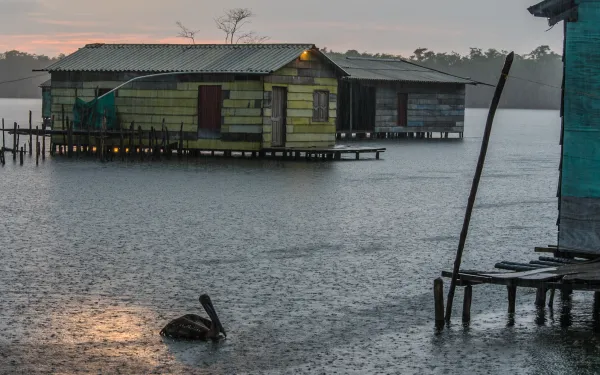
Hope for the Ciénaga, seed of Colombia’s magical realism
“We were in the great swamp, the Ciénaga Grande, another of the myths of my childhood.”– Gabriel García Márquez in Living to Tell the Tale, 2002. Today I learned that Colombia—thanks in part to AIDA’s supporters—took an unprecedented step to save an ecosystem central to Colombia’s identy: the Ciénaga Grande de Santa Marta. As a Colombian and an environmental attorney, I’m deeply moved. And so thankful to the hundreds of supporters whose petition signatures helped move the government to action. The government added the Ciénaga Grande to the Montreux Record, a global list of at-risk wetlands. This action will provide Colombia with international technical and financial support needed to save the vital ecosystem. When I heard the good news, I immediately thought of the yellow butterflies of Macondo. And I thought of Colonel Aureliano Buendía, who stood in front of a firing squad remembering the day his grandfather took him to see ice. The imagery of this magical world, masterfully created by Gabriel García Márquez in One Hundred Years of Solitude, was born from the Ciénaga Grande de Santa Marta. In the early 1900’s, after the Thousand Days’ War, Colonel Nicolás Ricardo Márquez, grandfather of Colombia’s Nobel laureate, passed through the Ciénaga to settle near Aracataca. Later, accompanied by his grandfather, the author crossed the Ciénaga Grande various times to visit his parents in Barranquilla. In 1950, he crossed it again with his mother as they were going to sell his grandparents’ house. It was there, in the Ciénaga Grande, that Márquez found the spark that would light one of the classics of modern literature. So it’s no exaggeration to say that without the Ciénaga Grande, we wouldn’t have the yellow butterflies, or Macondo, or Colonel Aureliano Buendía, embedded so deeply into our cultural memory. It was there that the seed of magical realism was planted. That’s why even a cachaca like me—what those who live in the Caribbean call those of us from the country’s interior—who has lived for many years outside her country, identifies so deeply with the Ciénaga Grande. An international treasure For that and so many other reasons, we at AIDA decided to act in defense of the Ciénaga Grande, named a Wetland of International Importance under the Ramsar Convention. It’s home to Colombia’s largest coastal lagoon, which connects the fresh waters of the mighty Magdalena River with the salt water of the Caribbean Sea. The area is home to many species of mangrove, as well as tropical and riparian forests. It shelters raccoons, howler monkeys, manatees, red herons, ducks, and migrating birds. The Ciénaga Grande also hosts one of the largest artisanal fisheries in Colombia, which supports hundreds of families throughout the area. As a coastal wetland, it’s essential for climate regulation, absorption of pollution from the atmosphere, and flood control. But the Ciénaga Grande is gravely threatened. The spread of mass agriculture and livestock farming, along with large-scale infrastructure projects, has led to deforestation and water diversion. The animals and fish and people of the area are suffering as a result. That’s why I’ve joined the efforts to conserve the Ciénaga Grande, and why every person in Colombia, in the region, and in the world, should do the same. Hope for a healthier tomorrow The addition of the Ciénaga Grande to the Montreux Record fills me with hope. Although it’s shameful such an important ecosystem is in such bad shape, having the government recognize that fact and ask for help is an important advance. Thanks to all the caring activists who’ve joined the cause, my colleagues and I are inspired to do everything we can to ensure that the Ciénaga Grande recovers its vitality. We expect the government will do the same. After all, what would Colombia, Latin America, and the world be without the yellow butterflies of Macondo, and without the magic of nature to envelope us and gives us life?
Read more