
Project
Shutterstock.
Pollution of the Motagua River in Guatemala: The Poqomam Maya people’s quest for environmental justice
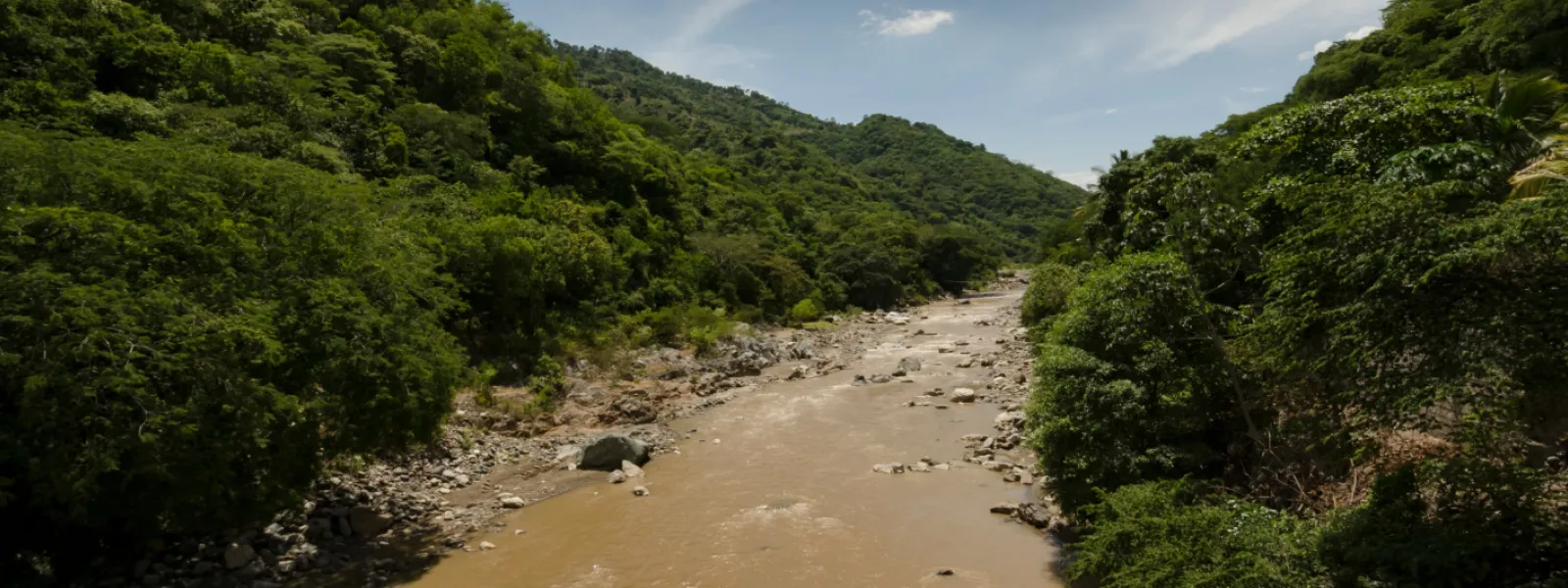
The Motagua River basin—Guatemala’s largest and most important river—is severely polluted with wastewater, solid waste, and other types of debris.
This is a cross-border issue because the Motagua’s polluted waters flow into the Caribbean Sea, reach the coast of Honduras, and threaten the Mesoamerican Reef System.
For decades, this has violated the rights to health, water, development, and a healthy environment of all the people living in the river basin.
In June 2025, the Poqomam Maya community of Santa Cruz Chinautla—supported by AIDA, the Indigenous Peoples’ Law Firm, and allied organizations—achieved an unprecedented legal victory to halt degradation in the basin. In response to the lawsuit it filed, a Guatemalan court ordered the municipality of Chinautla to comply with a series of obligations to curb the pollution of the area’s rivers and soil.
The government's response to the ruling has so far been limited to technical working group meetings. Meanwhile, the community continues to work toward the proper implementation of the ruling and to take other actions to defend its territory and its rights.
Background
The Motagua River, which is 486 km long, flows through 96 municipalities and 14 departments in Guatemala. It originates in Quiché, a department located in the northwest, and empties into the Caribbean Sea.
Polluting activities occur throughout the entire basin, including sub-basins and micro-basins. The largest volume of pollution comes from Guatemala City, the country’s capital, and is carried by the waters of the Las Vacas River, which in turn receives a large amount of waste from the Chinautla River.
The Chinautla River, which flows through the municipality of the same name, carries solid waste from a landfill located in Zone 3 of the capital—where trash from at least 14 municipalities in the department of Guatemala is dumped—as well as sewage generated by some 500,000 people living in the northern part of the capital, which undergoes no prior treatment.
Other sources of pollution include the numerous illegal dumps in the municipality of Chinautla, the waste that private vehicles and garbage trucks dump along the banks of its rivers, as well as the sand-mining companies—which began setting up operations in the area between 1996 and 1997—whose activities weaken the rivers' basins, causing solid waste to be more easily carried away by the river currents.
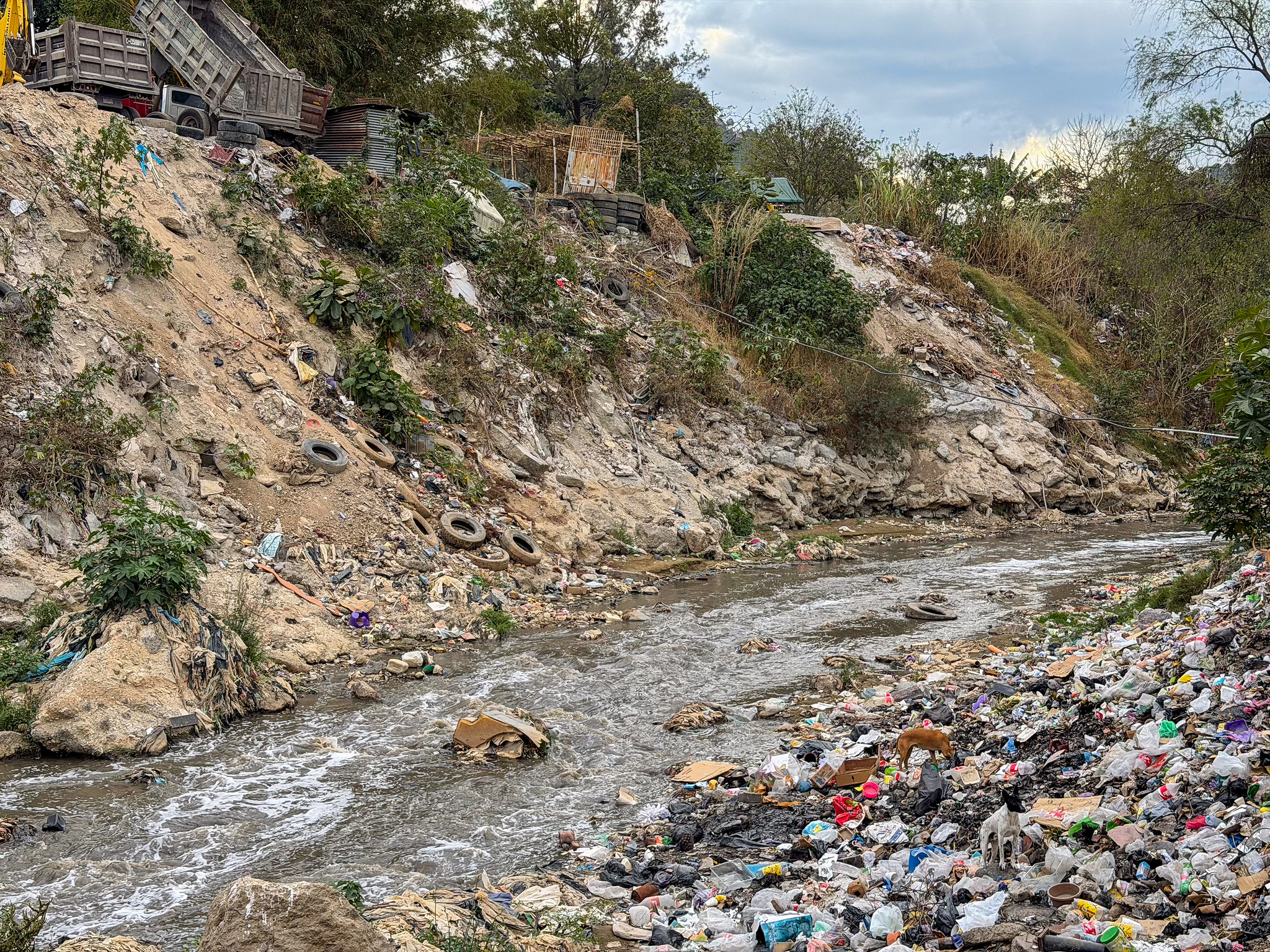
Photo: Mayela Sánchez García.
The situation extends beyond national borders. Every year, the Motagua River discharges some 20,000 metric tons of plastic into the Caribbean Sea, making it one of the rivers that contributes the most plastic pollution to the ocean worldwide, according to estimates contained in a 2025 report by the Inter-American Commission on Human Rights (IACHR).
The river flows into the Mesoamerican Reef at its mouth, so pollution also threatens to degrade one of the largest and most biodiverse transboundary reefs on the planet, which spans the territorial waters of Belize, Guatemala, Honduras, and Mexico.
In addition, the contaminated water reaches the coast of Honduras and spreads into Amatique Bay, located along the eastern coast of Guatemala, affecting the Caribbean Sea.
The roots of this chronic, cross-border problem are structural. Data from the Integrated Environmental Management of the Motagua River Basin project, funded by the United Nations Development Program (UNDP), show that in Guatemala, 66% of municipal solid waste is not collected, and there is no guarantee that the remaining 34% is disposed of properly. Furthermore, of all landfills nationwide, 88.32% are illegal or lack municipal authorization.
In other words, the core issues that need to be addressed are the mismanagement of solid waste and water resources in Guatemala; noncompliance with existing regulations on wastewater discharge and the disposal and treatment of solid waste and residues; and the lack of a water law.
The Poqomam Maya people's quest for justice
The rivers of Santa Cruz Chinautla, a community of the Poqomam Maya people located just twelve kilometers from Guatemala City, have become conduits of pollution that are degrading the Motagua River.
For decades, the local population has seen its health and livelihoods—including pottery, one of the main economic activities and a source of identity—damaged due to the lack of waste management in the municipality of Chinautla and the urban area of the country’s capital, as well as the activities of sand-mining companies.
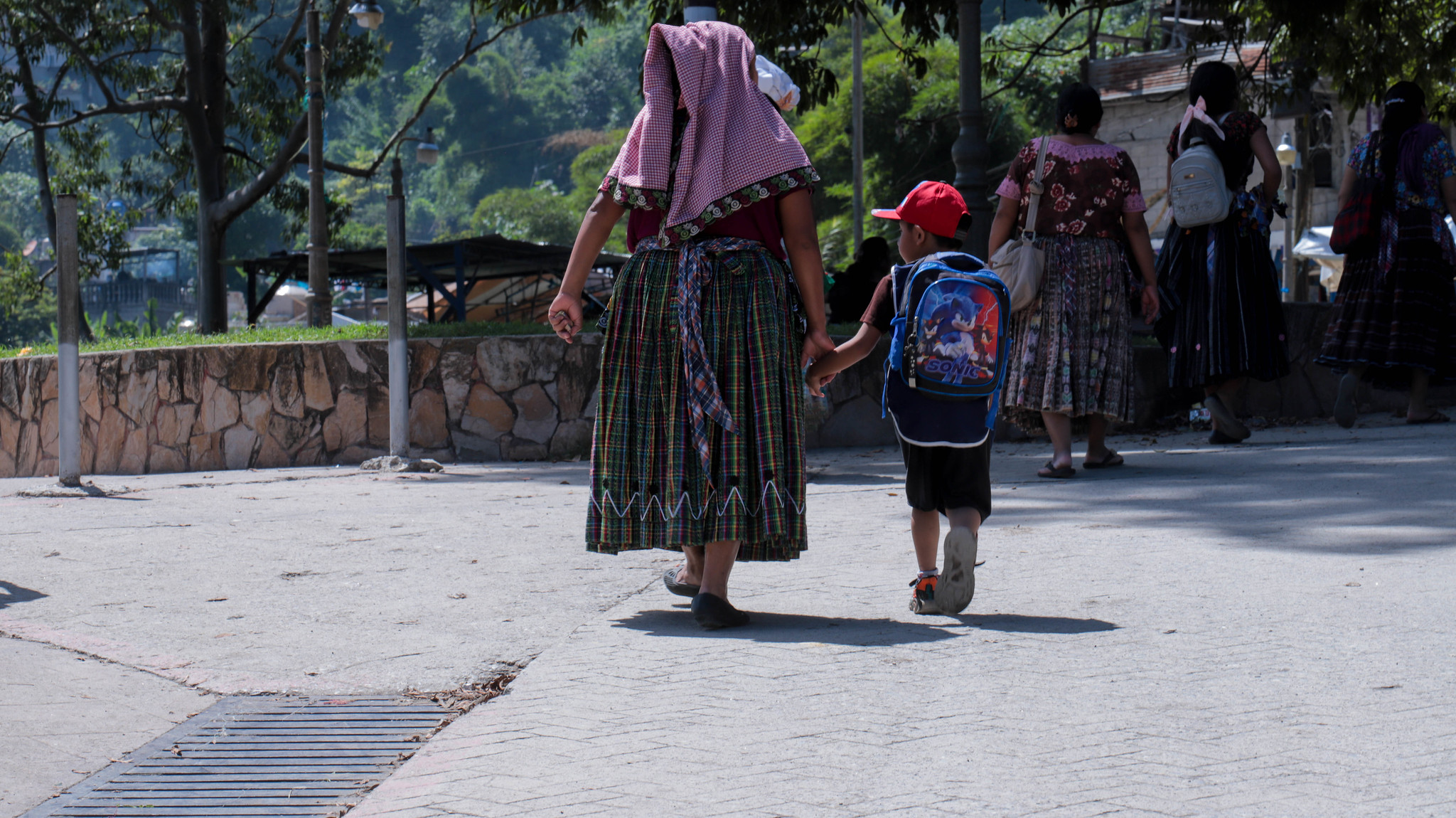
Photo: Mario Winter.
Voices for the Motagua River: Olga Vázquez.
Voices for the Motagua River: Nazario Pascual.
In early 2000, the Maya community organized to stop sand mining on their territory. At that time, the companies held mining permits that remained valid through 2021 and 2022. And although the permits expired, some companies continued to operate after requesting extensions. In June 2022, the indigenous authorities of the Poqomam people began a sit-in protest in front of the Piedrinera San Luis company, which they maintained for four years.
In July 2024, the Special Rapporteur on Economic, Social, Cultural, and Environmental Rights of the IACHR visited Santa Cruz Chinautla. During his visit, traditional authorities and community members spoke about the environmental, water-related, health, economic, and cultural impacts of the pollution in their rivers.
That same year, in October, the community—with support from AIDA, the Indigenous Peoples’ Law Firm, and partner organizations—filed a lawsuit (petition for amparo) against the municipality of Chinautla over its failure to take measures to address the contamination of its rivers and soil caused by improper solid waste management and the existence of illegal landfills.
AIDA’s scientific team, together with local residents and community authorities, collected key information on illegal landfills in the area. This community science initiative supported the litigation by highlighting the severity of the pollution, demonstrating the ongoing use of such practices, and providing evidence of the municipal authorities’ failure to fulfill their legal obligations regarding waste management.
Learn more about this community science initiative.
In June 2025, the Poqomam community won the support of the Guatemalan justice system when a constitutional court ordered the municipality of Chinautla to effectively address the claims in the lawsuit aimed at stopping the pollution of the rivers and soil in Santa Cruz Chinautla.
This is the first time a Guatemalan court has recognized a community's right to a healthy environment and its central role in finding solutions.
Find out the details of the legal victory.
Current situation
Since the ruling was issued, the municipality of Chinautla has held a series of “technical working groups” with representatives from the central government, civil society, and the community. A smaller group of technical experts was later created to develop a work plan with clear goals. Several months have passed without the municipality convening these working groups.
Furthermore, in December 2025, the IACHR noted in its report Human Rights Situation in Guatemala that the Motagua River basin is facing a severe pollution crisis that has had profound impacts on biodiversity and has resulted in systematic violations of the human rights of local communities, including the Maya Poqomam people.
And in May 2026, the Ministry of the Environment and Natural Resources revoked the license of the sand mining company Piedrinera San Luis for "failure to comply with environmental commitments."
AIDA continues to monitor the implementation of the court ruling to ensure the right to a healthy environment for the Poqomam Maya community and all those living in the Motagua River basin. Meanwhile, the residents of Santa Cruz Chinautla remain organized and mobilized to improve their environment and defend their rights.
Related projects
Eight key themes for Colombia’s environmental agenda in 2018
For Colombia, 2017 was a year marked by debate on the right of communities to be consulted about decisions that affect their territories and ecosystems. We saw it through the organization of popular consultations and mobilizations that questioned mining and fracking projects and, in short, the continuity of extractivism. It was also evident in the decision of the Constitutional Court, the highest court in the country, to invalidate the delimitation of the Santurbán páramo, a water source for millions, because the government’s decision did not take into account the population. On the other hand, Colombia joined the global debate on climate change and the need to promote a model of economic development free of fossil fuels. Now, in the face of the presidential elections and the implementation of the peace accord, environmental participation, territorial autonomy and fracking remain particularly important issues. What follows are eight topics key to Colombia’s environmental agenda in 2018: Environmental participation: Popular consultations, as an expression of empowered communities seeking to have a say on projects that will affect them, will continue holding a privileged place in public debate. Territorial autonomy: Although constitutionally recognized, the ability of departments and municipalities to govern themselves autonomously in various areas, including the environment, is not entirely defined. It remains to be answered: Who should decide? And about what can they decide? Indigenous authorities: Following on the heels of the above, the autonomy and decision-making ability of indigenous authorities in relation to environmental issues will give us much to discuss this year. Fracking: The key question is, faced with fracking’s expansion throughout the region, will Colombia adopt the position of social organizations on the application of the precautionary principle to avoid the health and environmental damages associated with fracking? Decarbonization: As an energy producer, will Colombia join France, the United Kingdom and Italy, nations that recently signed an alliance to close coal plants before 2030 and comply with the Paris climate agreement? La Niña: The strong winds and rains of the La Niña climate phenomenon will return to the country this year. Adequate measures to mitigate the risk will be fundamental, as will the application of lessons learned in 2010, when the phenomenon left hundreds dead and the loss of millions of pesos. Páramos: Following the decision of the Constitutional Court to invalidate the delimitation of the Santurbán páramo, this year promises to be full of controversies about the new delimitation of this important ecosystem. Also key will be the issue of community participation in the demarcation of the rest of Colombia’s páramos, a measure oriented to protect them against harmful projects like mining. Principle 10: The negotiation of a regional agreement on the access to information, to justice and to public participation on environmental issues, remains underway. The agreement seeks the application of Principle 10 of the Rio Declaration on Environment and Development, key to guaranteeing the right to a healthy and sustainable environment for present and future generations. At AIDA, and through the Network for Environmental Justice in Colombia, we will continue to promote solutions to the country’s environmental conflicts based on the effective application of national and international standards.
Read more
Sea turtle populations show sign of a comeback
Before 2008, hawksbill turtles had virtually disappeared from the Eastern Pacific. But small-scale conservation efforts enabled their return to the shores of El Salvador and Nicaragua, where researchers found them again laying eggs and slowly beginning to rebuild their population. Sea turtles are migratory animals. They spend most of their lives at sea, nesting on the beaches of various countries along their route. Among the main threats to their health are unsustainable fishing practices (they often get trapped in fishing nets) and inadequately developed projects in marine and coastal areas. The appearance of these turtles on Central American beaches, among other such events, demonstrates the success of small-scale conservation efforts, and the need for them to continue. Signs of recovery According to the recent study, Global sea turtle conservation successes, over the last decade sea turtle hatcheries have helped some populations rebound after historic declines. That’s the case of olive ridley turtles in the northeast Indian Ocean and of green turtles in the South Central Atlantic. After years of implementation, the protection of beaches, the regulation of fishing, and the creation of marine protected areas have helped improve sea turtle populations in waters around the world, according to researchers. The study also shows that, with adequate protections, even small populations of sea turtles have a chance of survival. Researchers found, for example, that in the area of Hawaii called French Frigate Shoals, the population of nesting green sea turtles increased from around 200 in 1973 – when the Endangered Species Act was created – to upwards of 2,000 in 2012. Green turtles are now considered a species of “minor concern” by the International Union for the Conservation of Nature. Our contribution Sea turtle conservation, like that of other animals and plants, requires that organizations, communities, and governments work together. Such collaboration is a main tenant of AIDA’s work. In 1998, we organized a campaign to get the signatures needed for the negotiation of an international treaty to promote the protection, conservation and recovery of sea turtle populations. We are currently working to ensure that governments who signed the treaty are operating in compliance with it. We also helped save green turtles in Costa Rica, and are currently working to protect the Veracruz Reef System in Mexico, in whose warm and shallow waters hundreds of hawksbill and Atlantic ridley turtles swim. Both species are at risk due to the expansion of the Port of Veracruz, a project that would cause serious damage to the expansive reef system. Much work remains Despite the impressive recovery of several species of turtle, there are others that remain in need of protection, as their numbers continue to decline worldwide. This is the case, according to the study, of both the leatherback turtle in the eastern and western Pacific and of the flatback turtle in Australia. A new beacon of hope for turtles can be found in the development, before the United Nations, of a treaty to protect the high seas, those international waters that belong to no country (but make up two-thirds of the world’s oceans). Sea turtles, sharks, whales and birds live in these waters or travel them as part of their migratory routes. Through our active role in the treaty’s development, we seek to create Marine Protected Areas to ensure the high seas remain a safe home for not just sea turtles, but for the many species of plants and animals that contribute to the health of the oceans and support the global food supply.
Read more
Celebrating 7 Advances to Close Out 2017
As the year comes to a close, we're happy to share with you several recent advances we've made in the name of environmental protection in Latin America. Each project we launch or case we win is a step toward a more just region, and a healthier planet for our children. Because of your support, we:1. Saved Colombia’s Largest Coastal WetlandWe successfully petitioned Colombia to list the Ciénaga Grande de Santa Marta among the world's most at-risk wetlands, opening up the resources needed for its recovery. Learn More2. Launched the Bolivian Environmental Justice NetworkWe founded a coalition of environmental and human rights organizations in Bolivia to support citizens’ efforts to defend the environment and those who depend on its health. 3. Campaigned to Protect Patagonia from Salmon FarmsWe petitioned Chile to investigate damage being done by salmon farm operations in Southern Patagonia, and launched a citizens’ campaign to raise awareness of the growing threat. Learn More4. Secured Healthcare for Victims of Toxic PollutionWe secured specialized medical care for residents of La Oroya, Peru, whose lives and health have long been affected by a heavy-polluting metal smelter that operates beside their homes.Learn More5. Protected Sea Turtles on the High SeasWe represented Latin American citizens and organizations in the development of a United Nations treaty to protect the shared parts of our ocean and the rich life within.Learn More6. Stimulated Divestment from Mining in a Protected WetlandWe convinced the World Bank to withdraw support from a gold mine in the Santurbán páramo, a protected ecosystem and water source for millions of Colombians. Learn More7. Advised Rural Town in the Lead-Up to a Mining BanWe provided legal advice and scientific analysis to the people of Cajamarca, Colombia, who then voted by a margin of 98% to ban all mining activities from their territory. Learn More
Read more