
Project
Shutterstock.
Pollution of the Motagua River in Guatemala: The Poqomam Maya people’s quest for environmental justice
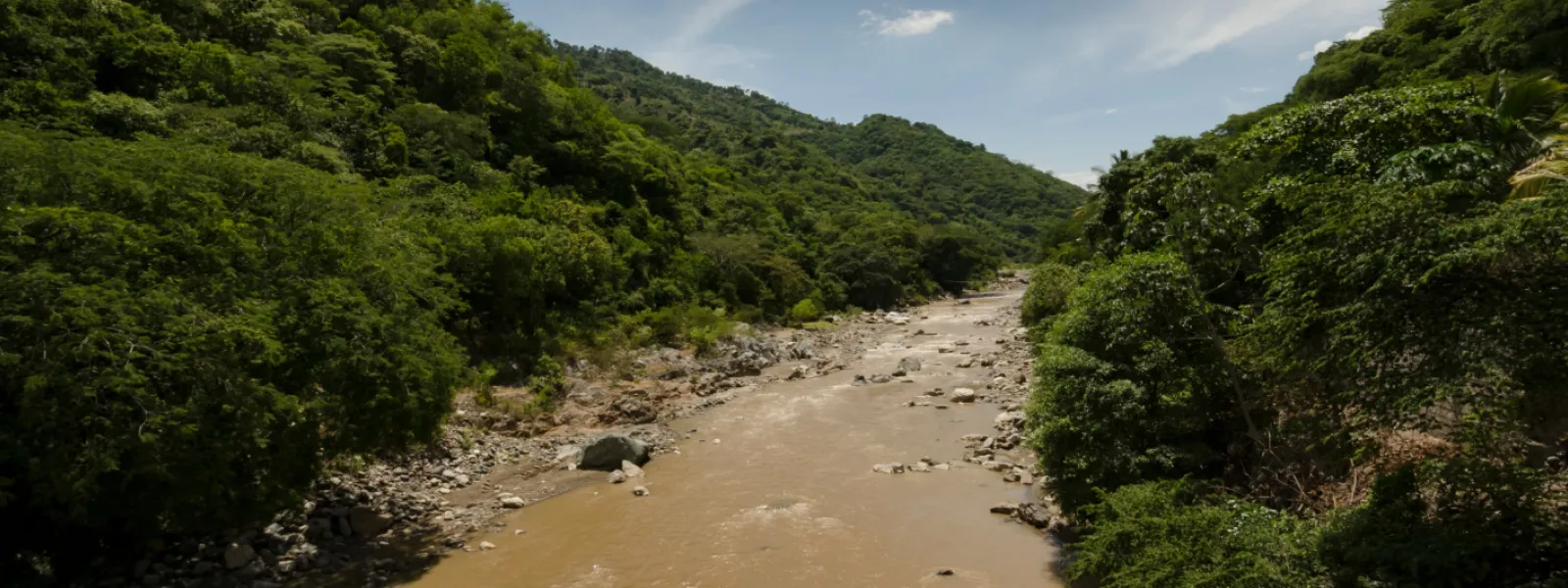
The Motagua River basin—Guatemala’s largest and most important river—is severely polluted with wastewater, solid waste, and other types of debris.
This is a cross-border issue because the Motagua’s polluted waters flow into the Caribbean Sea, reach the coast of Honduras, and threaten the Mesoamerican Reef System.
For decades, this has violated the rights to health, water, development, and a healthy environment of all the people living in the river basin.
In June 2025, the Poqomam Maya community of Santa Cruz Chinautla—supported by AIDA, the Indigenous Peoples’ Law Firm, and allied organizations—achieved an unprecedented legal victory to halt degradation in the basin. In response to the lawsuit it filed, a Guatemalan court ordered the municipality of Chinautla to comply with a series of obligations to curb the pollution of the area’s rivers and soil.
The government's response to the ruling has so far been limited to technical working group meetings. Meanwhile, the community continues to work toward the proper implementation of the ruling and to take other actions to defend its territory and its rights.
Background
The Motagua River, which is 486 km long, flows through 96 municipalities and 14 departments in Guatemala. It originates in Quiché, a department located in the northwest, and empties into the Caribbean Sea.
Polluting activities occur throughout the entire basin, including sub-basins and micro-basins. The largest volume of pollution comes from Guatemala City, the country’s capital, and is carried by the waters of the Las Vacas River, which in turn receives a large amount of waste from the Chinautla River.
The Chinautla River, which flows through the municipality of the same name, carries solid waste from a landfill located in Zone 3 of the capital—where trash from at least 14 municipalities in the department of Guatemala is dumped—as well as sewage generated by some 500,000 people living in the northern part of the capital, which undergoes no prior treatment.
Other sources of pollution include the numerous illegal dumps in the municipality of Chinautla, the waste that private vehicles and garbage trucks dump along the banks of its rivers, as well as the sand-mining companies—which began setting up operations in the area between 1996 and 1997—whose activities weaken the rivers' basins, causing solid waste to be more easily carried away by the river currents.
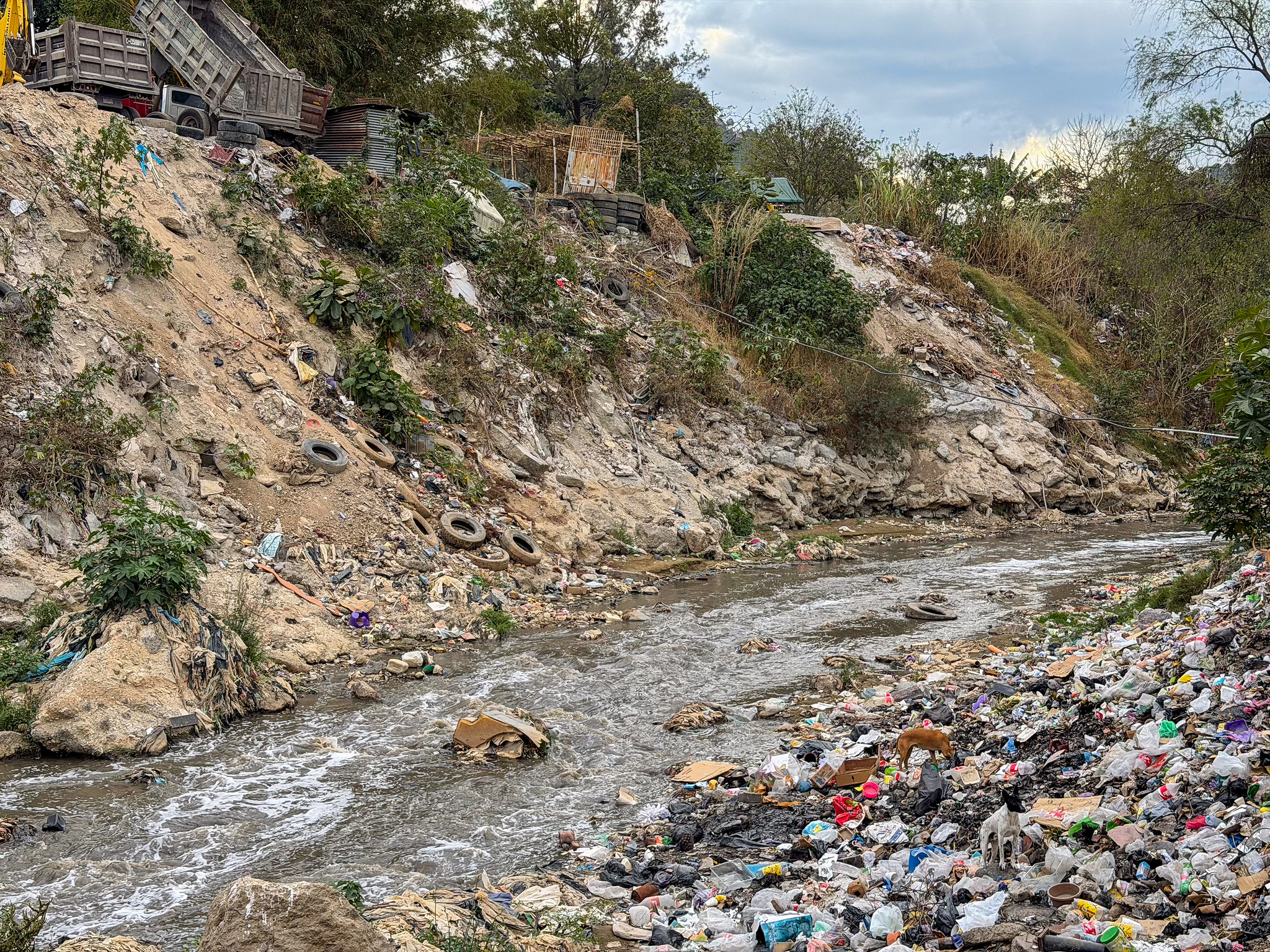
Photo: Mayela Sánchez García.
The situation extends beyond national borders. Every year, the Motagua River discharges some 20,000 metric tons of plastic into the Caribbean Sea, making it one of the rivers that contributes the most plastic pollution to the ocean worldwide, according to estimates contained in a 2025 report by the Inter-American Commission on Human Rights (IACHR).
The river flows into the Mesoamerican Reef at its mouth, so pollution also threatens to degrade one of the largest and most biodiverse transboundary reefs on the planet, which spans the territorial waters of Belize, Guatemala, Honduras, and Mexico.
In addition, the contaminated water reaches the coast of Honduras and spreads into Amatique Bay, located along the eastern coast of Guatemala, affecting the Caribbean Sea.
The roots of this chronic, cross-border problem are structural. Data from the Integrated Environmental Management of the Motagua River Basin project, funded by the United Nations Development Program (UNDP), show that in Guatemala, 66% of municipal solid waste is not collected, and there is no guarantee that the remaining 34% is disposed of properly. Furthermore, of all landfills nationwide, 88.32% are illegal or lack municipal authorization.
In other words, the core issues that need to be addressed are the mismanagement of solid waste and water resources in Guatemala; noncompliance with existing regulations on wastewater discharge and the disposal and treatment of solid waste and residues; and the lack of a water law.
The Poqomam Maya people's quest for justice
The rivers of Santa Cruz Chinautla, a community of the Poqomam Maya people located just twelve kilometers from Guatemala City, have become conduits of pollution that are degrading the Motagua River.
For decades, the local population has seen its health and livelihoods—including pottery, one of the main economic activities and a source of identity—damaged due to the lack of waste management in the municipality of Chinautla and the urban area of the country’s capital, as well as the activities of sand-mining companies.
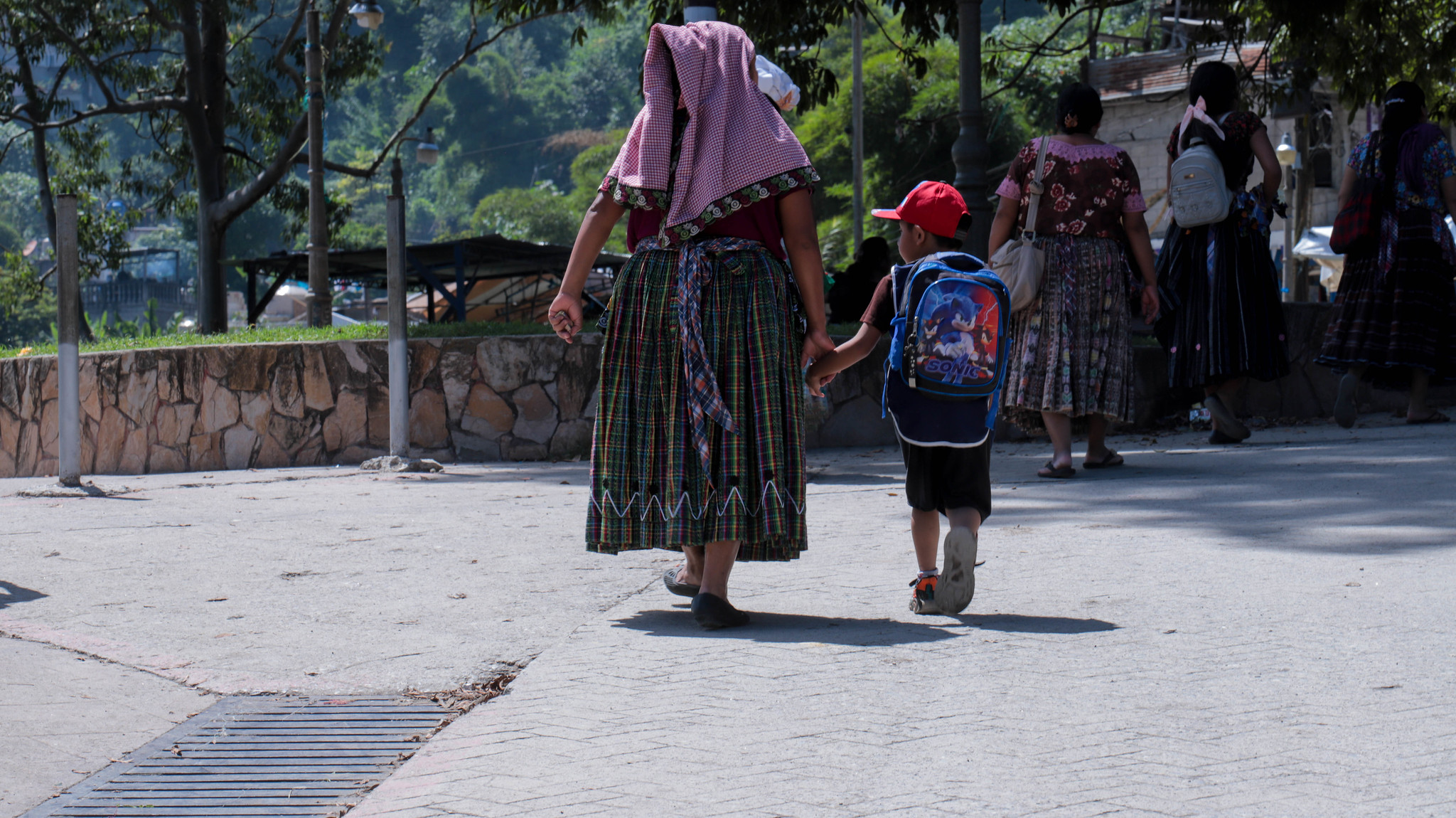
Photo: Mario Winter.
Voices for the Motagua River: Olga Vázquez.
Voices for the Motagua River: Nazario Pascual.
In early 2000, the Maya community organized to stop sand mining on their territory. At that time, the companies held mining permits that remained valid through 2021 and 2022. And although the permits expired, some companies continued to operate after requesting extensions. In June 2022, the indigenous authorities of the Poqomam people began a sit-in protest in front of the Piedrinera San Luis company, which they maintained for four years.
In July 2024, the Special Rapporteur on Economic, Social, Cultural, and Environmental Rights of the IACHR visited Santa Cruz Chinautla. During his visit, traditional authorities and community members spoke about the environmental, water-related, health, economic, and cultural impacts of the pollution in their rivers.
That same year, in October, the community—with support from AIDA, the Indigenous Peoples’ Law Firm, and partner organizations—filed a lawsuit (petition for amparo) against the municipality of Chinautla over its failure to take measures to address the contamination of its rivers and soil caused by improper solid waste management and the existence of illegal landfills.
AIDA’s scientific team, together with local residents and community authorities, collected key information on illegal landfills in the area. This community science initiative supported the litigation by highlighting the severity of the pollution, demonstrating the ongoing use of such practices, and providing evidence of the municipal authorities’ failure to fulfill their legal obligations regarding waste management.
Learn more about this community science initiative.
In June 2025, the Poqomam community won the support of the Guatemalan justice system when a constitutional court ordered the municipality of Chinautla to effectively address the claims in the lawsuit aimed at stopping the pollution of the rivers and soil in Santa Cruz Chinautla.
This is the first time a Guatemalan court has recognized a community's right to a healthy environment and its central role in finding solutions.
Find out the details of the legal victory.
Current situation
Since the ruling was issued, the municipality of Chinautla has held a series of “technical working groups” with representatives from the central government, civil society, and the community. A smaller group of technical experts was later created to develop a work plan with clear goals. Several months have passed without the municipality convening these working groups.
Furthermore, in December 2025, the IACHR noted in its report Human Rights Situation in Guatemala that the Motagua River basin is facing a severe pollution crisis that has had profound impacts on biodiversity and has resulted in systematic violations of the human rights of local communities, including the Maya Poqomam people.
And in May 2026, the Ministry of the Environment and Natural Resources revoked the license of the sand mining company Piedrinera San Luis for "failure to comply with environmental commitments."
AIDA continues to monitor the implementation of the court ruling to ensure the right to a healthy environment for the Poqomam Maya community and all those living in the Motagua River basin. Meanwhile, the residents of Santa Cruz Chinautla remain organized and mobilized to improve their environment and defend their rights.
Related projects
In search of legal protection for Mexico’s reefs
From the coasts of Baja California to the shallows of the Caribbean, Mexico is home to an incredible array of reefs. The coral and rocky reefs found throughout the country are sources of food and potentially life-saving genetic material. They protect people on the coasts from the impacts of storms and hurricanes, stimulate tourism, and provide shelter for a wide variety of plants and animals. Despite their inherent value, Mexico does not yet have an overarching law for reef protection. This vital task is instead governed by a variety of legislation and by international treaties that establish the country’s obligations to preserve these valuable ecosystems. Climate change is one of the most serious threats to reefs. Oceans are becoming warmer and more acidic, conditions that reduce reefs’ capacity to grow and repair themselves. In addition, warmer water disperses the algae that corals feed on, leaving the corals weakened and at risk of death. This month, the Mexican Senate’s Special Climate Change Commission decided to do something about the threats facing corals. They convened a series of meetings to promote the creation of a legislative instrument aimed exclusively at protecting the nation’s many reefs. I participated in these meetings as a representative of AIDA, alongside our colleagues from Wildcoast and scientists, academics, and community members who benefit from the services reefs provide. We drew the Senate’s attention to the serious threats facing reefs, and to the urgency of applying the precautionary principle to guarantee the human right to a healthy environment, which is at risk due to the lack of adequate regulations for reef conservation. To guarantee this right and to protect the oceans against climate change, Mexico has signed international treaties including the American Convention on Human Rights, the Paris Agreement on Climate Change, the Ramsar Convention on Wetlands, and the Inter-American Convention for the Protection and Conservation of Sea Turtles. The Veracruz Reef, an emblematic case Reefs around the country are also being threatened by inadequately planned coastal infrastructure and insufficient environmental impact assessments. This is the case with the expansion of the port of Veracruz, a project that endangers the Veracruz Reef System, the largest coral ecosystem in the Gulf of Mexico. The site was declared a Natural Protected Area in 1992, a priority region for the National Commission for the Knowledge and use of Biodiversity in 2000, a UNESCO biosphere reserve in 2006, and a Ramsar site. Even so, the government reduced the size of that area in 2013 to make way for the port project, violating international conventions such as the Ramsar Convention, under which the Veracruz reef is recognized as a Wetland of International Importance. Learn more about the case in the following video: Hope for Mexico's Marine Heritage We are confident that the Senate initiative will bear fruit and that Mexico will develop a law for the protection of its reefs, and that it will be born from a transparent and participatory process to which we will continue to contribute. To learn more about the topic, see our report The Protection of Coral Reefs in Mexico: Rescuing Marine Biodiversity and its Benefits for Humanity.
Read more
Calling on Chile to protect Patagonia from the risks of the salmon industry
More than half of the salmon farms in Chile’s Magallanes Region are depleting oxygen from sensitive marine waters, suffocating marine life. Civil society organizations filed an administrative complaint and a petition calling on the government to investigate and punish farm operators, and to enforce existing regulations. Santiago, Chile. Civil society organizations filed a complaint today asking the Superintendent of the Environment to investigate damages caused by salmon farms in the Magallanes Region of Southern Patagonia, and to sanction the companies responsible. According to government reports, salmon farms in the area are depleting the water of oxygen, causing a serious threat to marine life. The organizations also launched a citizen’s petition to support the formal complaint. “Salmon farming concessions have been approved in Magallanes without a detailed assessment of the impacts the industry may have on the region,” said Florencia Ortúzar, an attorney with the Interamerican Association for Environmental Defense. “The damages are already occurring: a report by the Comptroller General of the Republic found that, between 2013 and 2015, more than half of the salmon farms in Magallanes created anaerobic conditions, gravely threatening marine life.” Chile is the world’s second largest producer of salmon. The industry, which developed on coasts further north, has now entered the Magallanes region in the southermost tip of the country. The pristine waters there are highly vulnerable to human activity. Magallanes has the largest number of protected natural areas in the country; it shelters such protected species as the blue whale, the sperm whale, the Magellanic penguin, the elephant seal, the leatherback sea turtle, the southern dolphin, and the Chilean dolphin. “Salmon farms are cultivating more fish than the ecosystem can withstand. They are filling sensitive waters with chemicals and antibiotics,” said Francisco Campos-Lopez, director of #RealChile. “Those chemicals, combined with the feces of the animals, cause a dangerous lack of oxygen in the waters, endangering sea life.” NOTE: More information available at aida-americas.org/salmonfarms Press contacts: Florencia Ortúzar, AIDA Attorney, +56 9 7335 3135, [email protected]
Read more
Remembering Robert Moran
It is with great sadness that we share news about the passing of Dr. Robert E. Moran, a distinguished hydrogeologist who was an immense resource in furthering environmental protection globally and a dedicated partner to AIDA. He died May 15 in a car accident while vacationing in Ireland. With over 45 years of experience in water quality monitoring, geochemical, and hydrological work, Dr. Moran was invaluable in the fight for clean water and responsible mining worldwide. His work as an expert on the environmental impacts of mining led him to collaborate with a wide range of actors, from non-governmental organizations and indigenous communities, to private sector and government clients. He was an admirable scientist and a strong defender of environmental rights. Some of Dr. Moran's recent projects in Latin America included: a review of technical issues at the Veladero gold mine in Argentina following a toxic cyanide spill; providing assistance and training to Colombian government officials on coal mine inspection and water quality monitoring; and preparing reports evaluating the environmental impact statements of the Minero Progreso Derivada II project in La Puya, Guatemala. Dr. Moran also conducted reviews of mining operations and their impacts in Peru, Bolivia, Colombia, and Honduras, as well as in Africa, Europe, Central Asia, the Middle East, and the United States. He dedicated his life to helping others understand and better evaluate the true costs of mining activities. Dr. Moran will be sorely missed by many in the environmental movement and people everywhere whom his life touched. We honor and thank him for all of his magnificent work to defend our planet.
Read more