
Project
Shutterstock.
Pollution of the Motagua River in Guatemala: The Poqomam Maya people’s quest for environmental justice
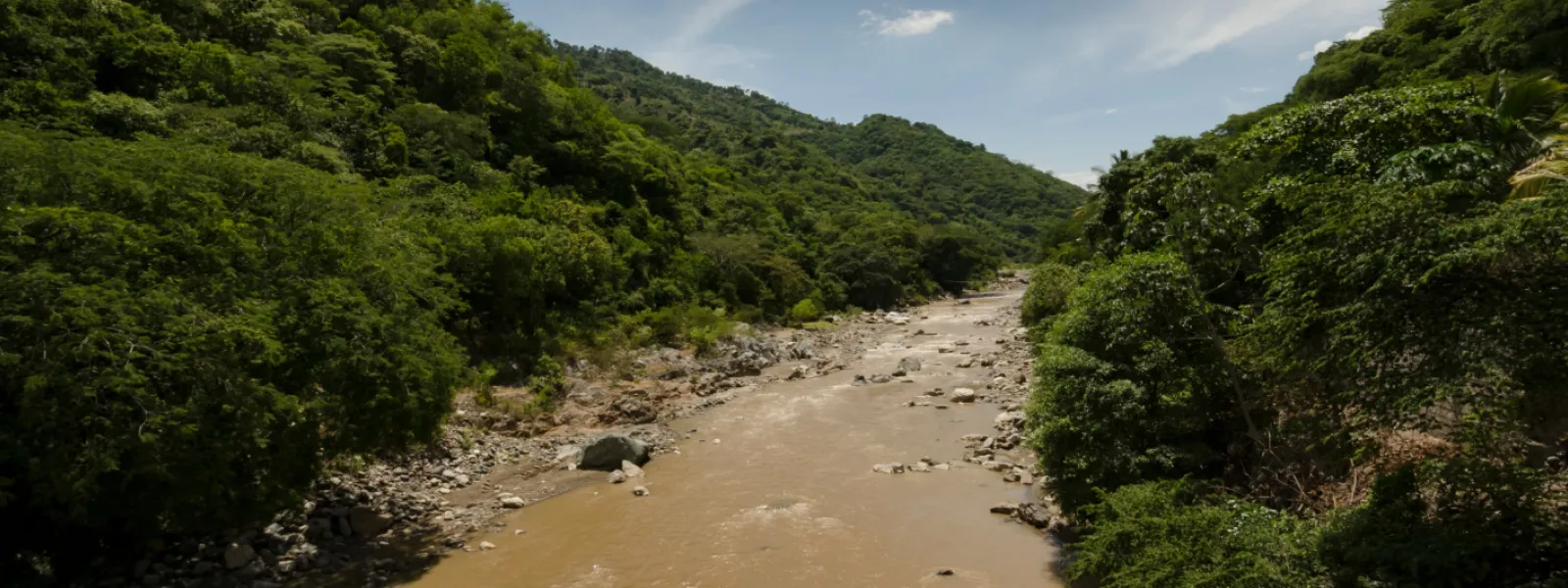
The Motagua River basin—Guatemala’s largest and most important river—is severely polluted with wastewater, solid waste, and other types of debris.
This is a cross-border issue because the Motagua’s polluted waters flow into the Caribbean Sea, reach the coast of Honduras, and threaten the Mesoamerican Reef System.
For decades, this has violated the rights to health, water, development, and a healthy environment of all the people living in the river basin.
In June 2025, the Poqomam Maya community of Santa Cruz Chinautla—supported by AIDA, the Indigenous Peoples’ Law Firm, and allied organizations—achieved an unprecedented legal victory to halt degradation in the basin. In response to the lawsuit it filed, a Guatemalan court ordered the municipality of Chinautla to comply with a series of obligations to curb the pollution of the area’s rivers and soil.
The government's response to the ruling has so far been limited to technical working group meetings. Meanwhile, the community continues to work toward the proper implementation of the ruling and to take other actions to defend its territory and its rights.
Background
The Motagua River, which is 486 km long, flows through 96 municipalities and 14 departments in Guatemala. It originates in Quiché, a department located in the northwest, and empties into the Caribbean Sea.
Polluting activities occur throughout the entire basin, including sub-basins and micro-basins. The largest volume of pollution comes from Guatemala City, the country’s capital, and is carried by the waters of the Las Vacas River, which in turn receives a large amount of waste from the Chinautla River.
The Chinautla River, which flows through the municipality of the same name, carries solid waste from a landfill located in Zone 3 of the capital—where trash from at least 14 municipalities in the department of Guatemala is dumped—as well as sewage generated by some 500,000 people living in the northern part of the capital, which undergoes no prior treatment.
Other sources of pollution include the numerous illegal dumps in the municipality of Chinautla, the waste that private vehicles and garbage trucks dump along the banks of its rivers, as well as the sand-mining companies—which began setting up operations in the area between 1996 and 1997—whose activities weaken the rivers' basins, causing solid waste to be more easily carried away by the river currents.
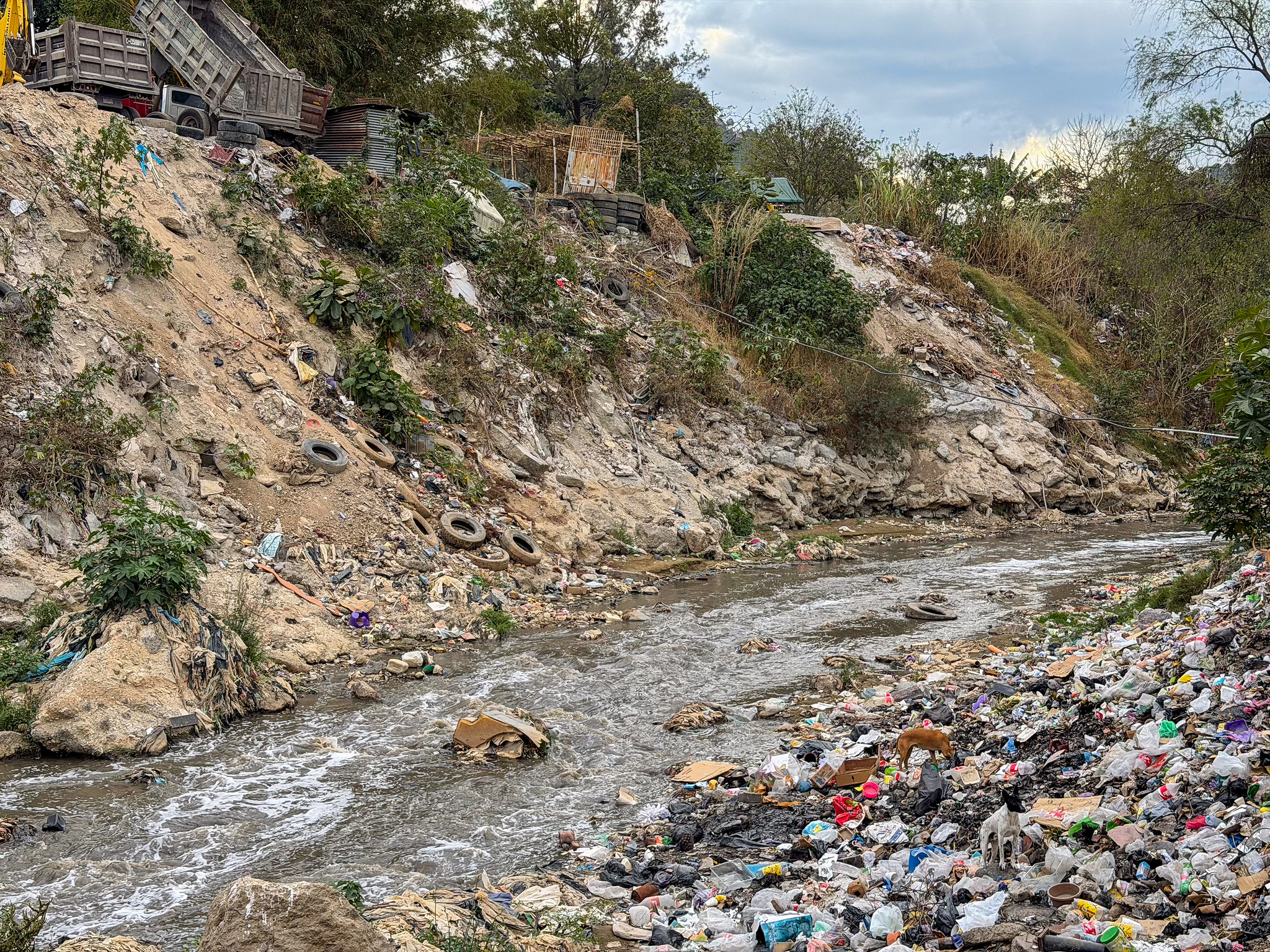
Photo: Mayela Sánchez García.
The situation extends beyond national borders. Every year, the Motagua River discharges some 20,000 metric tons of plastic into the Caribbean Sea, making it one of the rivers that contributes the most plastic pollution to the ocean worldwide, according to estimates contained in a 2025 report by the Inter-American Commission on Human Rights (IACHR).
The river flows into the Mesoamerican Reef at its mouth, so pollution also threatens to degrade one of the largest and most biodiverse transboundary reefs on the planet, which spans the territorial waters of Belize, Guatemala, Honduras, and Mexico.
In addition, the contaminated water reaches the coast of Honduras and spreads into Amatique Bay, located along the eastern coast of Guatemala, affecting the Caribbean Sea.
The roots of this chronic, cross-border problem are structural. Data from the Integrated Environmental Management of the Motagua River Basin project, funded by the United Nations Development Program (UNDP), show that in Guatemala, 66% of municipal solid waste is not collected, and there is no guarantee that the remaining 34% is disposed of properly. Furthermore, of all landfills nationwide, 88.32% are illegal or lack municipal authorization.
In other words, the core issues that need to be addressed are the mismanagement of solid waste and water resources in Guatemala; noncompliance with existing regulations on wastewater discharge and the disposal and treatment of solid waste and residues; and the lack of a water law.
The Poqomam Maya people's quest for justice
The rivers of Santa Cruz Chinautla, a community of the Poqomam Maya people located just twelve kilometers from Guatemala City, have become conduits of pollution that are degrading the Motagua River.
For decades, the local population has seen its health and livelihoods—including pottery, one of the main economic activities and a source of identity—damaged due to the lack of waste management in the municipality of Chinautla and the urban area of the country’s capital, as well as the activities of sand-mining companies.
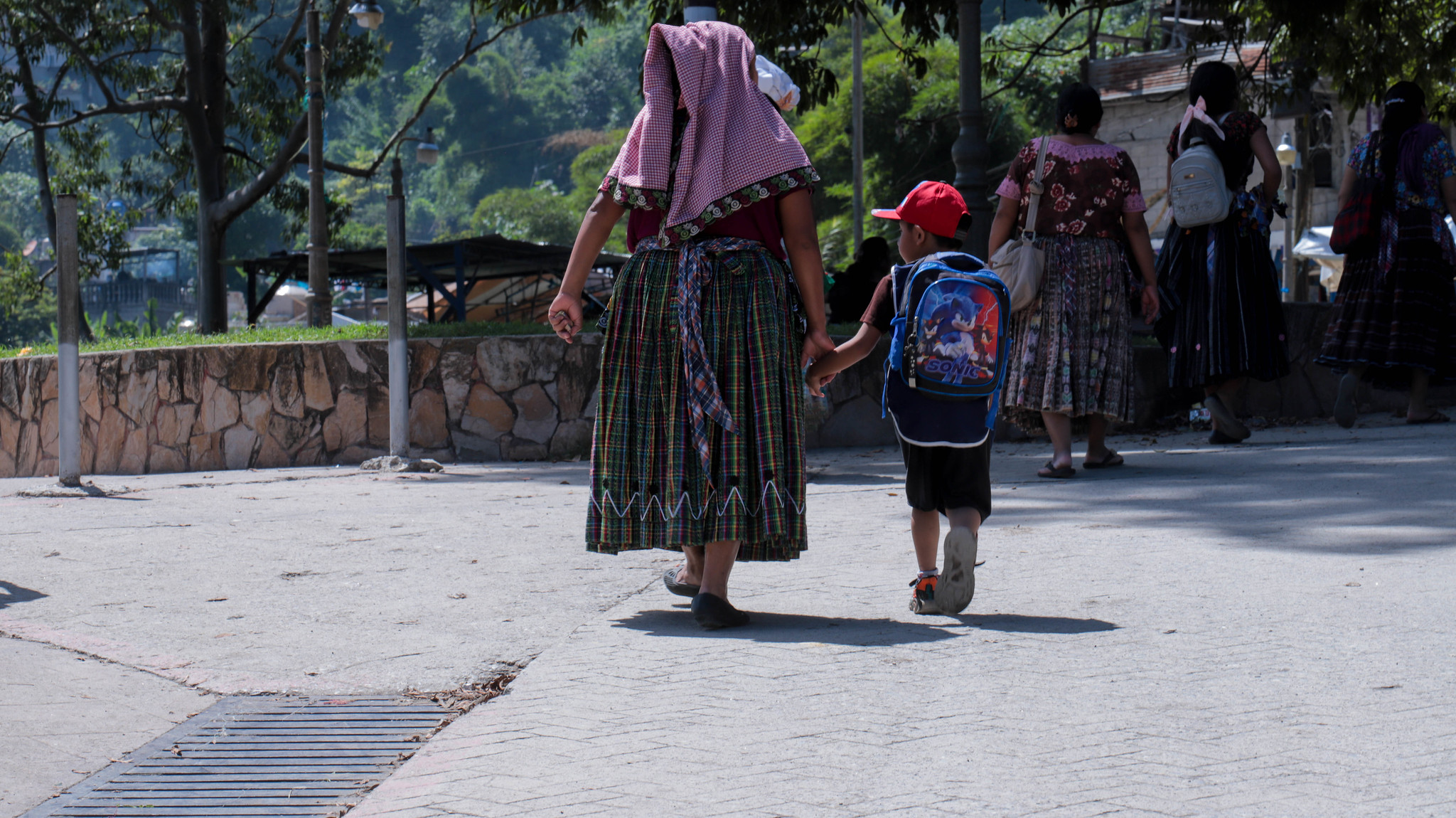
Photo: Mario Winter.
Voices for the Motagua River: Olga Vázquez.
Voices for the Motagua River: Nazario Pascual.
In early 2000, the Maya community organized to stop sand mining on their territory. At that time, the companies held mining permits that remained valid through 2021 and 2022. And although the permits expired, some companies continued to operate after requesting extensions. In June 2022, the indigenous authorities of the Poqomam people began a sit-in protest in front of the Piedrinera San Luis company, which they maintained for four years.
In July 2024, the Special Rapporteur on Economic, Social, Cultural, and Environmental Rights of the IACHR visited Santa Cruz Chinautla. During his visit, traditional authorities and community members spoke about the environmental, water-related, health, economic, and cultural impacts of the pollution in their rivers.
That same year, in October, the community—with support from AIDA, the Indigenous Peoples’ Law Firm, and partner organizations—filed a lawsuit (petition for amparo) against the municipality of Chinautla over its failure to take measures to address the contamination of its rivers and soil caused by improper solid waste management and the existence of illegal landfills.
AIDA’s scientific team, together with local residents and community authorities, collected key information on illegal landfills in the area. This community science initiative supported the litigation by highlighting the severity of the pollution, demonstrating the ongoing use of such practices, and providing evidence of the municipal authorities’ failure to fulfill their legal obligations regarding waste management.
Learn more about this community science initiative.
In June 2025, the Poqomam community won the support of the Guatemalan justice system when a constitutional court ordered the municipality of Chinautla to effectively address the claims in the lawsuit aimed at stopping the pollution of the rivers and soil in Santa Cruz Chinautla.
This is the first time a Guatemalan court has recognized a community's right to a healthy environment and its central role in finding solutions.
Find out the details of the legal victory.
Current situation
Since the ruling was issued, the municipality of Chinautla has held a series of “technical working groups” with representatives from the central government, civil society, and the community. A smaller group of technical experts was later created to develop a work plan with clear goals. Several months have passed without the municipality convening these working groups.
Furthermore, in December 2025, the IACHR noted in its report Human Rights Situation in Guatemala that the Motagua River basin is facing a severe pollution crisis that has had profound impacts on biodiversity and has resulted in systematic violations of the human rights of local communities, including the Maya Poqomam people.
And in May 2026, the Ministry of the Environment and Natural Resources revoked the license of the sand mining company Piedrinera San Luis for "failure to comply with environmental commitments."
AIDA continues to monitor the implementation of the court ruling to ensure the right to a healthy environment for the Poqomam Maya community and all those living in the Motagua River basin. Meanwhile, the residents of Santa Cruz Chinautla remain organized and mobilized to improve their environment and defend their rights.
Related projects

COP20: It’s All On Our Shoulders Now
ECO/Climate Action Network We are very happy to be in Lima, and ECO is ready to get right to it. COP20 needs to deliver on enough confidence building measures to ensure climate action and a successful outcome from next year’s COP in Paris. The wheels have already started turning: The Peruvian COP presidency has shown commitment and substantial effort to guide the negotiations onto the right track. The US-China climate announcement, on the heels of similar action by the EU, has injected positive impetus into the political aspect of the negotiations – and is pressuring significant laggards and defaulters, who can no longer claim inaction by the G2 to wiggle out of doing their part. The IPCC is shining clear light on the latest science, pointing urgently to deeper climate action as well as the fast-rising costs of delay. The GCF is seeing some light at the dim end of the climate finance tunnel with pledges at $9.7 billion for initial capitalization – though that’s welcome, it must not distract from the pressing need to scale up finance within the new agreement. Are these announcements and developments enough to create the right confidence building measures across countries, cement the foundation for greater political will and achieve success in Paris? ECO surely hopes so – but let’s be clear, this opening round of mitigation announcements must not be a resting place but rather a starting point that Parties will broaden and expand. The agreement in Paris is going to rest on three key decisions here in Lima: the elements of the 2015 agreement, the iNDC upfront information requirements, and ways to ramp up pre-2020 ambition. These outcomes are going to define the contours of the new global agreement. So let’s look a bit closer. The elements text must include a long-term goal of phasing out all fossil fuel emissions and phasing in 100% renewable energy as early as possible, but not later than 2050. We also expect to see goals for public finance along with a robust and honest MRV regime for them; a global adaptation goal that enables adaptation to be mainstreamed; and a strengthened two-year work plan to immediately operationalize the Warsaw loss and damage mechanism and to ensure that loss and damage has its appropriate place within the 2015 agreement. Not so easy, right? Well, don’t worry, as always, ECO is here to help. And with that in mind, we also look forward to seeing the inclusion of an enhanced role for civil society in the text. To be clear, we have high hopes for the iNDC text. The iNDCs should include mitigation with regular 5-year cycles of contributions, starting with countries putting forward their contributions for the 2020-2025 cycle, provision and mobilization of finance as part of countries’ fair share of the global effort, and voluntary adaptation contributions. Not only that, all current and future contributions must undergo a sound, robust equity and adequacy assessment phase to help drive up ambition and ensure that low ambition is not locked in by any country. The first round of iNDCs will set the tone for the future. We’ve really got to get it right on this one – it is no exaggeration to say the future of human civilization is weighing on all our shoulders. And every step counts. The effectiveness of the post-2020 agreement to be reached in Paris next year depends on the progress we make between now and 2020. On pre-2020 finance it’s simple: developed countries have to present a credible roadmap on how they are going to meet their $100 billion promise, deliver additional pledges to the GCF (this means you, Australia, Austria, Belgium, Iceland and Ireland) and also not let the Adaptation Fund dry up. We need finance and a full set of means of implementation and support to unlock untapped potential in countries and sectors that can deliver greater ambition for reducing emissions, as well as assisting vulnerable communities that are already facing impacts from climate change. On mitigation, what has the latest IPCC report taught us? All countries need to increase their pre-2020 mitigation commitments, and deliver on them through real mitigation actions. As session after session has shown, climate impacts do not stick to UNFCCC timelines; the atmosphere sees what we do, not what we think. The pressure is on but ECO is confident we can respond. We’ve got a lot of work to do, and there is no time to lose. Archivado en: English
Read moreWelcome!
Each year, representatives of a variety of nations unite with one purpose: to spur international action to combat climate change. However, in the 20 years that these meetings have been taking place, the international community has yet to reach a definitive agreement. The topics covered are many, but the most important demands are that the nations commit to reducing their greenhouse gas emissions, and that they assist in the creation of a joint economic fund that will help to mitigate the impacts of climate change in developing countries. With the purpose of informing and representing civil society, AIDA‘s team will be present in Lima to take part in the activities of the COP20 and the People’s Summit. We will be closely following the themes of climate finance, the Green Climate Fund, human rights and climate change, dams and fracking. Thank you for following along with us! Archivado en: English, Noticias
Read more
Revealing the Impact of Development on Human Rights and the Environment
"There we were – men and women, boys and girls, elders and community leaders – who dared to reject the burning of our homes on the river’s edge, the theft and loss of our things, the mistreatment, the insults, the humiliation from the police, the Army and public companies of Medellín, who forcibly emptied the river banks to make way for development." With these words, Isabel Cristina Zuleta gave testimony before the Inter-American Commission on Human Rights last month, describing the situation that she and thousands of Colombians have been suffering through. Zuleta, the leader of Movimiento Rios Vivos (Living Rivers Movement), is a victim of forced displacement – caused by the Hidroituango hydroelectric project in Colombia – and she is not alone. AIDA’s Co-Executive Director Astrid Puentes participated in the hearing alongside Rios Vivos, Tierra Digna, Asoquimbo, Comisión Intereclesial de Justicia y Paz, Corporación Jurídica Libertad, and other partner organizations from Colombia. She argued before the Commission that, in Colombia, forced displacement caused by development projects, such as mines and dams, is not recognized as a human rights violation by the State, which leaves affected communities unprotected. During the hearing Puentes introduced the three primary causes of forced displacement from these projects: the close relationship between armed conflict and major development projects; the flexibility and violation of rules in their authorization and implementation; and the direct impacts of their operation. She asked the Commission to urge the Colombian State to guarantee rights to the victims, repair damages, and take appropriate measures to prevent displacement in the future. Puentes described human rights violations caused by specific projects, such as El Quimbo dam, which displaced hundreds of families in Huila Department, and coal mines in La Jagua de Ibirico, in Cesar Department, where air pollution displaced entire communities. The inadequate implementation of development projects in Colombia, and in the region, also violates Economic, Social and Cultural Rights (ESCR), especially the right to a healthy environment. In this regard, AIDA and organizations from the region participated in a hearing called by the Commission to analyze the situation of ESCR on the continent. In it, Maria José Veramendi Villa, a senior AIDA attorney, noted that States mainly fail to protect the right to a healthy environment by implementing mining, energy, and infrastructure projects. The problem has only worsened in recent years. "The Commission has found different manifestations of this problem over the course of at least 40 hearings, conducted over the last decade, which have illustrated the serious territorial, cultural, and environmental conflicts created by the violations of ESCR," said Veramendi during the hearing. We need an Inter-American Human Rights Commission that is firm and decided in its position towards development projects that violate human rights and that brings justice to those who cannot find it in their countries.
Read more