
Project
Shutterstock.
Pollution of the Motagua River in Guatemala: The Poqomam Maya people’s quest for environmental justice
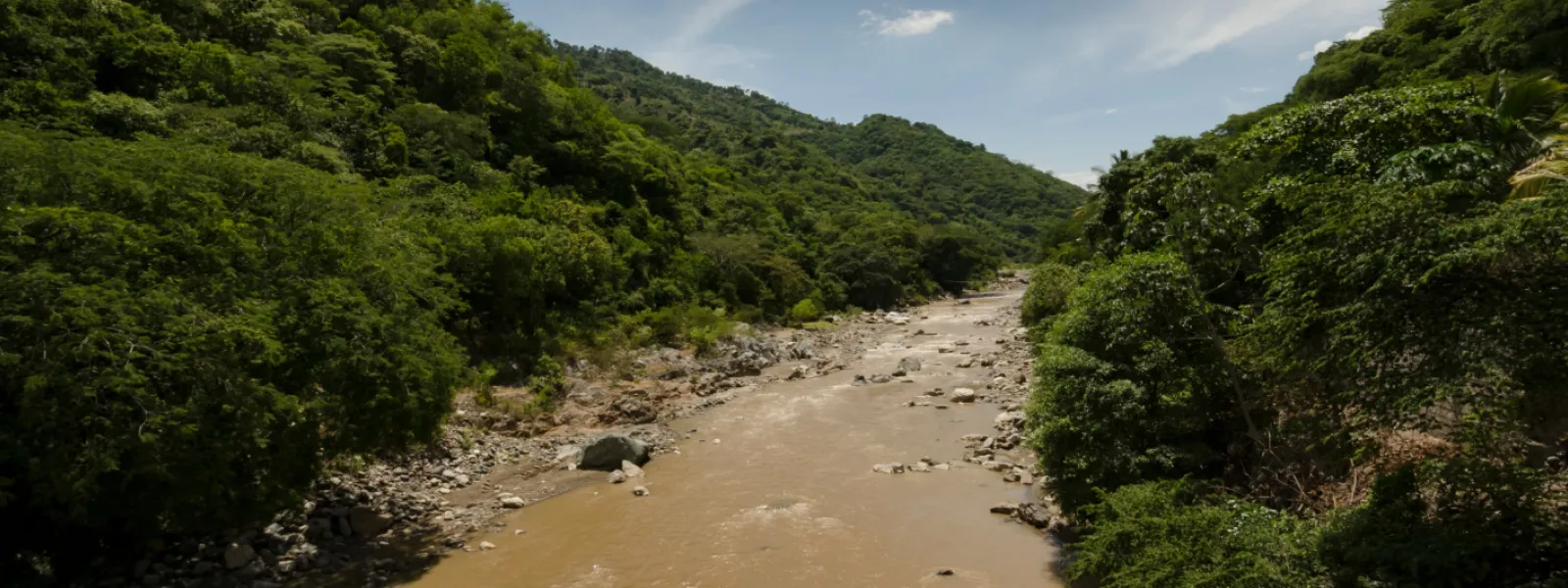
The Motagua River basin—Guatemala’s largest and most important river—is severely polluted with wastewater, solid waste, and other types of debris.
This is a cross-border issue because the Motagua’s polluted waters flow into the Caribbean Sea, reach the coast of Honduras, and threaten the Mesoamerican Reef System.
For decades, this has violated the rights to health, water, development, and a healthy environment of all the people living in the river basin.
In June 2025, the Poqomam Maya community of Santa Cruz Chinautla—supported by AIDA, the Indigenous Peoples’ Law Firm, and allied organizations—achieved an unprecedented legal victory to halt degradation in the basin. In response to the lawsuit it filed, a Guatemalan court ordered the municipality of Chinautla to comply with a series of obligations to curb the pollution of the area’s rivers and soil.
The government's response to the ruling has so far been limited to technical working group meetings. Meanwhile, the community continues to work toward the proper implementation of the ruling and to take other actions to defend its territory and its rights.
Background
The Motagua River, which is 486 km long, flows through 96 municipalities and 14 departments in Guatemala. It originates in Quiché, a department located in the northwest, and empties into the Caribbean Sea.
Polluting activities occur throughout the entire basin, including sub-basins and micro-basins. The largest volume of pollution comes from Guatemala City, the country’s capital, and is carried by the waters of the Las Vacas River, which in turn receives a large amount of waste from the Chinautla River.
The Chinautla River, which flows through the municipality of the same name, carries solid waste from a landfill located in Zone 3 of the capital—where trash from at least 14 municipalities in the department of Guatemala is dumped—as well as sewage generated by some 500,000 people living in the northern part of the capital, which undergoes no prior treatment.
Other sources of pollution include the numerous illegal dumps in the municipality of Chinautla, the waste that private vehicles and garbage trucks dump along the banks of its rivers, as well as the sand-mining companies—which began setting up operations in the area between 1996 and 1997—whose activities weaken the rivers' basins, causing solid waste to be more easily carried away by the river currents.
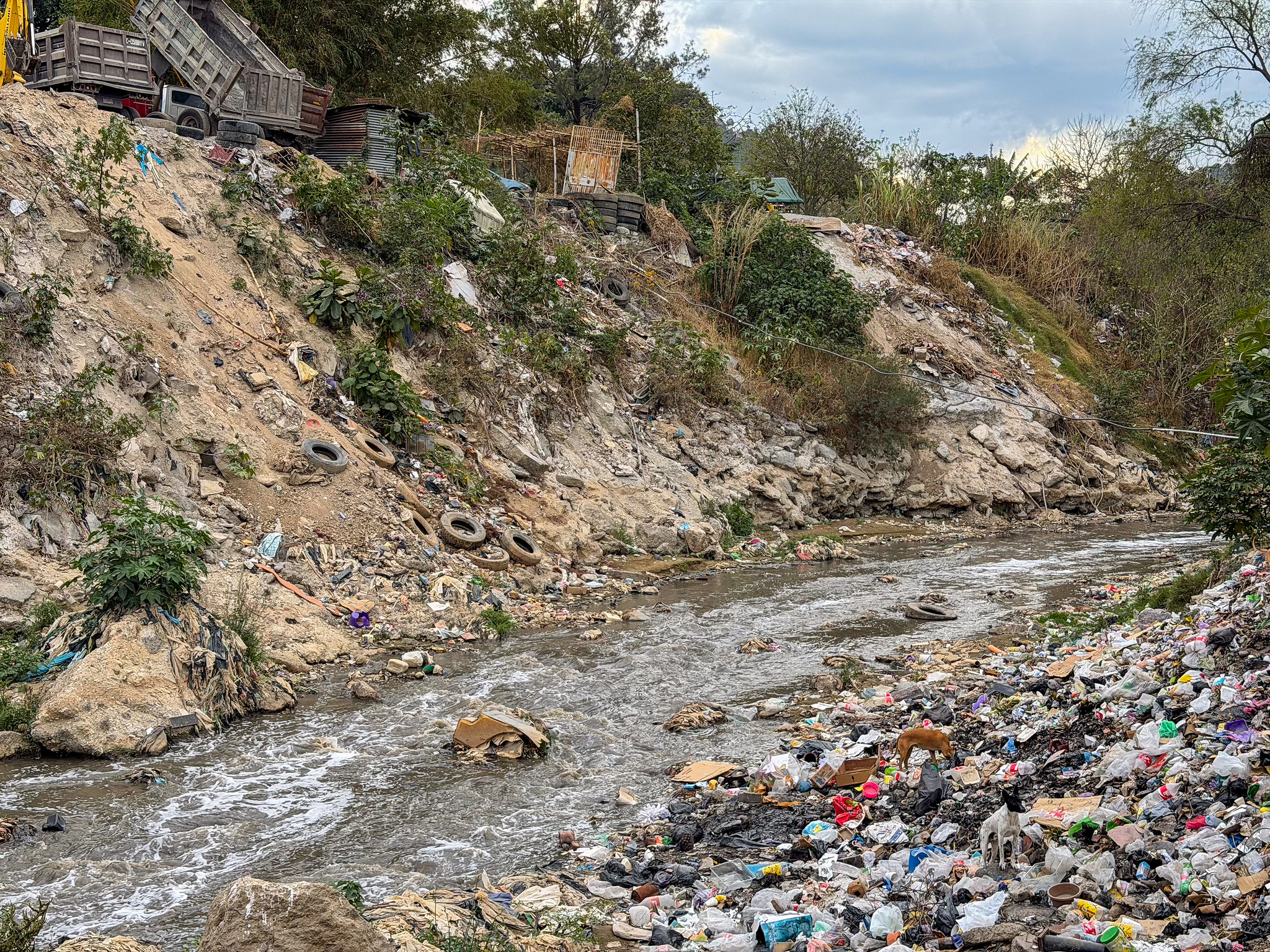
Photo: Mayela Sánchez García.
The situation extends beyond national borders. Every year, the Motagua River discharges some 20,000 metric tons of plastic into the Caribbean Sea, making it one of the rivers that contributes the most plastic pollution to the ocean worldwide, according to estimates contained in a 2025 report by the Inter-American Commission on Human Rights (IACHR).
The river flows into the Mesoamerican Reef at its mouth, so pollution also threatens to degrade one of the largest and most biodiverse transboundary reefs on the planet, which spans the territorial waters of Belize, Guatemala, Honduras, and Mexico.
In addition, the contaminated water reaches the coast of Honduras and spreads into Amatique Bay, located along the eastern coast of Guatemala, affecting the Caribbean Sea.
The roots of this chronic, cross-border problem are structural. Data from the Integrated Environmental Management of the Motagua River Basin project, funded by the United Nations Development Program (UNDP), show that in Guatemala, 66% of municipal solid waste is not collected, and there is no guarantee that the remaining 34% is disposed of properly. Furthermore, of all landfills nationwide, 88.32% are illegal or lack municipal authorization.
In other words, the core issues that need to be addressed are the mismanagement of solid waste and water resources in Guatemala; noncompliance with existing regulations on wastewater discharge and the disposal and treatment of solid waste and residues; and the lack of a water law.
The Poqomam Maya people's quest for justice
The rivers of Santa Cruz Chinautla, a community of the Poqomam Maya people located just twelve kilometers from Guatemala City, have become conduits of pollution that are degrading the Motagua River.
For decades, the local population has seen its health and livelihoods—including pottery, one of the main economic activities and a source of identity—damaged due to the lack of waste management in the municipality of Chinautla and the urban area of the country’s capital, as well as the activities of sand-mining companies.
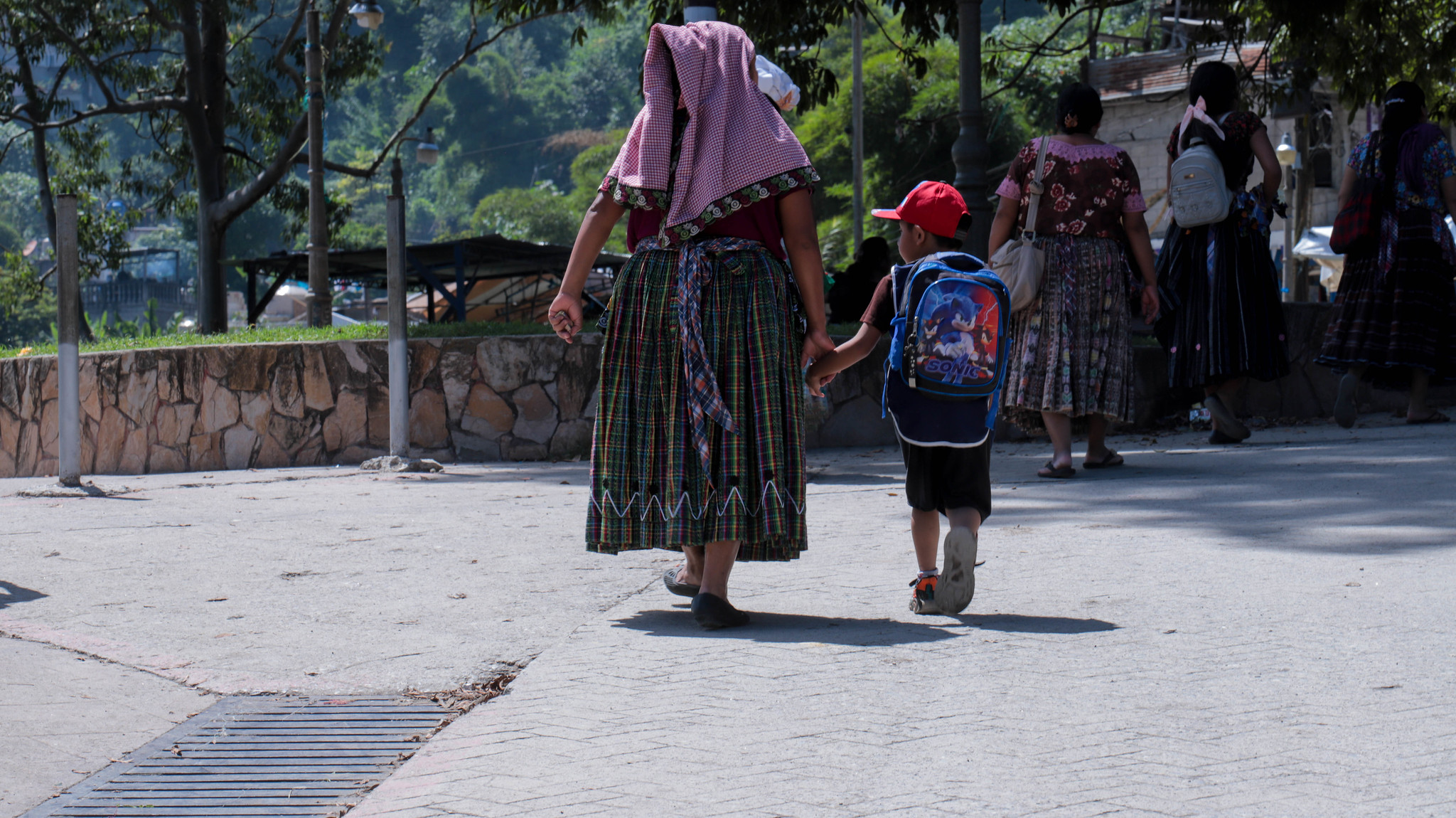
Photo: Mario Winter.
Voices for the Motagua River: Olga Vázquez.
Voices for the Motagua River: Nazario Pascual.
In early 2000, the Maya community organized to stop sand mining on their territory. At that time, the companies held mining permits that remained valid through 2021 and 2022. And although the permits expired, some companies continued to operate after requesting extensions. In June 2022, the indigenous authorities of the Poqomam people began a sit-in protest in front of the Piedrinera San Luis company, which they maintained for four years.
In July 2024, the Special Rapporteur on Economic, Social, Cultural, and Environmental Rights of the IACHR visited Santa Cruz Chinautla. During his visit, traditional authorities and community members spoke about the environmental, water-related, health, economic, and cultural impacts of the pollution in their rivers.
That same year, in October, the community—with support from AIDA, the Indigenous Peoples’ Law Firm, and partner organizations—filed a lawsuit (petition for amparo) against the municipality of Chinautla over its failure to take measures to address the contamination of its rivers and soil caused by improper solid waste management and the existence of illegal landfills.
AIDA’s scientific team, together with local residents and community authorities, collected key information on illegal landfills in the area. This community science initiative supported the litigation by highlighting the severity of the pollution, demonstrating the ongoing use of such practices, and providing evidence of the municipal authorities’ failure to fulfill their legal obligations regarding waste management.
Learn more about this community science initiative.
In June 2025, the Poqomam community won the support of the Guatemalan justice system when a constitutional court ordered the municipality of Chinautla to effectively address the claims in the lawsuit aimed at stopping the pollution of the rivers and soil in Santa Cruz Chinautla.
This is the first time a Guatemalan court has recognized a community's right to a healthy environment and its central role in finding solutions.
Find out the details of the legal victory.
Current situation
Since the ruling was issued, the municipality of Chinautla has held a series of “technical working groups” with representatives from the central government, civil society, and the community. A smaller group of technical experts was later created to develop a work plan with clear goals. Several months have passed without the municipality convening these working groups.
Furthermore, in December 2025, the IACHR noted in its report Human Rights Situation in Guatemala that the Motagua River basin is facing a severe pollution crisis that has had profound impacts on biodiversity and has resulted in systematic violations of the human rights of local communities, including the Maya Poqomam people.
And in May 2026, the Ministry of the Environment and Natural Resources revoked the license of the sand mining company Piedrinera San Luis for "failure to comply with environmental commitments."
AIDA continues to monitor the implementation of the court ruling to ensure the right to a healthy environment for the Poqomam Maya community and all those living in the Motagua River basin. Meanwhile, the residents of Santa Cruz Chinautla remain organized and mobilized to improve their environment and defend their rights.
Related projects
COP20: Fracking, an experimental, hazardous and contaminating technique
During an event at the People’s Summit on Climate Change, a parallel event to the COP20 in Lima, fracking took center stage. Activists expressed their central argument about the controversial oil extraction method: that fracking is an experimental technique that involves serious risks to health and the environment, including the worsening of climate change. Fracking, or hydraulic fracturing, is an extreme method of exploration and/or exploitation of unconventional oil and gas (as both shale and tight gas). Special drills bore holes vertically into the subsoil and then horizontally into rock formations. Drill teams inject a mixture of water, sand, and chemicals at high pressure to fracture the rock, releasing trapped gas and oil. "These chemicals have unknown effects due to contact with elements of the subsoil," explained Eduardo D’elia, petroleum engineer and member of the Citizens Environmental Assembly of Rio Gallegos in Argentina, during Fracking: A Challenge for Latin America, organized by the Heinrich Böll Foundation in the People's Summit. "The fracturing of horizontal wells is highly complex and unpredictable, so this makes fracking an experimental technique." Fracking affects people in a number of unfortunate ways: the massive use of water (from 9 to 29 million liters of water per well) reduces availability of fresh water for drinking water, agriculture or other needs; fracking fluids can contaminate surface and groundwaters; the chemicals used may cause cancer, allergies, and malformation, among other diseases. Aroa de la Fuente, member of FUNDAR and the Mexican Alliance Against Fracking, made it clear that fracking is not an option for confronting climate change. She said that in hydraulic fracturing projects, up to eight percent of the natural gas (methane) produced escapes directly into the atmosphere. And methane holds a global warming potential 25 times that of carbon dioxide. "In 20 years, the climate impact of electricity generated by fracked gas would be higher than 20 percent of the impact of coal-fired electric generation," she stated. Argentina, Bolivia, Colombia and Mexico, among other Latin American countries, are intending to develop fracking broadly in coming years. Attendees at the People’s Summit wondered, "What can people do in the face of these hazardous plans?" Ariel Perez Castellón, an attorney with AIDA, emphasized the existence of legal tools designed to safeguard human health and the environment against fracking. The first, he said, is the precautionary principle, which is recognized in international law and which States and civil society should apply to address the threats of fracking. This principle establishes that "where there are threats of serious or irreversible damage, lack of full scientific certainty shall not be used as a reason for postponing cost-effective measures to prevent environmental degradation". [1] This means that when in doubt about the occurrence, scope, or magnitude of severe environmental damage, States must take proactive and effective measures to prevent such damage. "Based in this principle, States have three obligations related to fracking: to generate broad, clear and impartial information regarding this activity and its impacts; to protect the environment and the people with a moratorium on fracking activities, until there is a demonstration of its innocuous development; and to promote opportunities for public debate about fracking", Pérez said. Attendees in Lima stressed that social mobilization is key in supporting the legal strategies against fracking. Various civil society organizations within Latin American spoke of their efforts to promote public discussions, disseminate information in their communities, and take the necessary steps to prevent the damage that fracking may bring to their countries. In recent times, these organizations are starting to share experiences and articulate advocacy efforts within the region. On the occasion of COP20, 80 Latin American organizations issued a statement (text in Spanish) warning that fracking will have disastrous consequences for the environment and the population of Latin America, and that it will worsen climate change. The organizations asked their national governments to "prevent the use of hydraulic fracturing in their territory under the state obligation of the principle of precaution, and ensure the protection of fresh water resources and their peoples' health." [1] Rio Declaration on the Environment and Development of 1992, principle 15
Read moreCOP 20: And what about the effective use of climate finance?
The amount of money required to confront the effects of extreme climate changes is much larger than currently sought in global negotiations. Clearly more resources are needed, but it is also important to track the effective use of climate finance now being mobipzed. "We must recognize the funding gap for adaptation programming," said Annaka Peterson Carvalho of Oxfam America. She was a panel member Wednesday at a COP20 event entitled, A fair and accountable cpmate finance regime: Confronting the contentious issues. In her opinion, we must determine, on the basis of science, the real costs that countries must rightfully bear, and we need a responsible finance system to determine how much money each country needs and where it will come from. Sandra Guzmán, General Coordinator of the Cpmate Finance Group of Latin America and the Caribbean (GFLAC), agreed that while it is necessary to have more resources for the fight, it’s also necessary to use them effectively. "It’s not just about asking for more money," she said. "We must change priorities at a national level to distribute funding by reassigning it to activities that allow for reduced emissions." Guzmán explained that the Climate Finance Group has developed a methodology to know how much money each country receives, and how much they spend in deapng with climate change. Their analysis encompasses many activities, including some that are not traditionally labeled as relating to cpmate change. She identified five challenges in the task of tracking the use of cpmate finance: Transparency and access to information; Definition of the criteria of climate finance; Institutional structure and communication between different institutions; Public participation in the evaluation of projects; and Better methodology for monitoring, reporting, and verification to analyze the effective use of the money. The experience of the Institute for Climate and Sustainable Cities (iCSC) in the Philippines demonstrates that accountability on climate finance is “everybody’s business,” according its Executive Director, Red Constantino. The Institute tracks not only committed funding for adaptation, but also how it is channeled locally. The work that Constantino has done has enabled him to identify difficulties in apgning funding with the real needs and priorities of vulnerable communities; provide limited opportunities to involve communities in decision-making about adaptation; and understand that while money flows, it is not necessarily used efficiently or completely. Andrea Rodríguez, senior lawyer at AIDA, also referred to the importance of ensuring that climate change programs and projects meet the requirements of individual countries and are directed by them. To be effective, she said, the new climate regime must find ways for countries to monitor climate finance, learn from the experiences of other institutions, and reallocate their resources to be effective. "Climate finance responds to a specific need, it is not general assistance for development," Rodríguez added. "Public participation is central to the process, and if we know how much money we need and how to use it, we will know how much to ask for in global negotiations. In this sense, Constantino highlighted coordination between local and national levels, between governments and civil society. For more information from COP20 and to post comments, visit our interactive blog at aida-cop.org
Read more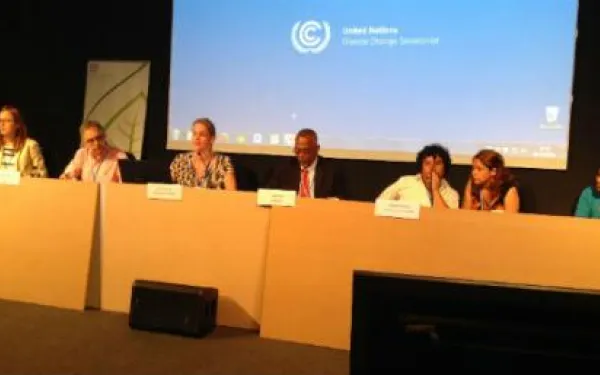
COP20: Protecting human rights in all climate actions
By Víctor Quintanilla, AIDA Communications Coordinator, @vico_qs All countries have an obligation to fight climate change. But they must also protect the human rights of their people. The fact that officially recognized clean development projects aimed at combating climate change often cause grave human rights violations was discussed Tuesday at a side event at the COP in Lima. Co-hosted by AIDA, the p for International Environmental Law (CIEL), and Carbon Market Watch, the side event asked the question, "How can the lessons learned from the Clean Development Mechanism (CDM) influence the design of climate finance mechanisms?" Máximo Ba Tiul stood before the room and spoke of the grave impacts of the Santa Rita hydroelectric project, which was registered under the CDMof the United Nations Framework Convention on Climate Change. A representative of the Tezulutlán Indigenous Council of Guatemala, Ba Tiul explained that the so-called clean development project has caused human rights violations, including the death of children, in at least 20 surrounding communities. Implementation of hydroelectric projects, Ba Tiul explained, often imply human rights violations: Shirking international standards, Santa Rita was approved without consulting or obtaining the free, prior, and informed consent of affected populations. Hugh Sealy, President of the Board of the CDM, replied that he was "disturbed" to hear that a CDM-registered project had allegedly violated human rights. While hydroelectric projects such as Santa Rita are promoted as clean energy solutions to climate change, scientific evidence has shown that large dams, particularly those in the tropics, release large quantities of methane, a greenhouse gas 20 to 40 times more potent than carbon dioxide. "All countries must respect human rights," Niranjali Amerasinghe, director of CIEL’s Climate & Energy Program, said during the event. He explained that the connection between climate change and human rights, or, more precisely, the impact of one on the other, has been recognized in previous climate agreements, such as those drafted at COP16 in Cancun, Mexico. Amerasinghe advocated for consistency within the Convention in terms of applying social and environmental safeguards. Andrea Rodriguez, an AIDA senior attorney, spoke of the importance of implementing such safeguards, particularly with respect to the Green Climate Fund. The Fund must adopt the strictest standards in the design of their social and environmental safeguards, she said. Only in this way can they ensure that projects financed won’t cause harm to the environment or violate human rights. Rodriguez said that the best international standards must be applied to projects at every phase of development, along with ongoing evaluation to learn from mistakes and to guide the choice of tools that have proved most effective. During its first three years of operation, the Green Climate Fund will use the standards of the International Finance Corporation (IFC), which Rodriguez considers "insufficient for preventing harm." Ba Tiul noted that the challenge is for all United Nations entities to honor differences and respect human rights. Amerasinghe added that projects registered with mechanisms like the CDM should be monitored throughout implementation, not just during the initial consultation and approval phases. And, faced with allegations of human rights abuses, he said, authorities must not hesitate to undertake an investigation. At the conclusion of the event, Sealy thanked the participants for the information provided and promised to do everything possible to strengthen the Clean Development Mechanism consultation process. For more information from COP20 and to post comments, visit our interactive blog at aida-cop.org
Read more