
Project
Shutterstock.
Pollution of the Motagua River in Guatemala: The Poqomam Maya people’s quest for environmental justice
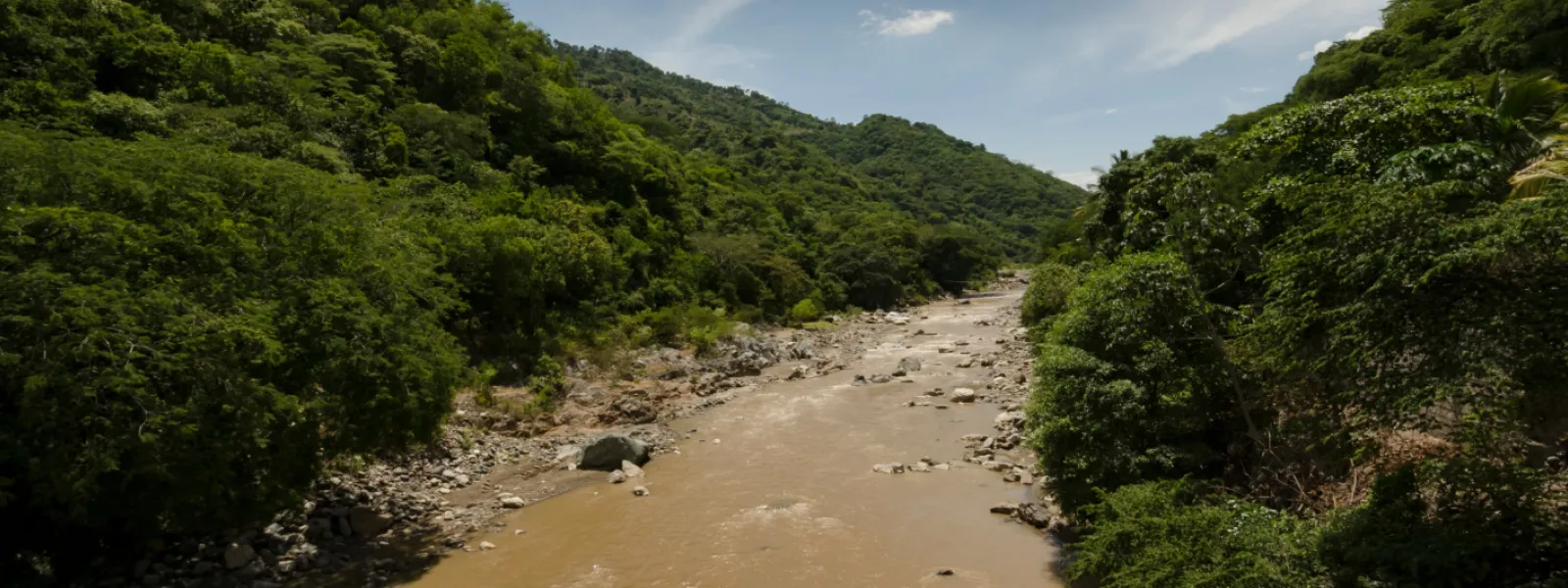
The Motagua River basin—Guatemala’s largest and most important river—is severely polluted with wastewater, solid waste, and other types of debris.
This is a cross-border issue because the Motagua’s polluted waters flow into the Caribbean Sea, reach the coast of Honduras, and threaten the Mesoamerican Reef System.
For decades, this has violated the rights to health, water, development, and a healthy environment of all the people living in the river basin.
In June 2025, the Poqomam Maya community of Santa Cruz Chinautla—supported by AIDA, the Indigenous Peoples’ Law Firm, and allied organizations—achieved an unprecedented legal victory to halt degradation in the basin. In response to the lawsuit it filed, a Guatemalan court ordered the municipality of Chinautla to comply with a series of obligations to curb the pollution of the area’s rivers and soil.
The government's response to the ruling has so far been limited to technical working group meetings. Meanwhile, the community continues to work toward the proper implementation of the ruling and to take other actions to defend its territory and its rights.
Background
The Motagua River, which is 486 km long, flows through 96 municipalities and 14 departments in Guatemala. It originates in Quiché, a department located in the northwest, and empties into the Caribbean Sea.
Polluting activities occur throughout the entire basin, including sub-basins and micro-basins. The largest volume of pollution comes from Guatemala City, the country’s capital, and is carried by the waters of the Las Vacas River, which in turn receives a large amount of waste from the Chinautla River.
The Chinautla River, which flows through the municipality of the same name, carries solid waste from a landfill located in Zone 3 of the capital—where trash from at least 14 municipalities in the department of Guatemala is dumped—as well as sewage generated by some 500,000 people living in the northern part of the capital, which undergoes no prior treatment.
Other sources of pollution include the numerous illegal dumps in the municipality of Chinautla, the waste that private vehicles and garbage trucks dump along the banks of its rivers, as well as the sand-mining companies—which began setting up operations in the area between 1996 and 1997—whose activities weaken the rivers' basins, causing solid waste to be more easily carried away by the river currents.
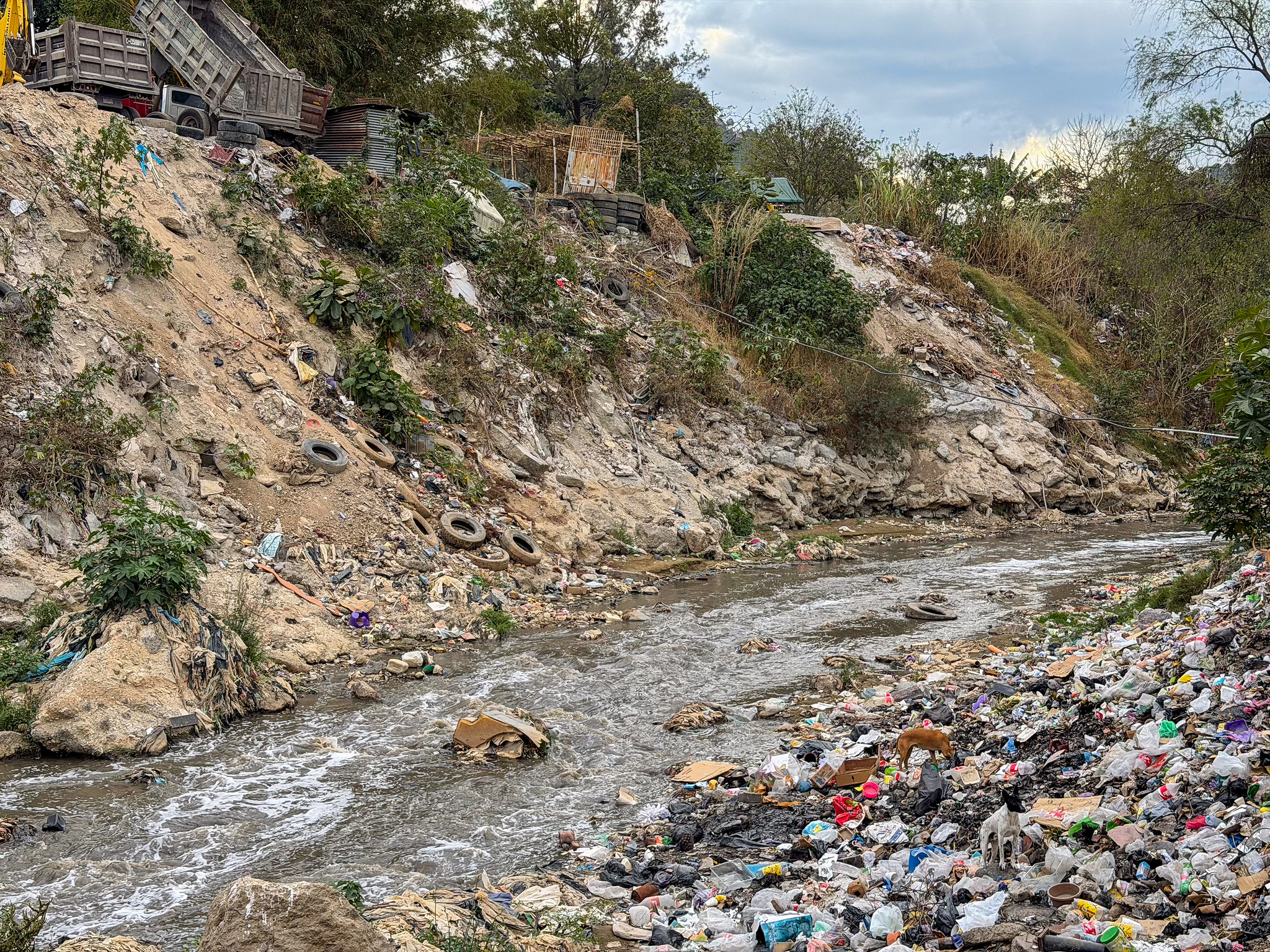
Photo: Mayela Sánchez García.
The situation extends beyond national borders. Every year, the Motagua River discharges some 20,000 metric tons of plastic into the Caribbean Sea, making it one of the rivers that contributes the most plastic pollution to the ocean worldwide, according to estimates contained in a 2025 report by the Inter-American Commission on Human Rights (IACHR).
The river flows into the Mesoamerican Reef at its mouth, so pollution also threatens to degrade one of the largest and most biodiverse transboundary reefs on the planet, which spans the territorial waters of Belize, Guatemala, Honduras, and Mexico.
In addition, the contaminated water reaches the coast of Honduras and spreads into Amatique Bay, located along the eastern coast of Guatemala, affecting the Caribbean Sea.
The roots of this chronic, cross-border problem are structural. Data from the Integrated Environmental Management of the Motagua River Basin project, funded by the United Nations Development Program (UNDP), show that in Guatemala, 66% of municipal solid waste is not collected, and there is no guarantee that the remaining 34% is disposed of properly. Furthermore, of all landfills nationwide, 88.32% are illegal or lack municipal authorization.
In other words, the core issues that need to be addressed are the mismanagement of solid waste and water resources in Guatemala; noncompliance with existing regulations on wastewater discharge and the disposal and treatment of solid waste and residues; and the lack of a water law.
The Poqomam Maya people's quest for justice
The rivers of Santa Cruz Chinautla, a community of the Poqomam Maya people located just twelve kilometers from Guatemala City, have become conduits of pollution that are degrading the Motagua River.
For decades, the local population has seen its health and livelihoods—including pottery, one of the main economic activities and a source of identity—damaged due to the lack of waste management in the municipality of Chinautla and the urban area of the country’s capital, as well as the activities of sand-mining companies.
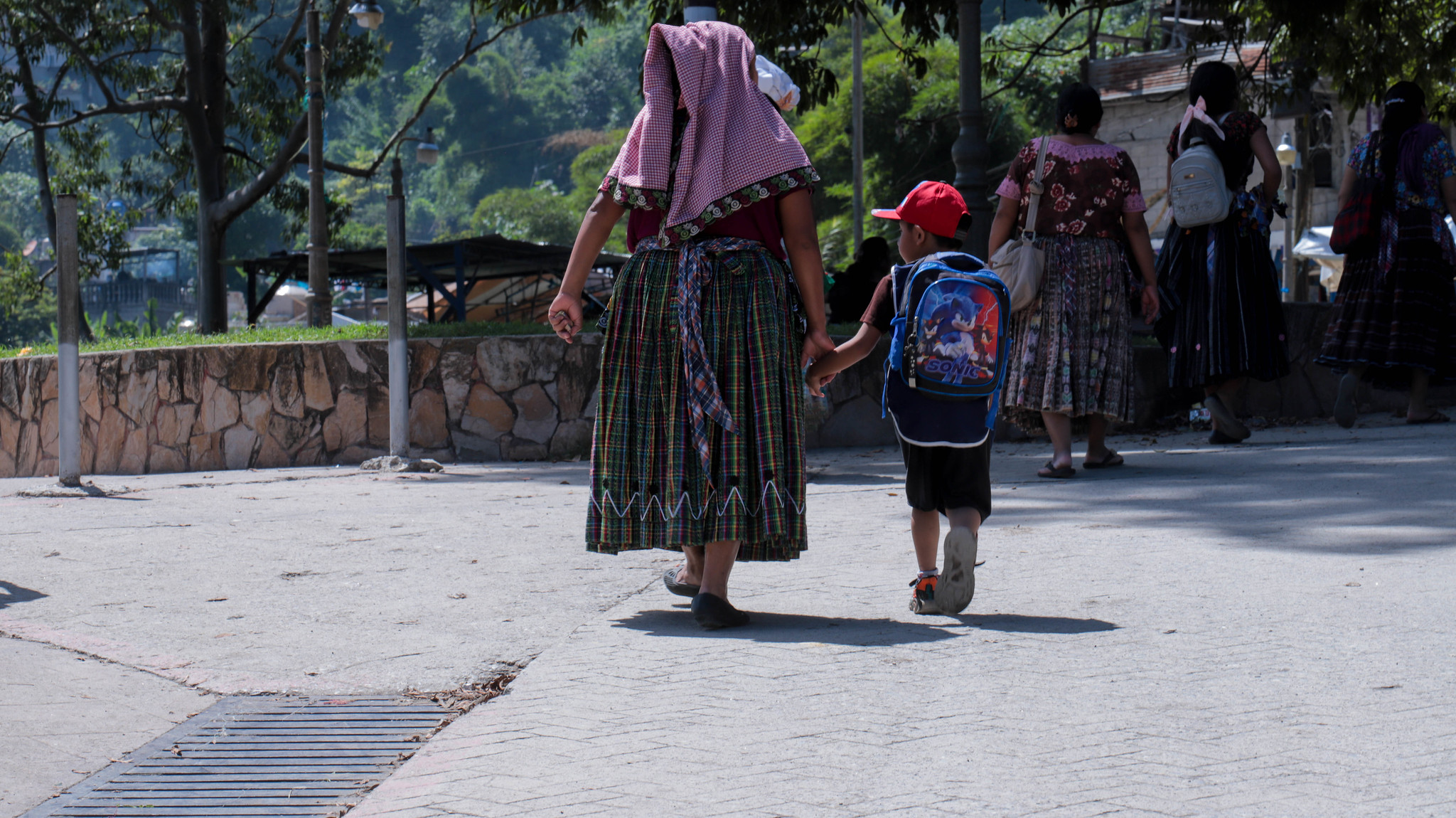
Photo: Mario Winter.
Voices for the Motagua River: Olga Vázquez.
Voices for the Motagua River: Nazario Pascual.
In early 2000, the Maya community organized to stop sand mining on their territory. At that time, the companies held mining permits that remained valid through 2021 and 2022. And although the permits expired, some companies continued to operate after requesting extensions. In June 2022, the indigenous authorities of the Poqomam people began a sit-in protest in front of the Piedrinera San Luis company, which they maintained for four years.
In July 2024, the Special Rapporteur on Economic, Social, Cultural, and Environmental Rights of the IACHR visited Santa Cruz Chinautla. During his visit, traditional authorities and community members spoke about the environmental, water-related, health, economic, and cultural impacts of the pollution in their rivers.
That same year, in October, the community—with support from AIDA, the Indigenous Peoples’ Law Firm, and partner organizations—filed a lawsuit (petition for amparo) against the municipality of Chinautla over its failure to take measures to address the contamination of its rivers and soil caused by improper solid waste management and the existence of illegal landfills.
AIDA’s scientific team, together with local residents and community authorities, collected key information on illegal landfills in the area. This community science initiative supported the litigation by highlighting the severity of the pollution, demonstrating the ongoing use of such practices, and providing evidence of the municipal authorities’ failure to fulfill their legal obligations regarding waste management.
Learn more about this community science initiative.
In June 2025, the Poqomam community won the support of the Guatemalan justice system when a constitutional court ordered the municipality of Chinautla to effectively address the claims in the lawsuit aimed at stopping the pollution of the rivers and soil in Santa Cruz Chinautla.
This is the first time a Guatemalan court has recognized a community's right to a healthy environment and its central role in finding solutions.
Find out the details of the legal victory.
Current situation
Since the ruling was issued, the municipality of Chinautla has held a series of “technical working groups” with representatives from the central government, civil society, and the community. A smaller group of technical experts was later created to develop a work plan with clear goals. Several months have passed without the municipality convening these working groups.
Furthermore, in December 2025, the IACHR noted in its report Human Rights Situation in Guatemala that the Motagua River basin is facing a severe pollution crisis that has had profound impacts on biodiversity and has resulted in systematic violations of the human rights of local communities, including the Maya Poqomam people.
And in May 2026, the Ministry of the Environment and Natural Resources revoked the license of the sand mining company Piedrinera San Luis for "failure to comply with environmental commitments."
AIDA continues to monitor the implementation of the court ruling to ensure the right to a healthy environment for the Poqomam Maya community and all those living in the Motagua River basin. Meanwhile, the residents of Santa Cruz Chinautla remain organized and mobilized to improve their environment and defend their rights.
Related projects
Climate Litigation Platform for Latin America and the Caribbean: The road traveled
When the world was in a health crisis and COVID-19 made us turn away from everything and everyone, I came across the Climate Litigation Community of Practice in Latin America. In those days of 2020, I was an external collaborator for Greenpeace Mexico, and I was lucky enough to meet Javier, Florencia, and Veronica, who hosted this nascent community from their roles at AIDA. The community facilitated several virtual meetings to share ideas on climate litigation with people from all over the region concerned about the environment, the climate crisis, and the health of the planet and living beings. We affirmed our shared concerns and showed how we were addressing the environmental and social crises from each of our trenches, using strategic climate litigation. Some people were litigating against deforestation, coal mines, and thermoelectric power plants, or for the inclusion of climate change variables in environmental impact studies. Others were trying to stop fossil fuel policies or to improve and meet national climate commitments. It was interesting to see the breadth and versatility of how litigation is being used to advance climate action. AIDA then invited us to a series of meetings with the protagonists of some of the world's most emblematic strategic litigation cases. The experience of being in close contact with these people, in a space of trust, was unparalleled. It certainly reinforced my belief in the importance of the struggle being waged and the need to learn more about climate litigation. Then came another invitation from AIDA, this time to participate in the Advisory Committee to build a platform that would bring together in one place the cases of climate litigation in our region and in our language, as testimonies of a resistance that comes from many different fronts. The goal was to create a website where users could access information, find arguments to support the struggles, develop strategies, and have the possibility of contacting attorneys and academics. All to make visible the efforts of Latin America and the Caribbean in the face of climate conflicts. The Alana Institute of Brazil, the Foundation for Environment and Natural Resources of Argentina, the Office of the Environmental Ombudsman of Chile, and Greenpeace Mexico responded to the call to participate in the design of the tool. The collaborative efforts bore fruit, and in February 2022, the Climate Litigation Platform for Latin America and the Caribbean was officially born, with the goal of strengthening climate litigation in the region, and with it its power to promote the structural changes that are needed. The main challenge was how to collect, systematize, and update the data. The solution was to create a team of rapporteurs. Thus, volunteers—attorneys or law students from different countries with an interest in environmental, climate and human rights advocacy—began to work together virtually to maintain and update the platform and report new cases in their jurisdictions. The Platform started with 49 cases, and currently hosts 61 cases from eight countries. Another 30 are in the process of being added. The cases are identified and categorized in a user-friendly and intuitive way. The team of rapporteurs consists of 24 people from 12 countries. Without their tireless work and enthusiasm, the platform would not be possible. A year and a half after the launch of the Platform, and much longer since its inception, my memories point to the enthusiasm, dedication and commitment of many people to defend our common home, fight against devastation, and the possibility of bequeathing a greener and bluer planet to the future. We have a responsibility to future generations. We must provide tools, initiate and continue actions that will guide future legal actions to protect and care for the environment. I share with you my conviction that the goals set by the Community of Practice at its first meetings in 2020 will be achieved and that this project will continue to move forward by leaps and bounds. The challenge remains: to continue to share the success stories, the valuable lessons learned when things do not go as we expect, the successful regional and international experiences; and to continue to work to make effective the decisions that give reason to the planet. From AIDA, we invite you to learn about and use the Climate Litigation Platform for Latin America and the Caribbean to enter the world of climate litigation, which represents a great opportunity in the fight for climate justice and the protection of human rights in the region and the world. Visit the platform
Read more
Amazon Summit: 6 proposals for preserving the Amazon through regional cooperation
The Amazon is the world's largest tropical forest, a megadiverse ecosystem, and a global climate stabilizer that plays a key role in South America's water cycle. The region is also home to hundreds of indigenous, peasant and local communities. Despite its richness and cultural importance, the Amazon is threatened by colonization and land grabbing, deforestation, fires and extractive activities, among others. Because the Amazon is shared by eight countries – Bolivia, Brazil, Colombia, Ecuador, Guyana, Peru, Suriname and Venezuela – and French Guiana, a French overseas department, its conservation requires a regional effort. The Amazon Cooperation Treaty (ACT), signed in 1978 by the eight Amazonian countries, promotes the sustainable development of the Amazonian territories, with an emphasis on cooperation and scientific research. In 1998, with an amendment to the Treaty, the countries created the Amazon Cooperation Treaty Organization (ACTO) to strengthen and improve the cooperation process. Today, ACTO is the only socio-environmental bloc in Latin America and the most important scenario for establishing solid regional coordination for the conservation of the Amazon biome. However, this intergovernmental organization has not yet reached its potential. On the one hand, it has encountered obstacles in generating funding, and has had to rely on international sources on several occasions. On the other hand, it has not allowed the effective participation of civil society. On August 8 and 9, the city of Belém do Pará in Brazil will host the Amazon Summit 2023, the fourth meeting of the Presidents of the States Parties to the ATT. Given the opportunity that this meeting offers to revitalize the ATT for the benefit of the Amazonian territories, we present below six proposals for the conservation of this ecosystem through regional cooperation. 1. Reform ACTO bodies to allow for public participation There is an urgent need to update the ACT and reinstate ACTO to ensure broad civil society participation, including in the meetings of ACTO's governing bodies and in the drafting of its Strategic Agenda for Amazon Cooperation. The minutes of such meetings should be made public. These and other measures are essential for Amazonian states to fulfill their obligations under the Escazú Agreement, a regional treaty that recognizes the public's right to access information on environmental matters. 2. Promote involvement, dialogue and coordination with Amazonian populations The indigenous, peasant and local communities that inhabit the Amazon have played a fundamental role in its protection. For millennia, their knowledge has enabled its conservation. Therefore, efforts to conserve this ecosystem must begin by recognizing, valuing and protecting these ancestral knowledge systems, promoting their participation in decision-making, and guaranteeing their rights in accordance with international human rights frameworks. 3. Protecting environmental defenders in the Amazon Four of the Amazonian countries – Brazil, Colombia, Ecuador and Peru – are among the countries with the highest risks for environmental and territorial defenders, especially indigenous and peasant women defenders. Despite this, ACTO currently has no strategy to address this serious situation. The organization must guarantee environmental defenders a safe and conducive environment for their work, a task that should include a program for the protection of women defenders in the Amazon. 4. Effectively fight the use of mercury in gold mining The use of mercury in small-scale gold mining is devastating to communities and ecosystems in the Amazon. At the regional level, ACTO should adopt a resolution or program to address this issue directly. And at the international level, member states should act as a bloc to push for amendments to the Minamata Convention on Mercury so that the treaty prohibits the marketing of the heavy metal and its use in small-scale gold mining. 5. Promote compliance with international environmental agreements Based on a regional strategy for the recognition of international environmental law to protect the Amazon and its people, ACTO should advise States Parties on compliance with environmental treaties such as the Convention on Biological Diversity. It should also assist States in the inclusion of threatened sites, knowledge systems, traditions and cultural expressions of peasant communities and indigenous peoples on lists of priority international attention and support, such as UNESCO Biosphere Reserves and Intangible Cultural Heritage, and Wetlands of International Importance under the Ramsar Convention on Wetlands. 6. Promote a different vision of development for the Amazon ACTO should promote a vision of development that considers communities and addresses the problems of deforestation, fires and the expansion of the extractive frontier through international integration. It should also articulate regional efforts to stop the expansion of the oil frontier and advocate for the establishment of a moratorium on fossil fuel extraction in the Amazon. In addition, it should promote legal reforms that discourage the expansion of illegal mining and its impacts. Looking to the future The Amazon rainforest and the potential for regional cooperation to conserve it are at a critical juncture. The point of no return for the Amazon, the point at which the rate of deforestation nullifies its capacity to regenerate, is no longer a future scenario. But at the same time, after several years of little action within ACTO, this year's Amazon Summit and the reactivation of the Amazon Parliament in 2022 renew hope for regional cooperation to conserve the Amazon. In the same vein, the presidents of Brazil and Colombia recently announced their goals to reduce illegal deforestation in the Amazon by 2030. Given the current threats to the Amazon and ACTO's mandate to promote regional cooperation, its member states should seize this moment to provide the organization with more regular and permanent funding. This is necessary to implement effective long-term programs and, in particular, the above-mentioned proposals. Civil society should also take full advantage of opportunities for advocacy with ACTO and its bodies, including participation in the Amazon Dialogues that will take place from August 4 to 6 as a prelude to the Summit. Joint regional and transboundary efforts are powerful enough to save a vital ecosystem for the region and the world.
Read more
Mexican environmental authority violates Mexico’s highest court and international obligations when reissuing a permit for a port expansion that threatens the Veracruz Reef System
In a legal brief, AIDA and Earthjustice argue the Secretary of the Environment failed to properly evaluate the environmental impact of the project to the reef, a UNESCO World Heritage Site, as required by Mexico’s highest court. Mexico City, Mexico – Today, AIDA (Interamerican Association for Environmental Defense) and Earthjustice filed a brief with the Fifth District Court of Veracruz to help protect the Veracruz Reef System from the Veracruz port expansion project. When reauthorizing the project, the Secretary of the Environment and Natural Resources (Semarnat) not only failed to comply with a ruling of the Supreme Court of Justice of the Nation, but also ignored Mexico’s international obligations regarding environmental protection and human rights, including the human right to a healthy environment guaranteed in the Mexican Constitution. This was demonstrated by AIDA and Earthjustice in a legal brief (Amicus Curiae or "Friend of the Court") filed before the Fifth District Court of Veracruz. In it they request that the court -- which is in charge of determining whether the Supreme Court’s ruling was complied with or not -- establish contempt and force Semarnat to re-examine the project based on the environmental impact assessment procedure required by the high court. "The authorities must comply with the Supreme Court ruling and protect this internationally-recognized natural treasure of Mexico. The human right to a healthy environment cannot be ignored," said Guillermo Zúñiga, a Veracruz native and Earthjustice attorney. "The reef not only hosts the greatest biodiversity of species in the central region of the Gulf of Mexico, but also helps mitigate the impact of storm surges and hurricanes. The people who grew up here, as I did, and who live here now, know the value of this sanctuary where land and sea harmonize in unity." On February 9, 2022, residents of Veracruz won a victory before the Supreme Court in an amparo action filed to defend the Veracruz Reef System -- the largest reef in the Gulf of Mexico -- and its environmental services against the Veracruz port expansion project. The Supreme Court ordered the revocation of the permits by determining that Semarnat, by approving the project, violated the right to a healthy environment of the people of Veracruz. Despite the ecological, cultural, and economic importance of the Veracruz Reef System, the environmental authority had authorized the port expansion in a fragmented way, dividing the project into 15 permits and diluting its true impact. In addition, it completely excluded from its analysis a non-emerging reef ("La Loma") located in the area of the Veracruz Reef System National Park. In its ruling, the Supreme Court ordered the environmental authority to reevaluate the project in an integral, holistic and complete manner. In addition, it ordered that the new evaluation be made in accordance with the elements that make up the right to a healthy environment, as well as the principles of prevention and precaution, enshrined in international law. It also requested the support of the National Council of Natural Protected Areas and the International Wetlands Committee of the Ramsar Convention to design a protection scheme for the Veracruz Reef System. "Right now, the court has the opportunity to confirm the transformative effect of the Supreme Court's ruling and set a valuable precedent for the real protection, not just on paper, of Veracruz's reefs and the universal right to a healthy environment," said Sandra Moguel, an attorney with AIDA's Ecosystems Program. "Including the international authorities of the Ramsar Convention would mean strengthening the project's environmental impact assessment with technical knowledge and transparency." As demonstrated in the brief, by granting a second permit to the project -- on December 30, 2022 -- Semarnat failed to comply with the Court's ruling and the Mexican State's obligations because: It did not require a new environmental impact study -- mandatory for projects of this size under international law and national legislation -- to analyze the cumulative impacts of all segments of the original project. On the contrary, the environmental authority based its assessment on the original deficient statements. Even so, it left three of the original segments out of its analysis. It failed to submit its new assessment to a public consultation nor did publish new information on the impacts of the project before authorizing it again. In this way, it ignored the rights of the people of Veracruz to public participation and access to information in environmental decision-making. Semarnat has not yet requested the support of the National Council of Natural Protected Areas or the International Wetlands Committee. The participation of this committee is of particular importance due to its experience and technical knowledge in the protection of protected areas and wetlands. The Veracruz Reef System is a Natural Protected Area designated under national legislation, a wetland of international importance under the international Ramsar Convention, and a UNESCO World Heritage Site. AIDA is an international non-profit organization that has been protecting the human right to a healthy environment in the Americas for 25 years. Earthjustice is the premier nonprofit public interest environmental law organization in the United States. We wield the power of law and the strength of partnership to protect people's health, to preserve magnificent places and wildlife, to advance clean energy, and to combat climate change. press contacts Sandra Moguel, AIDA, [email protected] (Spanish and English) Kathryn McGrath, Earthjustice, [email protected] (English) Guillermo Zúñiga, Earthjustice, [email protected] (Spanish)
Read more