
Project
Alberto Peña Kay
Protecting the Santurban páramo from mining's damage
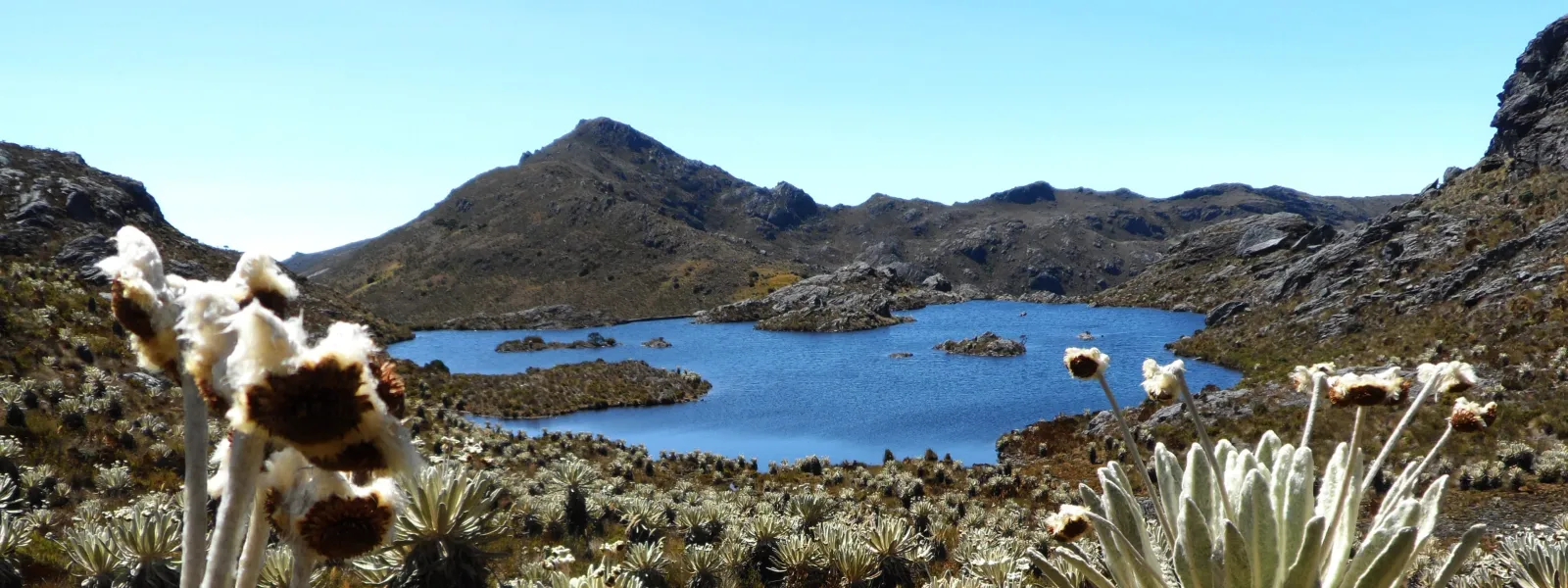
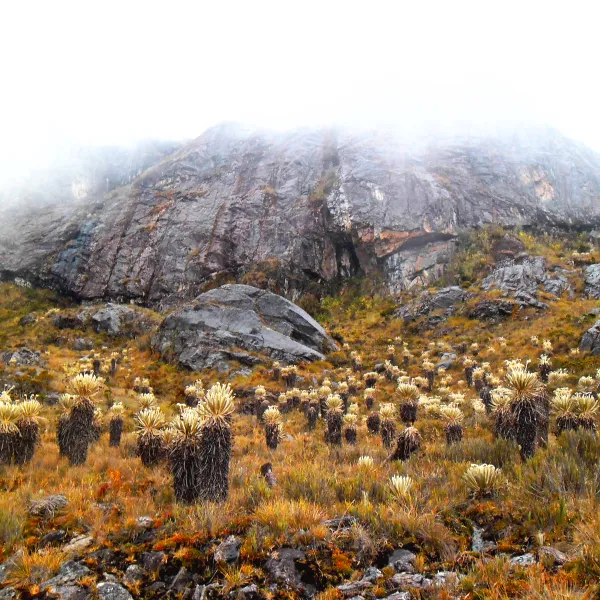
In the Andean region, high-mountain ecosystems known as páramos capture water from the fog and supply it to the lowlands. One such ecosystem is the Santurbán páramo, which provides fresh water to more than two million people in Colombia.
Santurbán, like the other páramos on the continent, also captures large amounts of carbon, making it a key ally in mitigating the climate crisis. It is also a refuge for hundreds of endangered species, including the iconic spectacled bear.
The land in and around the páramo contains gold and other minerals. This has put Santurbán in the spotlight of the multinational mining industry, which for decades has sought to establish large-scale projects in the ecosystem that threaten to degrade it.
The Committee for the Defense of Water and the Santurbán Páramo—a coalition of environmental advocates—has thwarted these ongoing attempts, with support from AIDA and other civil society organizations.
Background
The Santurbán páramo is located in the heart of the Eastern Cordillera of the Colombian Andes, in the departments of Santander and Norte de Santander, at an elevation ranging from 2,200 to 4,290 meters above sea level.
It covers an area of 129,743 hectares and is home to 57 lakes. It serves as a habitat for 457 plant species and 293 species of vertebrate fauna.
There are mineral deposits in Santurbán, primarily gold, but also silver and copper. This explains the region’s mining tradition, particularly in the part of the páramo located in Santander, in the province of Soto Norte. The communities in the area have built their culture and identity around gold mining, which is mainly artisanal and small-scale.
But since the 1990s, the gold deposits in the páramo have also attracted foreign mining conglomerates seeking to develop large-scale projects. This has raised concerns among the population that relies on the Santurbán water sources, who have mobilized in defense of water, their land, and life.
Although national and international regulations prohibit mining in páramos, the Colombian government has granted mining concessions to transnational corporations in Santurbán.

Photo: Keishpixl / Pixabay.
The long struggle to protect the páramo
One of the companies that sought to develop large-scale mining in Santurbán is Eco Oro Minerals Corp.—formerly Greystar Resources—a Canadian company that intended to establish the Angostura open-pit mine there to extract gold and silver. Between 1994 and 1995, the company acquired its mining titles and conducted exploration. And in 2010, it applied for a mining permit.
That was the year AIDA became involved in defending the ecosystem, supporting the Committee for the Defense of Water and the Santurbán Páramo. Our legal work helped convince the Colombian government to deny the mine an environmental permit in May 2011.
In January 2013, the government designated a portion of the páramo (11,700 hectares) as a Regional Natural Park. That year—together with the committee and partner organizations—we carried out a campaign and advocacy efforts to urge the government to recognize the entire Santurbán area as a páramo ecosystem through a delimitation based on scientific criteria. In December 2014, the Ministry of the Environment established a delimitation that protected 76% of the páramo (98,954 hectares).
Furthermore, as a result of a litigation supported by AIDA, in February 2016, Colombia’s highest court reaffirmed that mining in páramos is prohibited.
That same year, in December, the International Finance Corporation (IFC), the World Bank Group’s private sector arm, decided to divest from Eco Oro Minerals. This achievement was the result of a process that began in 2012, when the committee—advised and supported by AIDA and international partner organizations—filed a complaint before an independent accountability mechanism, which concluded that the IFC’s investment in the Angostura project failed to take into account the project’s social and environmental impacts, thereby contradicting the financial institution’s internal policies.
Also in 2016, Eco Oro Minerals filed an arbitration claim against the Colombian government with the International Centre for Settlement of Investment Disputes (ICSID), arguing that it had been adversely affected by government decisions aimed at protecting the country’s páramos, including the delimitation of Santurbán.
In 2017, the Constitutional Court invalidated the delimitation because the affected communities were not consulted. The high court ordered that a participatory delimitation be carried out.
And that year, a new threat to Santurbán emerged when the Canadian multinational Aris Mining applied for an environmental permit for Soto Norte, a gold mining project located near the páramo. Following citizen protests and technical objections, in October 2020, the National Environmental Licensing Authority shelved the project.
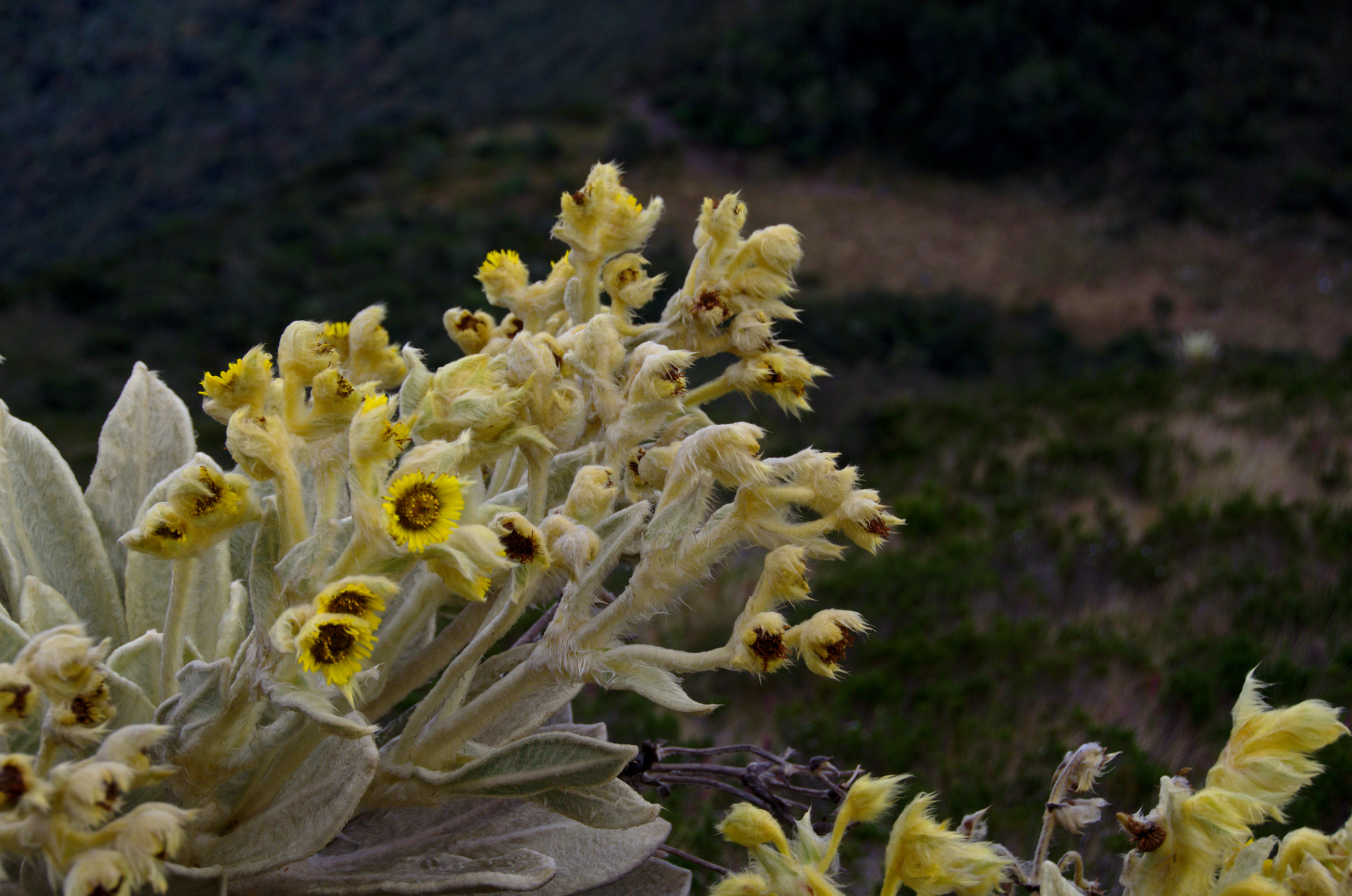
Photo: Aztlec.
Current situation
In March 2025, the Colombian government designated the western flank of the Santurbán massif as a temporary renewable natural resource reserve area, delimiting and protecting an area of 75,344.65 hectares. This resulted in a two-year suspension of the Soto Norte project. However, Aris Mining's contract to formalize Calimineros' small-scale mining activities through the purchase and processing of mineralized material remains in effect.
In addition, the Canadian mining company continues to move the project forward. In September 2025, it released its prefeasibility study, revising the mine’s original design.
Meanwhile, members of the Committee for the Defense of Water and the Santurbán Páramo face threats and stigmatization because of their work. In March 2025, UN Special Rapporteurs and the Working Group on Business and Human Rights denounced these incidents in communications sent to the governments of Colombia, Canada, and the United Arab Emirates, as well as to the companies Aris Mining and MDC Industry Holding Company LLC, the former co-owner of the Soto Norte project.
Regarding the arbitration claim filed by Eco Oro Minerals, in July 2024, ICSID ruled in favor of the Colombian government and rejected the Canadian company’s claim for USD 1.1 billion in compensation.
Concerning the delimitation of Santurbán, in July 2026, the Ministry of the Environment issued a resolution introducing the concept of "progressive delimitation." On that basis, the government proposes to progressively demarcate the páramo, covering 29,199 hectares across 19 municipalities—those where the participatory agreements required by the Constitutional Court in its 2017 ruling have already been finalized. It also proposes two measures on the creation and expansion of reserves to restrict mining in the ecosystem.
Learn more about the impacts of mining on the páramos of Latin America (in Spanish).
Partners:
Related projects

Climate litigation in Latin America and the Caribbean: Launching a regional platform
By Maria Antonia Tigre, Florencia Ortúzar and Javier Dávalos* With the largest rainforest in the world, the largest freshwater reserves on the planet and the most significant amount of arable land where food is produced, the importance of Latin America and the Caribbean in the fight against climate change is undeniable. Unfortunately, however, the region is also highly vulnerable to the damaging effects of the climate crisis, despite not being significant emitters of greenhouse gasses. As a result, human and environmental rights are being threatened in a context where defenders are constantly at risk. Sadly, the region has been recognized as the most dangerous for environmental and human rights defenders. Strategic climate litigation has slowly grown in the region as a critical tool to complement the work for the defense of the environment, the territory, and the protection of the rights of peoples and communities. Litigating in the Global South and Latin America is different from litigating in the Global North, with particular challenges that must be addressed strategically. Cases in some of the most dangerous countries for environmental defenders might render them more vulnerable to attacks and threats. A lack of resources might leave plaintiffs, who bravely stand up for the cause, unprotected, and not only from violence but from subtler maladies, such as emotional stress or stigmatization. Another huge obstacle is the grave corruption that affects the region, which implies excessive power for extractive companies. Corruption is a widespread and deeply rooted phenomenon, especially in multimillion-dollar industries such as fossil fuels and extractivism. There’s a risk that companies or governments might co-opt academics, and proving and battling corruption is extremely difficult and dangerous. Finally, one of the most severe obstacles to making climate litigation effective in Latin America and the Caribbean is the difficulty litigators face when implementing favorable decisions. LAC presents some encouraging but at the same time alarming statistics around climate litigation. Although the vast majority of cases that have been resolved so far have had favorable decisions, the implementation of these has, so far, been unsatisfactory. There is much to be done on this front, including identifying administrative deficiencies of States that influence the difficulty of enforcing decisions; and considering, from the planning stage of cases, which remedies are sought and how implementation will be demanded. Despite these challenges, climate litigation is already showing the power it beholds in promoting change. In Peru, a group of young people sued the government for failing to formulate and execute a national policy and plan to curb deforestation in the Peruvian Amazon (Álvarez et al. v Peru). In Colombia, the Wayúu indigenous communities promoted an action to annul the environmental permit of a colossal coal mine (Mina Cerrejon). In Mexico, Greenpeace promoted an injunction to stop atmospheric pollution and improve air quality in the State of Mexico (Greenpeace v Secretaría de Medio Ambiente). In Argentina, the Organización de Ambientalistas Organizados demanded that the Ministry of Environment halts the approval of offshore exploration of fossil fuels for its impacts on whales and climate change (Organización de Ambientalistas Organizados v Ministry of Environment and Sustainable Development). In Ecuador, a group of nine girls questions the Ecuadorian State for authorizing oil companies to burn gas in the Ecuadorian Amazon (Caso Mecheros). In Chile, the NGO Defensoría Ambiental sued the government and all the companies operating in an emblematic sacrifice zone for the environmental damage caused after years of operations (Daño Ambiental en Ventanas). And these are only some examples. The Climate Litigation Platform for Latin America and the Caribbean has been created in this context. The Interamerican Association for Environmental Defense (AIDA), a regional NGO that uses the law to protect the environment and the human rights of communities, has been leading the effort in close collaboration with regional organizations and litigators who have been behind some of the cases in the region. AIDA launched the platform in a webinar, the recording of the event is available here. The Platform, which is maintained in Spanish, offers information on the judicial cases in the region that use climate arguments in a friendly and intuitive manner. It also includes a section of downloadable resources that might be useful for stakeholders who are planning on using the law to advance their cases. The goal is to promote more cases and better outcomes. Thus, the Platform is a tool to deliver, share strategies, experiences, and arguments on climate litigation, help create and strengthen alliances and facilitate contact between people who work in favor of the environment and climate. This initiative emanates from a collaboration with different organizations. It is a cross-cutting and participatory initiative that feeds on collective work. AIDA’s initiative fits well within the collaborative endeavors of the Sabin Center. In December 2021, the Sabin Center launched the Peer Review Network of Global Climate Litigation to enhance the field of study and practice in climate litigation and ensure broad and equal geographic representation in our Global Climate Litigation Database. The Network includes national rapporteurs who help us ensure the database is comprehensive and up-to-date. In addition, the Sabin Center is continuously partnering with regional initiatives that specifically analyze climate litigation within a national or regional context. As part of this ongoing effort, the Sabin Center has partnered with AIDA to share information and facilitate the exchange between collaborators of the two projects. The launch of this regional Climate Litigation Platform is not only great news for Latin America and the Caribbean but also for the whole active global community that uses the Courts in favor of the planet. Visit the Platform *Maria Antonia Tigre is Global Climate Litigation Fellow at the Sabin Center for Climate Change Law, Florencia Ortúzar is a senior attorney at AIDA and Javier Dávalos is coordinator of AIDA's Climate Program.
Read more
Supreme Court orders protection of Veracruz's reefs and wetlands
Mexico’s high court unanimously ruled that authorities violated the right to a healthy environment by authorizing the expansion of the Port of Veracruz. Environmental authorities failed to use the best scientific information, analyze the port expansion in a comprehensive manner, and consider all of its impacts. The ruling implies that the project’s approvals are unfounded and that its impacts must be re-evaluated, this time in a comprehensive manner, to determine the viability of the project. Mexico City, Mexico — On February 9, residents of Veracruz won a victory before the Supreme Court of Justice of the Nation in a legal injunction filed to defend the Veracruz Reef System (SAV) and its environmental services against the expansion of the Port of Veracruz. The justices of the Court unanimously voted in favor of the draft ruling that protects the reefs of Veracruz and transforms the way the Environmental Impact Assessment procedure operates throughout the country. This decision underpins the protection of the right to a healthy environment, and it sets a new precedent that will change the way officials determine how projects are assessed by their environmental impact. The Court held that "the protection of wetlands is a national and international priority that has led our country to issue a strict regulation of this ecosystem and… any analysis made in relation to wetlands must be guided by a criterion of maximum precaution and prevention." The ruling pointed out that the Secretariat of Environment and Natural Resources (Semarnat) violated the right to a healthy environment by authorizing the expansion project of the Port of Veracruz, since "it did not take into account the best scientific information available; it did not analyze or evaluate in a complete manner each one of the different environmental impacts that the project and its modification could cause, in addition to the fact that the project and the works related to it were analyzed in a fragmented manner." The Supreme Court’s ruling annuls the authorization for the port’s expansion and orders a complete reevaluation of the project’s environmental impacts and determination of the consequent viability of the project. "CEMDA filed this injunction, together with the community, to protect and contribute to the conservation of the Veracruz Reef System, as well as the reefs and the services they provide, since they are key to the well-being of the people living in the Veracruz-Boca del Río-Medellín conurbation," explained Xavier Martínez Esponda, CEMDA's Operational Director. The case sets a precedent that will transform the way in which Semarnat and state authorities conduct Environmental Impact Assessments in the country. Martinez Esponda pointed out that, "with this decision, the principles of prevention and precaution will have to become much more ingrained in the decision-making process. Likewise, authorities and investors should learn the lesson that it is more expensive, in all senses, not to present their projects in a complete manner, than to comply in time and form with the Environmental Impact Assessment." Background The Veracruz Reef System is a National Park and a wetland of international importance according to the Ramsar Convention. It has great environmental value as the largest reef system in the central region of the Gulf of Mexico. This reef system hosts the greatest biodiversity of species in the western Gulf of Mexico and is also home to several protected species, such as the critically endangered hawksbill turtle. The SAV also helps mitigate the impact of storm surges and hurricanes, which have increased in frequency and intensity as a result of climate change. The Port of Veracruz expansion project was proposed in the late 1990s and its implementation included plans for new breakwater works, access and navigation channels, land access, terminals, and port facilities. These works will damage reefs and seagrasses in the area, as they will be impacted by the increased sedimentation caused by the construction works. Due to the importance of the case, international environmental protection organizations supported the process. Earthjustice and the Interamerican Association for Environmental Defense (AIDA) delivered a joint amicus brief to the Supreme Court in support of CEMDA’s filing with the court. Sandra Moguel, AIDA's attorney, emphasized that "it is not the proximity of a project that determines who are the affected people and who should have access to justice to defend their right to a healthy environment." In its brief, AIDA explains that international law obliges the Mexican government to allow anyone whose fundamental rights are threatened by environmental harm to access judicial remedies, even if their connection to the threatened ecosystem is indirect or remote. Guillermo Zuñiga, an attorney with Earthjustice, emphasized that his ties to this reef are important and personal: "I grew up in Veracruz. I am a Xalapeño. That area gave birth to me, and I grew up swimming in the rivers and beaches of Veracruz with my family. I want the children of Veracruz to have the opportunity to enjoy the richness of its biodiversity as I did." Alejandra Serrano Pavón, a lawyer with the international organization Environmental Law Alliance Worldwide (ELAW), was interested in the case because of the opportunity to encourage the Court to broadly interpret the right to access to justice in defense of the environment. ELAW presented an amicus brief that supported the filing, through which is provided examples from various countries around the world that recognize a broad interpretation of this right, which allows "any civil society organization or, at least residents of a place, to initiate a legal action to protect the environment." We widely celebrate this decision of the First Chamber of the Supreme Court, and we hope that in the process of executing the judgment, the Secretariat of Environment and Natural Resources complies with what it has been ordered to do under the highest standard of protection enshrined in the Regional Agreement on Access to Information, Public Participation and Access to Justice in Environmental Matters in Latin America and the Caribbean, known as the Escazú Agreement. Underwritten by: AIDA Earthjustice ELAW CEMDA press contacts: Ricardo Ruiz, CEMDA, [email protected], 5559644162 Victor Quintanilla, AIDA, [email protected], 5570522107
Read more
IDB must guaranty a responsible exit from the Hidroituango project
Ongoing investigation of the project continues regardless of early repayment of loan. The IDB Group concluded the loan for Hidroituango prematurely as they face uncertainty regarding project initiating operations. The investigation process regarding non-compliance with IDB policies in Hidroituango continues, regardless of the early termination of the loan. The construction of the Hidroituango dam, a project that has created a humanitarian and environmental crisis without precedent in Colombia, was financed by IDB Invest, the private lending arm of the Inter-American Development Bank (IDB), which invested millions of dollars in the hydroelectric project and facilitated the investment of a billion additional dollars from other international development banks. The Office of the Transparency Hub of IDB Invest informed Movimiento Ríos Vivos (MRV) -which represents communities affected by HidroItuango - that the bank concluded its involvement in the project after receiving the advance repayment of funds from Empresas Públicas de Medellin (EPM). Further, it informed that the compliance investigation process currently underway at the Independent Consultation and Investigation Mechanism (MICI) to assess compliance with IDB policies will continue, separate from the exit from the project by IDB. Regarding the communication sent by IDB Invest to MRV, the movement and accompanying international organizations, the Center for International Environmental Law (CIEL) and the Interamerican Association for Environmental Defense (AIDA), stated the following: First, the undersigned organizations maintain that the continuation of the complaint before the MICI demonstrates a respect for the integrity and independence of the accountability mechanism and a commitment to respond to the concerns of communities affected by IDB financed projects. Furthermore, we would underline that the fact the IDB has concluded its involvement in the project, resulting from a voluntary repayment due to the uncertainty of reaching certain project milestones, does not imply the absence or the removal of the investment. Much to the contrary, the prepayment by EPM to the IDB Group demonstrates that the IDB effectively disbursed funds and financed the project, and that Hidroituango is an IDB branded project. Consequently, we believe that it is correct for the MICI, the accountability mechanism in this case, to continue its investigative functions, and that the Board and management of the Bank remain committed to the process and its findings. Secondly, as has been set forth by the MICI in recent reports recognizing the lack of compliance with environmental and social safeguards by the bank, such as the case of the San Mateo and San Andres hydroelectric projects in the microregion of Yich K’isis in Guatemala, “in case of exit from the Projects, IDB Invest should make the necessary provisions to ensure a responsible exit from the Operations”. We are confident that the payment of the debt by EPM to the IDB opens up a historic possibility for the bank to conclude its involvement in a responsible way, by creating an Exit Plan in participation with communities which allows for the restoration of affected livelihoods, thereby legitimizing the bank as a responsible international finance institution. This possibility brings hope to the MRV communities affected by the Hidroituango project, who have called for the end of the investment by the IDB and its responsible exit for years. Thirdly, the undersigned organizations expect the IDB to fulfill its commitment to transparency in its operations, guaranteeing the principle of maximum access to project information, in a straightforward and comprehensive manner, under the terms established in the bank’s access to information policy. It is under these terms that we will be requesting meetings with the Board of the IDB in the near future. Today the IDB has an opportunity to fulfill its commitment to maintain high standards of integrity, transparency and accountability within its operations not only in Colombia but throughout Latin America. For this reason, we insist on the need for i) decision-making to be more transparent about the remaining IDB Group investments or loans which currently finance this project, both from its public and private lending arm, as was set forth in the petition sent on December 6th, 2021, ii) that a responsible, effective and participatory exit plan be built with communities. Press contacts: Milena Florez, Movimiento Ríos Vivos (MRV), [email protected], +57 319 2131656 Carla García Zendejas, CIEL, [email protected], +1 202 374 2550 Yeny Rodríguez Junco, AIDA, [email protected], +57 310 7787 601
Read more